El Paso, Tx. Wellness chiropractor, Dr. Alexander Jimenez examines Functional Medicine.�What it�is and how it can help in having a healthy lifestyle.
The Challenge
Of total healthcare costs in the United States, more than 86% is due to chronic conditions.1 In 2015, health care spending reached $3.2 trillion, accounting for 17.8% of GDP.2 This exceeded the combined federal expenditures for national defense, homeland security, education, and welfare. By 2023, if we don�t change how we confront this challenge, annual healthcare costs in the U.S. will rise to over $4 trillion,3,4 the equivalent�in a single year�of four Iraq wars, making the cost of care using the current model economically unsustainable. If our health outcomes were commensurate with such costs, we might decide they were worth it. Unfortunately, the U.S. spends twice the median per-capita costs of other industrialized countries, as calculated by the Organization for Economic Cooperation and Development (OECD),5 despite having relatively poor outcomes for such a massive investment.6
Our current healthcare model fails to confront both the causes of and solutions for chronic disease and must be replaced with a model of comprehensive care geared to effectively treating and reversing this escalating crisis.This transformation requires something different than is usually available in our very expensive healthcare system.7
A Contributing Factor�Outdated Clinical Model
Despite notable advances in treating and preventing infectious disease and trauma, the acute-care model that dominated 20th century medicine has not been effective in treating and preventing chronic disease.
Adopting a new operating system for 21st century medicine requires that we:
Recognize and validate more appropriate and successful clinical models
Re-shape the education and clinical practices of health professionals to help them achieve proficiency in the assessment, treatment, and prevention of chronic disease
Reimburse equitably for lifestyle medicine and expanded preventive strategies, acknowledging that the greatest health threats now arise from how we live, work, eat, play, and move
This problem can�t be solved by drugs and surgery, however helpful those tools may be in managing acute signs and symptoms. It can�t be solved be adding new or unconventional tools, such as botanical medicine and acupuncture, to a failing model. It can�t be solved by pharmacogenomics (although advances in that discipline should help reduce deaths from inappropriately prescribed medication�estimated to be the fourth leading cause of hospital deaths12). The costly riddle of chronic disease can only be solved by shifting our focus from suppression and management of symptoms to addressing their underlying causes. Specifically, we must integrate what we know about how the human body works with individualized, patient-centered, science-based care that addresses the causes of complex, chronic disease, which are rooted in lifestyle choices, environmental exposures, and genetic influences.
This perspective is completely congruent with what we might call the �omics� revolution. Formerly, scientists believed that once we deciphered the human genome we would be able to answer almost all the questions about the origins of disease.What we actually learned, however, is that human biology is far more complex than that. In fact, humans are not genetically hardwired for most diseases; instead, gene expression is altered by myriad influences, including environment, lifestyle, diet, activity patterns, psycho-social-spiritual factors, and stress.These lifestyle choices and environmental exposures can push us toward (or away from) disease by turning on�or o � certain genes.That insight has helped to fuel the global interest in Functional Medicine, which has that principle at its very core.
A Strategic Response
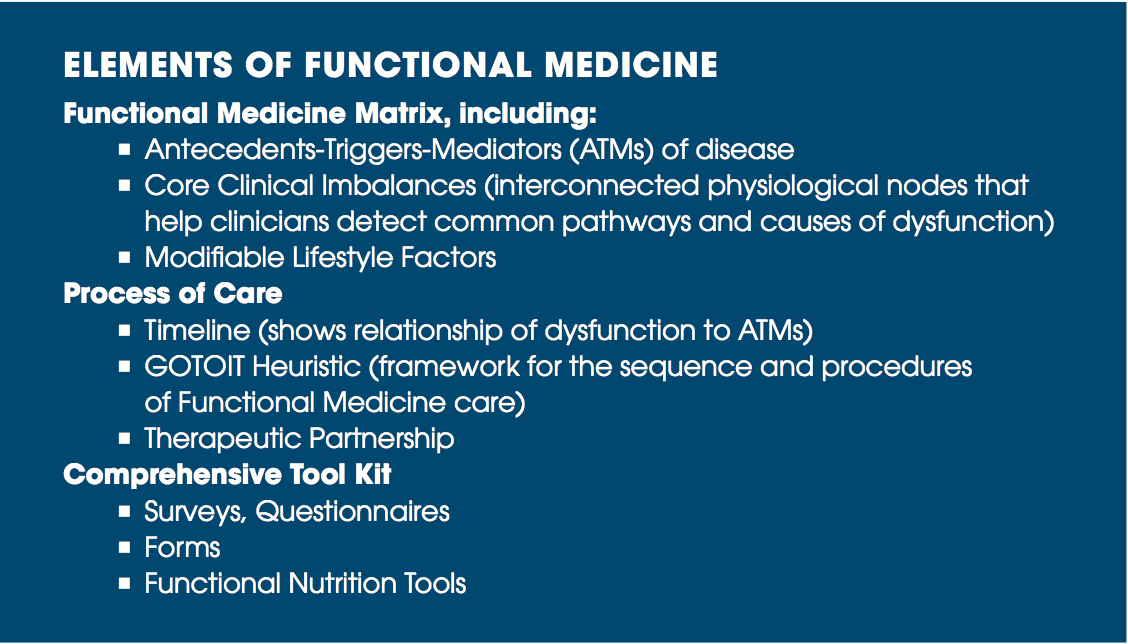
Functional Medicine directly addresses the underlying causes of disease by using a systems-oriented approach with transformative clinical concepts, original tools, an advanced process of care (see box below), and by engaging both patient and practitioner in a therapeutic partnership.
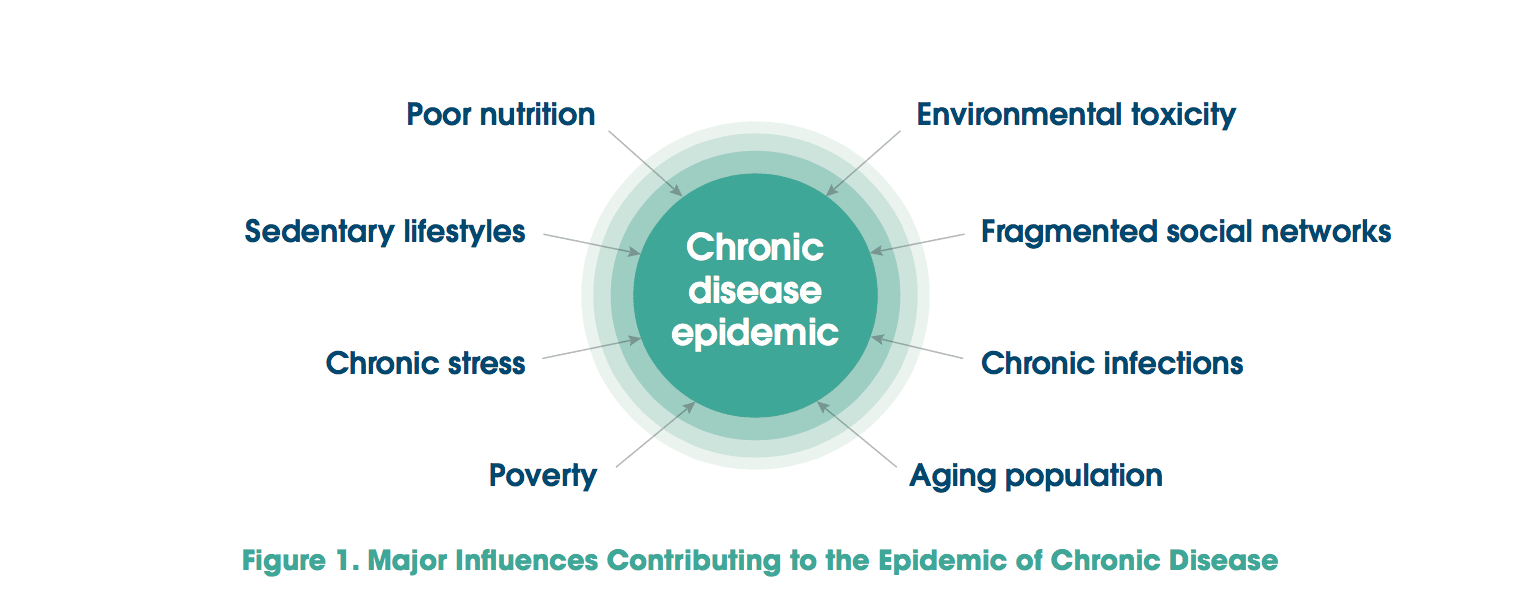
Functional Medicine practitioners look closely at the myriad interactions among genetic, environmental, and lifestyle factors that can influence long-term health and complex, chronic disease (see Figure 1).A major premise of Functional Medicine is that, with science, clinical wisdom, and innovative tools, we can identify many of the underlying causes of chronic disease and intervene to remediate the clinical imbalances, even before overt disease is present.
Functional Medicine exemplifies just the kind of systems-oriented, personalized medicine that is needed to transform clinical practice.The Functional Medicine model of comprehensive care and primary prevention for complex, chronic illness is grounded in both science (evidence about common underlying mechanisms and pathways of disease as well as evidence about the contributions of environmental and lifestyle factors to disease) and art (the healing partnership and the search for insight in the therapeutic encounter).
What Is Functional Medicine?
Functional Medicine asks how and why illness occurs and restores health by addressing the root causes of disease for each individual. It is an approach to health care that conceptualizes health and illness as part of a continuum in which all components of the human biological system interact dynamically with the environment, producing patterns and effects that change over time. Functional Medicine helps clinicians identify and ameliorate dysfunctions in the physiology and biochemistry of the human body as a primary method of improving patient health. Chronic disease is almost always preceded by a period of declining function in one or more of the body�s systems. Functional Medicine is often described as the clinical application of systems biology. Restoring health requires reversing (or substantially improving) the specific dysfunctions that have contributed to the disease state. Each patient represents a unique, complex, and interwoven set of environmental and lifestyle influences on intrinsic functionality (their genetic vulnerabilities) that have set the stage for the development of disease or the maintenance of health.
To manage the complexity inherent in this approach, IFM has created practical models for obtaining and evaluating clinical information that lead to individualized, patient-centered, science-based therapies. Functional Medicine concepts, practices, and tools have evolved considerably over a 30-year period, reflecting the dramatic growth in the evidence base concerning the key common pathways to disease (e.g., inflammation, oxidative stress); the role of diet, stress, and physical activity; the emerging sciences of genomics, proteomics, and metabolomics; and the effects of environmental toxins (in the air, water, soil, etc.) on health.
Elements Of Functional Medicine
The knowledge base�or �footprint��of Functional Medicine is shaped by six core foundations:
Gene-Environment Interaction: Functional Medicine is based on understanding the metabolic processes of each individual at the cellular level. By knowing how each person�s genes and environment interact to create their unique biochemical phenotype, it is possible to design targeted interventions that correct the specific issues that lead to destructive processes such as inflammation and oxidation, which are at the root of many diseases.
Upstream Signal Modulation: Functional Medicine interventions seek to influence biochemical pathways �upstream� and prevent the overproduction of damaging end products, rather than blocking the effects of those end products. For example, instead of using drugs that block the last step in the production of inflammatory mediators (NSAIDs, etc.), Functional Medicine treatments seek to prevent the upregulation of those mediators in the first place.
Multimodal Treatment Plans: The Functional Medicine approach uses a broad range of interventions to achieve optimal health including diet, nutrition, exercise and movement; stress management; sleep and rest, phytonutrient, nutritional and pharmaceutical supplementation; and various other restorative and reparative therapies.These interventions are all tailored to address the antecedents, triggers, and mediators of disease or dysfunction in each individual patient.
Understanding the Patient in Context: Functional Medicine uses a structured process to uncover the significant life events of each patient�s history to gain a better understanding of who they are as an individual. IFM tools (the �Timeline� and the �Matrix� model) are integral to this process for the role they play in organizing clinical data and mediating clinical insights.This approach to the clinical encounter ensures that the patient is heard, engenders the therapeutic relationship, expands therapeutic options, and improves the collaboration between patient and clinician.
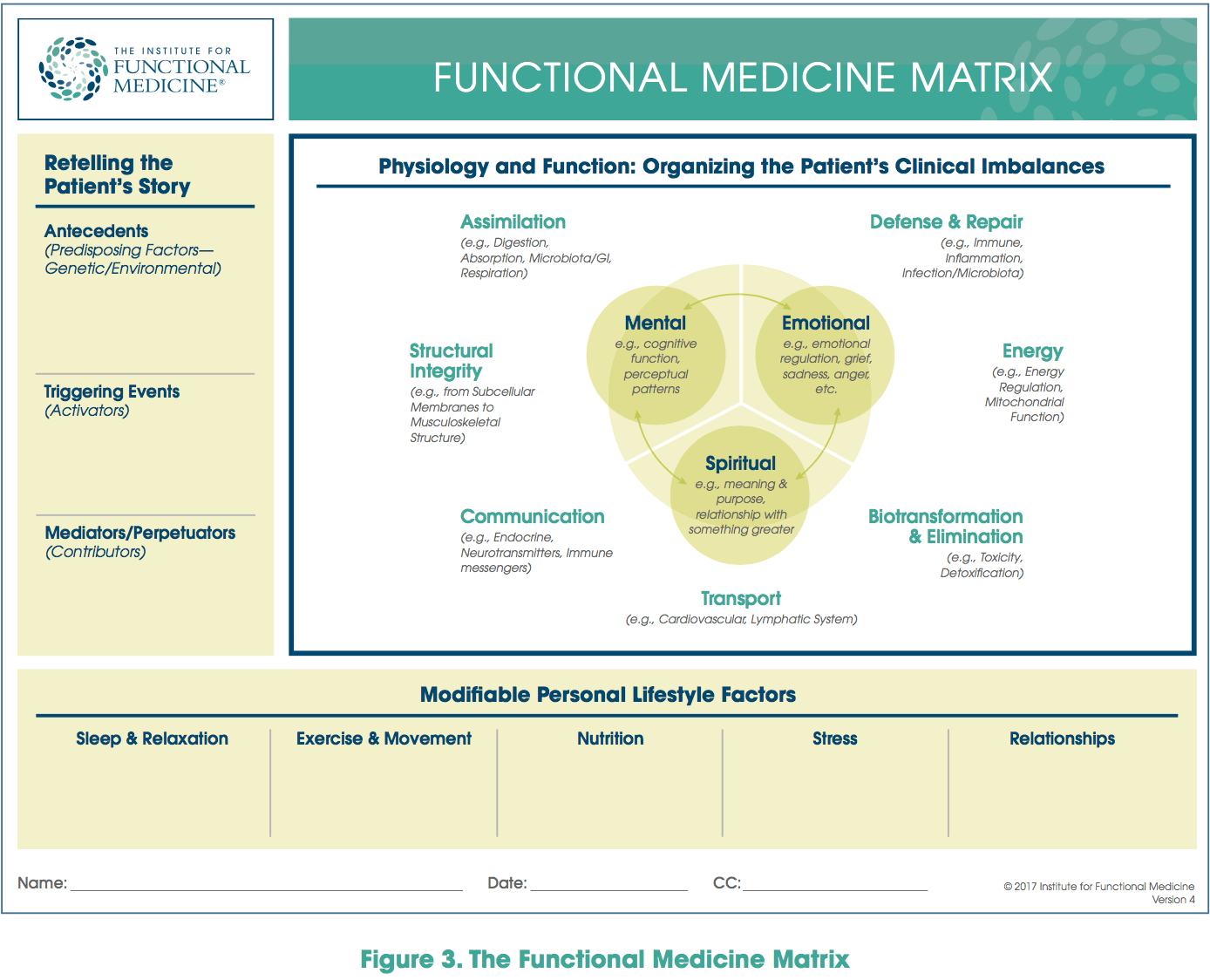
Systems Biology-Based Approach: Functional Medicine uses systems biology to understand and identify how core imbalances in specific biological systems can manifest in other parts of the body. Rather than an organ systems-based approach, Functional Medicine addresses core physiological processes that cross anatomical boundaries including: assimilation of nutrients, cellular defense and repair, structural integrity, cellular communication and transport mechanisms, energy production, and biotransformation.The �Functional Medicine Matrix� is the clinician�s key tool for understanding these network effects and provides the basis for the design of effective multimodal treatment strategies.
Patient-Centered and Directed: Functional Medicine practitioners work with the patient to find the most appropriate and acceptable treatment plan to correct, balance, and optimize the fundamental underlying issues in the realms of mind, body, and spirit. Beginning with a detailed and personalized history, the patient is welcomed into the process of exploring their story and the potential causes of their health issues. Patients and providers work together to determine the diagnostic process, set achievable health goals, and design an appropriate therapeutic approach.
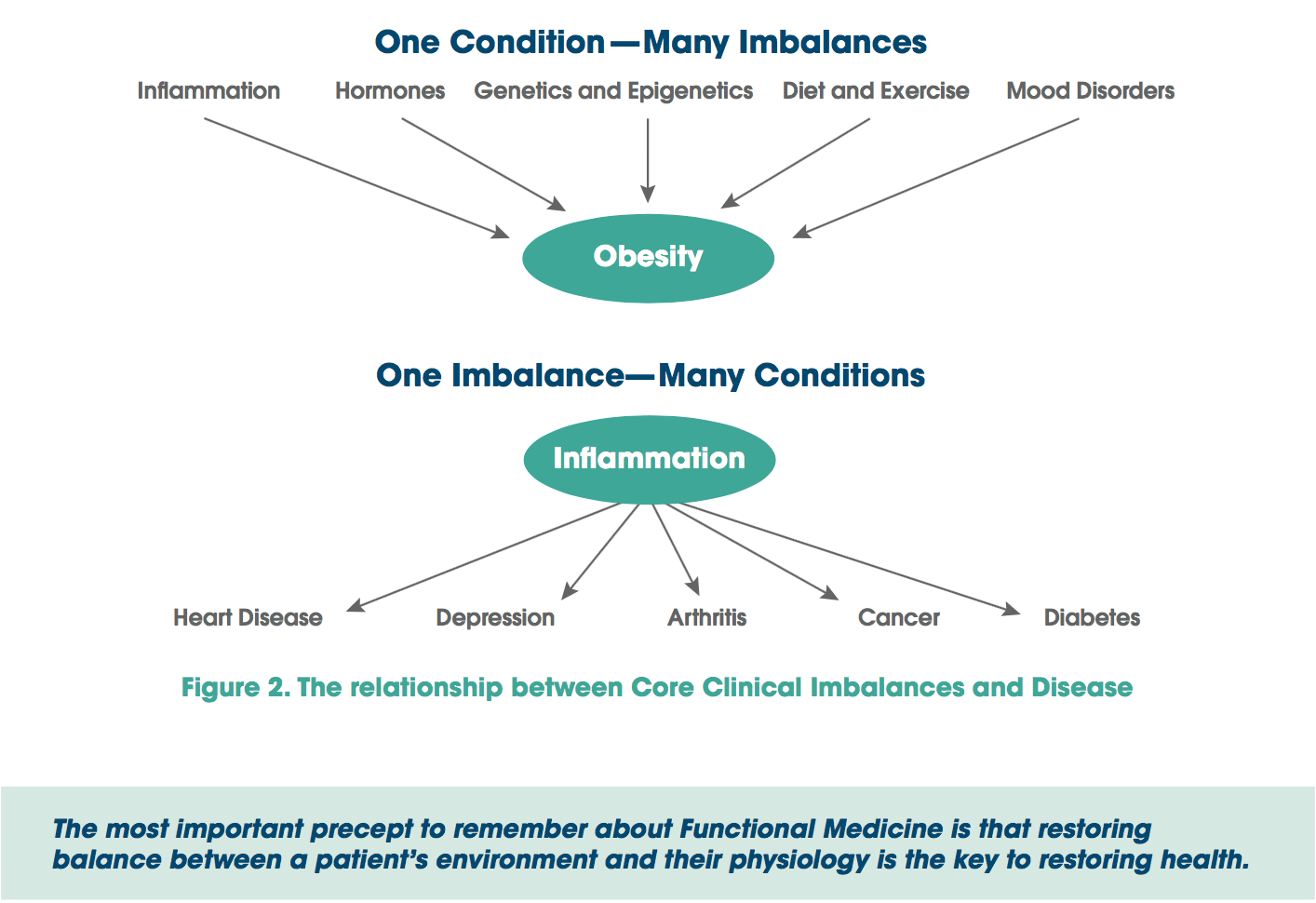
To assist clinicians in understanding and applying Functional Medicine, IFM has created a highly innovative way of representing the patient�s signs, symptoms, and common pathways of disease. Adapting, organizing, and integrating into the Functional Medicine Matrix the seven biological systems in which core clinical imbalances are found actually creates an intellectual bridge between the rich basic science literature concerning physiological mechanisms of disease and the clinical studies, clinical diagnoses, and clinical experience acquired during medical training.These core clinical imbalances serve to marry the mechanisms of disease with the manifestations and diagnoses of disease.
Structural integrity: sub-cellular membranes to musculoskeletal integrity
Using this construct, it is possible to see that one disease/condition may have multiple causes (i.e., multiple clinical imbalances), just as one fundamental imbalance may be at the root of many seemingly disparate conditions (see Figure 2).
Constructing The Model & Putting It Into Practice
The scientific community has made incredible strides in helping practitioners understand how environment and lifestyle, interacting continuously through an individual�s genetic heritage, psychosocial experiences, and personal beliefs, can impair one or all of the seven core clinical imbalances. IFM has developed concepts and tools that help to collect, organize, and make sense of the data gathered from an expanded history, physical exam, and laboratory evaluation, including:
The GOTOIT system, which presents a logical method for eliciting the patient�s whole story and ensuring that assessment and treatment are in accord with that story:
G = Gather Information
O = Organization Information
T = Tell the Complete Story Back to the Patient
O = Order and Prioritize
I = InitiateTreatment
T = Track Outcomes
The Functional Medicine Timeline, which helps to connect key events in the patient�s life with the onset of symptoms of dysfunction.
The Functional Medicine Matrix, which provides a unique and succinct way to organize and analyze all of a patient�s health data (see Figure 3).
The patient�s lifestyle influences are entered across the bottom of the Matrix, and the Antecedents,Triggers, and Mediators (ATMs) of disease/dysfunction are entered in the upper left corner.The centrality of the patient�s mind, spirit, and emotions, with which all other elements interact, is clearly shown in the figure. Using this information architecture, the clinician can create a comprehensive snapshot of the patient�s story and visualize the most important clinical elements of Functional Medicine:
1. Identifying each patient�s ATMs of disease and dysfunction.
2. Discovering the factors in the patient�s lifestyle and environment that influence the expression of health or disease.
3. Applying all the data collected about a patient to a matrix of biological systems, within which disturbances in function originate and are expressed.
4. Integrating all this information to create a comprehensive picture of what is causing the patient�s problems, where they are originating, what has influenced their development, and�as a result of this critical analysis�where to intervene to begin reversing the disease process or substantially improving health.
A Functional Medicine treatment plan may involve one or more of a broad range of therapies, including many different dietary interventions (e.g., elimination diet, high phytonutrient diversity diet, low glycemic-load diet), nutraceuticals (e.g., vitamins, minerals, essential fatty acids, botanicals), and lifestyle changes (e.g., improving sleep quality/quantity, increasing physical activity, decreasing stress and learning stress management techniques, quitting smoking). Nutrition is so vital to the practice of Functional Medicine that IFM has established a core emphasis on Functional Nutrition and has funded the development of a set of unique, innovative tools for developing and applying dietary recommendations.
Scientific support for the Functional Medicine approach to treatment can be found in a large and rapidly expanding evidence base about the therapeutic effects of nutrition (including both dietary choices and the clinical use of vitamins, minerals, and other nutrients such as sh oils)13,15,15; botanicals16,17,18; exercise19 (aerobics, strength training, flexibility); stress management 20; detoxification 21,22,23; acupuncture�24,25,26; manual medicine (massage, manipulation)27,28,29; and mind/body techniques 30,31,32 such as meditation, guided imagery, and biofeedback.
All of this work is done within the context of an equal partnership between the practitioner and patient.The practitioner engages the patient in a collaborative relationship, respecting the patient�s role and knowledge of self, and ensuring that the patient learns to take responsibility for their own choices and for complying with the recommended interventions. Learning to assess a patient�s readiness to change and then providing the necessary guidance, training, and support are just as important as ordering the right lab tests and prescribing the right therapies.
Summary
The practice of Functional Medicine involves four essential components: (1) eliciting the patient�s complete story during the Functional Medicine intake; (2) identifying and addressing the challenges of the patient�s modifiable lifestyle factors and environmental exposures; (3) organizing the patient�s clinical imbalances by underlying causes of disease in a systems biology matrix framework; and (4) establishing a mutually empowering partnership between practitioner and patient.
A great strength of Functional Medicine is its relevance to all healthcare disciplines and medical specialties, any of which can�to the degree allowed by their training and licensure�apply a Functional Medicine approach, using the Matrix as a basic template for organizing and coupling knowledge and data. In addition to providing a more effective approach to preventing, treating, and reversing complex chronic disease, Functional Medicine can also provide a common language and a uni ed model that can be applied across a wide variety of health professions to facilitate integrated care.
Functional Medicine is playing a key role in the effort to solve the modern epidemic of chronic disease that is creating a health crisis both nationally and globally. Because chronic disease is a food- and lifestyle-driven, environment- and genetics-influenced phenomenon, we must have an approach to care that integrates all these elements in the context of the patient�s complete story. Functional Medicine does just that and provides an original and creative approach to the collection and analysis of this broad array of information. Using all the concepts and tools that IFM has developed, Functional Medicine practitioners contribute vital skills for treating and reversing complex, chronic disease.
References
1 Centers for Disease Control and Prevention. Accessed April 14, 2017, https://www.cdc.gov/chronicdisease.
2 Centers for Medicare & Medicaid Services. NHE Fact Sheet. Accessed April 14, 2017, https://www.cms.gov/research-statistics-data-and-systems/statisticstrends-and-reports/nationalhealthexpenddata/nhe-fact-sheet.html.
3 DeVol R, Bedroussian A. An unhealthy America: the economic burden of chronic disease�charting a new course to save lives and increase productivity and economic growth. Milken Institute; 2007. Accessed April 14, 2017, http://assets1c.milkeninstitute.org/assets/Publication/ResearchReport/PDF/chronic_disease_report.pdf.
4 Bodenheimer T, Chen E, Bennett H. Confronting the growing burden of chronic disease: can the U.S. health care workforce do the job? Health Aff. 2009;28(1):64-74. doi: 10.1377/hlthaff.28.1.64.
5 Bureau of Labor Education, University of Maine. The U.S. Health Care System: Best in the World, Or Just the Most Expensive? 2001. Accessed April 14, 2017, http://www.suddenlysenior.com/pdf_files/U.S.healthcare.pdf.
6 Radley DC, McCarthy D, Hayes SL. Aiming higher: results from the Commonwealth Fund scorecard on state health system performance (2017 ed.). The Commonwealth Fund; 2017. Accessed April 14, 2017, http://www.commonwealthfund.org/interactives/2017/mar/state-scorecard/.
7 Jones DS, Hofmann L, Quinn S. 21st century medicine: a new model for medical education and practice. Gig Harbor, WA: The Institute for Functional Medicine; 2011.
8 Jones DS, Hofmann L, Quinn S. 21st century medicine: a new model for medical education and practice. Gig Harbor, WA: The Institute for Functional Medicine; 2009.
9 Willett WC. Balancing life-style and genomics research for disease prevention. Science. 2002; 296(5568):695-97. doi: 10.1126/science.1071055.
10 Thorpe KE, Florence CS, Howard H, Joski P. The rising prevalence of treated disease: effects on private health insurance spending. Health Aff. 2005;Suppl Web Exclusives: W5-317-W5-325. doi: 10.1377/hlthaff.w5.317.
11 Heaney RP. Long-latency deficiency disease: insights from calcium and vitamin D. Am J Clin Nutr. 2003;78(5):912-9.
12 Lazarou J, Pomeranz BH, Corey PN. Incidence of adverse drug reactions in hospitalized patients: a meta-analysis of prospective studies. JAMA. 1998; 279(15):1200-05.
13 Ames BN, Elson-Schwab I, Silver EA. High-dose vitamin therapy stimulates variant enzymes with decreased coenzyme binding affinity (increased K(m)): relevance to genetic disease and polymorphisms. Am J Clin Nutr. 2002;75(4):616-58.
14 Lands B. Prevent the cause, not just the symptoms. Prostaglandins Other Lipid Mediat. 201;96(1-4):90-3. doi: 10.1016/j.prostaglandins.2011.07.003.
15 Sofi F, Abbate R, Gensini GF, Casini A. Accruing evidence on benefits of adherence to the Mediterranean diet on health: an updated systematic review and meta-analysis. Am J Clin Nutr. 2010;92(5):1189-96. doi: 10.3945/ajcn.2010.29673.
16 Mulrow C, Lawrence V, Jacobs B, et al. Milk thistle: effects on liver disease and cirrhosis and clinical adverse effects (No. 21). Rockville, MD: Agency for Healthcare Research and Quality; 2000. Accessed April 14, 2017, http://www.pkids.org/files/milkthistle.pdf.
17 National Center for Complementary and Integrative Health. Green Tea; 2016. Accessed April 14, 2017, https://nccih.nih.gov/health/greentea.
18 National Center for Complementary and Integrative Health. St. John�s Wort; 2016. Accessed April 14, 2017, https://nccih.nih.gov/health/stjohnswort/ataglance.htm.
19 McArdle WD, Katch EI, Katch VL. Exercise Physiology: Energy, Nutrition, and Human Performance. Philadelphia: Lippincott Williams and Wilkins; 2001.
20 McCraty R, Childre D. Coherence: bridging personal, social, and global health. Altern Ther Health Med. 2010;16(4):10-24.
21 Yi B, Kasai H, Lee HS, Kang Y, Park JY, Yang M. Inhibition by wheat sprout (Triticum aestivum) juice of bisphenol A-induced oxidative stress in young women. Mutat Res. 2011;724(1-2):64-68. doi: 10.1016/j.mrgentox.2011.06.007.
22 Johnson CH, Patterson AD, Idle JR, Gonzalez FJ. Xenobiotic metabolomics: major impact on the metabolome. Annu Rev Pharmacol Toxicol. 2012;52:37-56. doi: 10.1146/annurev-pharmtox-010611-134748.
23 Scapagnini G, Caruso C, Calabrese V. Therapeutic potential of dietary polyphenols against brain ageing and neurodegenerative disorders. Adv Exp Med Biol. 2010;698:27-35.
24 Colak MC, Kavakli A, Kilin� A, Rahman A. Postoperative pain and respiratory function in patients treated with electroacupuncture following coronary surgery. Neurosciences (Riyadh). 2010;15(1):7-10.
25 Cao H, Pan X, Li H, Liu J. Acupuncture for treatment of insomnia: a systematic review of randomized controlled trials. J Altern Complement Med. 2009;15(11):1171-86. doi: 10.1089/acm.2009.0041.
26 Lee A, Fan LT. Stimulation of the wrist acupuncture point P6 for preventing postoperative nausea and vomiting. Cochrane Database Syst Rev. 2009;15(2):CD003281. doi: 10.1002/14651858.
27 Rubinstein SM, Leboeuf-Yde C, Knol DL, de Koekkoek TE, Pfeifle CE, van Tulder MW. The benefits outweigh the risks for patient undergoing chiropractic care for neck pain: a prospective, multicenter, cohort study. J Manipulative Physiol Ter. 2007;30(6):408-1. doi: 10.1016/j.jmpt.2007.04.013.
28 Beyerman KL, Palmerino MB, Zohn LE, Kane GM, Foster KA. Efficacy of treating low back pain and dysfunction secondary to osteoarthritis: chiropractic care compared to moist heat alone. J Manipulative Physiol Ther. 2006;29(2):107-14. doi: 10.1016/j.jmpt.2005.10.005.
29 Kshettry VR, Carole LF, Henly SJ, Sendelbach S, Kummer B. Complementary alternative medical therapies for heart surgery patients: feasibility, safety, and impact. Ann Thorac Surg. 2006;81(1):201-5. doi: 10.1016/j.athoracsur.2005.06.016.
30 Ornish D, Magbanua MJM, Weidner G, et al. Changes in prostate gene expression in men undergoing an intensive nutrition and lifestyle intervention. PNAS. 2008;105(24):8369-74. doi: 10.1073/pnas.0803080105.
31 Xiong GL, Doraiswamy PM. Does meditation enhance cognition and brain plasticity? Ann NY Acad Sci. 2009;1172:63-9. doi: 10.1196/annals.1393.002.
32 H�lzel BK, Carmody J, Vangel M, et al. Mindfulness practice leads to increases in regional brain gray matter density. Psychiatry Res. 2011;191(1):36-43. doi: 10.1016/j.pscychresns.2010.08.006.
The benefits that come from a ketogenic diet are much like those of any strict low-carb diet. The effect may be greater since protein is significantly more restricted. This raises ketones more, and reduces insulin (the fat-storing hormone).
Weight Loss
Turning your body to some fat-burning machine has clear benefits for weight loss. Fat burning is significantly increased while insulin, the hormone that focuses on fat-storing, drops considerably. This produces the perfect circumstances.
About 20 scientific research of the maximum category (RCTs) reveal that, compared to other diets, low-fat and ketogenic diets result in more effective weight reduction.
Reverse Type 2 Diabetes
A ketogenic diet is excellent for reversing type 2 diabetes, because it lowers blood-sugar levels as well as also helping to reverse the negative effect of elevated insulin levels from this condition.
Improved Mental Focus
Ketosis ends in a steady stream of gas (ketones) to the brain. And on a ketogenic diet you stay away from swings in blood glucose. This contributes to the experience of concentration and attention.
A lot of people use keto diets specifically for improved mental performance. Interestingly, there is a frequent misperception that eating a great deal of carbs6 is necessary for proper brain functioning. When ketones aren’t available but this is only true.
Following a couple of times (up to a week) of keto adaptation, through that people can experience some difficulty concentrating, have headaches and be easily irritated, both the human body and mind can run smoothly on ketones.
Inside this state, lots of men and women experience more energy and enhanced mental focus.
Increased physical endurance
Ketogenic diets may vastly increase your physical endurance, by giving you constant access to all of the energy of your own fat stores.
The body’s source of stored carbohydrates (glycogen) only lasts for a few hours of intense exercise, or less. But your fat stores hold sufficient energy to easily last for weeks or perhaps months.
When you’re accommodated to burning primarily carbs — like most individuals are now — that your fat stores aren’t readily accessible, and they can not fuel your brain. This results in needing to fill up by eating before, during and after exercise sessions that are longer. Or even simply to fuel your everyday activities and prevent “hanger” (hungry and irritable). On a ketogenic diet this dilemma is solved. As the body and brain can be fueled 24/7 from the stores that are powerful, you can keep going.
Whether you are competing in a bodily endurance event, or just trying to remain focused on reaching some other target, your body gets the fuel it needs to keep you going and going.
Two Problems
So how is it possible that the majority of people feel that carbohydrates are essential to do exercise? There are just two reasons. Not, and to unlock the power of ketogenic diets for bodily endurance rather suffer reduced performance, you’ll need:
Enough fluid and salt
Fourteen days of adaptation into burning fat — it does not happen immediately
Metabolic Syndrome
There are many studies demonstrating that low-carb diets improve markers of metabolic syndrome, such as blood lipids, insulin levels, HDL-cholesterol, LDL particle size and fasting blood sugar levels. Improvements have been demonstrated to be greater when carbs and protein are limited to some the point of becoming.
Epilepsy
The ketogenic diet is a proven medical therapy for epilepsy that’s been utilized since the 1920s. Traditionally it has been used in children with uncontrolled epilepsy despite drugs.
More recently it has also been tested successfully by adults with epilepsy, with similar good results. There are randomized controlled trials that demonstrate the potency of the ketogenic diet in seizures in patients with epilepsy.
Employing a ketogenic diet in epilepsy is that usually enables people to take less anti-epileptic drugs, while staying seizure-free. It is not uncommon to even be in a position to completely stop taking these drugs.
As a number of medications have side effects, such as nausea, reduced concentration, personality changes or even reduced IQ — being able to shoot less or no medications can be enormously beneficial.
More Prevalent Advantages
The advantages will be the most frequent ones. However there are many others that are potentially even more unexpected and, at least for some people, lifechanging.
The scope of our information is limited to chiropractic and spinal injuries and conditions. To discuss options on the subject matter, please feel free to ask Dr. Jimenez or contact us at 915-850-0900 .�
By Dr. Alex Jimenez
Additional Topics: Wellness
Overall health and wellness are essential towards maintaining the proper mental and physical balance in the body. From eating a balanced nutrition as well as exercising and participating in physical activities, to sleeping a healthy amount of time on a regular basis, following the best health and wellness tips can ultimately help maintain overall well-being. Eating plenty of fruits and vegetables can go a long way towards helping people become healthy.
A ketogenic diet, or keto diet, is a diet, which turns your system into a fat-burning machine. It has some initial side effects towards health and functionality, as well as many advantages for weight loss.
A ketogenic diet is comparable to other rigorous low-carb diets, like the Atkins diet plan or LCHF (low carb, higher fat). These diets wind up being ketogenic more or less by accident. The main difference between LCHF and keto is that protein is restricted in the latter.
A keto diet plan is made specifically to lead to ketosis. It’s possible to measure and adapt to achieve optimal ketone amounts for wellness or for bodily and psychological performance. Below, you can learn how to use keto to achieve your personal goals.
What is Ketosis?
The keto in a ketogenic diet stems in the fact that it leaves the body to create small fuel molecules known as ketones. This is an alternate fuel for your body, used when blood sugar (glucose) is in short supply.
Ketones are produced if you eat hardly any carbs (that are quickly broken down into blood sugar) and only moderate levels of protein (excess protein can also be converted to blood sugar). Ketones are produced in the liver, from fat. They are then used throughout the entire body as fuel. The brain is an organ which requires a lot of energy to function and fat can’t be used for energy by it. The brain can only run on glucose or ketones.
On a ketogenic diet your entire body switches its fuel source to operate almost entirely on fat. Insulin levels become very low and fat burning increases dramatically. It becomes easy to get into your fat stores to burn them off. If you are trying to drop weight, this is obviously excellent, but in addition, there are other benefits, such as less appetite and a continuous supply of energy.
Once the body produces ketones, it’s supposedly in ketosis. The quickest way to get there is by fasting, not eating anything, but obviously, it is not feasible to fast. A ketogenic diet, on the other hand, can be eaten forever and also results in ketosis. Without even having to fast, it has many of the benefits of fasting. including weight loss.
What to Eat on a Ketogenic Diet
Here are typical foods to enjoy on a ketogenic diet. The amounts are net carbs per 100 g. To remain in ketosis, lower is generally better:
The most essential thing to achieve ketosis is to stay away from eating most carbohydrates. You will need to keep intake ideally under 20 grams but under 50 grams per day of carbs is accepted. The fewer carbs the more successful.
Try to avoid
Here is what you shouldn’t eat on a keto diet, meals full of sugar and starch, including starchy foods such as bread, rice, pasta and potatoes. These foods are much higher in carbohydrates, as you can see.
The amounts are g of digestible carbs per 100 g (3.5 oz), unless otherwise noticed.
This usually means you will want to completely prevent sweet sugary foods, also starchy foods such as bread, pasta, rice and potatoes. Basically follow the guidelines to get a diet that is low-carb that is rigorous, and remember it is assumed to be full of fat, not high in protein.
A rough guideline is under 10 percent energy from carbs (the fewer carbs, the more successful), 15 to 25 percent protein (the lower end is more successful), and 70 percent or more from fat.
What to Drink on a Ketogenic Diet
So what do you drink on a keto diet? Water is ideal, and so is tea or coffee. Use no additives. A small amount of milk or cream is OK (but beware of caffe latte!) . The glass of wine is fine.
How Low is Keto?
The fewer carbohydrates you consume, the larger the effects on fat and blood sugar will be. A keto diet is a strict low-carb diet, and consequently highly effective.
We recommend following the dietary advice as strictly as you can. When you are contented with your weight and health, you might carefully try eating more liberally (if you would like to).
The scope of our information is limited to chiropractic and spinal injuries and conditions. To discuss options on the subject matter, please feel free to ask Dr. Jimenez or contact us at 915-850-0900 .�
By Dr. Alex Jimenez
Additional Topics: Wellness
Overall health and wellness are essential towards maintaining the proper mental and physical balance in the body. From eating a balanced nutrition as well as exercising and participating in physical activities, to sleeping a healthy amount of time on a regular basis, following the best health and wellness tips can ultimately help maintain overall well-being. Eating plenty of fruits and vegetables can go a long way towards helping people become healthy.
There’s been a lot of discussion about the advantages of intermittent fasting (IF) in the community lately. Paul Jaminet mentions its role in the function of the metabolism as well as it’s role in boosting the immune system. In his novel, Health Diet, he discusses how IF may be helpful for those attempting to shed weight, among other benefits.
Intermittent fasting is an eating pattern where you cycle between times of fasting and eating. It does not state anything about which foods to eat, but instead when they should be eaten by you. There are numerous different fasting methods, all of that which split the days and weeks to eating intervals and fasting intervals.
Most people fast; daily, while they sleep. Fasting is often as easy as stretching that. You can drink water, coffee, tea and other non-caloric drinks, although no food is permitted during the fasting period. Some forms of intermittent fasting allow small amounts of low-calorie foods . Taking supplements is generally allowed while fasting, as long as there are no calories in them.
From an evolutionary perspective, intermittent fasting has been likely the ordinary state of affairs. There were no restaurants, no grocery stores or convenience stores, and food was not nearly as readily accessible or easy to come by as it is today. Nor were there watches, lunch breaks, programs or the sort of construction and routine we have in today’s world. This means it is very likely that our paleo ancestors had days when they ate lightly or did not eat, and possibly did move 12-16 hours between meals on a regular basis.
Therefore, while intermittent fasting is a part of our legacy, and that it can be useful in certain situations, Its not believed to be a suitable strategy for everyone. Why? Because cortisol levels can be elevated due to fasting. One of cortisol’s effects is that it raises blood glucose. In someone with blood glucose regulation difficulties, fasting can make them worse.
This has been seen again and again with many patients. Many patients have blood sugar imbalances. And it is usually not as straightforward as “high blood sugar” or “low blood sugar”. They frequently have a combination of both (reactive hypoglycemia), or strange blood sugar patterns which, on the outside, do not make much sense. These folks are not currently eating a Standard American Diet. Most of them are on a paleo-type or low-carb dietplan. Yet they have blood sugar issues.
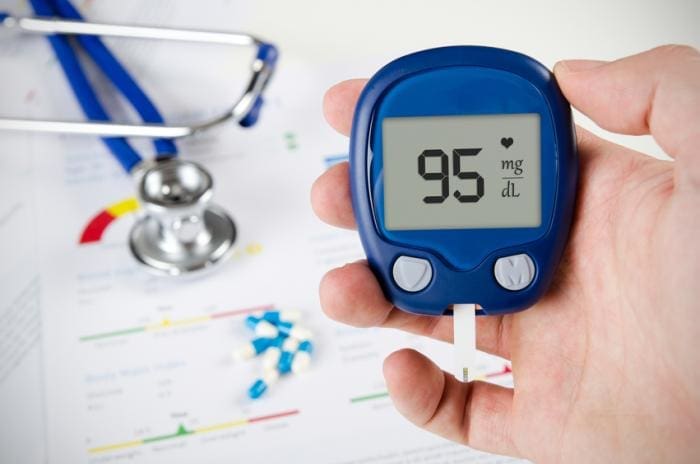
In these cases, cortisol dysregulation is almost always the culprit. Whenever these patients try fasting, their blood sugar management gets worse. Its been frequently observed that blood sugar readings in the 90s and even low 100s are recorded from fasting, in spite of the fact that they are eating a low-carb, paleo-type diet.
That’s why intermittent fasting is often not recommended for those who have blood sugar regulation issues. Instead, its suggested that they eat every 2-3 hours. This helps to maintain stable blood sugar during the day and prevents cortisol and other stress hormones like epinephrine and norepinephrine from becoming involved. When patients that have been fasting and experiencing high blood sugar readings switch to eating this way, their blood sugar numbers almost always hastens.
There’s a controversial standpoint about how eating every 2-3 hours is “normal” in the evolutionary view. But neither is driving in traffic or staying up till 2:00am on Facebook. It’s not a set of rules, although the paleo template is there to direct us. This should also be a reminder that there’s no “one size fits all” approach when it comes to healthcare. Successful therapy depends on addressing them and identifying the underlying mechanisms.
The scope of our information is limited to chiropractic and spinal injuries and conditions. To discuss options on the subject matter, please feel free to ask Dr. Jimenez or contact us at 915-850-0900 .�
By Dr. Alex Jimenez
Additional Topics: Wellness
Overall health and wellness are essential towards maintaining the proper mental and physical balance in the body. From eating a balanced nutrition as well as exercising and participating in physical activities, to sleeping a healthy amount of time on a regular basis, following the best health and wellness tips can ultimately help maintain overall well-being. Eating plenty of fruits and vegetables can go a long way towards helping people become healthy.
Intermittent fasting is not a diet, but a diet program that is supposed to accelerate fat loss and muscle development compared to traditional eating schedules. It is promoted primarily from the scientific community, however, there are no scientific research (as of February 2014) who have affirmed intermittent fasting to gaining muscle while losing weight.
With metabolic restriction, intermittent fasting may lead to weight reduction. In a recent review (Varady, 2011) and a recent randomized clinical trial (Harvie et al., 2011), many writers concluded that intermittent fasting and daily caloric restriction are equally effective at promoting weight loss in overweight and obese individuals. No research to date has been performed with athletes that require upkeep of strength, muscular size, and function.
Intermittent Fasting Approach & Scientific Support
There have been many suggested methods for intermittent fasting, from skipping a single meal daily to eating only every other day. The majority of these diets are encouraged through webpages, blogs, and books published by exercise and diet enthusiasts.
Up to now, regardless of the focused marketing of intermittent fasting into the athletic community, there are just a few well-controlled, scientific research exploring the effects of intermittent fasting on the body composition and performance in athletes. Currently, the majority of the scientific evidence for the health benefits of intermittent fasting has arrived from animal studies (Longo and Mattson, 2014) and the unwanted effects of intermittent fasting have originated from Muslim athletes throughout Ramadan (review: (Chaouachi et al., 2009), both with restricted ability to be translated into the overall athletic community. Even more and more human research have been conducted to confirm claims discovered in animals, many studies have been with patients with a certain illness or condition (ex. Rheumatoid arthritis, hypertension, and obesity) rather than in healthy, energetic individuals.
Similarities Among Strategies
The different intermittent fasting approaches tend to emphasize their differences (and therefore purported superiority) however, there are also many similarities. Among the advantages of the form of caloric control is that it allows people. Instead of linking “appetite” with “panic” or even “want” (Ganley 1989), “hunger” can theoretically be newly associated with “achievement” or “pride”, or simply dismissed.
Really, with any method, there’s a critical transition period of approximately 3-6 weeks through which the human body and mind adapt to the new eating schedule (Longo and Mattson, 2014). This period can be extremely uncomfortable, as restricted eating was anecdotally associated with intense hunger, irritability, loss of stamina, loss of libido, along with other unwanted side effects (Dirks and Leeuwenburgh 2006; Johnstone 2007; Heilbronn, Smith, et al. 2005). When the body is accustomed, however, the hunger levels may decrease and disposition might become more favorable in contrast to prior to the program began. Elevated mood and diminished hunger on caloric restrictive diets are noted in some (Wing et al. 1991) although not all (ex. (Heilbronn, Smith, et al., 2005) research.
Intermittent fasting isn’t a weight loss program per se; only if calories are restricted will somebody lose weight. Although intermittent fasting is one way to limit intake of total calories to achieve weight loss (Varady et al., 2009; Varady, 2011; Harvie et al., 2011), there have not been any studies to date on athletes who prioritize maintenance of muscle size and strength. In actuality, there are conflicting views on whether intermittent caloric limitation. daily calorie restriction greatest maintain lean muscle mass (Varady, 2011; Johnstone, 2007).
All of these approaches emphasize the value of the nutritional quality of the meals that are consumed. Nutrients like fiber, fat, protein, vitamins, and minerals are crucial for good health and, because nutrients aren’t consumed while fasting, they are especially important when breaking the fast. Additionally, drinking a lot of water has been encouraged both to stay hydrated and to alleviate hunger. John Berardi of Precision Nutrition (see “More info”) allows green powders, green tea, and branched chain amino acids during his quick, but it’s unknown how these supplements influence appetite, energy levels, muscle synthesis/breakdown, or the general advantages of intermittent fasting.
Exercising and Intermittent Fasting
All intermittent fasting approaches can be damaging to athletic gains for several reasons. To begin with, meals in close proximity to your workout are essential for optimal performance, healing, and muscle gain (Aragon and Schoenfeld, 2013). Secondly, greater appetite sensations can hinder compliance in addition to increase the potential to over-consume meals when it becomes available (Hawks and Gas,t 1998). Despite the frequent belief that you will burn off more fat if you exercise while firming, performing aerobic exercise in the fasted state is not recommended (review: (Schoenfeld 2011)). Actually:
Performing aerobic exercise following consuming carbohydrates doesn’t hinder fat oxidation (Febbraio et al., 2000; p Bock et al., 2008),
Performing aerobic exercise fasted will also promote reduction of lean muscle mass, since muscle will be burned for fuel (Lemon and Mullin, 1980),
Exercising at a fasted state often does not result in an optimal exercise. In contrast, having readily available energy will allow optimal performance that will burn off more calories overall and lead to the Greatest gains (Loy et al., 1986; Schabort et al., 1999),
Exercising at the fasted condition, fed state reduces static and dynamic balance and can increase the risk of harm (Johnson and Leck, 2010).
There are fewer studies investing the effects of doing resistance training in the fasted vs. fed state, but it is anticipated that the same points hold true.
Intermittent fasting recommends consuming at least 5 grams BCAAs before a workout when exercising during your fasting period. There’s no proof substantiating that claim, although this bolus of BCAAs in your blood flow theoretically could help maintain muscle protein throughout the exercise. In one study, a BCAA infusion prior to a workout in the fasted state failed to enhance performance in one set of individuals onto a rated incremental exercise test (Varnier et al., 1994). So that you can enjoy a complete meal that is post-workout advocates also advise to program your schedule, but they tend to dismiss the importance for pre-workout nourishment.
As you can see, all diet programs share a frequent theme of compartmentalizing “fasting” and “eating” periods. Because there is no one method that’s best so many versions of those diets exist. Further, some individuals who attempt fasting use a hybrid of present approaches to discover a technique that is successful.
Most importantly, intermittent fasting isn’t suggested for pregnant women, women that are breastfeeding, people with diabetes, or other people who wish to closely regulate their blood sugar. In addition, there has not been a study on participants that are underweight, very old, or very young.
The scope of our information is limited to chiropractic and spinal injuries and conditions. To discuss options on the subject matter, please feel free to ask Dr. Jimenez or contact us at 915-850-0900 .�
By Dr. Alex Jimenez
Additional Topics: Wellness
Overall health and wellness are essential towards maintaining the proper mental and physical balance in the body. From eating a balanced nutrition as well as exercising and participating in physical activities, to sleeping a healthy amount of time on a regular basis, following the best health and wellness tips can ultimately help maintain overall well-being. Eating plenty of fruits and vegetables can go a long way towards helping people become healthy.
Though the truth has a tendency to get distorted by time, diet and exercise tendencies have origins in science. Benefits are exaggerated. Hazards are downplayed. Meanwhile science takes a back seat to marketing.
An individual need not look any farther than the emerging tendency of intermittent fasting for a prime illustration. Advocates for taking breaks from eating, for up to 24 hours a week, tout it as a safe and effective method for improving health and wellness. That message has been reaching more and more ears as of late.
“Right now, we are in a vital juncture for fasting,” states Brad Pilon, an expert on occasional fasting and author of the novel Eat Stop Eat. “It’s becoming extremely popular.”
Intermittent Fasting: Know the Facts
Such may become so popular, in fact, that it’s moving into trend territory, indicates Pilon. And if something becomes a fad, only for a short period although intensely popular, several problems normally ensue. For one, he states, nutrition experts and many doctors have a tendency toward dismissing fads from hand. So clients and their patients, while shielded from the claims of dieting evangelists that are overzealous, can lose out on the advantages of fasting right.
Yet another concern is that promoters of intermittent fasting will, perhaps unintentionally, encourage extreme behaviour, such as bingeing. This is reflected in the photos accompanying many recent new articles on “the fast diet” or even the “5:2 diet.” Often, they portray people eating loads of high-calorie, high-fat foods, like hamburgers, french fries and cake. The implication being that if you fast two days a week, you are able to consume a lot during the remaining five days.
Not so, say more moderate proponents of fasting. Their take on intermittent fasting: eat sensibly the majority of the time, eat nothing for a protracted period every now and then, gratify only on occasion (maybe once a week, state, on a predetermined “cheat day”). There is study, they assert, to back up the health benefits of wisely.
There is indeed a large body of research to support the health benefits of fasting, although most of it has been conducted on animals, not humans. Still, the results have been promising. Fasting has been shown to improve biomarkers of illness, decrease stress and preserve memory and learning function, based on Mark Mattson, senior investigator at the National Institute on Aging, part of the US National Institutes of Health. Mattson has investigated the health advantages of intermittent fasting on the cardiovascular system and brain in rodents, also has known for “well-controlled human studies” in people “across a assortment of body mass indexes” (J Nutr Biochem 2005;16:129–37).
There are several theories about why fasting offers physiological advantages, says Mattson. “The one which we have researched a great deal, and designed experiments to examine, is the hypothesis that during the fasting period, cells are under a mild strain,” he states. “And they respond to the stress adaptively by enhancing their ability to deal with additional stressors and, possibly, to resist illness.”
Although the term “stress” is frequently used in a negative sense, taxing the body and mind has benefits. Consider exercise, which stresses, in particular, muscles and the cardiovascular system. So long as you give the body time to recover, it will grow stronger. “There is considerable similarity between how cells react to the pressure of exercise and how cells react to intermittent fasting,” says Mattson.
Additional Research: Intermittent Fasting
Mattson has contributed to several additional research on intermittent fasting and caloric restriction. In one, obese adults with moderate asthma consumed only 20% of their normal calorie intake on alternative days (Free Radical Bio Med 2007;42:665–74). Participants that stuck to the diet lost 8 percent of their initial body weight over eight months. They also found a decrease in markers of oxidative stress and inflammation, and improvement of several indicators and asthma-related symptoms.
In another study, Mattson and colleagues researched the effects of intermittent and continuous energy limitation on weight loss and various biomarkers (such as conditions such as breast cancer, diabetes and cardiovascular disease) among young obese woman (Int rheumatoid arthritis 2011;35:714–27). They discovered for improving weight loss, insulin sensitivity and other wellness biomarkers that restriction was as effective as continuous restriction.
Mattson has also investigated the protective benefits of fasting to neurons. Should youn’t eat for 10 – 16 hours, then your body will go for energy, and fatty acids called ketones will probably be released into the bloodstream. It has been demonstrated to protect memory and learning says disease processes in the mind, as well as Mattson.
But maybe it isn’t so much that the fasting that creates health benefits, per se, because the consequent overall reduction in calorie intake (if, in other words, you don’t overeat on nonfasting days, which could cause a caloric surplus rather than a deficit). That seems, at least, to be true in slowing diseases like cancer in mice, according to Dr. Stephen Freedland, associate professor of urology and pathology at the Duke University Medical Center in Durham, North Carolina.
“Caloric restriction, undernutrition without malnutrition, is the only experimental approach consistently shown to prolong survival in animal models,” Freedland and colleagues stated in a study on the effects of intermittent fasting on prostate cancer growth in mice (Prostate Cancer Prostatic Dis 2010; 13:350–5). From the study, mice fasted twice weekly for 24 hours, but were otherwise permitted to eat at liberty. During days, the mice overate. They did not lose weight. Intermittent fasting using compensatory overeating “did not enhance mouse success nor did it delay prostrate tumor growth,” the study concluded.
To improve health, the aim should be to shed weight by reducing the entire amount of calories consumed, indicates Freedland, rather than focusing on if those calories are consumed. “If you [do not] eat two days every week, and restrict what you eat another five days, you will lose weight. It is one approach to losing weight,” he says. “I am not sure it works any better than trimming down marginally seven days each week.”
People should also be skeptical of books written for wide audiences that describe the science behind fasting or another health trend, ” he says. One purpose of writing a novel for the consumer market, after all, would be to sell as many copies as you can. Authors tend to present evidence, while ignoring the facts and their impact. “It has a whole lot of spin when you compose a book.”
The scope of our information is limited to chiropractic and spinal injuries and conditions. To discuss options on the subject matter, please feel free to ask Dr. Jimenez or contact us at 915-850-0900 .�
By Dr. Alex Jimenez
Additional Topics: Wellness
Overall health and wellness are essential towards maintaining the proper mental and physical balance in the body. From eating a balanced nutrition as well as exercising and participating in physical activities, to sleeping a healthy amount of time on a regular basis, following the best health and wellness tips can ultimately help maintain overall well-being. Eating plenty of fruits and vegetables can go a long way towards helping people become healthy.
Studies have demonstrated that reducing typical calorie consumption, usually by 30 to 40 percent, extends life span by a third or more in many animals, including fruit flies, nematodes and rodents. But the jury remains out, when it comes to calorie restriction in primates and individuals.
Although some studies have suggested that primates that eat less live longer, research concluded that restriction does not extend average life span in some species of monkeys. A section of the data confirms the idea that limiting food intake reduces the dangers of diseases common in older age and lengthens the period of life spent in good health, even if the research concludes that restriction does not help people live longer.
If only one could claim those advantages without being hungry all the time. In recent years researchers have concentrated on a strategy known as intermittent fasting as a promising option to continuous calorie restriction.
Intermittent fasting, including everything from regular multi-day fasts to skipping a meal or 2 on particular days of the week, may encourage a number of the identical health benefits that uninterrupted calorie restriction promises. The idea of intermittent fasting is palatable to people since somebody does not need to renounce the joys of eating. Studies suggest that rodents live as long as rats eating foods every moment consuming fewer calories overall than they would normally.
In a 2003 mouse analysis controlled by Mark Mattson, head of the National Institute on Aging’s neuroscience lab, mice that fasted regularly were healthier by some measures than mice subjected to constant calorie limitation; they had reduced levels of glucose and insulin in their blood, by way of instance, which signified increased sensitivity to insulin and a reduced risk of diabetes.
The First Fasts
Religions have long claimed that fasting is good for the soul, but its bodily benefits weren’t widely known until the early 1900s, when doctors began recommending it to treat different disorders, such as diabetes, obesity and epilepsy.
Associated research on calorie restriction took off in the 1930’s, following Cornell University nutritionist Clive McCay found that rats exposed to stringent daily dieting in an early age lived longer and were less likely to develop cancer and other ailments as they elderly, compared with animals that ate at will. Research on calorie restriction and periodic fasting intersected in 1945, when University of Chicago scientists reported that alternate-day feeding extended the life span of rats as much as exercising in McCay experiments. Additionally, intermittent fasting “appears to delay the development of the disorders that cause death,” that the Chicago researchers wrote.
Within the upcoming decades study into anti-aging diets took a backseat to more powerful clinical advances, like the continued development of antibiotics and coronary artery bypass operation. However, researchers also have resisted the idea that intermittent fasting lowers the risks of degenerative brain diseases in later life. Mattson and his colleagues have shown that fasting protects neurons from several types of harmful stress, at least in rodents. Among the earliest studies demonstrated that alternate-day feeding made the rats’ brains as they age, that induce damage akin to the kind cells endure. In follow-up rodent research, his team discovered that fasting slows cognitive decline in mice genetically engineered to mimic the signs of Alzheimer’s, suppresses motor deficits in a mouse model of Parkinson’s disease and protects against stroke damage. The 55-year-old researcher, who has a Ph.D. in biology although not a medical degree, has written or co-authored over 700 posts.
Mattson believes that intermittent fasting functions in part as a kind of moderate stress that continually revs up mobile defenses against molecular damage. For instance, occasional fasting increases the degrees of “chaperone proteins,” which forbid the incorrect assembly of other molecules at the cell. Additionally, fasting mice have greater degrees of brain-derived neurotrophic factor (BDNF), a protein that prevents nervous nerves from dying. Low levels of BDNF are linked to Alzheimer’s, although it is still unclear whether these findings reflect cause and effect. Fasting also ramps up a sort of system in cells which eliminates damaged molecules, autophagy, including ones that have been tied to Parkinson’s, Alzheimer’s and other neurological diseases.
One of intermittent fasting’s major effects seems to be raising the body’s responsiveness to insulin, the hormone which regulates blood glucose. Sensitivity to insulin accompanies and obesity has been associated with diabetes and heart failure; people and long-lived animals tend to have unusually low insulinbecause their cells are more sensitive to the endocrine and therefore require less of it. A recent study in the Salk Institute for Biological Studies in La Jolla, Calif., revealed that mice that feasted on fatty foods for 2 hours each day and subsequently fasted for the remainder of each day did not become obese or show dangerously high insulin levels.
The idea that periodic fasting may offer some of the same health benefits as continuous calorie restriction–and allows for a few feasting while shedding down–has persuaded an increasing number of people to attempt it, says Steve Mount, a University of Maryland genetics professor who has moderated a Yahoo discussion group on intermittent fasting for more than seven decades. Intermittent fasting “isn’t a panacea–it’s always hard to lose weight,” adds Mount, who has fasted three days per week since 2004. “But the concept [that it activates the identical signaling pathways in cells as calorie restriction] makes sense.”
Further Research Still Needed
Despite the increasing excitement for intermittent fasting, scientists have conducted several powerful clinical trials, and its long term effects in people remain unclear. Still, a 1956 Spanish study sheds some light, states Louisiana-based physician James B. Johnson, who co-authored a 2006 evaluation of the research’s results. In the study, 60 men and women fasted and feasted on alternate days for 3 years. The 60 participants spent at the infirmary, and six died. Meanwhile, the 60 nonfasting seniors racked up 219 days that were infirmary, and 13 died.
In 2007 Johnson, Mattson and their colleagues published a clinical research demonstrating a quick, significant alleviation of asthma symptoms and various indications of inflammation in nine overweight asthmatics who near-fasted another day for 2 weeks.
Detracting from these promising results, however, the literature on intermittent fasting also includes several red flags. A 2011 study in rats suggests that long-term intermittent fasting raises tissue levels and blood sugar of compounds that may damage cells. In a 2010 study stiff heart tissue, which subsequently hastens the ability of the organ to pump blood was developed by occasionally fasting rats.
And a few weight-loss experts are skeptical about fasting, mentioning its hunger pangs and the possible hazards of compensatory gorging. Truly, the latest primate study on calorie restriction–the one that failed to extend life span–underscores the need for caution when altering the way people eat.
However, from an evolutionary perspective, three meals a day is a peculiar modern invention. Volatility in our ancestors’ food supplies brought on fasting–not to mention starvation and malnutrition. Yet Mattson considers that pressures that are such selected for genes that brain areas involved in learning and memory, which increased the likelihood of finding food and surviving. Intermittent fasting may be both smartening and a wise way, if he’s correct.
The scope of our information is limited to chiropractic and spinal injuries and conditions. To discuss options on the subject matter, please feel free to ask Dr. Jimenez or contact us at 915-850-0900 .�
By Dr. Alex Jimenez
Additional Topics: Wellness
Overall health and wellness are essential towards maintaining the proper mental and physical balance in the body. From eating a balanced nutrition as well as exercising and participating in physical activities, to sleeping a healthy amount of time on a regular basis, following the best health and wellness tips can ultimately help maintain overall well-being. Eating plenty of fruits and vegetables can go a long way towards helping people become healthy.
IFM's Find A Practitioner tool is the largest referral network in Functional Medicine, created to help patients locate Functional Medicine practitioners anywhere in the world. IFM Certified Practitioners are listed first in the search results, given their extensive education in Functional Medicine