Anti Aging
Back Clinic Anti Aging Chiropractic and Functional Medicine Team. Our body is in a constant and never-ending battle for survival. Cells are birthed, cells are destroyed. Scientists estimate that each cell must withstand over 10,000 individual assaults from reactive oxygen species (ROS) or free radicals. Without Fail, the body has an incredible system of self-healing that withstands the attack and rebuilds what has been damaged or destroyed. This is the beauty of our design.
To understand the biology of aging and translate scientific insight into interventions that improve late-life health through treatments. It is useful to have a clear, consensus view on what exactly constitutes anti-aging treatment.
Since before the days of Ponce de Leon’s search for longevity, man has always been enticed by the chance of eternal youth. Chiropractic care with its health movement is a powerful method of stabilizing and enhancing this self-healing ability. Dr. Alex Jimenez discusses concepts surrounding the anti-aging pandora.
.
by Dr Alex Jimenez DC, APRN, FNP-BC, CFMP, IFMCP | Anti Aging, Seniors
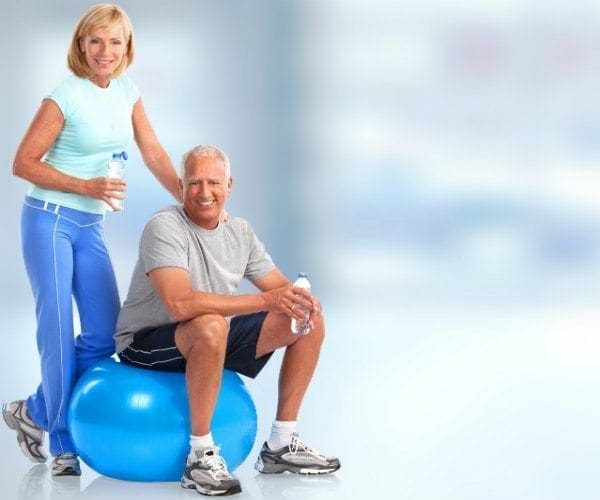
The health benefits of exercise are well-established for people of all ages. But until now, little has been known about which type of exercise best counters the aging process in senior citizens.
The answer may be high-intensity interval training, suggests a new study published in Cell Metabolism by researchers from the Mayo Clinic.
High-intensity interval training (HIIT) alternates short bursts of intense aerobic activity such as biking or walking with short periods of easing up on the same activity.
This type of exercise, which originated in Sweden, is promoted as an efficient training method that avoids the risk of injuries associated with non-stop, repetitive activity.
Compared to other types of exercise, it appears to be dramatically more effective at boosting the activity of aging cells and even reversing age-related cellular damage.
The Mayo Clinic researchers recruited 72 healthy but sedentary men and women from two age groups: “young” subjects ages 18-30 and “older” subjects ages 65-80.
The researchers conducted baseline measurements of aerobic fitness, lean muscle mass, blood-sugar levels, and insulin sensitivity. After taking biopsies from the subjects’ thighs, they also assessed genetic activity in muscle cells and the health of the energy-producing mitochondria within those cells.
As we age, mitochondrial capacity gradually deteriorates. As a result, cells become damaged and weak.
The researchers randomly assigned subjects to one of three groups:
HIIT on stationary bicycles. Three days per week, they pedaled hard for four minutes, eased up for three minutes, then repeated the sequence three more times. On other days, they did a moderate treadmill routine,
Moderate-intensity training. Three days per week, they pedaled on stationary bikes for 30 minutes. On other days, they lifted light weights.
Vigorous weight training. Participants engaged in weight lifting several times per week.
No exercise. A fourth group did not engage in organized physical activity.
After 12 weeks, the researchers found that all three exercise groups experienced significant gains in fitness and blood-sugar regulation compared to non-exercisers.
As expected, they found that the high-intensity interval training group had the biggest improvement in endurance while the weight training group had the biggest improvement in muscle mass and strength.
But they were astonished to find that high-intensity interval training was most strongly associated with age-reversing changes at the genetic and cellular levels.
In the “younger” group assigned to high-intensity interval training, the activity level changed in 274 genes. That compared to activity-level changes in 170 genes in the moderate-intensity training group and 74 genes in the weight training group.
Genetic changes were even more dramatic in the “older” group assigned to high-intensity interval training. They saw activity-level changes in nearly 400 genes. That compared to activity-level changes in only 33 genes in the weight training group and only 19 genes in the moderate-intensity training group.
High-intensity interval training had a similar effect on mitochondrial capacity: a 49 percent increase in the “younger” group and a whopping 69 percent increase in the “older” group.
This type of exercise also led to improved insulin sensitivity, which is associated with a reduced risk of diabetes.
The researchers cautioned that their primary goal was to show how exercise works at a molecular level, not to provide prescriptive exercise for seniors or anyone else. They hope to learn more about how exercise benefits different tissues in the body.
For the time being, they say that vigorous exercise remains the most effective way to bolster health.
“There are substantial basic science data to support the idea that exercise is critically important to prevent or delay aging. There’s no substitute for that,” senior author Dr. Sreekumaran Nair said in a statement.
Most experts agree that many older adults can participate in an age-appropriate high-intensity interval training program that takes into account their physical limitations.
Older adults are more likely to have an underlying health issue such as osteoporosis, arthritis, diabetes, hypertension or a history heart disease, heart attack, or stroke.
So it’s essential for them to consult with their primary care provider and take a cardio-stress test before beginning a new exercise program, especially one that involves vigorous activity.
by Dr Alex Jimenez DC, APRN, FNP-BC, CFMP, IFMCP | Anti Aging
Many nursing home residents suffering from chronic pain don’t get any medication or don’t get enough to fully relieve their symptoms, a recent U.S. study suggests.
Researchers examined data on almost 1.4 million residents in nursing homes nationwide from 2011 to 2012 and found that overall, roughly two in five had either intermittent or chronic pain.
Among the residents with persistent pain, about 6 percent received no medication at all and another 32 percent didn’t get enough drugs to properly address their symptoms, the study found.
“The good news is that we documented lower levels of untreated pain than previous studies,” said lead study author Jacob Hunnicutt of the University of Massachusetts Medical School in Worcester.
“However, pain may still be undertreated and disparities in pain management by cognitive impairment and race/ethnicity remain,” Hunnicutt said by email.
Previous studies have estimated that at least 40 percent of nursing home residents experience persistent pain, and that 20 percent of those in pain don’t get any medications, researchers note in the journal Pain.
More than 1.4 million adults live in U.S. nursing homes, including about 3 percent of people over 65 and roughly 10 percent of people over 85.
For the current study, researchers examined data on nursing home residents who spent at least 100 days in the same facility with no gaps in residency of more than 30 days.
Residents provided information on the intensity and frequency of any pain they experienced as well as any medications provided during two assessments three months apart. Participants were counted as having persistent pain if they described pain on both assessments, and intermittent pain if they only mentioned it during one of the assessments.
If residents reported pain and didn’t have any scheduled or as-needed medications noted in their medical records, researchers counted them as having untreated pain. If their records only included as-needed pain medications, researchers counted them has having potentially undertreated pain.
Non-white residents were 19 percent more likely than white residents to have undertreated or untreated pain, the study found.
In addition, residents with severe cognitive impairments were 51 percent more likely to have untreated or undertreated pain than people with only mild impairments or none at all.
One of the study authors is a consultant with the pharmacy benefits manager and drugstore chain CVS Caremark.
Limitations of the study include the lack of data on pain levels between the two assessments, the authors note. Researchers also relied on residents to accurately recall and report on their own pain levels, which can be subjective.
The study also didn’t account for patient preferences or medical histories, said Dr. Gary Winzelberg, a geriatrics researcher at the University of North Carolina School of Medicine in Chapel Hill who wasn’t involved in the study.
“It’s possible that some patients prefer not to receive pain medications and may use non-pharmacologic approaches to managing their pain,” Winzelberg said by email.
Some residents might not believe they should report being in pain or think they shouldn’t take medications. This might at least partially explain why older adults, men and residents of color were less likely to report pain and receive medications, Winzelberg added.
Residents and families can see how nursing homes compare on pain management and other quality measures online, Hunnicutt said.
To avoid untreated pain, residents and their loved ones shouldn’t be shy about speaking up, said Dr. XinQi Dong of the Rush Institute for Healthy Aging in Chicago.
“Patients and family should seek help when the pain is beginning to rise, and not to wait until pain is intolerable before asking for pain medications,” Dong, who wasn’t involved in the study, said by email.
“After adequate assessment, health care professionals should provide an adequate mixture of long acting and short acting pain medications for those with chronic and inadequately treated pain,” Dong added.

by Dr Alex Jimenez DC, APRN, FNP-BC, CFMP, IFMCP | Anti Aging
Middle-aged men jonesing for a boost in vitality are turning to steroids in increasing numbers, say researchers and health professionals. Men in their 40s, 50s — even 60s and 70s — are turning to hormones to fight the effects of aging, including weight gain and decreased libido, according to The Guardian.
Joseph Kean, a visiting research fellow at Liverpool John Moores University, said that usage has doubled in the number of men 50 and over in the past five years. He told The Guardian, “Guys are saying they just want to stand a bit taller and feel they can stand alongside the younger generation who are much more aware of how they look.”
But the vision of a buffer, more energized you comes with caveats — including the potential for worsening sleep apnea, heart disease, blood clots, and prostate complications.
Testosterone levels decline early on, starting at around age 30. This drop can lead to any number of unwanted side effects and problems, according to the National Center for Biotechnology Information at the National Institutes of Health. Low-T as it is often referred to, is responsible for much more than just weight gain and decreased sex drive. It is correlated with insulin resistance, low muscle strength and development — even poor cognitive function. So it’s a given that men would want to head off this decline and preserve their vigor for as long as possible.
“We have come across a lot of older men using [steroids]. It’s almost like hormone replacement therapy [for menopause relief] for females. Steroids can help you lose body fat as well,” Julien Baker, an applied physiology professor at the University of the West of Scotland, told The Guardian. “The evidence isn’t there about what the long-term impact is yet. We are not sure what these drugs are doing to you at that age, but everyone perceives it as safe.”
Magazines geared toward rejuvenation through hormone replacement have sprung up, as have clinics that promote testosterone replacement therapy in the United States and abroad.
The Juice Clinic in Sheffield, England, is one such service for people using steroids and image-enhancing drugs. Sid Wiffen, the clinic’s team leader, told The Guardian he has noted an increase in older men asking for help. “Steroid use for older men is often about the youthful effects, and about body image and energy levels. I hear talk of men feeling more pressure now to look good, so they are more likely to go to the gym and dress well,” he said. “It can be dangerous, and it does worry me. Lots of people we see are keen to make an informed decision about their steroid use, but some get information elsewhere and it’s not always good.”
That elsewhere includes the internet of course, where misinformation on the topic flourishes. The healthier, safer route by far is to seek the advice of a physician and get a prescription.
Steroids, officially known as anabolic-androgenic steroids, were first developed for medical use in wasting conditions. Their possession or sale without a prescription is illegal in the United States, though some people are able to get them online or in gyms. Some countries permit legal possession, including the U.K., though it is illegal to supply them there. Steroids come in pill form, injectables (intramuscular), and topical gels.
Baker said while there could be some benefits for older men, the risks should be well understood. “Introducing something your body stopped producing naturally may lead to repercussions or have health implications,” he said. “There’s not enough research out there to look at that. Someone taking steroids at 50 — it’s not clear what might happen to them in the future.”
Once users discontinue the use of steroids, many report withdrawal symptoms such as low mood and anxiety, something men should keep in mind as well.

by Dr Alex Jimenez DC, APRN, FNP-BC, CFMP, IFMCP | Anti Aging
Most people see their sleep habits shift as they age, but a new review suggests that some seniors lose the ability to get deep, restorative rest.
And that can come with health consequences, said review author Bryce Mander, a sleep researcher at the University of California, Berkeley.
Sleep “fragmentation” has been linked to a number of medical conditions, including depression and dementia, Mander said. People with fragmented sleep wake up multiple times during the night, and miss out on the deep stages of sleep.
It is true that medical conditions, or the treatments for them, can cause sleep problems, according to Mander.
But poor sleep can also contribute to disease, he added.
Take dementia, for example. Research suggests there is a “bi-directional” link between sleep disruptions and the dementia process, said Joe Winer, another Berkeley researcher who worked on the review.
That is, dementia often causes sleep problems; poor sleep, in turn, may speed declines in memory and other mental skills. According to Winer, animal research suggests that deep sleep helps “clear” the brain of the amyloid-beta proteins that build up in people with dementia.
So there may be a “vicious cycle,” Winer said, where dementia and poor sleep feed each other.
Similar vicious cycles may be at work with other diseases, too, Mander said. He also stressed, though, that some shifts in sleep habits may be perfectly normal.
Older people are famously prone to being “early to bed, early to rise.” They may also sleep a little less than they used to in their younger days. And that may be fine, the researchers said.
“We don’t want to create a panic that if you’re sleeping a little less than you used to, you’re going to develop dementia,” Mander said.
But, he added, it is important to recognize sleep as one of the lifestyle factors critical to good health — right along with exercise and a healthy diet.
In fact, Mander noted, one reason that regular exercise keeps us healthy is that it can support better-quality sleep.
“Why do some people age more ‘successfully’ than others?” he said. “We think sleep is one of the factors.”
Dr. Sanjeev Kothare, a sleep specialist who was not involved in the study, said poor sleep “clearly” has health consequences.
Sleep apnea is a good example, said Kothare, of the NYU Langone Comprehensive Epilepsy-Sleep Center, in New York City.
Obstructive sleep apnea causes repeated stops and starts in breathing during the night, and it’s linked to major diseases, such as heart disease and diabetes. Research also suggests it can hasten declines in memory and thinking.
Dr. Phyllis Zee is chief of sleep medicine at Northwestern University in Chicago. She said sleep quality is more important than “duration.”
So if older people are sleeping a little less than they used to — or wake up once at night then quickly fall back asleep — that’s probably not a red flag, according to Zee.
But, she said, older adults should talk to their doctor if they routinely sleep less than six hours a night, or lack long “consolidated” blocks of sleep.
In some cases, Zee said, sleep apnea may be to blame.
In other cases, people may need lifestyle adjustments that can improve their sleep. The good news, Zee said, is that “behavioral and environmental changes are powerful.”
Older people can improve their sleep by fitting physical and social activity into their daily routine, Zee said. At night, she suggested they make sure the bedroom temperature is comfortable and limit exposure to artificial light — especially the blue glow of computer and TV screens.
Zee also stressed the importance of getting enough daylight, in the morning and afternoon: That helps keep the body’s circadian rhythms (the sleep-wake cycle) on track.
But people should not wait until old age to care about sleep. According to Mander’s team, people often start losing the capacity for deep sleep in middle age, and that decline continues over the years.
What’s not clear yet, Mander said, is whether good sleep habits earlier in life help protect people from sleep problems in old age.
The review, which analyzed medical literature on the topic of sleep and aging, was published online April 5 in the journal Neuron.
by Dr Alex Jimenez DC, APRN, FNP-BC, CFMP, IFMCP | Anti Aging, Fitness
Chandler and John Moenius
By Jon Rowley
One of the things I love most about our community at 2020 Fitness is how it cuts across so many demographics. People who may be unlikely to encounter each other in day-to-day life find themselves chatting and having a great time together in class. Chandler and John Moenius are a great example. Here’s Chandler’s 2020 Fitness story in her own words:
Who plans what their fitness activity is going to be in their sixties? Certainly not me. After all, when I was in my thirties, forties and even fifties, sixty seemed light years away. Then, suddenly, I was celebrating my 60th birthday and I decided it was time to get my act together. I always had been active, running when I could fit it in my schedule, even training for two marathons, and attending a bootcamp class for years, but CrossFit? I never dreamed I would set foot in a CrossFit gym, but when I realized my almost 90-year-old mother had lost six inches in height and could barely open a jar without help, I decided it was time to listen to the experts who were saying strength training and flexibility were necessary for successful aging.
I turned to 2020 Fitness since it was close to home, and convinced my husband, John, to go with me. I quickly saw that it was more about doing the workouts with correct form than how much weight I was lifting. While it has been rewarding to increase the weight on my bar and master some moves in the gym, the best part has been my increased flexibility. The coaching staff is so knowledgeable and they give personal attention to everyone in the class. It amazes me how they will remember the sore muscle I had a few days ago or that I struggled with a workout last week and will offer suggestions to work at mastering it the next time. Recently, a lifelong back issue reappeared one Monday morning. I went to class but the coaches quickly pulled me from the workout and had me spend the hour doing mobility exercises instead. I kept with this routine for four days and was able to resume the workout by Friday. Need I say more about the attention and expertise available?
While I’m sure I am pretty close to the oldest female at the gym, I’ve never felt like anyone was singling me out because of my age, and when I need to scale back a workout, the coaches are always willing to provide an alternative. The encouraging atmosphere lets me know that everyone is hoping I will succeed and wants to help me in any way to get there. The camaraderie is outstanding and spills across all age levels from middle school students to my 68-year-old husband. I’ve definitely found my fitness home and I’ve told the coaches many times that I’m not going anywhere. In fact, I plan to be in the pilot class for 90-year-olds in 2044!
We pride ourselves on being able to offer a productive, positive environment for people of all ages. In fact, this summer, we’re hosting a five-week day camp for kids 6 to 10. Check out our website for details and registration information.
This Sponsored Column is written by Jon Rowley of 2020 Fitness. 2020 Fitness provides a positive and fun fitness environment dedicated to improving the lives of its clients.

by Dr Alex Jimenez DC, APRN, FNP-BC, CFMP, IFMCP | Anti Aging
At 89, Donald Tenbrunsel is a bit of a phenomenon. He surfs the internet with ease, happily converses on a broad range of timely topics, volunteers and reads regularly.
Known as a “SuperAger,” Tenbrunsel was part of a study that helped researchers discover what factors might set these super-sharp seniors apart from their peers.
The secret? Brain scans showed they experience brain aging twice as slowly as average folks their age.
“This suggests the SuperAgers are on a different trajectory of aging,” said senior researcher Emily Rogalski. She is director of neuroimaging for Northwestern University’s Cognitive Neurology & Alzheimer’s Disease Center. “They’re losing their brain volume at a much slower rate than average agers.”
For the study, Rogalski and her colleagues measured brain aging by examining the thickness of each person’s cortex — the outer layer of folded gray matter in the brain.
The cortex is where consciousness lies, and where all of the neurons that fire thoughts and movements are located. It is a critical part of the brain for higher-level thinking, memory, planning and problem-solving, Rogalski said.
Another neurologist explained it this way:
“That is essentially our brain,” said Dr. Paul Wright, chair of neurology at North Shore University Hospital in Manhasset, N.Y., and Long Island Jewish Medical Center in New Hyde Park, N.Y. “Brain shrinkage occurs in the natural progression over time, and when you lose brain volume, you lose function.”
Rogalski noted that previous research has shown that the cortexes of SuperAgers look less worn than their average 80-year-old peers, and about the same as people in their 50s or 60s.
But a question remained — were the SuperAgers born with brains that have more volume, and thus could better withstand the travails of aging? Or are their brains the same size as everyone else’s, and simply aging less rapidly?
To answer that question, the researchers tracked changes in cortex thickness for a year and a half in 24 SuperAgers and 12 average elderly people.
Both groups lost a significant amount of brain volume to aging, but average elderly people experienced a loss more than twice that of the SuperAgers — over 2.2 percent versus 1.1 percent.
“Part of the reason why they may have different brain volumes is because over the decades they’ve been losing their brain volume at a different rate,” Rogalski said.
The findings were published April 4 in the Journal of the American Medical Association.
Dr. Ezriel Kornel, a neurologist with Weill Cornell Medical College in New York City, said that at least part of the brain advantage of SuperAgers is genetic, with some people simply gifted at birth.
But there are likely to be environmental influences that also contribute to healthier brain aging, particularly in the womb and in early childhood, Kornel added. For example, research has shown that children raised in poverty tend to have smaller brains.
“There are so many factors involved,” Kornel said. “It could be that even external stressors in childhood can influence how the brain develops.”
Rogalski said that future research will focus on genetic factors that influence brain aging, which hopefully will provide researchers with anti-aging “targets” that could be manipulated with medications or other therapies.
While there’s currently no proven method to preserve cortex volume, research has shown specific lifestyle changes that seniors can perform to help keep themselves sharp as they age, Kornel and Wright said. These include:
Regular physical exercise, including strength training.
A healthy and balanced diet.
Brain workouts that involve challenging puzzles or tasks.
An active social life.
“Everyone understands they’re going to die, but people don’t want to feel they’re losing their ability to think and be who they are,” Kornel said. “This is the next big frontier in science, to figure out how we can prevent overall deterioration of the brain.”

by Dr Alex Jimenez DC, APRN, FNP-BC, CFMP, IFMCP | Anti Aging
A combination of advanced scaffold material and so-called adult stem cells improves the healing of rotator cuff tendon tears over surgery alone, a study in rats suggests.
“As an orthopedic shoulder and knee surgeon and chemical engineer, I think the combination of advanced materials and adult stem cells holds great promise,” Dr. Cato T. Laurencin from University of Connecticut in Farmington told Reuters Health. “For the shoulder, we are looking next to bring this type of technology to clinical use for the treatment of partial thickness and full thickness rotator cuff tendon tears,” he said by email.
Rotator cuff tendon tears are common and often require surgical repair, but most severe tears recur and require additional surgery. Because tendons are made mainly of collagen fibers, with few cells, they have little capacity for regeneration on their own, Laurencin’s team writes in the online journal PLoS ONE.
To see if mimicking the environment in which tendons normally grow would help repaired tendons to heal better than surgery alone, the researchers tested an artificial scaffold embedded with stem cells in a rats with a surgically repaired tendon tear. They compared how well it healed to the same kind of repair in rats that had only the surgery.
The tears repaired with stitches alone continued to show disorganized tissue 12 weeks after surgery, while tendons appeared much more normal after repair using the approach that combines advanced scaffold material with cells to engineer ideal conditions for tissue regeneration.
The addition of stem cells in the matrix, or scaffold, also led to increased mechanical strength and more normal characteristics of the replacement tendon tissue, compared with suturing alone, the study authors note.
The stem cells themselves disappeared over time, suggesting that the therapeutic effect resulted from their release of growth factors or other signaling molecules, rather than from the stem cells turning into tendon.
“We believe they can change the local environment and make it more compatible for regeneration,” Laurencin said. “The stem cells don’t have to become new tissue; they can work by influencing the environment to make better, regenerated tissue. The use of a nanotechnology based matrix is important in making it happen. That’s what this study suggests.”
“We are also developing this type of technology for use in treating problems of the knee,” he noted.
“We believe that the future for tissue regeneration lies in the combination of a number of areas of science and technology: advanced materials science, stem cell science, understanding how physical forces work in regeneration, developmental biology, and clinical translation,” Laurencin said.
“The work presented here combines many elements of regenerative engineering. The real successes will see not just using stem cells alone, but the convergence of different technologies. This new direction in thinking will provide exciting new possibilities for patients in the years to come,” he said.