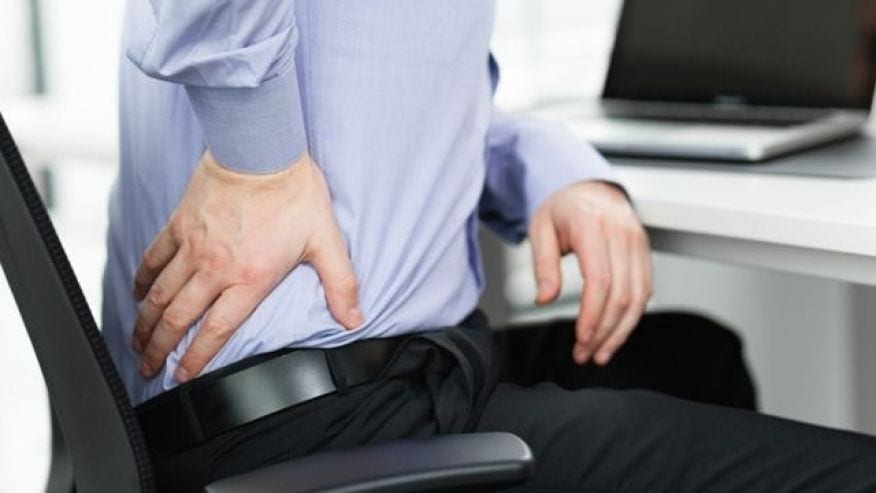
Many people suffer from lower back pain that spreads downward to the limbs and feet. This can often be alleviated by doing a deep piriformis stretch � a stretch that releases tight piriformis muscles, and relaxes the sciatic nerve.
Constriction of the piriformis muscle can irritate the sciatic nerve because they lay in close proximity to each other. By irritating the sciatic nerve, the result is pain (either in the lower back or thigh), numbness and tingling along the back of the leg and into the foot.
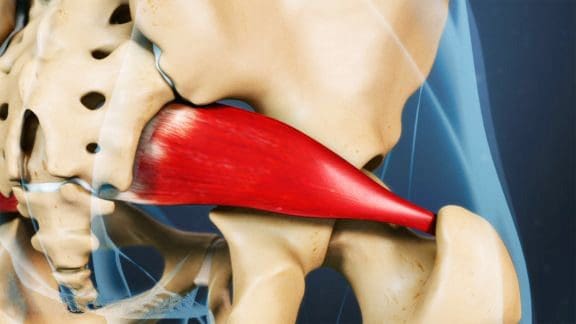
What Is The Piriformis?
The piriformis muscle is a small muscle located deep in the buttock, behind the gluteus maximus. It connects the spine to the top of the femur and allows incredible flexibility in the hip region (it�s the main muscle that allows for outward movement of the hip, upper leg and foot from the body).
The sciatic nerve passes underneath this muscle on its route to the posterior thigh. However, in some individuals, the sciatic nerve can actually pass right through the muscle, leading to sciatica symptoms caused by a condition known as piriformis syndrome.
Unfortunately, for a lot of individuals, their sciatic nerve passes through the piriformis muscle, leaving them with pain that just won�t go away (as well as poor mobility and balance).
Causes Of Piriformis Syndrome
The exact causes of piriformis syndrome are unknown. The truth is, is that many medical professionals can�t determine a cause, so they cannot really diagnose it. Even with modern imaging techniques, the piriformis is difficult to identify.
Lower back pain caused by an impinged piriformis muscle accounts for 6-8% of those experiencing back pain (1).
Suspected causes of piriformis syndrome include (2):
� Tightening of the muscle, in response to injury or spasm � Swelling of the piriformis muscle, due to injury or spasm � Irritation in the piriformis muscle itself � Irritation of a nearby structure such as the sacroiliac joint or hip � Bleeding in the area of the piriformis muscle
Any one of the above can affect the piriformis muscle, as well as the adjacent sciatic nerve.
Also, a misaligned or inflamed piriformis can cause difficult and pain while sitting and when changing positions (from sitting to standing). I actually stretched too far in a yoga pose once, and irritated my piriformis muscle � this took about 1-2 years to fully heal. I had major pain while sitting, and when changing positions from sitting to standing. I remember it being a huge pain in the butt (pardon the bun), but I just stuck with stretching and trigger point release and eventually it went away.
It is important to note, too, that over-stretching can actually make the condition worse. Light, gentle stretching is best. �No pain, no gain� does NOT apply here. I over-stretched my piriformis and that�s what made it inflamed for 1-2 years (because I was still doing yoga daily, and over-doing it in stretches).
Make sure you warm up your muscles before you stretch, because you can create a different injury. To warm up, simply walk or march in place or climb up and down a flight of stairs slowly for a few minutes before stretching.
Exercising and stretching the piriformis is well worth it � try it now with these 10 stretches:
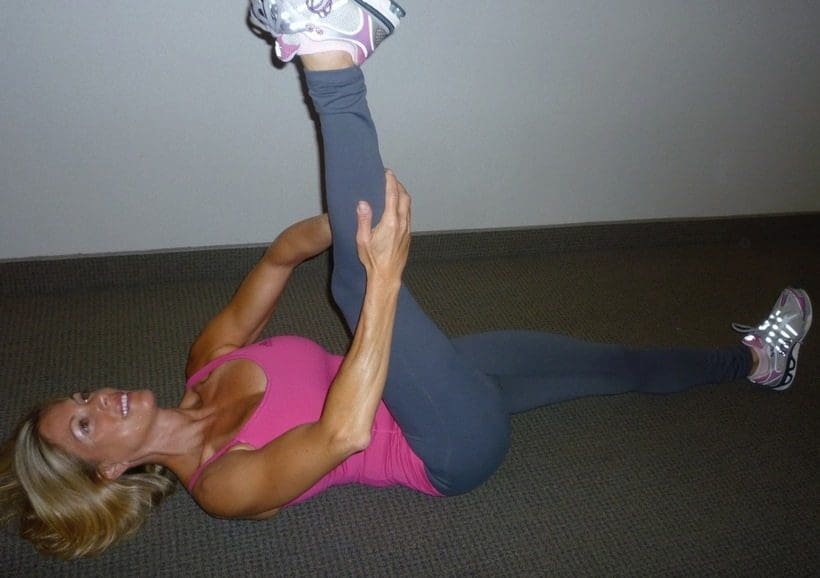
1. Supine Piriformis Stretch
1. Lie on your back with your legs flat.
2. Pull the affected leg toward the chest, holding the knee with the hand on the same side of the body and grabbing the ankle with the other hand.
3. Pull the knee towards the opposite shoulder�until stretch is felt.
4. Hold for 30 seconds, then slowly return to starting position.
There are many variations of this stretch, but here is a good video to demonstrate:
2. Standing Piriformis Stretch
1. If you have trouble balancing, stand with your back against a wall, and walk your feet forward 24 inches. Position your knees over your ankles, then lower your hips 45 degrees toward the floor.
2. Lift your right foot off the ground and place the outside of your right ankle on your left knee.
3. Lean forward and lower your chest toward your knees while keeping your back straight. 4. Stop when you feel the glute stretch. 5. Hold for 30-60 seconds, then switch legs and do the same.
3. Outer Hip Piriformis Stretch
1. Lie on your back and bend the right knee.
2. Use the left hand to pull the knee over to the left side. Keep your back on the ground, and as you do so, you should feel the stretch in the hip and buttocks.
3. Hold for 20-30 seconds, and repeat on the other side.
�4. Long Adductor (Groin) Stretch
1. Sitting on the floor, stretch your legs straight out, as far apart as you can.
2. Tilt your upper body slightly forward at the hips and place your hands next to each other on the floor.
3. Lean forward and drop your elbows to the floor if you can. You will feel the pelvis stretching.
4. Hold for 10-20 seconds, and release.
5. Short Adductor (Inner Thigh) Stretch
1. For this exercise, sit on the floor and put the soles of your feet together.
2. Use your elbows to apply downward pressure to your knees to increase the stretch.
3. You should feel the stretch on the inner thighs. For a deeper stretch, bend your upper torso forward with a straight back.
4. Hold for 30 seconds, release, and flutter your legs in the same position for 30 seconds.
6. Side Lying Clam Exercise
1. Lay on your side with the hip that needs help on top.
2. Bend your knees and position them forward so that your feet are in line with your spine. 3. Make sure your top hip is directly on top of the other and your back is straight.
4. Keeping your ankles together, raise the top knee away from the bottom one. Do not move your back or tilt your pelvis while doing so, otherwise the movement is not coming from your hip.
5. Slowly return the knee to the starting position. Repeat 15 times.
7. Hip Extension Exercise
1. Position yourself on all fours with your shoulders directly over your hands. Shift your weight a little off the leg to be worked.
2. Keeping the knee bent, raise the knee off the floor so that the sole of the foot moves towards the ceiling.
3. Slowly lower the leg, almost back to the starting position and repeat 15 times.
8. Supine Piriformis Side Stretch
1. Lie on the floor with the legs flat, and raise the affected leg by placing that foot on the floor outside the opposite knee.
2. Pull the knee of the bent leg directly across the midline of the body using the opposite hand or towel until a stretch is felt. Do not force anything and be gentle.
3. Hold the piriformis stretch for 30 seconds, then return to starting position and switch legs.
4. Aim for a total of 3 repetitions.
9. Buttocks Stretch for the Piriformis Muscle
1. Laying with your stomach on the ground, place the affected foot across and underneath the trunk of the body so that the affected knee is on the outside.
2. Extend the non-affected leg straight back behind the body and keep the pelvis straight. 3. Keeping the affected leg in place, move your hips back toward the floor and lean forward on the forearms until a deep stretch it felt.
4. Hold for 30 seconds, and then slowly return to starting position. Aim for a total of 3 stretches.
10. Seated Stretch
1. In seated position, cross your right leg over your left knee.
2. Bend slightly forward, making sure to keep your back straight.
3. Hold for 3-60 seconds and repeat on the other side.
According to Myofascial Pain and Dysfunction: The Trigger Point Manual, written by doctors Janet Travell and David Simons, myofascial trigger points (tiny knot contractions) in overworked gluteus minimus and piriformis muscles in the buttocks are the main cause of sciatica and all the symptoms that come with it.
Picking up a copy of the book, or even following instruction in the video below can help release these knot contractions.
Doctor of Chiropractic, Dr. Alexander Jimenez examines why sciatica can be so painful.
Sciatica may be perceived as the worst form of nerve malady, but that�s more reputation than reality.
Nerve pain is one of the most extreme forms of pain. It elicits imagery of searing heat, electric shock, and lightning bolt -like shooting sensations. And, the most dreaded kind of spinal nerve damage is arguably the tell tale low back and leg pain of sciatica.
A question patients frequently ask is, � Why is sciatica so distressing?� That�s not the case, although they often consider there�s something exceptional about sciatica versus other kinds of spinal nerve malady.
�
Myth-busting Sciatica Pain
Many assume sciatic nerve compression delivers more pain than other pinched nerves through the body because sciatica requires the sciatic nerve, which can be the longest and largest nerve within the body. But in 99 percent of sciatica cases, it�s not the sciatic nerve that�s compressed�it�s the nerve roots in the lumbar spine (low back) that join as they leave the spinal column and form the sciatic nerve.
When most folks refer to sciatica, they describe pain that shoots down the leg after the path of the sciatic nerve, but it�s actually one or two nerve roots compromised (commonly, the L4 or L5 nerve root). Doctors ascertain the exact nerve roots which are compressed by the positioning of the pain, like if the pain goes down to the side of the foot or the big toe.
Other Sources Of The Sciatica Stigma
It Affects Your Legs
One of the reasons sciatica gets so much attention is since the sciatic nerve�s roots feed to the legs, and we use our legs a lot. Sciatica may be perceived by patients as being more painful when compared to a compressed root in a less active portion of the human body, for example in the torso. In case you compressed or irritated another nerve of prominence or identical use to your own leg, it will be equally as distressing as sciatic pain.
Muscle Spasms Are�The Actual Culprit
Another rationale sciatica is associated with intense pain isn’t related to nerve compression muscle spasms. A patient with sciatic symptoms is hunched over and can�t stand up straight when, that�s a signal the patient has had a back spasm due to the nerve irritation. As sciatica changes your lumbar spine, the muscles that could spasm following nerve damage will be the large, postural back muscles. You�ll feel them when they spasm, because these muscles are so large. On the other hand, if a neck nerve root is compressed by you, you won�t find a muscle spasm that is potential quite as much because the muscles near the cervical spinal column are much smaller. (But spasms of neck muscles can nevertheless be really painful!)
Sciatica Is A Standard Enemy
The lumbar spine is prone to wear and tear on the intervertebral discs. When this happens, materials that irritate the encompassing nerves are leaked by the discs. Discs can also herniate, and that may irritate the nerve. Sometimes, the commonality of sciatica helps it be a catch all diagnosis when a patient doesn�t even have nerve root problem. For example, tweaking your back from lifting is generally a muscular problem, not a nerve issue.
Nerve Pain Is Created Equal
There are various causes of back malady, and sciatica is merely one. As they are all equally hazardous, sciatica isn�t especially unique when you compare it to other types of nerve malady. It can be really intense and debilitating, when nerve pain happens everywhere in the body. Lives are turned upside down from nerve pain, so don�t hesitate to see a spine specialist to simply help alleviate nerve pain in your neck or back.
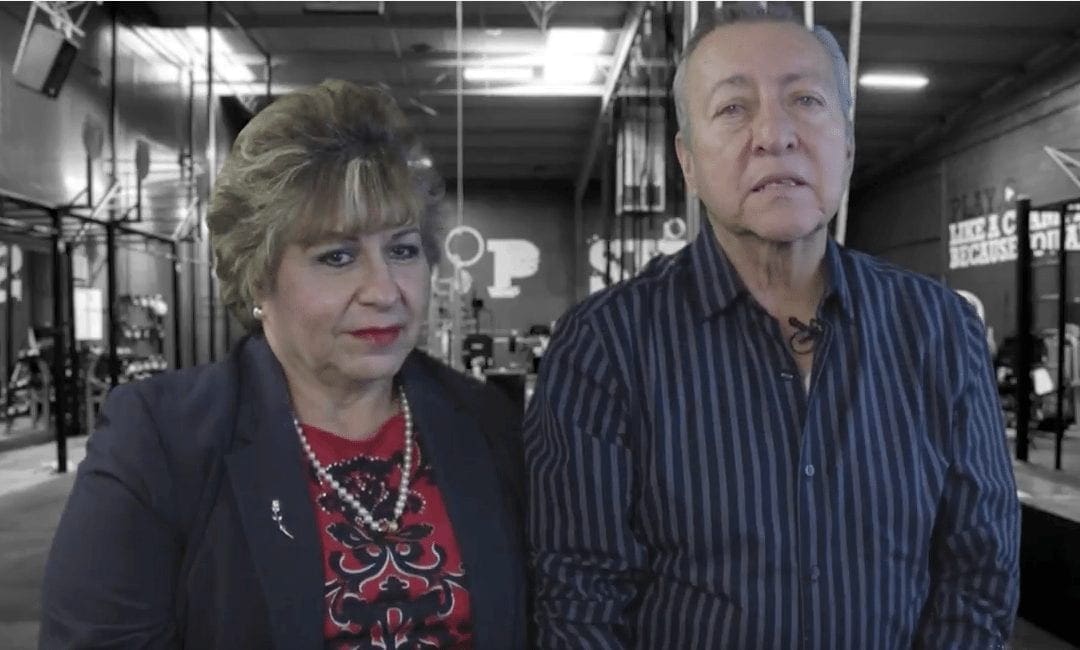
Mr. and Mrs. Dominguez share their wonderful story of health and recovery. After being injured in a car accident, Manuel Dominguez and his wife needed help healing their injuries. That’s when they found Push-as-Rx � and their path to recovery began. With the help of Dr. Jimenez, Mr. and Mrs. Dominguez started the therapies that changed their lives completely and together with the exercises given to them by the trainers at Push as Rx, little by little, they regained back their health. With great gratitude, Mr. and Mrs. Dominguez give their thanks for the magnificent service they received at Push-as-Rx �.
El Sr. y la Sra. Dominguez nos dieron a conocer su maravillosa historia de salud y recuperacion. Despues de salir lastimados en una accidente de auto, Manuel Dominguez y su esposa necesitaban ayuda para curar sus lesiones. Ahi fue cuando encontraron la clinica de Push-as-Rx � y empezaron su camino a la recuperacion. Con la ayuda del Dr. Jimenez, el Sr. y la Sra. Dominguez comenzaron a recibir terapias que cambiaron sus vidas por completo y junto con los ejercicios de los entrenadores de Push as Rx, poco a poco fueron recuperando su salud. Con mucho agradecimiento, el Sr. y la Sra. Dominguez dan las gracias por el magnifico servicio que recibieron en la clinica Push-as-Rx �.
PUSH-as-Rx � is leading the field with laser focus supporting our youth sport programs. The PUSH-as-Rx � System is a sport specific athletic program designed by a strength-agility coach and physiology doctor with a combined 40 years of experience working with extreme athletes. At its core, the program is the multidisciplinary study of reactive agility, body mechanics and extreme motion dynamics. Through continuous and detailed assessments of the athletes in motion and while under direct supervised stress loads, a clear quantitative picture of body dynamics emerges. Exposure to the biomechanical vulnerabilities are presented to our team. Immediately, we adjust our methods for our athletes in order to optimize performance. This highly adaptive system with continual dynamic adjustments has helped many of our athletes come back faster, stronger, and ready post injury while safely minimizing recovery times. Results demonstrate clear improved agility, speed, decreased reaction time with greatly improved postural-torque mechanics. PUSH-as-Rx � offers specialized extreme performance enhancements to our athletes no matter the age.
Please Recommend Us: If you have enjoyed this video and/or we have helped you in any way please feel free to recommend us. Thank You.
Doctor of Chiropractic, Dr. Alexander Jimenez looks at high heels at what they do to the back.
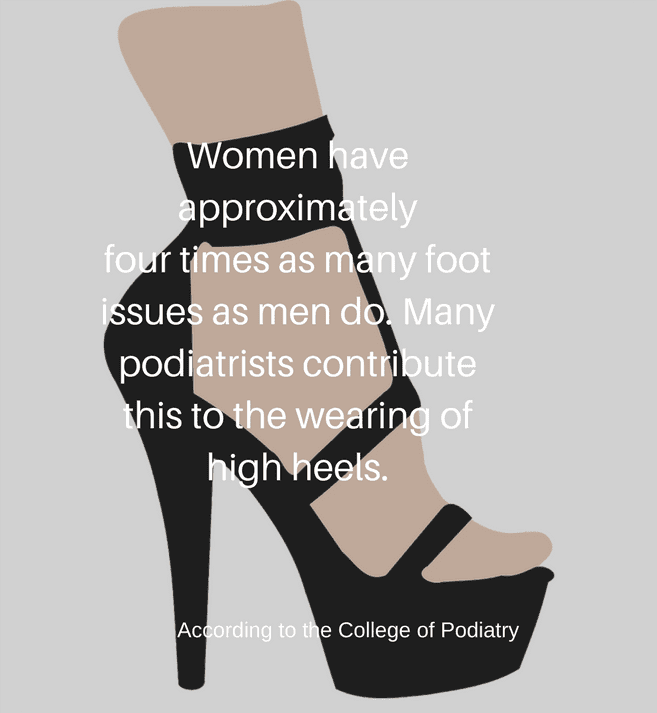
Ladies, ever wonder why you suffer from regular bouts of lower back pain?� Achy hips?� How about crazy tight leg muscles?� Don�t blame it on your cycling class, or too many squats or, the trainer you only see once or twice a week.� Look down.� Are you wearing high heels?� Bingo!� You�ve heard high heels are bad for you.� But it�s not just because they cause all kinds of pain and trauma to your feet.� High heels are also messing up your physical fitness. �They throw you out of proper postural alignment causing your joints and spine to take on more�wear and tear, which means aches and pains.
Is it possible to still look rockin� and save your joints? �My suggestion is more Athleisure-wear. �I know some fashion hard-liners say, no way will I walk around in yoga pants on a weekday!� But we�ve come a long way since those flare-leg, fold-over yoga pants.
Let�s chat for a moment about the evils of high heels.
First there�s the obvious.� They make your feet hurt.� Blisters, calluses and swelling are par for the course.� And pointy toes, fuhgeddaboutit!� I�m sure they were invented by someone on the Marquis de Sade�s payroll.� Second, they can lead to foot injuries like plantar fasciitis (usually from a bone spur that makes your heels hurt), hammertoes, bunions, and neuromas.� �Then there�s the domino effect.
Not only do high heels make your feet hurt, but problems with the feet can travel up the leg and cause injuries in the back, knees and hips. �Your knees take on extra pressure from the weight being pushed forward onto the balls of the feet. �Walking in this position makes your hip flexors and calf muscles short and tight. �And it doesn�t stop there.� Back problems are incredibly common in women who don�t give up their high heels.
Back Problems are incredibly common in women who don�t give up their high heels
Here�s why:
ext”>
Postural changes:�The S-curve of your spine has cushiony discs in between the vertebrae that act as a shock absorbers to protect them from stress. Like when you�re bending or jumping. �Wearing heels causes the lower back to arch more than normal because the body weight is pushed forward.� To compensate, the upper body has to lean back to maintain balance.� This puts extra stress on the discs. ��Spending hours with your body in funky alignment can lead to muscle spasms and back pain. �Tight hamstring muscles, which�attach to back of the pelvis and lower back, can also make your back ache.
Anatomical changes: Wearing high heels on a daily, or very regular basis, over years, can actually cause anatomical changes to your body.� In addition to the extra strain on your back and knees, the calf muscles can also shorten and the tendons can get tighter and thicker.
And It Can Get Even Nastier If You Get One Of These Spine Injuries:
Spondylolisthesis: it�s a mouthful, but is a common injury that can happen in the lower back from too much hyperextension (arching the back).� It�s when one vertebra slips forward over another.
Foraminal stenosis: I have this one congenitally and it sucks. This is a spine and nerve issue that occurs when anatomical abnormalities reduce the spaces the nerves travel through as they exit the spinal column.� The spaces are called foramina, and when they get blocked, the nerves get squeezed.� The pain can radiate through the buttocks and down the legs.� Symptoms are shooting pains, numbness, tingling, muscle weakness, spasms and, or cramping.
Sciatica:�The sciatic nerve is the longest one in the body. �It runs from the bottom of the lumbar spine all the ways down the legs. �When the sciatic nerve gets compressed it causes radiating pain, tingling, numbness and muscle weakness down the leg and can The pain can travel all the way to the bottom of the foot.
What Can You Do? �My Case for Athleisure-Wear To Combat Back Pain
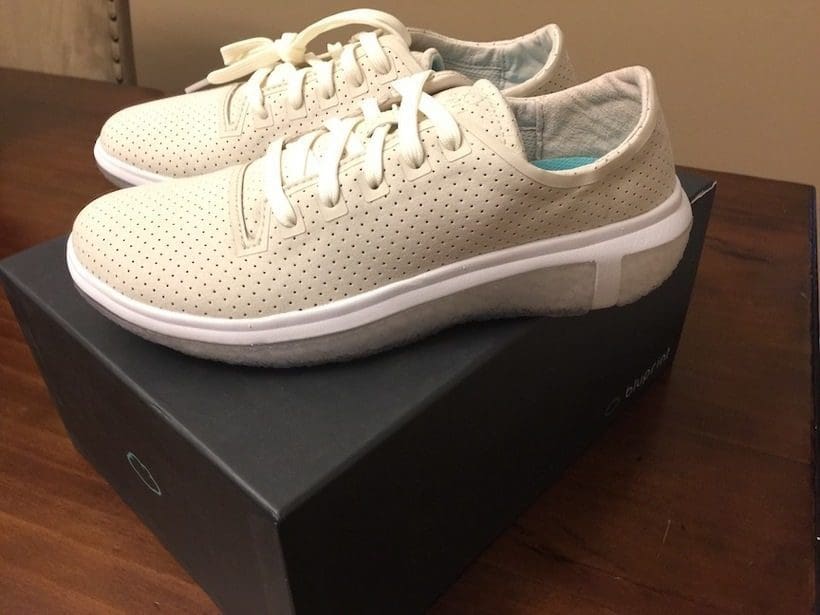
It�s time for stuffy office attire to retire. �Comfy clothes and flat shoes can be very chic. �Have you seen the boards on Pinterest?� Thanks to this hopefully permanent fashion style, my jeans and heels spend more time in my closet than on my body.� Leggings and cute kicks are my go to�s.� Night out?� No prob.� I reach for my sleek workout leggings, a ruched top or off the shoulder top with some high heel sneaks (they�re wedges so not nearly as bad for you). �I also discovered these by Bluprint which I put to the test at 2 huge conventions where I walking and standing for hours on end.� The soles made of memory foam � like those beds!
My podiatrist friend, Steven Rosenberg, DPM has been preaching the need for comfy shoes to his female clients for years. �(Fortunately for his practice, not everyone listens!) �Dr. Steve says, wearing shoes designed more for comfort can help you live more pain-free. ��Because comfort shoes are made of�soft cushiony materials�with soft foam innersoles, those are what you should turn to for shopping, walking or standing for long periods of time to avoid�blisters, muscle spasms or arch cramps.� � He also says to check for arch support in your shoes. �If there�s none, you can buy ones to put inside.
Even after reading this, you may still not be willing to give up high heels for good. �Me either.� I still get glammed up once in a while.
Here Are Some Tips For When You Must:
Wear them for as little time as possible.
Try to opt for heels around 2� high
Steer clear of pointy toes.
Buy shoes with leather insoles to so your foot doesn�t slide.
Buy arch inserts or use orthotics to support your arches.
Vary your footwear so you�re not wearing high heels every day.
Gradual or lower slopes are a little better, go for platforms or wedges instead of stilettos
Thicker heels are better than spiky heels
Stretch and strengthen the overworked muscles.
Here�s How:
Stretch your leg muscles and hip flexors before and after wearing heels.� For the calves, stand on a step and let one heel hang down until you feel a stretch.
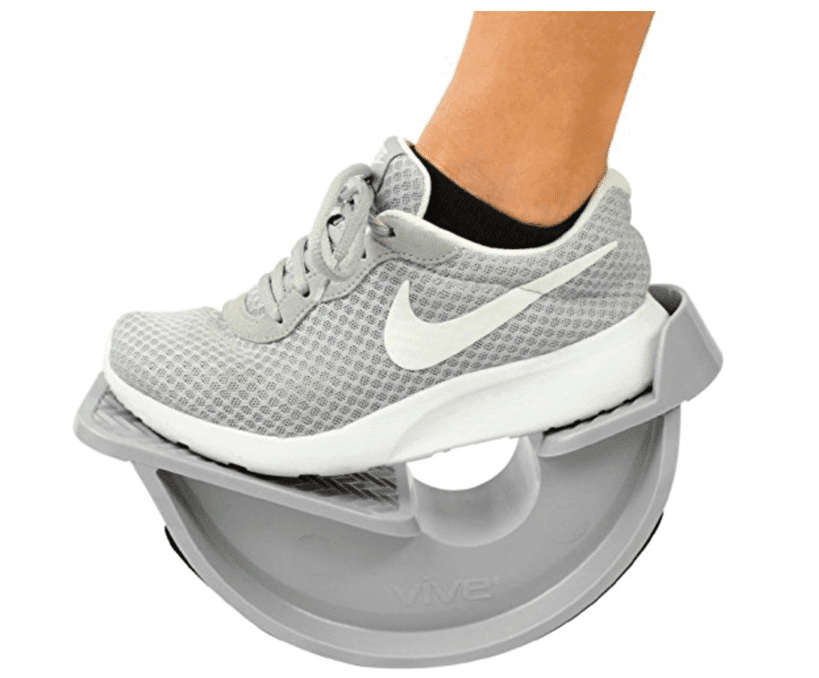
Try this convenient device, the foot rocker by Vive.� It stretches the calf and the sole of the foot relieving pain from plantar fasciitis.
Front of the hip and thigh stretch for before and after wearing high heels
Hamstring stretch for before and after wearing high heels
Massage and stretch the muscles in the soles of your feet.� Roll your foot on a golf ball before and after wearing heels and, get regular foot massages.
Strengthen and increase the range of motion in your ankles and feet.� Put a rag on the floor.� Using your foot, write the letters of the alphabet.� Also put a bunch of marbles on the floor.� Pick one or a few of them up using just your foot.� Put them down about 6 inches away without lifting your foot off the floor.� Try that 10 times.� If you don�t have marbles, you can do it with a hand towel.
So next time you�re shopping for shoes, think about your foot fitness first. �Look for fashion that keeps you closer to the ground and that will hopefully keep you farther away from the doctor.
El Paso, TX. Chiropractor Dr. Alex Jimenez examines whether sciatica can radiate to the arms.
Sudden lower back pain often indicates a muscle spasm. Your muscles will feel as though they have locked up, and the pain can be unbearable.
Sciatica
Several lumbar spine (lower back) disorders can cause sciatica. Sometimes doctors call sciatica a radiculopathy. Radiculopathy is a medical term used to describe pain, numbness, tingling, and weakness in the arms or legs caused by
No, the sciatic nerve only affects the legs. No, the sciatic nerve only affects the legs. Yes, it can—several years ago I was in a car accident that left me with severe whiplash. As the years went on and I grew older, the nerves between C6
Sciatica is defined as a severe pain in a leg along the course of the sciatic nerve. The pain is felt in the back of the leg running from the buttock down.
Another important stretch that I usually prescribe is a lumbar extension stretch. This one is especially important if the cause of your sciatic nerve pain is due to a
Recovery time after back surgery for a herniated disc can take several weeks to months as the muscles and ligaments in the back heal. Most people who undergo this surgery find relief from their previous pain. There is also a danger of damaging the nerves of the back and spine.
Relief, Washington
Many people suffer from sciatica, a painful lower back condition caused by a pinched nerve. Sciatica can cause severe mobility problems and debilitating pain. In serious cases, the condition can lead to progressive lower extremity
You can’t help but notice the biting, shooting pain that comes with sciatica. This condition affects the sciatic nerve that runs across the buttock and down the
A widely accepted theory is that a pinched nerve causes chest pain. These pinched nerves occur when excessive pressure is applied to surrounding bones.
Call your spine specialist in case you feel you may have developed sciatica. (Should you not already have a healthcare professional who specializes on spine health, you can ask a primary healthcare provider for recommendations).
You may have sciatica in the event that you’re experiencing symptoms,such as shooting pain down one or the two of your legs, or in case you have been experiencing weakness or tingling in your legs.
Through your medical visit, your physician or back specialist will ask you questions and perform some basic exams to try and identify the reason for your sciatica and create a treatment strategy for you�a method to control your pain as well as other symptoms also to help you recover. There are several spinal ailments which may lead to sciatic pain. Your treatment plan will be depending on the cause of your pain, so it’s vital that you get a precise diagnosis.
What to Expect During Sciatica Evaluations
First, your back specialist will ask about your present symptoms and remedies you’ve got already attempted. He or she will even ask some typical questions, like:
When did the sciatic nerve pain start?
Where would you sense pain? Is it all the way down your leg? Is it in both? Does it halt at your knee?
On a scale from 1 to 10, with 10 being the worst pain imaginable, rate your pain.
Are you really experiencing tingling or weakness in your legs and/or feet?
What actions did you recently do?
Does walking downhill or uphill increase pain?
What have you ever done with this sciatic nerve pain? Maybe you have attempted exercises or special drugs?
Does anything reduce the pain or allow it to be worse?
Neurological and physical examinations will be also performed by your healthcare professional.
In the physical examination, your doctor will find your position, range of motion, and physical state, noticing any movement that causes you pain. Your physician feel for muscle spasm, note alignment and its curvature, and will feel your back.
During the neurological examination, your back specialist will test your reflexes, muscle strength, and other nerve changes.
You will need to have some imaging tests, to diagnose the cause of your sciatica. You could have an x ray or a computed tomography (CT or CAT) scan. When it’s possible you might have a herniated disc or spinal stenosis that is causing your sciatica, your physician may order a magnetic resonance imaging (MRI) evaluation.
Together, all these various assessments and evaluations will give your doctor a more complete picture of your sciatic nerve pain. Using this information, he or she will most likely be able to make a diagnosis of the underlying cause of your sciatica.
The scope of our information is limited to chiropractic and spinal injuries and conditions. To discuss options on the subject matter, please feel free to ask Dr. Jimenez or contact us at 915-850-0900 .
By Dr. Alex Jimenez
Additional Topics: Whole Body Wellness
Following a balanced nutrition as well as engaging in regular physical activity and sleeping properly are all proper lifestyle habits which can help increase and maintain overall health and wellness. Many common complications associated with improper lifestyle habits, such as obesity, diabetes, heart disease and cancer, however, the risk of developing these can be prevented with a few lifestyle changes. In addition, visiting a chiropractor and receiving chiropractic care can help maintain and improve the overall health of the spine as well as its surrounding structures.
El Paso, TX. Chiropractor Dr. Alex Jimenez listens in on how chiropractors can help with sciatica.
Dr. Joseph Licitra DC, a chiropractor that serves Clifton, NJ as well as Montclair, Bloomfield, and Passaic, recently discussed sciatica on a local cable show. Dr. Licitra says that chiropractors can help treat sciatic nerve pain.
Clifton, United States
Dr. Joseph Licitra DC, the owner of a chiropractic practice that serves Clifton, New Jersey and surrounding areas such as Montclair, Bloomfield, and Passaic, recently discussed sciatica on a local cable show called �Meet Clifton.� Those interested in learning more about the challenges of sciatica and how it can be treated can view an exclusive video clip for free on Dr. Licitra�s website: http://www.josephlicitra.com/sciatica
In addition to speaking about the prevalence of sciatica in America, Dr. Licitra also touched upon the economic consequences of the debilitating condition. An interesting fact explored during his presentation brought to light the extent of which sciatica negatively affects employee attendance in the workplace. Dr. Licitra said: �People with sciatica have difficulty sitting and bending and therefore they can�t go to work. There is tremendous economic strain on the cities, on the companies, and on the families.�
The Causes Of Sciatica
Sciatic nerve pain can stem from many different things such as repetitive bending, direct trauma to the spine, as well as a sedentary lifestyle.
How chiropractors can help � There is hope for people who suffer from sciatica. Chiropractors can determine the origin of the sciatic condition and then focus on balancing out the spine to get the bones in correct alignment. Chiropractors like Dr. Licitra who specialize in kinesiology will also focus on the musculature to pinpoint the cause(s) of sciatic pain.
Dr. Licitra has been in practice for over 30 years and has worked on many professional athletes such as the New York Giants and the National Hockey League. His practice is now offering free consultations to new patients interested in receiving treatment for sciatica, as well as to patients suffering from other health conditions like neck or back pain, shoulder pain, and even migraines.
Struggling With Sciatica?
If you are experiencing pain that radiates from the back or buttocks all the way down the legs, you may have a common condition called sciatica. Many people in Clinton suffer with the pain of sciatica and may never achieve a long-term solution. An untreated sciatic condition can continue to worsen and make the daily tasks of living go from difficult to nearly impossible. Fortunately, chiropractic treatment can help you overcome this debilitating condition.
Sciatica In Clifton
Sciatica, also known as sciatic neuralgia, is a condition that causes pain in the lower back, down the back of the leg, and into the foot. It can make sitting and standing for long periods of time difficult and can lead to weakness, tingling, and numbness in the leg and foot. It will often come and go throughout a person’s lifetime, causing periods of varying degrees of pain and discomfort. If left untreated, sciatic pain will generally grow worse and the nerve can become permanently damaged.
The reason why the pain travels so far, radiating up and down the legs and back, is due to the compression of the sciatic nerve which is the longest nerve in the body. This nerve originates in the lumbar spine and extends into the buttocks before traveling down the leg to the ankle and foot. When the vertebrae in the lower back are compressed, the roots of the sciatic nerve can become pinched and irritated which is what causes the pain.
How Do You Develop Sciatica?
There are a number of factors that can lead to sciatica. It is most commonly caused by disc injuries and bulges. In this occurrence, the disc presses against the nerve root causing sciatic pain. Disc Injuries can occur because of poor posture, repetitive use injuries, and accidents. Sciatica is also common when there are subluxations (misalignments) in the spine due to postural issues, pregnancy, or trauma. Some patients report simply bending over to pick up a piece of paper and then being suddenly hit with extreme pain. The reality, however, is that the spinal condition was probably already developing for quite some time before the triggering incident occurred.
Some people respond very quickly while others take more time to recover. It really depends on the condition of the disc or the joints that the chiropractor has to correct. In most cases, the longer the issue persists, the longer it will take to achieve correction. The great news is that it typically takes less time to fix an issue like this than it took to create it in the first place. Once the position of the spine and discs are corrected, patients often report improvements in their overall health. If you are experiencing symptoms of sciatica, please call our team at Joseph Licitra, DC today.
IFM's Find A Practitioner tool is the largest referral network in Functional Medicine, created to help patients locate Functional Medicine practitioners anywhere in the world. IFM Certified Practitioners are listed first in the search results, given their extensive education in Functional Medicine