Living with chronic back or neck pain can lead to depression, feelings of worry, nervousness, hopelessness, as well as other mental health-associated symptoms. Your pain medicine physician or your back specialist may refer you to a psychologist or psychiatrist. Referring you doesn�t mean your physician believes your pain is all in your mind! Rather, he/she is taking an optimistic step in treating you as a whole individual � by treating both the physical and psychological pain.
Chronic Neck &�Back�Pain Is Complicated
As someone living with chronic pain caused spondylosis, degenerative disc disease, spinal cord injury or some other back problem, you understand pain is a complicated issue, and treatment requires the expertise of a spine�specialist. Perhaps your pain management plan features a blend of treatments � medication for neuropathic pain, a periodic epidural spinal shot, a muscle relaxant, or physical therapy. Treatment of stress, nervousness, and depression (there are various types) needs the same level of expertise but from somebody who focuses on managing mental health problems.
Depression & Chronic Pain
Are you aware that depression and chronic pain often go together? Depression is a critical condition, and nothing to be embarrassed of. It has been reported that as many as 50% of individuals with chronic pain are depressed.1 So, if you are depressed, you’re far from being alone.
The signs and symptoms of depression can manifest themselves differently in each individual, but tiredness, sleep disruption, changes in eating habits, listlessness, and feelings of hopelessness are all quite common. Aches and pains are a very common symptom of depression notably, depression can lead directly to neck and long-term back pain.
Treating Depression & Pain
Two classes of antidepressants often used to treat depression in those that experience chronic pain are selective serotonin reuptake inhibitors (SSRIs) and serotonin and norepinephrine reuptake inhibitors (SNRIs). Generally prescribed SSRIs include and fluoxetine (Prozac) and sertraline (Zoloft), whereas usually prescribed SNRIs include duloxetine (Cymbalta) and venlafaxine (Effexor). These drugs have now been demonstrated to be effective and safe for handling depression in the context of continual pain, but like all medicines, they come with some risk of unwanted effects. As always, be sure to go over these drugs in detail together with your physician before beginning any treatment regimen that includes them, and inform your physician of all of the medicines (including over the counter medicines), herbal remedies, and nutritional supplements you’re currently taking so as to avoid any negative drug interactions.
Moreover, or in addition to medications, other types of treatment may include:
Talk therapy, more officially called cognitive behavioral therapy (CBT). The focus of CBT is to help the individual manage their situation and may include learning how to problem solve, thus engaging the individual to alter specific thought patterns to your more positive outlook, and conquering�fears.
Practice relaxation techniques such as meditation or breathing exercises.
Routine exercise might help curb feelings of worry, stress as well as depression. Exercise causes the entire body to release endorphins, which can cause you to feel much better and may reduce pain perception too.
Call Today!
Reference
1. Tartakovsky M. Living with chronic pain and melancholy. PsychCentral.com. http://psychcentral.com/lib/living-with-chronic-pain-and-depression/. Got July 30, 2015.
Whiplash is�a common injury, annually affecting about 2 million individuals within the U.S. Generally due to a car accident, whiplash also can be a consequence of falling, engaging in sports &�being shaken or punched.
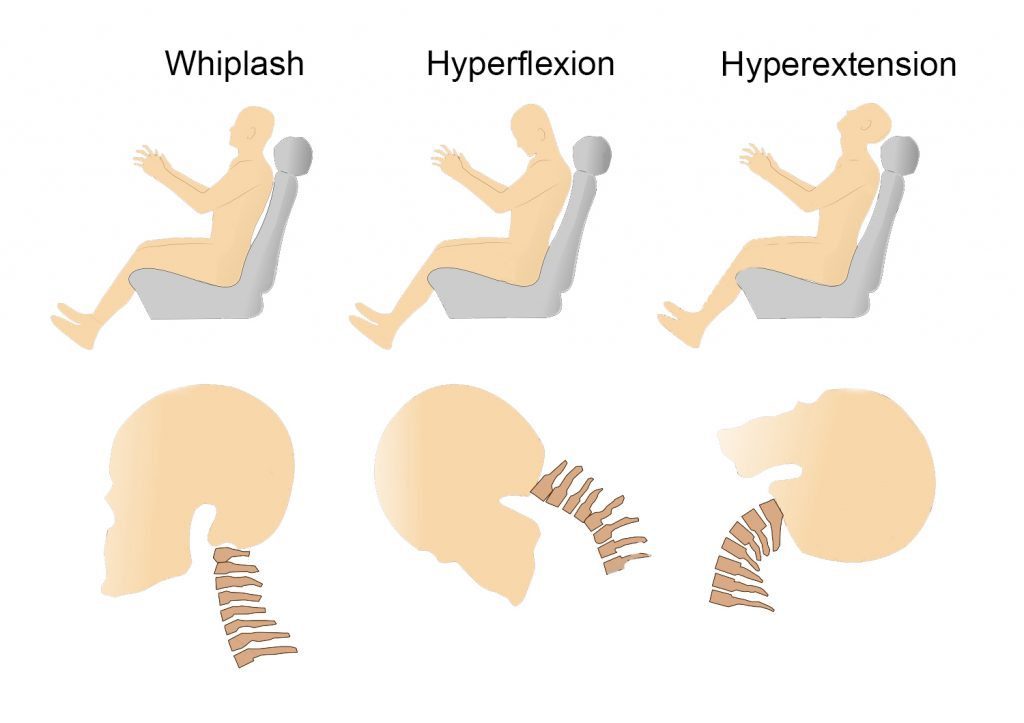
Whiplash may be the common term�for�neck damage or stress caused by hyperextension (see image below) and hyperflexion (see image below). It frequently does not cause immediate symptoms: over-time, it might produce actually. Since whiplash could cause long-lasting results to the back, it is vital that you see your physician if you have been injured, even if you don�t have pain.
The cervical spine (throat) is really a sophisticated structure consists of vertebrae (spinal bones), intervertebral disks (behave as shock absorbers), muscles, ligaments, and nerves. The throat is is flexible and will move it different guidelines (jerk, swivel) while supporting the total weight of the head. However, that mobility can make the throat at risk of injury. Throughout a whiplash event, your throat goes swiftly and vigorously backward and forward. Pain can continue despite the injury itself has healed.
Whiplash can result in reduced productivity, temporary impairment, and perhaps substantial medical expenses.
Not Just Pain In The Neck
A person with whiplash’s chief criticism is upper back pain or neck pain. Other symptoms may include:
Pain
Stiffness
Pain within the arm and/or shoulder that may expand to the hand(s).
Paresthesias (including numbness or tingling) and/or weakness that’ll expand into the hand(s).
Headache
You might possibly experience dizziness, nausea, ringing�in the ears, weakness, jaw pain, and blurred vision.
A Condition With�An Impact
The most frequent cause of whiplash is definitely a car accident in which the person�s vehicle (often stopped) is rear-ended by another car or truck. Because of this, the neck’s bones are forced�into a hyperextended position, while the upper vertebrae are hyperflexed, leading to an unusual S-shaped curve. This cycle typically damages the delicate tissues (structures, tendons, muscles) of the neck.
How Do I Realize I Have Whiplash?
Your doctor works a neurological and physical exam and carefully reviews your medical history. Because x rays don�t show injuries to delicate tissues, a CT (computerized tomography) scan or MRI (magnetic resonance imaging) could be executed.
What Does Treatment Involve?
Treatment is determined by the extent and level of the whiplash, and factor is given to general health and your age. Initial therapy can include:
Short term rest (a day or two)
Ice, for first day or two; then alternate ice and temperature
Gentle�range-of-motion exercises
Anti-inflammatory drugs (over-the-counter or prescription)
Muscle relaxants
*When using ice, make certain the cool source is draped in a towel to safeguard your skin area. Don’t apply ice for longer than 15 minutes at a time.
If your pain does not disappear inside a reasonable timeframe, or when it is serious, your doctor may recommend trigger-point injections, physical treatment, chiropractic, massage, acupuncture, and/or use of a transcutaneous electrical nerve stimulation (TENS) device.
Soft�collars, although once trusted for whiplash, are not employed so frequently anymore, since by immobilizing the neck, the muscles can weaken and delay recovery.
Surgery is rarely warranted by whiplash. If your pain persists even after you’ve undergone nonsurgical treatment, your doctor might advise surgery, according to what structures have already been injured and how serious the harm is. It is vital that you understand the risks carried with surgery. Thus, you should have a thorough conversation with your doctor.
Call Today!
Sources
Whiplash. Mayo Clinic. http://www.mayoclinic.org/disorders-situations/whiplash/basics/meaning/con-20033090.
Back pain is one of the most common complaints reported by a majority of the population. Affecting many people temporarily or for an extended period of time at least once throughout their lifetime, back pain is generally the result of trauma from an accident, injury or due to an aggravated medical condition. But, can an improper diet based on refined sugar and processed fat cause back pain?
Researchers from Rensselaer Polytechnic Institute and the Icahn School of Medicine believe that consuming an excess amount of these foods can cause inflammation in the body which may gradually degenerate the intervertebral discs, cartilaginous joints found between each vertebrae that act as shock absorbers and ligaments for all the movements of the spine. The degeneration of these structures may lead to back pain and other spinal complications.
Furthermore, an improper nutrition is also associated with the development of type 2 diabetes, another factor which may cause changes to the spine that could also lead to back pain and other painful symptoms.
�We hope to identify reasons why diabetes and poor diet can result in age-accelerated spinal pathologies,� declared co-investigator Deepak Vashishth, PhD, Professor of Biomedical Engineering and Director of the Center for Biotechnology & Interdisciplinary Studies at Rensselaer Polytechnic Institute in Troy, NY. �If we identify specific molecules necessary in this process, we can use this information to develop future treatments to slow or prevent these degeneration processes.�
Poor Nutrition Damages Essential Molecules
The researchers developed the research study because there are several safe, effective and minimally invasive treatments available to help improve the symptoms of back pain. The purpose of the evaluation was to determine what exactly happens in the body, as a result of an improper diet, to cause the degeneration of the intervertebral discs and eventually back pain. The study was also designed to provide them with additional information on how they could prevent or avoid this process from occurring in the first place.
Investigator James Iatridis, PhD, Professor and Vice Chair for Research in the Department of Orthopaedics at the Icahn School of Medicine at Mount Sinai in New York City explained, “Basic science studies on mice suggest a possible connection between diets high in advanced glycation end products, or AGEs, type 2 diabetes and spinal degeneration but this association has never before been proven.”
Advanced glycation end products, or AGEs, are proteins or lipids which become damaged as a result of being coated in excess sugars. Evidence suggests that a diet high in processed foods, such as fried foods, plays a huge role in the development of AGEs. In addition, research has demonstrated that the formation of advanced glycation end products over a period of time can cause tissues and other structures of the body to deteriorate, increasing inflammation which could lead to the degeneration of the intervertebral discs in the spine as well as contribute to the development of other diseases, including diabetes, atherosclerosis and Alzheimer’s disease.
Type 2 Diabetes and Back Pain
Moreover, Investigator James Iatridis, PhD, and his team began investigation the relation between type 2 diabetes and spinal degeneration. The disease is commonly referred to as an age-related condition, because it is believed to accelerate the cell aging process in many humans. “Studies have also shown that individuals with diabetes experience poorer recovery outcomes after spine surgery than those without diabetes,” he added.
In the first section of the project, researchers at Mount Sinai raised a group of mice on a diet focused on foods high in AGEs, similar to a human’s fast food diet. The research study also included both regular mice and mice genetically modified to reduce their ability to get rid of AGEs in their body. This was utilized to allow researchers to see whether the mice experienced disc degeneration or developed changes in the vertebrae of the spine to prove if advanced glycation end products play a key role in these degenerative alterations.
At Rensselaer, researchers would analyze how tissue and other structures from healthy intervertebral discs compared to that of degenerated intervertebral discs. Essentially, they were to study whether a drug that blocks the effects of a diet high in AGEs could provide protection against the degeneration of the structures of the spine in mice.
In conclusion, studying the tissue of humans can be challenging because people lead very complicated lifestyles with a variation of more than simply a diabetes status. These differences make it difficult to directly identify whether an improper diet and type 2 diabetes can actually cause back complications using only human research studies. Findings in both mice and human studies would support a link between diet, diabetes and spinal degeneration.
The study is funded by the National Institutes of Health. Findings will be published periodically over 5 years with the study concluding in 2021.
Make sure to consult a healthcare professional regarding any nutritional and/or medical concerns you may have before attempting and/or following any of the techniques listed above to avoid injury and/or complications.
For more information, please feel free to ask Dr. Jimenez or contact us at 915-850-0900 .
By Dr. Alex Jimenez
Whole Body Wellness
Overall health and wellness can be achieved by following a proper nutrition and engaging in regular exercise and/or physical activities. While these are some of the most common ways to ensure whole body health and wellness, visiting a qualified and experienced healthcare professional can also grant your body additional benefits. Chiropractic care, for instance, is a safe and effective alternative treatment option utilized by people to maintain well-being.
At 89, Donald Tenbrunsel is a bit of a phenomenon. He surfs the internet with ease, happily converses on a broad range of timely topics, volunteers and reads regularly.
Known as a “SuperAger,” Tenbrunsel was part of a study that helped researchers discover what factors might set these super-sharp seniors apart from their peers.
The secret? Brain scans showed they experience brain aging twice as slowly as average folks their age.
“This suggests the SuperAgers are on a different trajectory of aging,” said senior researcher Emily Rogalski. She is director of neuroimaging for Northwestern University’s Cognitive Neurology & Alzheimer’s Disease Center. “They’re losing their brain volume at a much slower rate than average agers.”
For the study, Rogalski and her colleagues measured brain aging by examining the thickness of each person’s cortex — the outer layer of folded gray matter in the brain.
The cortex is where consciousness lies, and where all of the neurons that fire thoughts and movements are located. It is a critical part of the brain for higher-level thinking, memory, planning and problem-solving, Rogalski said.
Another neurologist explained it this way:
“That is essentially our brain,” said Dr. Paul Wright, chair of neurology at North Shore University Hospital in Manhasset, N.Y., and Long Island Jewish Medical Center in New Hyde Park, N.Y. “Brain shrinkage occurs in the natural progression over time, and when you lose brain volume, you lose function.”
Rogalski noted that previous research has shown that the cortexes of SuperAgers look less worn than their average 80-year-old peers, and about the same as people in their 50s or 60s.
But a question remained — were the SuperAgers born with brains that have more volume, and thus could better withstand the travails of aging? Or are their brains the same size as everyone else’s, and simply aging less rapidly?
To answer that question, the researchers tracked changes in cortex thickness for a year and a half in 24 SuperAgers and 12 average elderly people.
Both groups lost a significant amount of brain volume to aging, but average elderly people experienced a loss more than twice that of the SuperAgers — over 2.2 percent versus 1.1 percent.
“Part of the reason why they may have different brain volumes is because over the decades they’ve been losing their brain volume at a different rate,” Rogalski said.
The findings were published April 4 in the Journal of the American Medical Association.
Dr. Ezriel Kornel, a neurologist with Weill Cornell Medical College in New York City, said that at least part of the brain advantage of SuperAgers is genetic, with some people simply gifted at birth.
But there are likely to be environmental influences that also contribute to healthier brain aging, particularly in the womb and in early childhood, Kornel added. For example, research has shown that children raised in poverty tend to have smaller brains.
“There are so many factors involved,” Kornel said. “It could be that even external stressors in childhood can influence how the brain develops.”
Rogalski said that future research will focus on genetic factors that influence brain aging, which hopefully will provide researchers with anti-aging “targets” that could be manipulated with medications or other therapies.
While there’s currently no proven method to preserve cortex volume, research has shown specific lifestyle changes that seniors can perform to help keep themselves sharp as they age, Kornel and Wright said. These include:
Regular physical exercise, including strength training.
A healthy and balanced diet.
Brain workouts that involve challenging puzzles or tasks.
An active social life.
“Everyone understands they’re going to die, but people don’t want to feel they’re losing their ability to think and be who they are,” Kornel said. “This is the next big frontier in science, to figure out how we can prevent overall deterioration of the brain.”
Pain in the upper and/or mid back is not as common than lower back or neck pain. The upper back is called the thoracic spinal column, and it is the most secure part of the spine. The reach of movement in the upper back is limited because of the backbone�s attachments to the ribs (rib cage).
Upper back pain is generally caused by soft tissue injuries, like sprains or strains, muscle tension caused by bad posture, or looking downward for long time spans (eg, texting, mobile phone use).
Pain
Tightness
Stiffness
Muscle spasm
Tenderness to touch
Headache
What causes or leads to upper back pain?
An episode of upper back pain can be actuated by distinct moves and actions, including:
Twisting
Excessive bending
Whiplash or alternative neck injury
Lifting improperly
Poor muscle tone
Persistent movements, overuse
Contact sports
Carrying a load that is heavy
Smoking
Being overweight
Poor posture�working at the computer for�a long time without taking a break to walk around and extend, or in general can promote upper back pain. Both muscle fatigue and muscle pull, which often result from poor posture, can trigger the pain.
So what can I do about it?
Usually, upper back pain is not a cause for worry; however, it can be uncomfortable, painful, and inconvenient. Also, if pain develops suddenly and is serious�such as from an injury (eg, fall)�and, certainly if pain and symptoms (eg, weakness) progressively worsen you should seek medical attention.
Generally, the next home treatments can help relieve back pain that is upper.
Short term rest
Mild�Stretches
Over the counter medicine, for example ibuprofen, (Motrin�), naproxen sodium (Aleve�), or acetaminophen (Tylenol�). Take with food, and don’t take more than the recommended dose.
Use a cold pack that is commercially available or fill a plastic bag with ice and seal it wrap it. Apply to the painful area for 20 minutes every 2-3 hours for the first 2 to 3 days.
Heat (after the very first 72 hours). After using moist heat, gently stretch the muscles to enhance mobility and alleviate stiffness.
Your physician may prescribe drugs, like a muscle relaxant or perform trigger point injections to greatly help break up muscle spasms. He or she may also recommend physical therapy to increase flexibility, mobility and alleviate pain. Other treatments your doctor may suggest include acupuncture and chiropractic care.
Most cases of upper back pain resolve in 1 to 2 weeks without additional treatment. When you’re able to perform them without pain restart your regular activities slowly. Don�t rush matters, however: you could interfere with your healing and risk reinjury.
As always, abrupt or severe pain ought to be dealt with promptly.
Many people frequently seek medical attention to treat symptoms of back pain. Approximately three in four adults will experience some sort of back pain throughout their lifetime. Back pain is identified as a painful symptom which originates along the spine.
From acute back pain to chronic back pain, the symptoms can often vary. Acute back pain is characterized as a severe but temporary pain. Chronic back pain generally occurs on a daily basis and can go on for an extended period of time. Some individuals may experience severe symptoms while others may experience mild, deep, achy, burning or electric-like symptoms. These symptoms are typically manifested in conditions such as lumbar radiculopathy.
Back Pain and Other Symptoms
Back pain can also be accompanied by a variety of other symptoms, including tingling sensations, numbness, stiffness, achiness and weakness. Some physical activities may also aggravate back pain. Sitting, walking, standing, bending oveer and twisting at the waist are several types of movements which can worsen symptoms of back pain. Depending on the region of the spine affected and the diagnosis or cause, the symptoms may vary.
Many healthcare professionals specializing in back pain who can help diagnose the source of the individual’s symptoms. The spine is divided into several regions, the thoracic, lumbar, lumbosacral or sacrum. The symptoms of back pain may differ depending on which area of the spine is affected.
The thoracic spine is the upper and mid areas of the back, where the ribs attach to the spinal column.
The lumbar spine refers to the low back.
The lumbosacral is the low back, sacrum, and the tailbone, also known as the coccyx.
The sacrum refers to the part of the spine that located at the back of the pelvis.
The spine is a complex structure consisting of approximately 17 vertebral bones, extending between the upper back and tailbone, joints, the sacrum and tailbone. The spine is also surrounded by fibrous and muscular supporting structures, intervertebral discs, the spinal cord and nerve roots, and blood vessels. An injury such as a back sprain or strain caused by improperly lifting and twisting simultaneously, can often be a cause for back pain.
However, not all forms of back pain are caused by trauma or injury. Many back issues are congenital, meaning they occur at birth, degenerative, age-related, disease-related and they may also be associated with improper posture, obesity or unhealthy lifestyle habits, such as smoking. In some instances, the symptoms of back pain may be worse than the actual injury or condition. More over, when should you seek medical attention for back pain?
If you cannot stand upright.
Fever accompanies pain.
There is loss of bladder or bowel function or control
Leg pain and/or weakness progressively worsens.
And the pain is relentless or worsens.
Many patients with back pain have described feeling afraid and anxious, which is often also a normal symptom that can generally manifest with complications. Most people who experience upper, low or lower back pain, even down into one or both legs, will know when it�s time to seek medical care.
What to Expect from a Healthcare Specialist
Whether your back pain is mild or severe, temporary or chronic, and whether the symptoms require urgent medical core or not, make sure to seek medical attention to receive a proper diagnosis for your back pain. Once you’ve visited your healthcare provider, below is what you can expect from them.
A review of your medical history, including the medical history of immediate family members to determine if they’ve also had back issues. Some back problems, such as scoliosis and osteoporosis, may develop genetically.
Full discussion of when back pain started, what you were doing when pain began, current pain severity and characteristics, how pain may have changed since it began, and other similar questions. Your doctor wants to learn as much about your pain and symptoms before he examines you.
Physical examination evaluates your vital signs, such as your heart rate. It is not unusual for your blood pressure to be elevated as a result of pain. The doctor examines your spine, feeling for abnormalities and areas of tenderness.
Neurological examination will involve assessing sensation and function. The doctor may employ the pin prick test to determine if feeling is the same on both sides of the body. Function, flexibility and range of motion are also evaluated while you walk, bend forward and backward and during other movements. The doctor may also test your reflexes as well.
After a thorough examination, the healthcare professional may be able to determine the source of your back pain and other symptoms. To obtain more information about your specific back issue and to help confirm the diagnosis, the doctor may order an x-ray, CT scan, or MRI. Sometimes lab tests are ordered too. Keep in mind that an accurate diagnosis is essential to a well-developed treatment plan.
For more information, please feel free to ask Dr. Jimenez or contact us at 915-850-0900 .
Additional Topics: What is Chiropractic?
Chiropractic care is an well-known, alternative treatment option utilized to prevent, diagnose and treat a variety of injuries and conditions associated with the spine, primarily subluxations or spinal misalignments. Chiropractic focuses on restoring and maintaining the overall health and wellness of the musculoskeletal and nervous systems. Through the use of spinal adjustments and manual manipulations, a chiropractor, or doctor of chiropractic, can carefully re-align the spine, improving a patient�s strength, mobility and flexibility.
If you are here, I am sure you want to find a long lasting, effective, and natural treatment for scoliosis.
This spinal deformity can be best treated by exercising regularly and staying active. Believe it or not, that constant backache will disappear like magic in few days!
So, here are the top 10 best exercises for treating scoliosis that will correct your posture and of course, bring a big smile on your face.
Why Exercises for Scoliosis?
Exercise is the best way to strengthen and straighten the physical posture and will avoid curvature on one side. But when it comes to scoliosis you have to be a little more mindful about the exercises you choose to do. So, let me first tell you about the common scoliosis treatments that are not very fruitful.
Breathing exercise like taking deep breaths can give you temporary relief but is not effective remedy. Yoga, which does help to make the posture strong and give the muscles some balance, is not the go-to solution in case of scoliosis. Finally, scoliosis bracing is also a temporary solution, as the spinal curve can reappear when you stop wearing the brace.
Good news is, there are non-surgical treatments available for scoliosis. These tested exercises will help rectify your spinal deformity. You can do these exercises either lying down or standing up with the support of a wall. Orthopedic surgeons often advise patients to do these exercises regularly to benefit the most.
The best of all are the Pilates which create a major impact on balancing the muscular structure which helps in directing focus towards the joint stability and mobility, and free movement. The form is specifically designed for the scoliosis related problem and helps in increasing strength within the core muscles. Exercise gives a great relief and is known as the best way to attain good results and a non surgical form of remedy to Scoliosis.
Top 10 Scoliosis exercises are:
1. Bird Dog Stretching:
It�s a form of scolosis exercise which needs a gym ball as a support. It is a very beneficial exercise for beginners as its hurts less and helps attain the perfect posture. It requires one to stretch one�s left arm and right leg, while supporting the body on the other leg; and the hand showing the upper body as a bird and the lower as a dog. To maintain the balance, the ball is absolutely necessary.
2. Pilates � Conforming to the wall:
It�s the starting point of the Scoliosis exercise regime. This can be done lying down and also standing with support of the wall. It helps in building strength and posture. This gives a boost to the resistance power of the patient.
3. Triceps Raise or Row:
Best known as a row raise, but in colloquial language a tricep raise, it helps to work the muscle and maintains a support for the trunk. Free weights are best suited to perform this exercise but if needed, an additional assistance, the machine forms a better mode. During this course, the best way to choose your form will depend on the challenges you face while initially undergoing treatment, as then one can determine which mode will help attain successful results.Take a stretchable string or a pulley and facing the same, pull it in the upper direction. As this challenges the core muscles, the exercise becomes difficult but has proven results.
Do you wonder if your little ones are getting enough activity? Worry about where they are when they�re out of your sight? Well, you may be eager to try the latest trend in technology� Take a look at new wearable tech designed for the pint sized crowd!
4. Hip Roll & Bridge:
Hip Roll and Bridge as an exercise inclines one�s pelvis area � raising your vertebrae to form a full circle; and gives movements to the hip which is a must during Scoliosis. As the circular position is maintained in the opposite direction, the problem gets good outcome after a fully fledged warm up session.[ Read: Height Increasing Exercises ]
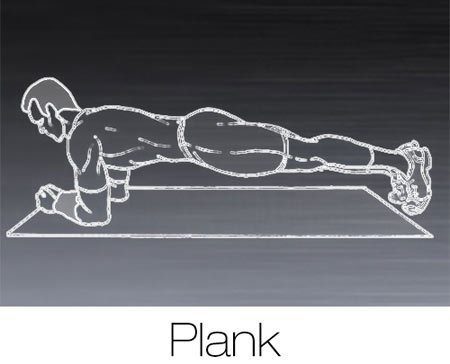
5. Plank:
There are several ways of performing planks as it helps strengthen core muscles. However, the recommended one for beginners is the form which requires one�s forearms and toes to face the plank.
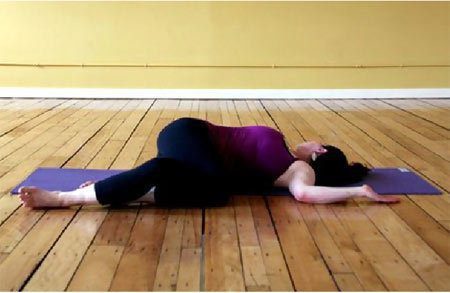
6. Spine Release:
This is a position which can be performed either on a bed or floor. Raise your knees to form a T shape and then move it in the either directions. Keep your shoulders flat on the mat as you might be tempted to raise them, and only lower your knees till a comfortable point.[ Read: Aerobic Exercise at Home for Stomach ]
7. Yoga:
Yoga has been one of the oldest practices to cure any ailment and it helps in enhancing overall physical strength. It maintains a balance for the body in case of Scoliosis.
8. Breathing Exercise:
Breathing in the right posture helps blood circulation to develop muscles that fluctuate in the right motion and also a cordial motion with the heart beats.[ Read: Exercise for Biceps ]
9. Stretch Up:
Stretching helps in formation and pulling of muscles which then help in straightening and loosening the core nerves.
10. Schroth Method:
The Schroth Method is one of the best innovations from Germany and has helped many as cure from this dreadful condition.Image source: 1 , 2 , 3 , 4 , 5
Caveat: Please consult your doctor before practicing these exercises. Only certain types of curves can be cured by these exercises while others require different procedures.
IFM's Find A Practitioner tool is the largest referral network in Functional Medicine, created to help patients locate Functional Medicine practitioners anywhere in the world. IFM Certified Practitioners are listed first in the search results, given their extensive education in Functional Medicine