Eugene, Or. � It was a bittersweet victory for the Miners as UTEP�s freshman Emmanuel Korir captured his second NCAA title in the 800m at the historic Hayward Stadium on Friday evening.
Running in the 800m final were both freshman Michael Saruni and Korir, who were favored to finish the event No. 1 and No. 2. Korir, a bit shaken up, narrowly held onto his lead and finished the race in a time of 1:45.03. It marks his second NCAA track and field title (800m indoor and outdoor).
�It was very unfortunate that Michael went down in the 800m, it would�ve been a very exciting finish to see who would be the national champion had he not fallen,� head coach Mika Laaksonen stated. �Emmanuel should feel very fortunate, Michael would have really challenged him at the end. He [Korir] is such a talented runner this may have been his last race for us.�
Saruni, having taken a hard fall, showed great determination and strength to finish the race with a time of 2:15.56. The Kenya native still earned All-American honors for his performance.
The only female competing for the Miners on Friday was junior Lucia Mokrasova. Under difficult weather conditions, she tallied a total of 3,178 points through the first four events of the women�s heptathlon.
She started the day off with a time of 14.49 in the 100m hurdles for 910 points. She followed that up by clearing 1.54m in the high jump accumulating 666 points. Her best event was undoubtedly the shot put. The Slovakia native heaved the ball out to 13.36m (43-10) garnering 751 points; the throw was the enough to place her first in the 24-athlete field.
She closed out the night with a time of 25.93 for 851 points in the 200m.
Mokrasova will conclude the heptathlon Saturday with the long jump (12:30 p.m. MT/espn3.com), javelin throw (1:45 p.m./espn3.com) and the 800m run (6:30 p.m./ESPN).
Saturday will feature the women�s final day of competition with sophomore sensation Tobi Amusan running in the 100m hurdle final for the second time in her career. Amusan qualified with the fastest time of 12.79. The Nigerian native will take the track at 5:10 p.m. live on ESPN.
Senior Samantha Hall will make her final appearance in the Orange and Blue as she competes in the women�s discus throw. Hall comes into the competition ranked 7th among the 24-athlete field. The discus throw starts at 4:00 p.m. on ESPN3.com.
For live results be sure to follow @UTEPTrack on Twitter and uteptrack on Instagram.
Chiropractic received a boost from some major national sources in recent months. Here�s a recap.
1. American College of Physicians issues new guideline for low-back pain treatment
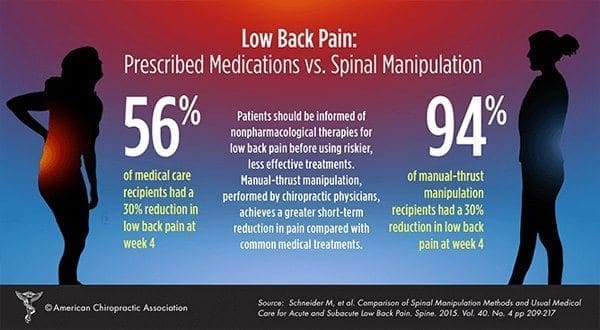
The American College of Physicians (ACP) published a new low-back pain treatment guideline recommending first using non-invasive, non-drug treatments, including spinal manipulation, before resorting to drug therapies. The guideline was published Feb. 14, 2017 in the Annals of Internal Medicine. For more information, see the American Chiropractic Association news release on the guideline.
On May 1, 2017, the New York Times published an editorial by Aaron E. Carroll, M.D., that mentions the new guideline in a generally positive light. The article appeared in a major, mainstream publication read by millions of people. �Spinal manipulation�along with other less traditional therapies like heat, meditation and acupuncture�seems to be as effective as many other more medical therapies we prescribe, and as safe, if not safer,� he wrote.
Talking points on new ACP guideline:
The chiropractic profession has advocated for decades that conservative care choices such as chiropractic be the first line of treatment for low-back pain. Now, with this new guideline, the medical profession is recognizing the benefits of conservative care for this common problem.
Thanks to this guideline, it�s possible more medical doctors will choose to refer their patients with low-back pain to chiropractors.
The ACP guideline was adopted by the American Chiropractic Association, which also adopted the Clinical Compass guidelines on chiropractic for LBP at its HOD meeting in March.
2. Article�and editorial on spinal manipulation published in JAMA
The April 11, 2017, issue of the Journal of the American Medical Association(JAMA) featured the article �Association of Spinal Manipulative Therapy With Clinical Benefit and Harm for Acute Low Back Pain.� This systematic review and meta-analysis found that of the 26 eligible RCTs identified, 15 RCTS (1,711 patients) provided moderate-quality evidence that SMT has a statistically significant association with improvements in pain. Twelve RCTs (1,381 patients) produced moderate-quality evidence that SMT has a statistically significant association with improvements in function. One of the RCTs included in this analysis, �Adding chiropractic manipulative therapy to standard medical care for patients with acute low back pain: results of a pragmatic randomized comparative effectiveness study,� was led by investigators at the Palmer Center for Chiropractic Research.
Additionally, an editorial by Richard A. Deyo, M.D., M.P.H., titled �The Role of Spinal Manipulation in the Treatment of Low Back Pain,� was published in the April 11 issue of JAMA. �If manipulation is at least as effective and as safe as conventional care, it may be an appropriate choice for some patients with uncomplicated acute low back pain,� Dr. Deyo wrote. �This is an area in which a well-informed patient�s decisions should count as much as a practitioner�s preference.�
A National Public Radio story on April 11 quoted Dr. Paul Shekelle, an internist with the West Los Angeles Veterans Affairs Medical Center and one of the study authors, as saying the JAMA study found patients undergoing spinal manipulation experienced a decline of one point in their pain rating. He added that the study also found spinal manipulation modestly improved function.
3. Article�and editorial on spinal manipulation published in JAMA
An article published April 4 in STAT News, a medical journal, discussed the ACP guideline and how it�s bolstering the cause of non-pharmaceutical pain control methods like chiropractic and acupuncture. Another article published May 10 in STAT News covered proposed FDA recommendations that physicians learn more about chiropractic, acupuncture and other drug-free pain treatments as therapies to help patients avoid prescription opioids.
4.�Article posted May 19 on Psychology Today website about new research on chiropractors helping people with low-back pain
This article, �The Evolving Evidence on Chiropractors for Low Back Pain,� covered the ACP guideline and its recommendation for conservative care first, as well as the Annals of Internal Medicine systematic review that found evidence spinal manipulation helps to reduce pain for people with chronic low-back pain. It concluded by saying, �On the whole, the evidence suggests that seeing a chiropractor can reduce pain levels and increase function for people with chronic low back pain.�
A cervicogenic headache begins in the cervical spine, or the neck. Sometimes these headaches mimic migraine headache symptoms. Initially, discomfort may start intermittently, spread to one side (unilateral) of the individual head, and become nearly continuous. Furthermore, pain can be exacerbated by neck movements or a particular neck place (eg, eyes centered on a pc monitor).
Possible Causes of Cervicogenic Headaches
The trigger of a headache is often associated to extreme tension to the neck. The headache may be a consequence of cervical osteoarthritis, a broken disc, or whiplash-type movements that irritates or compresses a cervical nerve. The neck’s bony structures (eg, aspect joints) and its delicate tissues (eg, muscles) can give rise to the improvement of a cervicogenic headache.
Nervous System Function
Certain nerves structures are involved in several cervicogenic headaches. Spinal nerves are signal transmitters that allow the body via the spinal cord and communication between the brain. At each level of the cervical spine is one on the right of the spine and a set of nerves; one on the left side. C1, C2 or C3 may be involved in development of cervicogenic headaches because these nerves permit function (motion) and feeling of the head and neck. Compression can cause pain and inflammation.
Cervicogenic Headache Symptoms
A cervicogenic headache provides in base and the back of the skull as a steady, non-throbbing pain, sometimes extending downward into the neck and between the shoulder-blades. Pain could be felt behind forehead and the brow, although the problem originates in the cervical spine.
Pain usually starts after a sudden neck movements, such as a sneeze. Along with head and neck discomfort, signs may include:
Stiff neck
Nausea and/or vomiting
Dizziness
Vision
Sensitivity to light or sound
Pain in both arms or one
Risk facets that will be engaged in headache on set or irritate cervicogenic headaches include:
Fatigue
Sleep difficulties
Disc problems
Current or neck injuries that are preceding
Poor posture
Muscular stress
Diagnosis of Cervicogenic Headaches
The analysis of a headache commences using a thorough medical background using a physical and neurological evaluation. Diagnostic testing may include:
X-rays
Magnetic resonance imaging (MRI)
CT Scans (rarely)
Nerve block injections to validate the diagnosis, cause
Treatment for Cervicogenic Headaches
Initially, your doctor may advise an over-the counter nonsteroidal anti inflammatory drug (eg, aspirin, Aleve). If this is ineffective, then a prescription anti-irritation and pain reliever might be prescribed. Other treatment options, outlined in purchase of from non-invasive to invasive, include:
Spinal manipulation or alternative manual therapies
Behavioral methods (eg, bio feedback)
Acupuncture
Trigger level injections
Prolotherapy
Facet joint blocks (a type of spinal joint injection)
Nerve blocks (this is generally of the medial branches of the nerves that provide you with the the facet joints)
Radiofrequency pulse ganglionotomy of the nerve root (eg, C 2, C-3)
Spine surgery to reduce nerve or vascular compression (this is rarely necessary)
The scope of our information is limited to chiropractic and spinal injuries and conditions. To discuss options on the subject matter, please feel free to ask Dr. Jimenez or contact us at 915-850-0900 .�
By Dr. Alex Jimenez
Additional Topics: Cervicogenic Headache and Chiropractic
Neck pain associated with whiplash-associated disorders resulting from an automobile accident are reportedly the most prevalent cause for discomfort along the cervical spine. The sheer force of an impact from a rear-end car crash or other traffic incident can cause injuries or aggravate a previously existing condition. While neck pain is commonly the result of damage to the complex structures of the neck, cervicogenic headaches may also result due to neck issues. Chiropractic care can help carefully restore the alignment of the cervical spine to relieve headaches and neck pain.
Manual manipulations and spinal adjustments have been demonstrated to be successful treatment alternatives for patient’s with headaches.
Chiropractic’s capability to correct bio-mechanical dysfunctions can help eliminate common factors which may lead to head and neck pain. A majority of headaches are associated with neck pain and other cervical spine issues, best known as cervicogenic headaches. These headaches are musculo-skeletal in nature and are related to tension headaches, which may also relate to migraines.
According to some research studies, there’s less risk of further injury or aggravation of a previous condition through chiropractic adjustments than with popular medical remedies. Additionally, newest research indicates that nine percent of men and 12 percent of women in the United States experience at least one to two headaches per month, with four percent of the population experiencing more regular headaches.
Prevalence of Head Pain & Neck Pain
Two-thirds of all adult males and greater than 80 percent of females in developed countries suffer from persistent headaches, according to the World Wellness Organization (WHO). Headaches are just as harmful in developing nations as well, primarily because such are not considered to be a symptom of disease. WHO estimates that about half of the individuals who experience headaches never receive any treatment for them.
People who suffer from chronic, everyday headaches amount to about four or five percent of the world’s population, surpassing the percentage of several other common illnesses. Experts genuinely believe the connection of headache victims to those with disabilities is approximately the same.
Headaches are so frequent that Americans pay more than one billion annually to get alleviation from them. Medical expenses plus lost-work time and productivity accounts for an estimated $50 billion in losses for American companies. Just as troubling: The discomfort associated with headaches and migraines might be so extreme, it’s often reported that mental illness follows soon after.
Approximately 95 percent of headaches are categorized as stress, migraine, or cervicogenic, originating in the neck. Symptoms include head pain on either side of the head or a stiff feeling in the neck, along with tightness and soreness. A small percentage of headaches is on the array that is more hazardous and it’s possible for these to need further referral to appropriate healthcare professionals to treat them as necessary.
Treatment for Headaches Associated with Neck Pain
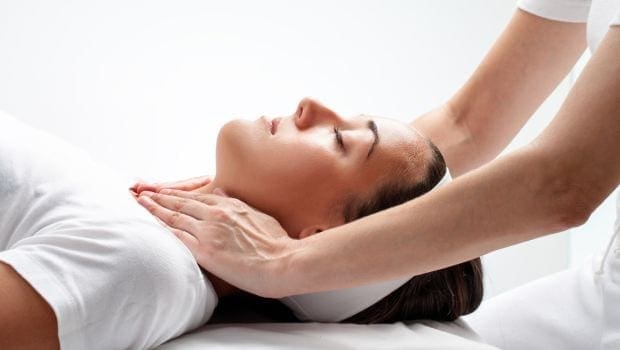
By utilizing risk-free and beneficial treatment protocols, many doctors of chiropractic, or DCs, effortlessly help many individuals reduce the symptoms of headaches. A spinal adjustment can certainly help lessen the strain being placed on the spine and its surrounding structures, such as muscles, tendons, ligaments and blood vessels, diminishing the signs of a headache and allowing for better function.
Particularly as it relates to neck modifying, many people have worries about chiropractic manipulation. Atlas Orthogonal chiropractic is a different kind of chiropractic treatment which is performed without manipulation of the head or neck. The �snap,� �crack,� or �pop� sound usually associated with chiropractic or osteopathic manipulation is not necessary to move a vertebra, especially the atlas or upper cervical joint complex.
Chiropractors in general are perhaps not taught aggressive, forceful techniques; the type that’ll injure vessels or tissues. Chiropractors are taught to use speed and finesse as an alternative to pressure. When the physician performing the procedure compensates for slow-pace by increasing pressure in the manipulation, problems can occur.�Chiropractors provide by far the greatest number of manipulations to the spine than any other profession, but other healthcare professionals can also perform manipulation and mobilization techniques.
Chiropractic health practitioners have had the same simple coaching as any other primary care physician. The variation between DCs and MDs lies in their treatment protocols for certain types of injuries and/or conditions.
Conclusive Findings
The need to seek assistance in emergencies is essential, if all other choices happen to be explored. When seeking specific treatment for cervicogenic headaches as well as neck pain, it’s suggested to seek medical attention with Atlas Orthogonal chiropractic, followed closely by other actions that are less-invasive. Surgery is often suggested and recommended to be used as a last option unless otherwise necessary.
Most people that have had an Atlas Orthogonal chiropractic adjustment report feeling as either a puff of force or nothing at all. They hear a tiny tap and they describe feeling the neck’s tightness and soreness decrease. Some explain the experience as initially underwhelming.� Others report a wave like feeling rushing through the body, especially after various treatments. The healthcare professional�may determine substantial changes between his objective findings from before the adjustment and those he finds afterwards in the patients.
About the Atlas Orthogonal Chiropractic Technique
Atlas Orthogonal chiropractic therapy could be an excellent instrument in the prevention of headaches, accidents and several other problems and includes a calming outcome for many individuals.
The scope of our information is limited to chiropractic and spinal injuries and conditions. To discuss options on the subject matter, please feel free to ask Dr. Jimenez or contact us at 915-850-0900 .�
By Dr. Alex Jimenez
Additional Topics: Cervicogenic Headache and Chiropractic
Neck pain associated with whiplash-associated disorders resulting from an automobile accident are reportedly the most prevalent cause for discomfort along the cervical spine. The sheer force of an impact from a rear-end car crash or other traffic incident can cause injuries or aggravate a previously existing condition. While neck pain is commonly the result of damage to the complex structures of the neck, cervicogenic headaches may also result due to neck issues. Chiropractic care can help carefully restore the alignment of the cervical spine to relieve headaches and neck pain.
Eugene, Or. � Tobi Amusan�s dazzling sophomore season continues as she earned an automatic qualifying spot in the 100m Hurdles on day two of the NCAA Championships on Thursday evening.
Amusan was tasked with running in the second and most competitive heat of three in the 100m hurdle semifinals. The sophomore clocked the fastest qualifying time of 12.79, beating the likes of Drior Hall (USC) and the 2017 (60m hurdle) NCAA Indoor Champion Sasha Wallace (Oregon).
Last year the Nigerian native finished runner up to Kentucky�s Jasmine Camacho-Quinn (12.84), who also qualified to the final. Amusan will take the track again on Saturday at 5:10 p.m. MT live on ESPN.
Sophomore 800m runner Lilian Koech�s season came to a halt on Thursday evening. The Kenya native clocked a time of 2:09.30 to finish 23rd overall.
Winny Koech�s season also came to an end as she ran a time of 34:51.32 in the 10,000m final on Thursday evening.
Friday�s action will see three Miners compete. Emmanuel Korir and Michael Saruni will run in the men�s 800m final set to start at 7:45 p.m. live on ESPN. Saruni (1:46.38) and Korir (1:46.63) qualified to the No. 1 and No. 3 spots in tomorrow�s final.
Lucia Mokrasova will also be in action as she will complete the first of four events (100m hurdles, high jump, shot put and 200m dash) of the heptathlon. The heptathlon competition can be viewed on espn3.com and begins at 1:30 pm.
For live results and breaking news be sure to follow @UTEPTrack on Twitter and uteptrack on Instagram.
The 2017 edition of the UTEP Men�s Basketball Camps is almost here. �The Miner coaching staff and players will conduct two camps for boys and girls of all skill levels, ages 7-17.� The first is June 19-21, and the second is June 26-29.
The camp will be held at the Don Haskins Center from 9 a.m. � 4 p.m. each day and will teach the fundamentals of basketball through a variety of skill work, games and contests.
Each camper will receive a t-shirt on the first day of camp, and certificate at the end of the camp.� Various trophies and prizes will be awarded to campers who stand out in talent, skill level, hustle and sportsmanship.
Campers can bring their own lunch, or purchase lunch and/or snacks on site. The cost is $200 for the June 19-21 camp, and $250 for the June 26-29 camp.
Campers receive $50 off by signing up for both camps.� UTEP staff and military members receive a $50 discount for each camp. Walk-ups will be accepted.
Registration will take place in the East concourse of the Don Haskins Center.� With Glory Road closed for both camps, parking will be available by the UTEP Ticket Center off of Mesa Street.
To register or for more information, call UTEP Director of Basketball Operations Evan Eustachy at (915) 747-6235 or visit the camp�s website.
The most useful rule-of-thumb for headache and migraine treatment is: Have a program. See your doctor and produce a treatment strategy together. Your program will help you identify and handle migraines or your headaches early, sparing you some discomfort.
Tension Headache Treatments
When you get a pressure-type headache, it’s usually because of a change in neck, your mind, or encounter. Other tissues, nerves, blood vessels, and the muscles are experiencing distress. Treat the change, and you will reduce your headache.
It may build up unwanted stress, in case you have already been hunched over a laptop at work. Or perhaps a new medicine was started by you, or had minor neck injuries.
Take a minute curl up to stretch, or massage head your face, and neck. Consider a nap, a shower, or utilizing pack or ice pack on your own head or neck.
Tension Headache Medications
For tension headaches, you’ve numerous over-the-counter medicine alternatives. Naproxen ibuprofen, acetaminophen, and aspirin are successful. If you suspect your headache is vascular (associated to your own blood vessels), consider a pain-reliever that includes some caffeine.
Get in touch with your doctor for more tips if your headache does not react to to your own behavioral techniques and medications. In the event the headache becomes severe or lasts for more than 10 days, see your doctor. Your headache might be a signal of another condition.
Cluster Headache Treatments
Inhaling 100% oxygen right when a cluster headache starts can help lessen the pain considerably. Your doctor can help you get a portable oxygen unit to carry in a bag or briefcase.
A mainstay migraine medication, sumatriptan, is effective for cluster headaches. Learn to inject yourself right when you sense the first signs of your cluster headache. Other cluster headache medicines that are useful are dihydroergotamine, administered via an I-V, and octreotide sent as an injection.
Migraine Headache Prevention
Over the past 2 decades, health practitioners have realized effective treatments for decreasing the frequency of migraines. Avoid migraine triggers, take preventive medicine, alter your nourishment, and improve your rest.
One of numerous migraine triggers, several are foods, by avoiding so you can reduce your migraine risk:
Beans, legumes, and nuts
Fermented and pickled foods like pickles and olives
Dairy and cheese that is aged
Avocados
Onions
Cured or ag ed meats
Items containing brewer’s yeast
Chocolate, cocoa, and carob
Aspartame
Beverages
Caffeine
Other frequent migraine triggers include:
Stress
Weather changes
Poor diet
Hormonal changes
Nicotine
Physical activities that are intense
As you pay focus on what triggers your migraines, you are able to learn better what to avoid�??this is just a starting listing.
Your doctor will consider other medicines that prevent migraines. He/she might prescribe:
The blood-pressure drugs propranolol or timolol
Anti-depressants such as amitriptyline or fluoxetine
The seizure medication valproate
While these drugs came to market to handle other conditions, they are also efficient for migraine prevention.
Migraine Treatment
Migraine remedy is a race from the clock. You can take steps to reduce the intensity of the assault when you sense the warning signs of a migraine. That is the time to lie down, relax, and simply take your drugs.
Non-steroidal anti-inflammatories (NSAIDs), aspirin, and acetaminophen relieve some migraines. However, many migraine sufferers need stronger medicines for example sumatriptan or a different medication from your triptan family. In a few extreme circumstances, you may be treated by your physician with an opioid.
Treatments such as ice packs or cold compresses on your forehead rush instant reduction. Massaging your scalp and rubbing your temples may also help reduce the intensity of the migraine.
The scope of our information is limited to chiropractic and spinal injuries and conditions. To discuss options on the subject matter, please feel free to ask Dr. Jimenez or contact us at 915-850-0900 .�
By Dr. Alex Jimenez
Additional Topics: Cervicogenic Headache and Chiropractic
Neck pain associated with whiplash-associated disorders resulting from an automobile accident are reportedly the most prevalent cause for discomfort along the cervical spine. The sheer force of an impact from a rear-end car crash or other traffic incident can cause injuries or aggravate a previously existing condition. While neck pain is commonly the result of damage to the complex structures of the neck, cervicogenic headaches may also result due to neck issues. Chiropractic care can help carefully restore the alignment of the cervical spine to relieve headaches and neck pain.
IFM's Find A Practitioner tool is the largest referral network in Functional Medicine, created to help patients locate Functional Medicine practitioners anywhere in the world. IFM Certified Practitioners are listed first in the search results, given their extensive education in Functional Medicine