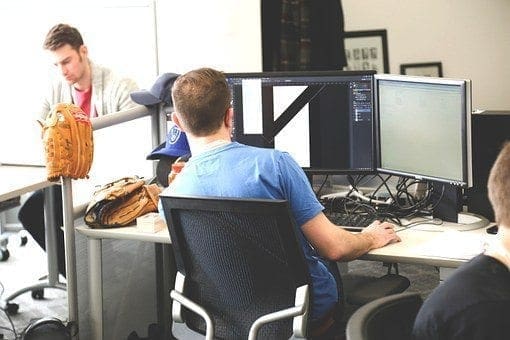
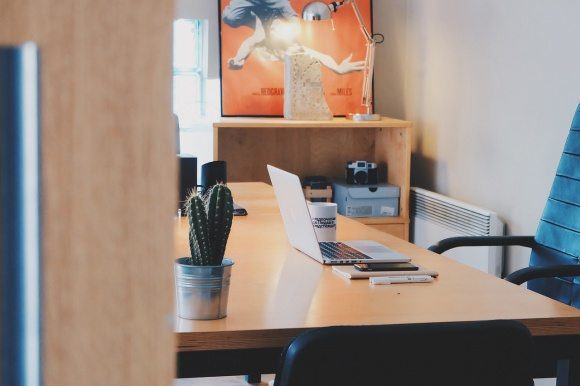
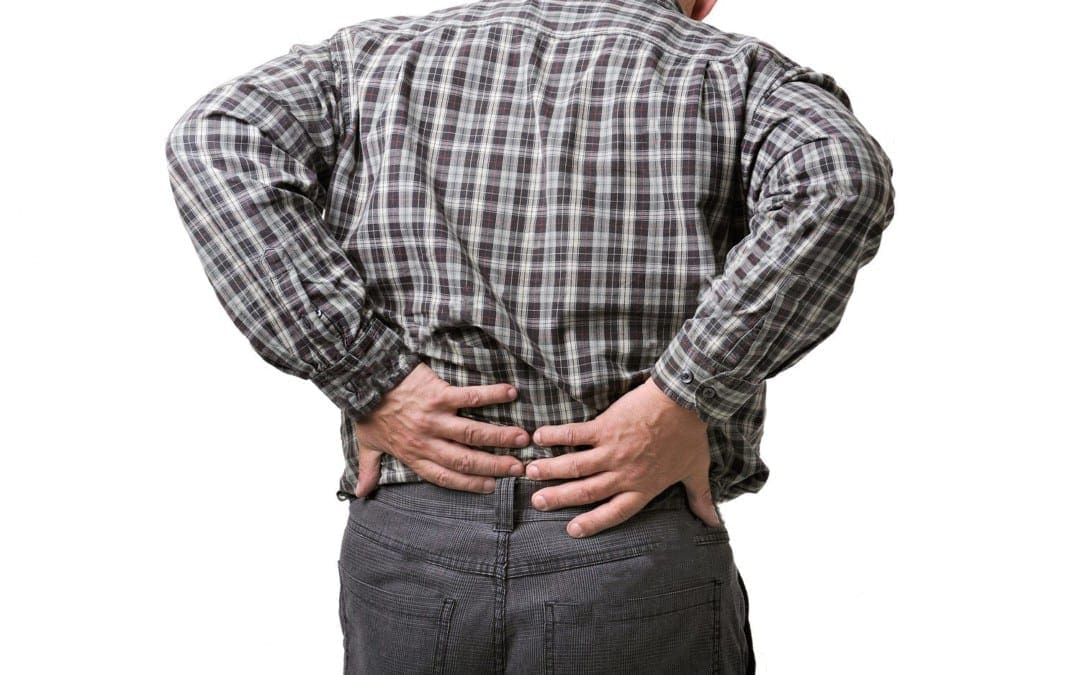
El Paso TX. Chiropractor Dr. Alex Jimenez looks at the work environment to see if it is in fact spine friendly.
While work can be a pain, it doesn’t have to cause pain. Creating your office work room in order to avoid back and neck strain is easier than you may think. Plus, rethinking your work environment is a fantastic chance to brush up on other healthy work habits as well as your posture.
Here are five ways you are able to design your office together with your back in your mind.
#1. Perfect Your Sitting�Posture
If you’re not sitting right even with the top equipment, your back will suffer. Pay attention to the situation of legs, hands, and your head when sitting. To avoid back pain, make sure to do the following:
Sit erect with your back and shoulders against the trunk of your chair
Consider using a hands free headset to stop shoulder and neck pain
Don’t slouch
Arms should rest on the armrests of your chair to avoid nerve pressure or circulatory difficulties
Keep your feet flat on the flooring�don�t cross your legs
Rest your shoulders while typing
#2. Get A Good�Chair
A good-constructed ergonomic seat to help increase your blood flow, reduce fatigue, stress, and decrease the chance of injury to your own neck and back. Getting the chair that is best is important, which means this is one product which should be tried in the store as opposed to purchasing online so you know before purchasing it, the way that it feels. Make fully sure your office chair has got the following:
A good backrest that provides lumbar support
The capability to recline (Sitting erect at a 90� angle is not good for your spine; a 100-degrees to 110-degrees angle is much better.)
Flexible height (You don�t want the seat to be overly high�your feet must be flat on the floor)
The ability to rotate or swivel, so you can easily�change tasks
#3. Invest In A Desk That Offers More Than Just Storage
One of the biggest pitfalls of a spine-friendly work routine is staying in one position for a long time. Switching between sitting and standing is the best strategy, and some desks�known as sit-stand desks or sit-to-stand desks � encourage one to mix up your position through the entire workday.
Sit-to-stand desks offer you the choice to work comfortably in both sitting and standing poses�and they been discovered to simply help burn off calories. They come in various price points and styles, and a growing variety of companies are considering this investment to boost workplace wellness.
If you�re looking to boost the ergonomic quality of a traditional desk make sure the desk is:
Secure (not wobbly)
Suitably high (generally 28″ to 30″ above the floor)
Large enough for your computer, with surface space for writing along with other jobs.
Not�so large that you have to over reach to do your work, which could cause excessive stress on the back
#4. Look At Your Computer
Since so much office work is done on computers, wherever your equipment is put can really make a difference when you are at work, in how your back feels. Try the following hints:
Tilt the keyboard down and slightly away from you for better wrist posture
Be sure your mouse is close enough so you can use it with your arms relaxed, and let it be as close to your body as possible
Set the monitor right in front of you at eye level, not off to the side, in order to avoid eye and neck strain. Adjustable monitor stands are available to find an ideal height.
If using a notebook, consider getting an external monitor or keyboard (or both). This enables each of those parts individually to move to develop a comfortable arrangement.
#5.�Take A Break
Not just a coffee break but a spine break. Stretch, take a quick walk, get the blood flowing. It�s simple to get caught up in work jobs and forget that you�ve been sitting or typing for a straight hour. Whether it�s a 15-minute walk or two-minute stretch session, occasional breaks can help revive your muscles, and perhaps you can find feel more productive, too.
You spend lots of time at work�why not take a few extra steps to develop a space that does your back a number of favors in return?
Chiropractors think that good health is decided by way of a healthy nervous system, particularly a healthy spinal column. Sometimes, vertebrae become misaligned and put pressure on the nerves exiting the spinal cord. The misalignment of a vertebra is called a chiropractic subluxation.
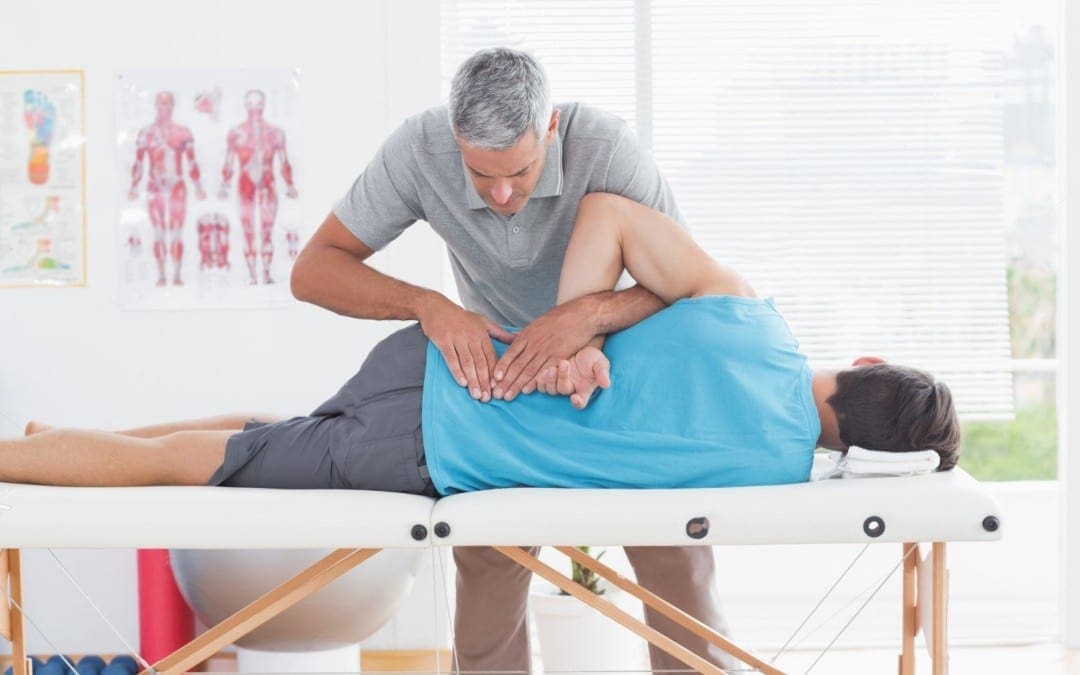
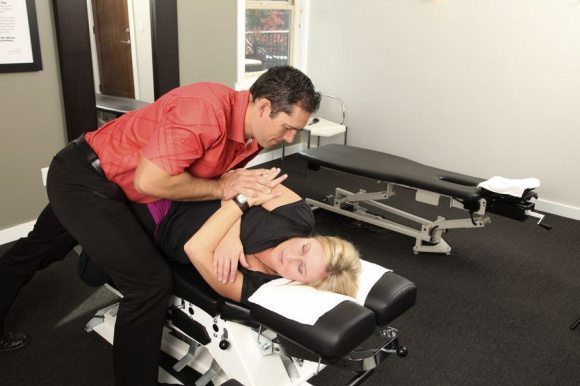
Chiropractors use specific methods to return the vertebrae in their proper locations or muster them to allow them to go freely when subluxations happen. These techniques are called spinal manipulations or adjustments. During an adjustment, the vertebra is freed in the misaligned location and returned to the right place in the spinal column. The adjustment permits the entire body to cure and preserve homeostasis once performed.
Chiropractors Are Trained In Many Different Adjustment Techniques
Some are done by hand; some necessitate using specialized instruments. Since each patient is different, your chiropractor will pick the best technique for the state. Nevertheless, don’t hesitate to ask the chiropractor which technique she or he will be doing and the way that it will be achieved.
Common Adjustment Techniques Employed By Chiropractors Are The Following:
Toggle Drop – this is when the chiropractor presses down firmly on a specific part of the back. Subsequently, using a drive that is precise and rapid, the chiropractor aligns the spine. This really is accomplished to enhance mobility in the vertebral joints.
Motion Palpation – this hand-on procedure is performed to determine in case your vertebrae are moving freely inside their normal planes of motion.
Lumbar Spin -the chiropractor positions the patient on her or his side, then implements a thrust that is quick and precise returning it to its proper place.
Release Work – the chiropractor applies gentle pressure using her or his fingertips to separate the vertebrae.
The chiropractor applies a quick thrust at once the table drops. The dropping of the table allows for a lighter adjustment without the twisting postures that can accompany the manual adaptation.
Instrument adjustments – of correcting the spinal column frequently the gentlest ways. The patient lies on the table while a string is used by the chiropractor face down – filled activator instrument to do the adjustment. This technique is frequently used to perform adjustments on creatures too.
Manipulation done under anesthesia (or twilight sedation) – this is performed by a chiropractor certified in this technique in a hospital outpatient setting when you’re unresponsive to traditional adjustments
Keep in mind that before you experience complete relief out of your symptoms you may really need to go back to the chiropractor’s office for additional adjustments.
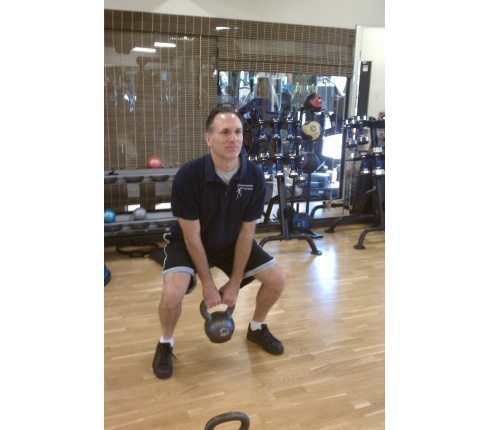
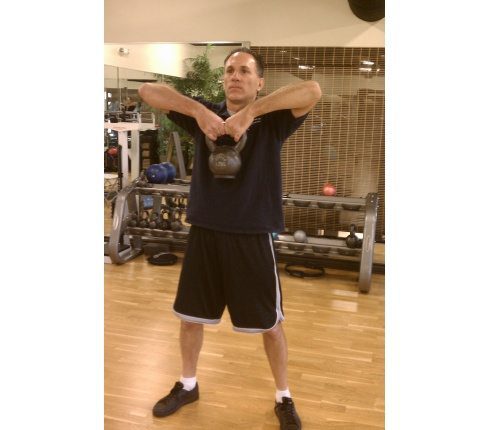
Strengthening the spinal muscles is essential for health and fitness. Functional kettlebell training is resistance training that strengthens the spine. Kettlebell training is an extremely effective type of exercise to increase functional strength, ballistic power, endurance, and flexibility in the entire body, especially the spinal and core muscles.
(Exercise shown is Anchor Squats.)
What Exactly Are Kettlebells?
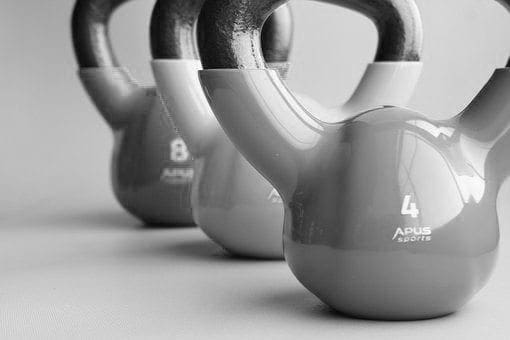
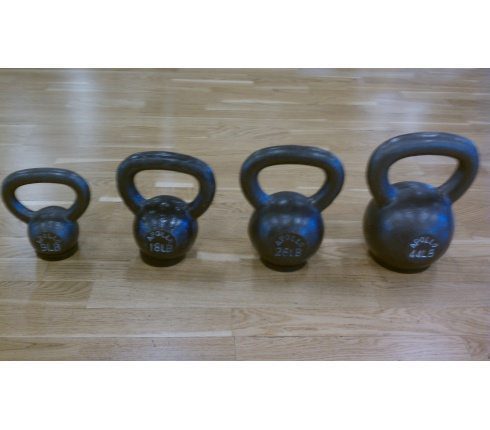
Kettlebells are round cast iron weights with a single handle. Picture a cannonball with a u-shaped handle. Kettlebells are manufactured in a wide range of weights, for all strength levels.
Muscles Used in Kettlebell Training
Kettlebell training incorporates large functional movements. Multiple muscle groups work in synergy to complete the exercises. The spinal muscles function as either the primary mover or assist the primary mover in every kettlebell exercise. The spinal muscles also stabilize the body during functional kettlebell training, thus developing the smaller supporting structures.
(Exercise shown is Push Press.)
High Reps Of High Importance In Kettlebell Training
Kettlebell training employs high repetitions, momentum, and centrifugal force. Momentum works the spinal muscles as the weight is raised and lowered. High repetitions combined with momentum and full body movement build strength and endurance in the entire musculoskeletal and cardio-vascular systems. Kettlebell training delivers aerobic and anaerobic benefits.
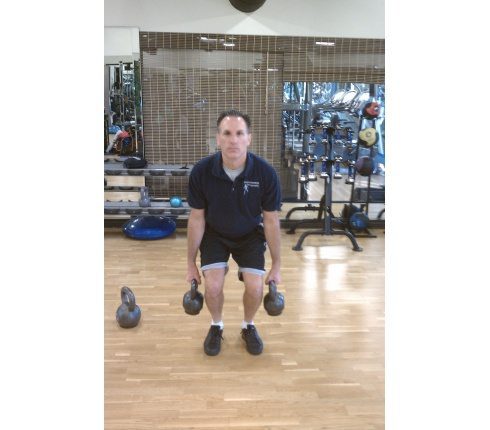
(Exercise shown is High Pulls.)
Always Learn From A Qualified Kettlebell Instructor
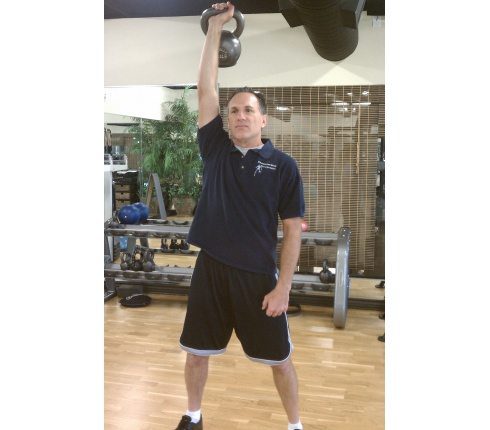
Perfect technique is mandatory during exercise. Correct exercise technique maximizes benefit and lowers injury risk. Poor exercise form increases the possibility of injury and diminishes results. Kettlebell exercises are learned motions, so you should learn proper training technique from a qualified kettlebell trainer. The trainer should demonstrate, instruct, and supervise your training and develop your routine.
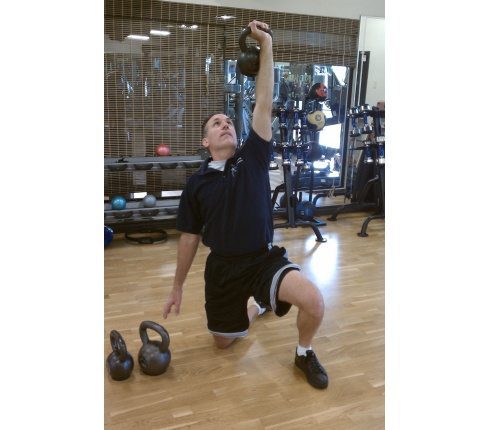
(Exercise shown is Turkish Get-up.)
So Many Possibilities
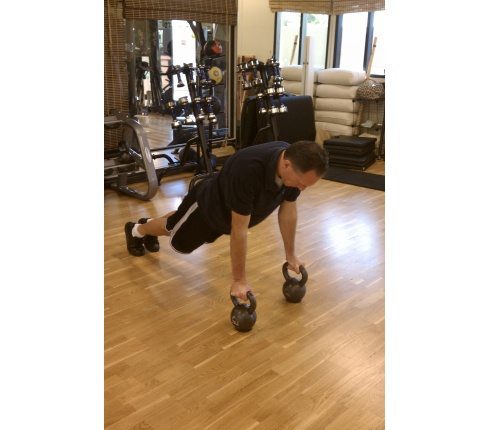
The kettlebell�s shape allows for a wide variety of exercises. This resourceful exercise tool is used for basic exercises like squats (shown in slide 1), cleans, swings, high pulls (shown in slide 4), snatches and push presses (shown in slide 3). The versatility of the kettlebell is demonstrated with exercises such as renegade rows (a combination of push-ups and rows�shown in slide 6), suitcase swings, woodchoppers (a combination of lunges and oblique twists), windmills, and Turkish get-ups (shown in slide 5)
(Exercise shown is Renegade Rows.)
Kettlebell’s Benefits For The Spine
Functional kettlebell training is a rare type of exercises that increases aerobic and anaerobic health simultaneously. The benefits to the spine include increased strength, power, endurance, flexibility, function and mobility.
Complementary and alternative medicine, abbreviated as CAM, is described as a variety of healing medicines and practices which are available outside of conventional treatments. CAM practices are believed to provide a much more natural and holistic treatment approach for the wide array of injuries and conditions that exist today. In fact, back pain is one of the most common complaint people turn to complementary and alternative medicine.
Many individuals have found relief from their spinal complications through the use of complementary and alternative medicine practices.
Complementary and alternative medicine therapies and practices can be utilized on their own to treat back pain as well as other symptoms or these can be combined with conventional medicine. As with any new form of treatment however, it’s essential for the individual to thoroughly discuss the variety of CAM therapies that are available to them with a healthcare professional and determine which of the following would be best for their specific issue.
Common CAM, or complementary and alternative medicine, approaches for back pain include:
Acupuncture: Acupuncture is a part of traditional Chinese medicine and it is commonly utilized to treat a variety of painful conditions and their symptoms. This practice involves the insertion of very thin needles into specific pressure points on the body, ultimately helping to relieve pain and other symptoms. A current research study funded by the National Center for Complementary and Alternative Medicine, or NCCAM, demonstrated that acupuncture can be an effective method for treating chronic pain. The utilization of acupuncture as a form of complementary and alternative treatment has long been controversial where some individuals believe it to be nothing more than a placebo and that patients experience pain relief only because they wish to experience relief. However, the NCCAM study provides evidence that acupuncture is an effective form of treatment.
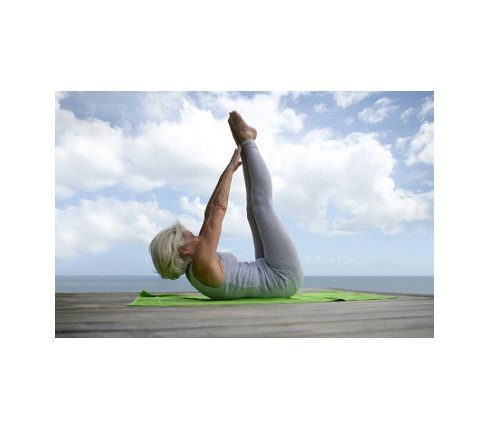
Stretching and yoga: Yoga combines stretching exercises with breathing techniques and mindful awareness to help focus on the area causing the painful symptoms. Physical activity can help improve strength, flexibility and mobility while improving back pain.
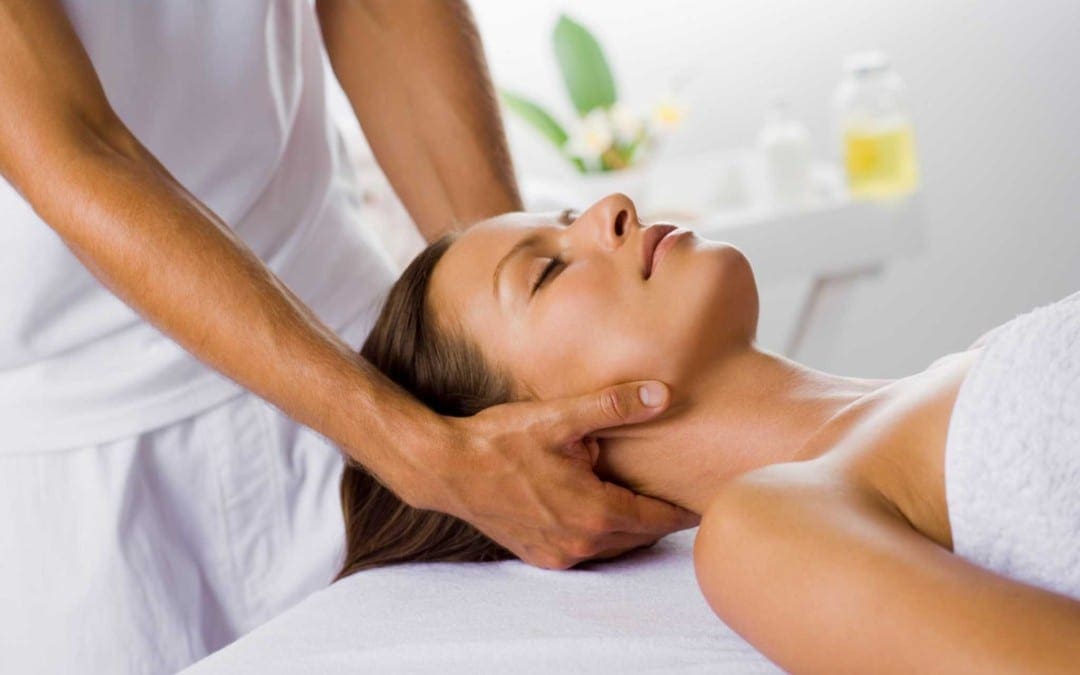
Chiropractic care: Although it is considered a form of complementary and alternative medicine, chiropractic care requires a license for practice in all states. Moreover, chiropractors, or doctors of chiropractic, cannot prescribe medications but they can diagnose and treat back pain using chiropractic techniques and methods, such as spinal adjustments and manual manipulations. Chiropractors may also recommend a series of stretches and exercises according to the patient’s type of injury and/or condition and depending on the severity of their symptoms, to further help treat the individual’s back pain as well as speed up the recovery process.
Massage therapy: A 2011 study funded by the National Center for Complementary and Alternative Medicine, or NCCAM, found that massage therapy can provide short-term benefits for individuals with back pain. When visiting a massage therapist, make sure to inform them about your specific symptoms in order for them to provide you with special treatment.
Herbal medicines: Herbal medications are available as capsules, tablets, teas and essential oils. Remember that herbs can interact with each other and with conventional medications, so be sure to tell your healthcare provider about any herbal remedies you plan to take.
Many people can often find it difficult to know which type of complementary and alternative medicine practice they should begin with, especially for a common complication such as back pain. Make sure to research all CAM specialists carefully, searching specifically for licensed practitioners, and be sure to ask your healthcare specialist for trustworthy recommendations of each. Your health depends on it.
The scope of our information is limited to chiropractic and spinal injuries and conditions. To discuss options on the subject matter, please feel free to ask Dr. Jimenez or contact us at 915-850-0900 .
By Dr. Alex Jimenez
Additional Topics: What is Chiropractic?
Chiropractic care is an well-known, alternative treatment option utilized to prevent, diagnose and treat a variety of injuries and conditions associated with the spine, primarily subluxations or spinal misalignments. Chiropractic focuses on restoring and maintaining the overall health and wellness of the musculoskeletal and nervous systems. Through the use of spinal adjustments and manual manipulations, a chiropractor, or doctor of chiropractic, can carefully re-align the spine, improving a patient�s strength, mobility and flexibility.
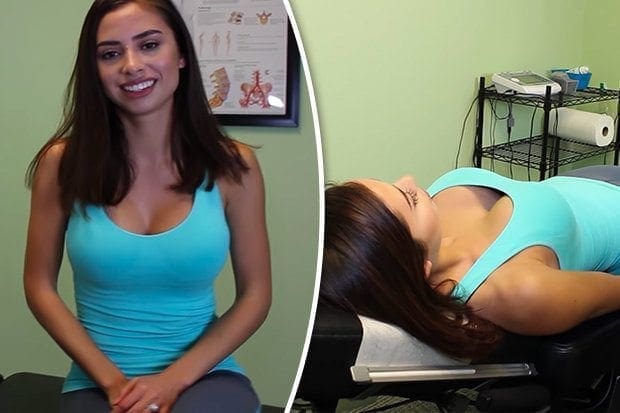
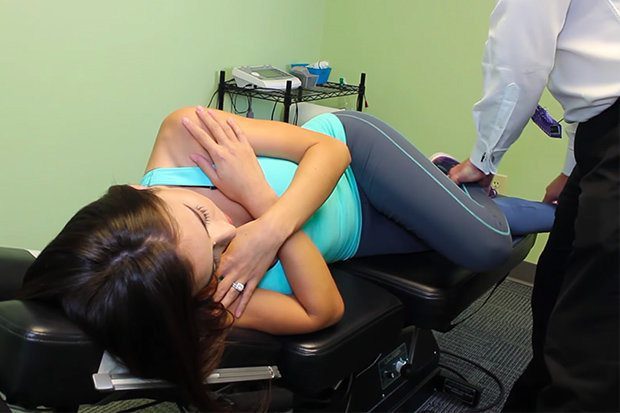
Viewers can�t get enough of the informative clip that sees a chiropractor helping a patient suffering from lower back pain.�Dr Jeffrey Gerdes of the ChiroCare and Rehab centre based in North Carolina, US, talks his way through the demonstrationHis patent tells him: �I�m getting excruciating pains in my back and they�re very instant and they�re immobilising.�It�s so excruciating that I have to stop for a second and re-coup so I�m not sure what�s happening.� The doctor asks her to lie on her side and gently cracks her back.
CRACKING:
But the sound that emerges leaves him stunned. �Wow, gosh that was loud,� Dr Jeffrey says.Viewers can�t get enough of the footage, with more than 876,000 people watching the clip on the chiropractor�s YouTube channel.But many seem to have been distracted more by the stunner getting treatment than the actual techniques involved.�Well, did anyone else manage to take any of that in?� one viewer said.
Exercise can help with back pain�you’ve probably heard that before. And Pilates tops the list of “helpful for your back” exercises.
This shows 4 Pilates moves to prevent pain. Of course, talk to your doctor before beginning an exercise plan.
Warm-up Your Spine with this Exercise
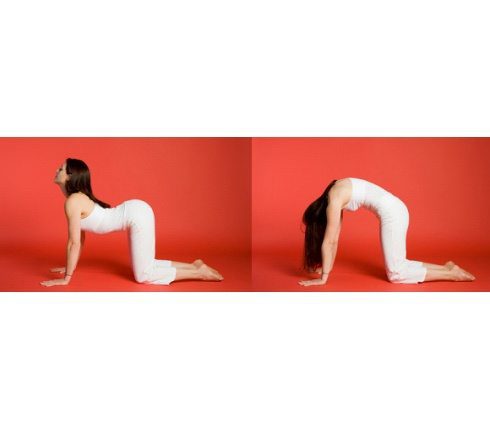
Cat/Cow
The cat/cow stretch lengthens and strengthens the muscles along your spine.
Start on hands (shoulder-distance apart) and knees (hip-distance apart).
Inhale and look up as you slightly arch your spine. Then exhale, engage your abdominal muscles, and draw your belly button toward your spine as you gaze at your navel. Repeat 5 to 10 times every day.
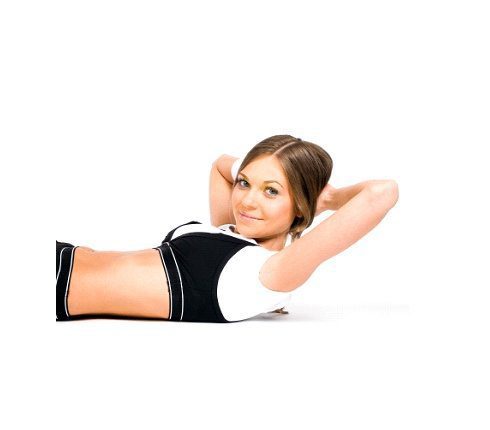
Chest Lift
Not Your Average Sit-up
The chest lift is similar to a basic crunch. The difference? This move deeply targets your abs.
Lie on your back with knees bent and feet flat (hip-distance apart). Bring hands behind head with fingertips touching. Elbows are wide open.
Inhale, and then as you exhale, pull belly button toward the spine and lift the shoulders off the ground (leading with chest). Really use your abs to lift�not your neck. Inhale again as you release toward the ground. Repeat 6 to 8 times daily.
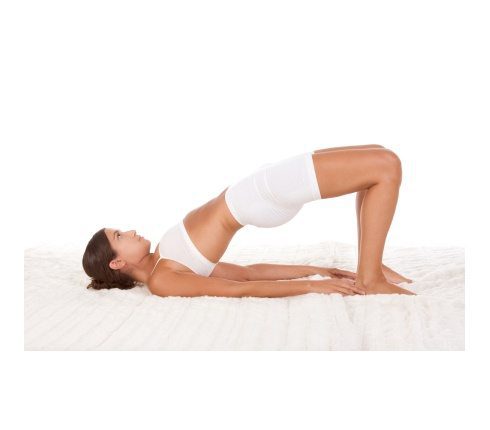
Pelvic Curl
A Pose to Help Ease Low Back Pain
Doing this exercise regularly teaches you how to engage your abs to help support and lengthen the low back.
Start by lying on your back with knees bent and feet flat (hip-distance apart).
Arms are straight along the sides of your body and palms are touching the ground. Inhale deeply and engage your abs as you lift your hips off the floor�vertebra by vertebra.
Exhale and roll back down very slowly, engaging core muscles. Link breath with movement. Repeat 3 to 5 times daily.
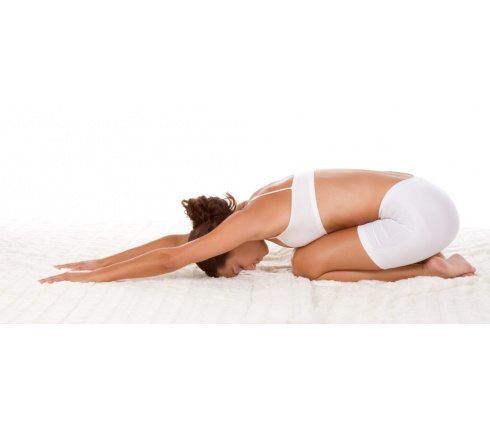
Child�s Pose
An Easy, Restorative Stretch
This move really stretches tight, sore low back muscles.
From hands and knees, bring hips toward heels, and stretch arms in front of you so palms are touching the ground.
Press forehead gently to the floor and do some deep belly breathing. Bring hands toward the legs to slowly sit up. Repeat 3 times daily.
Sciatica is a pain that radiates down the back, though the buttocks, and into the leg. The most common question people ask is: how long is this going to last? We want to know how long each attack will last and how long between flare-ups, but the answer may be more complicated than just simply giving a definite length of time. There are unfortunate individuals who have pain that doesn�t go away, often leaving them with suffering from chronic and persistent pain.
What most doctors and medical professionals can agree on is that there is no universally applicable answer to this question. This article will address questions such as, does sciatica go away on its own? What does sciatica feel like? And can sciatica go away? We will also discuss the causes of sciatica pain, severe complications of sciatica, and sciatica relief.
What Does Sciatica Feel Like?
Sciatica is a pain in the lower back or hip that radiates down into the buttocks and into the back of the leg along the sciatic nerve, with the pain often terminating in the foot. It is often the result of a pinched or inflamed sciatic nerve, which can occur after an injury, muscular strain, or herniated vertebral disc. Sciatic pain typically goes away on its own within a few weeks.
This type of pain can be difficult to describe, as it can take a number of different forms. It may feel like more of a cramping or numbing pain sensation that worsens when you sit, sneeze, or cough. It may be described as numbness combined with an electrical or burning sensation running down the leg, or even just as �pins and needles� along the leg. Pain associated with sciatica can be accompanied with muscle weakness, and it sometimes results in loss of bowel and bladder control, which would require emergency care treatment.
Current statistics show that 80 to 90 percent of all patients recover within six weeks without surgery.
How Long Does Sciatica Last?
Acute Sciatica Attacks
Acute attacks are by far the most common complaint in those with sciatic pain, with symptoms coming and going. The frequency of flare-ups can vary from patient to patient, with some having more episodes and others only having them on occasion. The following are some of the facts associated with acute episodes of sciatica:
Attack episodes do not typically last long in patients with a limited history of attacks�less than five years. These patients have occasional bouts of sciatic pain they might endure for about a week or two that gets better on its own. However, some may find these flare-up periods severely debilitating, as they are not accustomed to the pain, frequently leading to feelings of anxiousness and stress.
There is no clear evidence of any triggers that lead to flare-ups of sciatica pain, but certain physical and emotional instigators may be potential causes.
Statistically, acute pattern flare-ups may occur between two to six times a year, but there are patients who experience more or even less.
Chronic Sciatica Attacks
As the name suggests, chronic symptoms exist over longer periods of time or virtually all the time. This category of sciatic pain is often described as a pain that never really goes away. The severity of the symptoms, however, is often not as intense as it was when they first developed sciatica. Over time, their tolerance for pain has increased, allowing them to endure it for lengthy periods of time. The following are some facts associated with chronic episodes of sciatica:
Chronic pain sufferers often report their symptoms to be less severe over time, along with decreased levels of anxiety and fear that once was associated with the condition
It is rare for a person to just suddenly develop chronic sciatica from nowhere and have the pain remain for an extended period of time
Chronic sciatic is, unfortunately, a lifelong condition, as it is one of the most difficult pain disorders to resolve
While there are cases of individuals who make full recovery from sciatic pain, the harsh truth of the matter is that the majority of patients will have some degree of pain for the rest of their lives. Sciatica does not respond well to most forms of treatment, with no accurate explanation for its cause.
Complications Of Sciatica
While most people fully recover from sciatic pain, it can still potentially cause some serious complications, such as:
When To See A Doctor?
Experiencing sciatic type symptoms should prompt you to go see your doctor right away, as it can drastically reduce the length of time you suffer from the condition. Your doctor may also help you determine if you are at risk for any further complication and provide treatment that is best for you. While mild sciatic pain can go away in time, it�s a good rule of thumb to call your doctor if you are finding your pain to be particularly unbearable.
IFM's Find A Practitioner tool is the largest referral network in Functional Medicine, created to help patients locate Functional Medicine practitioners anywhere in the world. IFM Certified Practitioners are listed first in the search results, given their extensive education in Functional Medicine