by Dr Alex Jimenez DC, APRN, FNP-BC, CFMP, IFMCP | Natural Health, Wellness
Need an energy boost during the afternoon at the office? A jolt of caffeine isn’t as effective as walking up and down some stairs, says a new study from the University of Georgia.
The study, which was published in the journal Physiology and Behavior found that walking up and down stairs for 10 minutes gave volunteers more energy than ingesting 50 milligrams of caffeine — about the amount in a can of soda.
When giving volunteers either caffeine or a placebo, “there was not much change in how they felt,” said Patrick J. O’Connor, a professor in the department of kinesiology. “But with exercise they did feel more energetic and vigorous.”
The study wanted to duplicate the problems office workers, who spend hours staring at a computer screen, faced when trying to boost their energy to avoid mid-afternoon slumps when long bouts of exercise weren’t possible.
For the study, women college students on separate days either ingested capsules containing caffeine or a placebo, or spent 10 minutes walking up and down stairs — about 30 floors total — at a low-intensity pace.
“Office workers can go outside and walk, but weather can be less than ideal. It has never rained on me while walking the stairs,” said O’Connor. “And a lot of people working in office buildings have access to stairs, so it’s an option to keep some fitness while taking a short break from work.”
To test the effects of caffeine versus the exercise, each group took some verbal and computer-based tests to gauge how they felt and how well they performed certain cognitive tasks.
While neither caffeine nor exercise caused large improvements in attention or memory, walking up and down stairs was associated with a small increase in motivation for work.
The study found that even a brief amount of time walking up and down stairs can boost energy without reducing cognitive function. “You may not have time to go for a swim, but you might have 10 minutes to walk up and down the stairs,” O’Connor said.
Another way to boost your energy in the afternoon is to eat dark chocolate.
Volunteers at the University of Northern Arizona University ate dark chocolate containing at least 60 percent cacao beans or a placebo product, then did thinking and memory activities while undergoing EKGs of their brains. Those who ate the chocolate were more alert.
“A lot of us in the afternoon get a little fuzzy and can’t pay attention, so we could have a higher cacao content chocolate bar and it would increase attention,” said Larry Stevens, a professor of psychological sciences at NAU. “Chocolate is indeed a stimulant and it activates the brain in a really special way.”

by Dr Alex Jimenez DC, APRN, FNP-BC, CFMP, IFMCP | Athletes, Children, Sports Injuries
If you have a child who plays sports, then you share my excitement for them when they play the game. You probably also share my apprehension about injuries. I recently witnessed one of my daughter�s teammates tear her ACL in a volleyball match�in a non-contact play. The same thing happened to my son and it was heart wrenching. In fact, this caused me to look at the latest research for ways to prevent this from happening to my child and to other children in our community. It is more important than ever before to have parents understand the importance of injury awareness. �This has never been more true today as we become a highly competitive�community.
The Research Is Revealing
My son and daughter�s teammate are not alone. There are nearly 150,000 ACL injuries in the U.S. each year (American Orthopaedic Society for Sports Medicine). 70% of those are non-contact injuries involving landing or cutting. Females are 2-8 times more likely to suffer an ACL injury than males. Worse still: 1 in 4 go on to have another knee injury later.
One study (American Journal of Sports Medicine, 2014) looked at re-injury rates in 750 people after 5 years and found that of the 561 people who finished the study, 4.5% had their graft repairs tear and 7.5% tore the ACL in the other knee. What I found most disturbing is that the highest incidence of further injury occurred in the people who had their first surgery before 20 years of age!
I looked at several studies going back 15 years. They all conclude about the same things when it comes to injury prevention: a program of education, strength, flexibility, sport specific agility drills and plyometrics [aka: jump training] help to prevent injuries.
You might well ask: If we know that is the case, then why haven�t we taken the recommended actions to reduce the number of injuries �the rate of which are basically unchanged in the past 10 years? There are a number of reasons, and perhaps one of them is because we parents assume this is part of the coach�s job.
Truth be told, though, we really expect coaches to focus on technical training �that will help our children gain proficiency and expertise. Sure, they want to reduce injuries, too, but they can�t do it all and most don�t have degrees in injury prevention. So, if the coach can�t do it, who can? Well, if you are lucky enough to have a certified athletic trainer at your school, that helps. But for me, the �aha!� from the research is that injury prevention falls first and foremost on my shoulders as a parent.
What a Parent Can Do �And Should Not Try Do
A�childs athlete�s best training tool is BODY AWARENESS. Learning how to decelerate and land from a jump are just some of the important skills to learn that can help with performance and safety”.
The research backs this up.
There are various screening tools to assess an athlete�s ability to hop from a box, jump and land. Athletes who have poor control or have asymmetries right to left were correlated with greater injury risk. (Chorbe et al N AmJ Sorts Phys Ther 2010; Padue et al AJSM 2009).
The�PUSHasRx’s�and other local pre-season programs are progressive student education programs�starting with teaching body control in static positions, progressing to linear jumping drills and plyometrics. Then, the young athletes are taught to apply the learned techniques to deceleration activities in their sport, while all along maximizing strength and joint range of motion. This type of program needs to be ongoing to be effective (Padue et al AJSM 2012) and typically works best if done 2-3 times per week pre- season and 1 time per week in season.
Mind and Body Make the Winning Combination
So why can�t we just give our children a packet of drills to do on their own or take them to the gym ourselves? After all, I was a pretty good athlete in my day� Well, one reason is psychological. They need to understand the serious purpose of the activities and be 100% committed to what they are learning and doing. One way to do that is to work with a professional. �Sometimes kids need to hear it from someone not in a parent position to understand. �We just will have to do what it takes to get our kids to understand.
The second reason is about what is known as �motor memory�. Form is everything and it takes a trained eye to recognize and teach form, such as good landing mechanics and deceleration skills so that they become a part of motor memory. The bottom line is: If your child practices good jump-landing techniques s/he may have better form and motor memory to handle knee joint loading forces (Meyer et al. Am J Sports Med 2013).
As we head into summer�sports, let�s give our kids the best opportunity for an injury free season. I urge you to do what I�m doing: seek out a body awareness/training professional who can teach them to stay in the game they love!
by Dr Alex Jimenez DC, APRN, FNP-BC, CFMP, IFMCP | UTEP (Local) RSS
Related Articles
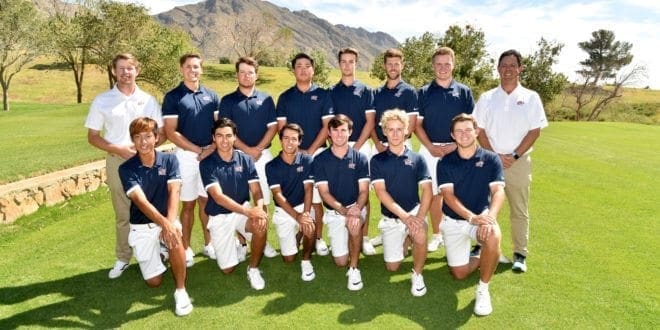
TEXARKANA � The second seeded UTEP men�s golf team opened the Conference USA Men�s Golf Championship with a bang, posting 1-under 287 with a field-leading 17 birdies for a second place spot, four strokes behind leader North Texas. Competition at the Texarkana Country Club (par 72/6,969 yards) will resume tomorrow, April 24, with the Miners teeing off on hole one at 9:20 a.m. CT alongside Charlotte and North Texas.
Due to forecasted inclement weather on Wednesday, the tournament is now scheduled to conclude on Tuesday.
All teams will play their final two rounds tomorrow, Monday, April 24, with tee times starting at 8 a.m. CT. Following the two rounds of stroke play to determine the individual medalist, the four best teams will advance to match play on Tuesday, April 25. The first round of match play tees off at 7:30 a.m. CT concluding with the second round at 12:30 p.m. CT to determine the 2017 Conference USA Men�s Golf Champion.
�We had a nice start to the tournament today,� head coach Scott Lieberwirth said. �North Texas shot five-under, they played a great round and deserve the lead right now, but we�ve got two more rounds of stroke play to go and I think we have plenty of time to catch up. We�re in for a really big test and I�m pleased we got off on the right foot in the first round.�
With his short game on point, sophomore Andreas Sorensen led the Miners� charge on day one, firing a round of 70 while collecting four birdies to tie for fifth place. The sophomore had back to back birdies on holes No. 7 and No. 8 and scored two more on holes No. 12 and No. 16, while bogeying only twice. Sorensen�s strong play puts him three strokes behind tourney leader Seth Gandy of Charlotte, who shot five-under 67.
Frederik Dreier was the only other Miner to shoot under par on the difficult course, shooting 71 to land in the individual top-10 with a share of seventh. Dreier, ranked No. 97 in Golfstat, pared 11 times and birdied on holes No. 1, No. 3, No. 8, No. 12. The senior had three bogeys.
Both Charles Corner and Aaron Terrazas shot 73 to finish just outside of the top-10 in a tie for 13th. Corner had consecutive birdies on holes No. 7 and No. 8 and added one more on hole No. 12, while Terrazas collected four birdies on holes No. 1, No. 7, No. 12, and No. 16 and nine pars.
Junior Nicklas Pihl�s score kept all the Miners in the top 50. Pihl shot a round of 79 to sit in a seven-way tie for 50th, scoring two birdies and bogeying three times.
The team�s round of 287 was its sixth-best opening round this season, though on a much more difficult course. The Miners shot an opening round of 302 at the C-USA tournament at the Texarkana Country Club last year.
�The golf course if difficult, the green was firm,� Lieberwirth said. �It was much warmer than yesterday. The wind wasn�t as severe as yesterday, but there�s a lot of swirls that you feel on the ground. That made club selection difficult, and add that to the firmness of the greens, it was difficult to hit greens in regulation. I thought we did a reasonably good job of that [hitting greens] and I think we also did a good job of getting it up and down when we had the opportunity to.
�Even one-under par for us out here on this course is a good score. Tomorrow the weather is supposed to be a little bit better as far as lighter winds, so I would expect the lower scores to be a little bit more possible.�
The final two rounds of stroke play begin tomorrow at 8 a.m. CT with Rice, UTSA and WKU starting on hole 10 while play on hole one begins concurrently with Marshall and Southern Miss. UAB and Middle Tennessee play as a twosome from the first hole at 8:40 a.m. CT, while Florida Atlantic, Louisiana Tech and Old Dominion will go off from the back nine at 8:50 a.m. CT.
Live stats are available at Golfstat.com.
by Dr Alex Jimenez DC, APRN, FNP-BC, CFMP, IFMCP | Chiropractic, Physical Rehabilitation
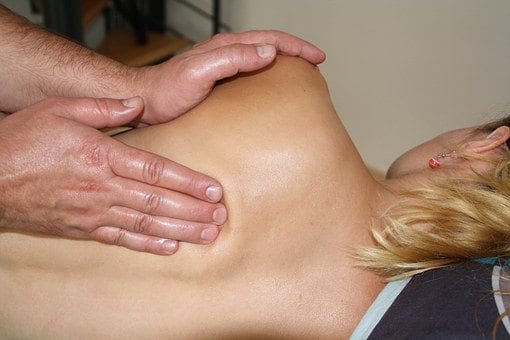
Chronic low back pain can be a challenge to treat, but new research suggests that massage therapy may provide some relief.
“Current medical guidelines actually recommend massage therapy prior to the use of opioid medications for lower back pain,” explained William Elder, the study’s principle investigator.
“Yet even with those guidelines, physicians and nurse practitioners are not recommending massage therapy,” said Elder. He’s with the University of Kentucky’s departments of family and community medicine and clinical services.
Low back pain is a common problem, and for most people, it’s short-lived. But for about 15 percent of people with low back pain, the problem becomes chronic and lasts more than three months, the study authors said.
There aren’t a lot of effective treatment options for chronic back pain, and physicians often prescribe opioid painkillers such as OxyContin or Percocet to ease the pain. But those drugs come with a risk of addiction.
Other possible treatments include exercise, steroid injections, behavior changes, chiropractic, acupuncture and surgery, according to the U.S. National Institute of Arthritis and Musculoskeletal and Skin Diseases.
The new study sought to simulate real-world back pain and treatment. Researchers asked physicians to recommend massage for people with chronic back pain.
Just over 100 study volunteers were then paired with an approved, experienced massage therapist in their area who assessed the problem and created a treatment plan. The study participants received 10 treatments, which they set up directly with their therapist.
More than half of the participants had less pain after 12 weeks and many continued to report reduced pain after three months.
The research also showed that massage therapy worked better with patients aged 50 years and older, although younger people benefited, too.
“These results are exciting because it shows that most doctors can refer their patients for massage as a treatment. It’s applicable to the real world,” said Elder.
“Some medical providers have taken interest in massage, but most don’t know which type would be helpful. We learned that just referring the patient to a massage therapist and letting them work to select the therapy is effective,” he added.
Dr. Anders Cohen, the neurosurgery division chief at The Brooklyn Hospital Center in New York City, recommends massage therapy to his patients as part of what he calls a comprehensive treatment plan.
“Massage is great way to break up adhesions and is great for soft tissue,” Cohen said. “If the back pain is a soft tissue issue, such as muscles and ligaments, it works great. Plus, there is the bonus of therapeutic touch.”
Patients in the study received the massage therapy free of charge. But, cost could also explain why some physicians recommend opioids instead. Cohen noted that massage prices vary, and may not be covered under some insurance plans.
Study co-author Niki Munk is a licensed massage therapist who’s with the Indiana University School of Health and Rehabilitation Sciences. She said the researchers saw that massage needs to occur regularly when someone begins treatment to reduce the pain.
Munk added that more research is needed on the ideal pain maintenance schedule. But the study authors think that once a level of comfort has been achieved, people can continue to manage their back pain through regular massage therapy on a schedule that fits their needs, such as once a month or every other month.
Munk also noted that selecting the right therapist is important.
“Look for a masseuse that you can establish a therapeutic relationship with over time,” she recommended.
“Chronic low back pain is a complex issue that can’t be cured from just a one-hour massage. Find a therapeutic massage clinic and ask questions about the therapist, such as their initial training and continuing education. Also, make sure that the therapist sets up a treatment plan that will work for you,” Munk said.
The study was published online recently in the journal Pain Medicine.

by Dr Alex Jimenez DC, APRN, FNP-BC, CFMP, IFMCP | 915 Crossfit WOD Rss, Crossfit (Local)
Feeling this week….
Skill:
Feet to Club
Power:
Superset x-4
Wide-Grip Bench-Press x 8 @ 60%
Wide-Grip pull ups x 5-8
Metcon:
7 Moment AMRAP:
14 time push ups
14 Feet to Club
Relaxation Three Minutes
7 Moment AMRAP:
14 Burpee Over Club
14 Deadlifts (115/75)(135/95)(155/105)

by Dr Alex Jimenez DC, APRN, FNP-BC, CFMP, IFMCP | Turmeric
There is more evidence that the active ingredient in turmeric may have the power to help combat malignant mesothelioma.
A new French study on curcumin finds that the compound not only slowed the growth of one of the rarest types of mesothelioma tumor cells in the laboratory but also reduced total tumor mass in lab rats in just two weeks.
Evaluating Curcumin�s Effect on Mesothelioma Cells
Curcumin, the plant polyphenol that gives turmeric its yellow hue and pungent flavor, has been the subject of numerous malignant mesothelioma studies in recent years, in part because of its powerful anti-inflammatory properties.
In the newest study, the French researchers focused on one of the rarest and deadliest subtypes of the asbestos cancer � sarcomatoid mesothelioma.
First, they used sarcomatoid mesothelioma cells from rats that had been induced to develop mesothelioma by exposing them to asbestos. By testing curcumin on the mesothelioma cells first, the research team was able to determine the optimal curcumin concentration and dose to use on the live rats.
Testing Curcumin in Live Rats with Mesothelioma
With dosing established, the researchers administered curcumin directly into the peritoneal cavities of sick mice. For comparison, a second group of rats was treated with an epigenetic drug called SAHA.
�The treatment of tumor-bearing rats with 1.5 mg/kg curcumin on days 7, 9, 11 and 14 after tumor challenge dramatically reduced the mean total tumor mass at day 16,� writes researcher Daniel L. Pouliquen in the journal Oncotarget.
The study found that both curcumin and SAHA produced necrosis or dead tissue within the mesothelioma tumors by day 28, but the necrosis induced by curcumin was �much more extensive�.
In addition, curcumin appeared to attract cancer-fighting CD8+ T lymphocytes to the area which clustered around small residual mesothelioma tumors in the peritoneal cavity after treatment.
�These data open up interesting new prospects for the therapy of sarcomatoid mesothelioma with curcumin and its derivatives,� concludes Dr. Pouliquen.
More Curcumin Research
Earlier this year, scientists in the Department of Experimental Medicine at the University of Rome conducted a similar experiment and that found that intraperitoneal curcumin extended survival in mice with mesothelioma.
In 2015, mesothelioma researchers with Flinders University in Australia determined that curcumin had the ability to keep mesothelioma tumors from giving rise to their own new blood vessels. That study suggested that curcumin could become a supplemental treatment for certain mesothelioma patients.
Source: Pouliquen, DL, et al, �Evaluation of intracavitary administration of curcumin for the treatment of sarcomatoid mesothelioma�, February 25, 2017, Oncotarget, Epub ahead of print
As always… Check with your doctors before you rely on this information. �I bring it to you because it does give great insight into Curcumin so many people are raving about.
It should be noted that Mesothelioma is a very serious disorder requiring the expertise of top level Oncologist. � Great Regards. Dr. Alex Jimenez
Read More News

by Dr Alex Jimenez DC, APRN, FNP-BC, CFMP, IFMCP | UTEP (Local) RSS
Five days after taking a loss in Reno, El Paso starter Walker Lockett performed well against the Aces in the Chihuahuas’ 7-1 win Saturday night.
Lockett pitched seven innings, allowing only one run on six scattered hits. The Chihuahuas are now 2-2 against the Aces this season.
El Paso hit three home runs Saturday, including one by Jamie Romak, who has six homers in his last six games. Romak’s nine home runs lead the Pacific Coast League. Jabari Blash went 1-for-4 with his first Triple-A home run of the season and Dusty Coleman went 3-for-4 with a solo shot, his second home run of the year and the homestand.
Jose Pirela and Rocky Gale both had two hits and an RBI for the Chihuahuas.
The Chihuahuas strong pitching continued into the bullpen Saturday, with Keith Hessler and Logan Bawcom tossing scoreless innings to close the game.
Christian Walker hit a solo home run for Reno and became the first PCL player to reach 20 RBIs.
Box Score | Team Records: Reno (9-8), El Paso (8-9)
Next Game: Sunday, 1:05 pm at Southwest University Park. Reno LHP Anthony Banda (1-1, 5.79) vs. El Paso RHP Matt Magill (1-0, 1.59). The game will air on 600 ESPN El Paso and www.epchihuahuas.com.
El Paso 7 Reno 1 – Saturday
WP: Lockett (2-1)
LP: Shipley (2-1)
S: None
Time: 2:37
Attn: 9,054
Gallery by Andres Acosta, El Paso Herald-Post Chief Photographer

by Dr Alex Jimenez DC, APRN, FNP-BC, CFMP, IFMCP | UTEP (Local) RSS
In just his second meet of the outdoor season, UTEP freshman Emmanuel Korir clocked a blistering 44.67 in the 400m to break a 37-year old stadium record (Billy Mullins, 45.03, USC, 1980) at Kidd Field Saturday afternoon.
Korir’s time of 44.67 ranks first in the nation and is the second-fastest time in the world. The Kenyan was just .09 seconds away from Bert Cameron’s school record established back in 1981. Teammate Michael Saruni followed by claiming silver with at time of 45.69, which is the 10th fastest time in the nation. Seniors Asa Guevara (46.81) and James Bias (47.24) notched the third and fourth spots, respectively.
Sophomore Tobi Amusan claimed gold in both the 100m hurdles (12.67) and the 200m (22.60). Amusan already has the fastest time in the nation (12.63) in the 100m hurdles and is now tied for third in the country in the 200m.
UTEP claimed the top four spots in the women’s 1,500m run with Lilian Koech (4:29.15), Linda Cheruiyot (4:29.38), Winny Koech (4:34.08) and Gladys Jerotich (4:46.89).
In the field events, senior Fayon Gonzales notched two second-place showings in the hammer throw (52.58m) and the discus throw (42.95m). Adebola Akomolafe claimed fourth (48.07m) in the hammer throw and third (40.89m) in the discus. Samantha Hall notched gold in the shot put after throwing for 14.30m.
In the men’s hammer throw, Karol Koncos threw for a personal-best 63.43m. Koncos ranks third in Conference USA. Brandon Moss claimed gold in the long jump with a mark of 7.20m and Austin Ondijo leaped over 1.89m in the high jump. In the men’s 1500m seniors Cosmas Boit, (3:50.99) and Daniel Cheruiyot (3:54.23) went 1-2 while sophomore Antony Kosgei (3:55.60) snagged the bronze.
Lucia Mokrasova placed second in the high jump with a mark of 1.65m, while Israel Ramsay (5.89m) and Tyler Ragin (5.62m) took fifth in the long jump. In the women’s 400m Ada Benjamin (53:39) edged out Central Arizona’s Shawkia Iddrisu (54:53) to secure the first-place finish.
In the 4x400m relay, UTEP’s Yanique Bennett, Madison Gibson, Brittney Adams and Imani Adams teamed up to cross the line in 3:48.71 to finish in second place.
The UTEP track and field team will return to action April 28-29 at the Brutus Hamilton Open in Berkley, Calif. For live updates and breaking news be sure to follow @UTEPTrack on Twitter.
UTEP’s Tobi Amusan in the Women’s 200 meter dash at the 2017 UTEP Invitational, Kidd Field El Paso, TX
UTEP’s Tobi Amusan in the Women’s 200 meter dash at the 2017 UTEP Invitational, Kidd Field El Paso, TX
2017 UTEP Invitational, Kidd Field El Paso, TX
2017 UTEP Invitational, Kidd Field El Paso, TX
2017 UTEP Invitational, Kidd Field El Paso, TX
2017 UTEP Invitational, Kidd Field El Paso, TX
UTEP’s Tobi Amusan in the Women’s 200 meter dash at the 2017 UTEP Invitational, Kidd Field El Paso, TX
2017 UTEP Invitational, Kidd Field El Paso, TX
2017 UTEP Invitational, Kidd Field El Paso, TX
UTEP’s Tobi Amusan in the Women’s 200 meter dash at the 2017 UTEP Invitational, Kidd Field El Paso, TX
2017 UTEP Invitational, Kidd Field El Paso, TX
2017 UTEP Invitational, Kidd Field El Paso, TX
2017 UTEP Invitational, Kidd Field El Paso, TX
2017 UTEP Invitational, Kidd Field El Paso, TX
UTEP’s Tobi Amusan in the Women’s 200 meter dash at the 2017 UTEP Invitational, Kidd Field El Paso, TX
UTEP’s Tobi Amusan in the Women’s 100 Meter Hurdles at the 2017 UTEP Invitational, Kidd Field El Paso, TX
2017 UTEP Invitational, Kidd Field El Paso, TX
2017 UTEP Invitational, Kidd Field El Paso, TX
UTEP’s Tobi Amusan in the Women’s 100 Meter Hurdles at the 2017 UTEP Invitational, Kidd Field El Paso, TX
2017 UTEP Invitational, Kidd Field El Paso, TX
UTEP’s Tobi Amusan in the Women’s 100 Meter Hurdles at the 2017 UTEP Invitational, Kidd Field El Paso, TX
UTEP’s Tobi Amusan in the Women’s 200 meter dash at the 2017 UTEP Invitational, Kidd Field El Paso, TX
UTEP’s Tobi Amusan in the Women’s 200 meter dash at the 2017 UTEP Invitational, Kidd Field El Paso, TX
UTEP’s Tobi Amusan in the Women’s 100 Meter Hurdles at the 2017 UTEP Invitational, Kidd Field El Paso, TX
UTEP’s Tobi Amusan in the Women’s 100 Meter Hurdles at the 2017 UTEP Invitational, Kidd Field El Paso, TX
UTEP’s Tobi Amusan in the Women’s 100 Meter Hurdles at the 2017 UTEP Invitational, Kidd Field El Paso, TX
UTEP’s Tobi Amusan in the Women’s 100 Meter Hurdles at the 2017 UTEP Invitational, Kidd Field El Paso, TX
2017 UTEP Invitational, Kidd Field El Paso, TX
2017 UTEP Invitational, Kidd Field El Paso, TX
UTEP’s Tobi Amusan in the Women’s 200 meter dash at the 2017 UTEP Invitational, Kidd Field El Paso, TX
2017 UTEP Invitational, Kidd Field El Paso, TX
2017 UTEP Invitational, Kidd Field El Paso, TX
2017 UTEP Invitational, Kidd Field El Paso, TX
UTEP’s Tobi Amusan in the Women’s 100 Meter Hurdles at the 2017 UTEP Invitational, Kidd Field El Paso, TX
2017 UTEP Invitational, Kidd Field El Paso, TX
2017 UTEP Invitational, Kidd Field El Paso, TX
UTEP’s Tobi Amusan in the Women’s 100 Meter Hurdles at the 2017 UTEP Invitational, Kidd Field El Paso, TX
UTEP’s Tobi Amusan in the Women’s 100 Meter Hurdles at the 2017 UTEP Invitational, Kidd Field El Paso, TX
2017 UTEP Invitational, Kidd Field El Paso, TX
2017 UTEP Invitational, Kidd Field El Paso, TX
UTEP’s Tobi Amusan in the Women’s 200 meter dash at the 2017 UTEP Invitational, Kidd Field El Paso, TX
2017 UTEP Invitational, Kidd Field El Paso, TX
2017 UTEP Invitational, Kidd Field El Paso, TX
UTEP’s Tobi Amusan in the Women’s 100 Meter Hurdles at the 2017 UTEP Invitational, Kidd Field El Paso, TX
2017 UTEP Invitational, Kidd Field El Paso, TX
2017 UTEP Invitational, Kidd Field El Paso, TX
2017 UTEP Invitational, Kidd Field El Paso, TX
UTEP’s Tobi Amusan in the Women’s 200 meter dash at the 2017 UTEP Invitational, Kidd Field El Paso, TX
2017 UTEP Invitational, Kidd Field El Paso, TX
2017 UTEP Invitational, Kidd Field El Paso, TX

by Dr Alex Jimenez DC, APRN, FNP-BC, CFMP, IFMCP | UTEP (Local) RSS
The UTEP men’s golf team will join 12 other teams at the 2017 C-USA Men’s Golf Championship, teeing off Sunday morning at the Texarkana Country Club in Texarkana, Arkansas.
The teams will play the par 72, 6,969-yard course over three days, April 23-25, beginning with 54 holes of stroke play. Following the results of stroke play, the top four teams will advance to a seeded match play round on Wednesday, April 26, with the team champion earning C-USA’s automatic berth to the NCAA Regionals.
The Miners will begin to tee off at 9:20 a.m. CT (8:20 a.m. MT) on hole No. 1, along side top-seeded Middle Tennessee and North Texas. Seeding is based on current Golfstat rankings, Middle Tennessee is ranked No. 53, while UTEP sits at No. 55 and North Texas is No. 62 out of 292 teams. Rice and UTSA will tee off on hole No. 1, while defending champion LA Tech will tee off with Southern Miss and WKU on hole No. 10, all at 8 a.m. CT. At the 8:40 a.m. CT mark, Charlotte and UAB will begin their play on the first tee. Rounding out the teams will be Marshall, FAU and Old Dominion with a 8:50 a.m. CT start from the No. 10 tee.
“National ranking, its really been us and Middle Tennessee bouncing back and forth between the top ranked schools in our conference,” sixth-year head coach Scott Lieberwirth said. “But our conference does have quite a few schools that may not be ranked quite as high, but they’re still strong quality programs. North Texas is very good, Charlotte is good year in and year out, UAB has been a power team in our league for a long time; and then you can mix in others like UTSA, and Rice, who just came off a win.
“There’s a lot of teams that are capable of winning this championship. Especially with us going into match play and having that portion decide who our team champion is, I’d say there’s about eight or nine teams that have a legitimate chance [to win], its just a matter of who plays better.”
The core five vying for the championship for the Miners will be Frederik Dreier, Charles Corner, Aaron Terrazas, Nicklas Pihl, and Andreas Sorensen. In the 11 tournaments played, the at least three of the five have played in every tournament. Terrazas transferred from Oklahoma and began playing in the spring.
“We are going strong into the tournament instead of reeling into the tournament, so we feel like we’ve got a very strong and a very deep core,” Lieberwirth said. “That should help us not just in the stroke play, but if we were to make it in the match play portion of the championship, we should be able to be highly competitive. From a depth perspective, we’re the best that we’ve been all year.”
Dreier, Corner, Pihl, and Sorensen all participated in the 2016 C-USA Championships last year, helping the Miners to a sixth place finish.
“We have a very similar team to last year,” Lieberwirth said. “We have a majority of our starters returning, they’re all one year older and defiantly have all improved. Last year we had a nice team, but this year I think we’ve really broken out and individually. We’ve had guys really have some great performances in the fall and spring. We’ve been very consistent top to bottom in the spring.”
Dreier, the lone senior on the team, is the reigning C-USA Golfer of the Year, only the fourth golfer in program history to earn the honor. The Birkeroed, Denmark, native leads the team this season with total top-10 finishes (six) as well as the squad’s lowest round (64) in the final round of the Price’s Give ‘Em Five Invitational. He will enter his final conference tournament, where he placed sixth last year to earn his first ever berth to the NCAA Regional tournament, where he finished in 57th.
“He’s been fantastic, watching him grow from his freshman and sophomore year when he was just so close to being really good, and then really turning the corner his junior year and continuing that into his senior year,” Lieberwirth said of Dreier. “He’s been a leader on and off the golf course for us. He’s defiantly a guy that all the players and us coaches really look up to and respect.”
Corner earned his first ever C-USA Golfer of the Week honor on April 12 after his stellar play led to an eighth place finish and helped his team to a seventh place finish at the prestigious 71st Western Intercollegiate. The team bested then-No. 17 Texas, No. 25 Arizona State and No. 32 San Diego State after shooting 1,084 (361-356-367) in the 15-team field, which included eight nationally-ranked teams. Of the 96 players, Corner’s score was better than 19 players ranked in the Golfstat Top 100, including six of the top-10 players. The junior from Cayuga, Ontario, Canada has recorded a 72.5 scoring average, third-best on the UTEP squad, and tallied three top-10 finishes this year in 10 tournaments, with his work at the Western Intercollegiate marking the first time he was the top finisher for UTEP this year.
Terrazas joined the Miners this spring after transferring from Oklahoma and has found his name in the top-250 of Golfweek collegiate rankings. The sophomore had his best showing in the Orange and Blue at the Lone Star Invitational, where he tied for sixth with 7-under 209.
Pihl has recorded back-to-back top finishes for the Miners at the National Invitational Tournament and the Border Olympics. The junior boasts a 73.3 stroke average in 29 rounds played while finishing in the top-50 of each event eight times.
Sorensen has two runner-up showings under his belt from the fall season as well as eight top-50 finishes in 11 events. Along side three top finishes for the Miners, the sophomore has a 72.75 stroke average and shot a career-low round of 66 in the opening round of the Price’s Give ‘Em Five Invitational. He was named the C-USA Golfer of the Week for the week of Sept. 14, his first ever, after his runner-up performance at the Gene Miranda Invitational helped the Miners to their first team title of the fall. He was on the C-USA All-Freshman team last year.
“Charles Corner has put together a quiet, very good year,” Lieberwirth said. “Aaron Terrazas, a transfer from Oklahoma who came in spring for us, has already got his name ranked in the top 250 in the country just in the five tournaments that he’s played and started for us, he’s been great too. Nicklas Pihl, this is probably his best semester from a consistency stand point, he’s always been right there between the top-10 and no worse than middle of the pack. We’ve got a bunch of guys that we can count on and that we are going to give us good, consistent performances.
“That’s probably the biggest difference between this year’s team and previous teams. Previous year’s teams were more of a wild card, we knew we had some talent, we just didn’t know which guy would show up on any given day. This team is fairly predictable, we know we’re going to get great effort and we’ve seen very good results.”
The conference tournament will be the beginning of the end of an incredible season for the Miners, which saw three tournament titles in the fall and 10 top-10 finishes in eleven tournaments.
“We had some really outstanding individual performances that allowed us to win,” Lieberwirth said. “This spring, we haven’t had those top-10, top five, individual performances as often, but more tournaments than not, we’ve had all five starters in the top half of the field. From depth perspective, that helps us. We just need one or two of those guys to really catch fire, that’s when we’ll be real dangerous.”
The Miners also have eyes set beyond the conference tournament, at the NCAA Regional tournament, where the goal is to make it as a team.
“These are extremely competitive players, which makes it a real joy to coach,” Lieberwirth said. “When you have players that are as or even more competitive than the coach is, then you know you have a good team on your hands. That’s exactly how these guys are. They want to win for the team but they want to win individually too. I think that’s good, you want to have those individual goals because if you perform well individually, then the team is going to take care of itself.”

by Dr Alex Jimenez DC, APRN, FNP-BC, CFMP, IFMCP | UTEP (Local) RSS
The UTEP track and field team will host its final regular season meet on Saturday at Kidd Field, starting with the running events at 10:00 a.m. MT and running events at 2 :00 p.m.
The UTEP track and field team will honor 15 seniors prior to the running events.
Two seniors Fayon Gonzales and Abedola Akomolafe will compete in the hammer throw set for 10:00 a.m. The pair will join Samantha Hall in the discus throw at 2:15 p.m. Hall earned Conference USA athlete of the week honors last week and ranks first in league.
In the long jump, Israel Ramsay will compete at 2:30 p.m. Ramsay ranks eighth in C-USA with a mark of 5.88m posted at the UTEP Springtime.
In the track events, Truphena Sum will compete in the 1,500m run set for 2:10 p.m. Yanique Bennett will take the track at 2:30 p.m. in the 100m hurdles along with sophomore Tobi Amusan. Amusan opened the season at home notching the fastest time in the nation (12.63).
Ada Benjamin, who currently leads the league in the 400m will race at 2:45 p.m. Brittney Adams will see action in both the 100m and the 400m hurdles, along with Yanique Bennett at 3:45 p.m.
Florence Uwakwe compete in the 200m at 4:05 p.m. Uwakwe will run the anchor leg of the 4x400m relay, which ranks third in the league.
On the men’s side, Kevin Rincon will compete in the hammer throw starting at 11:30 a.m. Brandon Moss will compete in the long jump set for 2:30 p.m.
Seniors, Cosmas Boit and Evans Kiprono will compete in the 1,500m run at 2:20 p.m. Yinka Oyebanjo-Odofin will race in the 400m hurdles starting at 3:55 p.m.
James Bias will run in the 400m at 3:15 p.m. along with Emmanuel Korir and Michael Saruni. This will be the second meet for Korir this outdoor season after running the fastest time in the country in the 800m last week at the Jim Bush Invitational.
Saruni has competed in three different events claiming the number one spot in all three races. His highlight of the season so far was at the Texas Relays where he won the 800m and posted the third-fastest time in the nation.
This will be the last home meet of the regular season before the Miners travel to Berkley, Calif. for the Brutus Hamilton Open on April 28-29 UTEP host the 2017 C-USA Outdoor Championships May 11-14.
For live updates and breaking news follow @UTEPTrack on Twitter.