
Patient Intake Form: Its Easy!
Please click on the link below in order to have direct access to the easy patient intake form.
If you have any questions please feel free to call us: 915-850-0900

Please click on the link below in order to have direct access to the easy patient intake form.
If you have any questions please feel free to call us: 915-850-0900
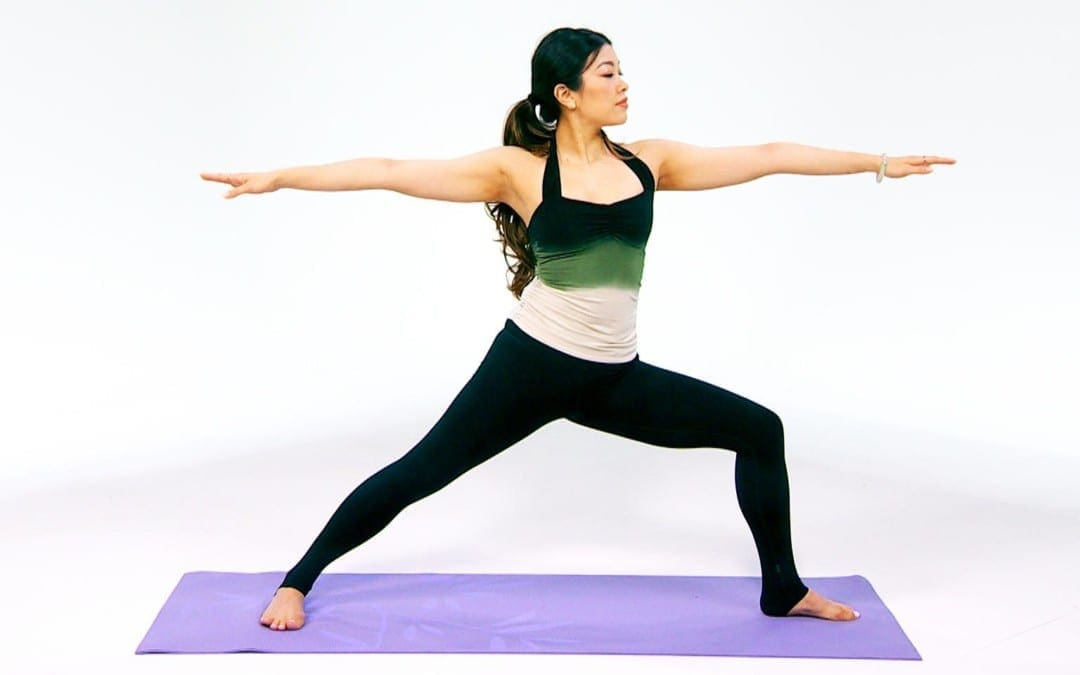
Yoga can be an effective way to prevent and ease aches and pains—but it can also cause them if you’re not careful. The key is proper alignment. Go from “ow” to “om” in seconds by making simple alignment tweaks to common poses. In this video, Yoga With Kirby founder Kirby Koo shows you quick fixes to take pressure off your knees, wrists, and neck. These basic principles can be applied throughout your practice to help prevent pain before it starts.
Once you’re set up in Warrior II, pay attention to the position of your front knee. Is it sticking out beyond your ankle? Is it collapsing inward? Pull your knee back into place, so it’s stacked directly above your ankle, and tracking in the same direction as the toes of your front foot. This protects the ligaments in your knee and prevents knee pain.
Related Content: Try This 15-Minute Yoga Flow for Stress Relief
Plank is a great core stabilizing exercise if you have proper alignment. But if your belly and hips sag in this pose, then your wrists are probably taking on the brunt of your body weight. In plank, engage your core muscles by imagining a zipper running up from your pubic bone to your belly button. This should help raise your hips so your body forms a continuous line from the top of your head to your heels, a more stable position that will help distribute your body weight more evenly and ease the pressure in the wrists.
Cow pose can feel super satisfying, but it’s easy to go overboard and strain your neck while you’re enjoying the gentle backbend. When you’re in cow pose, it’s important to remember not to tip your head too far back, shortening the back of the neck. You’ll get a lot more out of the pose (and avoid neck strain) if you imagine your neck as an extension of the gentle curve of the spine. Lift your gaze only as far as you can without compromising the curve in your spine and the length in the back of your neck. The same concept can apply for Upward-Facing Dog, too!

Maybe this will be the news that finally jolts you off the couch and into an exercise program. A new study suggests that being physically active increases the chances of survival after a heart attack.
Researchers compared exercise levels among 1,664 heart attack patients in Denmark, including 425 who died immediately. Those who had been physically active were less likely to die, and the risk of death decreased as exercise levels rose. Patients who had light or moderate/high physical activity levels were 32 percent and 47 percent less likely to die from their heart attack, respectively, than the sedentary patients.
The study was published April 12 in the European Journal of Preventive Cardiology.
“We know that exercise protects people against having a heart attack,” said study co-author Eva Prescott, a professor of cardiovascular prevention and rehabilitation at the University of Copenhagen. “Animal studies suggest that myocardial infarctions [heart attacks] are smaller and less likely to be fatal in animals that exercise. We wanted to see if exercise was linked with less serious myocardial infarctions in people,” she added in a journal news release. “One possible explanation is that people who exercise may develop collateral blood vessels in the heart which ensure the heart continues to get enough blood after a blockage. Exercise may also increase levels of chemical substances that improve blood flow and reduce injury to the heart from a heart attack,” Prescott said.
She added this caveat: “This was an observational study so we cannot conclude that the associations are causal [cause and effect]. The results need to be confirmed before we can make strong recommendations.
“But,” Prescott added, “I think it’s safe to say that we already knew exercise was good for health and this might indicate that continuing to exercise even after developing atherosclerosis [hardening of the arteries] may reduce the seriousness of a heart attack if it does occur.”
News stories are written and provided by HealthDay and do not reflect federal policy, the views of MedlinePlus, the National Library of Medicine, the National Institutes of Health, or the U.S. Department of Health and Human Services.
The scope of our information is limited to chiropractic and spinal injuries and conditions. To discuss options on the subject matter, please feel free to ask Dr. Jimenez or contact us at 915-850-0900 .

Chiropractic care is an well-known, alternative treatment option utilized to prevent, diagnose and treat a variety of injuries and conditions associated with the spine, primarily subluxations or spinal misalignments. Chiropractic focuses on restoring and maintaining the overall health and wellness of the musculoskeletal and nervous systems. Through the use of spinal adjustments and manual manipulations, a chiropractor, or doctor of chiropractic, can carefully re-align the spine, improving a patient�s strength, mobility and flexibility.


The mixture of pollutants in many U.S. streams are more complicated and potentially more dangerous than previously thought, a new study suggests.
Researchers checked for 719 organic chemicals in water samples from 38 streams across the United States and found more than half of those chemicals in the different samples.
Every stream — even those in wild and uninhabited areas — had at least one of the chemicals and some had as many as 162, the study found. It was led by scientists from the U.S. Geological Survey and the Environmental Protection Agency.
The detected chemicals included: insecticides and herbicides, along with byproducts from their degradation; antibacterials such as triclosan; and medications such as antihistamines and the diabetes drug metformin.
Some of the chemicals were often detected together in streams. Further research is needed to determine the potential for complex interactions between these chemicals, to assess if they pose a threat to aquatic life, the food chain and human health, the researchers said.
The study was published April 12 in the journal Environmental Science & Technology.

Your weight just might influence your risk of migraine headaches, a new review finds.
“Those with migraine and [their] doctors need to be aware that excessive weight and extreme weight loss are not good for [migraine sufferers], and that maintaining a healthy weight can decrease the risk of migraine,” said study corresponding author Dr. B. Lee Peterlin.
She is director of headache research at Johns Hopkins University School of Medicine in Baltimore.
“Healthy lifestyle choices in terms of weight management and diet and exercise are warranted,” she added.
Migraines affect about 12 percent of U.S. adults, according to background information from Johns Hopkins. These debilitating headaches are often accompanied by throbbing, nausea and sensitivity to light and sounds.
Peterlin’s team evaluated 12 previously published studies with nearly 300,000 people, a process known as a meta-analysis.
The investigators found that obese people were 27 percent more likely to have migraines than people who were at a normal weight.
And those who were underweight were 13 percent more likely to have migraines.
The researchers used the standard definitions of both obesity — a body mass index (BMI) of 30 or higher — and underweight, a BMI of less than 18.5. A person who is 5 feet 4 inches tall and weighs 175 pounds has a BMI of 30, while someone of the same height who weighs 105 has a BMI of 18.
In previous research, Peterlin’s team found that the link between obesity and migraines was greater for women and for those under the age of 55. This new study reaffirmed those findings.
The new review found that the link between obesity and migraines is a moderate one, Peterlin said. It’s similar to the link between migraines and ischemic heart disease, in which the heart doesn’t get enough blood, she added.
Peterlin said she can’t explain with certainty how body composition affects migraine risk. But, she speculated that fat tissue “is an endocrine organ and like other endocrine organs, such as the thyroid, too much and too little cause problems.”
The change in fat tissue that occurs with weight gain or extreme weight loss alters the function and production of several proteins and hormones, Peterlin explained, changing the inflammatory environment in the body. This could make a person more prone to a migraine or it could trigger a migraine, she said.
However, the study only found an association, and not a cause-and-effect relationship, between weight and migraine risk.
The review was published April 12 in the journal Neurology.
Would weight loss or gain help? It’s not certain, Peterlin said.
“Limited data in humans show that in both episodic and chronic [migraine sufferers] who are extremely obese and undergo bariatric surgery for other health reasons also have a reduction in headache frequency by over 50 percent,” she said. Aerobic exercise has also been shown to decrease headaches.
“What is not yet clear is if it is the weight loss per se or other factors related to exercise that result in the improvement,” Peterlin said.
One headache specialist who wasn’t involved with the study lauded the findings.
The new analysis is “a valuable addition to the growing body of literature on migraine and body mass index,” said Dawn Buse, director of behavioral medicine at the Montefiore Headache Center in New York City.
With her patients, Buse said, she has seen migraine frequency increase with weight gain. And she has also seen improvement in migraines after weight loss, she said.
Buse acknowledged that, while weight loss appears to help, losing weight can be challenging. Health care professionals should discuss with their patients the relationship with migraines, and help them by providing education and referrals for treatments that may help weight loss.

You should be adding a magnesium supplement to your daily vitamin regimen in middle age to prevent fractures later, says a new study.
Bone fractures, which are often caused by osteoporosis, are one of the leading causes of disability in the elderly. Calcium and vitamin D are known to play a role in bone health, and while magnesium is a vital nutrient and an important component of bone, no studies have shown that supplements might have a beneficial effect on bone health.
Researchers at the Universities of Bristol and Eastern Finland followed 2,245 middle-aged men for 20 years. They found that men with lower blood levels of magnesium had an increased risk of fractures, particularly fractures of the hip.
Men who had higher blood levels of magnesium lowered their risk by 44 percent. None of the men who had very high magnesium levels suffered a fracture during the 20-year follow-up.
However, dietary magnesium intake was not found to be linked with fractures. Only supplements were shown to be beneficial.
“The findings do suggest that avoiding low serum concentrations of magnesium may be a promising though unproven strategy for risk prevention of fractures,” said Dr. Setor Kunutsor of the University of Bristol.
Low blood levels of magnesium are common among the middle-aged and elderly, since the mineral becomes harder for the body to absorb as it ages, but the majority of people have no symptoms. Since blood magnesium isn’t measured routinely in the hospital, those with low levels are usually not diagnosed. The researchers believe their findings could help trigger initiatives to include blood magnesium screening in routine blood panels, especially for the elderly.
Magnesium may also help solve another problem faced by seniors — getting a good night’s sleep. British researchers found that magnesium helps cells keep track of the natural cycles of day and night.
Other studies show that magnesium provides a wide range of health benefits, including boosting the immune system and lowering the risk of heart attacks. Studies have also shown that people who have migraines tend to have lower levels of magnesium than those who are headache free.

The health benefits of exercise are well-established for people of all ages. But until now, little has been known about which type of exercise best counters the aging process in senior citizens.
The answer may be high-intensity interval training, suggests a new study published in Cell Metabolism by researchers from the Mayo Clinic.
High-intensity interval training (HIIT) alternates short bursts of intense aerobic activity such as biking or walking with short periods of easing up on the same activity.
This type of exercise, which originated in Sweden, is promoted as an efficient training method that avoids the risk of injuries associated with non-stop, repetitive activity.
Compared to other types of exercise, it appears to be dramatically more effective at boosting the activity of aging cells and even reversing age-related cellular damage.
The Mayo Clinic researchers recruited 72 healthy but sedentary men and women from two age groups: “young” subjects ages 18-30 and “older” subjects ages 65-80.
The researchers conducted baseline measurements of aerobic fitness, lean muscle mass, blood-sugar levels, and insulin sensitivity. After taking biopsies from the subjects’ thighs, they also assessed genetic activity in muscle cells and the health of the energy-producing mitochondria within those cells.
As we age, mitochondrial capacity gradually deteriorates. As a result, cells become damaged and weak.
The researchers randomly assigned subjects to one of three groups:
HIIT on stationary bicycles. Three days per week, they pedaled hard for four minutes, eased up for three minutes, then repeated the sequence three more times. On other days, they did a moderate treadmill routine,
Moderate-intensity training. Three days per week, they pedaled on stationary bikes for 30 minutes. On other days, they lifted light weights.
Vigorous weight training. Participants engaged in weight lifting several times per week.
No exercise. A fourth group did not engage in organized physical activity.
After 12 weeks, the researchers found that all three exercise groups experienced significant gains in fitness and blood-sugar regulation compared to non-exercisers.
As expected, they found that the high-intensity interval training group had the biggest improvement in endurance while the weight training group had the biggest improvement in muscle mass and strength.
But they were astonished to find that high-intensity interval training was most strongly associated with age-reversing changes at the genetic and cellular levels.
In the “younger” group assigned to high-intensity interval training, the activity level changed in 274 genes. That compared to activity-level changes in 170 genes in the moderate-intensity training group and 74 genes in the weight training group.
Genetic changes were even more dramatic in the “older” group assigned to high-intensity interval training. They saw activity-level changes in nearly 400 genes. That compared to activity-level changes in only 33 genes in the weight training group and only 19 genes in the moderate-intensity training group.
High-intensity interval training had a similar effect on mitochondrial capacity: a 49 percent increase in the “younger” group and a whopping 69 percent increase in the “older” group.
This type of exercise also led to improved insulin sensitivity, which is associated with a reduced risk of diabetes.
The researchers cautioned that their primary goal was to show how exercise works at a molecular level, not to provide prescriptive exercise for seniors or anyone else. They hope to learn more about how exercise benefits different tissues in the body.
For the time being, they say that vigorous exercise remains the most effective way to bolster health.
“There are substantial basic science data to support the idea that exercise is critically important to prevent or delay aging. There’s no substitute for that,” senior author Dr. Sreekumaran Nair said in a statement.
Most experts agree that many older adults can participate in an age-appropriate high-intensity interval training program that takes into account their physical limitations.
Older adults are more likely to have an underlying health issue such as osteoporosis, arthritis, diabetes, hypertension or a history heart disease, heart attack, or stroke.
So it’s essential for them to consult with their primary care provider and take a cardio-stress test before beginning a new exercise program, especially one that involves vigorous activity.


IFM's Find A Practitioner tool is the largest referral network in Functional Medicine, created to help patients locate Functional Medicine practitioners anywhere in the world. IFM Certified Practitioners are listed first in the search results, given their extensive education in Functional Medicine