
by Dr Alex Jimenez DC, APRN, FNP-BC, CFMP, IFMCP | Chiropractic
Science and experts alike say�high-intensity interval workouts�reign as fitness royalty. Touted as a top-notch method for�weight loss, improving your�VO2 max�and even helping you run faster, it�s no wonder this approach to exercise holds such high wellness honors.
Of course, just like any workout you do over and over, the routine can get stale. That is, until you learn the foundation of�HIIT workouts�and then switch it up every time you go to break a sweat. Allow trainer�Adam Rosante, creator of Two Week Transformation and author of�Super Smoothie Revolution,�to break down the basics so you can turn up the benefits.
RELATED:�No Time? This is How Much HIIT You Really Need
HIIT Workout: What You Need to Make It Work
�The foundation [of HIIT] is a series of intervals of intense activity, coupled with intervals of less-intense activity or complete rest,� says Rosante. �Beyond buzz, it�s popularity can largely be attributed to its efficiency. HIIT�s a great way to get fit in a short amount of time. But the key is to ensure that the high-intensity intervals are truly performed at your highest intensity.�
How do you know if you�re HIIT-ing it hard enough? Rosante says to go at 80 to 95 percent of your maximum�heart rate�during the work intervals, and 60 to 65 percent during your rest periods.�(To find your max heart rate, just subtract your age from 220. Then take the percentages from there.) If you don�t have a heart rate monitor, push hard enough through the work intervals that you�re sucking wind. You shouldn�t be able to hold a convo, Rosante says.
You can do a HIIT workout with almost any exercise, from plank hip dips to�jumping jacks�to everyone�s favorite:�burpees. That�s because it�s more about intensity than the specific movements, Rosante explains. But to help you narrow down what to do, Rosante says he prefers a mix of moves that force the glutes, quads and hamstrings (the body�s biggest muscles) to work explosively. Some of his go-to�s include�jump squats, plyo lunges and sprints.
But don�t stop there. Rosante often alternates between a lower body and upper body move, or a lower body and total body exercise. �The alternation forces your heart to pump blood out to the muscles in a much higher volume, which, naturally, means your�heart rate�is significantly elevated,� Rosante explains. �When you boost your heart rate like this, you disrupt your metabolic pathways in such a way that they�re scrambling to return to normal long after the workout has ended.� This concept of burning calories even after you stop busting a move � known as�excess post-exercise oxygen consumption�or EPOC � will blast fat and calories, fast.
RELATED:�How to Beast Box Jumps and Other Plyometric Exercises
Choose Your Own HIIT Workout Adventure
Spike your heart rate, tone your body and�break through plateaus�with this HIIT formula from Rosante. Start with a goal intensity, then pick an option from each layer. No two workouts have to be the same � but you�ll get sweaty and fit with each round. We�ll call this one smash HIIT.

Infographic: Mallory Creveling / Life by Daily Burn
To warm up before you dive in, do a series of�dynamic stretches�and a few high jumps. After you HIIT it, cool down with a solid�stretch�of all major muscle groups. Rosante suggests holding each one for at least 3 to 5 deep breathes.
Standing Mountain Climbers
Start standing, arms bent at your chest, palms facing away from your body. Drive your right knee up toward your chest as you straighten your left arm toward the ceiling. Quickly switch to bring your left knee toward your chest and right hand toward the ceiling. Continue alternating.
RELATED:�15 Most Underrated Exercises, According to Trainers�
Push-Ups
Start in a high plank position. Without piking or dropping your hips, bend your elbows�and lower your chest to the ground. Then push back up to a plank.
Speed Squats
Start with feet a little wider than hip-distance apart, toes pointed slightly outward. Drive your hips back and butt toward the ground to perform a low squat. Jump back up and bring your feet together. Then jump back into a wide�squat position.
4-Point Plankers
Start in a�high plank position�with feet together. Jump your feet to the left side of your left hand, then hop them back to�the plank position. Next, jump your feet to the right side of your right hand, then back�to the plank position. Hop�your feet between your hands, then back�to the plank position. Finally, jump your feet wide, placing�one on either side of your hands. Then return to the plank position. Continue jumping to each point, keeping your hands on the ground the whole time.
RELATED:�3 Plyometric Planks You Need to Try ASAP
Burpees
Start standing. Place your hands on the ground, wrists underneath shoulders and jump your feet back to high plank position. Drop your chest to the ground. Then, without arching your back, push yourself back up and jump�your feet back up to your hands. Explode off the ground to perform a hop�at the top.
High Plank Punches
Start in a high plank position. Keeping your hips still, punch your right arm out straight in front of you. Then your left. Continue alternating.
RELATED:�3 Fat-Blasting HIIT Workouts to Try Now
Sprints
Run in place (or on a�treadmill�or track) as fast as you can, pumping your arms for more power.
Y-W-T Holds
Lie on your stomach, arms straight out in front of you. Lift your legs and arms off the ground, with�your arms to a Y position. Hold for a few seconds, then lower back down. Lift your legs and arms off the ground again. This time pull your elbows back and shoulder blades together so your arms form a W. Hold for a few seconds then extend your arms again and lower back down. Lift your legs and arms off the ground another time, this time moving your�arms into a T position with elbows straight and arms out to the sides. Lower back down and repeat from the Y.

by Dr Alex Jimenez DC, APRN, FNP-BC, CFMP, IFMCP | Chiropractic, Natural Health, Wellness
An assortment of diverse and difficult health conditions can be helped by a chiropractors in El Paso. Patients usually only associate chiropractic care with back problems, but in reality chiropractic can be helpful for the entire nervous system and musculoskeletal system.
Treating mild to severe headaches is probably not a thing most people think chiropractors can help, however,�that and many other conditions are pretty common to see in our office. Naturally the sources of headaches can vary and many things could be the trigger or cause. It’s important to remember that any kind of pain which causes us to alter our natural posture or the way we walk requires professional care or treatment.
Therapeutic stretches and exercises can be given by a chiropractor which will help you avoid the same issues later on. Many chiropractors also offer lifestyle recommendations and nutrition that you can utilize to help improve your condition.

No matter what affliction or health problem you’re dealing with you want to have the best treatment solution. Having a precise diagnosis is the first step. Giving our doctor as much information as possible is critical. Providing us with a complete health history is an important first step.
If we cannot take care of your problem or help with the pain you are going through, we will take steps to point you to another healthcare provider. Our treatment methods can certainly be carried out in conjunction with various other medical treatments, thus giving a more holistic approach to musculoskeletal problems.
Selecting the right chiropractor can seem difficult, but it needn�t be when you stick to a couple of easy guidelines. If possible a referral from a good friend or co-worker can be a very smart way to find a good connection. Find a doctor that you can communicate well with and you’re well on your way.

Call Today!

by Dr Alex Jimenez DC, APRN, FNP-BC, CFMP, IFMCP | Integrative Functional Wellness, Integrative Medicine, Natural Health, Wellness
Conventional medicine is necessary to cure disease, but if you really want to stay healthy, you should incorporate treatments from the field of need to incorporate curing illness, but if you want to stay as healthy you should incorporate practices from the field known as integrative medicine as well, a top expert says.
“The field of integrative, or complementary, medicine, grew out of what used to be known as ‘alternative health,’ but the concepts we use today are based on scientific evidence,” Dr. Ashwin Mehta tells Newsmax Health.
Conventional medicine, known also as Western medicine, is a system in which medical doctors and other healthcare professionals treat symptoms and diseases using such means as drugs, radiation or surgery.
In contrast, the term “alternative medicine” describes a range of medical therapies that are not regarded as orthodox by the medical profession, such as herbalism, homeopathy, and acupuncture.
“In the 1970s, the alternative medicine gained traction in the U.S. as a pushback against the biochemical paradigm that was becoming associated with medicine,” says Mehta, medical director of integrative medicine at Memorial Healthcare System in Hollywood, Fla.
“But, on the other hand, the realization was growing that there might be something of value in these ancient healing traditions, and so we should scientifically evaluate them.”
When some alternative therapies were held up to this scrutiny, they were found to be baseless, says Mehta. On the other hand, others were found to be valuable. These have since been known as integrative, or complementary therapies, he adds.
“Integrative medicine uses only the therapies that have been found to have scientific validity,” says Mehta.
He likes to explain this concept by using an example in cancer treatment.
“If the body is a garden and cancer is an unwelcome weed, the job of the oncologists (cancer doctors) is pluck out the weed and our job is to make the soil of the garden inhospitable to the weed ever coming back,” he says.
One of the most valuable adjuncts that integrative medicine offers today’s patient is the ability of these therapies to reduce inflammation.
Inflammation is the same reddening process you see if you cut your finger. But there also is an invisible type of inflammation, known as “chronic bodily inflammation,” which occurs inside your body and cannot be seen.
Such inflammation is increasingly viewed as the culprit in the development of cardiovascular disease, diabetes, and cancer as well, notes Mehta.
“Today, we use the term ‘metabolic syndrome,” to describe a number of conditions, including high cholesterol, high blood sugars, high blood pressure and obesity, that increase the risk of cardiovascular disease, diabetes and cancer,” says Mehta.
What these conditions have in common is that they cause a “predominance of inflammation,” he adds.
To combat inflammation, follow these 5 principles of integrative medicine, he says:
Use food as medicine: Much of our medication, from aspirin to chemotherapy, has been derived from leafy plants, so it makes sense to use them in cooking. Green tea, turmeric and cinnamon have anti-inflammatory properties.
Use food to strengthen your immune system: The Mediterranean Diet is anti-inflammatory because it features a largely plant-based diet that focuses on vegetables, nuts and seeds, cold-water fish and healthy herbs and spices.
Get a good night’s sleep: During REM sleep, the body’s temperature dips slightly (about 1 ½ degrees) creating a cooling effect that helps reduce inflammation. If you have trouble sleeping, check your caffeine intake and turn of “screens,” in your room that can disrupt your melatonin levels. (Melatonin is the “sleep” hormone). This means TV’s, tables, and smart phones. Aromatherapy, the use of essential oils, can also create a restful environment.
Consider cxercise as medicine: A sedentary lifestyle impairs circulation over time, contributing to physical deconditioning that gives rise to obesity and osteoporosis and also increases the risk of high blood pressure and diabetes.
Practice meditation. A daily period of meditation has been found to strengthen the mind-body connection.

by Dr Alex Jimenez DC, APRN, FNP-BC, CFMP, IFMCP | Chiropractic
This article originally appeared on Time.com.�
Evidence keeps mounting that exercise is good for the brain. It can lower a person�s risk for Alzheimer�s disease and may even slow brain aging by about 10 years. Now, new research helps illuminate how, exactly, working out improves brain health.
In one research review published in the British Journal of Sports Medicine, researchers examined 39 studies that looked at the link between exercise and cognitive abilities among people over age 50. They found that aerobic exercise appears to improve a person�s cognitive function and resistance training can enhance a person�s executive function and memory. Other exercises like tai chi were also linked to improvements in cognition, though there wasn�t as much available evidence. Ultimately, the researchers concluded that 45 minutes to an hour of moderate-to-vigorous exercise was good for the brain.
�There is now a wide body of research showing that the benefits to the body with exercise also exist for the brain,� says study author Joe Northey, a PhD candidate at the University of Canberra Research Institute for Sport and Exercise in Australia. �When older adults undertake aerobic or resistance exercise, we see changes to the structure and function of areas of the brain responsible for complex mental tasks and memory function.�
RELATED:�Here’s What Playing an Instrument Can Do for Your Brain
But how does exercise have these effects? Another new study presented at the American Physiological Society�s annual meeting in Chicago explored one possible way. In the study, researchers from New Mexico Highlands University found that when people walk, the pressure of making impact with the ground sends waves through the arteries, which increase blood flow to the brain (also called cerebral blood flow). Getting enough blood to the brain is important for healthy brain function, since blood flow brings the brain oxygen and nutrients.
In the small study�which has not yet been published�researchers used ultrasounds to assess arteries and changes in cerebral blood flow in 12 healthy young adults while they were standing, walking and running. The increases in blood flow were greater when the men and women ran, but walking was enough to spur the effect. �[Increased cerebral blood flow] gives the brain more to work with,� says study author Ernest R. Greene, a professor of engineering and biology at New Mexico Highlands University. �It�s another positive aspect of exercise.�
Scientists are still exploring multiple ways by which fitness improves the brain. But blood flow is a promising path, since it can also help create new brain cells. The protein BDNF (brain-derived neurotrophic factor) also seems to play a role because it helps repair and protect brain cells from degeneration. Exercise can also boost mood by triggering the release of feel-good hormones and chemicals, like endorphins, which can improve brain health. A 2015 study found that exercise may be able to prevent the onset of depressive symptoms.
�Each type of exercise seems to have different effects on the growth factors responsible for the growth of new neurons and blood vessels in the brain,� says Northey. �That may indicate why doing both aerobic and resistance training is of benefit to cognitive function.�

by Dr Alex Jimenez DC, APRN, FNP-BC, CFMP, IFMCP | Chiropractic
Related Articles
The UTEP softball team will continue its 2017 campaign with a trip to Conference USA West Division foe UAB April 29-30. The Miners (11-31, 5-13 C-USA) are coming off their bye week, while the Blazers (16-29, 7-9 C-USA) are coming off a loss at Middle Tennessee on April 22.
The Miners and Blazers will play a doubleheader starting at 1 p.m. CT/Noon MT on Saturday, while the series finale will be played on Sunday (1 p.m. CT) at Mary Bowers Field.
The weekend series in Birmingham will be the first of six final regular season games leading up to the C-USA Tournament May 10-13 in Hattiesburg, Miss. UTEP will close out the regular season against the defending C-USA Champions Florida Atlantic May 6-7.
MINERS FOLLOWING A BYE WEEK
UTEP is 4-2 the last two seasons following a bye week. In the 2015, following three losses at no. 25 UABMarch 14-15, the Miners responded by winning two of three against Southern Miss in El Paso (March 28-29). Last season, UTEP won two of three at Middle Tennessee (April 16-17). UTEP did not have a bye week in 2014 as it was scheduled to play at Colorado State in a three-game set April 5-6.
POSTSEASON PICTURE
UTEP is currently on the outside looking in the postseason outlook. Marshall (15-3 C-USA East) and LA Tech (13-5 West) have clinched spots while there are six spots remaining for the C-USA Tournament. The top three programs in each division will clinch a spot and the next two schools with the best record will seal the final two spots.
FIU (11-6 East), Florida Atlantic (10-8 East), North Texas (11-10 West) and UAB (7-9 West) are the next best four teams regarding league record, while WKU (10-10) and UTSA (9-12 West) would clinch spots if regular season ended today. Charlotte (7-10 East), Southern Miss (7-13 West), Middle Tennessee (5-11 East) and UTEP round out the list.
LAST SERIES
UTEP lost three contests at LA Tech April 14-15. The Miners fell in a pair of close contests on Friday, 4-2 and 4-0. The Lady Techsters took game three 8-0 in five. Taylor Sargent kept a hot bat as she hit .375 (3-8) with a double and a two-run triple. Kaitlin Ryder hit .333 with a run scored, while Lindsey Sokoloski also hit .333 and did not strikeout during the weekend.
ALL-TIME SERIES VS. UAB
The Blazers are 21-9 all-time against the Miners since May 6, 2006. UTEP has lost its last nine contests against UAB (April 20, 2013-April 24, 2016). UTEP last defeated UAB on April 22, 2012 in El Paso by the score of 7-0. The Miners were swept last season by the Blazers in El Paso. Cortney Smith went 4-for-10 with a pair of home runs and four RBI, while Courtney Clayton hit .545 (6-11) with a long ball and a pair of RBI.
UAB pulled away late in game one with the score knotted at 1-1 through four innings. The Blazers scored five in the fifth, three in the sixth and another run in the seventh to claim victory.
The Miners and Blazers slugged one out in game two as both squads each recorded 12 hits. The Miners took an early 3-0 lead after a Danielle Pearson RBI double and a Smith two-run single in the first frame. After UAB took a 4-3 lead, the Miners would tie the score in the second on a Kaitlin Ryder solo home run. After the Blazers took a 7-5 lead after three frames, Kiki Pepi scored on an error in the fourth that brought the Miners within a run.
But the Blazers used two runs in the seventh to put the game away. The Miners would go on to lose a heartbreaker in the series finale as UAB scored three runs in the seventh to claim a 4-2 victory. Following a run by the Blazers for a 1-0 edge in the fourth, the Miners would score runs in the fifth (Smith solo home run) and the sixth (Hope Moreno RBI single) for a 2-1 advantage.
UTEP is also 2-13 all-time in Birmingham, as the Miners took two of three from the Blazers during the 2009 season.
SCOUTING UAB
The Blazers are coming off a pair of losses, the first to no. 9/10 Washington, 6-0, on April 20 and another to at Middle Tennessee, 3-1, on April 22. UAB and Middle Tennessee were rained out on April 23 and rescheduled the two-game set for May 3 in Murfreesboro.
UAB is 16-29 overall and 7-9 in Conference USA. The Blazers are 8-9 on their home field and 3-2 in their last five home games � won two of three against North Texas (April 14-15), defeated Samford 4-3 [8] (April 18) and fell to Washington.
UAB ranks last in the conference with its .219 batting average, while its 132 runs are the least. UAB ranks eighth in the ERA (3.55) and walked a league-high 188 batters but have struck out 223 (ranked fourth in C-USA). UAB also ranks last in slugging (.314), on-base percentage (.298), hits (258) and RBI (114). The Blazers rank last in fielding percentage (.949) while their errors (73) are the most in the league. UAB has turned 22 plays, the third most in C-USA. Analyse Petree leads the team with a .278 batting average, while Madison Millsaps leads the squad in RBI (17).
Joanna Fallen and Millsaps each lead the team with five home runs apiece; Petree leads in doubles (seven) and Destini England leads the squad in runs (20) and hits (38). Claire Blount (7-10) leads the staff in wins, ERA (2.84), walks (88), innings (138.0) and Ks (114). Blount�s 114 strikeouts rank tied fourth in C-USA. Cara Goodwin (4-11) has a 3.85 ERA in 91.0 frames of work with 37 BBs and 70 Ks.
#TURNUP
UTEP turned three more double plays at LA Tech during Easter Weekend. The Miners lead Conference USA with 27 double plays turned, while they rank second nationally in double plays per game (.64) behind Auburn (.77). Auburn as turned a national-best 36 double plays, while Campbell has turned 29. UT Arlington has been part of 28 double plays, and UTEP and UC Riverside have turned 27 each.
Taylor Sargent andCourtney Clayton have each been part of 12 DPs to rank tied fourth with Florida Atlantic�s Lauren Whitt.Cortney Smith (11) ranks tied seventh with LA Tech�s Katie Smith and Kiki Pepi (10) is tied ninth with three other players.
SECOND MOST DOULBE PLAYS
UTEP�s 27 double plays turned in 2017 is already the second most turned in program history. Last season�s squad turned a program-best 30 double plays. In fact, since Tobin Echo-Hawk arrived to UTEP, the Miners have turned 96 doubles plays in 201 games (.48 per game).
The 2007 squad turned 21, while 19 double plays were turned during the 2005 season. The previous four seasons (2010-13), 46 double plays were turned.
BAT GIRLS
UTEP is hitting .299 to rank fourth in Conference USA and no. 58 nationally, while it would rank the third best average in program history if the season ended today. UTEP hit .307 in 2016 and .303 in 2007. UTEP�s slugging (.415) ranks fifth, while its hits (342) rank sixth. Marshall leads C-USA in batting (.321), while UTSA leads with 396 hits.
UTEP RANKINGS IN C-USA ONLY GAMES
The Miners rank second in batting average (.308) and hits (152) in Conference USA games only behind UTSA (.310 average & 181 hits). UTEP ranks fifth in runs scored (76), on-base percentage (.363), RBI (73) and fourth in total bases (200). UTEP ranks third in slugging (.405). LA Tech leads the way in runs scored (96) and RBI (89).
EXTRA BASE HITS
UTEP tallied a triple and double at LA Tech. The Miners rank fourth in Conference USA with 10 triples and seventh with 49 doubles. The Miners rank third in C-USA and no. 49 nationally with .24 triples per game.
Binghamton leads the nation with .49 triples per game and Florida State leads the nation with 20 triples (.42 per game). Marshall and LA Tech are tied for the lead league with 12 triples and Southern Miss (11) ranks third.
5 IN THE TOP 25
UTEP has five players ranked in the top 25 in Conference USA in batting. Taylor Sargent (.351) ranks 13th,Kaitlin Ryder (.350) ranks 14th, Kiki Pepi (.339) ranks 15th, Cortney Smith (.336) ranks 16th, andCourtney Clayton (.315) ranks no. 25.
UTEP has the most players in the top 25, while Marshall, Charlotte, North Texas and FIU each have three. Middle Tennessee and UTSA each have two. Florida Atlantic, WKU, LA Tech and Southern Miss each have one.
RACKING UP HITS
The Miners have connected on 342 hits, ranking sixth in Conference USA. UTEP�s 17 hits at UTSA (April 1) are tied for the most during the Tobin Echo-Hawk era, as 17 hits were recorded against Incarnate Word on Feb. 11, 2016. The 17 knocks are tied for eighth on the all-time list. Last season, the Miners set a single-season record with 451 knocks.
MORE ON THE HIT PARADE
UTEP has recorded 10-plus hit games 79 times during the Tobin Echo-Hawk era. The previous four seasons, the Miners tallied 10-plus hits in 50 contests. Since Echo-Hawk took the helm at UTEP, the Miners are hitting .298 (1,611-5,415), while the previous four years saw a .268 average (1,462-5,462). The Miners have connected on 15-plus hits in 14 different contests from 2014-17 and eight different times from 2010-13. The most hits recorded the last eight seasons were 24 at Brown on March 3, 2012 � tied most in program history.
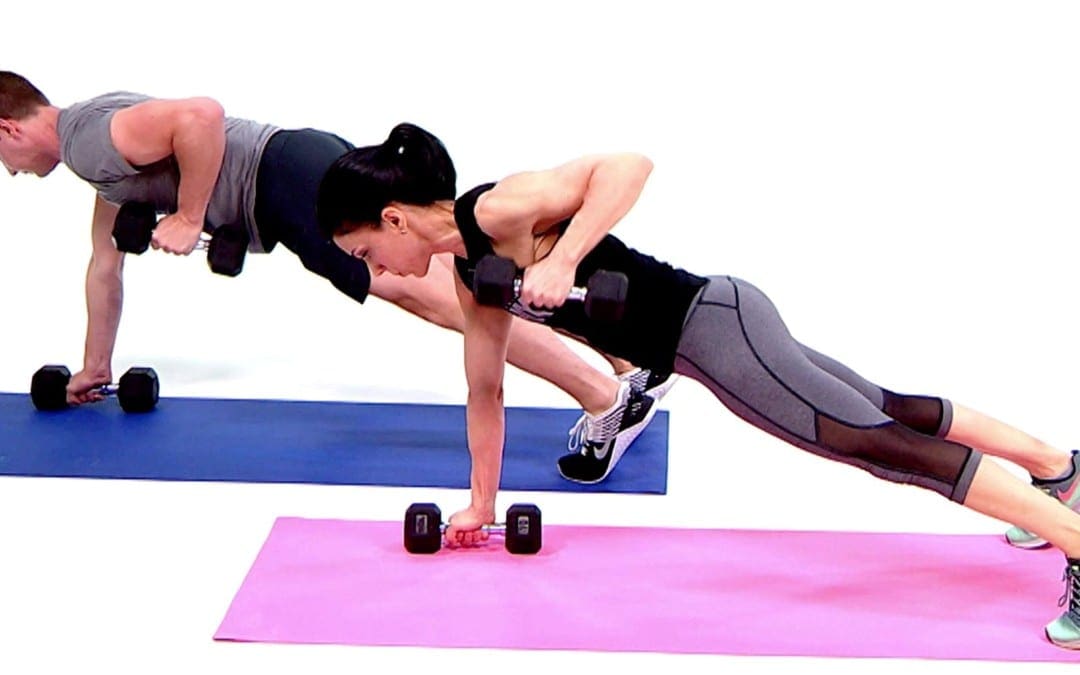
by Dr Alex Jimenez DC, APRN, FNP-BC, CFMP, IFMCP | Crossfit, Fitness
Don�t get us wrong: We love trying out the latest boutique studio classes, busting through solid strength routines at the gym, and sweating it out on the treadmill. But these certainly aren�t the only ways to get active; and some days a full hour of exercise just isn�t in the cards. Luckily, you don�t need a fancy fitness membership or lots of free time to become your best, fittest self.
In fact, it�s possible to complete a super-effective fat-burning workout in less than 30 minutes, in your own living room. High-intensity interval training (HIIT) is one of the most efficient ways to whip your body into top shape.
RELATED: 5 Basic Moves to Get Started with Pure Barre at Home
What is HIIT, exactly? It�s a cardio interval workout technique that generally involves 20-30 second bursts of full-on effort, followed by short recovery periods. These workouts get your heart pumping, sculpt muscle, and burns massive amounts of calories, even after your workout has ended. Plus, HIIT workouts are rarely more than 20 minutes long. So they�re ideal when you want to sneak a quick but serious workout into your busy schedule.
Sold? Follow along with this 20-minute HIIT workout led by Fhitting Room trainer Dara Theodore. It�s a heart-pumping sequence you can do anytime, anywhere�with dumbbells or simply your own body weight.
(Bonus: Check out this workout playlist that�s perfect for any HIIT workout.)

by Dr Alex Jimenez DC, APRN, FNP-BC, CFMP, IFMCP | Diets, Fitness
Upping the intake of soy protein may help fight inflammatory bowel disease (IBD), say Penn State researchers whose study included both mice and cultured human colon cells.
Inflammatory bowel diseases, which include ulcerative colitis and Crohn’s disease, are characterized by either continuous or periodic inflammation of the colon and are a significant risk factor for colon cancer.
For their study, researchers removed protein sources from the diets of the mice and substituted soy-protein concentrate. The soy equaled about 12 percent of their diet.
“We didn’t want to get carried away with using doses that were really high and would crowd out all the other protein that was there,” said researcher Zachary Bitzer. “Instead, we wanted to find a scenario that was going to fit into a more human-relevant situation.”
The dietary soy-protein at the 12-percent dose level improved body-weight loss and swelling of the spleen in the mice with induced inflammatory bowel disease.
“Soy-protein concentrate mitigates markers of colonic inflammation and loss of gut barrier function in the mice with induced IBD,” said researcher Amy Wopperer.
Followup studies will focus on whether the results translate to people. Because soy protein is a widely used food ingredient — often used as a meat substitute and commonly referred to as “texturized vegetable proteins” in ingredient lists — the researchers believe human studies could be arranged in the near future.
The study is published in The Journal of Nutritional Biochemistry,
Other studies have found soy to have health benefits. A study from Wayne State University found that compounds in soybeans can make radiation treatment of lung cancer more effective while helping to preserve normal tissue.
Soy isoflavones, a natural component of soybeans, increase the ability of radiation to kill cancer cells by hindering pathways necessary for the cancer cells to survive. At the same time, they act as antioxidants that protect normal cells from radiation-induced toxicity.
“In contrast to drugs, soy is very, very safe,” said Gilda Hillman, Ph.D., professor of radiation oncology at Wayne State University’s School of Medicine. “It’s also readily available, and it’s cheap.”










