Freshman Emmanuel Korir earned a spot in the Men�s Watch List for The Bowerman Award.
The mid-distance runner is one of 10 men earning recognition on the list. Previously, Korir took up residence in the �Also Receiving Votes� section. This is the Iten, Kenya, native�s first out door recognition.
Korir gives UTEP its 17th Watch List mention in program history � which is the seventh most by a men�s program in the Bowerman Watch List history.
Korir turned at the UTEP Invitational when he clocked a time of 44.78 in the 400m on April 22. Less than one week later, Korir challenged Donavan Brazier�s year-old collegiate record at 800 meters. Korir negative split the race at the Brutus Hamilton Challenge in Berkley, Calif., and crossed the finish line in 1:43.73.
The Miners will be hosting Conference USA Championships on May 11-14 at Kidd Field. For ticket information please call, 915-747-5234.
Doctor of Chiropractic, Dr. Alexander Jimenez looks at obesity in children and the risk of type 2 diabetes.
Close To 13 Million American Children & Teens Are Obese
And�new research shows they may be four times more likely than kids with a healthy weight to develop type 2 diabetes by age 25.
Between 2002 and 2005, there were 3,600 cases a year of type 2 diabetes among U.S. kids and teens, according to the Endocrine Society’s Endocrine Facts and Figures report. A large study of British children produced similar results, the researchers noted.
“As the prevalence of obesity and being overweight has rapidly risen, an increasing number of children and young adults have been diagnosed with diabetes in the United Kingdom since the early 1990s,” said study co-author Ali Abbasi, a research fellow at King’s College London.
For the study, published April 25 in the Journal of the Endocrine Society, the researchers reviewed health records of 375 general practices in the United Kingdom.
BMI Is A Measure Used To Determine If Someone Is A Healthy Weight For Their Height
The team compared the diabetes status and body mass index (BMI) of about 370,000 children between the ages of 2 and 15.
The study found that 654 youngsters were diagnosed with type 2 diabetes and 1,319 with type 1 diabetes between 1994 and 2013. Nearly half of those with type 2 diabetes were obese. There was no link, however, between obesity and rates of type 1 diabetes, an autoimmune disease, researchers noted.
“Diabetes imposes a heavy burden on society because the condition is common and costly to treat,” Abbasi said in an Endocrine Society news release. “Estimates indicate one in 11 adults has type 2 diabetes, or about 415 million people worldwide. Given that diabetes and obesity are preventable from early life, our findings and other research will hopefully motivate the public and policymakers to invest and engage in diabetes prevention efforts.”
News stories are written and provided by HealthDay and do not reflect federal policy, the views of MedlinePlus, the National Library of Medicine, the National Institutes of Health, or the U.S. Department of Health and Human Services.
Doctor of Chiropractic, Dr. Alexander Jimenez breaks down how pinched nerves cause back and neck pain.
You hear people say it a lot:
�I have a pinched nerve, and wow, it hurts.�
But what exactly is a pinched nerve? How does it cause back pain or neck pain? What are the symptoms of a pinched nerve�beyond pain? And most importantly, what can you do about a pinched nerve? Learn the basics of pinched nerves here.
Pinched Nerves: A Common Cause of Back & Neck Pain
What Is A Nerve?
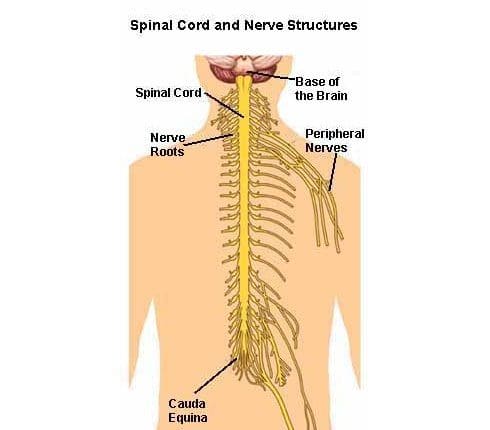
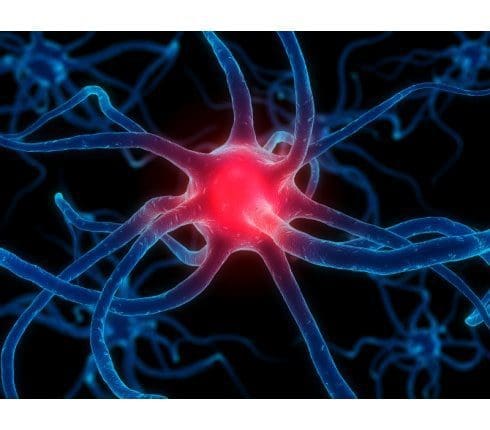
Nerves are your body�s messengers. They transport signals to and from your brain�messages like �Move this toe� or �Ouch, that cactus needle really is sharp.� You have a central nervous system, which is made up of your brain and spinal cord. You also have a peripheral nervous system, which is the system of nerves that branches off the brain and spinal cord.
What Do Nerves Look Like?
If it helps, think of nerves like a garden hose (except they aren�t green). They have an outside membrane that transports those electrical messages. Inside nerves, there�s a fluid that nourishes and replenishes the outer membrane.
You�re Getting on My Nerves
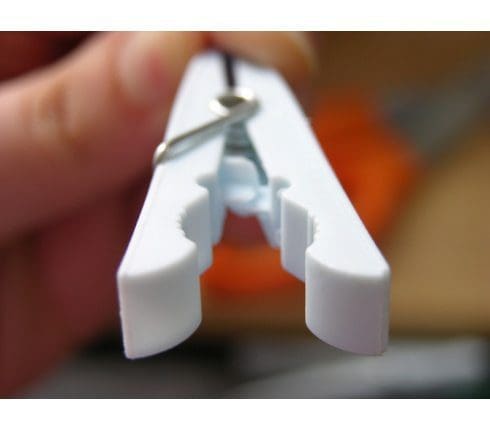
When a nerve gets pinched, the messages and the nourishing fluid don�t flow quite as well as they should (still helpful to think of a garden hose here). A pinched nerve can start sending the �Ow, pain� message to the brain, and it can also have trouble communicating clear messages, possibly leading to weakness, numbness, or tingling.
What Can Pinch a Nerve?
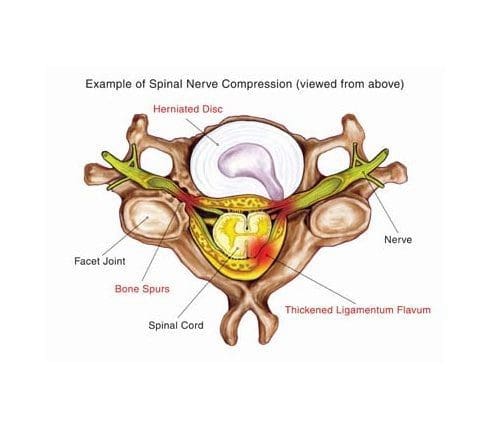
As a nerve exits the spinal canal, it can be pinched by a herniated disc or a bone spur. Bone spurs, also known as osteophytes, are bony bumps that can develop on a spinal joint over time. They can push into the spinal nerve, as you can see in this illustration (red = pain generator, of course).
What Does a Pinched Nerve Feel Like?
A pinched nerve mostly feels like pain. If you have a pinched nerve in your low back, it can cause pain to travel (or radiate, in doctor-speak) down your leg. You may also know that as sciatica. A pinched nerve in the neck can create pain that shoots down your arm. Other symptoms of pinched nerves include muscle spasms, burning, tingling, and a hot/cold sensation.
Now the Good Stuff: Pinched Nerve Treatments
Pinched nerve treatments fall into two categories: what you can do at home (self-care) and what your doctor may prescribe for you.
Pinched Nerve Self-care #1: Heat and Ice
Heat and ice can work wonders on a pinched nerve. Switch between 20 minutes of heat and 20 minutes of ice�and remember that you shouldn�t put the heat and ice packs directly on your skin.
Pinched Nerve Self-care #2: Get a Massage
The muscles around a pinched nerve can become tight, so having a professional massage therapist work the painful area can bring pain relief. You may also consider a handheld massager.
Pinched Nerve Self-care #3: Take a Walk
Let�s say it�s your low back�a pinched nerve in your low back�that�s hurting you. A nice, easy stroll is a good way to stay active and address your pain. Gone are the days of extended bed rest for back pain: doctors now are more likely to recommend you exercise and stretch to help relieve your pain.
When Should You Call a Doctor?
If you try the self-care thing and yet your pinched nerve pain persists, you should consider calling the doctor. If you�ve been in pain for more than a couple of days, schedule an appointment. You should also call the doctor if you experience a very sudden onset of weakness, or if you experience profound numbness. Losing bowel and/or bladder control is also a good reason to call the doctor.
How a Doctor Treats a Pinched Nerve
The doctor will try to diagnose the cause of your pinched nerve, and then the doctor will be able to develop a treatment plan. That plan may include prescription pain medications, physical therapy, or cortisone injections. But keep this in mind: the treatment plan will be specifically tailored for you, and it�s in your best interest to follow it closely.
There is significant excitement among surgeons as well as among patients following the recent FDA, or Food and Drug Administration, release of the Charit� Artificial Disc (DePuy Spine, Inc.). The delight among patients with degenerative disc disease comes from the perception that there’s now a safe way to eliminate pain from degenerative discs while also maintaining normal movement. Several patients have developed advanced stages of disc degeneration requiring an additional fusion process or have heard about others with similar difficulties getting fusion processes before, who still continue with constant pain or had more than one effort at fusion. They’ve also discovered the successful results following disc arthroplasty in Europe which has been highly publicized by the media in America.
Lumbar Fusions and Other Discoveries
That is certainly an exciting new addition to the variety of therapies and methods for treating degenerative disc disease. An almost amazing quantity of progress has been made when looking at the way in which the evaluation and treatment for degenerative disc disease has developed over recent years. Many healthcare professionals are now able to recognize disc disorder with MRI and pain generators with discography and facet blocks. Now they could be performed through incisions that are barely observable either anteriorly through the abdomen or through the back where only a decade past, lumbar fusions were being performed through substantial posterior incisions. With the usage of instrumentation that is presently available, achievement rates for one amount fusions approach 90 to 95 percent. Regrettably, not every patient who has degenerative disc disease and contains a successful fusion has a successful clinical result. There’s still a number of patients for whom fusion will not effectively relieve pain.
Risks of Disc Replacement
Disc replacement arthroplasty has the prospect of the treatment of most of the spinal motion segment illnesses which are currently being treated both successfully and not by one of the numerous fusion techniques. At this comparatively early phase of disc replacement development, many healthcare specialists don’t know all of the issues which will be encountered following these procedures. Because the surgical strategy is via the abdomen either retroperitoneal or transperitoneal, in other words, around or through the gut, there are several foreseeable complications including vascular injury, thrombophlebitis, or vein inflammation accompanied by blood clot formation, nerve root injuries, injury to the ureter, and retrograde ejaculation in men.
It’s also known that several disc replacements have failed and have been converted to some fusion with varying clinical consequences. Removing artificial discs, especially at the L4-5 level, poses a substantial risk of vascular injury due to scarring round the prosthesis. Surely, it’s known that artificial joints produce wear debris where that is obviously not an issue with fusion and an inflammatory reaction which could escalate over time.
Early Results of Procedure
Spine specialists and other healthcare professionals in general are very positive and excited about total disc arthroplasty, and suitably so. Appropriate training via cadaveric labs and courses will help minimize the learning curve of the procedure, to avoid other possible complications. There will without a doubt be many improvements and modifications in the prosthetic layouts.
Early results are surely encouraging in the hands of the investigational surgeons but are fraught with the numerous problems common to the creation of a procedure that is new. Total disc arthroplasty is likely to be an option that is better than fusion for several degenerative disorders of the lumbar spine as layout advancements continue being made and as further encounter defines the indicators because of its use.
The scope of our information is limited to chiropractic and spinal injuries and conditions. To discuss options on the subject matter, please feel free to ask Dr. Jimenez or contact us at 915-850-0900 .
Brain injuries are common complications in our modern world. Approximately 2 million individuals experience a head injury in the United States alone each year. Although most brain or head injuries are not considered life threatening, they could sum up to billions of dollars in annual revenue. Brain injuries are often categorized according to patient response. Only 1 out of 4 reported brain injuries are considered moderate or severe.
Doctor of Chiropractic, Dr. Alexander Jimenez investigates the mediterranean diet, and what it can do for people taking statins for heart attacks and strokes.
Q: How Does The Mediterranean Diet Stack Up Against Statins In Preventing Heart Attacks & Strokes?
A: Research suggests that the Mediterranean diet and statins can be effective in helping to lower the risk of potentially fatal complications of heart disease. But there has been no published scientific research in which a large number of people were given either statins or a Mediterranean-style diet at random and then followed carefully to see what became of their heart health.
As Rosemary Stanton, nutritionist and visiting fellow at the School of Medicinal Sciences, University of New South Wales, explains in an article posted by The Conversation, “Such a trial is unlikely to occur, as withholding medication from people at risk of heart attack or stroke would be regarded as unethical.”
But there is evidence that both approaches are helpful and that the optimal choice, at least for those at high risk of cardiovascular disease, would be a combination of diet and statins. Research also suggests that, for people at lower risk, lifestyle measures like the Mediterranean diet could be sufficient.
Traditionally, the Mediterranean diet includes lots of fruit, nuts, vegetables, cereals and oil from olives; a moderate intake of fish and poultry; a low intake of dairy products, red meat, processed meats and sweets; and — taken with meals — wine in moderation. (Researchers tested two versions, one with lots of olive oil and the other with lots of oil from nuts.)
“I don’t view these things as either-or,” said Dr. Meir Stampfer, a professor of epidemiology and nutrition at the Harvard T.H. Chan School of Public Health. “My advice is to start with the Mediterranean diet because it’s good for you in multiple ways — lowering risk of cognitive decline, reduction in some cancers, lower risk of diabetes — that go beyond what statins do.”
If Cholesterol Numbers Remain High Despite A Healthy Diet, Statins Or Other Medical Treatments Can Be Added
In 2009, Circulation: Cardiovascular Quality and Outcomes, a journal of the American Heart Association, reported research that showed statin therapy resulting in a 44 percent reduction in heart disease-related problems including heart attacks, strokes and deaths. (The study can be downloaded at bit.ly/2lX1tuF.)
In 2013, a large and rigorous study published by The New England Journal of Medicine found that switching to a Mediterranean diet prevented about 30 percent of heart attacks, strokes and deaths from heart disease in people at high risk. That study, which looked at two versions of the diet, can be found at bit.ly/2np3VY2.
Statin takers often wrongly think they don’t have to worry about diet and exercise.
“Quantitatively, you get more mileage from optimal exercise and diet than statins, so it’s not one or the other,” Stampfer said. “Everybody needs the diet and exercise, and some people, despite that, will still need statins. It’s not a failure; it’s not a character flaw — if you need it, you need it.”
The bottom line is that the Mediterranean diet helps even if one is taking statins and, along with other potential benefits, might help avoid the need for statins altogether.
Anyone who’s tried Zumba knows what a fun, heart-pumping workout it is. Thanks to the lively music and challenging dance moves, these classes help burn calories and strengthen your body from head to toe. But before Zumba classes started appearing everywhere, there was samba reggae. This music genre (which combines Brazilian samba with Jamaican reggae) originated in Bahia, Brazil.
And of course, what’s music without some dancing? It’s no surprise this upbeat music gave rise to a style of dance with a similar name. Samba reggae is upbeat, fun, freeing, and all about connecting with your body and the rhythm of the music.
Ready to rock this dance for yourself? In this video, dance teacher Quenia Ribeiro of the renowned dance school Ailey Extension demonstrates an easy-to-follow samba reggae workout to get your heart pumping and body flowing. Just hit play and follow-along.
Chiropractor, Dr. Alexander Jimenez gives insights into the most common questions about whiplash.
What Is Whiplash?
Whiplash, although not technically a medical term, can be quite painful and is quite serious. We call it whiplash because, within an accident, your neck actually can whip back and forth�first backward (hyperextension) and then forwards (hyperflexion). Doctors call whiplash a neck sprain or strain. Whiplash is an injury to the soft tissues of your neck and upper back that occurs when ligaments and your muscles get overstretched in the strength of an accident.
What Causes Whiplash?
The most common source of whiplash is car accidents. Nonetheless, you can even get whiplash from a sports injury or a fall. It’s also possible to get whiplash when you are hit or shaken.
What Are Some Non-Surgical Ways To Take Care Of Whiplash?
Time is just one of the greatest non surgical treatment options for whiplash. Most instances of whiplash recover by themselves to some months in several weeks. Your doctor may also indicate: wearing a cervical collar, cervical traction, chiropractic adjustment, physical therapy, and pain drugs as you heal.
Will I Need Surgery?
Patients with whiplash quite, very rarely need surgery. If, nevertheless, you’ve been through wide-ranging non-operative treatments and also you have pain, surgery may be considered by you. There are several kinds of surgery useful for whiplash
Corpectomy:
Sometimes whiplash induces the spinal canal to narrow because of how a soft tissues (muscles, ligaments, and tendons) and bones moved throughout the first injury. By removing area of the vertebra and the intervertebral disc using a corpectomy, the surgeon is wanting to make more room in your spinal canal.
Discectomy:
The surgeon will remove section of the intervertebral disc, which may be pressing on your own spinal cord or alternative nerves and causing pain. Sometimes, the surgeon will have to do a spinal fusion at the same time as the discectomy. The fusion plans to permanently stabilize that region of your spine, although not everyone who has a discectomy will need a fusion.
Foraminotomy:
As with a corpectomy, a surgeon uses a foraminotomy to make more room for your nerves that could have gotten pinched and compressed throughout the harm. In this process, the foramina (the place where the nerve roots leave the spinal canal) is removed to boost the size of the nerve pathway.
IFM's Find A Practitioner tool is the largest referral network in Functional Medicine, created to help patients locate Functional Medicine practitioners anywhere in the world. IFM Certified Practitioners are listed first in the search results, given their extensive education in Functional Medicine




















 What Causes Whiplash?