Scoliosis is defined as the abnormal, lateral deviation of the spine with a minimal Cobb angle of 10� in the coronal plane. It may be characterized as either non structural or structural scoliosis.
Non-structural scoliosis is identified as a non-progressive curve resulting from a leg length discrepancy, herniated disc or improper bearing which can be corrected by removing the causing factor. Structural scoliosis is identified by not only its vertebral distorted shape, but by a vertebral rotation towards the convex side, where the spinal processes also rotate toward the concave side, additionally, including rib deformity along with the convex sided ribs shifting posterior and superior while the concave sided ribs changing anterior and inferior.
After diagnosis, a person with scoliosis may present a pelvis that is not leveled in the transverse plane with unequal shoulder height, a thoracic or lumbar hump, and an asymmetrical lumbar triangle, loss of lumbar lordosis or loss of balance in the sagittal and coronal planes.
Scoliosis in the Modern World
Scoliosis approximately affects up to 2 to 3 percent of the population and it may be classified as congenital, neuromuscular, degenerative or idiopathic. Furthermore, scoliosis diagnosed after skeletal maturity, between the ages of 20 to 50, known as adult scoliosis, amounts up to 6 to 10 percent of the population. Adult scoliosis is divided into four types: Primary degenerative scoliosis resulting from the asymmetrical erosion of the disc, endplates and/or facet joints; progressive idiopathic scoliosis not previously treated or post-surgical; secondary adult curvature due to a pelvic obliquity; and secondary adult curvature due to metabolic bone disease.
According to research studies, the clinical presentation associated with adult scoliosis requiring immediate medical attention from a healthcare professional includes: back pain which manifests as muscle soreness, muscular exhaustion or mechanical instability; symptoms of radicular pain present during standing or walking; neurological deficits; and curve progression resulting in from axial overload or vertebral bodies with osteoporosis.
Literature has described a variety of treatments for scoliosis predicated on surgical and non-surgical classification, dependent on the severity and the character of the curvature as well as the danger of progression. Surgical intervention is an alternative treatment option for individuals that have completed the growth cycle and whose curve is greater than 50� and or whose curve is above 45� and are still in the growth cycle. Bracing and projecting is utilized for people in the growth interval and whose curve is between 20� and 40�. An individual with a curve of less than 25� and has completed growing might be observed throughout their life for curvature progression of 5� in one year, which can be determined to need surgical intervention.
Many healthcare professionals recommend surgery for scoliosis rather than an alternative, non-surgical treatment for scoliosis. In a study by Brigham and Mooney, a progressive exercise plan focusing on exercises combined with torso turning exercises were utilized to raise the strength in patients with scoliosis measuring 15�to 41�. The results showed a 20% � 23% improvement in the curvature without any type of bracing or casting.
Prevalence of the Schroth Method for Scoliosis
In comparison to America, conservative measures are more vigorously executed worldwide. Along with plans, such as for example SEAS (Scientific Exercise Method Of Scoliosis), FITS (Functional Individual Therapy of Scoliosis), Dobosiewicz method, ASCO (Anti-Scoliosis Shaking-Decompression) procedure, Lyonaise method, and physiologic�, the Schroth method is a scoliosis treatment approach which attempts to conservatively treat the spinal condition by emphasizing patient specific postural analysis and corrections in a multidimensional plane. In line with the method first created by Katharina Schroth, the torso is divided into three and sometimes four vertically stacked anatomical blocks. As an outcome of scoliosis, these blocks deviate in the vertical line and laterally shift and rotate against each other creating areas of convexities and concavities.
Depending on sensorimotor and kinesthetic principles, patients utilize proprioceptive and exteroceptive stimulus (visual, tactile, verbal) to achieve the proper spinal alignment through corrective breathing patterns and postures. This is a big element of the Schroth method for scoliosis. Three dimensional postural corrections and remedial exercises are used to achieve spinal de-rotation, de-flexion and elongation in order to re-gain postural symmetry and muscular equilibrium as well as for the stabilization of the corrected bearing through isotonic and isometric tension and reflex holding of muscles. Simultaneous performance of rotational angular respiration (RAB) helps correct the placement of the ribs by directing air into the thoracic concavities. Through the specific exercises of the Schroth method for scoliosis, patients learn to lift themselves out of passive alignments and endure a position that is corrected throughout their day-to-day activities.
The Schroth Method for Scoliosis
The scope of our information is limited to chiropractic and spinal injuries and conditions. To discuss options on the subject matter, please feel free to ask Dr. Jimenez or contact us at 915-850-0900 .
By Dr. Alex Jimenez
Additional Topics: Lower Back Pain After Auto Injury
After being involved in an automobile accident, neck injuries and aggravated conditions, such as whiplash, are some of the most commonly reported types of injuries, due to the force of the impact. A study discovered, however, that the seat of a vehicle can often lead to injuries as well, causing lower back pain and other symptoms. Lower back pain is also among one of the most common types of automobile accident injuries in the U.S. alone.
Losing weight comes down to simple arithmetic: Eat fewer calories than you burn off.
Here’s a good way you can accomplish this without going hungry.
Switch out high-calorie foods for low-calorie options to cut calories without cutting portion sizes. Dairy food is a good place to start, according to the U.S. Department of Agriculture.
If you’re still using whole milk and cream, make gradual changes to lower-fat versions. Start by switching from whole milk to 2 percent milk for your coffee, on your cereal and in recipes. Then take the next step down to 1 percent milk and, eventually, to fat-free or skim milk. You can make similar switches with other dairy products, like yogurt and cottage cheese.
Mix in your own fresh fruit or a few drops of vanilla extract to a serving of no-fat plain Greek yogurt to make you forget about higher-calorie choices. You’ll get twice the protein of regular yogurts without the added sugar (and calories) of flavored varieties.
Are you craving cheese? Choose types that are naturally lower in fat, like feta, string, goat and ricotta cheese. Also try reduced-fat versions of your favorites, like cheddar.
Milk is a great source of protein and other nutrients — like calcium — needed for bone health. And it’s usually fortified with vitamin D, essential to maximizing that calcium.
The bottom line? Keep the dairy, but ditch the fat.
It is very well known that spices and herbs have a great many positive healthy qualities. But often we get confused as to how many, how much and which of the ingredients we must use as a supplement to boost our body.
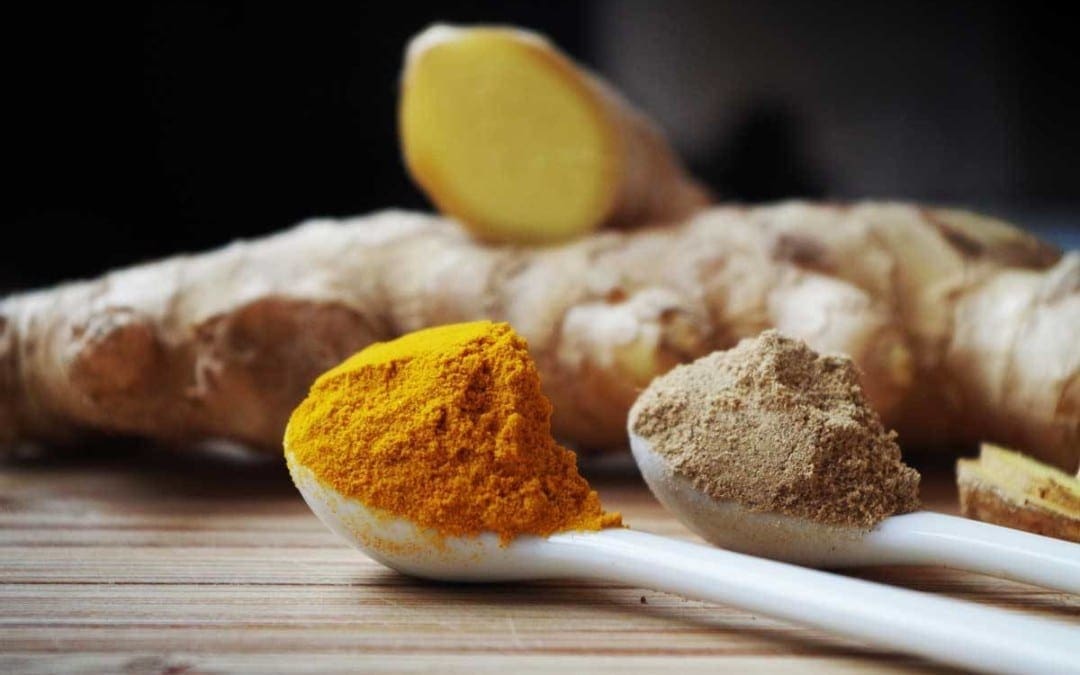
We have zeroed in on three basic but power house spices from your kitchen that can help you stay healthy. It goes without saying that in today�s times of excessive pesticide use, using organic varieties of these spices is the best and only way to go.
Ginger
Ginger root, which is a staple in every Indian Kitchen can work many wonders.
Ginger has been known for over two thousand years as a medicinal herb effective in treating digestive problems, nausea, hangover and gases. Modern studies have found that it is effective in the treatment of vomiting, protects the gastric mucosa and improves inflammatory conditions.
Turmeric
Turmeric has anti-aging, antioxidant, anti-inflammatory properties. Curcumin is the magical substance, which gives turmeric its golden color and its many health benefits. Pure extracts of Curcumin are also available in the market these days.
Many studies have revealed that turmeric has low absorption and rapid metabolism. This helps in cleansing your system of toxins and also to help in absorption of nutrients. it is a front runner for fighting infections.
Cinnamon
Cinnamon is one of the most versatile spices of all. With its sweet and spicy notes, it is a favourite that can be easily used for a wide variety of preparations. This spice is also very high on antioxidants and can help with heart health, fights diabetes and protects brain function.
It is great as a mouth freshener.
A simple drink can be made using a teaspoon full of each of these ingredients mixed with a cup of hot water. Adding a drop of honey and a squeeze of lime makes it even better. You can use ether the powdered version of the spices or them fresh and grate them as per your requirements.
Other than consuming it as a drink, you can incorporate a pinch of each spice in almost everything you cook. Get creative and think about using more of these ingredients in your salads and even smoothies.
Once a day, right at the start of the day, having a cup of this booster will make your body thankful to you.
The scope of our information is limited to chiropractic and spinal injuries and conditions. To discuss options on the subject matter, please feel free to ask Dr. Jimenez or contact us at 915-850-0900 .
Additional Topics: Lower Back Pain After Auto Injury
After being involved in an automobile accident, neck injuries and aggravated conditions, such as whiplash, are some of the most commonly reported types of injuries, due to the force of the impact. A study discovered, however, that the seat of a vehicle can often lead to injuries as well, causing lower back pain and other symptoms. Lower back pain is also among one of the most common types of automobile accident injuries in the U.S. alone.
When the weather starts getting warmer, most of us immediately ramp up our ab and glute exercises. But what about your arms? Here, Health’s contributing fitness editor Tracy Anderson demonstrates a challenging arm workout you can do anywhere—no equipment necessary.
Tracy notes that the key to strong arms is all about working different parts, not just isolated areas. These bodyweight exercises offer incredibly challenging resistance to get your shoulders, biceps, and triceps in shape for summer. Watch this video to see six of Tracy’s favorite arm-sculpting moves.
No time to watch? Here’s a breakdown of the workout:
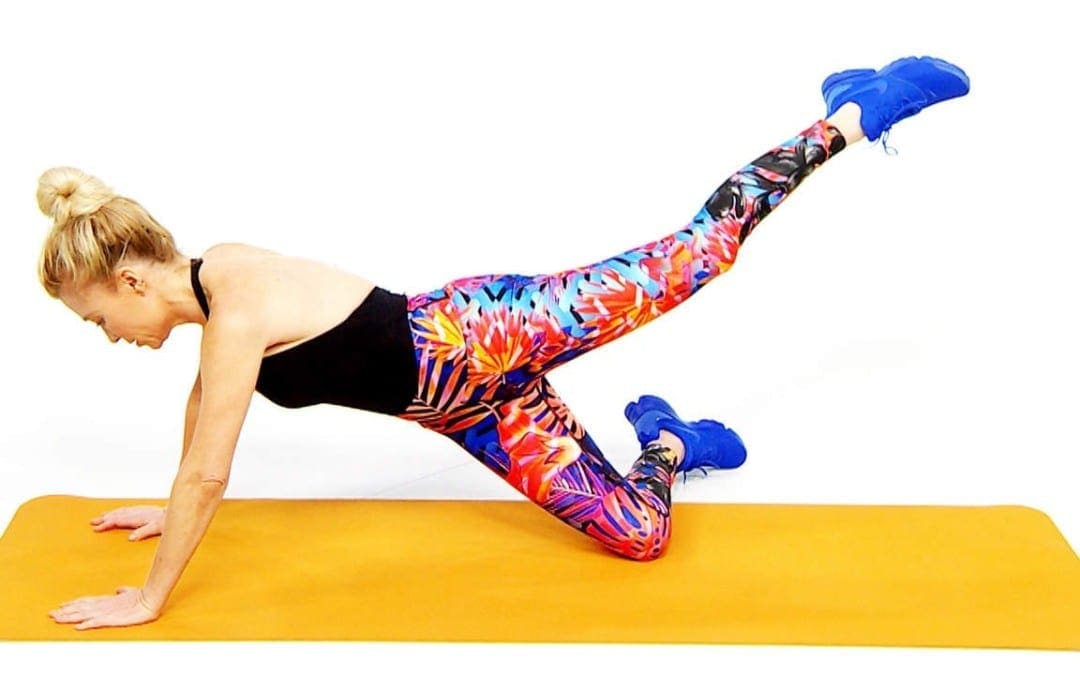
Move 1: Start by lying on the ground. Push up into a plank position, then twist your body, creating an award pushup position. Press back up into a full plank and extend your top leg. Lower your body down and extend your leg up again. Do this 30 times. You’re going to start to feel your back arm really working, because you’re twisting your body weight to the back arm, while the front one is just stabilizing. Be sure to do both sides.
Move 2: Get into a full plank position, then straighten one leg to the back. Lift one leg and dangle your knee. Tuck it in towards your chest, then cross it over your other leg, and extend your leg into the air behind you.
Move 3: Get into a plank position. Alternate bringing your knees underneath your body, crossing diagonally, and tapping your knee with the opposite hand. Use your arms to stabilize yourself during this move.
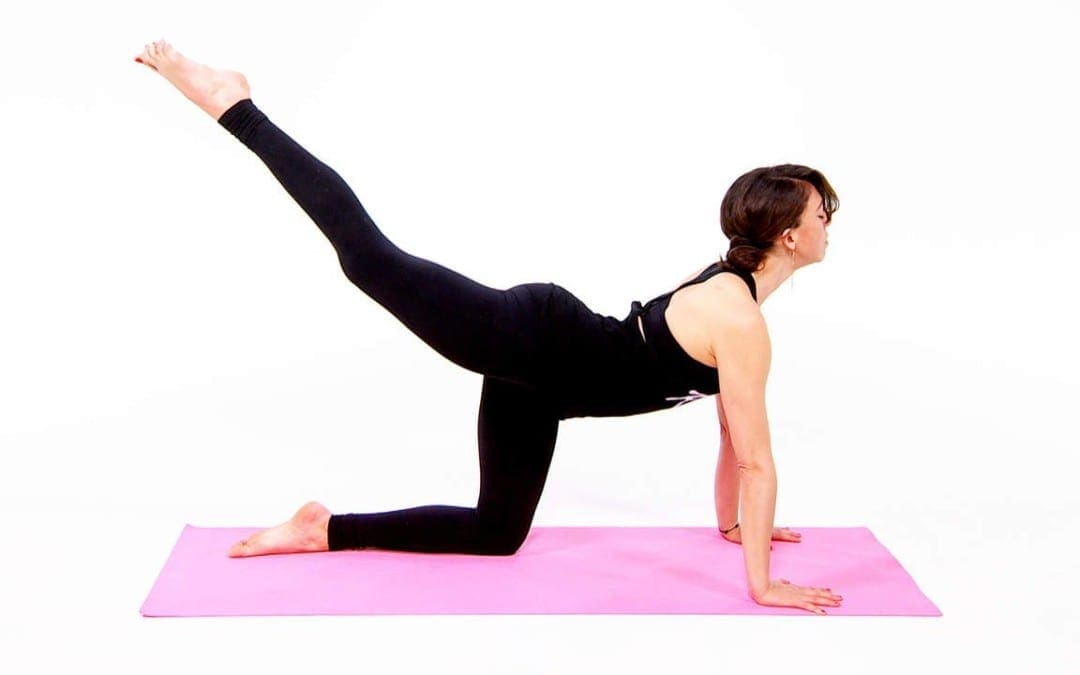
Move 4: Get into a tabletop position. Reach one arm into the sky while pushing your hips up. Twist your body down into a high plank, then press your outside leg up into the air.
Move 5: Get into a plank position. Bend your knee and rest your outer leg on the ground in a twisted position. From here, lift your knee up and extend it out behind you. Keep twisting, lowering, and lifting for 30 reps.
Move 6: Get into a wide leg plank. Lower down to one forearm, then switch to the other. Next, energetically push your body back up using just one arm.
It’s no secret that sitting at a desk all day isn’t good for you. A sedentary lifestyle can lead to weight gain, which may then lead to a host of other issues. Research has shown that sitting too much throughout the day can lead to a number of different health problems, including obesity, heart problems, and diabetes.
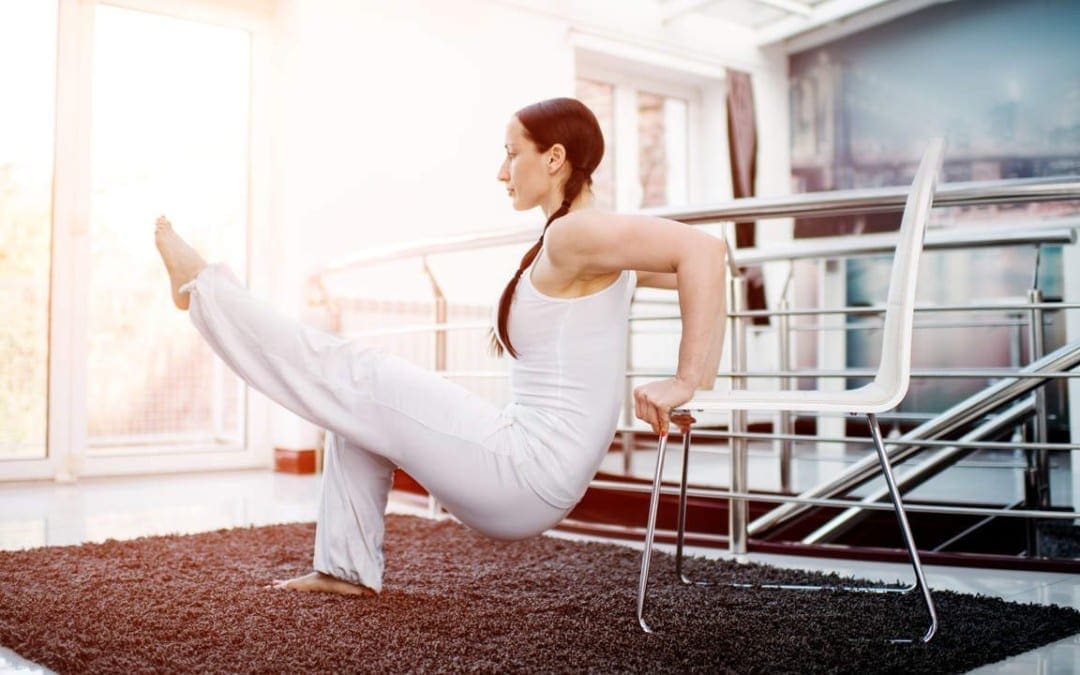
However, there are things you can do to offset the health risks of sitting at your desk, such as getting up to take frequent walks. But even if you can’t leave your chair, there are even plenty of movement exercises you can do right from your desk, such as chair yoga. You could also take advantage of the time to work on some mobility training—a form of exercise that focuses on improving your stability, range of motion, and loosening your muscles so you can perform better during any workout.
Frank Baptise, founder of Frankly Fitness, is a big fan of mobility training as an effective way to help promote healthy joints, balance, and flexibility in your body. Here, he demonstrates six simple yet effective moves to try at your desk. All you need is a stress ball and a desk chair!
Don’t have time to watch? Here’s a quick rundown of Baptiste’s go-to mobility moves:
Feeling stressed? On any given day, you’re likely bombarded with many different stress-inducing situations. Perhaps it’s a challenging project at work, a fight with your partner, or just someone who unapologetically bumped into you on the street.
Life is filled with challenges and frustrations like these. But the good news is there are plenty of smart strategies that can help you refocus your energy so you feel calm and peaceful instead of frazzled. Take meditation and mindfulness, for example—both practices are all about checking in with yourself and filtering stress out of the mind. And if meditation isn’t your thing, exercise is also a great way to help release your daily frustrations and send a healthy dose of feel-good endorphins to your brain.
Better yet, combine two of these mindful practices: meditation and exercise. Yoga is perfect for this, especially if it’s a calming flow that can quiet your mind while simultaneously strengthening your muscles. By forcing you to pay close attention to your breath, yoga helps stop your racing thoughts.
Watch this video for a calming 10-minute yoga flow from Kirby Koo of Yoga With Kirby. It focuses on the importance of your breath, so you can calm your mind and banish stress.
Anyone who struggles with back pain knows how distressing it can be. Whether it�s soreness that impedes your sleep or aches that hurt your productivity while you sit at your desk at work, back pain is hard to ignore no matter what position you�re in.
The good news? Yoga can be a surprisingly helpful remedy. In this video, yoga expert and Retox author Lauren Imparato takes you through a 20-minute yoga flow designed to soothe and prevent back pain. Yes, please!
�How you sit, how you sleep, something you ate, how you moved,� can all contribute to upper or lower back issues, Imparato explains. And while treatment options do exist�such as massage and acupuncture�studies have shown that yoga may actually be more effective than these and other alternatives. Research from the Annals of Internal Medicine found that people with chronic lower back pain saw more improvement of their symptoms after a 12-week yoga class compared to those who only received medicine or physical therapy to treat their pain.
Want to experience the same relief? In this video, Imparato will first help you release tightness and tension in your back by guiding you through classic stretches like cat and cow. Next, she�ll show you how to do a quick, equipment-free flow that works to stabilize the spine and strengthen the muscles in your core that support it. (Hi, toned abs!) Watch the clip above for a yoga routine that not only reduces back pain but crafts long, lean muscle at the same time.
Also check out our sister company: Best Yoga Routines for Sleep. �This is a great article that helps you doze off…. WAY Better…
IFM's Find A Practitioner tool is the largest referral network in Functional Medicine, created to help patients locate Functional Medicine practitioners anywhere in the world. IFM Certified Practitioners are listed first in the search results, given their extensive education in Functional Medicine