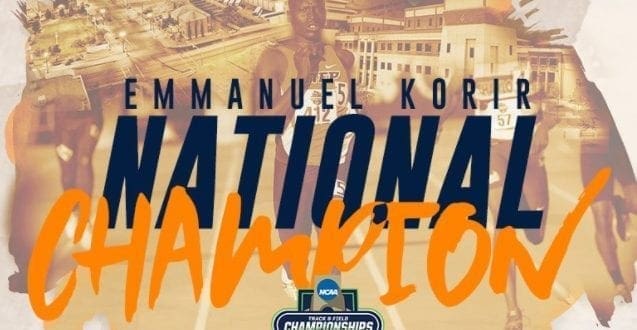
Emmanuel Korir has been named a semifinalist for college track and field’s highest individual honor, The Bowerman Award, the U.S. Track and Field and Cross Country Coaches Association (USTFCCCA) announced Thursday.
Korir wrapped up his freshman season with a sweep of both 800m national titles. The Kenyan is the first Miner to win the 800m NCAA title since Peter Lemashon outdoors in 1978, and the first to achieve the feat at both NCAA Indoors and Outdoors in the same year.
The All-American holds school records in the indoor 800m (1:46.75), the outdoor 800m (1:43.73) and the outdoor 400m (44.53). Korir is one of three athletes in the world to run a sub-45 400m and a sub-1:44 in the 800m.
Three finalists will be announced on Thursday, June 22 from the following list of semifinalists:
KeAndre Bates, junior, jumps, Florida
Edward Cheserek, senior, distance, Oregon
Christian Coleman, junior, sprints/jumps, Tennessee
Grant Holloway, freshman, hurdles/jumps, Florida
Fred Kerley, senior, springs, Texas A&M
Josh Kerr, sophomore, mid-distance, New Mexico
Emmanuel Korir, freshman, mid-distance, UTEP
Ioannis Kyriazis, junior, throws, Texas A&M
Filip Mihaljevic, junior, throws, Virginia
Lindon Victor, senior, combined events, Texas A&M
For more information on UTEP track and field, follow the Miners on Twitter (@UTEPTrack) and Instagram (uteptrack).
New UTEP Tennis Head Coach Ivan Fernandez announced his first two signees on Friday. Erandi Martinez Hernandez and Alisa Morozova will join the Miners for the 2017-18 season.
Martinez Hernandez graduated from Monterrey Institute of Technology and Higher Education, a prestigious high school in Mexico City. She has been ranked among the top-five under-18 players in Mexico and has won three Grade 1 tournaments in both singles and doubles.
Hernandez reached the semifinals of the Masters Championship, a qualifier for a Women’s Tennis Association (WTA) Tournament in Mexico, and reached the quarterfinals at the Tampico International Tournament last August, where she faced several players that are now playing Division I tennis.
“I have been recruiting Erandi for a couple of months already,” Fernandez said. “I know that she’s got a lot of wins in Mexico against players that are now in Division I, so I have a really good idea of the level that she’s going to bring to the program. She’s very solid in singles and doubles and I think that she’s going to be a great addition to this team, especially having competed against a lot of collegiate players. She’s going to come in with a lot of international experience and she has been highly ranked in Mexico for her whole career. I definitely expect her to make an immediate impact in the lineup.”
Morozova recently graduated from the Gusev Secondary School in Russia, where she has been ranked among the top under-18 players the last three years. Morozova represented the Yaroslavi Regional Team as the No. 3 singles player and has won more than 10 Russian Federation Tournaments in singles and doubles.
“I spoke with Alisa’s sister a little bit and she told me that if she had been playing here in the U.S. she would have a UTR [Universal Tennis Rating] of 9 or 10, which is a very high level,” Fernandez said. “Her sister, who played for four years at St. John’s and just graduated, told me that she would probably play in the middle of the lineup at St. John’s, who just won their conference and went to the NCAA Tournament. Alisa is a very young player but she is very well-rounded. She’s also going to be capable of playing in the middle of the lineup here. We’re very fortunate that we were able to get her in so quickly and get her signed right away. She’s a very solid player, she’s going to mature and keep developing and both she and Erandi will definitely be in the lineup as true freshmen.”
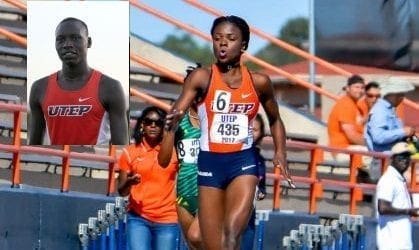
UTEP claimed two superlative Conference USA track and field honors as Emmanuel Korir and Tobi Amusan were named C-USA Male and Female Track Athletes of the Year, announced by the league office on Friday afternoon.
“Both athletes are very special and talented. He [Korir] was the best candidate for our league and would most likely do very well other top conferences as well,” head coach Mika Laaksonen stated. “A lot of work goes into these things and Tobi worked incredibly hard over these past two years and she absolutely deserves this award, they both do.”
Korir ran a world best 1:14.97 in the 600m earlier this year at the New Mexico Cherry & Silver meet, which was his first race on an indoor 200m banked track. The freshman followed that up by capturing the NCAA title in the 800m (1:47.48) at the same track in Albuquerque, N.M., with a time of 1:47.48. The freshman is one of three athletes in the world to run an outdoor sub-45 400m and a sub-1:44 in the 800m.
The Kenyan native won the NCAA outdoor title in the 800m (1:45.03) and is the first Miner to win both titles in the same year.
Amusan was the leading scorer for the Miners with 25 points at the C-USA Indoor Championships and notched a meet record in the 60m hurdles with a time of 8.01. The sophomore helped her team win its third consecutive conference title. Amusan qualified to the NCAA Indoor Championships in the 60m hurdles where she notched a sixth-place showing.
The outdoor season started with a bang, as she set a school record (12.63) in the 100m hurdles at the UTEP Springtime meet. She followed that with a first-place finish at the 2017 Clyde Little Field Texas Relays in the 100m hurdles, setting a meet record time of 12.72. The Nigerian native scored 24.5 points at the C-USA Outdoor Championships leading the women’s team to its first ever outdoor conference title.
Both athletes were named semifinalists for college track and field’s high individual honor, The Bowerman Award. The women’s three finalists will be announced on Wednesday, June 21 and the men’s finalists will be announced Thursday, June 22.
For more information on UTEP track and field, follow the Miners on Twitter (@UTEPTrack) and on Instagram (uteptrack).
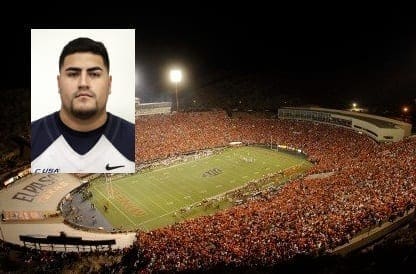
Offensive lineman Will Hernandez was named to the 2017 Athlon Sports Preseason All-American third team on Tuesday.
The senior comes back after a stellar season where he garnered AP All-American second team, FOX Sports’ All-American second team, All-Conference USA first team and Pro Football Focus Best Pass Protector honors. The lineman has started all 37 games in his career for the Miners at the left guard position.
He led the offensive line that paved the way for Aaron Jones to rush for a single-season program-record 1,773 yards, while Jones also became UTEP’s all-time leading rusher last season. The Miners averaged 185.5 rushing yards per game and scored 20 touchdowns on the ground.
Hernandez is one of two student-athletes from C-USA that makes an appearance on the Athlon Sports All-American team. The Las Vegas, Nev., native also was named to the Athlon Sports Preseason All-C-USA first team.
Teammate Alvin Jones also garnered Athlon Sports All-C-USA first team recognition, while Devin Cockrell and Terry Juniel received second team honors. Jones was appointed to the 2016 All-C-USA second team after leading team in tackles 93 (44 solo). He ranked fourth in the league in tackles per game (9.3) and added 6.0 tackles for loss (28 yards), 2.5 sacks (22 yards) and a pass breakup.
Cockrell started all 12 games last season and ranked fourth on defense, while leading all defensive backs with 58 tackles (31 solo). He added 3.0 tackles for loss, a pass breakup, a quarterback hurry and a fumble recovery. The senior led team with 10 special team’s tackles (seven punt return tackles)
Juniel returns to the Miners special teams unit as the starting punt returner. The specialist was the team’s leading punt returner, tallying 203 yards on 22 returns (9.2 avg.), with a pair of long returns of 43 yards. Juniel led C-USA in punt returns and return yards. The junior returned nine kickoffs for 164 yards (18.2 avg.) with a long of 26 yards.
UTEP’s center Derron Gatewood and punter Alan Luna also received recognition on the All-C-USA Preseason fourth team.
According to the American Academy of Orthopedic Surgery �The most common soft tissues injured are muscles, tendons, and ligaments.
Acute injuries are caused by a sudden trauma, such as a fall, twist, or blow to the body. Examples of an acute injury include sprains, strains, and contusions.�� (http://orthoinfo.aaos.org/topic.cfm?topic=A00111) We must also not forget that there are other soft tissues that can get injured and the true definition of soft tissue, which is anything not bone is soft tissue.
This includes the brain, lungs, heart and any other organ in the body. However, in medicine soft tissue injuries are commonly known to be limited to the muscles, ligaments and tendons.
Soft Tissue Injury Classification
When we look at the type of structures that muscles, tendons and ligament are composed of, we will realize that they are connective tissue. According to the National Institute of Health �Connective tissue is the material inside your body that supports many of its parts. It is the “cellular glue” that gives your tissues their shape and helps keep them strong. It also helps some of your tissues do their work (http://www.nlm.nih.gov/medlineplus/connectivetissuedisorders.html). Unlike fracture repair where the bone is replaced and usually heals properly if aligned and rested, connective tissue disorders undergo a different type of wound repair that has aberrant tissue replacement as sequella to bodily injury and has subsequent abnormal permanent function.
If we focus on sprains or ligamentous injuries, according to the American Academy of Orthopedic Surgery there are three types of sprains:
Sprains are classified by severity:1
Grade 1 sprain (mild):�Slight stretching and some damage to the fibers (fibrils) of the ligament.
Grade 2 sprain (moderate):�Partial tearing of the ligament. There is abnormal looseness (laxity) in the joint when it is moved in certain ways.
Grade 3 sprain (severe):�Complete tear of the ligament. This causes significant instability and makes the joint nonfunctional.
Regardless of the severity of the sprain, there is tissue damage or bodily injury and the next step is to determine if there is healing or wound repair. According to Woo, Hildebrand, Watanabe, Fenwick, Papageorgiou and Wang (1999) ��as a result the combination of cell therapy with growth factor therapy may offer new avenues to improve the healing of ligament and tendon. Of course, specific recommendations regarding growth factor selection, and timing and method of application cannot be made at this time.
Previous attempts at determining optimal doses of growth factors have provided contradictory results. Although growth factor treatment has been shown to improve the properties of healing ligaments and tendons, these properties do not reach the level of the uninjured tissue.� (p. s320)
�No treatment currently exists to restore an injured tendon or ligament to its normal condition.�, stated Dozer and Dupree (2005). (pg. 231).
Soft Tissue Recovery Process
According to Hauser, Dolan, Phillips, Newlin, Moore and Woldin (2013) �injured ligament structure is replaced with tissue that is grossly, histologically, biochemically and biomechanically similar to scar tissue. Fully remodeled scar tissue remains grossly, microscopically and functionally different from normal tissues� (p. 6) �the persisting abnormalities present in the remodeled ligament matrix can have profound implications on joint biomechanics, depending on the functional demands placed on the tissue.
Since remodel ligament tissue is morphologically and mechanically inferior to normal ligament tissue, ligament laxity results, causing functional disability of the affected joints and predisposing other soft tissues in and around the joints further damage.� (p.7) �studies of healing ligaments have consistently shown that certain ligaments do not heal independently following rupture, and those that didn�t feel, do so characteristically inferior compositional properties compared with normal tissue. It is not uncommon for more than one ligament undergo injury during a single traumatic event.� (p.8) �osteoarthritis for joint degeneration is one of the most common consequences of ligament laxity.
Traditionally, the pathophysiology of osteoarthritis was thought to be due of aging and wear and tear on the joint, but more recent studies have shown that ligaments play a critical role in the development of osteoarthritis. Osteoarthritis begins when one or more of ligaments become unstable or lax, and the bones began to track improperly and put pressure on different areas, resulting in the rubbing the bone on cartilage. This causes breakdown of cartilage and ultimately leads to deterioration, whereby the joint is reduced to bone on bone, a mechanical problem of the joint that leads to abnormality of the joints mechanics. Hypomobility and ligament laxity have become clear risk factors for the prevalence of osteoarthritis.� (p.9)
Looking globally at the research over the last 16 years, in 1999 it was concluded that the most current treatments to repair or heal the injured ligament do not reach the level of the uninjured tissue. In in 2005 it was concluded that no treatment currently exists to restore an injured tendons or ligaments to its normal condition. In addition the current standard of ligament research in 2013 concluded that that ligaments do not feel independently, but damage ligaments are a direct cause of osteoarthritis and biomechanical dysfunction (abnormality of joint mechanics). The latest research has also concluded that ligament damage or sprains is the key element in osteoarthritis and not simply aging or wear and tear on the joint.
As a result it is now clear based upon the scientific evidence that a soft tissue injury is a connective tissue disorder that has permanent negative sequela and is the cause of future arthritis. This is no longer a debatable issue and those in the medical legal forum who are still arguing �transient soft tissue injuries� are simply rendering rhetoric out of ignorance and a possible ulterior motive because the facts clearly delineate the negative sequella based upon decades of multiple scientific conclusions.
The caveat to this argument is that although there is irrefutable bodily injury with clear permanent sequella, does it also cause permanent functional loss in every scenario? Those are two separate issues and as a result of the function of ligaments, which is to connect bones to bones the arbiter for normal vs. abnormal function is ranges of motion of the joint. That can be accomplished by either a two-piece inclinometer for the spine, which according to the American Medical Association Guides to the Evaluation of Permanent Impairment, 5th Edition (p. 400) is the standard (and is still the medical standard as the 6th Edition refers to the 5th for Ranges of motion).
The other diagnostic demonstrable evidence to conclude aberrant function is to conclude laxity of ligaments through x-ray digitizing. Both diagnostic tools confirm demonstrably loss of function of the spinal joints. ��
The scope of our information is limited to chiropractic and spinal injuries and conditions. To discuss options on the subject matter, please feel free to ask Dr. Jimenez or contact us at 915-850-0900 .�
Woo S, Hildebrand K., Watanabe N., Fenwick J., Papageorgiou C., Wang J. (1999) Tissue Engineering of Ligament and Tendon Healing, Clinical Orthopedics and Related Research 367S pgs. S312-S323
Tozer S., Duprez D. (2005) Tendon and Ligament: Development, Repair and Disease, Birth Defects Research (part C) 75:226-236
Hauser R., Dolan E., Phillips H., Newlin A., Moore R. and B. Woldin (2013) �Ligament Injury and Healing: A Review of Current Clinical Diagnostics and Therapeutics, The Open Rehabilitation Journal (6) 1-20
Cocchiarella L., Anderson G., (2001) Guides to the Evaluation of Permanent Impairment, 5th Edition, Chicago IL, AMA Press
Additional Topics: Preventing Spinal Degeneration
Spinal degeneration can occur naturally over time as a result of age and the constant wear-and-tear of the vertebrae and other complex structures of the spine, generally developing in people over the ages of 40. On occasion, spinal degeneration can also occur due to spinal damage or injury, which may result in further complications if left untreated. Chiropractic care can help strengthen the structures of the spine, helping to prevent spinal degeneration.
As you may have noticed settlement values have been on a steady downward trend for many years.�� Some of the decrease in claim value has been the result of insurers bad faith efforts to make their customers premiums an income stream for their corporate shareholders.�� Some of the decrease is related to the lack of documentation provided to attorneys by the health care industry. The high overhead of the medical practitioner ($100K+ malpractice premiums for a surgeon), coupled with ever decreasing reimbursements, necessitates a high-volume practice and too many critical details in in the doctor�s documentation is left out.
According to James Mathis, a former claims senior supervisor and management specialist for State Farm and Allstate who instituted these claims processing/reducing algorithms, there are 4 case value drivers:
Injuries
Impairment rating
Duties Under Duress: activities which you can do, but it hurts
Functional Loss:� activities that you can no longer do
A critical component is the impairment rating.�� This is due to the fact that the impairment rating unlocks the value in the �Duties Under Duress� and the �Functional Loss� categories.� According to Attorney Michael Schafer in his class titled �Demand Packages and Colossus� the impairment rating can unlock up to 75% of claim value.1
Computerized Radiographic Mensuration Analysis
The key test that unlocks an impairment rating in soft tissue (ligamentous damage) cases is called Computerized Radiographic Mensuration Analysis (CRMA).�� This test is the best way to document ligament laxity.�� It is my experience that up to 70% of your female and 50% of your male clients have this injury and that it is not being documented.
Dr. Bill Gallagher writes in the Attorney at Law Magazine, Greater Phoenix Edition:
�Ligament damage, the main underlying cause of soft tissue injuries can be measured with the proper x-rays and CRMA. When done so, a 25-28% impairment rating can be established.�2
The technical name for ligament laxity and damage is Alteration of Motion Segment Integrity (A.O.M.S.I.).�� The AMA Guides to the Evaluation of Permanent Impairment 5th edition, page 378 describes A.O.M.S.I. as:
�A.O.M.S.I. can be either loss of motion segment integrity (increased translation or angular motion) or decreased motion resulting mainly from developmental changes, fusion, fracture healing, healed infection or surgical arthrodesis (surgical fusion).�3
On page 379 the AMA Guides describes the definitions and how to determine its presence:
�Motion of the individual spinal segments cannot be determined by a physical examination, but is evaluated with flexion and extension roentgenograms.� Loss of motion segment integrity is defined as an anteroposterior motion of one vertebra over another that is:
greater than 3.5 mm in the cervical spine
greater than 2.5 mm in the thoracic spine
greater than 4.5 mm in the lumbar spine
Loss of motion segment is also defined as difference in angular motion of two adjacent motion segments greater than:
15 degrees at L1-2, L2-3 and L3-4
20 degrees at L4-5
25 degrees at L5-S1
More than 11 degrees greater than at either adjacent level in the cervical spine�4
Practitioners as myself, who are trained and specialize in biomechanical failure as a routine course of examination take motion x-rays immediately when the patient first arrives and again in 60 days.�� The initial x-rays may have muscle spasm and muscle guarding reducing the motion of the spine.� After 60 days, the muscle spasm should be reduced to a reasonable level and demonstrably reveal persistent pathology both biomechanically and of the connective tissue.
Insurance Companies and Diagnosis Results
According to Attorney Schaffer in his video conference on minor impact soft tissue injuries, insurance companies reserve $60,000 when they see a diagnosis of ligament laxity.5
A caveat is that you need to have a �Colossus ready� demand package to create a �fair and equitable� claim value.� One attorney, when I sent him this info, put together a two page demand with very little description of the injuries suffered by the client.�� Combined with the untrained adjustor and the computerized cost containment program, lead to his �low ball settlement offer.� This is common with too many lawyers and is a process that can be reversed to realize fair and equitable settlements.
Attorney Schaffer�s� courses from the MATA webinar archives (he provides a sample demand package for you in both) helps train you on this matter. Should you want more information, my office will help guide you through the steps to learn more about the technology used by the carriers to value your claims.
The scope of our information is limited to chiropractic and spinal injuries and conditions. To discuss options on the subject matter, please feel free to ask Dr. Jimenez or contact us at 915-850-0900 .�
References:
Michael Schafer, Esq.� Demand Brochures and Colossus, Seminar Web, December 1, 2016 www.seminarweb.com
Cocchiarella, Linda, and Gunnar B.J. Andersson.�Guides to the Evaluation of Permanent Impairment. 5th ed. AMA, Print. Page 378
Cocchiarella, Linda, and Gunnar B.J. Andersson.�Guides to the Evaluation of Permanent Impairment. 5th ed. AMA, Print. Page 379
Michael Schafer, Esq.� Maximizing the Value of M.I.S.T. Cases, Seminar Web, July 28, 2016 www.seminarweb.com
Additional Topics: Preventing Spinal Degeneration
Spinal degeneration can occur naturally over time as a result of age and the constant wear-and-tear of the vertebrae and other complex structures of the spine, generally developing in people over the ages of 40. On occasion, spinal degeneration can also occur due to spinal damage or injury, which may result in further complications if left untreated. Chiropractic care can help strengthen the structures of the spine, helping to prevent spinal degeneration.
According to the National Institute of Health�s, National Institute of Arthritis and Musculoskeletal and Skin Disorders:
A sprain is an injury to a ligament (tissue that connects two or more bones at a joint). In a sprain, one or more ligaments is stretched or torn. A strain is an injury to a muscle or a tendon (tissue that connects muscle to bone). In a strain, a muscle or tendon is stretched or torn.
Historically, doctors of all disciplines in the clinical setting and lawyers in the medical-legal arena have erroneously attempted to separate them into 2 distinct injuries allowing a false conclusion to be derived in either prognosis or legal arguments when considering connective tissue pathology as sequella to trauma.
Anatomy of Sprains and Strains
Solomonow (2009) wrote:
There are several ligaments in every joint in the human skeleton and they are considered as the primary restraints of the bones constituting the joint. Ligaments are also sensory organs and have significant input to sensation and reflexive/synergistic activation of muscles. The muscles associated with any given joint, therefore, also have a significant role as restraints. In some joints, such as the intervertebral joints of the spine, the role of the muscles as restraints is amplified. The role of ligaments as joint restraints is rather complex when considering the multitude of physical activities performed by individuals in routine daily functions, work and sports, the complexity of the anatomy of the different joints and the wide range of magnitude and velocity of the external loads. As joints go through their range of motion, with or without external load, the ligaments ensure that the bones associated with the joint travel in their prescribed anatomical tracks, keep full and even contact pressure of the articular surfaces, prevent separation of the bones from each other by increasing their tension, as may be necessary, and ensuring stable motion. Joint stability, therefore, is the general role of ligaments without which the joint may subluxate, cause damage to the capsule, cartilage, tendons, nearby nerves and blood vessels, discs (if considering spinal joints) and to the ligaments themselves. Such injury may debilitate the individual by preventing or limiting his/her use of the joint and the loss of function. Pgs. 136-137
While ligaments are primarily known as mechanical or supportive structures responsible for joint stability, they have equally important neurological functions. Anatomical studies have shown that ligaments in the extremities and the spine are endowed with nerves called mechanoreceptors. The presence of such that sense and send neurological information to the spine and brain in the ligaments confirms that they contribute to proprioception (feeling and analyzes one�s physical positon in space and time) and kinesthesia (similar to proprioception but can maintain feeling in these nerves even with aberrant neurological imput elsewhere) and also has a distinct role in reflex activation or inhibition of muscular activities.
Simply put, the nerves in ligaments attempts to alter muscle activity to prevent further biomechanical failure and pathology (bodily injury), which effects one�s ability to move in a balanced homeostatic manner leading to further functional loss in a short amount of time. The presence of such nerves in the ligaments confirms that they contribute to proprioception and kinesthesia and have a distinct role in reflex activation or inhibition of muscular activities. Therefore, the muscles and tendons (which are inherent in muscular activity), are responsive and dependent upon ligament activity in function with both normal and pathological (inclusive of trauma) activities.
Solomonow (2009) also reported that as far back as the turn of the last century, that a reflex may exist from sensory receptors in the ligaments to muscles that may directly or indirectly modify the load imposed on the ligament. A clear demonstration of a reflex activation of muscles finally provided in 1987 and reconfirmed several times since then. It was further shown that such a ligamento-muscular reflex exists in most extremity joints and in the spine.
Mechanism of Injury
A Single trauma according to Panjabi (2006) can cause either a tear in the ligament called laxity or a subfailure injury of the spinal ligaments and injury to the mechanoreceptors embedded in the ligaments and the following cascade of events occur: pgs. 669-670
NOTE: The subfailure injury of the spinal ligament is defined as an injury caused by stretching of the tissue beyond its physiological limit, but less than its failure point.
When the injured spine performs a task or it is challenged by an external load, the transducer signals generated by the mechanoreceptors are corrupted.
Neuromuscular control unit has difficulty in interpreting the corrupted transducer signals because there is spatial and temporal mismatch between the normally expected and the corrupted signals received.
The muscle response pattern generated by the neuromuscular control unit is corrupted, affecting the spatial and temporal coordination and activation of each spinal muscle.
The corrupted muscle response pattern leads to corrupted feedback to the control unit via tendon organs of muscles and injured mechanoreceptors, further corrupting the muscle response pattern.
The corrupted muscle response pattern produces high stresses and strains in spinal components leading to further subfailure injury of the spinal ligaments, mechanoreceptors and muscles, and overload of facet joints.
The abnormal stresses and strains produce inflammation of spinal tissues, which have abundant supply of nociceptive sensors and neural structures.
Consequently, over time, chronic biomechanical failure develops leading to premature degeneration and long-term pain.
Simply explained, when there is a ligament injury or sprain, the nerves in the ligament fire signals that go to the central nervous system and causes the muscles to react as compensation to bodily injury to stabilize the structure. That in turn sets up another cascade of problems if not compensated for or repaired as the muscle spasticity cannot maintain itself for long periods of time and goes into a posture of tetanus, or perpetual spasm until the lactic acid builds. This is followed by the muscle failing and putting the entire structure in a chronic biomechanically unstable position and causing the bone to remodel or become arthritic.
According to Hauser ET. Al (2013) ligament instability in either subfailures or laxity are a clear cause of osteoarthritis. This is not speculative as the inured will develop arthritis in 100% of the time and is consistent with Wolff�s Law that has been, and continues to be accepted since the late 18th century.
Therefore, as per the above scenario, strain-sprain is an intertwined syndrome that cannot either mechanically or neurologically be separated and will cause arthritis in 100% of the post-trauma instance. How much arthritis and how quickly it will develop is dependent upon how much ligamentous damage there is.
The scope of our information is limited to chiropractic and spinal injuries and conditions. To discuss options on the subject matter, please feel free to ask Dr. Jimenez or contact us at 915-850-0900 .�
Solomonow, M. (2009). Ligaments: a source of musculoskeletal disorders.Journal of Bodywork and Movement Therapies,13(2), 136-154.
Panjabi, M. M. (2006). A hypothesis of chronic back pain: ligament subfailure injuries lead to muscle control dysfunction.European Spine Journal,15(5), 668-676.
Hauser R., Dolan E., Phillips H., Newlin A., Moore R., Woldin B., Ligament & Healing Injuries: A Review of Current Clinical Diagnostics and Therapeutics, The Open Rehabilitation Journal, 2013, 6, 1-20
Additional Topics: Preventing Spinal Degeneration
Spinal degeneration can occur naturally over time as a result of age and the constant wear-and-tear of the vertebrae and other complex structures of the spine, generally developing in people over the ages of 40. On occasion, spinal degeneration can also occur due to spinal damage or injury, which may result in further complications if left untreated. Chiropractic care can help strengthen the structures of the spine, helping to prevent spinal degeneration.
IFM's Find A Practitioner tool is the largest referral network in Functional Medicine, created to help patients locate Functional Medicine practitioners anywhere in the world. IFM Certified Practitioners are listed first in the search results, given their extensive education in Functional Medicine