

Contents
What a Lumbar Spine MRI Can and Cannot Tell a Jury About an Accident-Related Disc Injury
A lumbar spine MRI provides one of the clearest pictures medicine can give a jury of what is happening inside the low back after a crash, fall, or workplace impact. It shows the discs, the nerves, and the surrounding structures in high detail. Yet the same scan that reveals a herniation or compressed nerve root often leaves the most important legal questions unanswered: When did this finding appear, and was the accident the cause?
Defense experts frequently point to the MRI and call every abnormality “pre-existing degeneration.” That argument succeeds when the imaging is presented in isolation. It weakens when the MRI is viewed alongside the patient’s history, the collision mechanics, the examination findings, and serial clinical notes. Understanding what the scan can and cannot prove helps patients, clinicians, and attorneys interpret the evidence correctly.
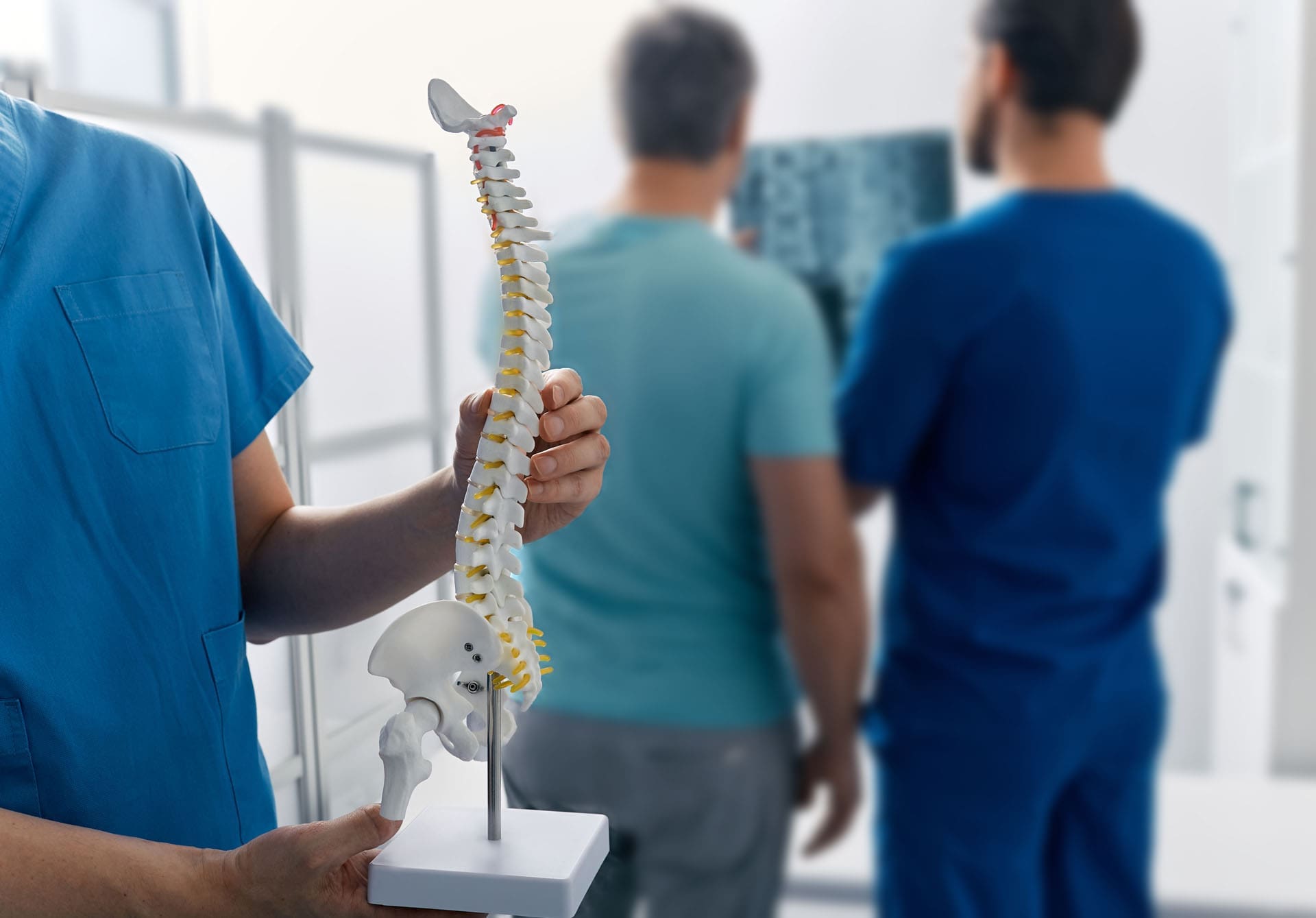
How MRI Shows Lumbar Disc Herniations and Nerve Root Compression
The intervertebral disc has a soft, gel-like center (nucleus pulposus) surrounded by a tough outer ring (annulus fibrosus). On a T2-weighted MRI, the healthy nucleus appears bright because it holds water. When the annulus tears and nuclear material pushes outward, the MRI shows the displaced material as a protrusion, extrusion, or sequestration.
A herniation is called focal when it involves less than 25 percent of the disc circumference. Posterolateral herniations are the most common pattern after trauma because the posterior longitudinal ligament is thinner on the sides. When herniated material compresses a nerve root in the lateral recess or foramen, MRI can show the root flattened or displaced. Surrounding soft-tissue edema or a high-intensity zone (HIZ)—a bright spot on T2 images within the posterior annulus—further signals an acute or subacute annular tear.
Nerve-root compression is not always dramatic. Mild contact may still produce radicular pain through chemical inflammation from the herniated material rather than pure mechanical pressure. Clinical correlation remains essential: the side and level of the imaging finding must match the patient’s leg pain, numbness, or reflex changes. Digital range-of-motion measurements and electrodiagnostic studies (when indicated) help confirm that the compressed root, not an incidental finding, is causing the symptoms.
Degenerative Findings That Commonly Appear on MRI
Disc desiccation (darkening of the nucleus), multilevel bulging, small osteophytes, and mild facet arthropathy appear on MRI scans of many adults who have never been in a crash and who have no pain. Large population studies show that roughly one-third of asymptomatic people in their twenties already have disc bulges or protrusions; by the seventies and eighties the rate approaches 90 percent. These age-related changes do not automatically mean a patient’s current pain is unrelated to trauma.
The key distinction is between symmetric, multilevel, slowly progressive degeneration and a focal, asymmetric finding that matches the biomechanics of the accident and the patient’s new symptoms. An annular high-intensity zone that is bright, a few millimeters of unilateral disc-height loss, or a new extrusion at the level and side of impact is far more suggestive of traumatic aggravation than uniform drying across five levels.
MRI nomenclature follows standardized terms. A bulge is a broad-based extension greater than 25 percent of the circumference, usually from annular redundancy as the disc loses height. A protrusion remains contained by outer annular fibers; an extrusion has broken through them. These distinctions matter for both treatment planning and for explaining the finding to a jury, but the nomenclature itself does not assign cause or date. The official lumbar disc nomenclature notes that dating a herniation from images alone is unreliable; bright signal and surrounding inflammation suggest relative acuteness, yet those changes can persist for months.
Why the MRI Alone Does Not Establish Age or Cause
An MRI is a snapshot. It doesn’t carry a time stamp saying, “This herniation occurred on the day of the collision.” Even an acute-appearing high-intensity zone can remain bright for many months. Without prior imaging, the radiologist cannot know whether a disc protrusion existed silently before the crash. That is why defense experts correctly state that the presence of a herniation on MRI does not, by itself, prove the accident caused it.
Causation is established by linking several elements:
- The patient had no comparable radicular symptoms before the event.
- The mechanism (axial compression plus flexion or lateral shear typical of rear-end or side-impact collisions) is capable of tearing the annulus and forcing nuclear material posterolaterally.
- Symptoms began or dramatically increased shortly after the impact.
- The MRI finding matches the level, side, and clinical examination.
- Serial notes document ongoing functional limitations that track the imaging abnormality.
When these elements are present, the MRI becomes powerful objective evidence of traumatic aggravation under the Texas Eggshell Plaintiff rule. A pre-existing, asymptomatic disc that is torn and made symptomatic by the crash is still a compensable injury. The clinic’s records capture this linkage in plain language so that the attorney and the jury can follow the chain from collision forces to specific MRI morphology.
The Role of Clinical Correlation and Multidisciplinary Documentation
Radiology reports describe anatomy; they do not decide legal causation. The treating clinician must integrate the images with the history, the physical examination, and the functional status. Digital range-of-motion testing, postural analysis, and response to conservative care provide additional objective data that MRI alone cannot.
At Injury Medical Clinic PA, the dual-licensed team coordinates these pieces. Dr. Alex Jimenez, DC, APRN, FNP-BC, documents soft-tissue and structural findings, correlates them with the mechanism of injury and MRI, and tracks the response to non-invasive care. Dr. Maria Guadalupe Cardenas, MD, provides medical direction, reviews metabolic and inflammatory factors that affect disc healing, and ensures the overall clinical picture is medically coherent. The result is a continuous, Colossus-compliant record that withstands cross-examination far better than isolated imaging reports.
Patients benefit from this approach through clearer understanding of their condition, safer non-drug options such as targeted chiropractic care, spinal decompression, and electroacupuncture, and better coordination with any outside physicians. Attorneys receive the objective linkage needed for Letters of Protection and trial. Clinicians outside the clinic can rely on the same transparent interpretation when they review the records.
What Makes the Clinic Unique
- Dr. Jimenez’s Injury Medical Chiropractic and Functional Medicine Clinic is the only practice in El Paso, Texas, that integrates a board-certified internal medicine medical director with a dual-licensed chiropractor and nurse practitioner who specializes in soft-tissue and disc injury.
- Dr. Maria Guadalupe Cardenas, MD, provides medical direction and advanced laboratory oversight for patients with metabolic conditions that affect recovery.
- Dr. Alex Jimenez, DC, APRN, FNP-BC, focuses on the structural and soft-tissue consequences of trauma, using precise imaging correlation, digital functional testing, and non-invasive therapies. This single-clinic model produces unified documentation rather than fragmented records from separate providers, giving both patients and attorneys a clearer, more defensible account of how the accident affected the lumbar spine.
For deeper discussion of how imaging findings are tied to causation, see the detailed review of advanced spinal MRI interpretation for attorneys at dralexjimenez.com and the explanation of why abnormal MRI findings do not automatically establish injury age. The standardized lumbar disc nomenclature used in these reports is also available for reference.
An MRI is indispensable, but it is only one piece of the story. Read in context with the mechanism, history, and clinical course, it becomes courtroom-ready evidence of traumatic disc injury rather than an ambiguous picture the defense can relabel as ordinary aging.
Feeling Better Than Ever After a Semi-Truck Accident | El Paso, TX
References
Brinjikji, W., Luetmer, P. H., Comstock, B., Bresnahan, B. W., Chen, L. E., Deyo, R. A., Halabi, S., Turner, J. A., Avins, A. L., James, K., Wald, J. T., Kallmes, D. F., & Jarvik, J. G. (2015). Systematic literature review of imaging features of spinal degeneration in asymptomatic populations. American Journal of Neuroradiology, 36(4), 811–816. https://doi.org/10.3174/ajnr.A4173
Fardon, D. F., & Milette, P. C. (2001). Nomenclature and classification of lumbar disc pathology: Recommendations of the combined task forces of the North American Spine Society, American Society of Spine Radiology, and American Society of Neuroradiology. Spine, 26(5), E93–E113. https://doi.org/10.1097/00007632-200103010-00006
Fardon, D. F., Williams, A. L., Dohring, E. J., Murtagh, F. R., Gabriel Rothman, S. L., & Sze, G. K. (2014). Lumbar disc nomenclature: Version 2.0: Recommendations of the combined task forces of the North American Spine Society, the American Society of Spine Radiology and the American Society of Neuroradiology. The Spine Journal, 14(11), 2525–2545. https://doi.org/10.1016/j.spinee.2014.04.022
Aprill, C., & Bogduk, N. (1992). High-intensity zone: A diagnostic sign of painful lumbar disc on magnetic resonance imaging. British Journal of Radiology, 65(773), 361–369. https://doi.org/10.1259/0007-1285-65-773-361
Boden, S. D., Davis, D. O., Dina, T. S., Patronas, N. J., & Wiesel, S. W. (1990). Abnormal magnetic-resonance scans of the lumbar spine in asymptomatic subjects. A prospective investigation. Journal of Bone and Joint Surgery, 72(3), 403–408. https://doi.org/10.2106/00004623-199072030-00013
General Disclaimer, Licenses, and Board Certifications *
Professional Scope of Practice *
The information herein on "Lumbar MRI Accident Causation and Legal Implications" is not intended to replace a one-on-one relationship with a qualified health care professional or licensed physician and is not medical advice. We encourage you to make healthcare decisions based on your research and partnership with a qualified healthcare professional.
Blog Information & Scope Discussions
Welcome to El Paso's Premier Wellness and Injury Care Clinic & Wellness Blog, where Dr. Alex Jimenez, DC, FNP-C, a Multi-State board-certified Family Practice Nurse Practitioner (FNP-BC) and Chiropractor (DC), presents insights on how our multidisciplinary team is dedicated to holistic healing and personalized care. Our practice aligns with evidence-based treatment protocols inspired by integrative medicine principles, similar to those on this site and on our family practice-based chiromed.com site, focusing on naturally restoring health for patients of all ages.
Our areas of multidisciplinary practice include Wellness & Nutrition, Chronic Pain, Personal Injury, Auto Accident Care, Work Injuries, Back Injury, Low Back Pain, Neck Pain, Migraine Headaches, Sports Injuries, Severe Sciatica, Scoliosis, Complex Herniated Discs, Fibromyalgia, Chronic Pain, Complex Injuries, Stress Management, Functional Medicine Treatments, and in-scope care protocols.
Our information scope is multidisciplinary, focusing on musculoskeletal and physical medicine; wellness; contributing etiological viscerosomatic disturbances within clinical presentations; associated somato-visceral reflex clinical dynamics; subluxation complexes; sensitive health issues; and functional medicine articles, topics, and discussions.
We provide and present clinical collaboration with specialists from various disciplines. Each specialist is governed by their professional scope of practice and licensure jurisdiction. We use functional health & wellness protocols to treat and support care for musculoskeletal injuries or disorders.
Our videos, posts, topics, and insights address clinical matters and issues that directly or indirectly relate to our clinical scope of practice.
Our office has made a reasonable effort to provide supportive citations and has identified relevant research studies that support our posts. We provide copies of supporting research studies upon request to regulatory boards and the public.
To discuss how these matters can assist in a specific care plan or treatment protocol, please contact Dr. Alex Jimenez, DC, APRN, FNP-BC, or reach out to us at 915-850-0900.
We are here to help you and your family.
Blessings
Dr. Alex Jimenez DC, MSACP, APRN, FNP-BC*, CCST, IFMCP, CFMP, ATN
Email: [email protected]
Multidisciplinary Licensing & Board Certifications:
Licensed as a Doctor of Chiropractic (DC) in Texas & New Mexico*
Chiropractic Licenses:
Texas DC License #: TX5807, Verified: TX5807
New Mexico DC License #: NM-DC2182, Verified: NM-DC2182
Nurse Practitioner Licenses:
Texas APRN License #: 1191402, Verified: 1191402 *
New Mexico CNP License #: 90560, Verified 90560
Florida APRN License #: 11043890, Verified: APRN11043890 *
Colorado License #: C-APN.0105610-C-NP, Verified: C-APN.0105610-C-NP
New York License #: N25929, Verified N25929
Georgia APRN License #: GAA-NP005701
Multi-State Advanced Practice Registered Nurse (APRN*) Texas & Multi-States
Multi-state Compact APRN License by Endorsement (43 States)
Compact Status: Multi-State License: Authorized to Practice in 43 States*
Nursing Licensure Compact: Updated Here
DEA Registration: (Drug Enforcement Agency Registered)
All medical (MDs) and family practice providers (FNP-APRN) are registered and licensed to offer various levels of medication.
Verify Providers Here
License Verification Link: Nursys License Verifier
* Prescriptive Authority Authorized (DEA Registered Providers). Call if Required
Board Certification:
ANCC FNP-BC: Board Certified Nurse Practitioner*
Education:
Graduate with Honors: ICHS: MSN-FNP (Family Nurse Practitioner Program)
Degree Granted. Master's in Family Practice, MSN Diploma (Cum Laude)
Dr. Alex Jimenez, DC, APRN, FNP-BC*, CFMP, IFMCP, ATN, CCST
(Board Certified: Family Practice Nurse Practitioner—Multistate)*
(Licensed Nurse Practitioner & Chiropractor - Multistate)*
Clinical Director
DC & FNP License (Review Above)
Digital Business Card
NPI: 1205907805
Dr. Maria Cardenas, MD
(Board Certified: Internal Medicine)
(Licensed Medical Doctor)
Medical Director, Clinical Director & Collaborative Physician
NPI # 1164426748
MD License #: J2933
Licenses and Board Certifications:
MD: Medical Doctor
DC: Doctor of Chiropractic
APRNP: Advanced Practice Registered Nurse
FNP-BC: Family Practice Specialization (Multi-State Board Certified)
FNP-BC: Family Practice Across Life Span (Neonatal to Geriatrics)
RN: Registered Nurse (Multi-State Compact License)
CFMP: Certified Functional Medicine Provider
MSN-FNP: Master of Science in Family Practice Medicine
MSACP: Master of Science in Advanced Clinical Practice
IFMCP: Institute of Functional Medicine
CCST: Certified Chiropractic Spinal Trauma
ATN: Advanced Translational Neutrogenomics
Family with Primary Care Focus (Family Nurse Practitioner or FNP)
- The Family Nurse Practitioner (FNP) promotes, maintains, and restores health for individuals and families across the lifespan. FNPs also identify health risks, promote wellness, and diagnose and manage acute and chronic illness.
- The FNP focuses on comprehensive primary care, promoting healthy lifestyles for patients across the lifespan in settings such as private practice, physician offices, and community health centers.
Memberships & Associations:
TCA: Texas Chiropractic Association: Member ID: 104311
TNA: Texas Nurse Association: Member ID: 06458222
TNP: Texas Nurse Practitioner Association ID: 2025091511
AANP: American Association of Nurse Practitioners: Member ID: 2198960
ANA: American Nurses Association: Member ID: 06458222 (District TX01)
| Primary Taxonomy | Selected Taxonomy | State | License Number |
|---|---|---|---|
| No | 111N00000X - Chiropractor | NM | DC2182 |
| Yes | 111N00000X - Chiropractor | TX | DC5807 |
| Yes | 363LF0000X - Nurse Practitioner - Family | TX | 1191402 |
| Yes | 363LF0000X - Nurse Practitioner - Family | FL | 11043890 |
| Yes | 363LF0000X - Nurse Practitioner - Family | CO | C-APN.0105610-C-NP |
| Yes | 363LF0000X - Nurse Practitioner - Family | NY | N25929 |
| Yes | 363LF0000X - Nurse Practitioner - Family | NM |
90560 |
| Yes | 363LF0000X - Nurse Practitioner - Family | GA | GAA-NP005701 |
Dr. Alex Jimenez, DC, APRN, FNP-BC*, CFMP, IFMCP, ATN, CCST
(Board Certified: Family Practice Nurse Practitioner—Multistate)*
(Primary Care Across Lifespan—Neonatal / Pediatric / Adult / Geriatrics)
(Licensed Nurse Practitioner & Chiropractor - Multistate)*
Clinical Director
Digital Business Card
NPI: 1205907805
Dr. Maria Cardenas, MD
(Board Certified: Internal Medicine)*
(Licensed Medical Doctor)*
Medical Director, Clinical Director & Collaborative Physician
NPI # 1164426748
MD License #: J2933
📆 Schedule Appointment: Schedule 24/7 (Click Here)









