Breathing nourishes the whole body and regulates important functions like heart rate and blood pressure. It also reinforces proper body mechanics to lessen the stress on the body when moving. Busy lives combined with sedentary work and lifestyle can condition the body to take only quick, shallow breaths, which can weaken lung muscles and cause tension to build, worsening posture and leading to other adverse symptoms and conditions. Learning deep breathing can positively affect heart rate, mental alertness, and blood pressure and improve posture. Injury Medical Chiropractic and Functional Medicine Clinic can create personalized postural treatment and training plans.
Breathing and Posture
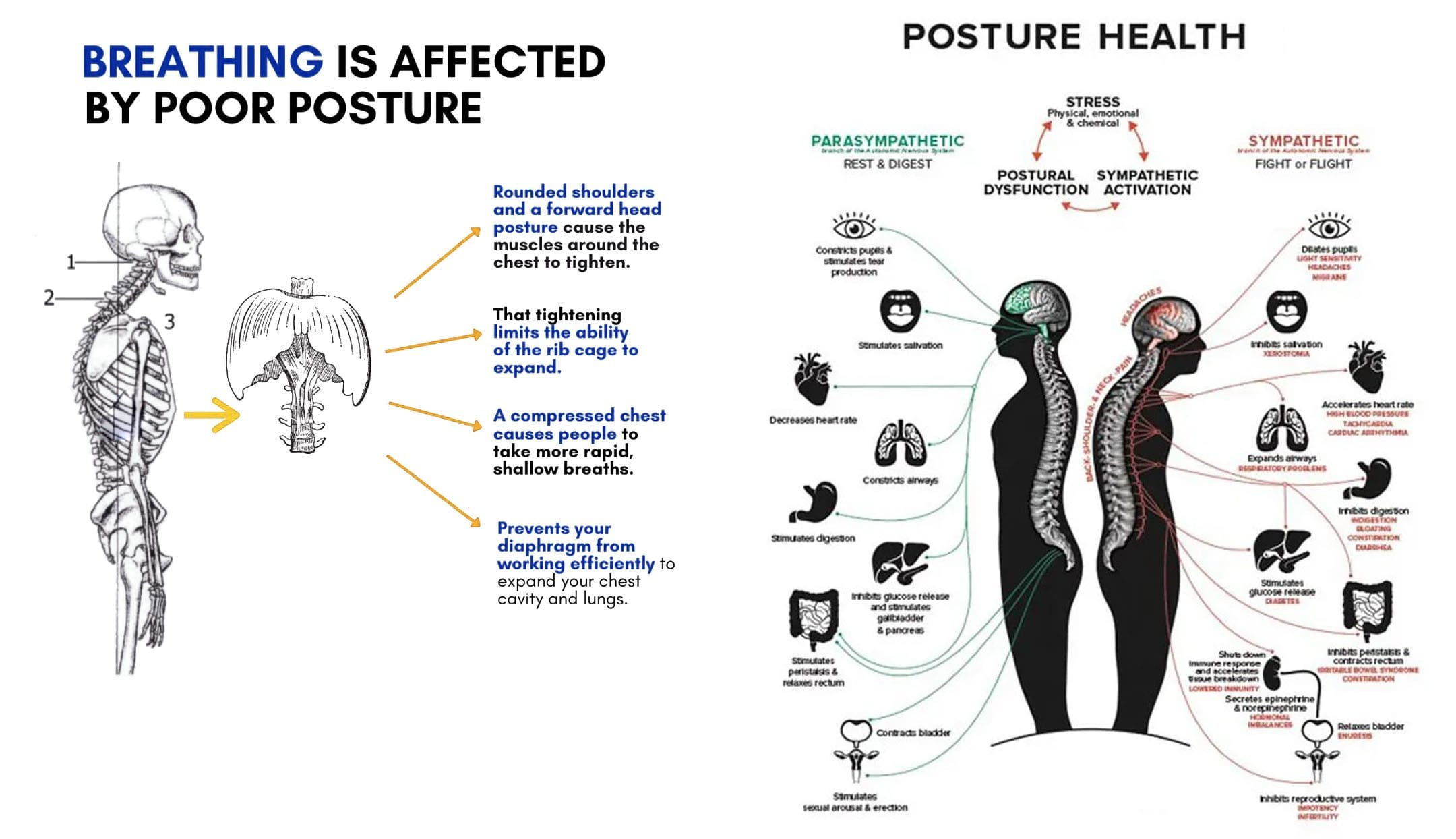
Inhalation causes the lungs to get filled with air, and exhalation releases and empties the lungs. For the lungs to work optimally, the rib cage needs to expand constantly in a gentle, rhythmic way. The respiratory muscle/diaphragm muscle needs to go up and down with each breath cycle. This can only happen when the muscle is not contracted or tense. Tension in the upper body can increase unhealthy postures and undermine health. Continued unhealthy postures at school, work, and home will compress the ribs, intercostal muscles, diaphragm, and base of the neck. This prevents the ribcage from expanding fully, which impairs optimal breathing. Over time, the strength of the respiratory muscles weakens.
Healthy Posture
Proper body alignment reduces strain on supportive structures like ligaments, muscles, joints, and discs. A healthy posture allows individuals to breathe more easily, move more efficiently, relax, and sleep better.
Symptoms Of Unhealthy Posture
Research shows that prolonged practice of unhealthy posture can lead to health problems, including:
Aching and chronic pain in the back, neck, and shoulders.
Tight, sore muscle knots/trigger points.
Tension headaches, limited sleep, and digestive problems.
Brain fog.
Shifting moods.
Digestive problems.
Breathing from the chest relies on secondary muscles around the neck and collarbone instead of the diaphragm. Shallow breathing patterns accompanied by unhealthy postures cause muscles in the upper body to function improperly. The longer the body sits, the less the body can resist the force of gravity and maintain a stable core. Tight muscles around the chest cause rounded shoulders and forward head posture, further weakening the muscles that help maintain an upright posture. Chest and rib discomfort symptoms can result from the tight intercostal muscles and inadequate expansion of the ribs.
Chiropractic Treatment
Shallow breathing can be reversed by regular physical activity, and sessions of respiratory muscle training will help to improve posture and quality of life. Deep or belly breathing involves learning to use the abdominal muscles. Inhaling slowly and deeply through the nose fills the lungs with air and expands the stomach. Learning to breathe deep regularly provides benefits like stress reduction, improved cardiovascular health, stronger lungs, and improved cognitive performance.
Posture correction techniques relieve back and neck pain, improve muscle and joint function, maintain brain health, increase mood stability, and improve spinal health.
Learning how to breathe deeply takes practice.
One beginning technique is to breathe deeply and count to 4 before slowly releasing the breath with another count to 4.
Individuals will notice their abdomen, ribs, and chest push forward as they breathe.
The shoulders, neck, and spine properly align during this action.
Place a hand on the abdomen to check for correct breathing.
It should move outwards slightly as air fills the lungs.
Real Patients, Real Results
References
Albarrati, Ali, et al. “Effect of Upright and Slouched Sitting Postures on the Respiratory Muscle Strength in Healthy Young Males.” BioMed research international vol. 2018 3058970. 25 Feb. 2018, doi:10.1155/2018/3058970
Aliverti, Andrea. “The respiratory muscles during exercise.” Breathe (Sheffield, England) vol. 12,2 (2016): 165-8. doi:10.1183/20734735.008116
Pickering, Mark, and James F X Jones. “The diaphragm: two physiological muscles in one.” Journal of Anatomy vol. 201,4 (2002): 305-12. doi:10.1046/j.1469-7580.2002.00095.x
Sheel, A William. “Respiratory muscle training in healthy individuals: physiological rationale and implications for exercise performance.” Sports medicine (Auckland, N.Z.) vol. 32,9 (2002): 567-81. doi:10.2165/00007256-200232090-00003
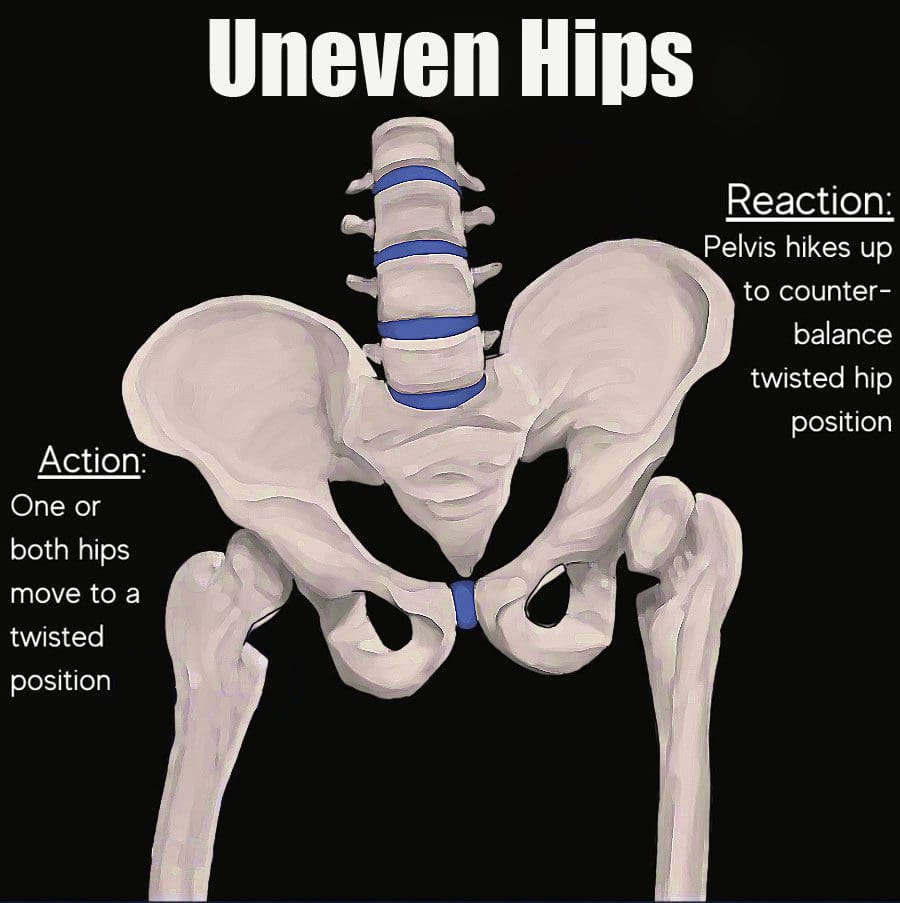
Uneven hips can throw the back out of natural alignment and cause back stiffness, tightness, discomfort, and pain. Hips that are off-balance unhealthily affect standing, sitting, sleeping posture, walking gait, and overall movements. Biomechanics issues cause the core and spine stabilizing muscles to become weakened and fatigued from overcompensating to keep the body up and moving. Over time this can lead to chronic pain in the back, hips, knees, and feet. Chiropractic care can restore proper hip and spinal alignment and wellness.
Uneven Hips
Misaligned hips can be caused by work or sports injury, exercise, vehicle collision, and/or general wear and tear. When hips are out of alignment, they have shifted from their centered position. They could be rotated forward or backward, forcing the spine and the lower limbs to compensate, resulting in the spine tilting that can make the legs appear uneven. Discomfort may be one-sided low back pain near the sacroiliac joint, causing a stiff/tight back, limited motion, and/or pain symptoms. Because the spine and lower limbs have to compensate for the unevenness, the shoulders and upper back, connected to the pelvis through the spine, are also affected and result in:
Back pain.
Hip and gluteal muscle pain.
Uneven leg length.
Knee, ankle, and foot issues and pain.
Uneven shoulders.
The shoulder blades can stick out on the side of the lower hip.
Rib discomfort and pain.
The rib cage could protrude out on one side. However, this could be due to advanced scoliosis.
Therapy
Staying active is recommended and includes stretching and core strengthening. General stretches recommended to optimize hip equity include:
Hamstring stretch
For this stretch, lie on a flat surface with your legs extended straight out.
Bend the right leg at the knee, placing the right foot on the ground.
Use a towel, belt, or band to grab and wrap around the left foot.
Keep the hip/buttock on the left side planted on the floor.
Slowly raise the left leg upward as far as possible until you feel the stretch.
Once you feel a stretch or restriction in the hamstring, hold the position for 30 seconds.
Repeat on the other side.
Perform 2 to3 times.
Hip flexor stretch
Kneel on the affected leg and bend the healthy leg out in front with the foot flat on the floor.
Back straight.
Slowly push the hips forward until you feel the stretch in the upper thigh and hip.
Hold the stretch for around 15 to 30 seconds.
Chiropractic Care
Chiropractic treatment is a highly recommended non-surgical option for uneven hips and pelvic tilt. Depending on the severity of the misalignment, underlying issues, and body scanning images, hip alignment treatment could include:
Soft tissue therapeutic massage
Chiropractic muscle release for tight hip flexors, quadriceps, hamstrings, and glutes.
Kiapour, Ali et al. “Biomechanics of the Sacroiliac Joint: Anatomy, Function, Biomechanics, Sexual Dimorphism, and Causes of Pain.” International journal of spine surgery vol. 14, Suppl 1 3-13. 10 Feb. 2020, doi:10.14444/6077
Lee, Jeong-Hoon, et al. “The effect of Graston technique on the pain and range of motion in patients with chronic low back pain.” Journal of physical therapy science vol. 28,6 (2016): 1852-5. doi:10.1589/jpts.28.1852
Patel, Rikin V et al. “Pelvic Tilt and Range of Motion in Hips With Femoroacetabular Impingement Syndrome.” The Journal of the American Academy of Orthopaedic Surgeons vol. 28,10 (2020): e427-e432. doi:10.5435/JAAOS-D-19-00155
Rivière, C et al. “Spine-hip relations add understandings to the pathophysiology of femoro-acetabular impingement: A systematic review.” Orthopaedics & traumatology, surgery & research : OTSR vol. 103,4 (2017): 549-557. doi:10.1016/j.otsr.2017.03.010
Suits, William H. “Clinical Measures of Pelvic Tilt in Physical Therapy.” International journal of sports physical therapy vol. 16,5 1366-1375. 1 Oct. 2021, doi:10.26603/001c.27978
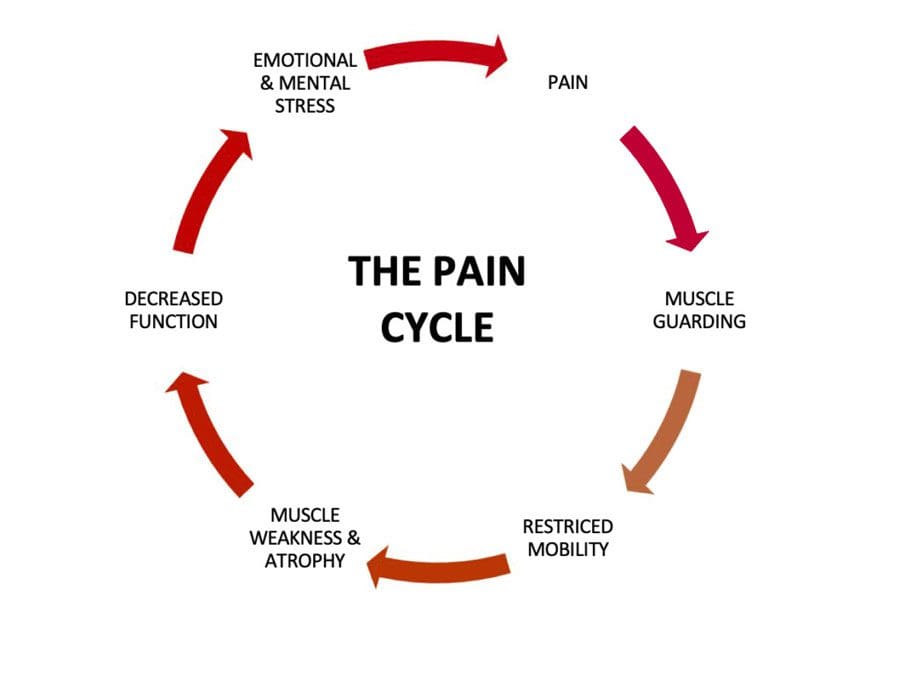
Individuals that have experienced a muscle strain, pull, spasm, etc., that has healed can begin to behave overly cautious, avoiding putting full weight on the area or using full motion out of fear of re-injuring it. This can and does strain other body areas because of the imbalance and awkward positioning. It also leads to anxiety, emotional distress, and decreased self-confidence in everyday movement. Adjustments, massage, and decompression therapy can maintain musculoskeletal health, and a chiropractor can help retrain individuals on healthy posture and confident movement.
Muscle Guarding
Muscles can be held in a position of readiness to act, like the stress response of fight or flight. When this happens, the muscles are partially contracted in preparation for action and is a form of muscle-guarding. But once the fight or flight passes, the muscles relax into their normal position. With injury muscle guarding, the fears and stresses after recovering from an injury can cause the injured and non-injured muscles to stay in the guarded/semi-contracted position. The longer the muscle guarding continues, fatigue begins to set in, decreasing function, restricting mobility, and making the body more vulnerable to damage and injury.
The Brain
The discomfort, pain, or just the thought reinforces the need to guard the area. The brain will find a way to move without causing pain and create compensating but unhealthy movement patterns that strain the other areas of the body. The body adapts to not using the formerly injured muscles and now relies on the other muscles to perform the functions in a non-relaxed state that can become normal, causing stiffness, soreness, tenderness, tendon tension, and pain.
An example is a hip strain, pull or spasm that has been treated and has healed, but the individual is fearful of another injury or going through the painful experience again and begins walking by shifting all their weight to the other side and steps with a limp or some abnormal motion that strains and/or injures the rest of the body.
Chiropractic Treatment and Retraining
Individuals experiencing muscle guarding can find help through chiropractic to retrain their muscles to return to their normal position and regain confidence in their movements. The body will be rebalanced by releasing and relaxing the tight muscles. Then therapeutic repetitive movements, specialized exercises, stretches, and relaxation techniques will help the individual relearn to use the muscles without fear.
Protective Muscle Guarding
References
Hanlon, Shawn et al. “Examining Ankle-Joint Laxity Using 2 Knee Positions and With Simulated Muscle Guarding.” Journal of athletic training vol. 51,2 (2016): 111-7. doi:10.4085/1062-6050-51.3.06
Olugbade, Temitayo et al. “The relationship between guarding, pain, and emotion.” Pain reports vol. 4,4 e770. 22 Jul. 2019, doi:10.1097/PR9.0000000000000770
Prkachin, Kenneth M et al. “Pain behavior and the development of pain-related disability: the importance of guarding.” The Clinical journal of pain vol. 23,3 (2007): 270-7. doi:10.1097/AJP.0b013e3180308d28
IFM's Find A Practitioner tool is the largest referral network in Functional Medicine, created to help patients locate Functional Medicine practitioners anywhere in the world. IFM Certified Practitioners are listed first in the search results, given their extensive education in Functional Medicine