Can incorporating tonic water benefit individuals who want to drink more water?
Tonic Water
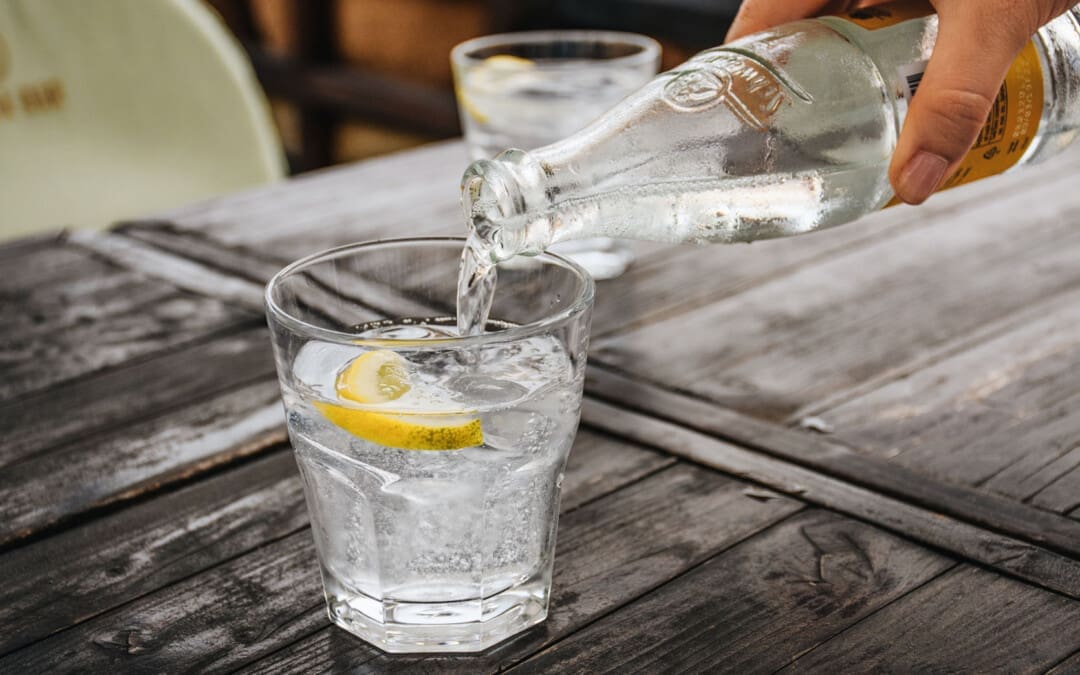
Tonic water is more than just water. Its bitter taste comes from quinine, a natural substance found in the bark of the Peruvian cinchona tree. Most store-bought tonic water contains quinine, with natural or artificial flavors from fruits or herbs to temper the bitterness, varying from brand to brand.
Tonic water calories can be high. Some brands can have up to 114 calories per bottle. The reason is they use a sweetener. Some brands have a diet version with zero calories and no sugar but may contain more sodium.
Fats and Protein
There is no fat or protein in tonic water.
Sugar
Some brands use high fructose syrup, while others use cane sugar or sugar from the other ingredients. For example, adding an alcoholic ingredient to make a tonic cocktail can significantly increase the calorie count.
Sodium
Depending on the variety and the amount drunk, tonic water can be a source of sodium. However, sodium intake should be 1500 milligrams per day.
Carbohydrates
There are 33 grams of carbohydrates per serving with the estimated glycemic load or the numerical value that estimates how much a food will raise an individual’s blood sugar to around four.
Micronutrients
There are no significant vitamins or minerals but a small amount of sodium, zinc, and copper.
Health
Quinine is FDA-approved in specific doses to treat malaria. However, the quinine in tonic water is less than prescribed for medicinal purposes. (Achan, J. et al., 2011) Some individuals have tried to use quinine for leg cramps. However, the FDA has warned that this is not recommended and can cause harm. (U.S. Food and Drug Administration. 2017)
Other Water Beverages
There are other water alternatives to reduce calories, sodium, and added sugar.
Seltzer
Seltzer is carbonated water, similar to club soda, with no calories or added sweeteners.
Add lemon or other fruit for flavor.
Mineral water
Mineral water tastes like seltzer, but the carbonation is usually natural.
Flavored water
Flavored water provides some nutrients and antioxidants from the vegetables and fruits.
It is a great alternative if the other options don’t work.
Allergies
It is possible to have an allergy to quinine that could cause a reaction when drinking tonic water. (Winter F. D., Jr. 2015) In these cases, the research suggests, the allergy may cause:
Individuals can make tonic water with online recipes using different herbs and flavors. Tonic water made at home may or may not be lower in calories than store-bought brands, but the ingredients can be controlled to create beverages that cater to personal tastes. Using tonic or sparkling water, keep the bottled water tightly capped and chilled to maintain carbonation and ready to serve.
Injury Medical Chiropractic and Functional Medicine Clinic focuses on and treats injuries and chronic pain syndromes through personalized care plans to restore health and function to the body through Nutrition and Wellness, Functional Medicine, Acupuncture, Electro-Acupuncture, and Sports Medicine protocols. If the individual needs other treatment, they will be referred to a clinic or specialist best suited for them, as Dr. Jimenez has teamed up with the top surgeons, clinical specialists, medical researchers, nutritionists, and health coaches to provide the most effective clinical treatments.
Learning About Food Substitutions
References
U.S. Department of Agriculture. FoodData Central. (2018). Beverages, carbonated, tonic water. Retrieved from https://fdc.nal.usda.gov/fdc-app.html#/food-details/171869/nutrients
Achan, J., Talisuna, A. O., Erhart, A., Yeka, A., Tibenderana, J. K., Baliraine, F. N., Rosenthal, P. J., & D’Alessandro, U. (2011). Quinine, an old anti-malarial drug in a modern world: role in the treatment of malaria. Malaria journal, 10, 144. https://doi.org/10.1186/1475-2875-10-144
U.S. Food and Drug Administration. (2017). FDA drug safety communication: New risk management plan and patient medication guide for Qualaquin (quinine sulfate). Retrieved from https://www.fda.gov/drugs/postmarket-drug-safety-information-patients-and-providers/fda-drug-safety-communication-new-risk-management-plan-and-patient-medication-guide-qualaquin
Howard, M. A., Hibbard, A. B., Terrell, D. R., Medina, P. J., Vesely, S. K., & George, J. N. (2003). Quinine allergy causing acute severe systemic illness: report of 4 patients manifesting multiple hematologic, renal, and hepatic abnormalities. Proceedings (Baylor University. Medical Center), 16(1), 21–26. https://doi.org/10.1080/08998280.2003.11927884
Winter F. D., Jr (2015). Immune thrombocytopenia associated with consumption of tonic water. Proceedings (Baylor University. Medical Center), 28(2), 213–216. https://doi.org/10.1080/08998280.2015.11929233
Garlic tea is an herbal tonic made from garlic, lemon, and honey. What medicinal uses and benefits can garlic provide that is supported by scientific research?
Garlic Tea
Garlic tea:
Garlic – Allium sativum – is a perennial plant from Central Asia.
The plant produces a bulb that is used in cooking and in health remedies all over the world.
Garlic powder, oil, and supplements are available.
Supplements can be made from garlic oil or from fresh, dried, or aged garlic.
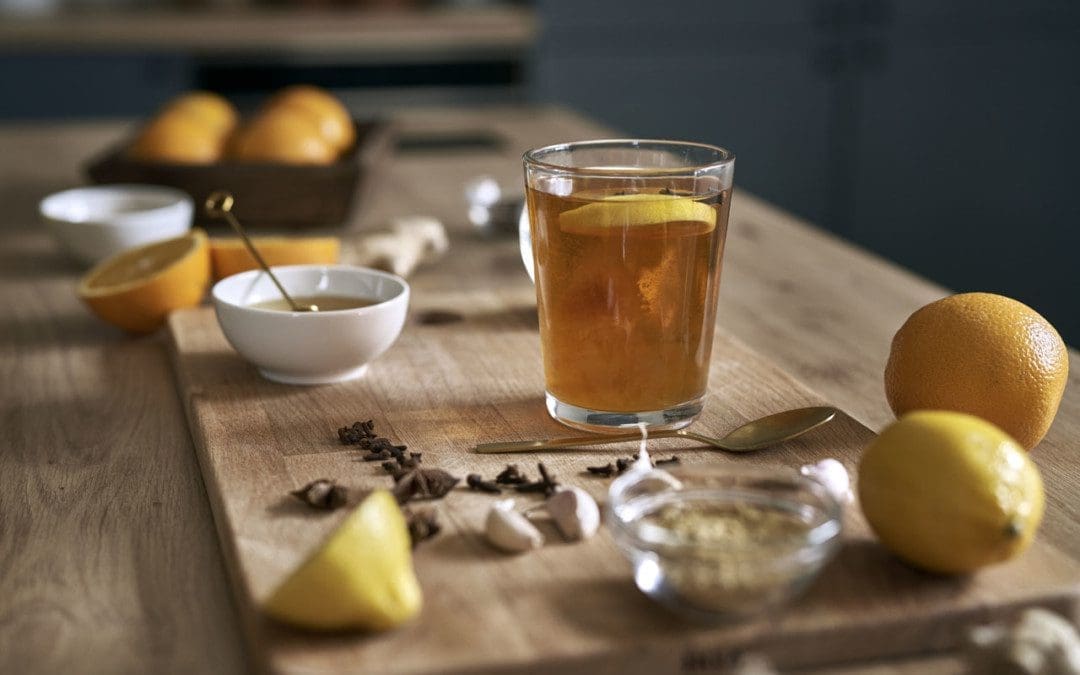
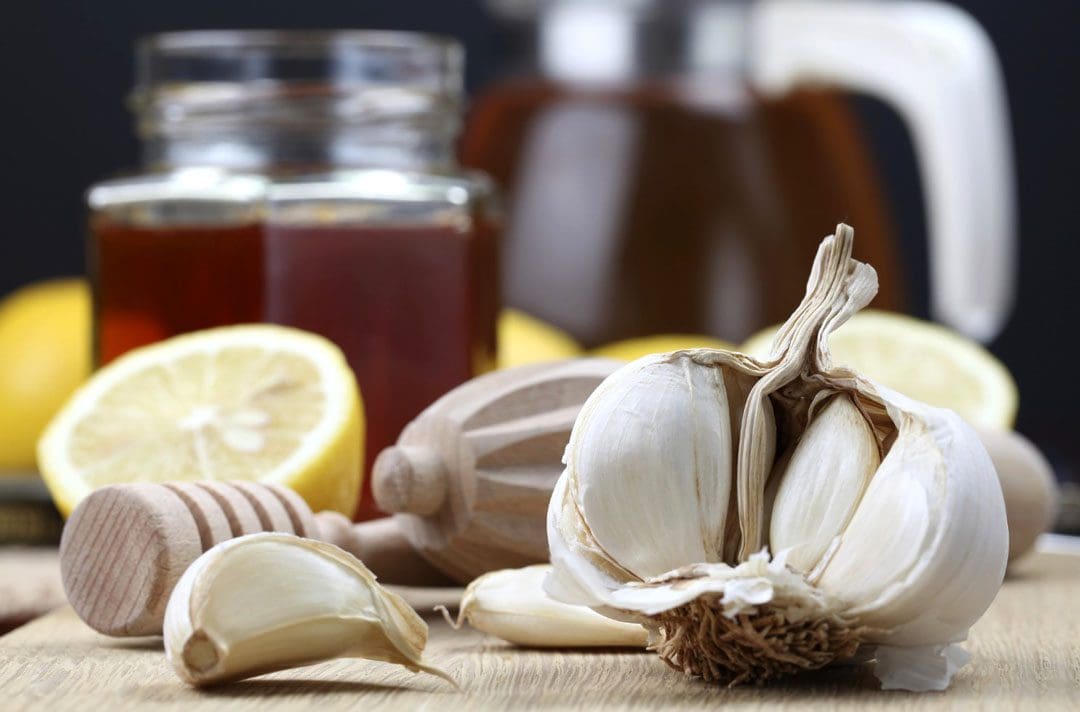
The tea is commonly made with garlic, lemon, and honey, but can be made with a variety of different ingredients.
It is used for cold symptoms like congestion and cough.
Health Benefits
Some, but not all benefits are supported by scientific evidence. It is important to keep in mind that these studies are analyzing garlic, and not necessarily garlic tea. The dose of garlic in tea may not be the same as a more concentrated dose that is used in the studies. Also, cooking or boiling garlic can change its therapeutic effects.
The scientific evidence about garlic’s benefits. Garlic is a healthy source of organosulfur compounds, including alliinase, which is released when it is crushed or chopped. (Leyla Bayan, Peir Hossain Koulivand, Ali Gorji. 2014)
Organosulfur compounds are believed to provide health benefits.
An overview of garlic studies found that there are promising health benefits, however, the researchers caution that larger studies are needed to confirm the results and verify the right dosage to get the results. (Johura Ansary, et al., 2020)
The current studies show the following possible benefits:
Some studies have also shown that garlic could be able to stimulate the immune system and decrease tumor growth in certain cancers, like colorectal cancer.
However, research investigating the cancer-preventing benefits has shown mixed results. (Xi Zhou, et al., 2020)
Common side effects of garlic consumption include bad breath, upset stomach, and body odor.
Garlic can also cause bloating, gas, and heartburn for some.
There are allergies to garlic and individuals with an allergy can experience more severe symptoms.
The NIH also advises that taking garlic may increase your risk of bleeding.
Individuals taking a blood thinner like warfarin or about to undergo surgery should discuss taking supplements or drinking garlic tea with their healthcare provider.
Garlic has been found to interfere with the effectiveness of some drugs that are used to treat HIV infection.
Lemon can cause tooth erosion so it is recommended to rinse teeth after drinking.
Honey has sugar content so it is recommended to use it in small quantities.
Healthy Diet and Chiropractic
References
National Center for Complementary and Integrative Health. Garlic.
Bayan, L., Koulivand, P. H., & Gorji, A. (2014). Garlic: A review of potential therapeutic effects. Avicenna journal of phytomedicine, 4(1), 1–14.
Ansary, J., Forbes-Hernández, T. Y., Gil, E., Cianciosi, D., Zhang, J., Elexpuru-Zabaleta, M., Simal-Gandara, J., Giampieri, F., & Battino, M. (2020). Potential Health Benefit of Garlic Based on Human Intervention Studies: A Brief Overview. Antioxidants (Basel, Switzerland), 9(7), 619. https://doi.org/10.3390/antiox9070619
Zhang, S., Liu, M., Wang, Y., Zhang, Q., Liu, L., Meng, G., Yao, Z., Wu, H., Xia, Y., Bao, X., Gu, Y., Wang, H., Shi, H., Sun, S., Wang, X., Zhou, M., Jia, Q., Song, K., & Niu, K. (2020). Raw garlic consumption is inversely associated with prehypertension in a large-scale adult population. Journal of human hypertension, 34(1), 59–67. https://doi.org/10.1038/s41371-019-0257-0
Zhou, X., Qian, H., Zhang, D., & Zeng, L. (2020). Garlic intake and the risk of colorectal cancer: A meta-analysis. Medicine, 99(1), e18575. https://doi.org/10.1097/MD.0000000000018575
Avci, A., Atli, T., Ergüder, I. B., Varli, M., Devrim, E., Aras, S., & Durak, I. (2008). Effects of garlic consumption on plasma and erythrocyte antioxidant parameters in elderly subjects. Gerontology, 54(3), 173–176. https://doi.org/10.1159/000130426
Burian, J. P., Sacramento, L. V. S., & Carlos, I. Z. (2017). Fungal infection control by garlic extracts (Allium sativum L.) and modulation of peritoneal macrophage activity in a murine model of sporotrichosis. Brazilian journal of biology = Revista brasleira de biologia, 77(4), 848–855. https://doi.org/10.1590/1519-6984.03716
Kato, Y., Domoto, T., Hiramitsu, M., Katagiri, T., Sato, K., Miyake, Y., Aoi, S., Ishihara, K., Ikeda, H., Umei, N., Takigawa, A., & Harada, T. (2014). Effect on blood pressure of daily lemon ingestion and walking. Journal of nutrition and metabolism, 2014, 912684. https://doi.org/10.1155/2014/912684
Samarghandian, S., Farkhondeh, T., & Samini, F. (2017). Honey and Health: A Review of Recent Clinical Research. Pharmacognosy Research, 9(2), 121–127. https://doi.org/10.4103/0974-8490.204647
IFM's Find A Practitioner tool is the largest referral network in Functional Medicine, created to help patients locate Functional Medicine practitioners anywhere in the world. IFM Certified Practitioners are listed first in the search results, given their extensive education in Functional Medicine