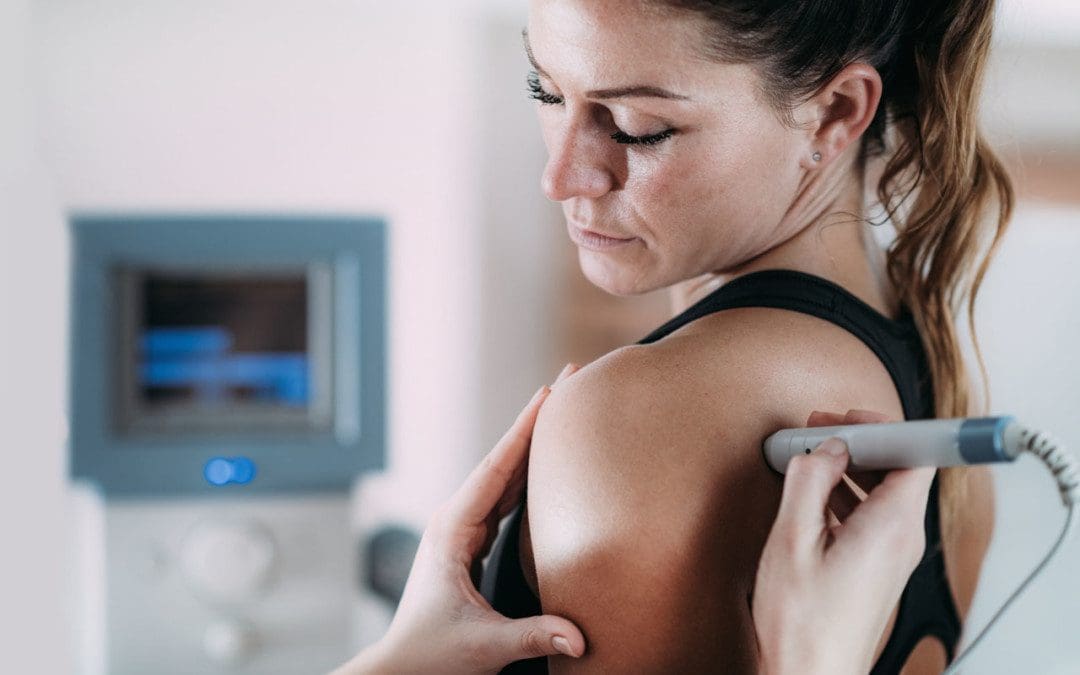
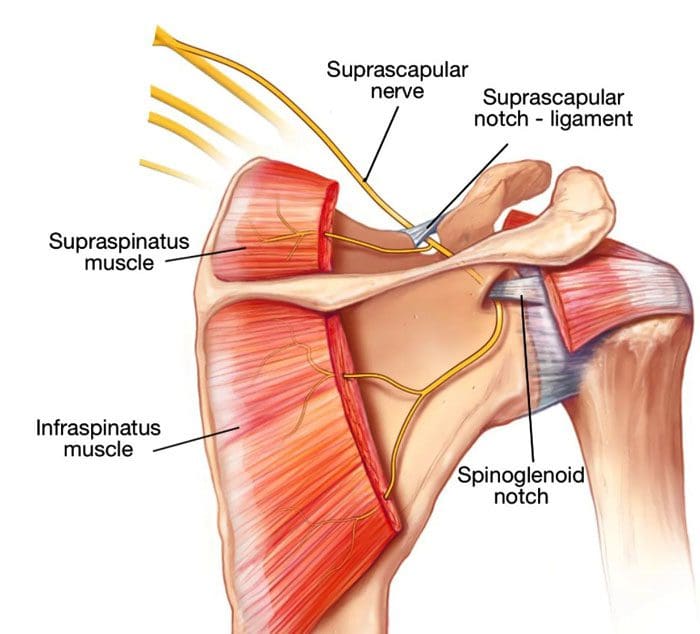
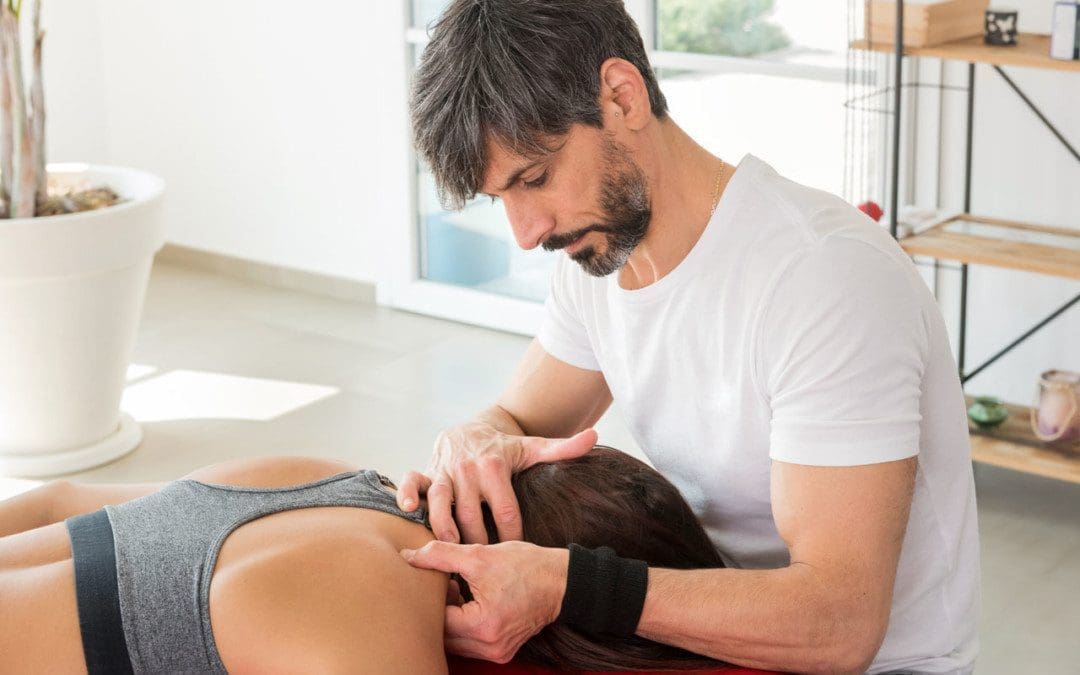
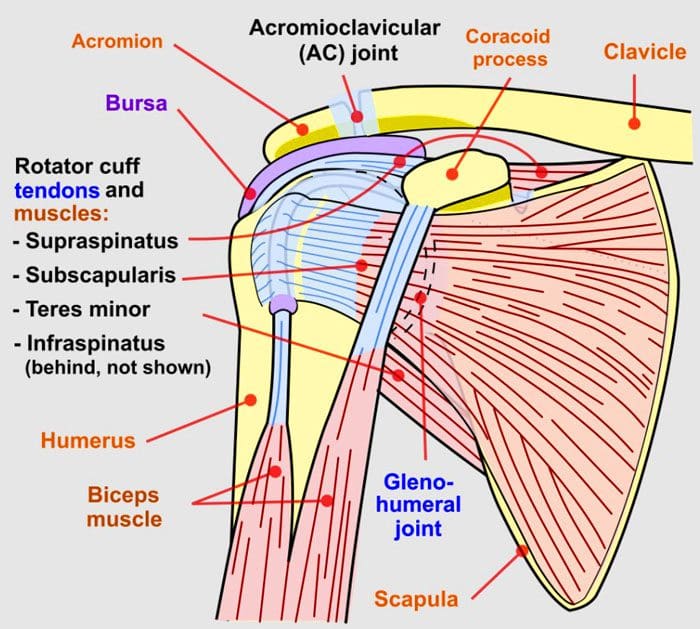
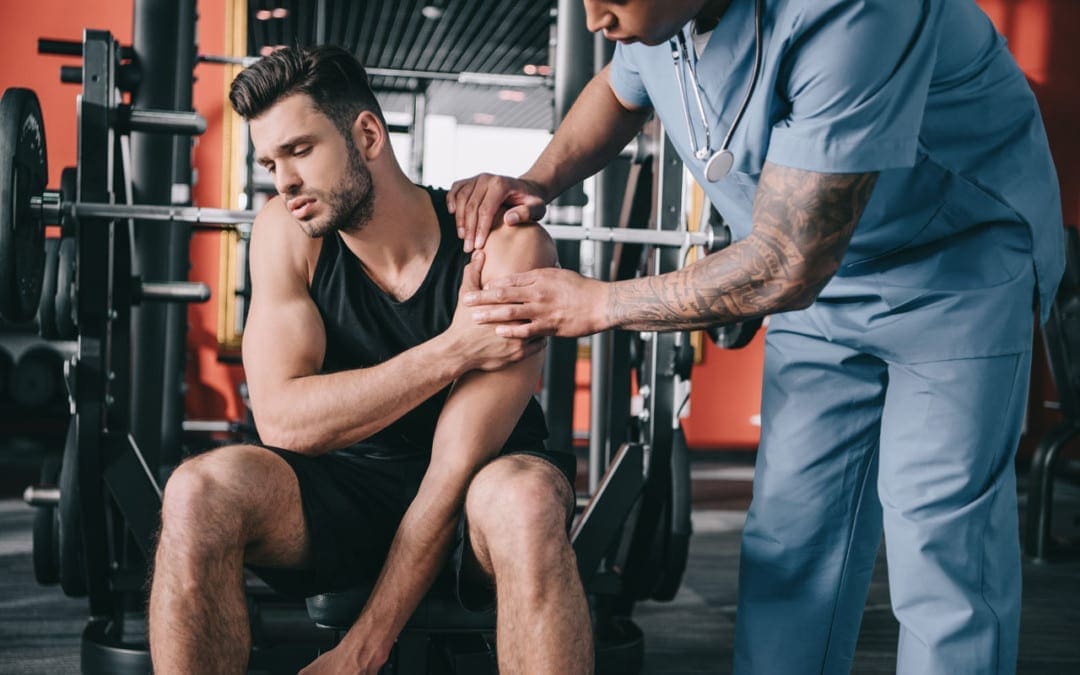
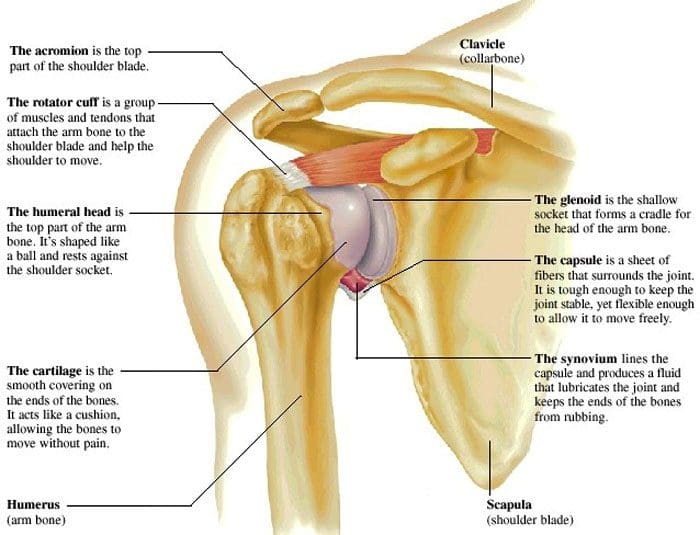
The shoulder is a ball-and-socket joint. The shoulder has several muscles that help it move and allow a wide range of motion. A strain or pulled shoulder muscle can affect the slightest movements, making simple activities difficult and painful. Pulling a muscle in the shoulder can be caused by an injury, overuse, and general wear and tear. Minor shoulder injuries usually heal on their own with rest and self-care. Severe shoulder muscle injuries should be addressed by a medical professional.
Pulled Shoulder Muscle Causes
Pulling a muscle in the shoulder can happen quickly. This could be from falling on the shoulder, an auto accident, or a work accident. It can develop after weeks, months, and years of repetitive motion and overuse. It is common among individuals that play certain sports or jobs that require repetitive activities with the shoulders. They can also happen with no apparent cause. Treatment and recovery depend on the type and severity of the injury.
How to Tell If It’s a Pulled Muscle
It can be hard to tell the cause unless the individual has experienced the specific type of pain before. Otherwise, it is recommended to consult a medical professional like a physical therapist or chiropractor. This is because shoulder pain can be caused by inflammation of the tendons and joints and/or the joint itself.
Pulled Muscle Shoulder Symptoms
A pulled muscle is characterized by:
Tenderness
Dull, sore, or aching pain.
Sometimes it can cause shooting pain between the shoulder blades in the front or back.
Pain when the shoulder is at rest.
Pain when the specific muscle is used.
Swelling of the area.
Shoulder instability.
The shoulder feels fragile.
Movement causes pain.
A bump may develop at the top of the shoulder near the end of the collarbone.
Inability to use the muscle at all.
If the pain is persistent, it could signify that there is something other than a pulled muscle like a pinched nerve or a joint issue.
Treatment and Recovery Options
Treatment and recovery vary and depend on the severity of the pull and the individual’s overall health. Many find that their pain is reduced with self-care in 2 or 3 weeks. Chiropractic treatment for a pulled shoulder muscle can provide relief within 1 or 2 weeks.
Self Care
Depending on the severity of the pull and how much pain is being experienced, individuals could be recommended to take an NSAID like Ibuprofen to reduce pain and swelling. Self-care can include:
Ice To Reduce Swelling
Applying ice or a cold pack to the area can help reduce swelling.
Place a cloth or towel between the skin and the cold pack.
Apply it for 20 minutes an hour.
The swelling should reduce in a day or two.
Rest
It is recommended to rest the shoulder for no more than 2 or 3 days.
This begins the healing process and prevents worsening the injury.
Wrap or Sling
During rest days, it can be hard to keep the shoulder from moving.
To avoid this, use a shoulder wrap or a sling to support the arm.
However, they should not be used for more than 2 or 3 days.
Gentle Stretching
It is essential to get the muscle working again after 2 or 3 days of rest.
Stretches will help the muscle group heal and gain strength.
Not stretching the muscle could prolong recovery and worsen the injury, and possibly cause new injuries.
Stretches For a Pulled Shoulder
Stretching a pulled shoulder muscle after a few days of rest is recommended because not working out the injured muscle can cause more problems. Not using the muscle can cause it to atrophy, which will take longer to heal, and the surrounding muscles become weak.
Pendulum Stretch
Slightly bent support the body by placing the unaffected arm on a table or chair.
Let the injured arm hang straight down.
Swing the arm in small circles clockwise as far as the pain or discomfort allows.
Perform for 1 minute.
Go counterclockwise for one minute.
Repeat 4 to 8 times throughout the day.
Chiropractic
If self-care is not providing sufficient relief, then chiropractic treatment is recommended. A doctor of chiropractic can advise on the best treatment options and get to the root of the issue. Chiropractors have a treatment arsenal of modalities and approaches to help treat pulled muscles. These include:
A somatotype is the overall shape and composition of the human body. Body types based on physique have three generalized divisions:
Endomorph
Mesomorph
Ectomorph
However, it is rare for someone to fall entirely into one somatotype. Individuals can have a combination of qualities from two somatotypes, like an ectomorph-endomorph hybrid or an endomorph-ectomorph, for example.
Ectomorphs
Naturally lean with long limbs, ectomorphs typically possess a slender look no matter what type of diet.
A lot of endurance runners and swimmers are ectomorphs.
Ectomorphs may have a decent amount of muscle but may appear to have less muscle development because of their long limb length.
Body fat also seems to get hidden by the long, slender figure, which means they can get away with a few extra pounds of fat.
However, if ectomorphs do not watch their health, they can become skinny fat.
Mesomorphs
Mesomorphs have a natural athletic look.
They can achieve a muscular physique without really trying.
The physiology tends to include:
Narrow hips
Wide back
A large frame contributes to a muscular appearance.
Many professional fighters, football, and basketball players are mesomorphs.
Endomorphs
Endomorphs have a larger structure with wide hips and shoulders.
Shorter arms and legs.
This type of body shape is excellent for activities that require a lot of strength.
Rugby players, strength athletes, and powerlifters are endomorphs.
This body type is considered to be a contributing performance factor in Ironman athletes.
References
Blache, Y et al. “Superficial shoulder muscle co-activations during lifting tasks: Influence of lifting height, weight, and phase.” Journal of electromyography and kinesiology: official journal of the International Society of Electrophysiological Kinesiology vol. 25,2 (2015): 355-62. doi:10.1016/j.jelekin.2014.11.004
Brantingham, James W et al. “Manipulative therapy for shoulder pain and disorders: expansion of a systematic review.” Journal of manipulative and physiological therapeutics vol. 34,5 (2011): 314-46. doi:10.1016/j.jmpt.2011.04.002
Kandel, Michel et al. “Somatotype, training and performance in Ironman athletes.” European journal of sports science vol. 14,4 (2014): 301-8. doi:10.1080/17461391.2013.813971
McFarland, Daniel C et al. “Spatial dependency of shoulder muscle demand during dynamic unimanual and bimanual pushing and pulling.” Applied ergonomics vol. 73 (2018): 199-205. doi:10.1016/j.apergo.2018.07.011
There are various causes for achiness or soreness under the shoulder blades. The shoulder blade is the triangular bone that forms the back of the shoulder. This pain can range from dull, sharp, burning, or a combination between the spine and shoulder blade to tender or achy across the shoulder or upper back. Pain can spread from another body part or structure, like the neck or spine. Inflammation from injury or overuse is noticeable at onset or gradually after engaging in physical activity and can limit arm movements and interfere with regular activities.
Improper Posture
Improper poster combined with prolonged sitting can cause the spine to develop structural changes that cause pain under the shoulder blade. Habits that lead to poor posture include:
Hunching the back.
Tilting the head down – looking at the phone.
Leaning to one side while sitting, working.
Poor posture habits cause the muscles to weaken, placing added pressure on the spinal discs, muscles, and ligaments. This body imbalance can contribute to upper back and shoulder pain.
Lifting Improperly
Lifting weight above the head and not using the proper technique can leave the upper back and shoulders vulnerable to injury. Lifting an object that is too heavy or is held in an awkward way causing the spine to be misaligned creates added pressure in the upper back. This can strain the muscles, sprain ligaments, injure the shoulder joint, or spine, which can cause spreading pain under and/or near the shoulder blade.
Repetitive Overuse Injury
Painting, moving furniture, or participating in sports are activities that can overwork the upper back muscles and shoulders. Overuse can lead to muscle strains and ligament sprains. This can cause pain in the upper back between the shoulder blade and the spine. Scapulothoracic bursitis, also known as snapping scapula syndrome, is when the bursa between the shoulder blade/scapula and the thoracic spine becomes inflamed, causing pain.
Cervical Herniated Disc
A herniated disc in the cervical spine/neck happens when a disc’s outer layer/annulus fibrosus tears and the inner layer/nucleus pulposus starts to leak outward. This can cause pain and cause the nearby nerve roots to become inflamed, causing pain to run down into the shoulder, arm, and/or hand. A disc herniation in the lower part of the neck usually radiates pain into or near the shoulder blade area. Although less common, a herniation in the upper back can cause pain around or near the shoulder blade.
Dislocated Rib
An accident or fall could cause a rib to become dislocated or misaligned after repetitive/overuse strain or reaching too far overhead. Sharp pain near the shoulder blade can result from this activity and can sometimes make it challenging to take a deep breath.
Compression Fracture
A compression fracture occurs when a vertebral bone in the upper back weakens and compresses. This can lead to back pain with a heightened sensitivity across the shoulder area. The pain usually decreases with rest. Compression fractures are commonly caused by osteoporosis in older individuals. Any back or shoulder pain that persists for weeks or interferes with regular activities should be evaluated by a doctor or chiropractor. If the pain is severe or accompanied by symptoms like headache, tingling, weakness, or nausea, individuals are recommended to seek medical attention.
Body Composition
Carbohydrate/Carb Loading
Carbohydrates are macronutrients that serve a critical function in the body, as they are the body’s primary energy source. The body breaks down carbohydrates into sugar that enters the bloodstream and is stored for energy use in the muscles and liver as glycogen. The muscles only store small quantities of glycogen. And when engaging in physical activity or exercise, the energy stores get used up.
Carbohydrate loading can raise glycogen stores in the muscles from 25 to 100 percent of their average amount in men. Women have shown mixed results in studies on carbohydrate loading. Women need to take in more calories than men when carb-loading to experience the same gains in glycogen. Reasons to carb load are either to:
Build-up stores of glycogen so an individual can use the extra energy storage to help improve endurance.
Fill the muscles with glycogen to bring water into the muscles to help gain mass and tone.
References
Hanchard, Nigel C A et al. “Physical tests for shoulder impingements and local lesions of bursa, tendon or labrum that may accompany impingement.” The Cochrane database of systematic reviews vol. 2013,4 CD007427. 30 Apr. 2013, doi:10.1002/14651858.CD007427.pub2
Mizutamari M. et al. Corresponding scapular pain with the nerve root involved in cervical radiculopathy. J Orthop Surg. 2010; 18(3): 356–60.
Sergienko, Stanislav, and Leonid Kalichman. “Myofascial origin of shoulder pain: a literature review.” Journal of bodywork and movement therapies vol. 19,1 (2015): 91-101. doi:10.1016/j.jbmt.2014.05.004
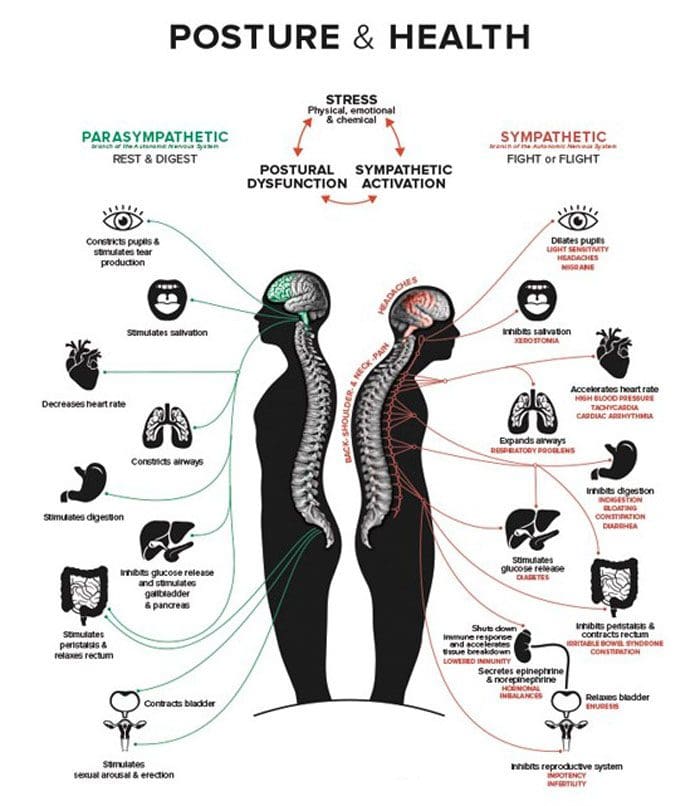
Posture exercises: It is easy to get into the bad habit of poor/improper posture, especially at work where an individual gets into a groove and continues without thinking about their posture. Not until discomfort and pain begin to present do individuals start thinking about what is causing the issues. This usually includes:
Back pain
Shoulder pain
Neck pain
Tight/Compressed spine
They don’t realize that all these issues are brought on by prolonged sitting and practicing improper posture. Individuals that practice proper posture:
Sleep better
Move better
Have reduced to no aches and pains
Digestion improves
Organ function improves
Have better overall health
Being aware of proper posture is the first step in being able to maintain it. When you feel the spine starting to curve, shoulders hunching, or the back sway, stop and take a moment to reposition the body back into proper alignment.
Seated Posture
Proper posture means sitting, standing, or walking in a position with little to no strain on the body’s muscles and ligaments. Good seated position means:
Sitting with the back straight and shoulders back.
Having all of the natural curves of the spine in alignment.
Keeping the knees bent at a right angle with the feet flat on the floor.
The weight is distributed evenly to both hips.
Keep the arms at 90 degrees to the torso, using the armrests or on a desk.
When looking at a computer monitor, keep it at a position where you are looking straightforward.
Use a chair with lower back support.
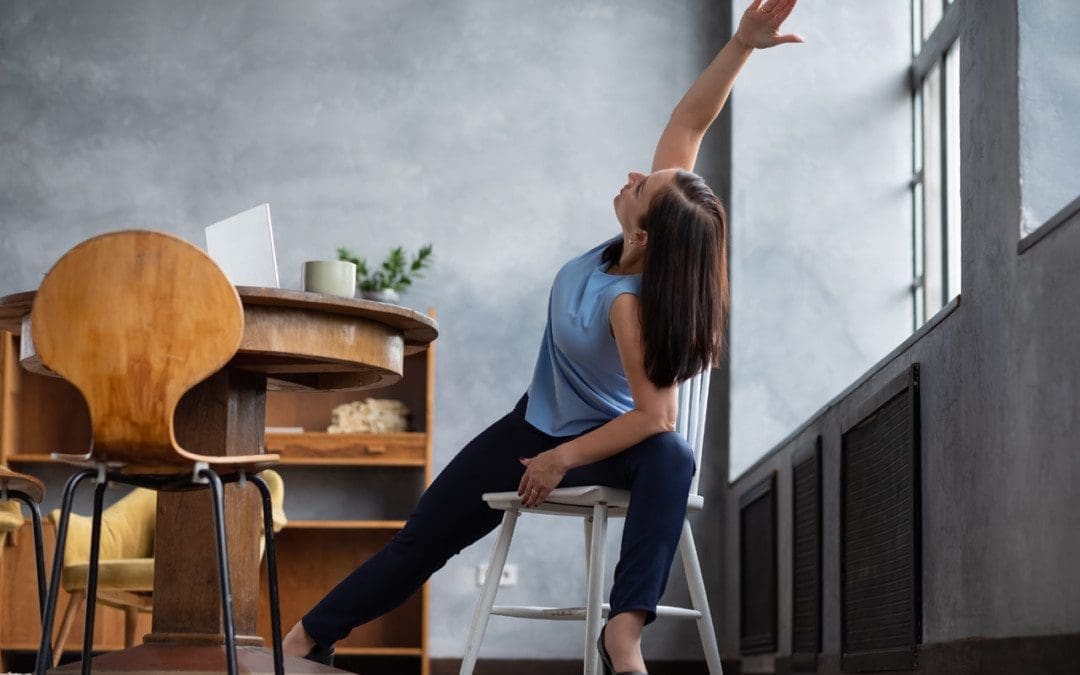
Even when sitting with good posture, it’s important to avoid sitting in the same position for more than 30 minutes.
Regularly stand up, walk around, and stretch out.
Posture Exercises
Posture exercises will help to strengthen the back, neck, and shoulders. They also help as a reminder for maintaining good posture throughout the day.
Shoulder Lift and Release
When sitting down for long periods, individuals tend to develop hunched shoulders. It is caused by an imbalance of muscles in the neck and upper back. Specific muscles in the neck, specifically the pectoralis major and minor, become shortened and tight. The other muscles in the upper back, the trapezius,latissimus dorsi, and rhomboids, weaken and stretch out. These muscles can be stimulated by stretching throughout the day.
Sit in your chair with your feet flat on the floor and spine straight.
Pull the shoulders up towards the ceiling.
Hold them there for three to five seconds.
Let the shoulders drop.
It is recommended to repeat 5 to 6 times every hour.
Shoulder rolls
Another exercise for avoiding rounded/hunched shoulders.
Sit in your chair with your feet flat on the floor and spine straight.
Take a breath in.
Lift the shoulders towards the ears.
Move the shoulders back.
Squeeze the shoulder blades together.
On the exhale, finish the rotation by dropping the shoulders back to a neutral position.
Repeat 5 to 6 times every hour.
The exercise can be done in the opposite direction.
Neck rolls
Forward head posture, aka text neck, can develop. Neck rolls are recommended throughout the day.
Lean your head towards the right shoulder.
Relax the neck and let your head roll towards your chest.
Continue rolling your head towards the left and up and around back to the starting position.
Perform at least 3-4 neck rolls every few hours.
Repeat the exercise and change direction.
Trapezius stretch
The trapezius is a major muscle group in the upper-middle section of the back and the neck. The trapezius is responsible for moving the shoulder blades and extending the neck. Stretching these muscles regularly will help maintain good posture.
Sit in your chair with the spine straight and feet flat on the ground.
Place the right hand over the top of your head.
Gently pull your head towards the right shoulder.
Perform one to three times for each side.
Hold the pose for 30 to 60 seconds.
Arm rotations
This exercise can help maintain back and shoulder alignment. This can be performed sitting or standing.
Stretch out the arms to the sides with palms facing downward.
While keeping the spine straight, move the arms in small circles.
Perform ten repetitions rotating the arms forward, then backward.
Perform 3-4 sets.
Doing these posture exercises at your workstation regularly will help improve and maintain proper posture and minimize the risk of back, neck, and shoulder pain.
Body Composition
Fitness for Long-Term Health
Muscle building isn’t only for bodybuilders and athletes. Everyone can benefit from building their Lean Body Mass for long-term health. It is crucial to monitor Lean Body Mass changes by having body composition measured. Body composition analysis divides the body’s weight into various components.
Fat Mass
Lean Body Mass
Basal Metabolic Rate
This will give a clearer picture of overall fitness and health.
Building Lean Body Mass is an investment in the body’s future. The more LBM that is built, the more is in reserve when the body needs it. But before adding protein shakes and resistance workouts to the daily regimen, there needs to be a plan. The first step to building healthy lean body mass is to measure how much there is with a body composition analysis.
References
Biswas A, Oh PI, Faulkner GE, et al. Sedentary Time and Its Association With Risk for Disease Incidence, Mortality, and Hospitalization in Adults. Ann Intern Med. 2015;162:123-132. doi:10.7326/M14-1651. Accessed January 7, 2017.
Ergonomics for Prolonged Sitting. UCLA Spine Center Web site. http://spinecenter.ucla.edu/ergonomics-prolonged-sitting. Accessed January 7, 2017.
Florido R, Michos E. Sitting Disease: Moving Your Way to a Healthier Heart. U.S. News & World Report. http://health.usnews.com/health-news/patient-advice/articles/2015/09/14/sitting-disease-moving-your-way-to-a-healthier-heart. Published September 14, 2015. Accessed January 7, 2017.
Fortner, Miles O et al. “Treating ‘slouchy’ (hyperkyphosis) posture with chiropractic biophysics®: a case report utilizing a multimodal mirror image® rehabilitation program.” Journal of physical therapy science vol. 29,8 (2017): 1475-1480. doi:10.1589/jpts.29.1475
Levine JA. What are the risks of sitting too much? Mayo Clinic Web site. http://www.mayoclinic.org/healthy-lifestyle/adult-health/expert-answers/sitting/faq-20058005. Published September 4, 2015. Accessed January 7, 2017.
O’Connor B. Sitting Disease: The New Health Epidemic. The Chopra Center Web site. http://www.chopra.com/articles/sitting-disease-the-new-health-epidemic. Accessed January 7, 2017.
Wolfe, Robert R. “The underappreciated role of muscle in health and disease.” The American journal of clinical nutrition vol. 84,3 (2006): 475-82. doi:10.1093/ajcn/84.3.475
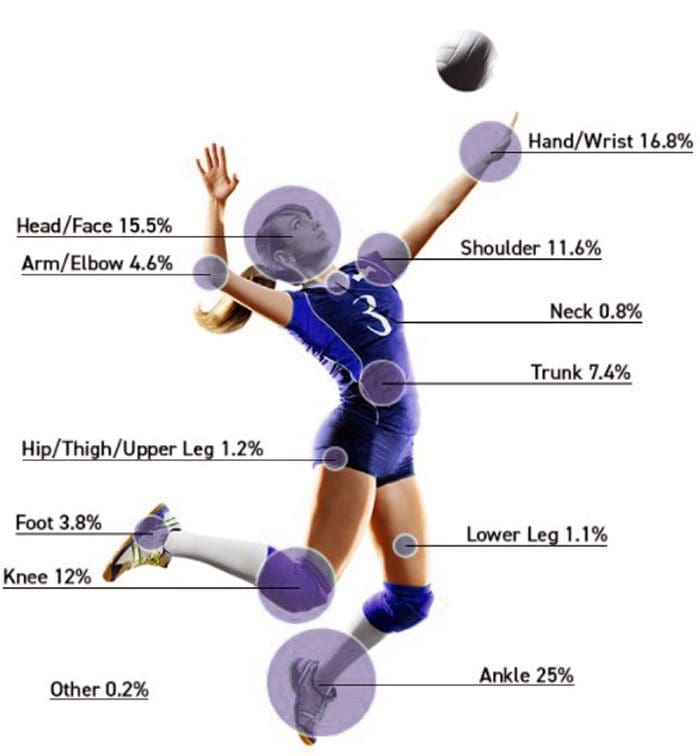
Around a half-million high school students in the U.S. play volleyball. Whether the parent of a volleyball player or part of a recreational league, the goal is to be ready for the season, which means preventing and addressing volleyball injuries. It is a highly demanding sport with quick movements, jumping, twisting, diving, spiking, etc. Despite being fit and healthy, extensive training along with match play takes a toll on the body. Chiropractic can benefit volleyball players.
Common Volleyball Injuries
Why Chiropractic Works
Chiropractic treatment and rehabilitation, especially by a sports chiropractor, is recommended for volleyball injuries because it addresses acute and chronic injuries to all areas of the body. Chiropractic treats the entire musculoskeletal system. Proper joint alignment from chiropractic adjustments in the spine and throughout the body maintains the biomechanic integrity. This reduces high-impact forces in the joints. Soft tissue treatments like instrument-assisted soft tissue mobilization can help resolve injuries by providing the tissues with more blood flow into the affected area allowing for faster healing. Most volleyball injuries result from overuse to the joints and muscles, resulting in repetitive strain. In volleyball, repetitive/overuse injuries are common in the knees, ankles, and shoulders. This comes from all the jumping, serving, and spiking.
Player Benefits
Body Soreness Is Reduced/Alleviated
Many athletes, including volleyball players, do not get the proper recovery time from training or playing.
Reduced recovery periods cause body soreness and stiffness that can overlap into an injury.
Chiropractic can reduce and alleviate body soreness.
Chiropractic promotes faster recovery.
Optimal Performance
Studies show that athletes that receive regular chiropractic care found speed and mobility performance enhanced.
Athletes require fast reflexes and optimal hand-eye coordination.
Speed, mobility, reflexes, and coordination depend on a healthy nervous system.
90% of the central nervous system travels through the spine.
Spinal alignment can either allow for proper nerve flow or disrupt nerve flow.
Even when just one spinal segment is misaligned and out of place, the nervous system can impact reflexes, speed, mobility, and hand-eye coordination.
A properly functioning spine and nervous system will ensure the player is at their best.
Faster Injury Recovery Time
Healing the body properly takes time. Just like the body needs sleep/rest to function properly, so it is with injuries.
The issue for athletes is how much time healing takes.
Individual athletes receiving chiropractic care have been shown to heal faster.
Mobility and Strength
A chiropractic doctor can reduce the pressure around the nerve roots that exit the spine, which will help improve player performance. This includes:
Range of motion
Mobility and flexibility
Strength
Endurance
To find out how chiropractic can help, contact Injury Medical Chiropractic and Functional Medicine Clinic. We will perform a thorough musculoskeletal and nervous system examination.
Ankle Sprain Treatment
How Many Calories Over 24 hours
Myths that offer strategies that avoid the hard work and commitment that diet and exercise demand should be avoided. Individuals cannot expect to experience healthy body composition changes by increasing/decreasing meal frequency if they are living a sedentary lifestyle. It is not important how often or what time an individual takes in calories (has a meal). What is important is how many calories an individual has over a 24-hour period. A study looked at healthy individuals that ate one large meal a day for two weeks and then later ate the same meal but spread out over five smaller meals for another two weeks. It was concluded that there was no statistical difference in body weight gain or loss between the two eating methods. 2000 calories over 3 meals is the same 2000 calories consumed over 5 meals. There is no substitute for proper diet and exercise. The focus should be on what and how much you eat.
References
Eerkes, Kevin. “Volleyball injuries.” Current sports medicine reports vol. 11,5 (2012): 251-6. doi:10.1249/JSR.0b013e3182699037
Gouttebarge, Vincent et al. “Preventing musculoskeletal injuries among recreational adult volleyball players: design of a randomized prospective controlled trial.” BMC musculoskeletal disorders vol. 18,1 333. 2 Aug. 2017, doi:10.1186/s12891-017-1699-6
Kilic, O et al. “Incidence, etiology, and prevention of musculoskeletal injuries in volleyball: A systematic review of the literature.” European journal of sports science vol. 17,6 (2017): 765-793. doi:10.1080/17461391.2017.1306114
Seminati, Elena, and Alberto Enrico Minetti. “Overuse in volleyball training/practice: A review on the shoulder and spine-related injuries.” European journal of sports science vol. 13,6 (2013): 732-43. doi:10.1080/17461391.2013.773090
Wolfram, G et al. “Thermogenese des menschen bei unterschiedlicher mahlzeitenhäufigkeit” [Thermogenesis in humans after varying meal time frequency]. Annals of nutrition & metabolism vol. 31,2 (1987): 88-97. doi:10.1159/000177255
Bowling is a fun physical activity that is enjoyable for all ages. Today, there are college bowlers, recreational bowlers, amateur, semiprofessional, professional leagues, and tournaments worldwide. Although it might not be the first sport that comes to mind when thinking of injuries and chronic pain conditions, it can place significant stress on the muscles and tendons of the upper and lower body. It is important to know and understand how to avoid injuries.
How Bowling Injuries Happen
There are two main causes of injuries and chronic pain related to bowling. The first is poor mechanics, and the second is repetitive over-use. Both cause/develop painful symptoms that can turn into injuries that become chronic conditions. Many injuries are caused by:
Slip and fall accidents
Players dropping the ball on their feet
The majority of injuries come from overuse/repetition and improper body mechanics.
Overuse injuries result from repetitive and/or strenuous actions/movements that place profound stress on the body’s musculoskeletal system.
For example, a semi-pro and professional bowler will play fifty or more games a week. This means throwing a sixteen-pound ball for ten frames per game. When consistently repeated over and over, this can cause serious wear and tear to the body. With amateur and recreational bowlers, they don’t play as much, so they don’t experience overuse injury as much, but what they do experience is improper/poor form techniques that shift the body in non-ergonomic ways, wrong equipment like oversized/too-small shoes that can cause awkward postures and body motions, a ball that is too heavy causing an individual to overthrow and strain their arms, backs, hips, and legs. Or a ball with small finger holes that get stuck or too large, causing finger, hand, arm, shoulder pulls strains, and sprains.
Common Bowling Injuries
The most common injuries and conditions associated with bowling include:
Many of the injuries can lead to tendonitis or arthritis later in life.
Trigger/Bowler’s Finger
Symptoms include:
Hand pain after bowling, specifically in the fingers
A clicking or popping when moving the fingers
A finger gets locked in a bent position
Rest, and no bowling is recommended. How long a rest depends on how long the symptoms have been presenting. Physical therapy, along with chiropractic exercises, can help improve finger strength. Splinting the finger could be required to improve the condition. If all fails or does not generate adequate relief, hand surgery could be optioned with a trigger finger release. The surgery allows the finger to move more freely.
Bowler’s Thumb
This usually happens to bowlers that want to generate a lot of spin on the ball. If the thumb’s hole is too tight, it can pinch the ulnar nerve inside the thumb. If the thumb injury is not serious, rest and getting the correct ball size can correct the issue. This is where purchasing a personal bowling ball can help.
Finger Sprain
This is an injury to one or more of the ligaments in the fingers. It most often takes place in the collateral ligaments along the sides of the fingers inside the ball. The ligament/s gets stretched or torn when the finger is forced beyond its normal range of motion. Common symptoms of a finger sprain include swelling, tenderness, stiffness, and pain in the affected finger. This usually occurs from:
The weight of holding the ball with the fingers alone
A poor release
Using a ball that doesn’t properly fit the fingers
A finger sprain falls into grades on the severity of how much the ligament is stretched or torn:
Grade 1
Stretching or microscopic tearing.
Grade 2
Less than 90% of the ligament is torn.
Grade 3
More than 90% of the ligament is torn. Grade three sprains can be accompanied by joint instability and immobility.
Herniated Disc
A herniated disc is when the discs get injured/damaged from overuse, wear, and tear, or a traumatic injury to the spine. The disc can dry out, become less flexible, bulge out, or rupture. Bowlers are constantly:
Bending during the final approach and throw
Carrying a heavy ball
Shifting, twisting, and releasing, increasing the pressure within the discs
In bowling, the majority of herniated discs happen in the low back. The most common symptom is backaches and back pain. Lumbar herniated discs left untreated can cause sciatica.
Avoid and Prevent Injury
The best way to prevent injury is to stay aware of body position, mechanics, equipment, and what the body says.
Stretching
Stretching is one of the best things to avoid injury before practicing, competing, or just playing. Stretching will increase flexibility, especially in the wrist, hand, arm, and low back.
Improving technique
Continually using poor techniques over and over is a perfect set-up for injury. Working with a coach will ensure the proper form. This is important when it comes to generating spin on the ball, as well as, making sure the grip does not place too much strain on the hands.
Using the right ball
The ball being used might not be the right fit for your hand or strength. The holes could be too far apart, causing strain on the fingers. Get as much information as possible and try out different styles and weights to get a comfortable feel for the right ball.
Bowling less
Hard-core bowlers could be overdoing it. Cutting back, and creating a balance will allow the body to recover thoroughly and not cause flare-ups.
Getting in shape
Studies show that individuals who bowl and do not exercise significantly increase the risk of a back injury than those who exercise their back and core. Bowling is not as strenuous as other sports, but it still requires the body to be able to handle the stress.
Body Health
Test Body Composition
Testing body composition regularly is the best way to ensure the body stays healthy. Tracking body composition tracks Lean Mass and Fat Mass gain or loss. The information provided allows the individual to make the necessary changes to ensure they stay fit and healthy.
Diet adjustment
Diet needs to be adjusted to match the individual’s current activity level, or risk running a caloric surplus. A great way to optimize diet is to use Basal Metabolic Rate which will make sure the body is getting enough nutrients to fuel muscle growth, and lose belly fat.
Physical activity that fits the new lifestyle
Increase physical activity levels that work with current lifestyle. This does not mean performing at high levels every day. Be active on a schedule that works for you. Two days of strength training a week offer great physical and mental benefits. The key is to maintain the balance between food consumption and exercise/physical activity that fits your current lifestyle.
References
Almedghio, Sami M et al. “Wii knee revisited: meniscal injury from 10-pin bowling.” BMJ case reports vol. 2009 (2009): bcr11.2008.1189. doi:10.1136/bcr.11.2008.1189
Kerr, Zachary Y et al. “Epidemiology of bowling-related injuries presenting to US emergency departments, 1990-2008.” Clinical pediatrics vol. 50,8 (2011): 738-46. doi:10.1177/0009922811404697
Kisner, W H. “Thumb neuroma: a hazard of ten pin bowling.” British journal of plastic surgery vol. 29,3 (1976): 225-6. doi:10.1016/s0007-1226(76)90060-6
Miller, S, and G M Rayan. “Bowling related injuries of the hand and upper extremity; a review.” The Journal of the Oklahoma State Medical Association vol. 91,5 (1998): 289-91.
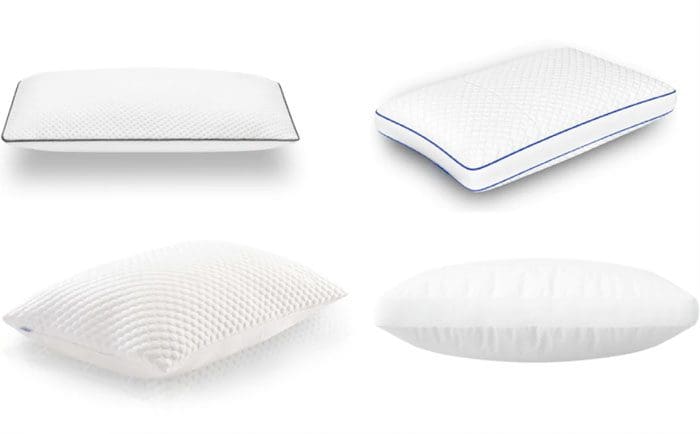
Many individuals do not realize the importance of the type of pillow they use for sleep. Sleeping on the wrong pillow is the perfect set-up for neck, shoulder, and back pain. Here are a few chiropractic tips on what to know about picking the best pillow. Knowing which is the right pillow for you can be the key to proper sleep and waking up pain-free.
Importance of Pillows
Neck and shoulder pain can be a nightmare, especially when the body cannot get decent rest. The right pillow/s can help with neck and back pain symptoms and recover from injuries quicker. When the head is in an awkward position for sleep duration, this causes neck, shoulder, and headache problems. The importance of finding the right pillow follows a set of guidelines.
Shape
The shape of the pillow has a definitive role in the cervical/neck’s curvature.
Posture
Sleep posture is important in preventing neck, shoulder, and back musculoskeletal pain.
Sleep quality
Craniocervical pressures and cervical spine alignment are height-specific. Any changes can affect an individual’s sleep quality.
Height
Cervical alignment can become significantly impacted by the shape and height of the pillow.
Pillow Comfort Importance
Trying to find the right pillow will require trial and error. The basics to consider include:
One sign that it’s time for a new pillow is waking up with pain.
Age of current pillows. The recommendation is they should be replaced every year or two. This depends on the stuffing/material used as different types wear down quicker.
If problems are getting comfortable and being able to fall asleep.
Constantly readjusting or fluffing the pillow/s.
The pillow has become lumpy or lost its shape.
It is flat with no cervical support or, too high placing the head in a forward tilt.
This is an online quiz along with a personalized process in their stores.
The process helps choose a pillow based on individual support preferences and sleep position for the best spinal alignment.
Customizable or adjustable pillows are another option. These pillows allow the individual to change the amount of filling to fit their needs.
Research, personal preference, and advice from a doctor and or chiropractor will help find the pillow that is right for you.
A third of an individual’s life is spent in bed. Make it as comfortable as possible.
Body Health
Sleep Body Composition Importance
Not getting enough sleep makes it difficult to gain muscle.
Not getting enough sleep means that the body experiences less short wave sleep, affecting the body’s ability to secrete Growth Hormone and develop muscle.
Testosterone is negatively affected by lack of sleep.
Not enough sleep increases cortisol levels, impairing muscle development.
Not getting enough sleep makes it difficult to lose fat.
Irregular sleep throws off the body’s ghrelin/leptin cycles, causing hunger.
Not getting enough sleep has been linked to eating more.
Not getting enough sleep can cause reductions in the body’s Basal Metabolic Rate, reducing total energy output.
Tiredness reduces spontaneous movements.
References
“Effect of sleep posture on neck muscle activity.” Journal of Physical Therapy. June 2017. https://pubmed.ncbi.nlm.nih.gov/28626314/
“Effect of pillow height on the biomechanics of the head-neck complex: investigation of the craniocervical pressure and cervical spine alignment.” PeerJ. August 2016. https://pubmed.ncbi.nlm.nih.gov/27635354/
“How Often Should You Replace Your Pillows?” Sleep Foundation, Seattle, WA. https://www.sleepfoundation.org/bedding-information/how-often-should-you-replace-your-pillows
“Improving the quality of sleep with an optimal pillow: a randomized, comparative study.” Tohoku Journal of Experimental Medicine. July 2014. https://pubmed.ncbi.nlm.nih.gov/25008402/
“The effects of pillow designs on neck pain, waking symptoms, neck disability, sleep quality and spinal alignment in adults: A systematic review and meta-analysis.” Clinical Biomechanics. May 2021. https://pubmed.ncbi.nlm.nih.gov/33895703/
Okamoto-Mizuno, Kazue, and Koh Mizuno. “Effects of thermal environment on sleep and circadian rhythm.” Journal of physiological anthropology vol. 31,1 14. 31 May. 2012, doi:10.1186/1880-6805-31-14
Vitamin B12 and Shoulder Injuries. Most shoulder injuries involve the muscles, ligaments, and tendons. Individuals that perform repetitive arm motions/movements, constantly lift objects as part of their job, and athletes that use their arms repetitively have an increase in developing/experiencing shoulder injuries and problems. Shoulder injuries are commonly caused by physical activities that involve:
Excessive motions
Repetitive motions
Overhead motions
Sports like swimming, tennis, pitching, and weightlifting involve these repetitive arm/shoulder motions that contribute to shoulder injuries.
Injuries can also be brought on from everyday activities like washing/painting walls, hanging curtains/plants, and gardening.
Shoulder Injury Symptoms
If there is discomfort and/or pain in and around the shoulder here are a few ways to analyze the situation.
Does the shoulder feel like it could pop out or slide out of its socket?
Is there a lack of strength in the shoulder for normal daily activities?
If yes was an answer to any of these questions, individuals should consult an orthopedic surgeon and/or chiropractor for assistance in determining the problem and its severity.
Injury Categories
Individuals often underestimate the extent of an injury and usually just push/play through the discomfort and pain. This is how powerful the brain is as it ignores steady pain, weakness, or limitation of joint motion. Shoulder injuries and problems are grouped in the following categories.
Instability
This is when a shoulder joint moves/shifts or is forced out of its normal position. This is called instability and can result in dislocation of the joints in the shoulder. Individuals will experience pain when raising their arms. It can feel as if the shoulder is slipping out.
Impingement
Impingement is caused by excessive rubbing/friction of the muscles against the top part of the shoulder blade, known as the acromion. Impingement can happen during physical activities that require excessive overhead arm motion. Medical examination and care are recommended for inflammation, as it could eventually lead to a more serious injury.
Injuries
Bursitis
The bursa is the fluid-filled sacs that cushions the joints. These can become swollen and irritated from repetitive motions, falls, or other injuries. Individuals will notice the pain most when moving/rotating the shoulder.
Cartilage tear
The cartilage – the rubbery padding that goes around the rim of the shoulder joint can get damaged from repetitive motions, overextending, falls, or from intense force to the shoulder. With this type of injury individuals feel pain when reaching overhead, weakness, and/or catching, locking, and grinding feelings.
Rotator cuff tear
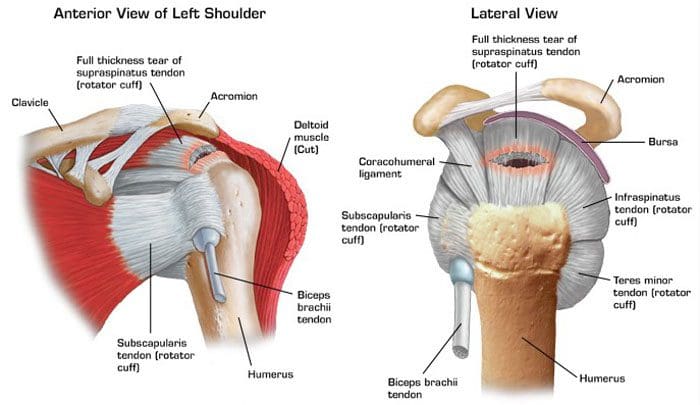
The rotator cuff consists of a group of muscles and tendons that hold the arm in place and allow for lifting the arm up and overhead. It can get damaged through overuse, falls, and regular wear and tear with age. Pain often presents at night, when lifting objects, and there could be a cracking sound when trying to move or rotate.
Frozen shoulder
This condition limits the joint’s movement. What happens is abnormal bands of tissue called adhesions build up in the joint and restrict movement. The shoulder can freeze up from not using it. This could be because pain or surgery causes an individual to use it less. This is when adhesions begin to build up.
Separation
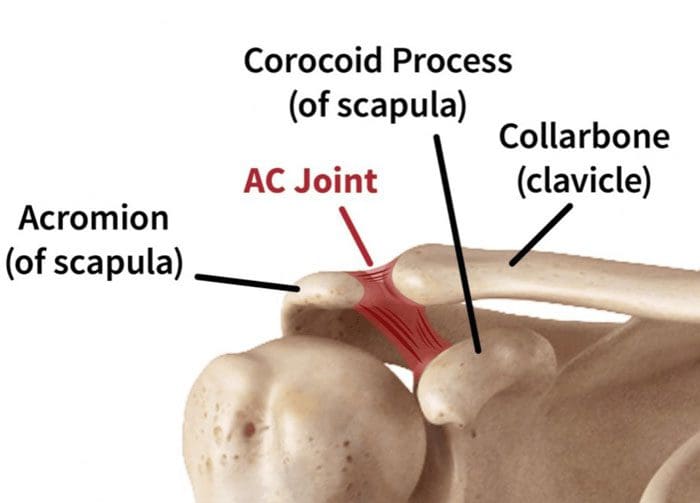
This injury affects the joint where the collarbone and shoulder blade join. It is known as the acromioclavicular or AC joint. A fall or hard impact can tear the ligaments that hold it together. If the collarbone gets pushed out of place a bump forms/develops on top of the shoulder.
Fracture
A bone can break or crack from a vehicle accident, fall, or takes a hard hit. The most common fractures are to the clavicle – collarbone and the humerus – arm bone closest to the shoulder. This type of injury causes a great deal of pain and bruising. If the collarbone is broken, the shoulder can sag with the inability to lift the arm.
Vitamin B12
Rotator cuff injuries involve dysfunctional and/or damaged connective tissue. This could be from impaired collagen synthesisVitamin B12 helps combat inflammation and plays a significant role in collagen formation. Low vitamin B12 status can be directly linked to pro-inflammatory cytokines. This means that a lack of vitamin B12 increases inflammation.
Researchers followed a group of individuals to determine if their individual vitamin B12 levels correlated with an increased risk of a rotator cuff tear. To begin the study, levels of vitamin B12 were measured along with other nutrients that included:
Vitamin D
Zinc
Calcium
Magnesium
Folate
Homocysteine and blood sugar biomarkers, which are both associated with B12 metabolism were also measured. Homocysteine is a metabolite that builds up in the blood when specific nutrients, like B12, folate, or B6 become deficient. Elevated levels of homocysteine can be harmful and cause damage to blood vessels and brain tissue when not detoxified properly. In the study, the homocysteine levels did not differ between the groups, but vitamin B12 levels were significantly different.
The patients that were included were a healthy group that did not have any rotator cuff injury during the study.
The second group all experienced a rotator cuff tear that required surgery during the study.
With the various nutrients measured, only vitamin B12 and vitamin D showed differences. With the B12 and D being lower in the group that had the shoulder injury.
Specifically, the B12 levels in the healthy group were 627 pg/mL compared to 528 pg/mL in the injured group. This was a 16% decrease.
These subclinical deficiencies are usually missed with traditional serum testing which is why functional nutritional testing is clinically recommended.
Body Compositional Testing
Disclaimer
The information herein is not intended to replace a one-on-one relationship with a qualified health care professional, licensed physician, and is not medical advice. We encourage you to make your own health care decisions based on your research and partnership with a qualified health care professional. Our information scope is limited to chiropractic, musculoskeletal, physical medicines, wellness, sensitive health issues, functional medicine articles, topics, and discussions. We provide and present clinical collaboration with specialists from a wide array of disciplines. Each specialist is governed by their professional scope of practice and their jurisdiction of licensure. We use functional health & wellness protocols to treat and support care for the musculoskeletal system’s injuries or disorders. Our videos, posts, topics, subjects, and insights cover clinical matters, issues, and topics that relate to and support, directly or indirectly, our clinical scope of practice.* Our office has made a reasonable attempt to provide supportive citations and has identified the relevant research study or studies supporting our posts. We provide copies of supporting research studies available to regulatory boards and the public upon request. We understand that we cover matters that require an additional explanation of how it may assist in a particular care plan or treatment protocol; therefore, to further discuss the subject matter above, please feel free to ask Dr. Alex Jimenez or contact us at 915-850-0900.
Dr. Alex Jimenez DC, MSACP, CCST, IFMCP*, CIFM*, CTG*
email: [email protected]
phone: 915-850-0900
Licensed in Texas & New Mexico
References
American Society for Surgery of the Hand: Shoulder Pain.
American Academy of Family Physicians: Shoulder Pain.
IFM's Find A Practitioner tool is the largest referral network in Functional Medicine, created to help patients locate Functional Medicine practitioners anywhere in the world. IFM Certified Practitioners are listed first in the search results, given their extensive education in Functional Medicine