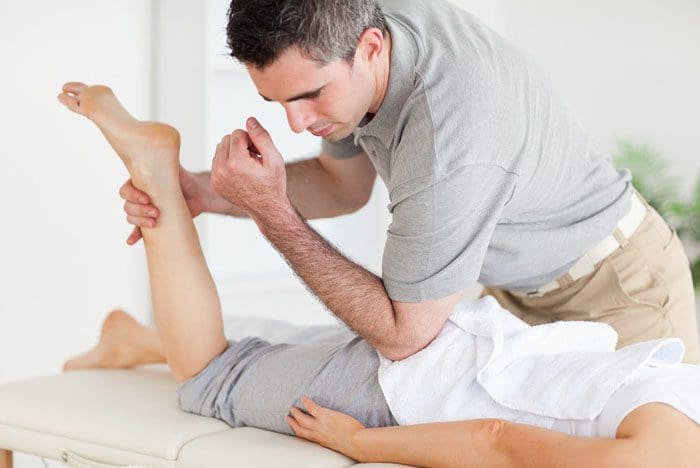
I threw my back out. Most of us have heard and possibly experienced throwing our backs out. But, what does throwing out your back really mean? Find out from our experts. When talking about throwing one’s back out, it’s usually a result of twisting, turning, coughing, sneezing, or lifting incorrectly. The medical equivalent to this injury is an ankle sprain. It can be excruciating, individuals might not see or feel a tear, but the ligaments have been injured, causing inflammation and pain. The same thing can happen to the spine.
What it means when you throw out your back.
Most experience acute pain in the lower region of their backs. Individuals can throw out their back at any age doing all kinds of activities. These can range from:
Changing a tire
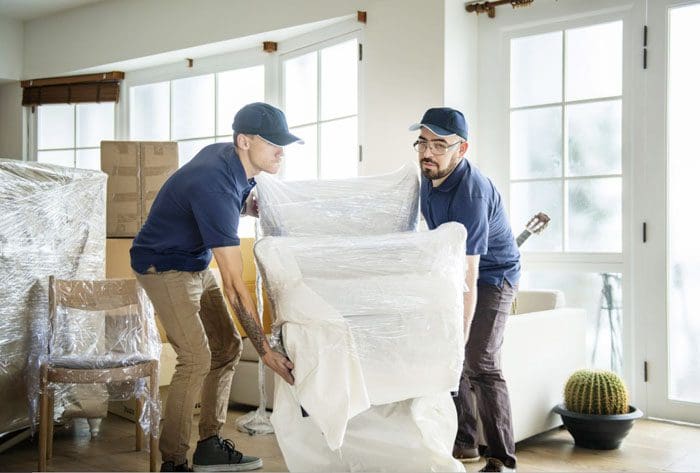
Moving lifting boxes, going upstairs, etc
House chores/tasks
Gardening
Sports
Working out
Bending over to pick up an object
It is more common as individuals age. This is when individuals notice how they could take a serious injury and walk away when they were young. However, with age, something like a cough or sneeze could cause the back to become sprained. When the ankle is sprained, it is immobilized to allow it to rest and heal.
However, it is not as easy to immobilize the spine as large muscles in the back around the spine. Any time tissue is injured, the muscles automatically spasm to act as a splint. These spasms usually tend to be the worst part when back pain presents. This is because the back muscles are large; they cause intense inflammation and pain when they spasm. Combined with this, the back can feel like it is stuck, significantly decreasing the range of motion. This type of injury can take a couple of days to reduce and up to two to six weeks to return to normal function.
This is what is really happening
The majority of the time, what has happened is there is a small ligament strain or an annular tear, which is a tear in the ligament that connects the vertebra to the disc. When standing upright and lifting properly, the disc/s work like hydraulics.
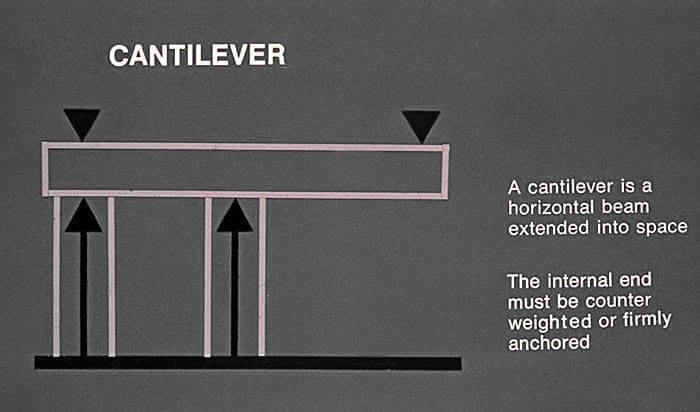
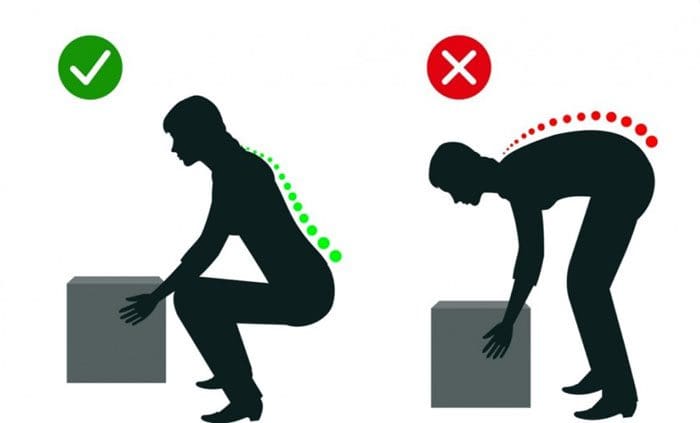
When individuals bend over not using their legs, the back part of the spine widens/opens up, and instead of a hydraulic effect, it becomes a cantilever structure. Bending and twisting compound the pressure across the disc. Prevention is key and by using the legs and keeping the back straight, let the hydraulic system do its natural job.
Misconceptions
Chiropractors specialize in difficult to treat musculoskeletal pain conditions. The term threw out one’s back is similar to the knee, arm, shoulder being blown out. The terminology can create fear associated with the idea of throwing something out of place, especially when it comes to the spine. When individuals come in with back pain, they can become fearful of what will be found. These include:
What has happened to my spine?
Is it going to get better?
Is this going to be a life-long injury?
Will I be able to walk normally?
Through research, doctors now know that fear is an inflammatory response. Therefore, when individuals become fearful, their immune system kicks in, causing the pain to worsen.
Treatment
A few things have been proven to work well, along with seeing a doctor, spine specialist, or chiropractor.
Ice and heat
It depends on individual preference. Ice reduces inflammation and pain, and the heat helps to get the blood flowing in and around the area to help heal the injury.
Abdominal support
An abdominal corset is a stretchy band that is worn around the lower mid-section. The abdominal muscles supply support for the lower body. The corset can help take some of the weight off of the spine to help ease discomfort and pain.
Anti-inflammatories
Advil or a prescription Ibuprophen from a physician is better than narcotics. However, if narcotic medications are necessary, they should be short-term, a few days to a week. In addition, individuals need to show caution as they can cause constipation, making back pain even worse.
Chiropractic and Physical Therapy
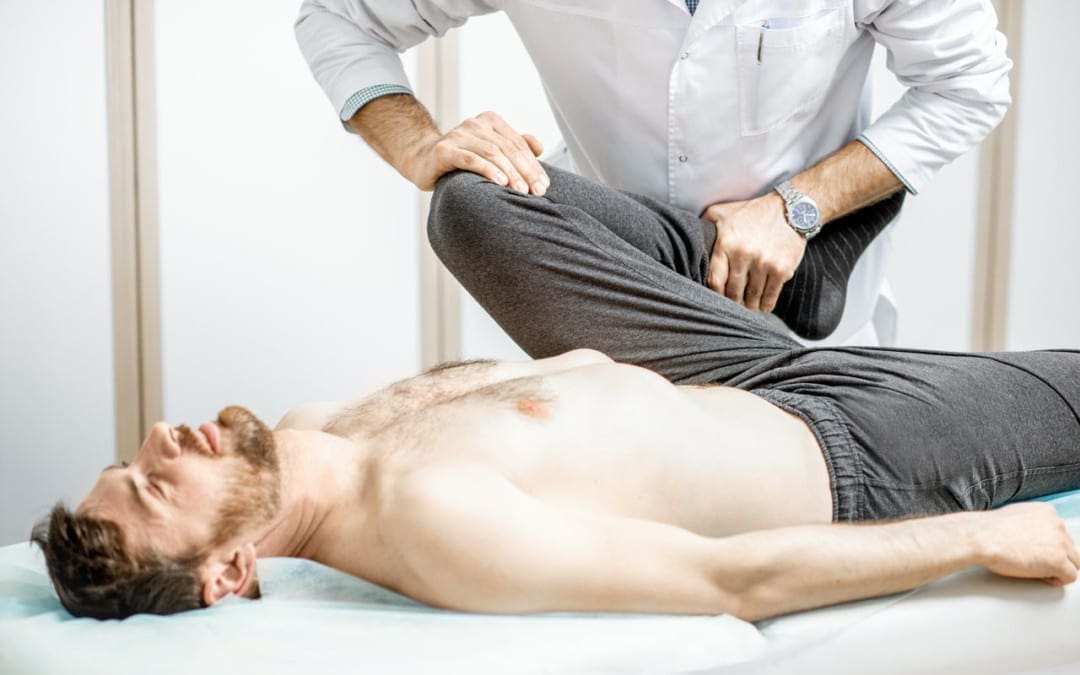
Seeing a chiropractor and physical therapist can help heal the injury faster. They will strengthen the spinal muscles and educate the individual on stretches, exercise, posture, anti-inflammatory diet for optimal spinal health. Individuals usually take two to six weeks to heal completely. However, individuals should still be able to do most physical activities once the spine injury heals. Maintaining the back muscles can be achieved with regular exercise, lifting correctly with the legs, and not over-twisting and over-reaching are important elements to prevent back injuries.
Body Composition Analysis
Summer Heat and The Body
How the body reacts to extreme heat. It is a process known as thermoregulation, where the body strives to maintain a temperature between 97.7 to 99.5 degrees Fahrenheit. The hypothalamus, a gland in the brain, is in charge of managing the core temperature. If outside weather is extreme, causing a change in the body’s core temperature, the hypothalamus triggers a specific process to heat or cool the body back to the normal range. When the hypothalamus registers that the body’s core temperature is rising because it’s sweltering outside, it kicks in.
To remove the extra heat, the hypothalamus increases circulation, moving the blood toward the surface, dilating blood vessels so that the heat can dissipate through the skin. When this happens, the veins can protrude, and the skin flushes. Along with increased circulation, the hypothalamus also activates the sweat glands. The evaporation of the water released onto the skin cools the body down, reducing temperature. Finally, the thyroid is activated to lower heat created through the metabolic processes.
References
Disc tears: Stat Pearls. (11/17/2020).” Annular Disc Tear.” ”https://www.statpearls.com/ArticleLibrary/viewarticle/17615
Fear and Pain: Journal of Pain Research. (2018). “Assessments of Pain-Related Fear in Individual with Chronic Pain Conditions.” https://www.ncbi.nlm.nih.gov/pmc/articles/PMC6280906/
Mittinty, Manasi M et al. “Assessment of pain-related fear in individuals with chronic painful conditions.” Journal of pain research vol. 11 3071-3077. 30 Nov. 2018, doi:10.2147/JPR.S163751
The spinal cord is the information pathway that transmits signals from the brain to the rest of the body. The body’s limbs and organs cannot function properly without regular communication flowing through the spinal cord. Understanding how the sciatic nerve responds to the other parts of the body can clarify how a doctor of chiropractic heals sciatica. When severe pain presents normal communications are overridden for the sake of body and health preservation. The sciatic nerve is an important part of the spinal cord and requires a trained professional to aid in proper and effective healing.
Basics On Sciatica
Sciatica happens when the nerves are compressed/pinched in some form. Lower back conditions can be the cause of such compression. Sciatica can be reduced and healed. Conditions that can lead to sciatic pain include:
Herniated discs
Subluxations
Disc Degeneration
Spinal Stenosis
Lower back disc bulge
Piriformis syndrome
Symptoms
Sciatica often includes:
Sharp pain
Numbness
Burning
Tingling sensation
Individuals can also experience weakness down the leg.
Normal activities can become strained as individuals experience these symptoms. Pressure on the nerve can be decreased and healed with professional chiropractic care. The human spine consists of 31 pairs of nerves. Five of these pairs are in the lumbar/lower back region and five are right below that area in the sacral region. The sciatic nerve starts in the lower back. It goes down through the hips, buttocks, thighs, knees, calves, and ends in the foot.
Causes could be something as simple as sitting on a bulging wallet or sitting for extended lengths of time can result in a decreased blood flow to the area. Also, direct trauma to the gluteal muscles from automobile accidents, sports, and work injuries can lead to sciatic nerve issues and pain.
Treatment Options
Tests and examinations will be conducted to figure out the origin of the pain to develop a personalized treatment plan to expedite the healing process. Treatment can include:
Chiropractic treatment
Decreasing muscle tension
Core stabilization
Spinal decompression
Rehabilitation therapy
Chiropractic treatment is designed to help the body activate its own healing system. It is non-invasive and drug-free providing an organic alternative. Advanced cases of sciatica can result in muscle weakness or a loss of sensation in the legs, if not properly treated. Individual treatment plans vary depending on an individual’s specific needs.
Prevention
Prevention is important once the condition is healing to not cause flare-ups. Sciatica symptoms can return, especially if proper and continued care to the spine is not maintained. Preventative care and maintenance are essential for ensuring a healthy spine and body. These tips can help avoid back injuries that can lead to sciatica and help with reoccurrences:
Practice proper posture
Regular exercise/physical activity with safe movements
Bend at the knees, especially when lifting heavy objects
Follow specific instructions given by a chiropractor
Body Composition
Healthy Snacks
Eggs
Eggs make a great snack that will keep the body full and help to eat less. They are a great source of protein and fat and have a healthy variety of vitamins and minerals. Hard-boiled eggs are easy to make ahead of time and are portable.
Cheese
Cheese is a great snack for protein and fat. But it is important to watch the serving size if watching/limiting calories. Cottage cheese is highest in protein but cream cheese and cheese sticks are also good options. Cheese can be paired with a serving of fruit or vegetables like grape tomatoes, bell peppers, celery, apples, or pears.
Jerky
Jerky is convenient and portable and is a great way to pack in extra protein throughout the day. The best option is grass-fed. Remember that some jerky is high in sodium if limiting sodium.
Greek Yogurt
Natural Greek yogurt is a great option for a high-protein snack. However, many yogurts are high in sugar. Therefore choose yogurt with less than 10 grams of sugar per serving, or opt for plain yogurt to avoid the sugar altogether. The yogurt can be sweetened with honey, fresh fruit, or mixed into a smoothie.
Hummus and Guacamole Dips
Hummus is a great source of plant-based protein and is balanced with carbohydrates, fat, and fiber. It is the olive oil in the hummus that provides a healthy dose of heart-healthy polyunsaturated fats. Guacamole is a delicious source of healthy fats.Both dips are calorie-dense, therefore it is important to be aware of portion sizes. These can be paired with carrot sticks, bell peppers, or celery.
Disclaimer
The information herein is not intended to replace a one-on-one relationship with a qualified health care professional, licensed physician, and is not medical advice. We encourage you to make your own health care decisions based on your research and partnership with a qualified health care professional. Our information scope is limited to chiropractic, musculoskeletal, physical medicines, wellness, sensitive health issues, functional medicine articles, topics, and discussions. We provide and present clinical collaboration with specialists from a wide array of disciplines. Each specialist is governed by their professional scope of practice and their jurisdiction of licensure. We use functional health & wellness protocols to treat and support care for the musculoskeletal system’s injuries or disorders. Our videos, posts, topics, subjects, and insights cover clinical matters, issues, and topics that relate to and support, directly or indirectly, our clinical scope of practice.* Our office has made a reasonable attempt to provide supportive citations and has identified the relevant research study or studies supporting our posts. We provide copies of supporting research studies available to regulatory boards and the public upon request. We understand that we cover matters that require an additional explanation of how it may assist in a particular care plan or treatment protocol; therefore, to further discuss the subject matter above, please feel free to ask Dr. Alex Jimenez or contact us at 915-850-0900.
Dr. Alex Jimenez DC, MSACP, CCST, IFMCP*, CIFM*, CTG*
email: [email protected]
phone: 915-850-0900
Licensed in Texas & New Mexico
References
National Institutes of Health. (2019.) “Sciatica.” medlineplus.gov/sciatica.html.
North American Spine Society. (2012.) “Clinical Guidelines for Diagnosis and Treatment of Lumbar Disc Herniation with Radiculopathy.” www.spine.org/Portals/0/assets/downloads/ResearchClinicalCare/Guidelines/LumbarDiscHerniation.pdf
IFM's Find A Practitioner tool is the largest referral network in Functional Medicine, created to help patients locate Functional Medicine practitioners anywhere in the world. IFM Certified Practitioners are listed first in the search results, given their extensive education in Functional Medicine