Pets have improved the lives of those living with chronic pain and can help alleviate the depression that comes with it. There's no doubt that having a pet or interacting with a trained therapy animal can help reduce and alleviate the pain and improve the quality of life.
Animals and the companionship they offer seems to be a natural pain reliever, and significant research supports this theory. Here are some ways that our pets can help us live optimal lives even with chronic pain. �
�
�
Ways Pets Can Relieve Pain
Our pets allow us to feel less stressed out. Research has shown even for those that are not into pets, that petting a dog for ten-fifteen minutes reducescortisol, which is a stress hormone. In a journal for pain, researchers studied the effects of quick therapy dog visits at a pain management clinic. Over 2-months they compared the individuals' feelings of:
Pain
Fatigue
Stress
Tremendous improvements were reported for pain, state of mind, and other measures of stress among the individuals after the dog visit. Improvements were also seen in family, friends, and staff after the therapy dog visits.
�
They Generate More Activity
Specifically, dog owners seem to be healthier than those without a dog. Cats are great but when it comes to activity/fitness, dogs require regular walks, which makes owners get up, go outside and move around. Walking a dog can help:
Improve balance
Combat fatigue
Improve flexibility
Reduce joint pain
Increase strength
Manage weight
Being active combined with walking helps to get a better night's sleep and reduced pain. �
�
They Make Us Feel Better Without Medication
Research has shown how the proper attitude impacts treatment outcomes. With a positive attitude, an individual is more likely to stick with a long-term pain treatment plan. Petting and playing with a furry friend can be the perfect medicine creating an improved mood literally relieving pain and reducing the need for pain meds.
�
They Distract The Pain Away
Individuals living with chronic pain are constantly thinking about it. Having a pet changes the focus from pain to joy and happiness. With a pet to care for gives the day structure and life purpose. Pets need attention and because of their lovability are hard to ignore. �
�
Animal-Assisted Therapy
This type of therapy is a legitimate option for chronic pain management. With the problems associated with opioids, doctors and patients are looking for alternative ways to treat pain. The American Academy of Family Physicians reports that nonpharmacological therapies, like animal-assisted therapy, are now included in chronic pain treatment plans. Other options for pain relief include:
Example: An individual has a pain syndrome/condition. When the pain flares up the individual becomes irritable and upset. The individual has a dog that recognizes these feelings. The dog comes over and starts playing, licking, etc. The individual picks up the dog, calming the individual, helping change the mood, and ease the pain.
�
Pet Time
Owning a pet is a real responsibility, for those who are not interested in adopting, there are still benefits from pet medicine. Some ideas to consider:
Perhaps a family member or friend owns a pet that could have regular visits. This would be a good way to get a feel for the experience and see what it's like to have a pet without committing.
Cats are an option if dogs are not your cup of tea. This could be because of allergies or residing in a location that does not permit them. Cats offer companionship along with the same psychological benefits as dogs. However, there is not much activity since they don't need to be walked. But they still need to play/pretend hunt.
Try spending time at a pain management clinic that has an animal therapy program. Some of these clinics allow individuals to spend time with a therapy dog a few times per week. These are usually 15-minute sessions.
Unable to locate a clinic in the area, try looking into other organizations that could provide therapy animals and programs. Local vets and animal shelters can be a good source of information for animal therapy programs.
�
Therapy and Service Dogs Are Not the Same
When it's time you might be ready for a dog of your own. Before searching the local shelter's website, consider everything that comes with pet ownership. Factor in costs like:
Veterinary care
Behavior classes
Food
Shelter
Toys
Travel
Think about the size of the animal and if you can safely manage a small or large pet. Remember this is a therapy for individuals with a health condition of chronic pain. An individual needs to be able to see what they can take given their level of pain at any given time.
If you've never owned a pet, there needs to be an understanding that housebreaking a pet can be quite a time-consuming and exhausting task. This could add more stress and worsen the pain.
It is important to remember that therapy dogs do not have the same training as assistance or service dogs. Service dogs are trained to perform and assist with specific tasks to help an individual that has a disability. This could be a seeing-eye dog helping their blind owner. Also, service dogs live with their owners and are granted special access to public places like planes, restaurants, places of business, etc.
The American Kennel Club defines therapy dogs as dogs that can accompany their owners to volunteer in schools, hospitals, and nursing homes where they work together as a team to improve the lives of other people.
There are definitely medical benefits to having pets in our lives. However, don't expect them to remove chronic pain overnight. Pets are another tool that can bring relief and improve the quality of life for individuals living with pain.
Metabolic Syndrome & Inflammation
�
Dr. Alex Jimenez�s Blog Post Disclaimer
The scope of our information is limited to chiropractic, musculoskeletal, physical medicines, wellness, and sensitive health issues and/or functional medicine articles, topics, and discussions. We use functional health & wellness protocols to treat and support care for injuries or disorders of the musculoskeletal system. Our posts, topics, subjects, and insights cover clinical matters, issues, and topics that relate and support directly or indirectly our clinical scope of practice.*
Our office has made a reasonable attempt to provide supportive citations and has identified the relevant research study or studies supporting our posts. We also make copies of supporting research studies available to the board and or the public upon request. We understand that we cover matters that require an additional explanation as to how it may assist in a particular care plan or treatment protocol; therefore, to further discuss the subject matter above, please feel free to ask Dr. Alex Jimenez or contact us at�915-850-0900. The provider(s) Licensed in Texas& New Mexico
Spinal stimulation is a treatment option that could help bring relief from pain and improve the quality of life for individuals dealing with chronic pain, like low back, and leg pain. Spinal stimulation can help reduce and manage chronic pain that does not alleviate or reduce with physical therapy, pain medications, injections, and other non-surgical treatments/therapies. �
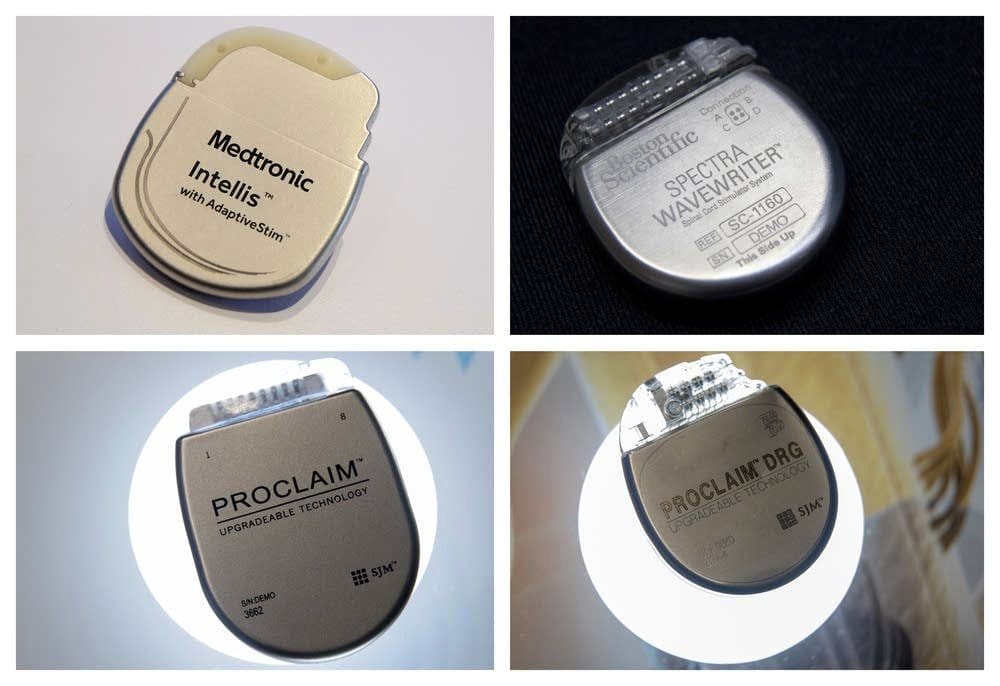
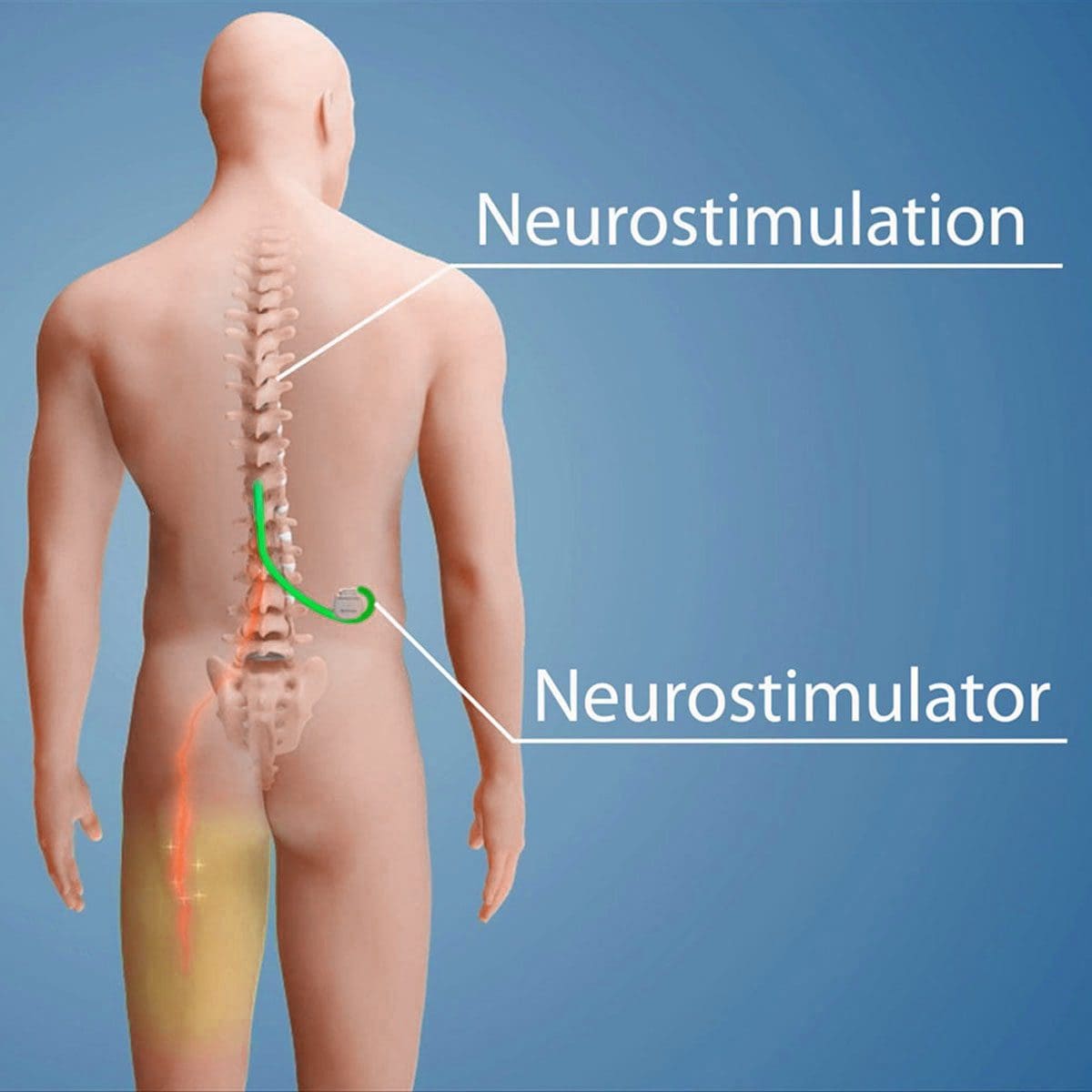
It is a form of neuromodulation that works by blocking pain signals that the nerves send out from reaching the brain. A spinal stimulator is a tiny device that is implanted underneath the skin. The device delivers a very low electrical impulse that masks/changes pain signals before they reach the brain.
�
A Spinal Stimulation System
�
Neurostimulator:
This is the entire device that is implanted and sends out electrical impulses through a lead wire to the nerves in the spine.
Lead:
The thin wire that delivers the electrical impulses from the neurostimulator.
Remote control:
This turns on/off the stimulator and increases or decreases the amount of stimulation.
Charger:
Stimulators are rechargeable and normally require recharging about one hour every two weeks.
�
Spinal Stimulator Types:
�
Traditional stimulators
These produce a gentle ringing/tingling sensation that masks the pain.
Burst stimulators
These send out random interval bursts of electrical impulses designed to copy the way the body sends out nerve impulses.
High-frequency stimulators
These reduce pain without generating tingling sensations. �
�
Types of Pain Spinal Stimulation Treats
Spinal stimulation is approved by the U.S. FDA to treat chronic back and leg pain, including pain that doesn't go away after back surgery known as failed back surgery syndrome. Chronic neuropathic back and leg pain are the most common types that stimulation treats. This means back or leg pain caused by nerve damage from:
Auto accident
Injury - personal, sports, work
Disease
Acute pain is like stepping on a sharp piece of glass, where the pain serves as protection letting you know something is wrong and not to continue. Whereas chronic neuropathic pain lasts for 3 months or more and does not help protect the body. �
�
Spinal stimulation is also used to treat complex regional pain syndrome or CRPS. This is a rare condition that affects the arms/hands or legs/feet and is believed to be caused by damage or malfunction of the nervous system. It is also used in treating peripheral neuropathic pain. This is damage to the nerves outside of the spinal cord often in the hands/feet that is caused by an:
Infection
Trauma
Surgery
Diabetes
Other unknown causes
�
Appropriate Treatment
Spinal cord stimulation should not be used in patients that are pregnant, unable to operate the stimulation system, went through a failed trial of spinal stimulation, and are at risk for surgical complications. The decision to use spinal stimulation is based on an individual's needs and risks. Talk to a doctor, spine specialist, chiropractor to see if spinal stimulation could be an option.
�
Benefits and Risks
The effects of stimulation are different for everyone. Therefore, it is important to understand that spinal stimulation can help reduce pain, but not completely eliminate it. �
�
The Benefits of Spinal Cord Stimulation
In addition to reducing pain, other benefits of spinal stimulation include:
Better sleep
Improved body function
Increased activity
Improved mobility
Reduced opioid medication/s use
Less need for other types of pain meds
Reduced dependence on braces/bracing
�
Risks
During the implantation, there is a risk for:
Bleeding
Infection
Pain at the site of incision
Nerve damage
Rarely paralysis
� For some individuals, scar tissue can build up over the electrode, which can block the stimulator's electrical impulse. The lead wire could move or shift out of position. This could lead to impulses being sent to the wrong location. The device itself could shift under the skin causing pain, making it hard to re-charge or communicate with the remote.
There is a risk that the lead wire could detach or break off causing a malfunction and require a replacement. Also, individuals could respond well to the stimulation at first, but later on, they develop a tolerance, and so the therapy no longer has the same impact and the pain could get worse because the nerves stop responding.
�
Take Precautions
Discuss with a doctor, spine specialist, or chiropractor what you can and can't do after the stimulator is implanted and activated. Here are a few precautions:
Do not drive or operate heavy equipment when the stimulator is active.
Stimulation systems could set off metal detectors, which could require manual screening.
MRIs, electrocautery, diathermy, defibrillators, and cardiac pacemakers could have a negative interaction with certain types of stimulators. This could result in injury or damage to the spinal stimulator. Talk to your doctor to determine if a spinal stimulator is a treatment option that will work for you.
�
Weight Loss Techniques - Push Fitness Center
Dr. Alex Jimenez�s Blog Post Disclaimer
The scope of our information is limited to chiropractic, musculoskeletal, physical medicines, wellness, and sensitive health issues and/or functional medicine articles, topics, and discussions. We use functional health & wellness protocols to treat and support care for injuries or disorders of the musculoskeletal system. Our posts, topics, subjects, and insights cover clinical matters, issues, and topics that relate and support directly or indirectly our clinical scope of practice.*
Our office has made a reasonable attempt to provide supportive citations and has identified the relevant research study or studies supporting our posts. We also make copies of supporting research studies available to the board and or the public upon request. We understand that we cover matters that require an additional explanation as to how it may assist in a particular care plan or treatment protocol; therefore, to further discuss the subject matter above, please feel free to ask Dr. Alex Jimenez or contact us at�915-850-0900. The provider(s) Licensed in Texas& New Mexico
Everyone experiences stress at some point in their life. In fact, it is becoming a sort of new normal in today�s hectic, fast paced, high pressure society. Chiropractic treatment can help relieve stress symptoms and achieve optimal health!
However, a large percentage of the United States population is feeling a significant impact from the stress in their lives; 77 percent say they experience physical stress related symptoms on a regular basis. Additionally, 73 percent report experiencing stress related psychological symptoms including anxiety and depression. These are not accurate numbers though because many people never seek help for their stress issues.
Stress symptoms should not be taken lightly. It is important to address the symptoms and find ways to reduce the stress. Chiropractic is an effective stress reliever.
What Is Stress?
In literal terms, stress is the state of emotional or mental strain, pressure, or tension that result from difficulties, adverse situations, or extremely demanding circumstances. However, the very nature of stress by definition makes it very subjective. What is an adverse situation to one person may not even faze another. What one person finds to be an extremely demanding circumstance would to another barely warrant a second thought. This makes it difficult to pin down a precise, universal definition. More often, the term stress is more often used to describe the set of symptoms that are caused by stress and those symptoms can be as varied as the people who experience them.
What Are The Symptoms Of Stress?
Stress symptoms can affect the entire body, both physically and mentally. Common symptoms of stress include:
Technically, stress itself does not have a negative impact on health. Some people deal with situations that others would consider to be stressful, yet they never exhibit the first symptom. This again speaks to the subjective nature of stress. Different people experience different symptoms and it is a combination of the stress symptoms and how the person handles those symptoms that adversely affect health.
Ultimately, stress symptoms can lead to some very serious conditions including heart disease, hypertension, diabetes, obesity, and even certain cancers. Psychologically, it can lead to social withdrawal and social phobias. It is also often directly linked to alcohol and drug abuse.
How Can Chiropractic Help Relieve Stress Symptoms?
Chiropractic cannot get rid of stress, but it can help relieve stress symptoms. The more stress the body endures, the more sensitive it becomes to pain and physical imbalances. Chiropractic can help with bringing the body back into balance, aligning the spine, and relieving pain.
On a larger scale, the simple act of aligning the spine helps to relieve stress in the body that the person may not even be aware of experiencing. The physical stress of a misaligned spine can exacerbate stress symptoms and make a person more susceptible to stressful stimuli in their environment.
Chiropractic helps to improve circulation which is essential in relieving muscle tension. This is integral in achieving and maintaining a relaxed, balanced state. It shuts down the fight or flight response that is a common accompaniment to stress, and allows the body to rest and heal.
Stress symptoms are should not be ignored. They can lead to several very serious health conditions. If you are experiencing stress in your life or stress symptoms (you don�t have to recognize that you are under stress to experience its symptoms) pay attention. Those symptoms aren�t likely to go away but instead get worse. Take care of yourself; get help for your stress.
Injury Medical Clinic:�Whiplash Pain Treatment Chiropractor
IFM's Find A Practitioner tool is the largest referral network in Functional Medicine, created to help patients locate Functional Medicine practitioners anywhere in the world. IFM Certified Practitioners are listed first in the search results, given their extensive education in Functional Medicine