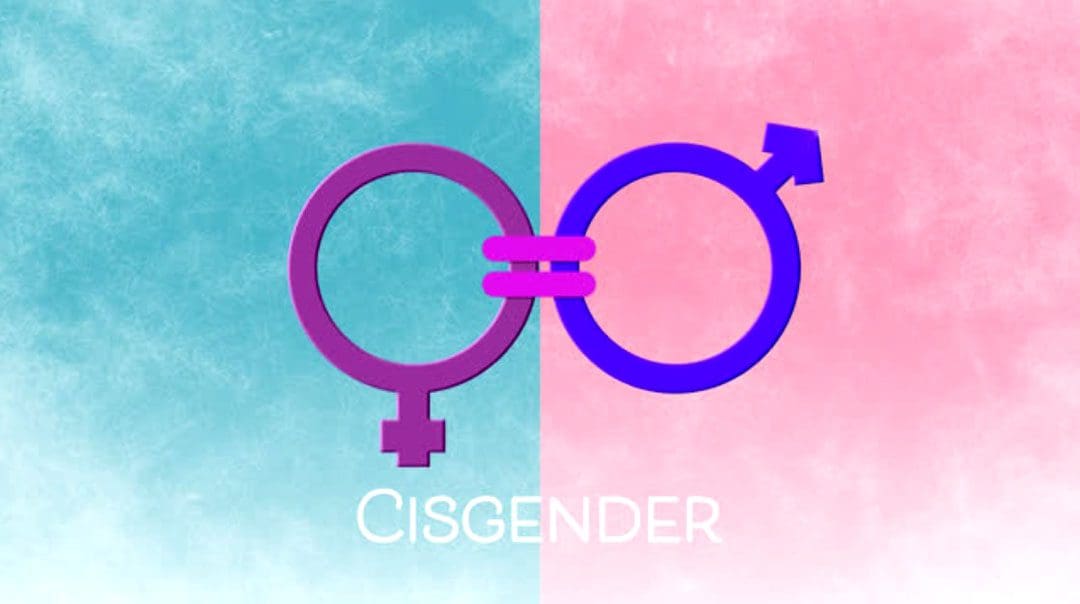
Cisgender has nothing to do with an individual’s sexual orientation. Therefore how do sex and gender differ and where does cisgender fall within the spectrum of gender identities?
Cisgender
Cisgender is a segment of the larger spectrum of gender identities. Also referred to as “cis,” it describes an individual whose gender identity corresponds to the sex they were assigned at birth. Therefore if an individual assigned sex at birth is female and identifies as a girl or a woman they are a cisgender woman.
The term describes how a person sees themselves and helps others communicate more accurately and respectfully.
Although many individuals may identify as cisgender, a cisgender person is not typical nor has qualities or characteristics that inherently differentiate them from a person of other gender identities.
Cisgender women commonly use the pronouns she and her.
A common mistake is using the term cis-gendered.
The proper usage of the term is cisgender.
Sex and Gender Differences
The terms sex and gender are often used interchangeably, however, they are not the same.
Sex is a biological and physiological designation based on an individual’s sex chromosomes and sexual organs.
This includes an individual’s genitals and sex organs.
It also encompasses secondary characteristics – like body size, bone structure, breast size, and facial hair – that are regarded as female or male.
Differences
Gender is a social construct that refers to roles and behaviors that society assigns as being masculine or feminine. The construct infers behaviors that are accepted or appropriate based on how an individual behaves, speaks, dresses, sits, etc.
Gender titles include sir, ma’am, mister, or miss.
Pronouns include him, she, he, and her.
Roles include actress, actor, prince, and princess.
Many of these suggest a power hierarchy of who has it and who does not.
Cisgender women often fall victim to these dynamics.
Sex
Refers to an individual’s chromosomes and the way that their genes are expressed.
Typically described in terms of male and female characteristics or the sex assigned at birth.
Gender
A social construct.
Refers to the social roles, behaviors, and expectations considered and/or deemed appropriate for men and women.
Historically defined as masculine and feminine, however, definitions can change as society changes.
Gender Identities Glossary
Today, gender is viewed as a spectrum where an individual might identify as one gender, more than one gender, or no gender. The definitions are often subtle and can often overlap, co-exist, and/or change. Gender identities include:
Cisgender
An individual whose gender identity matches their assigned sex at birth.
Transgender
An individual whose gender identity does not align with their assigned sex at birth.
Non-binary
An individual who feels their gender identity cannot be defined.
Demigender
An individual who experiences a partial, but not full/complete connection to a particular gender.
Agender
An individual who feels neither male nor female.
Genderqueer
Similar to non-binary but infers refusal of societal expectations.
Gender-neutral
Non-binary similarities but focuses on abandoning gender labels.
Gender fluid
An individual who experiences multiple genders or shifts between genders.
Polygender
An individual who experiences or expresses more than one gender.
Pangender
An individual who identifies with all genders.
Third gender
Third gender is a concept in which individuals are categorized, either by themselves or by society, as neither male nor female, not transitioning.
They are a different gender altogether.
Twin gender
A Native American term describing someone who is male and female or of two spirits simultaneously.
Cis Woman Identity
The terms cis woman or cis female are used to describe individuals who were assigned female at birth and identify as a woman or female. For cisgender woman, this means their gender identity aligns with their primary sex organs and secondary sex traits that include:
Higher pitch voice.
Wider pelvis.
Broadening of hips.
Breast development
It can also involve cisnormativity – a concept that everyone identifies as the gender they were assigned at birth. This could inform how a cis woman is expected to dress and act. An even more extreme concept is gender essentialism – this is the belief that gender differences are rooted purely in biology and cannot be changed. However, even cisnormativity beauty standards can influence the perceptions of transgender women that end up reinforcing gender stereotypes. (Monteiro D, Poulakis M. 2019)
Cisgender Privilege
Cisgender privilege is the concept that individuals who are cisgender receive added benefits compared to individuals who don’t conform to the gender binary norm. This includes cisgender women and men. Privilege happens when a cisgender individual assumes they are the norm and consciously or unconsciously takes action against those who are outside the definition of masculine and feminine. Examples of cisgender privilege include:
Not being denied work and social opportunities because of not fitting into the boy’s or girl’s club.
Not having to have sexual orientation questioned.
Not being denied healthcare due to provider discomfort.
Not fearing that civil rights or legal protections will be taken.
Not worrying about being bullied.
Not having to worry about attracting questioning looks in public.
Not being challenged or questioned about the clothes being worn.
Not being demeaned or mocked because of pronoun use.
Gender identity and sexual orientation are not the same.
A cisgender individual can be heterosexual, homosexual, bisexual, or asexual and so can a transgender individual.
Being cisgender has no correlation to an individual’s sexual orientation.
Chiropractic Care After Accidents and Injuries
References
Clayton, J. A., & Tannenbaum, C. (2016). Reporting Sex, Gender, or Both in Clinical Research? JAMA, 316(18), 1863–1864. https://doi.org/10.1001/jama.2016.16405
Monteiro, Delmira and Poulakis, Mixalis (2019) “Effects of Cisnormative Beauty Standards on Transgender Women’s Perceptions and Expressions of Beauty,” Midwest Social Sciences Journal: Vol. 22: Iss. 1, Article 10. DOI: https://doi.org/10.22543/2766-0796.1009 Available at: https://scholar.valpo.edu/mssj/vol22/iss1/10
Moleiro, C., & Pinto, N. (2015). Sexual orientation and gender identity: review of concepts, controversies and their relation to psychopathology classification systems. Frontiers in Psychology, 6, 1511. https://doi.org/10.3389/fpsyg.2015.01511
Having the proper mattress can help reduce, prevent, and alleviate neck and back pain. Individuals spend around one-third of their life sleeping. However, when it comes to the mattress that we sleep on, there seems to be no consideration of how the mattress will affect our spines. No other piece of furniture in the house is used more often or affects overall health more than our beds. �
�
�
Down to sleep
Everybody needs to sleep, as the proper amount of rest is an essential part of life. When there is a lack of sleep or sleep disorder, this contributes and leads to health issues of all types and increased/exacerbated pain.
Specifically, the spine benefits tremendously from a proper sleep cycle. The spine works all day supporting the body and its functions. Rest is essential to maintain this level of activity day in and out. But when the surface that we sleep on does not support our body and spine in the correct form, then proper sleep can be impossible to achieve.
�
Proper Mattress Selection
The mattress we sleep on can make a significant difference in the quality of sleep we are getting on a regular basis. A mattress that does not provide optimal support for the spine can lead to muscle fatigue and sleep deprivation.
A proper mattress keeps the spine in the same natural alignment as when standing. When the body can rest in its natural position, the muscles are relaxed and the sleep is healthy following the five stages of a full sleep cycle.
�
Healthy sleep means the individual needs to cycle through five stages: 1, 2, 3, 4, and rapid eye movement or REM sleep. A full sleep cycle takes around 90 to 110 minutes to complete. Once the five stages have finished, it starts over at stage 1. Here is a look at the stages:
Stage 1
This is the lightest stage and is characterized by slow eye movement and relaxed muscle activity.
Stage 2
Eye movement stops and brain waves slow down.
Stage 3
This is the first stage of deep sleep where brain waves appear but are extremely slow. It can be quite difficult to wake someone from this stage.
Stage 4
This is the second stage of deep sleep with no eye or muscle activity. Just like stage 3, it can be more difficult to wake someone in this stage.
REM sleep
This is the dream phase where breathing quickens, heart rate, blood pressure increase, and eyes begin to move around in different directions. REM sleep could be considered the most important stage, as researchers believe REM sleep contributes to storing memories, learning, and regulating mood. Most adults spend half of their total sleep time in stage 2, 20% in REM sleep, and 30% in the other stages. �
Innerspring mattresses can offer more variety in terms of firmness and support. However, individuals find other types of mattresses just as comfortable. What makes a proper mattress the best is that it is the one that offers you the most support and the most comfort.
�
Foundation
This is usually called the box spring, which is just as important as the mattress. The box spring absorbs the weight along with the added stress of movement etc, from the mattress. Having the proper foundation extends the life of the mattress.
If possible try to purchase the box spring designed for the mattress. Using no box spring, an old box spring, or mixing the mattress and box spring can have a negative impact on the level of support and durability of the mattress.
�
Firmness
The belief that the firmer the mattress is the better is not exactly true. A too-firm mattress does not support the body in a balanced fashion. Which means that only the body's heaviest parts are supported. A too-soft mattress can sink, preventing the spine from keeping proper alignment. Too firm or too soft does not allow the muscles to relax and rest, because they have to keep working to find a comfortable position just to maintain correct posture.
�
Comfort
Make sure to take the time to lie on the mattress and test it out when shopping. Lie down and position yourself the way you would when sleeping. Take turns turning/moving from side to side. If sleeping with a spouse or partner, try out the mattress together to make sure there is enough space to move around comfortably. Be sure that the mattress can support the spine and maintain its natural curve.
Beware, mattress manufacturers use different terms for comfort and firmnessthat could be confusing. Mattress makers will use a term like orthopedic but it does not have any actual medical merit or benefit. That is why trying out the mattress before buying is the way to go. It will definitely help to tell which one is the most supportive and comfortable.
�
Durability
How long the mattress and materials that it's made of will last determines the durability. Top-quality materials are what to aim for. Especially, the core and the cover. Prices are determined by:
What the mattress is made out of
The quality of the construction
The size
A proper mattress and box spring should last for around 8-10 years. Therefore it is an investment in your spine and quality health. Don't automatically go for the mattresses on sale or that are the cheapest. Instead, search for the best quality and value.
�
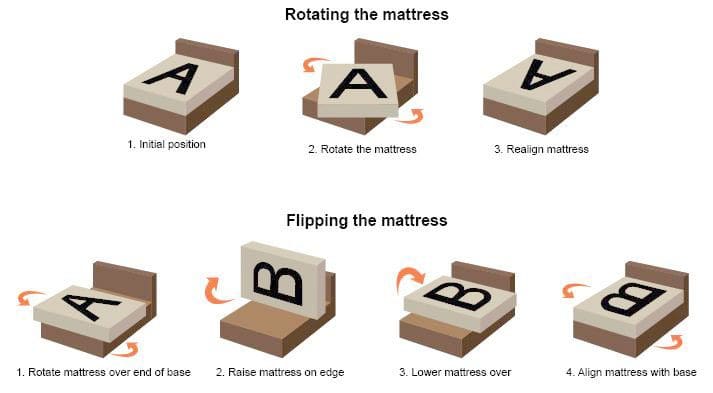
Flip or Rotate
Keeping the mattress in top form means flipping or rotating the mattress on a regular basis. This will ensure even wear and tear giving you optimal spine and body support. �
�
Time for a new one
Even proper mattresses don't last a lifetime. But like most of us, we wait way too long when it comes to replacing. For those who've had the same mattress for 10 years or more, it is definitely time for a new one. There are other signs letting you know it's time to replace including:
Waking up tired and aching could signal that the mattress is no longer providing enough support for proper rest. Not feeling refreshed after sleep could be the sign it's time for a new mattress.
If the mattress looks old, worn, or strained, and the box spring rocks and squeaks are all signs that the mattress and foundation are worn out.
The bed is no longer comfortable with the mattress sagging/sinking or leaving an impression where you sleep. Slipping or rolling toward the center along with the inability to find a comfortable position means it's time to think about a new mattress.
�
Sleep position makes a difference
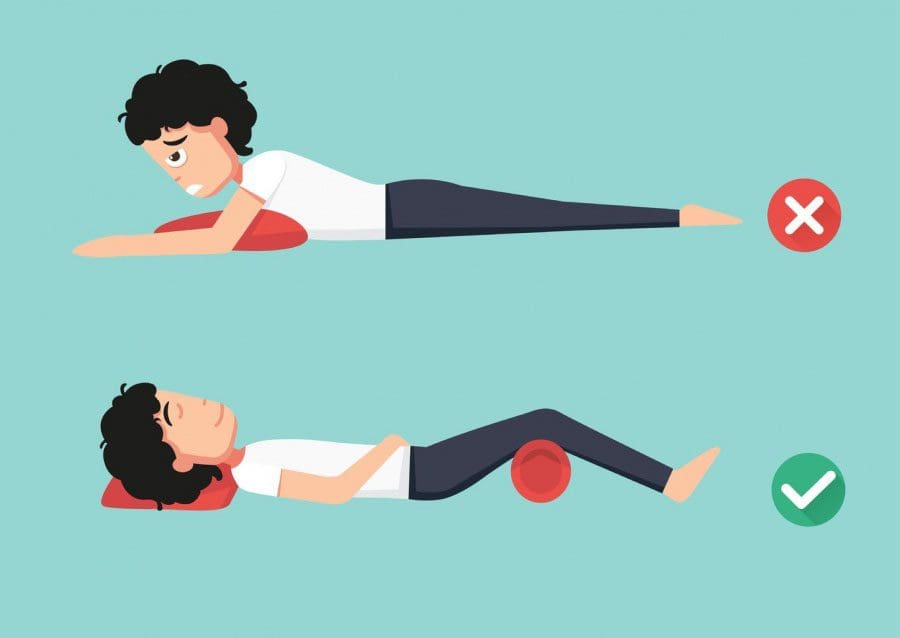
Sleeping on the side, with knees bent or with a pillow between the knees is considered the best way to maintain proper body posture. However, if you must sleep on your back, place a pillow under the knees to support the normal curve of the spine.
Sleeping on the stomach or with the head elevated on an oversized pillow creates an unnatural arch of the spine. This increases pressure on the diaphragm and lungs. These positions usually lead to restless tossing and turning and loss of proper sleep. �
�
Don't Worry
If there is difficulty getting the right amount of sleep or you are waking up exhausted then this could be the time to take a look at where and how you sleep. A proper mattress and box spring will generate proper comfortable rest all the while maintaining posture and protecting the spine. Remember that sleep is an essential nutrient for our bodies. Therefore, the bed that we sleep on can make a significant difference.
Three Points of Weight Loss @ PUSH Fitness Center
Dr. Alex Jimenez�s Blog Post Disclaimer
The scope of our information is limited to chiropractic, musculoskeletal, physical medicines, wellness, and sensitive health issues and/or functional medicine articles, topics, and discussions. We use functional health & wellness protocols to treat and support care for injuries or disorders of the musculoskeletal system. Our posts, topics, subjects, and insights cover clinical matters, issues, and topics that relate and support directly or indirectly our clinical scope of practice.*
Our office has made a reasonable attempt to provide supportive citations and has identified the relevant research study or studies supporting our posts. We also make copies of supporting research studies available to the board and or the public upon request. We understand that we cover matters that require an additional explanation as to how it may assist in a particular care plan or treatment protocol; therefore, to further discuss the subject matter above, please feel free to ask Dr. Alex Jimenez or contact us at�915-850-0900. The provider(s) Licensed in Texas& New Mexico
IFM's Find A Practitioner tool is the largest referral network in Functional Medicine, created to help patients locate Functional Medicine practitioners anywhere in the world. IFM Certified Practitioners are listed first in the search results, given their extensive education in Functional Medicine