ClickCease
+1-915-850-0900 [email protected]
Select Page
The Role of Nutrients in Supporting a Healthy Body

The Role of Nutrients in Supporting a Healthy Body

Individuals don’t have to memorize or overthink every vitamin, mineral, or macronutrient. Can having a basic understanding of the role different nutrients play in overall health and daily function help make food decisions easier?

The Role of Nutrients in Supporting a Healthy Body

Nutrients The Body Needs

Nutrients, in general, are substances that provide nourishment for growth and the maintenance of life. There are six categories of nutrients, all of which are necessary to sustain life.

Categories

  • Carbohydrates
  • Fats
  • Minerals
  • Proteins
  • Vitamins
  • Water

Macronutrients vs. Micronutrients

Categorizing nutrients makes remembering easy and allows for comparison and contrast. Nutrients are grouped by size or how they function in the body. There are two groups: micronutrients and macronutrients, with water usually left alone in a group.

Carbohydrates, Proteins, and Fats

  • They are macronutrients because they are large energy nutrients and provide the fuel the body needs to function.
  • Fiber is a carbohydrate the body can’t digest, so it doesn’t provide energy or structure assistance. However, it is necessary for digestive system function. (US National Library of Medicine, 2023)
  • Two types are soluble fiber, which dissolves in water, and insoluble fiber, which doesn’t.

Vitamins and Minerals

  • They are called micronutrients because they’re smaller.
  • They are essential nutrients, but the body only needs little bits.
  • Micronutrients are classified by whether they’re fat or water-soluble.
  1. Vitamins A, D, E, and K are fat-soluble.
  2. B-complex vitamins and C are water-soluble.

Minerals are grouped as major or trace minerals, depending on how much of each is necessary. Nutrients can also be grouped by whether or not they are organic, meaning organic chemistry, not organic farming or food production. Water and minerals are inorganic; the rest are organic because they contain carbon atoms.

Importance

Nutrients are necessary for proper health and development for the following reasons.

Energy Production

Carbohydrates, fats, and proteins provide energy (measured in calories) for the body’s daily and night biochemical reactions (Academy of Nutrition and Dietetics, 2024). Fat has more calories than carbohydrates or protein; one gram of fat has nine calories, and carbohydrates or protein have four calories per gram.

Maintain Body Structures

  • Fats, proteins, and minerals build and maintain tissues, organs, and other structures, including bones and teeth.
  • The body can convert any extra carbohydrates into fat stored in adipose tissue.
  • The body can also store carbohydrates as glycogen in the muscles and liver and use them as energy.
  • When the tanks are full, the body stores carbohydrates as fat.

Regulate Body Functions

  • Nutrients assist in body function regulation.
  • All regulate body functions such as sweating, temperature, metabolism, blood pressure, thyroid function, and more.
  • When all different functions are balanced, the body is in homeostasis.

Phytonutrients

Phytonutrients are not included in the major classes but are chemical compounds found in plants that can provide potential health benefits. (Gupta C., & Prakash D. 2014) There are various names they go by, such as flavonoids, phytochemicals, flavones, isoflavones, catechins, and anthocyanidins, and commonly include beta-carotene, lycopene, and resveratrol. (The Foundation for Fresh Produce, 2024) Ongoing studies are investigating the role they play in human health. However, because they typically occur in nutritious foods, it can be challenging to know how much of the benefits come from the regular nutrients or the phytonutrients.

Injury Medical Chiropractic and Functional Medicine Clinic

A balanced diet looks different for everyone. Learning about how nutrients maintain body health will help when choosing foods and planning meals. Consuming various products like fruits and vegetables, grains, proteins, healthy fats, and sweets and treats in moderation. Injury Medical Chiropractic and Functional Medicine Clinic works with primary healthcare providers and specialists to develop a personalized treatment plan through an integrated approach to treating injuries and chronic pain syndromes, improving flexibility, mobility, and agility programs to relieve pain and help individuals return to optimal function. Our providers use an integrated approach to create personalized care plans for each patient and restore health and function to the body through nutrition and wellness, functional medicine, acupuncture, Electroacupuncture, and sports medicine protocols. If the individual needs other treatment, they will be referred to a clinic or physician best suited for them. Dr. Jimenez has teamed up with top surgeons, clinical specialists, medical researchers, nutritionists, and health coaches to provide the most effective clinical treatments.


Eat Right, Feel Better


References

US National Library of Medicine. (2023). Dietary fiber. Retrieved from https://medlineplus.gov/dietaryfiber.html

Academy of Nutrition and Dietetics. (2024). Essential Nutrients. https://www.eatright.org/health/essential-nutrients

Gupta, C., & Prakash, D. (2014). Phytonutrients as therapeutic agents. Journal of complementary & integrative medicine, 11(3), 151–169. https://doi.org/10.1515/jcim-2013-0021

The Foundation for Fresh Produce. (2024). What Are Phytonutrients? https://fruitsandveggies.org/stories/what-are-phytochemicals/

Calcium and Vitamin D for Optimal Bone Health

Calcium and Vitamin D for Optimal Bone Health

Calcium and Vitamin D for optimal bone health. The body’s bones/skeletal system contains a huge amount of calcium. Close to 100% of the body’s total calcium is in the bones. Calcium is a nutrient that helps the body rebuild/repair bones. �

This means an individual needs enough calcium throughout their lifetime for healthy bones. Individuals with osteoporosis have an increase of fracture/s, which means it is even more important to have the proper amount of calcium.

However, the body also needs enough vitamin D to properly absorb the calcium. When the body does not have enough vitamin D, the body will not be able to utilize all the calcium being taking in. Maintaining bone health requires keeping track of calcium and vitamin D intake.

Calcium

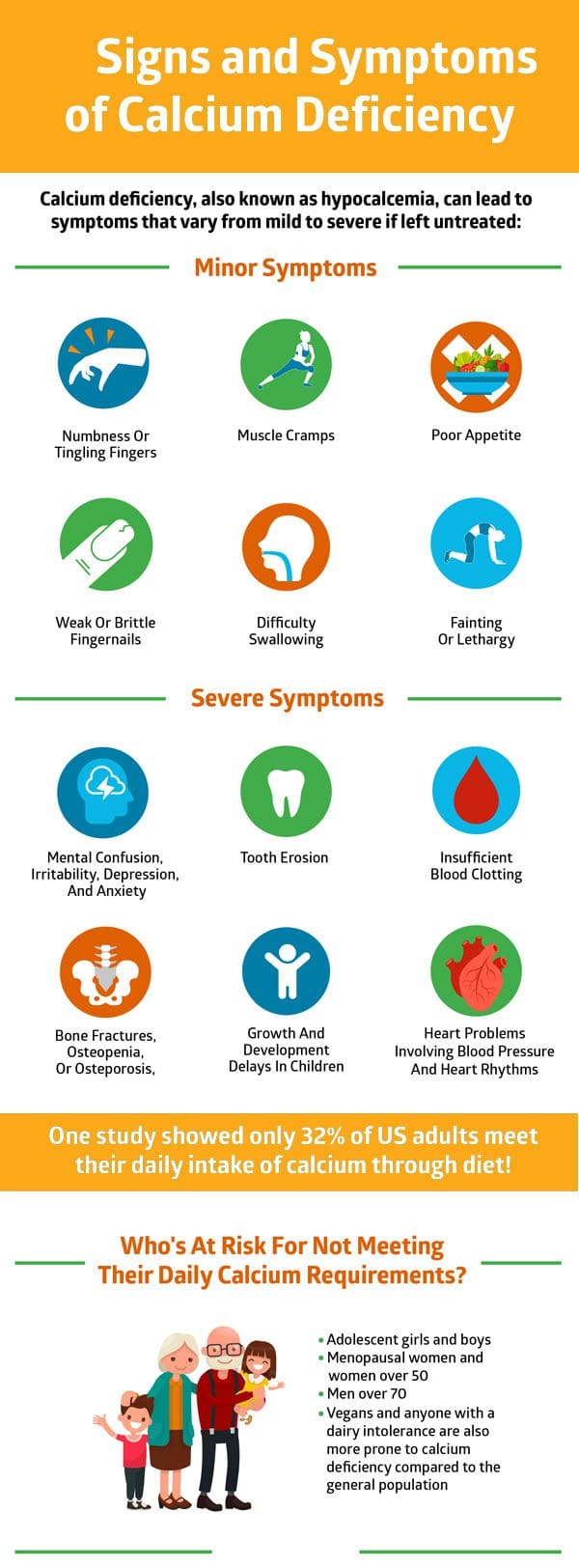
How much calcium the body needs depends on various factors, that include age. Listed are basic recommendations of calcium intake by age, but individuals should talk with a doctor about how much calcium is best for them on a daily basis. �

Children and Young Adults

  • 1-3 years of age 500mg
  • 4-8 years of age 800mg
  • 9-18 years of age 1,300mg

Adult Men and Women

  • 19-49 years of age 1,000mg
  • 50+ years of age 1,200mg

Women Pregnant and Breastfeeding

  • Under 18 years of age 1,300mg
  • 19+ years of age 1,000mg
11860 Vista Del Sol, Ste. 128 Calcium and Vitamin D for Optimal Bone Health

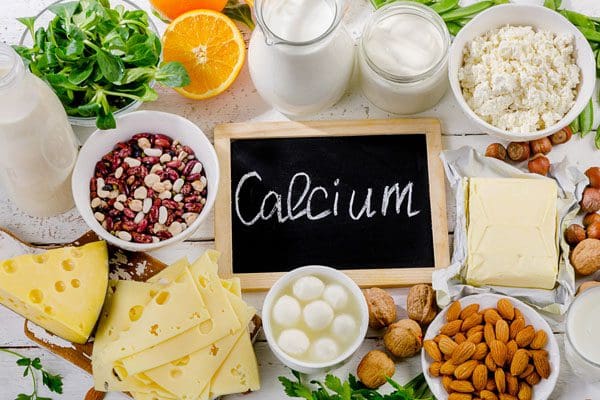
This can help to get a general idea of how much calcium is needed every day. The best way to get enough calcium through what is eaten and drank regularly. Here are some foods that offer the proper amount of calcium:

  • Cooked Broccoli 60mg in 8 oz.
  • Fruit Juice with Added Calcium 200-260mg in 6 oz.
  • Low-fat and Skim Milk 300mg in 8 oz.
  • Low-fat Plain Yogurt 415mg in 8 oz.
  • Swiss Cheese 220-270mg in 1 oz.

These are estimates for the amount of calcium these foods offer. Always look at the food label to get an accurate number. These are also just examples of what foods can help meet the calcium requirement for the day. If unable to get enough calcium from the diet, supplements can be taken to make sure the appropriate amount is met.

An example of not being able to get the proper amount is individuals that are lactose intolerant. This can be a challenge to get the calcium needed. For individuals not getting enough calcium should talk with a doctor, nutritionist, or health coach about supplements. They will help figure out the best calcium supplement and how much to take. However, getting too much calcium can be detrimental to overall health. That’s why finding the best balance is key.

Vitamin D

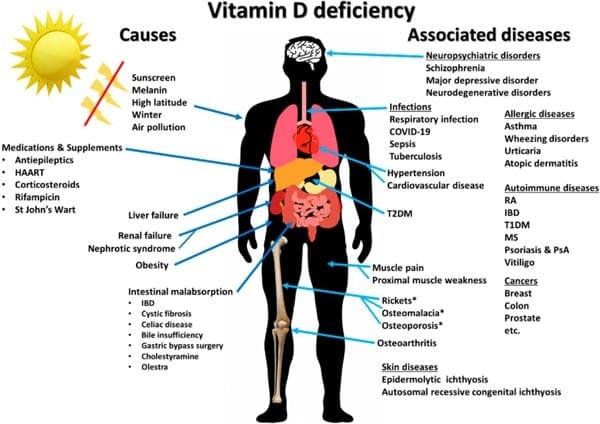
Vitamin D is what helps the body absorb calcium. The body makes vitamin D when outside in the sun. This is a perfect reason to go outside more often. 15 minutes of exposure to the sun every day will significantly increase vitamin D production. Some individuals are not able to make enough vitamin D, no matter how much sunlight exposure. However, Vitamin D is also found in various foods like:

For some individuals, it can also be a challenge to get enough vitamin D. There are vitamin D supplements that can help fill daily requirements. A doctor can tell if supplements are needed with various tests that can tell how much vitamin D the body is getting. There are two types of vitamin D supplements: They are D3 and D2. Research shows that D3 and D2 are both good for bones. And just like calcium, the amount of vitamin D needed depends on age: �

11860 Vista Del Sol, Ste. 128 Calcium and Vitamin D for Optimal Bone Health

Children and Young Adults

IU stands for international units which are how vitamin D is measured.

  • 1-18 years of age 400 IU

Adult Men and Women

  • 19-49 years of age 400-800 IU
  • 50+ years of age 800-1,000 IU

Women Pregnant and Breastfeeding

  • Any age 400-800 IU

Getting enough calcium and Vitamin D is essential for healthy bones and a healthy body. Our nutritionist and health coach can help get you back on track to optimal health.


Chiropractic Care and CrossFit Rehabilitation


Dr. Alex Jimenez�s Blog Post Disclaimer

The scope of our information is limited to chiropractic, musculoskeletal, physical medicines, wellness, and sensitive health issues and/or functional medicine articles, topics, and discussions. We use functional health & wellness protocols to treat and support care for injuries or disorders of the musculoskeletal system. Our posts, topics, subjects, and insights cover clinical matters, issues, and topics that relate and support directly or indirectly our clinical scope of practice.*

Our office has made a reasonable attempt to provide supportive citations and has identified the relevant research study or studies supporting our posts. We also make copies of supporting research studies available to the board and or the public upon request. We understand that we cover matters that require an additional explanation as to how it may assist in a particular care plan or treatment protocol; therefore, to further discuss the subject matter above, please feel free to ask Dr. Alex Jimenez or contact us at 915-850-0900. The provider(s) Licensed in Texas& New Mexico*

References

Fischer, V et al. �Calcium and vitamin D in bone fracture healing and post-traumatic bone turnover.��European cells & materials�vol. 35 365-385. 22 Jun. 2018, doi:10.22203/eCM.v035a25

Mastodon