Can using egg substitutes or replacements be safe for individuals with an egg allergy?
Substitutes and Replacements
Individuals should not assume either is safe unless they carefully read the label.
Egg substitutes may contain eggs.
Egg replacement products may be egg-free.
Look for alternatives labeled vegan or egg-free to ensure there are none.
Substitutes May Contain Eggs
Liquid egg substitutes in grocery store dairy aisles are made from eggs. The following all contain eggs and are not safe for individuals with egg allergies:
Generic liquid egg substitutes in cartons
Egg Beaters
Powdered egg white products
Replacements Are Safe Alternatives
Special replacement products that do not contain eggs are available.
They are labeled vegan egg substitutes.
They are usually sold in powdered form.
They are useful for baking.
They cannot be used as a replacement for eggs in foods like a quiche.
Always check the ingredients on the label before purchasing a product sold as a substitute or replacement to ensure it is completely free.
These products may also contain soy, dairy, or other food allergens.
Vegan – contains no animal products, which includes eggs and dairy.
Vegetarian – may contain eggs as they are not meat but an animal product.
Unaware of Foods With Eggs
Stay aware of eggs hidden in other food products, such as cakes, breads, pastries, noodles, crackers, and cereals.
The federal Food Allergen Labeling and Consumer Protection Act requires that all packaged food products that contain eggs as an ingredient must list the word egg on the label. (U.S. Food & Drug Administration. 2022)
Other ingredients that indicate eggs are in the product include:
Angioedema – swelling of the lips, tongue, or face.
Airway symptoms – wheezing, coughing, or a runny nose.
Gastrointestinal symptoms – nausea, stomach pain, diarrhea or vomiting.
Severe reactions – such as anaphylaxis, can cause multiple organ system failure.
Anaphylaxis is an emergency and requires immediate medical treatment.
A Guide For Food Allergies, Hypersensitivity and Intolerances
References
U.S. Food & Drug Administration. (2022). Food Allergen Labeling and Consumer Protection Act (FALCPA). Retrieved from https://www.fda.gov/food/food-allergensgluten-free-guidance-documents-regulatory-information/food-allergen-labeling-and-consumer-protection-act-2004-falcpa
Tan, J. W., & Joshi, P. (2014). Egg allergy: an update. Journal of paediatrics and child health, 50(1), 11–15. https://doi.org/10.1111/jpc.12408
For individuals trying to make healthy lifestyle adjustments, can adding protein bars into their diet help achieve health goals?
Protein Bar
Protein bars provide a quick energy boost between meals that can help curb appetite and avoid filling up on high-fat, sodium-packed snacks for individuals trying to lose weight. They can also increase calorie intake for individuals like athletes trying to increase muscle mass. Protein bars can vary in terms of factors like additives, calories, fat, sugars, and other ingredients. Labels need to be read carefully; otherwise, the bar can be more of a candy bar than a healthy, nutritious mini-meal or snack. It’s important to have a sense of how much protein is really needed each day, and the amount varies depending on individual factors.
How Much Protein Is Needed
Protein is vital to many body functions, but the body can’t produce this macronutrient, and it has to come from food. Dietary protein is broken down during digestion, and compounds known as amino acids are formed:
These are the building blocks the body uses to build and maintain muscles and organs.
It is vital to the production of blood, connective tissue, antibodies, enzymes, and hair. (Marta Lonnie, et al., 2018)
As protein is necessary for building muscle, athletes or individuals with physically demanding jobs are recommended to eat more.
The ideal protein intake considers how much is eaten at individual sittings. The average individual is recommended to consume between 25 and 35 grams of protein at every meal. (Emily Arentson-Lantz, et al., 2015)
Sources
The richest sources of dietary protein include:
Meats
Poultry
Fish and shellfish
Eggs
Milk and other dairy products
Plant sources include:
Beans
Legumes
Nuts
Seeds
Whole grains
These are foods that are easy to include in a balanced diet, so eating a variety in ample quantities daily will equal the recommended amount of protein. Recommendations are to stick with those low in saturated fat and processed carbs and rich in nutrients. However, eating too much protein can cause kidney problems. Therefore, individuals who are predisposed to kidney disease are recommended to be careful over-protein intake. (Kamyar Kalantar-Zadeh, Holly M. Kramer, Denis Fouque. 2020)
What To Look For
Incorporating protein bars into a diet, either as a between-meal snack, as a grab-and-go option when there is no time for a full meal, or as a part of a weight-loss or weight-gain strategy, individuals need to read and understand the ingredients on the different types of bars to choosing the healthiest options. Some general guidelines to consider:
Protein Content
For a between-meal or pre-post-workout snack, look for a bar with at least 20 grams of protein.
Meal replacement bars should have at least 30 grams of protein.
A less is more approach to these guidelines is recommended, as the body can digest only between 20 and 40 grams of protein in one sitting. (Brad Jon Schoenfeld, Alan Albert Aragon. 2018)
Protein Type
The protein usually comes from dairy or plant sources.
The most common include eggs, milk, rice, whey, soy, peas, and hemp.
Individuals with allergies or sensitivities need to choose a bar that is comprised of a type of protein that is safe to eat.
Calories
For a bar to eat between meals, recommendations are those with around 220 to 250 calories.
A protein bar that substitutes for a full meal can have 300 to 400 calories.
Fat
Ten to 15 grams of total fat and no more than two grams of saturated fat is ideal.
Steer clear of unhealthy trans fats found in partially hydrogenated oils.
Fiber
Fiber is filling, so the more fiber, the more likely it is to keep hunger satisfied until the next snack or meal.
It is recommended to choose those that contain more than three to five grams of fiber.
Sugar
Some protein bars have just as much sugar content as candy bars.
Some have as much as 30 grams of added sugar.
The ideal amount is around five grams or less.
Artificial sweeteners like erythritol, sorbitol, and maltitol are not better options as they can cause bloating and gas.
It is recommended to work with a nutritionist to figure out the most effective type so that they can be incorporated into an individual’s diet to achieve and maintain health goals.
Nutrition Fundamentals
References
Lonnie, M., Hooker, E., Brunstrom, J. M., Corfe, B. M., Green, M. A., Watson, A. W., Williams, E. A., Stevenson, E. J., Penson, S., & Johnstone, A. M. (2018). Protein for Life: Review of Optimal Protein Intake, Sustainable Dietary Sources and the Effect on Appetite in Ageing Adults. Nutrients, 10(3), 360. https://doi.org/10.3390/nu10030360
Stephens, T. V., Payne, M., Ball, R. O., Pencharz, P. B., & Elango, R. (2015). Protein requirements of healthy pregnant women during early and late gestation are higher than current recommendations. The Journal of nutrition, 145(1), 73–78. https://doi.org/10.3945/jn.114.198622
Arentson-Lantz, E., Clairmont, S., Paddon-Jones, D., Tremblay, A., & Elango, R. (2015). Protein: A nutrient in focus. Applied physiology, nutrition, and metabolism = Physiologie appliquee, nutrition et metabolisme, 40(8), 755–761. https://doi.org/10.1139/apnm-2014-0530
Kalantar-Zadeh, K., Kramer, H. M., & Fouque, D. (2020). High-protein diet is bad for kidney health: unleashing the taboo. Nephrology, dialysis, transplantation : official publication of the European Dialysis and Transplant Association – European Renal Association, 35(1), 1–4. https://doi.org/10.1093/ndt/gfz216
Schoenfeld, B. J., & Aragon, A. A. (2018). How much protein can the body use in a single meal for muscle-building? Implications for daily protein distribution. Journal of the International Society of Sports Nutrition, 15, 10. https://doi.org/10.1186/s12970-018-0215-1
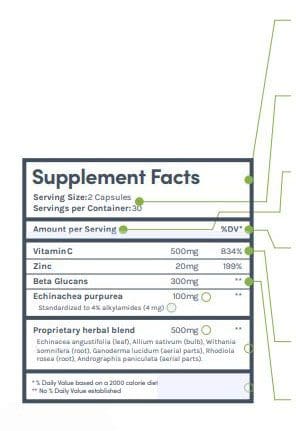
Supplemental Facts title indicates that the product is marketed for sale in the USA and is FDA standard.
Serving size, and the number of servings per container will be included to help you compare between products.
Make sure the serving sizes match when comparing supplements to get an accurate comparison.
Vitaminsand minerals always show the dose in weight and % percentage daily value to help you understand your dietary requirements.
Supplements often will have doses that exceed the recommended daily value.
Dietary supplement ingredients that are not vitamins or minerals will not have the % percentage daily value because they are not essential ingredients in the diet.
Dietary supplements are regulated by the FDA, and all labels must follow a consistent format to make it easier for consumers to understand. Understanding dietary supplement labels well require some attention to the following points when you�re evaluating supplements.
Herbs sometimes have additional information listed in the supplement panel. You might see ratio numbers (example 4:1) that show how much raw material of the herb (fresh or dried herb) is in the supplement version.
Herbs might have a standardization amount that shows how much of an active ingredient is present. The dose of the active ingredient is often listed, but sometimes it is not.
Proprietary blends are common. Only the total amount of the blend in a serving needs to be listed, which means that you don�t get all of the information about every ingredient.
Proprietary blend ingredients are listed in order from most to least. Similar to how food ingredients are listed on prepared foods nutrition facts panels.�
The daily value percent is established against a 2000 calorie diet. This is the standard calorie amount, however, it�s always important to determine your calorie requirements that you need for your health goals.
How To Identify Organic Foods
In the United States, a food or product that is labeled as organic is required to be certified by the�U.S. Department of Agriculture (USDA). The USDA has a certification program for natural growers and it has a set of very stringent standards that the product or food must meet.
There are some exemptions. For instance, a producer who does not sell more than $5,000 annually just in organic foods is not required to get the certification although they do have to adhere to the USDA�s stringent requirements for organic foods.
When a food carries the USDA Organic label, it means that it meets the requirements. While natural producers are not required to put the label on their products, many do.
The labeling varies, depending on the type of food. Single-ingredient foods like eggs, vegetables, and fruits�are considered to be 100 percent natural and are allowed to carry the USDA seal.
Foods that contain two or more ingredients, like breakfast cereal, are still allowed to use the USDA seal, but also must include the following information:
Organic � The product must be 95 percent organic or greater in order to be able to use this term
100 percent organic � The product must be completely organic or all of its ingredients must be natural
Made with organic ingredients � The product contains no less than 70 percent natural ingredients
If the product has less than 70 percent natural ingredients, they are not allowed to use the word �organic� anywhere on their product labels.
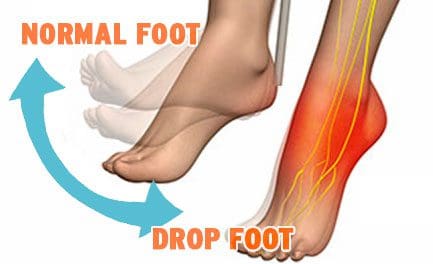
Drop Foot
Drop Foot is a symptom associated with an underlying neurological, muscular or anatomical problem that is often treated with a combination of non-invasive techniques and procedures.
Overview
Drop foot/foot drop is a general term that means lifting the forefoot (front part of the foot) is difficult to do.
Drop foot is not a diagnosis but a symptom associated with an underlying condition such as:
Neurological
Muscular
Anatomical problem
Nerve or muscle injury
Brain/spinal cord disorder, including
Herniated disc
Spinal Stenosis
Spondylolisthesis
Vertebral Fractures
Walking can be difficult, so the foot tends to drag on the floor.
Those suffering from drop foot sometimes raise the thigh up in an exaggerated fashion, such as when climbing stairs.
Stepping high is the most common symptom.
Symptoms of Drop Foot
High steppage gait
Foot drop may be experienced in one or both feet.
It is typically experienced in one foot if the drop foot is caused by:
Braces can provide additional support, stability, and shock absorption
Specific exercises to help the affected muscles
Physical therapy
Prevention
Prevention includes keeping your bones and tissues strong and healthy through diet and�exercise.
Avoid tobacco and excessive alcohol use creates weak bones and problems with the blood supply
Reduce the risk of injury by following safety measures on the job and beyond (i.e. wear a seatbelt).
Custom orthotics can provide additional support, stability, and shock absorption.
Kneeling for extended periods, such as on the job (certain construction functions laying tile, yard work).
Recovery
Some cases of drop foot are temporary; however, others can become permanent.
The recovery time and process depend on the cause.
Reduce *PLANTAR FASCIITIS PAIN* with Custom Foot Orthotics | El Paso, TX (2019)
Foot problems can affect the overall well-being of the human body. Many health issues which affect the foot can result in poor posture, low back pain, and sciatica. These imbalances can ultimately result in a variety of other health issues. Custom-made foot orthotics can help promote and support overall well-being by relieving foot problems.
Dr. Alex Jimenez is the non-surgical choice for foot problems and other health issues. Dr. Alex Jimenez can help promote and support overall well-being with the use of custom-made foot orthotics and other treatments approaches.
What’s Afoot
Foot Dysfunction can very easily cause a domino effect that extends all the way to the back. The feet are the foundation of the body and when there is a problem with the way they function it can cause the entire body to shift out of alignment. Overpronation and oversupination, for example, can cause a variety of injuries and conditions that affect not only the feet and ankles, but also the knees, hips, and back as well.
NCBI Resources
If you have further questions or concerns about your particular�diet, please ask us! Our Doctor of Chiropractic can help guide you toward a more healthy life, including the foods you consume. It comes down to two major areas: safety and�nutrition. That is what consumers need to understand when they are trying to make a decision on whether to purchase foods that have been conventionally farmed or foods that are natural.
IFM's Find A Practitioner tool is the largest referral network in Functional Medicine, created to help patients locate Functional Medicine practitioners anywhere in the world. IFM Certified Practitioners are listed first in the search results, given their extensive education in Functional Medicine






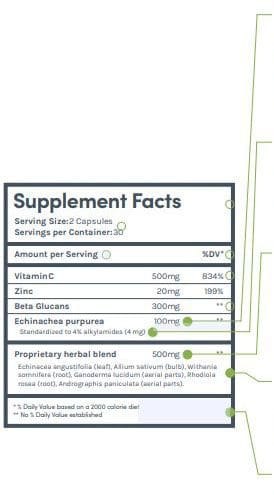 Herbs sometimes have additional information listed in the supplement panel. You might see ratio numbers (example 4:1) that show how much raw material of the herb (fresh or dried herb) is in the supplement version.