Can individuals incorporate the beneficial properties of l-theanine into their routines to reduce stress and improve brain function?
Introduction
More often than not, many people worldwide are constantly in stressful situations. People worry about the smaller things, from deadlines to piles and errands that must be done as soon as possible. Now, when environmental factors start to cause overlapping risk profiles associated with stress, it can lead to neurocognitive dysfunction and other comorbidities affecting the body, which is why there are numerous ways for people to reduce their stress and function in a healthier lifestyle. One of the ways to reduce stress can be found in a local grocery store, incorporating L-theanine. Today’s article focuses on how stress can affect the brain and how L-theanine can combat stress and help improve brain function. We discuss with certified medical providers who inform our patients how L-theanine can help reduce chronic stress that is affecting the body and how it can affect their brain function. While asking informed questions to our associated medical providers, we advise patients to incorporate mindful techniques and L-theanine as part of their routine to improve their brain function and prevent chronic stress from reoccurring. Dr. Alex Jimenez, D.C., encompasses this information as an academic service. Disclaimer.
How Stress Affects The Brain
Have you experienced the 2 p.m. slumps that you constantly run on low energy after a hectic work or school day? How often do you experience brain fog that makes you unable to function properly? Or are you constantly stressed and feeling muscle aches and pains? Everyone knows stress is a major influence on their daily lives and can impact their mood, well-being, and health. (Schneiderman et al., 2005) Hence, stress comes in two forms: acute and chronic. Depending on the situation that the person is experiencing, stress can affect not only the body but also the brain. Short-term or acute stress can help enhance the immune response to the body, giving it a little boost of energy; however, in its long-term or chronic form, it can dysregulate the immune system and affect the brain function of the body. (Dhabhar, 2014)
Now, many people are thinking, how does stress affect brain function? The brain is the main organ for stress reactivity and helps distribute neural circuitry that determines what threats are coming that cause stress to the individual. (McEwen & Gianaros, 2010) When a person is dealing with a highly stressful situation, the brain determines that this situation is threatening and causes the individual to deal with stress cortisol levels. Hence why, many individuals are dealing with headaches, general aches, and pain around the neck and shoulders; stress causes issues with brain function; it can disrupt the neuron signals in the body, which leads to the development of inflammation, chronic illnesses, and neurological conditions to arise. Fortunately, there are numerous ways to reduce stress to prevent brain dysfunction and enhance the body while relaxing it.
Secrets Of Optimal Wellness- Video
How Does L-Theanine Combat Stress?
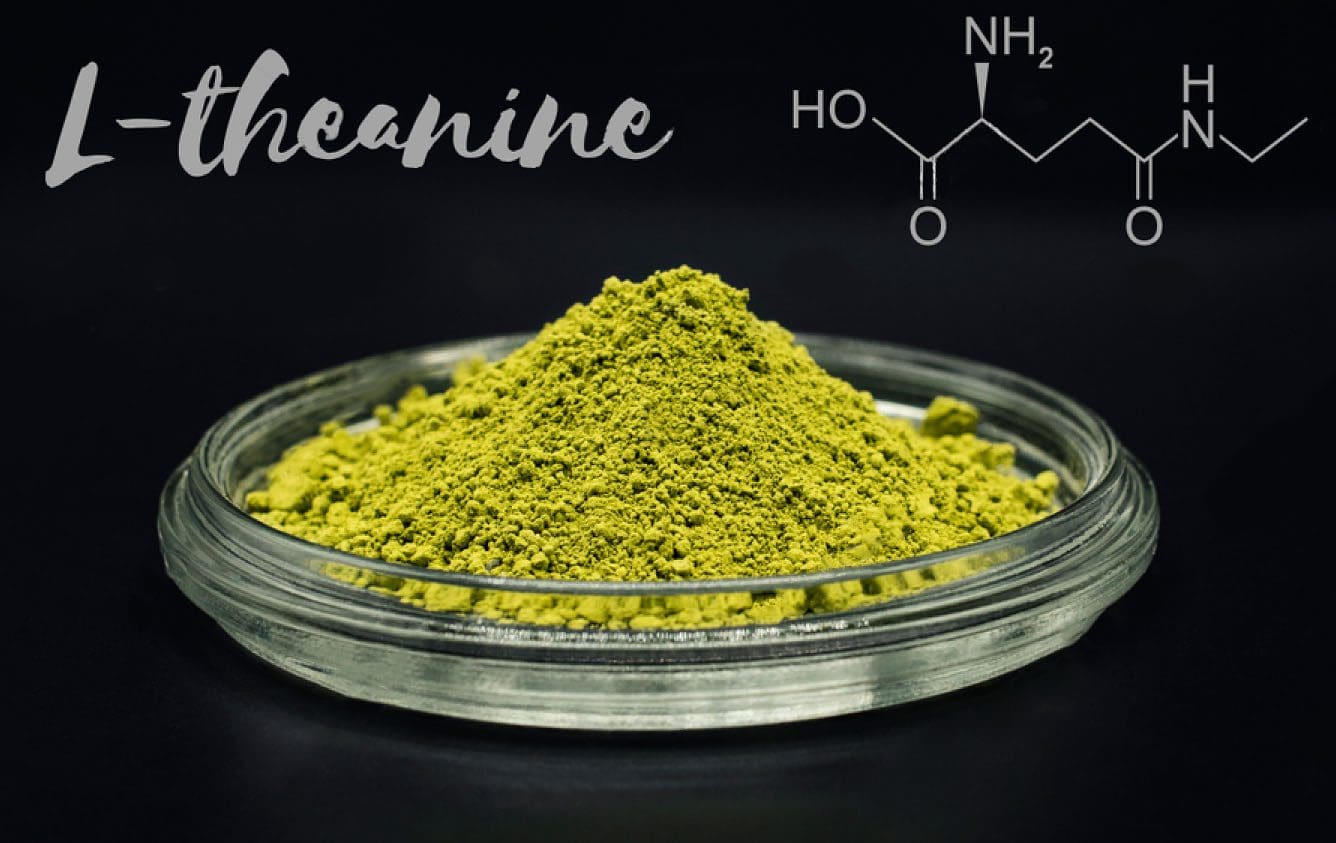
When finding natural ways to reduce stress, many people will search for different ways to relax and ease the stress. One of the ways many people can reduce stress is by sipping some green tea. Green tea contains polyphenolic compounds and about 1 to 3% L-theanine that can positively affect stress and mental health consequences in individuals. (Almudhi & Gabr, 2022) Additionally, drinking green tea or taking L-theanine supplements as part of a daily routine can be combined with relaxing hobbies to lower stress and boost energy levels. L-theanine is also an amino acid with stress-relieving effects that can improve glutamine and dampen inflammatory effects. (Unno et al., 2024)
How Does L-Theanine Improve Brain Function?
L-theanine can help improve brain function when consumed in tea form and decrease the risk for neurodegenerative disorders as a potential therapeutic agent. (Valverde-Salazar et al., 2023) Additionally, when individuals start to consume L-theanine, it can provide positive neuroprotective effects and cognitive function, which helps increase alertness and reduces brain fog. (Sokary et al., 2023) When individuals start thinking about their health and wellness by consuming L-theanine in tea form, it can provide beneficial properties combined with therapeutic options to help reduce chronic stress levels and improve brain function so they can have a healthier and stress-free life.
References
Almudhi, A., & Gabr, S. A. (2022). Green tea consumption and the management of adrenal stress hormones in adolescents who stutter. Biomed Rep, 16(4), 32. https://doi.org/10.3892/br.2022.1515
Dhabhar, F. S. (2014). Effects of stress on immune function: the good, the bad, and the beautiful. Immunol Res, 58(2-3), 193-210. https://doi.org/10.1007/s12026-014-8517-0
McEwen, B. S., & Gianaros, P. J. (2010). Central role of the brain in stress and adaptation: links to socioeconomic status, health, and disease. Ann N Y Acad Sci, 1186, 190-222. https://doi.org/10.1111/j.1749-6632.2009.05331.x
Schneiderman, N., Ironson, G., & Siegel, S. D. (2005). Stress and health: psychological, behavioral, and biological determinants. Annu Rev Clin Psychol, 1, 607-628. https://doi.org/10.1146/annurev.clinpsy.1.102803.144141
Sokary, S., Al-Asmakh, M., Zakaria, Z., & Bawadi, H. (2023). The therapeutic potential of matcha tea: A critical review on human and animal studies. Curr Res Food Sci, 6, 100396. https://doi.org/10.1016/j.crfs.2022.11.015
Unno, K., Taguchi, K., Matsuda, T., & Nakamura, Y. (2024). Stress-Relieving Effects of Green Tea Depend on the Ratio of Its Special Ingredients and the Infusion Conditions. Molecules, 29(19). https://doi.org/10.3390/molecules29194553
Valverde-Salazar, V., Ruiz-Gabarre, D., & Garcia-Escudero, V. (2023). Alzheimer’s Disease and Green Tea: Epigallocatechin-3-Gallate as a Modulator of Inflammation and Oxidative Stress. Antioxidants (Basel), 12(7). https://doi.org/10.3390/antiox12071460
Ever wondered why your job is so stressful? Or that you haven�t gotten enough sleep due to partying with your friends, even though you were supposed to finish that essay for that one class you signed up for and now you are typing away to meet the deadline and turning it in. Or even better� the two p.m. slumps.
Well, it might be because your L-theanine is a bit low. However, there are many ways to make sure that you get a boost of energy even though you feel tired and you are probably drinking it right now. Green tea seems to help us when we are overly stressed and when it�s nice and hot, we feel relaxed and whatever stress we hold onto melts away. However, L-theanine can also stimulate the brain and overall make you feel good, as well as blocking out certain neurotransmitters in your brain.
Try Green Tea
If you are wondering about the benefits of green tea, you can look at many Google searches and they will tell you different things about the health benefits of drinking green tea. However, they will say the same thing that is truly effective. That green tea can help your central nervous system function properly. Even though green tea has the same properties as coffee in the caffeine department without the extra �jittery� effect.
Green tea can be effective as it can make you more productive but can also give you more stable energy, while improving your brain to function properly. There is even a study that green tea can protect your brain when you are older. And that it may help lower the chances of getting Parkinson�s disease and Alzheimer�s disease. Both are very common neurodegenerative diseases that can be prevented by the various protective effect by drinking green tea. Not only that but it can also balance out the two neurotransmitters that are a key essential to having a healthy brain activity.
Neurotransmission
There are two types of neurotransmitters in our brains that work together to make sure that we are functioning properly. They are Glutamate and GABA. Both are mostly located in the brain�s neuro system as they are together and bringing a balance to our system. Glutamate’s function is to make our brain fired up and ready to learn new things. As well as being an important part of our brain development.
But when there is too much Glutamate in our brain, we become very hyper-aware of our surroundings, neurological inflammation, and anxiety. But when we add L-theanine to Glutamate, the Glutamate�s neurotoxicity is lowered by the L-theanine supplement. But the only way to counteract Glutamate is with GABA. GABA or Gamma-Aminobutyric Acid is the body�s main neurotransmitter that is responsible for our cells.
Chill Out
It�s basically the �chill pill� for our central nervous system. This neurotransmitter counteracts with Glutamate, which is very hyper; while GABA is very relaxed. Not only GABA calms downs our central nervous system, but it also gives us a much-needed restful sleep when we are exhausted from a long day. And when we are done with exercising, GABA helps our muscle tissue regenerate. GABA seems to know when we need to rest our brains from burning out and crashing hard on the couch after a long stressful day at work or school.
The best way to describe how GABA and Glutamate work together is to imagine your body as a car. Glutamate is the gas where we have to go from one place to the other and GABA is the brakes where we have stop and rest a bit. And when we add L-theanine to the mixture, it�s a sense of an added booster to our body and central nervous system to not only be relaxed but also have a bit of energy to go out on our daily day to day life.
But there is always still going to be stress in our lives if we don�t control it. Stress can be caused by many things that we all go through. Sometimes it can be something small like deadlines on projects that you are preparing for, that one exam that you have to take in class, or trying to find a job.
Those give us minor headaches that we have to step back a bit and take a deep breath. Other times stress can be something major like having too many commitments that we can�t handle, having poor organization skills, or even having a very highly stressed job. These major stressors can cause us to have high blood pressure and heart disease that we have to go to the doctor to get a prescription or even see a therapist so we can calm our mind down.
L-Theanine
Going back to L-theanine, it is proven that L-theanine can help us relax a bit in stressful situations. An animal study showed us what would happen when L-theanine is in the blood system of rats. Those rats that are treated with L-theanine are more relaxed in a stressful situation than those that are not treated.
With L-theanine, it is proven that this supplement has beneficial properties to help us calm down our central nervous system but also makes us feel a bit better in our day to day lives. We all deal with stress differently as there are certain things that help us alleviate it and even help us get better if we continue to do the things we love.
Conclusion
Whether it is taking a walk, writing down in a journal, exercising, seeking some professional help if things get way too hectic or doing a hobby that we love; stress is always going to be there within us, but only we can control it with the right ingredients.
Therefore, whenever you feel overly stressed from working too hard, having way too many plans that you can�t commit, or feeling very low on energy. Remember to stop and breathe a bit as you get into your comfiest clothes, put on a movie or binge-watch a series on Netflix, and make yourself a cup of hot green tea. Then when you are all comfortable on the couch and when you take that first sip, not only your body; but your brain will thank you for that break in your hectic daily life.
Excessive Foot Pronation can Affect *FOOT POSTURE & MOBILITY* | El Paso, TX (2019)
The following video discusses how excessive foot pronation can ultimately have an effect on foot posture and mobility. Several things can impact foot posture and mobility, such as excessive foot pronation. Excessive foot pronation is most widespread among the overall populace, therefore, it’s regarded as one of the most frequent factors for abnormal foot posture and mobility, which can lead to a variety of health issues like overuse injuries. Excessive foot pronation and supination can ultimately impact general health and wellness.
What’s Afoot
Foot Dysfunction can very easily cause a domino effect that extends all the way to the back. The feet are the foundation of the body and when there is a problem with the way they function it can cause the entire body to shift out of alignment. For instance, overpronation of the foot causes a series of internal changes that extend up through the leg. The femur may rotate causing hip pain and inflammation of the sacroiliac joint which leads to back pain. Other misalignments in the body that are caused by foot problems can also lead to chronic lower back pain as well.
NCBI Resources:
Researchers at Japan�s Kyoto University found that drinking green tea could help prevent deadly abdominal aortic aneurysms. They believe that the beneficial compounds in green tea are polyphenols, a type of antioxidant that fights free radicals and reduces inflammation. The polyphenols also appear to make arteries stronger and more flexible by regenerating elastin, an essential protein that makes arteries stretchy, yet sturdy. Green and white teas contain large amounts of EGCG, a powerful antioxidant linked to a lower risk of heart disease, Alzheimer�s disease, and numerous types of cancer. A study at Japan�s Okayama University found that senior citizens who drank large amounts of green tea slashed their risk of dying from heart disease by as much as 76 percent, and a Chinese study found that drinking green tea cut the risk of lung cancer by two-thirds.
IFM's Find A Practitioner tool is the largest referral network in Functional Medicine, created to help patients locate Functional Medicine practitioners anywhere in the world. IFM Certified Practitioners are listed first in the search results, given their extensive education in Functional Medicine