

Dealing with a Jammed Finger: Symptoms and Recovery
Individuals suffering from a jammed finger: Can knowing the signs and symptoms of a finger that is not broken or dislocated allow for at-home treatment and when to see a healthcare provider?
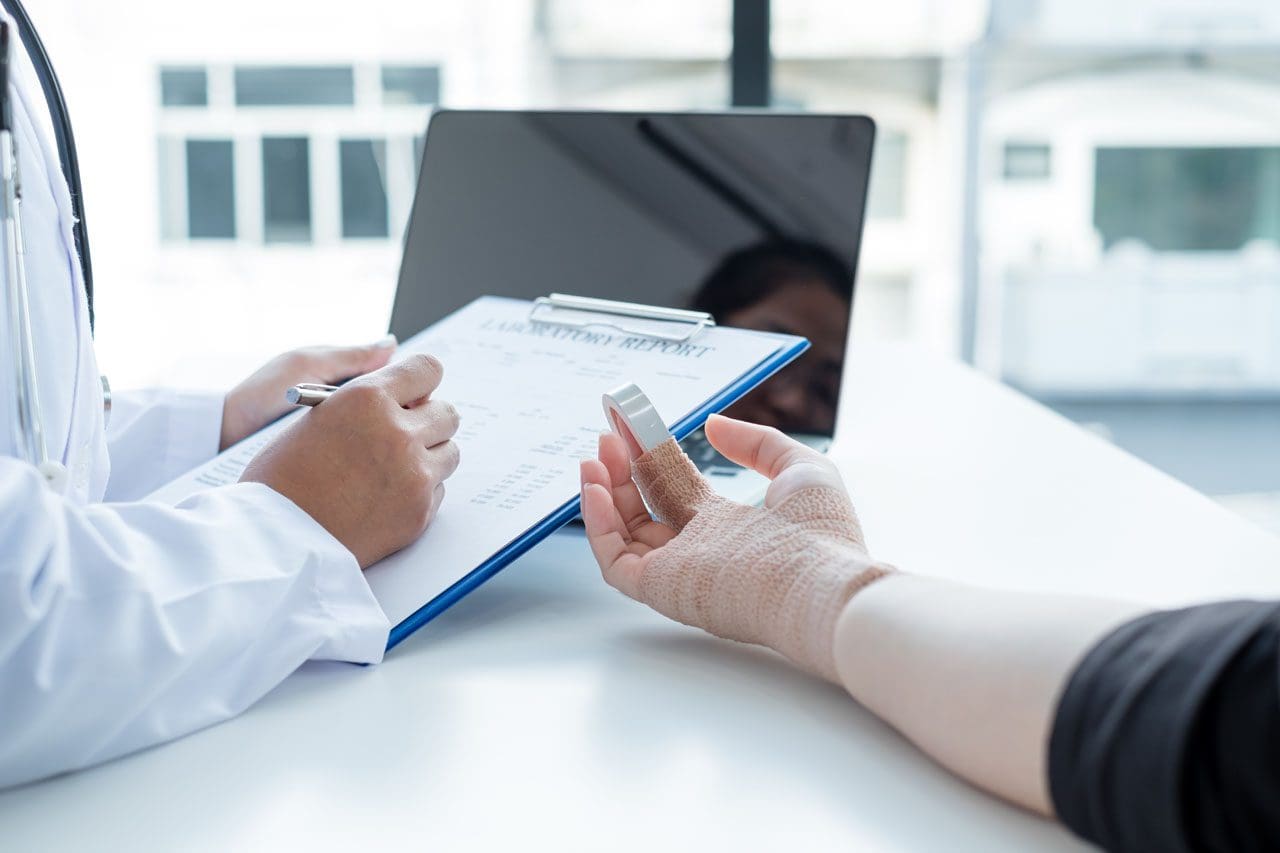
Jammed Finger Injury
A jammed finger, also known as a sprained finger, is a common injury when the tip of a finger is forcefully pushed toward the hand, causing the joint to become compressed. This can cause pain and swelling in one or more fingers or finger joints and cause ligaments to stretch, sprain, or tear. (American Society for Surgery of the Hand. 2015) A jammed finger can often heal with icing, resting, and taping. This is often enough to allow it to heal in a week or two if no fractures or dislocations are present. (Carruthers, K. H. et al., 2016) While painful, it should be able to move. However, if the finger cannot wiggle, it may be broken or dislocated and require X-rays, as a broken finger or joint dislocation can take months to heal.
Treatment
Treatment consists of icing, testing, taping, resting, seeing a chiropractor or osteopath, and progressive regular use to regain strength and ability.
Ice
- The first step is icing the injury and keeping it elevated.
- Use an ice pack or a bag of frozen vegetables wrapped in a towel.
- Ice the finger in 15-minute intervals.
- Take the ice off and wait until the finger returns to its normal temperature before re-icing.
- Do not ice a jammed finger for over three 15-minute intervals in one hour.
Try To Move The Affected Finger
- If the jammed finger does not move easily or the pain gets worse when trying to move it, you need to see a healthcare provider and have an X-ray to check for a bone fracture or dislocation. (American Society for Surgery of the Hand. 2015)
- Try to move the finger slightly after swelling, and the pain subsides.
- If the injury is mild, the finger should move with little discomfort for a short time.
Tape and Rest
- If the jammed finger is not broken or dislocated, it can be taped to the finger next to it to keep it from moving, known as buddy taping. (Won S. H. et al., 2014)
- Medical-grade tape and gauze between the fingers should be used to prevent blisters and moisture while healing.
- A healthcare provider may suggest a finger splint to keep the jammed finger lined up with the other fingers.
- A splint can also help prevent a jammed finger from re-injury.
Resting and Healing
- A jammed finger must be kept still to heal at first, but eventually, it needs to move and flex to build strength and flexibility.
- Targeted physical therapy exercises can be helpful for recovery.
- A primary care provider might be able to refer a physical therapist to ensure the finger has a healthy range of motion and circulation as it heals.
- A chiropractor or osteopath can also provide recommendations for helping rehabilitate the finger, hand, and arm to normal function.
Easing The Finger Back to Normal
- Depending on the extent of the injury, the finger and hand can be sore and swollen for a few days or weeks.
- It can take some time to start feeling normal.
- Once the healing process begins, individuals will want to return to using it normally.
- Avoiding using a jammed finger will cause it to lose strength, which can, over time, further weaken it and increase the risk of re-injury.
If the pain and swelling persist, see a healthcare provider to get it checked for a possible fracture, dislocation, or other complication as soon as possible, as these injuries are harder to treat if the individual waits too long. (University of Utah Health, 2021)
At Injury Medical Chiropractic and Functional Medicine Clinic, we passionately focus on treating patients’ injuries and chronic pain syndromes and improving ability through flexibility, mobility, and agility programs tailored to the individual. Our providers use an integrated approach to create personalized care plans that include Functional Medicine, Acupuncture, Electro-Acupuncture, and Sports Medicine protocols. Our goal is to relieve pain naturally by restoring health and function to the body. If the individual needs other treatment, they will be referred to a clinic or physician best suited for them. Dr. Jimenez has teamed up with the top surgeons, clinical specialists, medical researchers, and premier rehabilitation providers to provide the most effective clinical treatments.
Treatment for Carpal Tunnel Syndrome
References
American Society for Surgery of the Hand. (2015). Jammed finger. https://www.assh.org/handcare/condition/jammed-finger
Carruthers, K. H., Skie, M., & Jain, M. (2016). Jam Injuries of the Finger: Diagnosis and Management of Injuries to the Interphalangeal Joints Across Multiple Sports and Levels of Experience. Sports health, 8(5), 469–478. https://doi.org/10.1177/1941738116658643
Won, S. H., Lee, S., Chung, C. Y., Lee, K. M., Sung, K. H., Kim, T. G., Choi, Y., Lee, S. H., Kwon, D. G., Ha, J. H., Lee, S. Y., & Park, M. S. (2014). Buddy taping: is it a safe method for treatment of finger and toe injuries?. Clinics in orthopedic surgery, 6(1), 26–31. https://doi.org/10.4055/cios.2014.6.1.26
University of Utah Health. (2021). University of Utah Health. Should I worry about a jammed finger? University of Utah Health. https://healthcare.utah.edu/the-scope/all/2021/03/should-i-worry-about-jammed-finger







