

Real-World Stress Detox Techniques to Try Today
“Cleanse” Yourself of Stress? A Real-World Stress Detox Guide for El Paso Back Clinic Patients
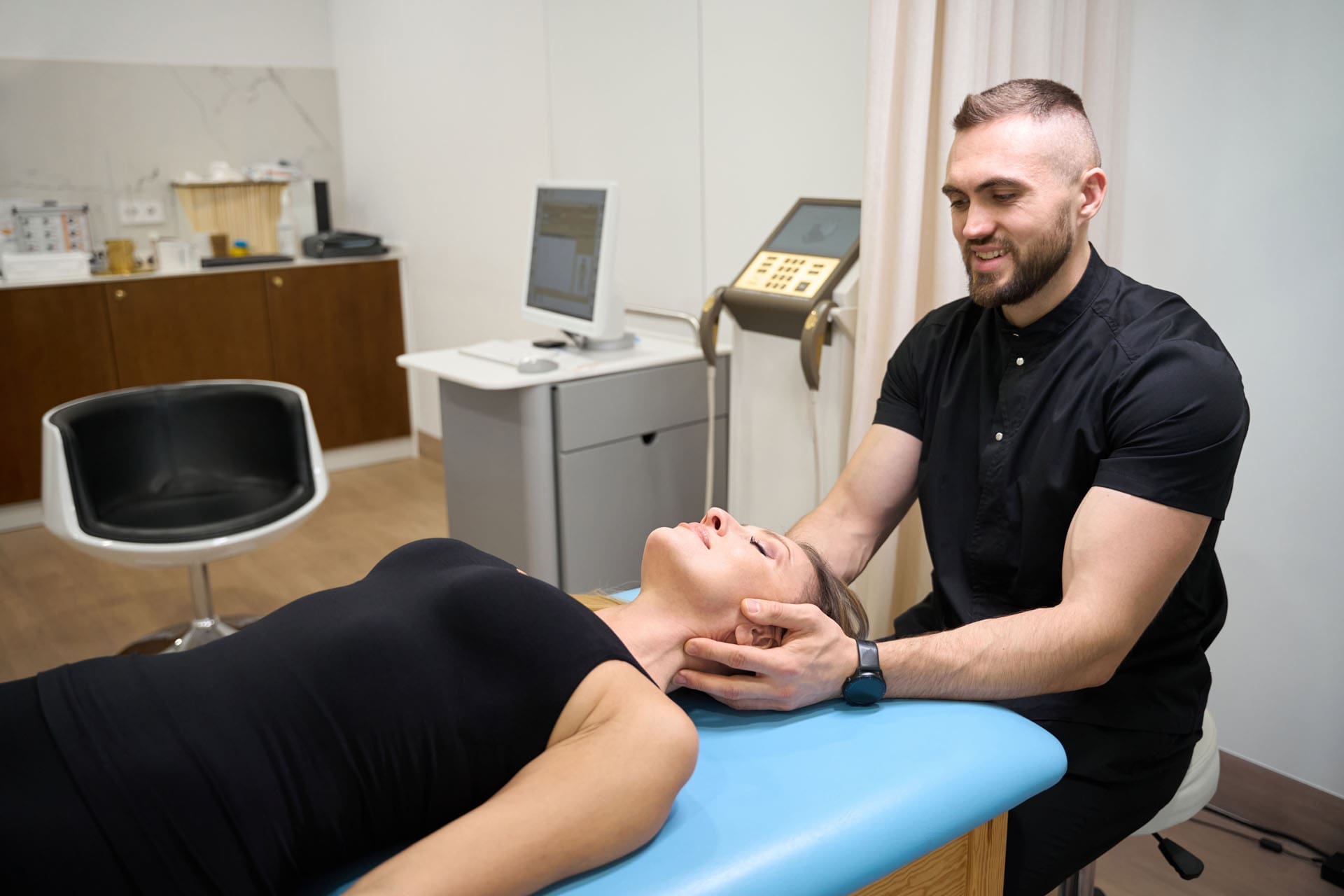
A chiropractor/Nurse practitioner massages a patient’s neck, who is suffering from headaches, neck and shoulder pain, and stress.
Many people type things like “stress cleanse,” “mental detox,” or “cortisol detox” into Google because they feel worn down and want a reset that actually works. The good news is: yes, it’s possible to reduce stress load and feel calmer. The key is to define “cleanse” correctly.
A true “stress cleanse” is not about flushing cortisol out of your body like it’s poison. Cortisol is a normal hormone your body needs. What you can do is reduce constant triggers that keep cortisol and adrenaline elevated, improve sleep, relax tight muscles, and help your nervous system shift into recovery mode. That’s the practical meaning of “detox from stress,” and it’s the version that’s most helpful.
This article is geared for people in El Paso who want a clear, step-by-step plan—especially if stress is showing up as neck tension, headaches, shallow breathing, low back pain, poor sleep, or anxiety-like symptoms.
What “Stress Detox” Really Means (In Plain Language)
A “stress detox” is best thought of as a nervous system reset:
-
Less time stuck in fight-or-flight (sympathetic mode)
-
More time in rest-and-digest (parasympathetic mode)
-
Better sleep and recovery
-
Less muscle tension and pain flare-ups
-
More stable mood and focus
The Centers for Disease Control and Prevention emphasizes core stress-management basics that are simple yet powerful: move more, get enough sleep, and use healthy coping tools.
Why Stress Feels “Physical” (And Why Your Back Can Hurt More)
Stress is not “all in your head.” Chronic stress changes how your body holds itself:
-
Shoulders creep up
-
Jaw tightens
-
Breathing becomes shallow
-
Hip flexors and low back muscles stay tense
-
Sleep gets lighter, so your tissues recover less
Over time, those patterns can feed into pain cycles—especially in the neck and low back.
El Paso Back Clinic has written about the connection between chronic stress and physical tension, including how spinal alignment and supportive care may help reduce stress-related strain.
Cortisol: Helpful Hormone, Not a Toxin
Cortisol gets a bad reputation online. Here’s the reality:
-
Cortisol is needed for normal life (energy, metabolism, immune regulation)
-
It naturally rises and falls during the day
-
“High cortisol” as a trendy diagnosis is often oversimplified
A recent report found that most people don’t need to obsess over “controlling cortisol” in response to viral trends. When cortisol-related conditions are present, they require medical diagnosis and management—not detox drinks or random supplements.
So if you want a “cortisol detox,” the safest, most effective approach is:
build habits that lower chronic stress signals and improve recovery.
The Nervous System Switch You’re Trying to Flip
Think of your body as having two main settings:
Fight-or-flight (Sympathetic)
-
Muscles brace
-
Heart rate rises
-
Digestion slows
-
Sleep gets lighter
-
Pain sensitivity can increase
Rest-and-digest (Parasympathetic)
-
Breathing slows
-
Digestion improves
-
Muscles soften
-
Sleep deepens
-
Recovery improves
Your “stress cleanse” goal is to spend more time in the rest-and-digest phase.
The Pillars of a Real Stress Cleanse
Sleep: The Fastest Way to Reset Stress Chemistry
If sleep is poor, everything gets harder—pain, mood, cravings, focus.
The CDC recommends that adults get 7+ hours of sleep and maintain a consistent sleep schedule.
Simple sleep upgrades
-
Keep the same wake-up time most days
-
Dim lights 60 minutes before bed
-
Keep the room cool and dark
-
Put your phone away (or at least out of your hand)
AdventHealth also supports the idea of a “mental cleanse” by encouraging people to step away from electronic devices and use calming routines to feel more whole.
Movement: Your Body Was Designed to Burn Off Stress
Exercise doesn’t have to be intense to help.
The CDC suggests building toward 2.5 hours per week (150 minutes), and even 20–30 minutes a day helps.
Good stress-friendly movement options
-
Brisk walking
-
Light strength training
-
Mobility work
-
Yoga or stretching
Mayo Clinic lists being active, eating well, laughing, connecting with others, and mindfulness as practical stress relievers.
Breathing: A “Remote Control” for Your Nervous System
When stress rises, breathing often becomes fast and shallow. Changing your breath can send a safety signal to your brain.
Try this for 2 minutes
-
Inhale through your nose for 4 seconds
-
Exhale slowly for 6–8 seconds
-
Repeat 10 rounds
This is simple, free, and surprisingly powerful when done daily.
Nutrition + Hydration: Don’t Let Blood Sugar Create More Stress
When you’re stressed, it’s easy to skip meals, snack on sugar, or live on caffeine. That rollercoaster can worsen feelings of anxiety.
Healthline outlines practical ways to support healthier cortisol patterns: sleep, regular exercise, balanced eating, and stress-management habits.
Supportive “stress reset” foods
-
Protein with breakfast (eggs, Greek yogurt, beans, tofu)
-
Fiber daily (berries, oats, vegetables, lentils)
-
Healthy fats (olive oil, avocado, nuts, salmon)
-
Plenty of water
Boundaries: The Most Underrated Detox Tool
A big source of chronic stress is constant availability—work messages, social media, and nonstop news.
Healthy boundary examples
-
No work email after 7 pm
-
A 30-minute phone-free morning
-
One tech-free block each day
-
A weekly “low stimulation” afternoon
This is the kind of change that reduces stress at the source rather than trying to “out-supplement” it.
Support: Your Nervous System Regulates Better With Safe People
Humans calm down faster when they feel supported.
Even one meaningful conversation per day can help lower your baseline stress.
Where Integrative Chiropractic Care Fits at El Paso Back Clinic
Let’s keep it honest and grounded: chiropractic care doesn’t “detox your liver.” Your liver and kidneys already do detoxification.
But chiropractic and integrative care can be very helpful when stress shows up as tension, posture strain, restricted movement, or pain that keeps your nervous system on high alert.
Henry Ford Health describes chiropractic care as a way to address physical tension patterns linked with stress, including muscle tightness and posture-related strain.
El Paso Back Clinic similarly discusses chiropractic care as part of a plan to manage chronic stress and support the body’s relaxation.
What this can look like in real life
A practical integrative plan often includes:
-
Chiropractic adjustments (when appropriate)
-
Soft tissue work/myofascial release
-
Mobility + rehab exercises
-
Posture and ergonomic coaching
-
Lifestyle support (sleep, movement, nutrition)
Some clinics also describe “detox pathways” in more holistic terms; the safest way to interpret this is to improve movement, circulation, breathing mechanics, and recovery habits.
A 24-Hour “Stress Cleanse” You Can Do This Week
This is for those moments when you feel overloaded and need a reset.
Morning
-
Wake up at a normal time
-
Drink water
-
Eat protein + fiber
-
10–20 minutes outside
-
10-minute walk
Midday
-
Lunch with protein + vegetables
-
5 minutes breathing
-
30–60 minutes phone-free block
Afternoon
-
20–40 minutes of movement
-
Short social connection (text/call someone safe)
Evening
-
Light dinner
-
No doom scrolling
-
Warm shower + dim lights
-
Go to bed at a consistent time
Mayo Clinic supports many of these basics (movement, healthy diet, breathing, time in nature, and reducing screen time).
A 7-Day Stress Detox Plan (Simple and Repeatable)
Daily anchors (do these every day)
-
20–30 minutes of movement
-
7+ hours sleep goal
-
5 minutes of slow breathing
-
Whole-food meals most of the time
Add one upgrade per day
-
Day 1: No phone for the first 30 minutes
-
Day 2: Caffeine cutoff (try noon)
-
Day 3: 20 minutes nature
-
Day 4: Mobility + stretching session
-
Day 5: Strength training (light/moderate)
-
Day 6: Support day (social connection)
-
Day 7: Plan your next week’s boundaries
Some lifestyle blogs promote “stress detox” challenges; use the helpful parts (movement, mindfulness, routine) and skip anything extreme or guilt-based.
When Stress Symptoms Need Medical Evaluation
Please don’t “detox” your way past red flags. Seek medical help if you have:
-
Chest pain, fainting, severe palpitations
-
Severe insomnia lasting weeks
-
Panic attacks that feel unmanageable
-
Depression symptoms, hopelessness, or thoughts of self-harm
-
Unexplained weight loss or major hormone concerns
If you’re worried about a true cortisol disorder, don’t self-diagnose with social media trends—get evaluated clinically.
Local CTA for El Paso Readers
If stress is showing up as neck pain, headaches, shallow breathing, shoulder tension, or low back flare-ups, a combined approach may help—especially when care includes both physical treatment and lifestyle coaching.
To learn more about your options, explore the clinic’s stress-related resources and integrative care topics on the El Paso Back Clinic website.
References
AdventHealth. (2022). How to do a mental cleanse to feel whole.
Associated Press. (2026, February 2). Do you need to control your cortisol? Probably not, doctors say.
Centers for Disease Control and Prevention. (2025, June 9). Managing stress.
El Paso Back Clinic. (n.d.). Chiropractic treatment for chronic stress relief.
El Paso Back Clinic. (n.d.). Stress management.
El Paso Back Clinic. (n.d.). Stress management & low back pain in El Paso, TX.
Henry Ford Health. (2025, May). How to lower your cortisol levels.
Healthline. (n.d.). 11 natural ways to lower your cortisol levels.
Mayo Clinic. (n.d.). Stress relievers: Tips to tame stress.
Mayo Clinic. (n.d.). Stress management: Stress relief.
Psychology Today. (2025, June 28). Integrated care: Finding your balance.







