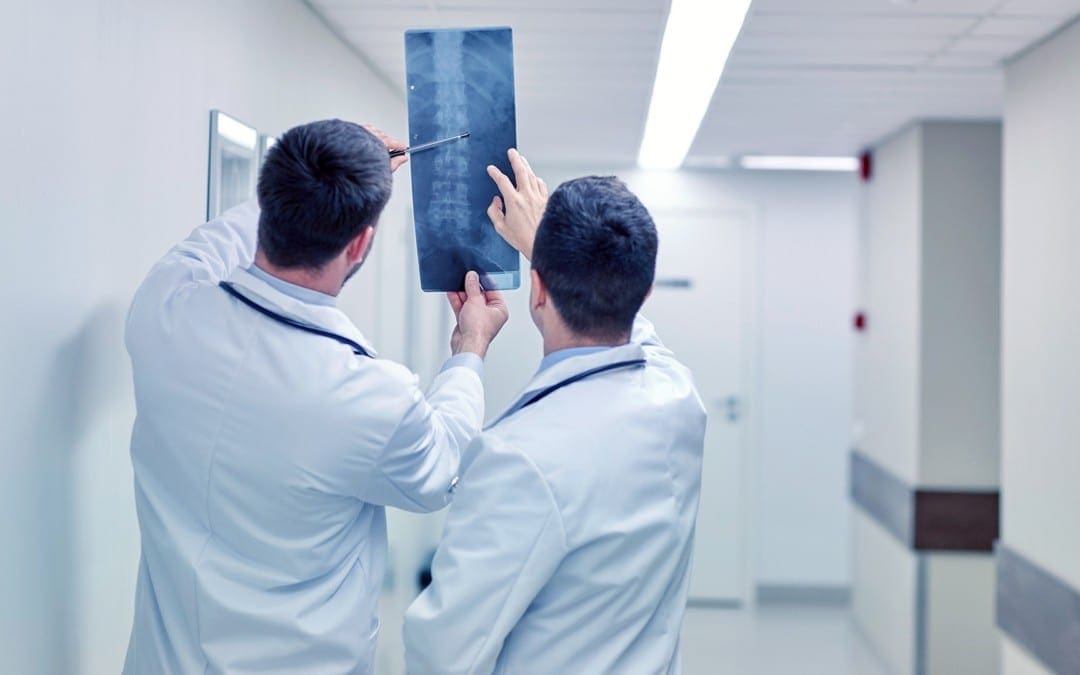
It is required to perform minimum 2-views orthogonal to each other:
1 AP (Anterior to Posterior) or PA (Posterior to Anterior)
2 Lateral
Supplemental views: Oblique views etc.
Skeletal radiographs typically use AP & lateral views
Chest radiographs and Scoliosis imaging in children will usually use the PA technique
Exceptions for PA chest views: patients unable to cooperate (severely ill or unconscious patients)
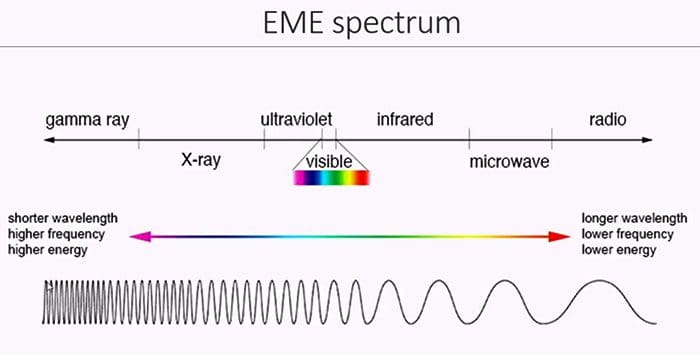
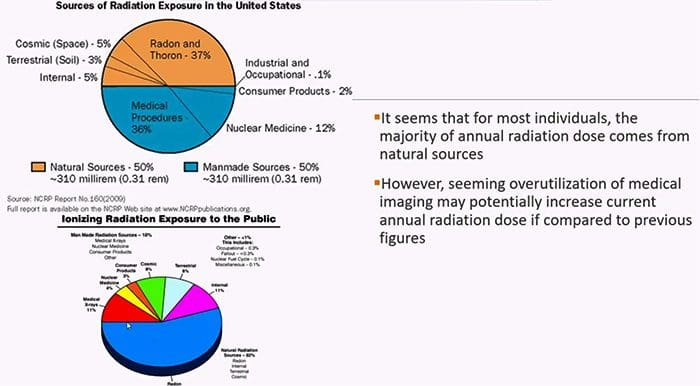
X-rays are a form of electromagnetic energy (EME) similar to light photons or other sources
X-rays are a form of man-made radiation
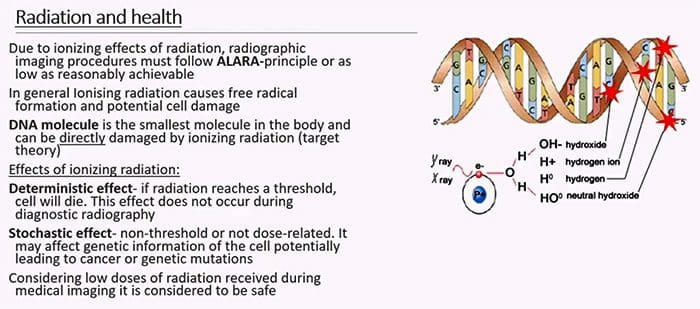
Ionizing effect of x-rays process of removal of atomic electrons from their orbits
Two basic types of ionizing radiation:
Particle (particulate) radiation produced by alpha & beta particles that are the result of radioactive decay of different materials
Electromagnetic Radiation (EMR) produced by x-rays or gamma rays called photons
The energy of EMR depends on its wavelength
Shorter wavelength corresponds to higher energy
The energy of EME is inversely related to its wavelength
X-ray Properties
No charge
Invisibility
Penetrability of most matters (esp. human tissues) depends on “Z” (atomic number)
Making compounds fluoresce and emit light
Travel at the speed of light
Ionization and biologic effect on living cells
The Imaging System
X-rays are produced by an imaging system ( x-ray tube, operator’s console, and high voltage generator)
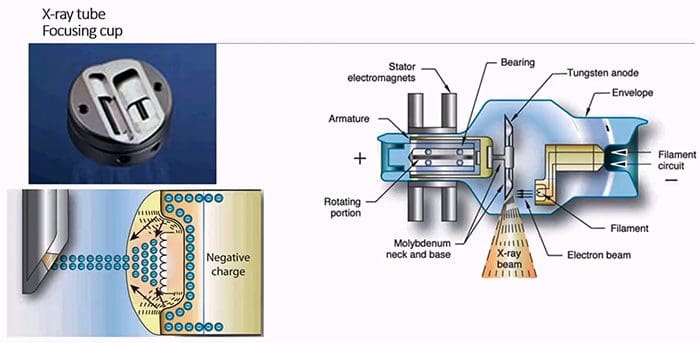
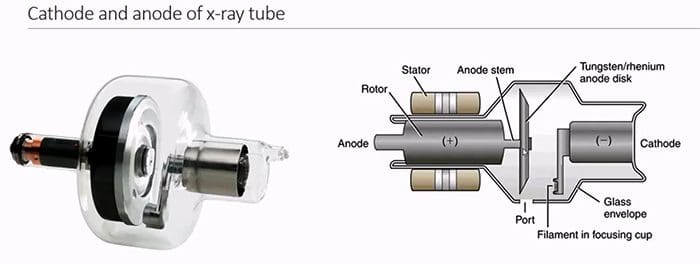
X-ray tube composed of (-) charged cathode and (+) charged anode enclosed in the evacuated class envelope and housed in the protective coat of metal
A Cathode made up of filament wire embedded within the focusing cup to give electrostatic focus to electrons’ cloud
Filament wire of heat resistant thorium tungsten metal of high melting point (3400 C) that “boils off” electrons during thermionic emission
Focusing cup polished nickel (-) charged that�accommodated� the filament to electrostatically repulse the electrons and confines them to the focal spot of the anode disc where x-rays are produced
Anode (+) charged target for electrons to interact at the focal spot
Conducts electricity
Rotates to dissipating heat
Made of tungsten to resist heat
Anode has a high atomic number to produce x-rays of very high efficiency at the focal spot
There are 2-focal spots large and small, each corresponding to cathode’s filament size (small vs. large) that depends on the magnitude of current in the cathode dictated by a radiographic study of larger or smaller body parts
It is known as the dual focus principle
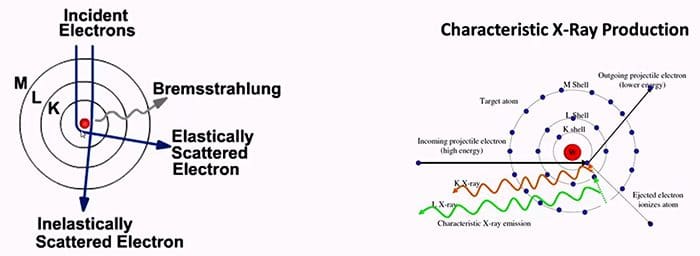
When Electrons are emitted from the cathode as the cloud, they slam into the Anode’s focal spot resulting in 3 man events
Production of heat (99% outcome)
Production of Bremsstrahlung (i.e., breaking radiation) x-rays that represent the majority of x-rays within the x-ray emission spectrum
Production of Characteristic x-rays very few in the emission spectrum
Newly formed x-rays at the anode are of different energies
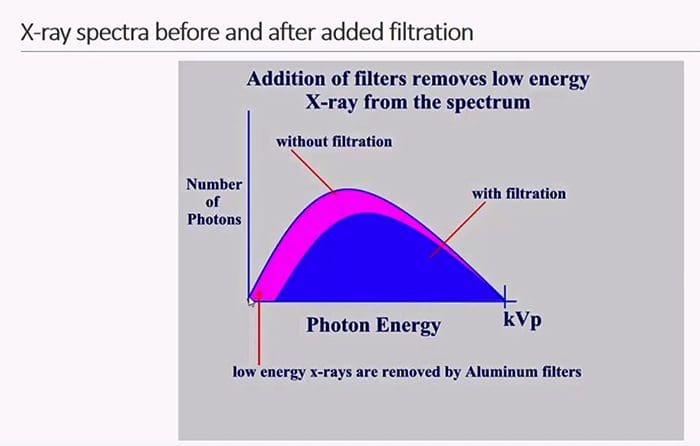
Only need high energy or “hard” x-rays to perform the radiographic study
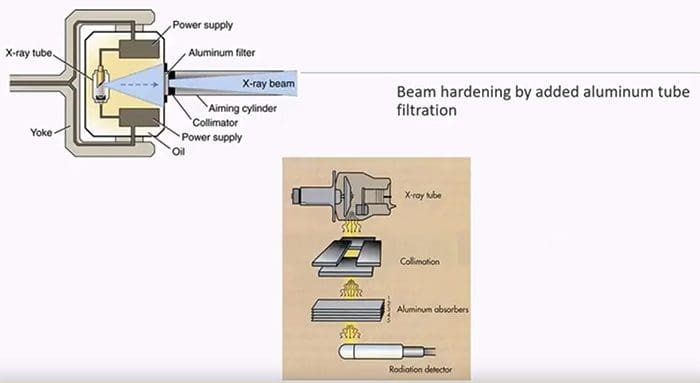
Before x-rays exiting the tube we need to remove weak or low energy photons, i.e., “harden the beam.”
Added tube filtration in the form of aluminum filters is used that removes at least 50% of the “unfiltered” beam thus minimizing the patient’s radiation dose and maximizing image quality
High Voltage Generator
X-ray production requires an uninterrupted flow of electrons to the anode
Regular electricity supplies AC power with sinusoidal currents of “peaks and drops.”
In the past, single-phase high voltage generators would convert AC power into a half, or full wave rectified supply with a measure in the thousands of volts delivered with a “voltage ripple” or peaks of high voltage. Therefore, a term kilo voltage peaks (kVp) was used
Modern generators provide “uninterrupted” flow of electrical potential to the x-ray tube eliminating “voltage ripples” thus referred to as kilovoltage kV without “peaks.”
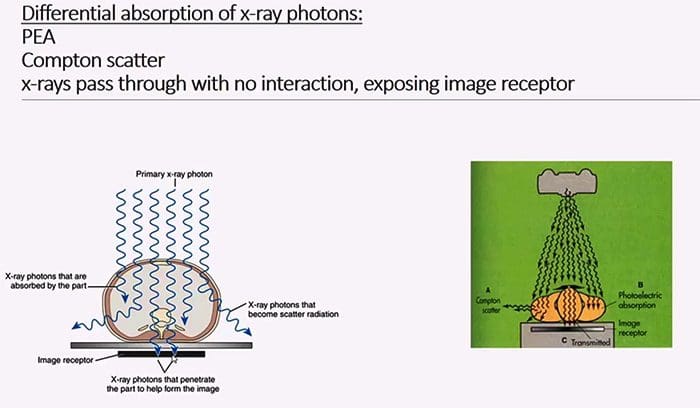
When x-rays interact with the patient’s tissued 3 events will occur
X-rays will pass through without interaction and “expose” the image receptor
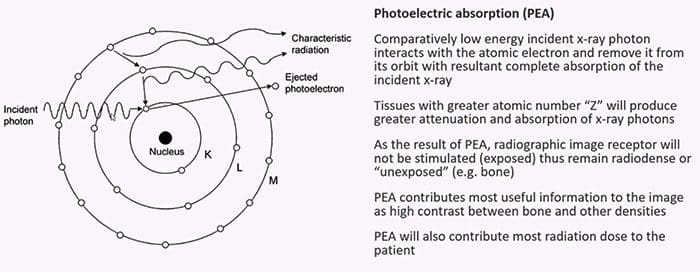
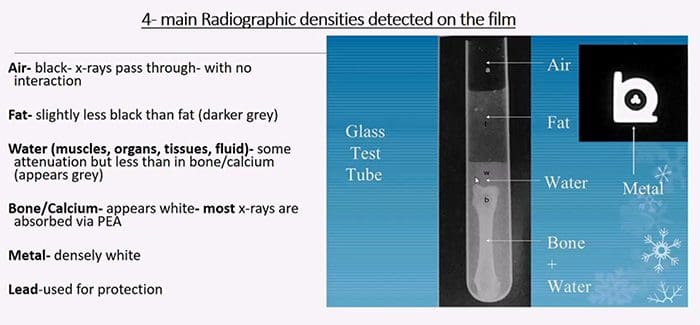
Photoelectric interaction/effect (PE) comparatively lower energy x-rays will be absorbed/attenuated by the tissues
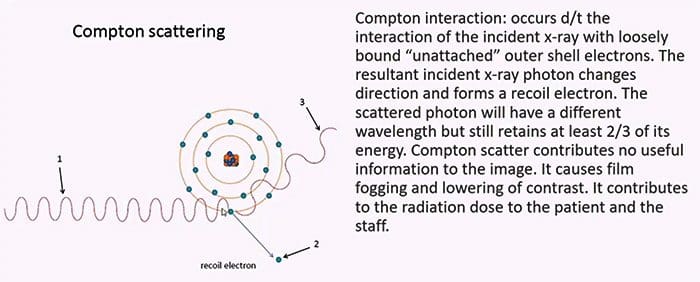
Compton scatter x-rays are “bounced off” to form scatter, contributing no useful information to the film and lower image contrast while potentially giving unnecessary radiation dose to staff
The final image is the product of all three types of interactions known as
Differential absorption of x-ray photons – the result of photons’ absorption via PE, Compton scatter and x-rays passing through the patient
Compton scatter probability decreases with an increase in x-ray energy compared to PE effect
Compton effect probability does not depend on the atomic number (Z)
An increase of total mass density (thick vs. thin) will increase Compton and PE interaction
What cells in the body are considered most vulnerable and most resistant to radiation?
Cells that are rapidly dividing and not terminally differentiated, epithelial cells, etc. are more radiosensitive
Bone marrow cells (stem cells) & lymphocytes are very radiosensitive
Muscle & and nerve cells are terminally differentiated and are less sensitive to radiation
Aged (senescent cells) vs. immature fetal cells are more vulnerable to radiation
However, following low dose radiation in most healthy individual cells will be able to repair likely without any long-lasting changes
Pregnancy & radiation initial 6-7 weeks are the most vulnerable
Do not use routine (non-emergent) radiographic examinations in pregnancy
Apply 10-day rule establish that radiographs can only be obtained during the initial ten days from the onset of the last menstrual cycle
Radiographic imaging of children:
If clinically possible use non-ionizing forms of medical imaging (e.g., ultrasound)
Non-axial imaging studies that use x-ray photons:
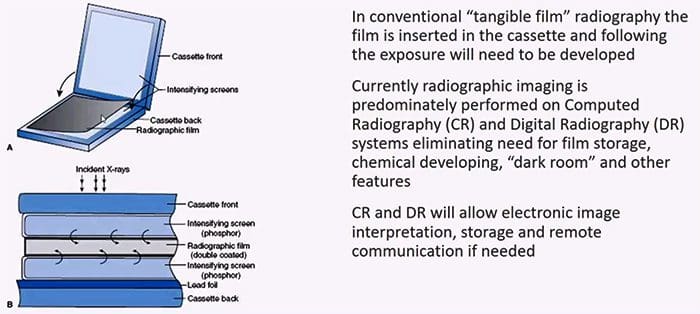
Conventional radiography
Fluoroscopy
Mammography
Radiographic angiography (currently less often used)
Dental imaging
Cross-sectional imaging using x-ray photons: Computed Tomography
Indication and Contraindication for conventional radiographic imaging
Advantages of Radiography: widely available, inexpensive, low radiation burden, the first step in imaging investigation of most MSK complaints
Disadvantages: 2D imaging, relatively lower diagnostic yield during an examination of soft tissues, numerous artifacts, and dependence on correct radiographic factors selection, etc.
Indications:
Chest: initial assessment of lung/intrathoracic pathology. Potentially determines or obviates the need for chest CT scanning. Pre-surgical evaluation. Imaging of pediatric patients due to extremely low radiation dose.
Skeletal: to examine the bone structure and diagnose fractures, dislocation, infection, neoplasms, congenital bone dysplasia, and many forms of arthritis
Abdomen:�can assess acute abdomen, abdominal obstruction, free air or free fluid within the abdominal cavity, nephrolithiasis, evaluate placement of radiopaque tubes/lines, foreign bodies, monitor resolution of postsurgical ileus and others
Many supermarkets have started offering their shoppers a choice in produce: organic or conventionally farmed. This can leave many wondering just what the difference is.
The truth is, both foods taste the same � or very close. Both have the same vitamins, minerals, and other nutrients, so what is the big difference?
It comes down to two major areas: safety and nutrition. That is what consumers need to understand when they are trying to make a decision on whether to purchase foods that have been conventionally farmed, or foods that are natural.
What Is �Organic�?
This is a misused word but the true meaning is that the term refers to how food is grown and processed. Organic farming is intended to encourage water and soil conservation as well as reduce pollution.
This type of farming does not use chemicals for controlling weeds, eliminating insects, or fertilizing. Most of the methods are completely natural. For instance, a farmer may use natural fertilizers to enrich the soil, strategically placed plants to control insects, and mulch or crop rotation to control weeds.
Organic Vs. Conventional Foods
Conventionally farmed products will often use chemicals for insect control and weed control. They often use some type of processing on their foods.
The fertilizer used in planting often has chemicals. The foods may even be genetically modified. Animals may be injected with steroids and hormones which can cause unpleasant or even harmful side effects.
These types of foods do not use any chemicals, they are not genetically modified, and they are not injected with antibiotics or steroids. The food has been very minimally processed � if at all.
There are no additives that don�t belong and could be potentially harmful. These foods are safer for human consumption and they are typically more nutritious.
How To Identify Organic Foods
In the United States, a food or product that is labeled as organic is required to be certified by the U.S. Department of Agriculture (USDA). The USDA has a certification program for natural growers and it has a set of very stringent standards that the product or food must meet.
There are some exemptions. For instance, a producer who does not sell more than $5,000 annually just in organic foods is not required to get the certification although they do have to adhere to the USDA�s stringent requirements for organic foods.
When a food carries the USDA Organic label, it means that it meets the requirements. While natural producers are not required to put the label on their products, many do.
The labeling varies, depending on the type of food. Single ingredient foods like eggs, vegetables, and fruits are considered to be 100 percent natural and are allowed to carry the USDA seal.
Foods that contain two or more ingredients, like breakfast cereal, are still allowed to use the USDA seal, but also must include the following information:
Organic � The product must be 95 percent organic or greater in order to be able to use this term
100 percent organic � The product must be completely organic or all of its ingredients must be natural
Made with organic ingredients � The product contains no less than 70 percent natural ingredients
If the product has less than 70 percent natural ingredients, they are not allowed to use the word �organic� anywhere on their product labels.
Health Benefits Of Natural Foods
The greatest health benefit of natural foods is what it does not provide. Organic growers do not use synthetic pesticides to protect their crops from disease, insects, and molds. This means that the food itself has never been touched by these chemicals.
Natural foods also do not have the food additives that conventional foods often do. They are free from artificial sweeteners, flavorings, and colorings as well as preservatives and monosodium glutamate. This means eating natural means that you aren�t putting those chemicals into your body. Plus, many people say that organic foods simply taste better.
If you have further questions or concerns about your particular diet, please ask us! Our Doctor of Chiropractic can help guide you toward a more healthy life, including the foods you consume.
Injury Medical Clinic: Accident Treatment & Recovery
IFM's Find A Practitioner tool is the largest referral network in Functional Medicine, created to help patients locate Functional Medicine practitioners anywhere in the world. IFM Certified Practitioners are listed first in the search results, given their extensive education in Functional Medicine