Physicians, neurologists, and other healthcare professionals may often run a cranial nerve examination as part of a neurological evaluation to analyze the operation of the cranial nerves. This involves a highly formalized series of tests that evaluate the status of each cranial nerve. A cranial nerve test begins with observation of the patient partly due to the fact that cranial nerve lesions may ultimately affect the symmetry of the face or eyes, among other signs and symptoms.
The visual fields for neural lesions or nystagmus�are tested via an evaluation of particular eye movements. The sensation of the face is tested by asking patients to execute different facial movements, like puffing out their cheeks. Hearing is tested through voice and tuning forks. The position of the individual’s uvula is also examined because asymmetry in its placement could indicate a lesion of the glossopharyngeal nerve. After the capability of the individual to use their shoulder to test the accessory nerve (XI), the patient’s tongue operation is generally assessed by detecting various tongue movements.
Damage or Injury of the Cranial Nerves
Compression
Cranial nerves may be compressed due to increased intracranial pressure, a profound effect of an intracerebral haemorrhage, or tumour which presses against the cranial nerves and interferes with the communication of impulses along the length of a nerve. In some instances, a loss of functionality of one cranial nerve may on occasion be the first symptom of an intracranial or skull base cancer.
An increase in intracranial pressure can lead to dysfunction of the optic nerves (II) because of the compression of the surrounding veins and capillaries, resulting in swelling of the eyeball, known as papilloedema. A cancer, such as an optic glioma, can also affect the optic nerve (II). A pituitary tumour can compress the optic tracts or the optic chiasm of the optic nerve (II), causing visual field loss. A pituitary tumour may also extend into the cavernous sinus, compressing the oculuomotor nerve (III), the trochlear nerve (IV) and the abducens nerve (VI), often leading to double-vision and strabismus. These cranial nerves may also be impacted by herniation of the temporal lobes of the brain via the falx cerebri.
The cause of trigeminal neuralgia, where one side of the face experiences painful signs and symptoms, is believed to be due to the compression of a cranial nerve by an artery as the nerve exits from the brain stem. An acoustic neuroma, especially at the junction between the pons and medulla, may compress the facial nerve (VII) and the vestibulocochlear nerve (VIII), resulting in hearing and sensory loss on the affected side.
Stroke
Occlusion of blood vessels which supply the cranial nerves or their nuclei, or an ischemic stroke, might cause specific signs and symptoms which could localize where the occlusion happened. A clot in a blood vessel draining the cavernous sinus, also known as the cavernous sinus thrombosis, may affect the oculomotor (III), the trochlear (IV), and the opthalamic branch of the trigeminal nerve (V1) and the abducens nerve (VI).
Inflammation
Inflammation caused by an infection may impair the operation of any of the cranial nerves. Infection of the facial nerve (VII), for instance, can result in Bell’s palsy. Multiple sclerosis, an inflammatory process which can produce a loss of the myelin sheathes that encircle the cranial nerves, may cause a variety of shifting signs and symptoms which can ultimately affect multiple cranial nerves.
Other
Trauma to the skull, bone disease like Paget’s disease, and damage or injury to the cranial nerves through neurosurgery, by way of instance, through tumor removal, are other potential causes of cranial nerve health issues.
Dr. Alex Jimenez’s Insight
There are 12 pairs of cranial nerves which exit the brain, one in each side. These cranial nerves are named and numbered (I-XII) according to their location in the brain as well as their specific function in the body. Common conditions, such as multiple sclerosis, may affect one or more of the cranial nerves, resulting in dysfunction of the specific regions innervated by them. Signs and symptoms associated with health issues affecting specific cranial nerves can help healthcare professionals determine the source of the problem. Testing the cranial nerves involves a number of steps in order to be certain which function of the human body has been ultimately affected.
Clinical Significance of the Cranial Nerves
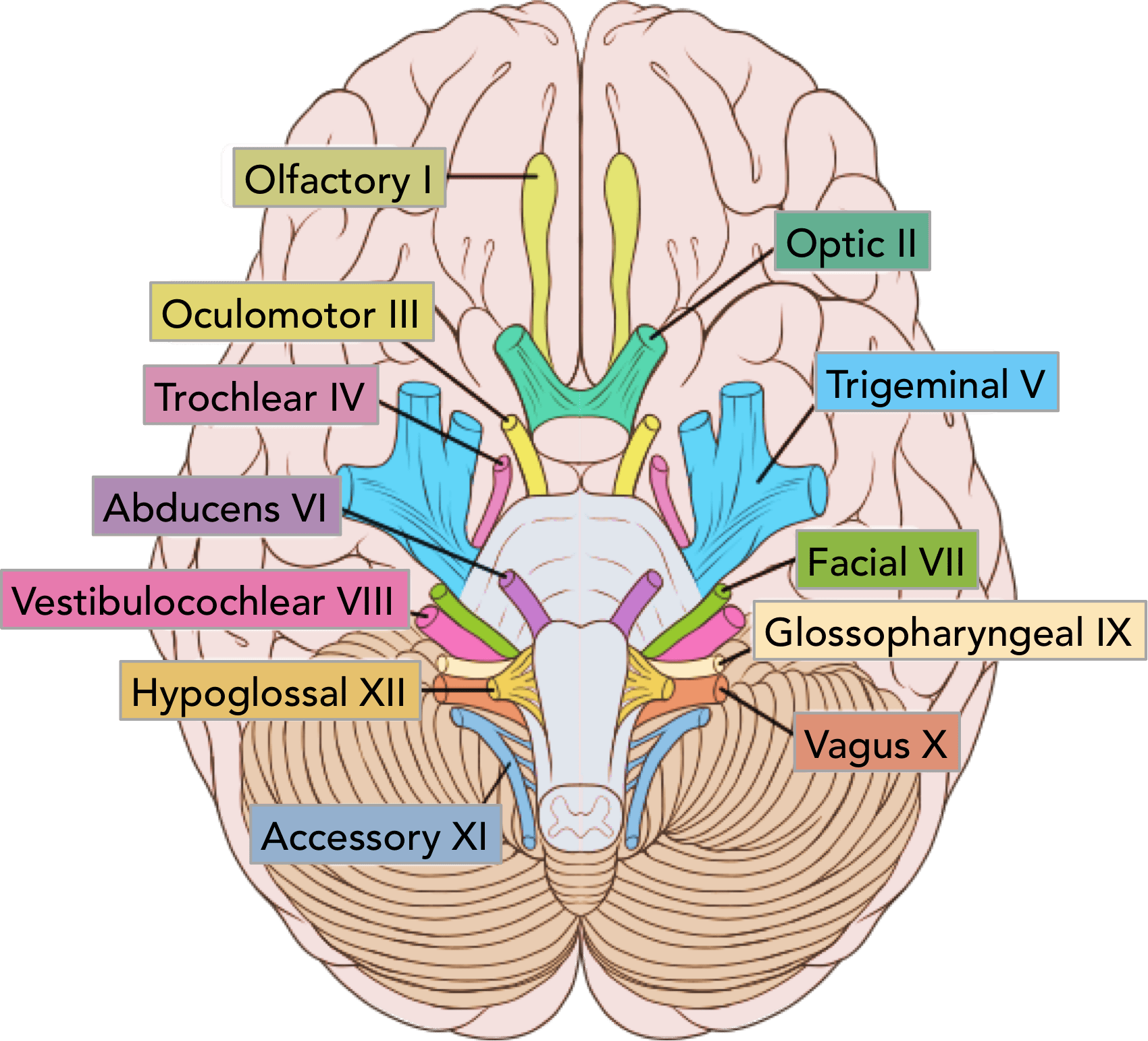
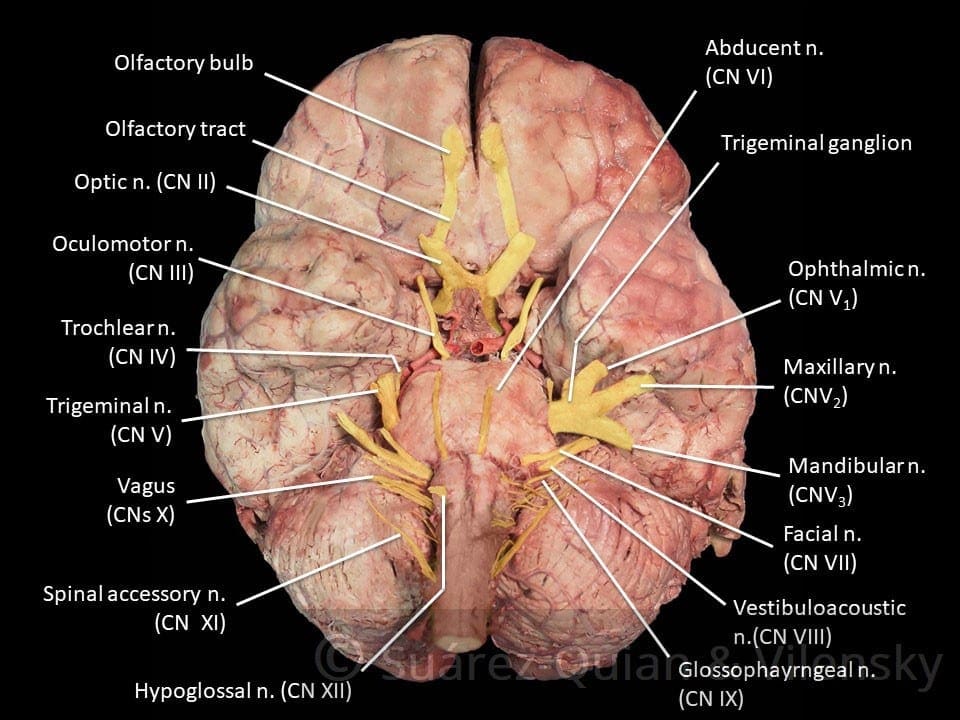
Most commonly, humans are believed to have twelve pairs of cranial nerves which have been assigned Roman numerals I-XII for identification. The numbering of the cranial nerves is based on the order in which they emerge from the brain, or from the front to the back of the brainstem. These include: the olfactory nerve (I), the optic nerve (II), the oculomotor nerve (III), the trochlear nerve (IV), the trigeminal nerve (V), the abducens nerve (VI), the facial nerve (VII), the vestibulocochlear nerve (VIII), the glossopharyngeal nerve (IX), the vagus nerve (X), the accessory nerve (XI), and the hypoglossal nerve (XII). Below we will narrow down the clinical significance of the cranial nerves.
Olfactory Nerve (I)
The olfactory nerve (I) communicates the sensation of smell to the brain. Lesions resulting in anosmia, or loss of the sense of smell, have been previously described to occur through trauma, damage or injury to the head, especially in the instance that a patient hits the back of their head. In addition, frontal lobe masses, tumors, and SOL have also been associated with the loss of the sense of smell. Healthcare professionals have previously identified that the loss of the sense of smell is one of the first symptoms seen in Alzheimer’s and early dementia patients.
Healthcare professionals may test the function of the olfactory nerve (I) by having the patient close their eyes and cover one nostril at a time in order to have them breathe out through their nose while placing a scent under the nostril and having them breathe in. The doctor will ask the patient, “do you smell anything?”, and record the findings. This tests whether the nerve is operating appropriately. If the patient says yes, the doctor will then ask the patient to identify the scent. This tests whether the processing pathway, known as the temporal lobe, is functioning accordingly.
Optic Nerve (II)
The optic nerve (I) communicates visual information to the retina. Lesions to this cranial nerve can be the result of CNS disease, such as MS, or CNS tumors and SOL. Most health issues associated with the visual system emerge from direct trauma, metabolic or vascular diseases. FOV lost in the periphery can also indicate that SOL may be affecting the optic chiasm, including a pituitary tumor.
A healthcare professional will often test the function of the optic nerve (II) by asking whether the patient can see. If the patient describes having vision in each eye, the optic nerve is functional. Doctors may also perform visual acuity testing using the Snellen chart, first one eye at a time, then the two eyes together, or they may perform distance vision testing. Near vision testing will often involve the Rosenbaum chart, first one eye at a time, then the two eyes together. Additional associated testing for the visual system can include, the ophthalmoscopic or funduscopic exam, which assess the A/V ratio and vein/artery health as well as assess cup to disc ratio of the visual system. Other testing methods include field of vision testing, intraoccular pressure testing and the iris shadow test.
Oculomotor Nerve (III), Trochlear Nerve (IV), and Abducens Nerve (VI)
The oculomotor nerve (III), the trochlear nerve (IV), the abducens nerve (VI) and the ophthalmic division of the trigeminal nerve (V1) travel through the cavernous sinus to the superior orbital fissure, passing out of the skull into the orbit. These cranial nerves control the tiny muscles that move the eye and also offer sensory innervation to the eye and orbit.
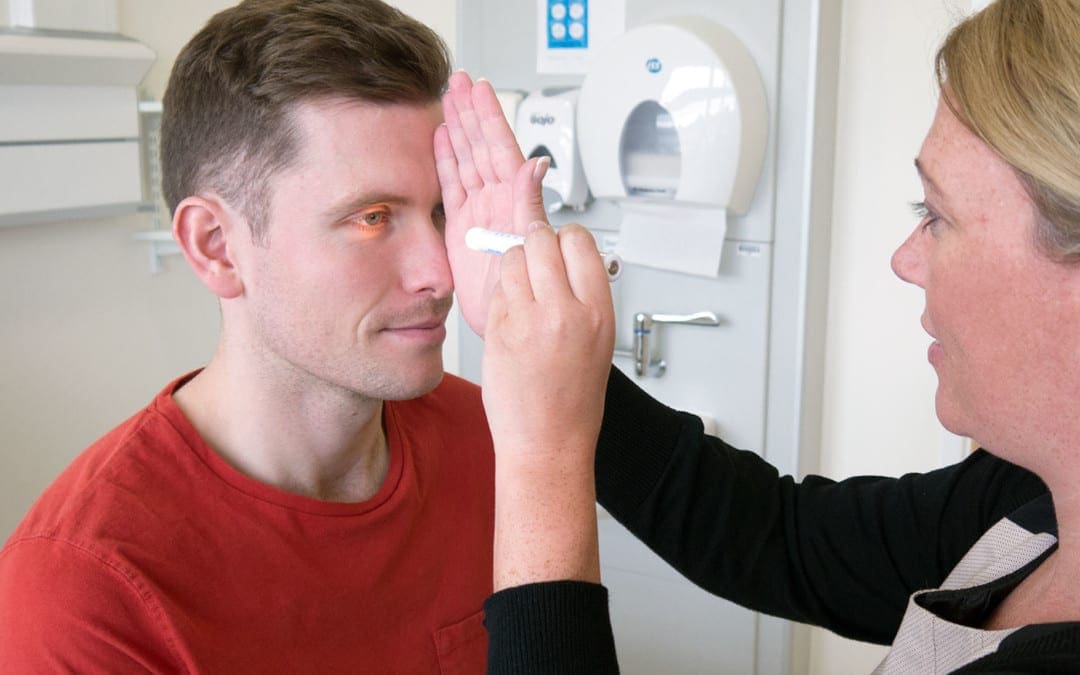
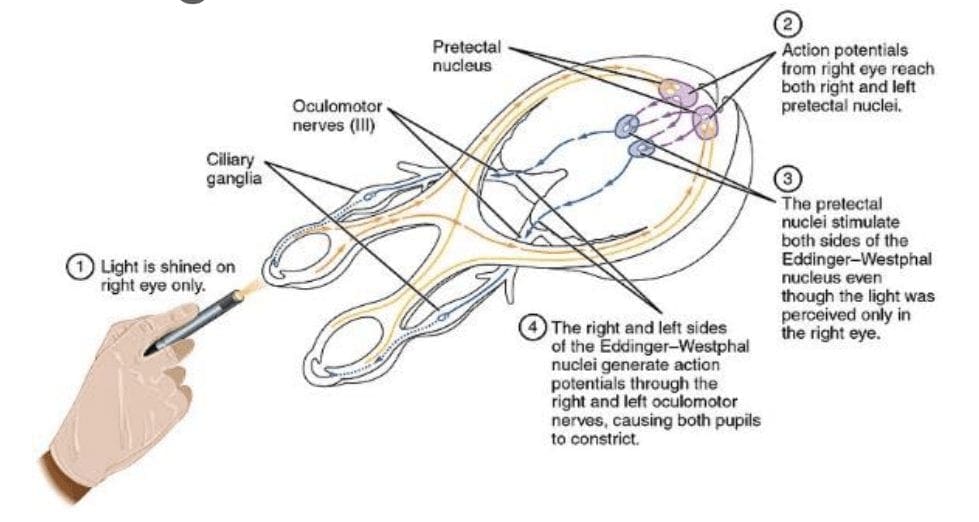
The clinical significance of the oculomotor nerve (III) includes diplopia, lateral strabismus (unopposed lateral rectus m.), head rotation away from the side of the lesion, a dilated pupil (unopposed dilator pupillae m.), and ptosis of the eyelid (loss of function of the levator palpebrae superioris m.). Lesions to the oculomotor nerve (III) can occur due to inflammatory diseases, such as syphilitic and tuberculous meningitis, aneurysms of the posterior cerebral or superior cebellar aa., and SOL in the cavernous sinus or displacing the cerebral peduncle to the opposite side. Testing this cranial nerve is performed by moving a light in front of the patient’s pupil from the lateral side and hold for 6 seconds. The doctor should watch for direct (ispilateral eye) and consensual (contralateral eye) pupillary constriction in order to distinguish dysfunction of the oculomotor nerve (III).
The clinical significance of the trochlear nerve (IV) is characterized where the patient presents diplopia and difficulty while maintaining a downward gaze, often complaining of having difficulties when walking down stairs, resulting in more frequent tripping and/or falling, followed by extortion of the affected eye (unopposed inferior oblique m.) and a head tilt to the unaffected side. Lesions to the trochlear nerve (IV) can commonly be the result of inflammatory diseases, aneurysms of the posterior cerebral or superior cerebellar aa., SOL in the cavernous sinus or superior orbital fissure and surgical damage during mesencephalon procedures. Head tilts in superior oblique palsy (CN IV failure) may also be identified.
The clinical significance of the abducens nerve (VI) includes diplopia, medial strabismus (unopposed medial rectus m.), and head rotation towards the side of the lesion. Lesions to this cranial nerve can be the result of aneurysms of the posterior inferior cerebellar or basilar aa., SOL in the cavernous sinus or 4th ventricle, such as a cerebellar tumor, fractures of the posterior cranial fossa, and increased intracranial pressure. Testing this cranial nerve is performed through the H-Pattern testing, where the healthcare professional will have the patient follow an object no bigger than 2 inches. It’s essential for the doctor to follow these specific guidelines as patient’s can have difficulties focusing on items that are too large, and it’s also important for the doctor not to hold the object too close to the patient. Convergence and accommodation testing is performed by bringing the object close to the bridge of the patient’s nose and back out at least 2 times. The physician must look for pupillary constriction response as well as convergence of the eyes.
Trigeminal Nerve (V)
The trigeminal nerve (V) is made up of three different parts: The . When put together, these nerves provide sensation to the skin of the face and also controls the muscles of mastication, or chewing. Cranial nerve dysfunction along any of the separate sections of the trigeminal nerve (V) can manifest as decreased bite strength on the ipsilateral side of the lesion, loss of sensation along the distribution of V1, V2, and V3, and loss of corneal reflex. Lesions to the trigeminal nerve (V) can be the result of aneurysms or SOL affecting the pons, particularly tumors at the cerebellopontine angle, skull fractures on the facial bones or damage to the foramen ovale, and Tic doloureux, most frequently referred to as trigeminal neuralgia, characterized by sharp pain along the distributions of the different parts of the trigeminal nerve (V). Physicians may utilize analgesic, anti-inflammatory or contralateral stimulation to control the signs and symptoms.
Testing the trigeminal nerve (V) includes pain & light touch testing along the ophthalmic (V1), the maxillary (V2), as well as the Mandibular (V3) nerves of the cranial nerve.�Testing is best done toward the more medial or proximal areas of
the face, where the V1, the V2 and the V3 are better delineated. A healthcare professional may also assess dysfunction along this cranial nerve using the blink/corneal reflex testing, performed by puffing air or doing a small tissue tap from the lateral side of the eye on the cornea. If normal, the patient blinks. The CN V provides the sensory (afferent) arc of this reflex. Bite strength may also be tested by having the patient bite down on a tongue depressor while the doctor tries to remove it. The jaw jerk/Masseter reflex may also be performed with the patient�s mouth slightly open, by placing the thumb on a patient�s chin and tapping the own thumb with a reflex hammer. Strong closure of the mouth indicates UMN lesion. CN V provides both the motor and sensory of this reflex.
Facial Nerve (VII) and Vestibulocochlear Nerve (VIII)
The facial nerve (VII) and the vestibulocochlear nerve (VIII) both input the inner auditory canal in the temporal bone. The facial nerve subsequently extends to the side of the face then distributes to control and reach all of the muscles in charge of facial expressions. The vestibulocochlear nerve reaches the organs which control equilibrium and hearing in the temporal bone.
As with all cranial nerves, signs and symptoms along the facial nerve (VII) describe the location of the lesion. Lesion in the lingual nerve will manifest as loss of taste, general sensation in the tongue and salivary secretion. Lesion proximal to the branching of the chorda tympani, such as in the facial canal, will result in the same signs and symptoms, without the loss of general sensation of the tongue, partly due because the V3 has not yet joined the facial nerve (VII). Corticobulbar innervation is asymmetric to the upper and lower parts of the facial motor nucleus. In the instance of an UMN lesion, or a lesion to the corticobulbar fibers, the patient will experience paralysis of the muscles in charge of facial expression in the contralateral lower quadrant. If there is an LMN lesion, or a lesion to the facial nerve itself, the patient will experience paralysis of the muscles of facial expression in the ipsilateral half of the face, otherwise known as Bell’s palsy.
A healthcare professional will test the facial nerve (VII) initially by asking the patient to mimic or follow specific instructions to make certain facial expressions. The doctor should make sure to evaluate all four quadrants of the face by asking the patient to raise their eyebrows, puff their cheeks, smile and then close their eyes tightly. Subsequently, the doctor will test the facial nerve (VII) by checking the strength of the buccinator muscle against resistance. The healthcare professional will achieve this by asking the patient to hold air in their cheeks as they press gently from the outside. The patient should be able to hold air in against the resistance.
Signs and symptoms of dysfunction in the vestibulocochlear nerve (VIII) often involve changes in hearing alone, most commonly as a result of infections in the otitis media and/or as a result of skull fractures. The most common lesion to this nerve is caused by an acoustic neuroma which affects the CN VII and the CN VIII, particularly the cochlear and vestibular divisions, as a result of proximity in the internal auditory meatus. Signs and symptoms of the health issue include nausea, vomiting, dizziness, hearing loss, tinnitus, and Bell’s palsy, etc.
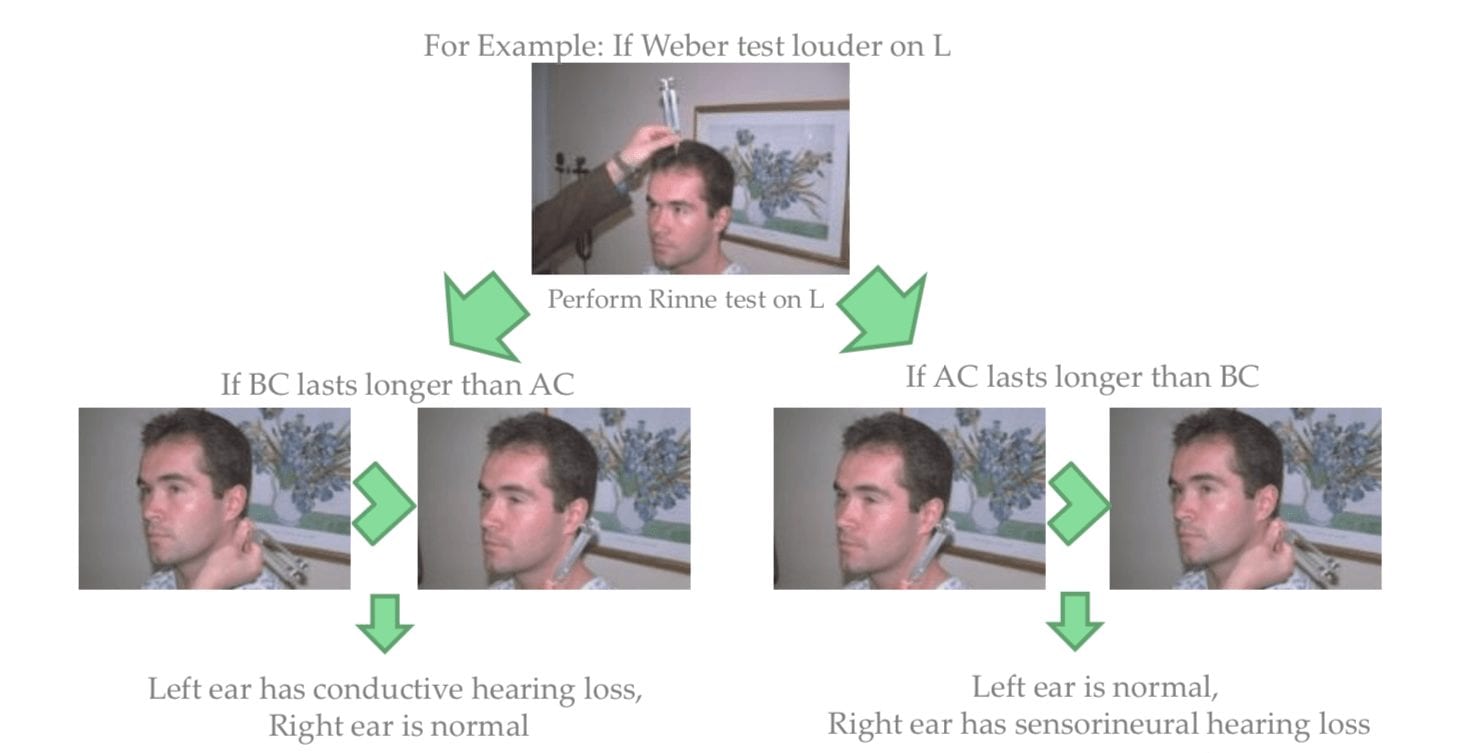
Testing the vestibulocochlear nerve (VIII) for dysfunction commonly involves an otoscopic exam, the scratch test, which determines whether a patient can hear equally on both sides, the Weber test, tests for lateralization, a 256 Hz tuning fork placed on top of the patient�s head in the center, which can help point out whether a patient hears it louder on one side than the other, and finally the Rinne test, which compares air conduction to bone conduction. Normally, air conduction should last twice as long as bone conduction.
Glossopharyngeal Nerve (IX), Vagus Nerve (X) and Accessory Nerve (XI)
The glossopharyngeal (IX), the vagus nerve (X) and the accessory nerve (XI) all emerge from the skull to enter the neck. The glossopharyngeal nerve (IX) provides innervation to the upper throat and the back of the tongue, the vagus nerve (X) offers innervation to the muscles at the voicebox, and proceeds down to provide parasympathetic innervation to the chest and abdomen. The accessory nerve (XI) controls the trapezius and sternocleidomastoid muscles at the neck and shoulder.
The glossopharyngeal nerve (IX) is rarely damaged alone, due to it�s proximity to the CN X and XI. A healthcare professional should perform a test to look for signs of CN X & XI damage as well if CN IX involvement is suspected.
Patients with clinical signs and symptoms caused by vagus nerve (X) dysfunction may experience dysarthria, or difficulty speaking clearly, as well as dysphagia, or difficulty swallowing. These may present as food or liquid coming out of their nose or frequent chocking or coughing when eating and/or drinking. Further clinical presentations include hyperactivity of a visceral motor component, leading to the hypersecretion of gastric acid and resulting in ulcers. Hyper-stimulation of the general sensory component can cause coughing, fainting, vomiting and reflex visceral motor activity. The visceral sensory component of this nerve only provides general feelings of un-wellness but visceral pain may transfer on to the sympathetic nerves.
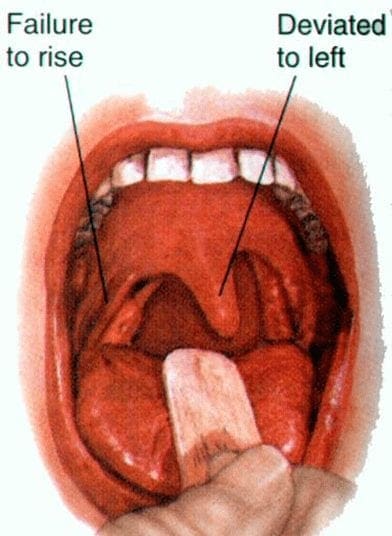
Testing for the glossopharyngeal nerve (IX) and the vagus nerve (X) can include the gag reflex, where the�CN IX provides the afferent (sensory) arc and the�CN X provides the efferent (motor) arc. Approximately 20 percent�of patients have a minimal or absent gag reflex. Other tests may include wwallowing, gargling, etc., as it requires CN X function. Healthcare professionals may also test palatal elevation because it requires CN X function. Furthermore, the doctor will see whether the palate elevates and uvula deviates
contralateral to damaged side. Finally, the healthcare professional will test the auscultation of the heart, since the R CN X innervates SA node (more rate regulation) and the L CN X the AV node (more rhythm regulation).
Lesions in the accessory nerve (XI)�may occur due to radical surgeries in the neck area, such as the removal of the laryngeal carcinomas. Testing for the accessory nerve (XI) may include the strength test SCM m. Patients with clinical signs and symptoms due to lesions in the accessory nerve (XI) will experience difficulties turning their head against the resistance of a healthcare professional, particularly toward the side opposite of the lesion. Testing for the accessory nerve (XI) may also include the strength test trapezius m. Patients with clinical signs and symptoms due to lesions in the accessory nerve (XI) will experience difficulties with shoulder elevation on the side of the lesion.
Hypoglossal Nerve (XII)
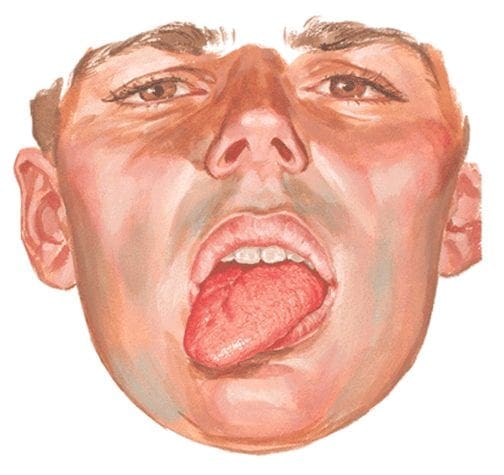
The hypoglossal nerve (XII) originates from the skull to reach the tongue in order to control essentially all of the muscles involved in the movements of the tongue. The clinical significance of health issues associated to the hypoglossal nerve (XII) can manifest as a deviating tongue towards the side of an inactive genioglossus m. upon tongue protrusion. This may often be contralateral to a corticobulbar, or UMN, lesion or from an ipsilateral to a hypoglossal n., or LMN, lesion.
Testing for the hypoglossal nerve (XII) involves the healthcare professional asking a patient to stick out their tongue. The doctor will look for any deviation which may signal a health issue along the length of the hypoglossal nerve (XII). Another test the doctor may perform as a part of the evaluation may include the physician asking the patient to place their tongue inside their cheek and apply light resistance, one side at a time. The patient should be able to resist moving their tongue with pressure.
The clinical significance of the signs and symptoms which manifest as a result of cranial nerve dysfunction are essential in order for the healthcare professional to properly diagnose the patient’s specific health issue. The clinical findings described above are often unique to the affected cranial nerve and the tests and evaluations for each can help confirm a diagnosis. Proper diagnosis is fundamental in order for the doctor to continue with the patient’s appropriate treatment. The scope of our information is limited to chiropractic as well as to spinal injuries and conditions. To discuss the subject matter, please feel free to ask Dr. Jimenez or contact us at 915-850-0900 .
Curated by Dr. Alex Jimenez
Additional Topics: Sciatica
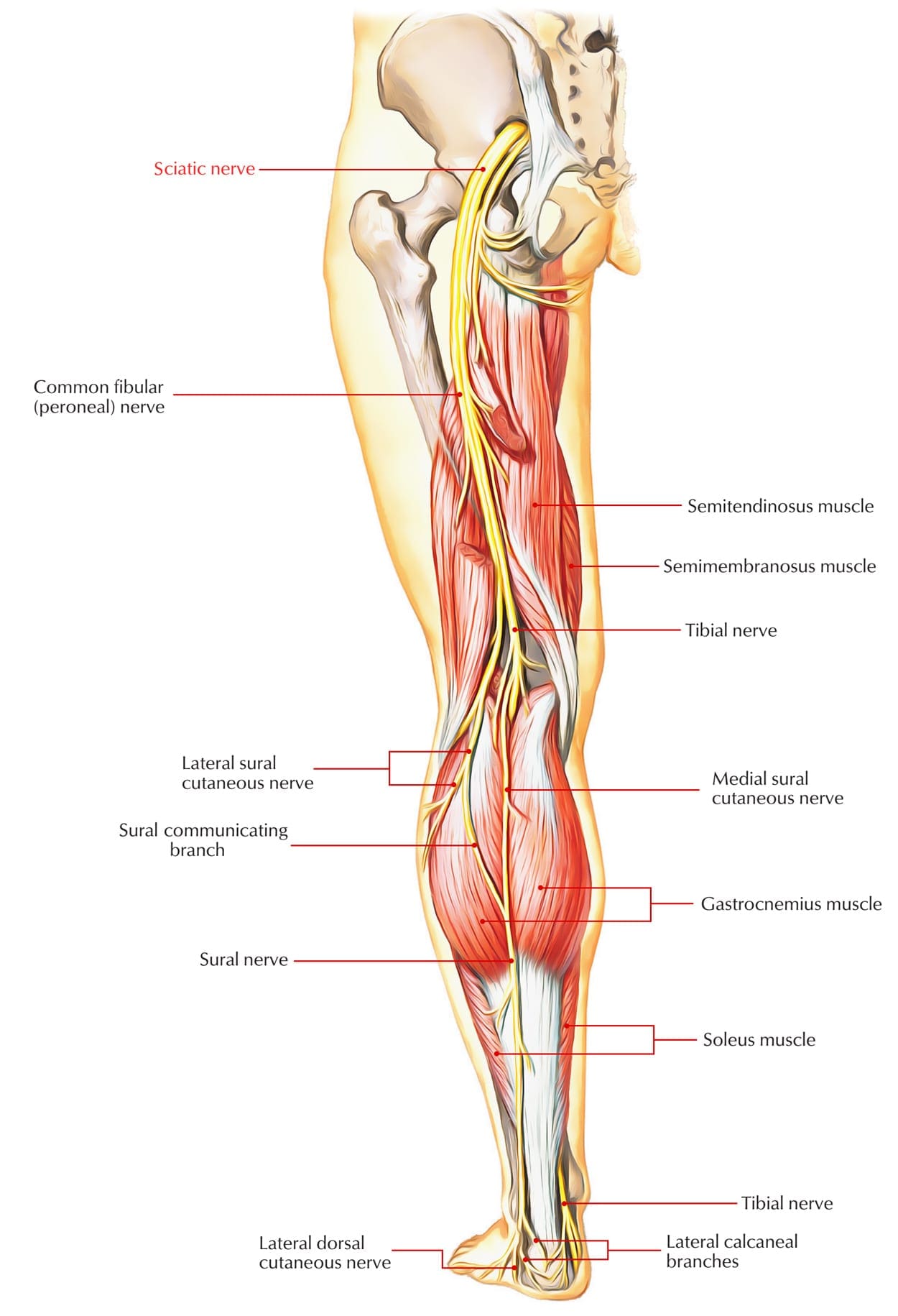
Sciatica is medically referred to as a collection of symptoms, rather than a single injury and/or condition. Symptoms of sciatic nerve pain, or sciatica, can vary in frequency and intensity, however, it is most commonly described as a sudden, sharp (knife-like) or electrical pain that radiates from the low back down the buttocks, hips, thighs and legs into the foot. Other symptoms of sciatica may include, tingling or burning sensations, numbness and weakness along the length of the sciatic nerve. Sciatica most frequently affects individuals between the ages of 30 and 50 years. It may often develop as a result of the degeneration of the spine due to age, however, the compression and irritation of the sciatic nerve caused by a bulging or herniated disc, among other spinal health issues, may also cause sciatic nerve pain.
The cranial nerves are the nerves which come out straight from the brain, including the brainstem, in comparison to the spinal nerves, which come out from sections of the spinal cord. Of those, 10 out of 12 of these cranial nerves originate in the brainstem. Cranial nerves transfer information between the brain and parts of the human body, particularly to and from areas of the head and neck.
Spinal nerves exit from the spinal cord with the spinal nerve closest to the head (C1) exiting in the space above the first cervical vertebra. The cranial nerves, however, exit from the central nervous system above this region. Each cranial nerve is paired and is present on either side of the brain. Based on the definition in humans, there are twelve, sometimes thirteen, cranial nerve pairs, which have been assigned Roman numerals I-XII for identification, sometimes including cranial nerve zero as well. The numbering of the cranial nerves is based on the order in which they emerge from the brain, or from the front to the back of the brainstem.
The terminal nerves, olfactory nerves (I) and optic nerves (II) come out from the cerebrum, or forebrain, where the rest of the ten pairs of cranial nerves arise in the brainstem, which is the lower portion of the brain. The cranial nerves are considered components of the peripheral nervous system (PNS), though on a structural level, the olfactory, the optic and the trigeminal nerves are more accurately considered a portion of the central nervous system (CNS).
Most commonly, humans are believed to have twelve pairs of cranial nerves (I-XII). These include: the olfactory nerve (I), the optic nerve (II), the oculomotor nerve (III), the trochlear nerve (IV), the trigeminal nerve (V), the abducens nerve (VI), the facial nerve (VII), the vestibulocochlear nerve (VIII), the glossopharyngeal nerve (IX), the vagus nerve (X), the accessory nerve (XI), and the hypoglossal nerve (XII). There may be a thirteenth cranial nerve, known as the terminal nerve, or nerve N or O, which Is quite small and may or may not be functional in humans.
Anatomy of the Cranial Nerves
The cranial nerves are usually named according to their structure or function. For instance, the olfactory nerve (I) supplies smell, and the facial nerve (VII) supplies motor innervation to the face. Since Latin was the common language of the study of anatomy once the nerves were documented, recorded, and mentioned, many nerves maintain Greek or Latin names, including the trochlear nerve (IV), named based on its arrangement, as it supplies a muscle which attaches to a pulley (Greek: trochlea). The trigeminal nerve (V) is named based on its three components (Latin: trigeminus meaning triplets), and the vagus nerve (X) is known because of its wandering course (Latin: vagus).
In addition, cranial nerves are numbered according to their rostral-caudal, or front-back, position, when looking at the brain. If the brain is carefully removed from the skull, the nerves are typically visible in their numeric order, with the exception of the final nerve, the CN XII, which seems to come out from above, into the CN XI.
Cranial nerves have pathways within and away from the skull. The pathways inside the skull are known as “intracranial paths” and the pathways outside the skull are known as “extracranial pathways”. There are a number of holes in the skull known as “foramina”, by which the nerves may exit from the skull. All cranial nerves are paired, meaning that they can be found on both the left and right sides of the human body. The skin, muscles, or other structural function provided by a nerve on the same side of the human body as the side it originates from, is referred to as an ipsilateral function. In case the function is on the other hand from the origin of the nerve, then this is referred to as a contralateral function.
Location of the Cranial Nerves
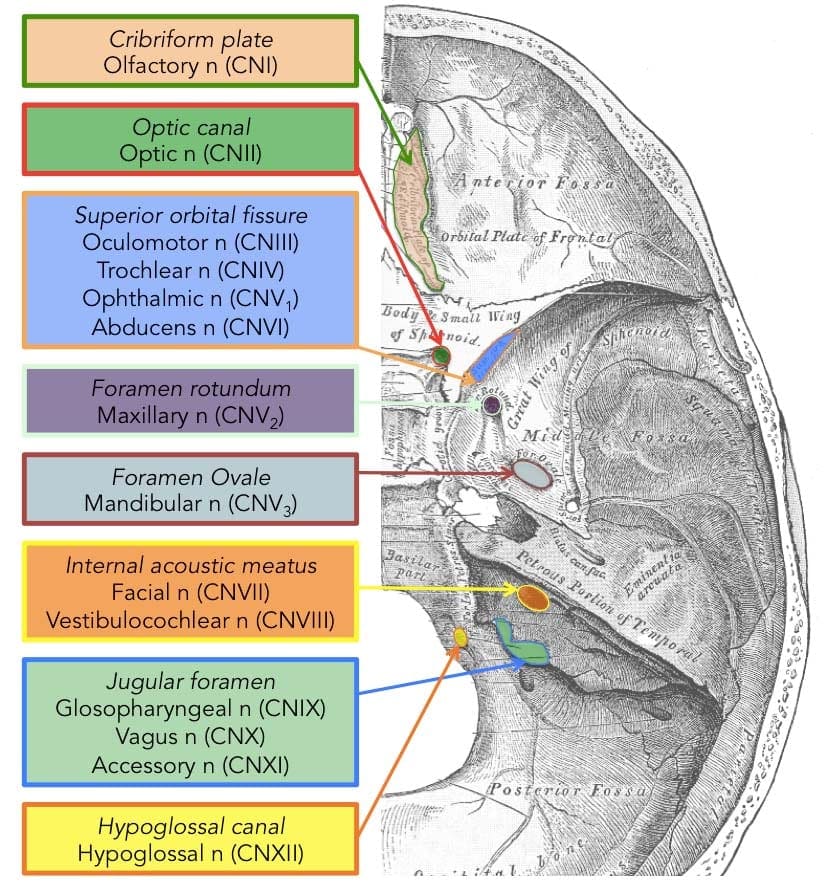
After coming out from the brain, the cranial nerves from inside the skull must leave this bony structure in order to arrive to their destinations. Several of the cranial nerves pass through the foramina,�holes in the skull, as they journey to their destinations. Other nerves pass through bony canals, longer pathways enclosed by bone. The foramina and canals might contain more than just one cranial nerve, and may also include blood vessels. Below is a list of the twelve cranial nerves and a brief summary of their function.
The olfactory nerve (I), composed of many small separate nerve fibers, which passes through perforations from the cribiform plate component of the ethmoid bone. These fibers end in the upper part of the nasal cavity and also operate to communicate impulses containing information about scents or odors into the brain.
The optic nerve (II) passes through the optic foramen from the sphenoid bone in order to reach the eye. It communicates visual information to the brain.
The oculomotor nerve (III), the trochlear nerve (IV), the abducens nerve (VI) and the ophthalmic division of the trigeminal nerve (V1) journey through the cavernous sinus to the superior orbital fissure, passing out of the skull into the orbit. These cranial nerves control the tiny muscles that move the eye and also offer sensory innervation to the eye and orbit.
The maxillary division of the trigeminal nerve (V2) moves through the foramen rotundum from the sphenoid bone to supply the skin of the middle of the face.
The mandibular branch of the trigeminal nerve (V3) moves through the foramen ovale of the sphenoid bone to supply the lower face with sensory innervation. This nerve also extends to nearly all the muscles that control chewing.
The facial nerve (VII) and the vestibulocochlear nerve (VIII) both input the inner auditory canal in the temporal bone. The facial nerve subsequently extends to the side of the face using the stylomastoid foramen, also from the temporal bone. Its fibers then distribute to control and reach all of the muscles in charge of facial expressions. The vestibulocochlear nerve reaches the organs which control equilibrium and hearing in the temporal bone, and therefore doesn’t reach the outside surface of the skull.
The glossopharyngeal (IX), the vagus nerve (X) and the accessory nerve (XI) all emerge from the skull via the jugular foramen to enter the neck. The glossopharyngeal nerve provides innervation to the upper throat and the back of the tongue, the vagus nerve offers innervation to the muscles at the voicebox, and proceeds down to provide parasympathetic innervation to the chest and abdomen. The accessory nerve controls the trapezius and sternocleidomastoid muscles at the neck and shoulder.
The hypoglossal nerve (XII) exits the skull using the hypoglossal canal at the occipital bone and also reaches the tongue to control virtually all the muscles involved in movements of this organ.
Function of the Cranial Nerves
The cranial nerves give motor and sensory innervation particularly to the structures found inside the neck and head. The sensory innervation contains both “overall” feelings, such as temperature and touch, and “particular” innervation, such as flavor, vision, smell, balance and hearing. For instance, the vagus nerve (X) gives sensory and autonomic, or parasympathetic, motor innervation to structures in the neck and to many of the organs in the chest and abdomen. Below, we will discuss the function of each cranial nerves in further detail.
Smell (I)
The olfactory nerve (I) communicates the sense of smell. Damage to the olfactory nerve (I) may cause an inability to smell, referred to as anosmia, a distortion in the sense of odor, referred to as parosmia, or even a distortion or absence of flavor. When there’s suspicion of a change in the sense of smell, every nostril is tested with compounds of known odors, such as coffee or soap. Intensely smelling chemicals, such as ammonia, can lead to the activation of pain receptors, known as nociceptors, of the trigeminal nerve which are situated in the nasal cavity, which may ultimately confound olfactory testing.
Vision (II)
The optic nerve (II) communicates visual information. Damage to the optic nerve (II) affects specific aspects of vision which are based on the area of the lesion. An individual may not be able to observe objects in their left or right sides, known as homonymous hemianopsia, or might have difficulty seeing objects on their outer visual areas, known as bitemporal hemianopsia, if the optic chiasm is included. Vision may be analyzed by examining the visual field, or simply by analyzing the retina with an ophthalmoscope, with a procedure called funduscopy. Visual field testing can be employed to pin-point structural lesions in the optic nerve, or further along the visual pathways.
Eye Movement (III, IV, VI)
The oculomotor nerve (III), the trochlear nerve (IV) and the abducens nerve (VI) coordinate eye motion. Damage to nerves III, IV, or VI can impact the movement of the eyeball globe. One or both eyes may be influenced; in either case, double vision, referred to as diplopia, will likely occur since the movements of the eyes are no longer synchronized. Nerves III, IV and VI are tested by observing the way the eye follows an object in different directions. This object may be a finger or even a pin, and may be moved at several directions to test for pursuit velocity. If the eyes don’t work together, the most likely cause is harm to a specific cranial nerve or its nuclei.
Damage to the oculomotor nerve (III) can lead to double vision, or diplopia, and inability to coordinate the movements of both eyes, known as strabismus, as well as eyelid drooping, referred to as ptosis, and pupil dilation, or mydriasis. Lesions may also lead to theinability to open the eye due to paralysis of the levator palpebrae muscle. People suffering from a lesion in the oculomotor nerve may compensate by leaning their heads to relieve symptoms because of paralysis of one or more of the eye muscles it regulates.
Damage to the trochlear nerve (IV) may also cause diplopia with all the eye adducted and raised. The result will be an eye which can’t move downwards properly, especially downwards when within an inward position. This is a result of impairment from the superior oblique muscle, which is innervated by the trochlear nerve.
Damage to the abducens nerve (VI) can also result in diplopia This is a result of impairment in the lateral rectus muscle, which is innervated by the abducens nerve.
Trigeminal nerve (V)
The trigeminal nerve (V) is made up of three different parts: The ophthalmic (V1), the maxillary (V2), as well as the Mandibular (V3) nerves. When put together, these nerves provide sensation to the skin of the face and also controls the muscles of mastication, or chewing. Conditions affecting the trigeminal nerve (V) include, trigeminal neuralgia, cluster headaches, and trigeminal zoster. Trigeminal neuralgia may occur later in life, from middle age onwards, most often after the age of 60, and it is a condition commonly associated with a very strong pain that spreads over the region innervated by the maxillary or mandibular nerve divisions of the trigeminal nerve (V2 and V3).
Facial expression (VII)
Lesions of the facial nerve (VII) may manifest as facial palsy. This is where a individual is unable to move the muscles on one or both sides of the face. An extremely frequent and generally temporary facial palsy is called Bell’s palsy. Bell’s Palsy is the end result of an idiopathic (unknown cause), unilateral lower motor neuron lesion of the facial nerve and is characterized by an inability to move the ipsilateral muscles of facial expression, including altitude of the eyebrow and furrowing of their forehead. Patients with Bell’s palsy frequently have a drooping mouth over the affected side and often have difficulty chewing since the buccinator muscle is affected. Bell’s palsy occurs very rarely, affecting around 40,000 Americans annually. Facial paralysis may be caused by other conditions including, stroke. Related conditions to Bell’s Palsy are sometimes misdiagnosed as Bell’s Palsy. Bell’s Palsy is a temporary condition usually lasting 2-6 months, but can have life-changing results and may reoccur often. Strokes typically also impact the cranial nerve by cutting off blood flow to nerves within the brain which is a clear indication that the nerve is present with similar symptoms.
Hearing and Equilibrium (VIII)
The vestibulocochlear nerve (VIII) divides into the vestibular and cochlear nerve. The vestibular region is in charge of innervating the vestibules and semicircular canal of the inner ear; this structure communicates information regarding equilibrium, and is a significant element of the vestibuloocular reflex, which keeps the brain stable and allows the eyes to track moving objects. The cochlear nerve communicates data from the cochlea, allowing sound to be heard. If damaged, the vestibular nerve can manifest the sensation of spinning and dizziness. Function of the vestibular nerve may be analyzed by placing warm and cold water in the ears and watching eye motions caloric stimulation. Damage to the vestibulocochlear nerve may also pose as repetitive and involuntary eye movements, previously described as nystagmus, particularly when looking in a horizontal plane. Damage to the cochlear nerve may cause partial or complete deafness in the affected ear.
Oral Sensation, Taste, and Salivation (IX)
The glossopharyngeal nerve (IX) innervates the stylopharyngeus muscle and supplies sensory innervation to the oropharynx and back of the tongue. The glossopharyngeal nerve additionally supplies parasympathetic innervation to the parotid gland. Unilateral absence of a gag reflex suggests a lesion of the glossopharyngeal nerve (IX), and perhaps the vagus nerve (X).
Vagus Nerve (X)
Reduction of function of the vagus nerve (X) can lead to a reduction of parasympathetic innervation to quite a high number of structures. Important consequences of damage to the vagus nerve could include an increase in blood pressure and heart rate. Isolated dysfunction of just the vagus nerve is rare, but can be diagnosed with a hoarse voice, because of dysfunction of one of its branches, the recurrent laryngeal nerve. Damage to this nerve may result in difficulties swallowing.
Shoulder Elevation and Head-Turning (XI)
Damage to the accessory nerve (XI) can lead to ipsilateral weakness in the trapezius muscle. This can be tested by asking the patient to elevate their shoulders or shrug, where the shoulder blade, or scapula, will protrude to a winged position. Additionally, if the nerve is damaged, weakness or an inability to elevate the scapula may be present because the levator scapulae muscle is only able to provide this function. Based on the location of the lesion, there may also be weakness within the sternocleidomastoid muscle, which then acts to reverse the head so that the face points to the other side.
Tongue Movement (XII)
The hypoglossal nerve (XII) is unique in that it is innervated in the motor cortices of both hemispheres of the brain. Damage to the nerve at lower motor neuron level may cause fasciculations or atrophy of the muscles of the tongue. The fasciculations of the tongue are sometimes said to look like a”bag of worms”. Upper motor neuron damage won’t cause atrophy or fasciculations, but only weakness of the innervated muscles. Once the nerve is damaged, it will lead to weakness of tongue movement on one side. When damaged and extended, the tongue will move towards the weaker or damaged side, as shown in the image.
Dr. Alex Jimenez’s Insights
The cranial nerves are a set of 12 nerves which emerge directly from the brain. The first two nerves, known as the olfactory nerve and the optic nerve, come out from the cerebellum, where the remaining ten cranial nerves emerge from the brain stem. The names of the cranial nerves relate directly to their function and they are also numerically identified in roman numerals I-XII by their specific location of the brain and by the order in which they exit the cranium. Damage to any of the above mentioned cranial nerves can cause health issues associated to the specific structure and function of each nerve. Common signs and symptoms in these regions can help healthcare professionals identify the affected cranial nerves.
The scope of our information is limited to chiropractic as well as to spinal injuries and conditions. To discuss the subject matter, please feel free to ask Dr. Jimenez or contact us at 915-850-0900 .
Curated by Dr. Alex Jimenez
Additional Topics: Sciatica
Sciatica is medically referred to as a collection of symptoms, rather than a single injury and/or condition. Symptoms of sciatic nerve pain, or sciatica, can vary in frequency and intensity, however, it is most commonly described as a sudden, sharp (knife-like) or electrical pain that radiates from the low back down the buttocks, hips, thighs and legs into the foot. Other symptoms of sciatica may include, tingling or burning sensations, numbness and weakness along the length of the sciatic nerve. Sciatica most frequently affects individuals between the ages of 30 and 50 years. It may often develop as a result of the degeneration of the spine due to age, however, the compression and irritation of the sciatic nerve caused by a bulging or herniated disc, among other spinal health issues, may also cause sciatic nerve pain.
Almost everyone can say that they’ve experienced a feeling of unsteadiness or a spinning/whirling sensation in their heads at one point in their lifetimes. Usually it’s narrowed down to dizziness, however, dizziness is a broad term that can mean different things to different individuals. It is a prevalent complaint which can also be serious. Dizziness has no specific medical definition, but there are four common conditions which can be considered types of dizziness:
Vertigo. The feeling of motion where there is no movement, as if you were spinning or your environment is whirling. Spinning/whirling yourself around and around, then abruptly stopping, can produce temporary vertigo. However, when it occurs throughout an individual’s regular course of living, it could mean that there’s an underlying health issue in the vestibular system of the inner ear, the body’s equilibrium system which tells you which way is up or down and senses the position of your head. About half of all dizziness complaints are diagnosed as vertigo.
Lightheadedness. Also referred to as near syncope or pre-syncope, lightheadedness is the feeling that you’re about to faint. It is commonly believed to occur from standing up too fast or by breathing deeply enough times to generate the sensation.
Disequilibrium. A problem with walking. People with disequilibrium feel unsteady on their feet or feel as if they will fall.
Anxiety. Individuals who are scared, worried, depressed, or fearful of open spaces can use the term “dizzy” to imply feeling frightened, depressed, or anxious.
Individuals who frequently suffer from dizziness may also ultimately complain of more than one type of dizziness. For instance, people with vertigo may also feel anxious. Dizziness may be a one-time event, or it can be a chronic, long-lasting issue. Nearly everyone who experiences some form of dizziness will recover over time. This is because an individual’s sense of balance is an intricate interaction between the brain, each ear’s different vestibular system, sensors in the muscles, and sense of vision. When one component experiences dysfunction, others can generally learn how to compensate. Below, we will be narrowing down the four common types of dizziness.
Vertigo, the sensation of spinning or whirling, can be divided into two different categories: peripheral vertigo and central vertigo. Peripheral vertigo is more common than central vertigo and it typically develops due to damage to the inner ear or CN VIII. This type of vertigo produces abnormal eye movements, referred to as nystagmus, which may be horizontal or rotary.
Nystagmus is usually jerky in nature with a fast and slow phase, however it is often named for the direction of the fast phase. Peripheral vertigo may worsen when the patient looks to the side of the fast phase of nystagmus. Furthermore, the severity of nystagmus can correlate with the severity of the patient’s vertigo. Peripheral vertigo is also characterized as having no other signs and/or symptoms of CNS dysfunction. Patient may describe having symptoms of nausea or may present difficulty when walking, but only due to vestibular dysfunction. The patient may also have hearing loss or tinnitus if the CN VIII or auditory mechanism function is damaged.
The causes of peripheral vertigo are typically benign, including: benign paroxysmal positional vertigo, or BPPV, cervicogenic vertigo, acute labyrinthitis/vestibular neuronitis, Meniere’s disease, perilymph fistula, and acoustic neuroma. Identifying a patient’s cause of vertigo can be determined by narrowing down the symptoms through proper diagnosis from a healthcare professional. If movements, especially of the neck and head, aggravate vertigo, it may be attributed to BPPV, vertebrobasilar artery insufficiency or cervicogenic vertigo. If noise manifests episodes of vertigo, it may be attributed to Meniere’s disease or perilymph fistula.
Common Causes of Dizziness
Vertigo can be Brought on by many things:
Infections, such as the ones which cause the frequent cold or diarrhea, can lead to temporary vertigo through an ear infection. This inner ear disease is generally viral, benign, and usually goes away in one to six weeks, however, drugs and/or medications are readily available if these become too severe.
Benign paroxysmal positional vertigo, or BPPV, is caused by the motion of a misplaced otolith, a tiny calcium particle the size of a grain of sand, from the component of the inner ear which senses gravity into the part that senses head position. The individual feels as if their head is turning when it isn’t. After diagnosis of BPPV using a special methods known as the Dix-Hallpike test, treatment done right in the doctor’s office can help move the otolith back where it belongs and fix the health issue. This therapy, known as the Epley maneuver, has been accounted to cure vertigo 80 percent of the time.
Meniere’s disease is a disorder characterized by long-lasting episodes of severe vertigo. Other symptoms of Meniere’s disease are tinnitus, or ringing in the ears, hearing loss, and fullness or pressure in the ear.
Dandy’s syndrome is a feeling of everything bouncing up and down. It may occur to individuals who take an antibiotic that is toxic to the ear. However, it usually improves over time.
Less frequent, deadly diseases may also result in vertigo, like tumors or stroke.
Below, we will be narrowing down some of the common causes of vertigo, described above, in further detail.
Benign Paroxysmal Positional Vertigo (BPPV)
Benign paroxysmal positional vertigo, or BPPV, may develop spontaneously, particularly in the elderly. It may also commonly develop as a result of head trauma or head injury, such as that resulting from an automobile accident. Vertiginous episodes associated with BPPV may manifest through specific movements, including, looking at a high shelf, referred to as top-shelf vertigo, bending over, and rolling over in bed at night. The onset of vertigo with BPPV can begin a few seconds after movement and often resolves within a minute. As mentioned above, the diagnostic test commonly utilized to diagnose BPPV is the Dix-Hallpike maneuver. Treatment procedures to treat BPPV include the Epley maneuver and Brandt-Daroff Exercises. Furthermore, benign paroxysmal positional vertigo may also resolve on its own as the loose crystals in the inner ear dissolve, however, it may take months and new otoliths can also become displaced.
Cervicogenic vertigo occurs after a neck or head injury, however, it is not very common. It’s generally accompanied by pain and/or joint restriction where vertigo and nystagmus are less severe than that in BPPV. Cervicogenic vertigo manifests with changes in head position but does not subside as quickly as it does with benign paroxysmal positional vertigo.
Vertebrobasilar Artery Insufficiency
Vertebrobasilar artery insufficiency occurs if the vertebral artery is compressed during head rotation or extension. In this instance, the onset of vertigo is delayed more than in BPPV or cervicogenic vertigo due to the fact that ischemia often takes up to 15 seconds to occur. Orthopedic tests for vertebrobasilar artery insufficiency may help in its diagnosis. Diagnostic tests include the�Barre?-Lie?ou sign, DeKlyn Test or Dix-Hallpike Maneuver, Hautant test, Underberg test and the vertebrobasilar after functional maneuver.
Acute Labyrinthitis and Vestibular Neuronitis
Acute labyrinthitis and vestibular neuronitis are not well understood, however, they’re believed to develop as a result of inflammation. These conditions generally follow after a viral infection or may occur seemingly without a cause.�Acute labyrinthitis and vestibular neuronitis are characterized by a single, monophasic attack of vertigo which typically resolves in days to a few weeks and generally does not reoccur.
Meniere’s Disease
Meniere’s disease is characterized by increased pressure in the endolymph which causes membrane ruptures and a sudden mixture of endolymph and perilymph. With Meniere’s disease, episodes of vertigo can last from 30 minutes to several hours, or until equilibrium between the fluids in the inner ears to be reached. Over time, these episodes can damage vestibular and cochlear hair cells, resulting in low-pitch buzzing tinnitus and the loss of hearing of low tones. In comparison to Meniere’s disease, Meniere’s syndrome is when the symptoms of Meniere’s disease are found to be secondary to another condition, such as: hypothyroidism, acoustic neuroma, superior semicircular canal dehiscence or SCDS, or perilymph fistula. True Meniere’s disease is idiopathic.
Perilymph Fistula
Perilymph fistula is an abnormal connection, or tear, which causes a small leak within the inner ear due to trauma or injury, especially barotrauma. Perilymph fistula can look very similar symptomatically to Meniere’s disease/syndrome and it’s often aggravated by changes in pressure causes by airplane rides or driving uphill. Another symptom of perilymph fistula includes Hennebert’s sign, where a vertigo or nystagmus episode is brought on by sealing pressure of the ear, such as by inserting an otoscope.
Central vertigo, another category of vertigo, is less common than peripheral vertigo, as described above. It is caused by damage to the processing center of vestibular information in the brain stem and the cerebral cortex. However, episodes of dizziness are considered to be less severe than with peripheral vertigo while episodes of nystagmus are more severe than the patient’s complaint or description. This specific nystagmus associated with central vertigo may go in multiple directions, including vertical. Central vertigo may or may not have other CNS findings upon diagnosis or examination and no changes in hearing can be expected with this form of vertigo. The most common causes of central vertigo include: cerebrovascular disease, such as transient ischemic attacks, multiple sclerosis, Arnold-Chiari malformation, damage to caudal brainstem or vestibulocerebellum and/or migraine condition.
Lightheadedness, or pre-syncope dizziness, is generally caused by some surrounding circumstance impairing blood flow into the brain when an individual is standing up. Blame this problem on our ancestors who learned to walk upright, placing our brain above our heart. It is a challenge for your heart to keep the brain supplied with blood and it is easy for this system to break down. When blood vessels in the brain become dilated, or enlarged, as a result of elevated fever, excitement or hyperventilation, alcohol ingestion, or prescription drugs and/or medications, such as antidepressants, it’s no wonder someone may commonly get lightheaded. There can also be serious causes, however, such as a stroke and cardiovascular disease.
Pre-syncope dizziness is specifically from cardiac origin, such as output disorders, arrhythmias, Holter monitor testing. It may also be caused by postural/orthostatic hypotension, which may be secondary to other health issues like diabetic neuropathy, adrenal hypofunction, Parkinsons, certain drugs and/or medications, etc. Light-headedness can involve vasovagal episodes accompanied by slow heart rate with low blood pressure often caused by stress, anxiety or hyperventilation. Finally, pre-syncope dizziness can be caused by migraine headaches due to cerebrovascular instability and blood sugar dysregulation.
Disequlibrium, can be caused by:
A type of arthritis in the neck called cervical spondylosis, which puts stress on the spinal cord.
Parkinson’s disease or related disorders that cause an individual to stoop forward.
Disorders involving part of the brain known as the cerebellum. The cerebellum is the part of the brain responsible for coordination and balance.
Diseases like diabetes that can lead to lack of sensation in the legs.
Disequilibrium is most common in the elderly and it generally occurs due to sensory deficits. In addition, disequilibrium has a gradual onset which worsens with reduced vision, darkness, eyes closed and visual acuity losses. However, it is improved by touching a stationary object which is often subjective as dizziness improves with a gait assistive device like a cane, walker, etc.
Dr. Alex Jimenez’s Insights
If you’ve ever experienced a sudden spinning or whirling sensation or even felt faint, woozy or unsteady, you’re not alone. Dizziness is a term used to describe a range of sensations and it is one of the most common reasons why many adults visit their healthcare professionals. While these false sensations can rarely signal a life-threatening condition, frequent episodes can significantly affect an individual’s quality of life. Diagnosis and treatment of dizziness can depend largely on the cause of the symptoms. Fortunately, many treatment methods used to treat dizziness are considered safe and effective.
Other causes of dizziness can be attributed to psychological stress. In this instance, the patient will describe their dizziness as a “floating” sensation.�Dizziness in the kind of anxiety is frequently, but not always, caused by depression. In addition, it can be attributed to an anxiety disorder or anxiety. Various medications can also cause dizziness as a side effect. It’s essential for a healthcare professional to rule out this type of dizziness caused by hyperventilation as well as other types of dizziness. The scope of our information is limited to chiropractic as well as to spinal injuries and conditions. To discuss the subject matter, please feel free to ask Dr. Jimenez or contact us at 915-850-0900 .
Curated by Dr. Alex Jimenez
Additional Topics: Sciatica
Sciatica is medically referred to as a collection of symptoms, rather than a single injury and/or condition. Symptoms of sciatic nerve pain, or sciatica, can vary in frequency and intensity, however, it is most commonly described as a sudden, sharp (knife-like) or electrical pain that radiates from the low back down the buttocks, hips, thighs and legs into the foot. Other symptoms of sciatica may include, tingling or burning sensations, numbness and weakness along the length of the sciatic nerve. Sciatica most frequently affects individuals between the ages of 30 and 50 years. It may often develop as a result of the degeneration of the spine due to age, however, the compression and irritation of the sciatic nerve caused by a bulging or herniated disc, among other spinal health issues, may also cause sciatic nerve pain.
Ataxia is a medical term used to describe a lack of muscle control or coordination of voluntary movements, including everyday physical activities like walking or picking up objects. Often referred to as a symptoms of an underlying health issue, ataxia can affect various movements, causing difficulties with speech patterns and language, eye movement and even swallowing.
Persistent ataxia generally results from damage to the part of the brain which controls muscle coordination, known as the cerebellum. Many causes and conditions can lead to ataxia, such as alcohol abuse, certain drugs and/or medications, stroke, tumors, cerebral palsy, brain degeneration and multiple sclerosis. Inherited faulty genes have also been associated to lead to ataxia.
Diagnosis and treatment for ataxia depends largely on the cause and/or condition. Adaptive devices, including walkers or canes, can help patients with ataxia maintain their independence. Chiropractic care, physical therapy, occupational therapy, speech therapy and regular aerobic stretches and exercises can also help improve the symptoms associated with this health issue.
Symptoms of Ataxia
Ataxia is a health issue which can develop gradually over time or it can come on unexpectedly. As a symptom of a number of neurological disorders, ataxia may ultimately lead to:
Poor coordination
Unsteady walk along with a tendency to stumble
Difficulty with fine motor tasks, such as eating, writing or buttoning a shirt
Changes in speech
Involuntary back-and-forth eye movements, known as nystagmus
Difficulty swallowing
When to Visit a Doctor
In the instance that a patient is not aware of whether they may have an underlying health issue that causes ataxia, such as multiple sclerosis, it’s essential to visit a doctor immediately if the patient:
Loses equilibrium
Loses muscle coordination at a hand, leg or arm
Has difficulty walking
Slurs their speech
Has trouble swallowing
Causes of Ataxia
Damage, degeneration or loss of neural cells in the section of the brain which controls muscle coordination, or the cerebellum, often results in ataxia. The cerebellum is made up of two pingpong-ball-sized parts of folded tissue located at the base of the brain close to the brainstem. The right side of the cerebellum controls coordination over the right side of the body; the left side of the cerebellum controls coordination on the left side of the body. Diseases that damage the spinal cord and peripheral nerves which connect the cerebellum to the muscles can also lead to ataxia. Ataxia causes include:
Head trauma. Damage to the brain or spinal cord due to a blow to the head, such as in the case of an automobile accident, can cause acute cerebellar ataxia, which comes on unexpectedly.
Stroke. After the blood supply to part of the brain is interrupted or severely reduced, depriving brain tissue of nutrients and oxygen, brain cells die.
Cerebral palsy. This can be a general term for a group of disorders brought on by damage to a child’s brain during early development, before, during or shortly after birth, which affects the child’s ability to coordinate body movements.
Autoimmune diseases. Multiple sclerosis, sarcoidosis, celiac disease and other autoimmune conditions can cause ataxia.
Infections. Ataxia may be an uncommon complication of chickenpox and other viral ailments. It may manifest in the healing phases of the infection and can last for days or weeks. Generally, the ataxia resolves over time.
Paraneoplastic syndromes. These are rare, degenerative health issues triggered by the body’s own immune system’s reaction to a cancerous tumor, referred to as neoplasm, most frequently from lung, ovarian, breast or lymphatic cancer. Ataxia can appear months or years before the cancer is even diagnosed.
Tumors. A growth on the brain, cancerous, or malignant, or noncancerous, or benign, can also harm the cerebellum, leading to ataxia.
Toxic reaction. Ataxia is a possible side effect of certain drugs and/or medications, particularly barbiturates, like phenobarbital; sedatives, like benzodiazepines; as well as some kinds of chemotherapy. These are important to diagnose because the effects are usually reversible. Also, some drugs and/or medications can cause problems with age, which means a person may need to reduce their dose or discontinue its use. Alcohol and drug intoxication; heavy metal poisoning, such as from mercury or lead; and solvent poisoning, like from paint thinner, can also cause ataxia.
Vitamin E, vitamin B-12 or thiamine deficiency. Not getting enough of these nutrients, due to the inability to absorb them enough, alcohol misuse or other reasons, may also ultimately lead to ataxia.
For a number of adults that develop sporadic ataxia, no particular cause is found. Sporadic ataxia can take lots of forms, including multiple system atrophy, a progressive and degenerative disease.
Dr. Alex Jimenez’s Insights
The cerebellum is the region of the brain which is in charge of controlling movement in the body. Electrical signals are transmitted from the brain through the spinal cord and into the peripheral nerves to stimulate a muscle to contract and initiate movement. Sensory nerves also gather data from the environment regarding position and proprioception. When one or more of these pathway components experiences a problem, it can subsequently lead to ataxia. Ataxia is a medical term utilized to describe the lack of muscle coordination when a voluntary movement is attempted. It can make any motion which requires muscles to function a challenge, from walking to picking up an object, even swallowing. Diagnosis and treatment can help manage and improve the symptoms associated with ataxia.
Diagnosis of Ataxia
If an individual has developed symptoms of ataxia, a healthcare professional may perform a diagnosis in order to look for a treatable cause. Besides running a physical examination and a neurological examination, including assessing a patient’s memory and concentration, vision, hearing, balance, coordination, and reflexes, your doctor might request lab tests, including:
Imaging studies. A CT scan or MRI of a patient’s brain might help determine possible causes of ataxia. An MRI can sometimes reveal shrinkage of the cerebellum and other brain structures in people with ataxia. It might also demonstrate other findings that are treatable, such as a blood clot or benign tumor, which may be pressing on the cerebellum.
Lumbar puncture (spinal tap). A needle is inserted into the lower spine, or the lumbar spine, between two lumbar bones, or vertebrae, to remove a sample of cerebrospinal fluid. The fluid, which surrounds and protects the brain and spinal cord, is transported to a laboratory for testing.
Genetic testing. A healthcare professional might recommend genetic testing to determine whether a child has the gene mutation which causes hereditary ataxia. Gene tests are available for many but not all of the hereditary ataxias.
Furthermore, diagnosing ataxia may depend on which system is affected. For instance,�if the health issue lies in the vestibular system, the patient will experience dizziness, possibly having vertigo or nystagmus. They may also be unable to walk in a straight line and when walking, they will tend to veer to one side. If the health issue lies in the cerebellar system, cerebellar gaits present with a wide-base and generally involves staggering and titubation. Patient will also have difficulty doing the Rhomberg�s test with their eyes open or closed, because they cannot stand with their feet together, as described below.
Testing the Vestibular System
Testing the vestibular system to determine the diagnosis of ataxia can include the Fakuda Stepping Test and the Rhomberg Test. The�Fakuda Stepping Test is performed by having the patient march in place with their eyes closed and their arms raised to 90 degrees in front of them. If they rotate more than 30 degrees, the test is considered to be positive. It’s important to note that the patient will rotate toward the side of the vestibular dysfunction. The Rhomberg Test will confirm a diagnosis of ataxia if the patient sways a different direction every time their eyes are closed, as this may indicate vestibular dysfunction.
Testing the Cerebellar System
Testing the cerebellar system to determine the diagnosis of ataxia can include the piano-playing test and the hand-patting test as well as the finger-to-nose test. The piano-playing test and hand-patting test both assess for dysdiadochokinesia. Also in both tests, the patient will have more difficulty moving the limb on the side of cerebellar dysfunction. With the finger-to-nose test, the patient may be hyper/hypo metric in movement and intention tremor may be reveled.
Joint Position Sense
In patients with changes to their joint position sense, conscious proprioception may be diminished, especially in elderly patients and patients with neuropathy. Patients with joint position sense losses often rely on visual information to help compensate. When visual input is removed or diminished, these patient�s have exaggerated ataxia.
Motor Strength and Coordination
If the patient has reduced frontal lobe control, they may end up with an apraxia of gait, where they have difficult with the volitional control of movement. Extrapyramidal disorders, such as Parkinson disease, result in the inability to control motor coordination. Pelvic girdle muscle weakness due to a myopathy in this instance will produce an abnormal gait pattern.
There’s no specific treatment for ataxia. In some cases, treating the underlying health issue often resolves the ataxia, such as quitting the use of drugs and/or medications that cause it. In other cases, such as ataxia that results from chickenpox or other viral infection, it’s likely to resolve on its own. A healthcare professional might recommend treatment to manage symptoms, such as pain, fatigue or nausea, or they may recommend the use of adaptive devices or therapies to help with ataxia. Chiropractic care is a safe and effective, alternative treatment option which focuses on the treatment of a variety of injuries and/or conditions associated with the musculoskeletal and nervous system. A chiropractor commonly uses spinal adjustments and manual manipulations to correct any spinal misalignment, or subluxation, which may be causing a patient’s symptoms. In addition, a doctor of chiropractic, or chiropractor, may also recommend a series of appropriate lifestyle modifications, including nutritional advice and exercise plans, in order to restore a patient’s strength, mobility and flexibility. Chiropractic care together with the proper fitness routine can help speed up the patient’s recovery process.
Adaptive Devices
Ataxia brought on by conditions like multiple sclerosis or cerebral palsy might not be curable. In that circumstance, a healthcare professional might have the ability to recommend adaptive devices. These can include:
Hiking sticks or walkers for walking
Modified utensils for eating
Communication aids for speaking
Other therapies
A patient with ataxia might benefit from particular therapies, including: physical therapy to help improve coordination and enhance mobility; occupational treatment to help with daily living activities, such as eating on their own; and speech therapy to improve speech as well as aid with swallowing.
Coping and Support
The challenges a person face when living with ataxia or with a child with the condition might make the patient feel lonely or it may contribute to depression and anxiety. Talking to a counselor or therapist may help. Or perhaps the patient may find encouragement and understanding in a support group, possibly for ataxia or for their specific underlying condition, such as cancer or multiple sclerosis.
Although support groups aren’t for everyone, they may be good sources of advice. Group members often know about the newest treatments and tend to share their own experiences. If you’re interested, your healthcare professional may be able to recommend a group in your area. The scope of our information is limited to chiropractic as well as to spinal injuries and conditions. To discuss the subject matter, please feel free to ask Dr. Jimenez or contact us at 915-850-0900 .
Curated by Dr. Alex Jimenez
Additional Topics: Sciatica
Sciatica is medically referred to as a collection of symptoms, rather than a single injury and/or condition. Symptoms of sciatic nerve pain, or sciatica, can vary in frequency and intensity, however, it is most commonly described as a sudden, sharp (knife-like) or electrical pain that radiates from the low back down the buttocks, hips, thighs and legs into the foot. Other symptoms of sciatica may include, tingling or burning sensations, numbness and weakness along the length of the sciatic nerve. Sciatica most frequently affects individuals between the ages of 30 and 50 years. It may often develop as a result of the degeneration of the spine due to age, however, the compression and irritation of the sciatic nerve caused by a bulging or herniated disc, among other spinal health issues, may also cause sciatic nerve pain.
Benign paroxysmal positional vertigo, or BPPV, is a mechanical issue in the inner ear. It occurs when some of the calcium carbonate crystals (otoconia) that are normally embedded in gel at the utricle become dislodged and migrate to at least one of those 3 fluid-filled semicircular canals, where they are not supposed to be. When enough of these particles accumulate in one of the canals they interfere with the normal fluid motion that these canals utilize to sense head motion, causing the inner ear to send false signals to the mind.
Fluid in the semi-circular canals doesn’t normally react to gravity. However, the crystals do proceed with gravity, thereby shifting the fluid when it normally would be still. When the fluid moves, nerve endings in the canal are eager and send a message to the brain the mind is moving, even though it is not. This false information doesn’t match what another ear is sensing, together with what the eyes are seeing, or with what the joints and muscles are doing, and also this mismatched information is perceived by the brain as a turning sensation, or vertigo, which generally lasts less than one minute. Between vertigo spells some people today feel symptom-free, while some feel a mild sense of imbalance or disequilibrium.
A healthcare professional will execute a collection of tests and evaluations in order to properly diagnose the individual’s BPPV. Regular medical imaging (e.g. an MRI) is not helpful in diagnosing BPPV, because it doesn’t show the crystals which have moved to the semi-circular canals. But when someone with BPPV has their own head moved into a position that produces the dislodged crystals move within a tube, the error signals cause the eyes to move in a very specific pattern, called”nystagmus”.
The nystagmus will possess distinct characteristics that let a trained practitioner to identify which ear the crystals that are displaced are in, and then canal(s) they have moved into. Tests such as the Dix-Hallpike or Roll Tests involve moving the head into specific orientations, allowing gravity to move the dislodged crystals and activate the vertigo while the professional watches for the tell-tale eye movements, or nystagmus.�To execute the Dix-Hallpike test, a healthcare professional will ask the patient to sit on the test table with their legs stretched out. They will then turn the head 45 degrees to one side, which contrasts the right posterior semicircular canal with the sagittal plane of the body, then they are going to allow the patient to lie back quickly, while the eyes are open, so that their head hangs slightly over the edge of the desk.
When the health care provider has finished the diagnosis, then they can perform the appropriate treatment maneuver. The maneuvers make use of gravity to guide the crystals back to the room where they are supposed to be via a very specific series of head movements, commonly referred to as Repositioning Maneuvers. Repositioning maneuvers are highly effective in treating BPPV, inexpensive, and easy to apply.
Dr. Alex Jimenez’s Insights
While the use of surgical interventions as well as that of drugs and/or medications are occasionally recommended to relieve the symptoms associated with benign paroxysmal positional vertigo, or BPPV, they do not treat the underlying health issue. Repositioning maneuvers, like the ones demonstrated below, are considered to be safe yet effective treatment options for BPPV. There is good evidence to support the treatment of BPPV with the Epley maneuver. Although less amounts of research studies have been conducted on other repositioning maneuvers, outcome measures of a variety of patients with BPPV have benefitted from the other treatment options for benign paroxysmal positional vertigo.
Considering that the therapeutic efficacy among maneuvers for every canal is comparable, the option of treatment is generally predicated on clinician preference, complexity of their maneuvers themselves, therapy response to certain maneuvers, as well as musculoskeletal considerations, such as arthritic changes and range of motion of the cervical spine. Below, many repositioning maneuvers are demonstrated, for instance, deep mind hanging maneuver, the Lempert (BBQ) maneuver and the Epley maneuver.
The deep head hanging maneuver is a repositioning maneuver which is used for one of the least common places where BPPV occurs, the superior semi-circular canal, amounting to only about 2 percent of most benign paroxysmal positional vertigo instances. However, the advantage of deep head hanging maneuvers is that they may be effectively performed without knowledge of the side involved. It consists of three steps with four position changes at intervals of approximately 30 seconds.
The deep head hanging maneuver is performed with the patient at the long-sitting position, while the head is brought to a minimum of 30� below the horizontal with the head straight up. When the nystagmus induced by this measure is finished, the head is brought up rapidly to touch the chest while the patient remains supine, and after 30 seconds, the individual has been brought back to a seated position with head flexion maintained. Finally, the patient will be brought back to a neutral head position.
The Lempert maneuver, also referred to as the Barbeque maneuver or the Roll maneuver, is a repositioning maneuver commonly utilized to help treat canilithiasis of the horizontal and lateral canal. It might occur as a complication of posterior canal BPPV treatment repositioning maneuvers. The side with the most notable horizontal nystagmus is assumed to be the affected side.
To perform the Lempert maneuver, the patient should lie supine on the exam table, using the affected ear facing down. Afterward, the healthcare professional will quickly turn the head 90� towards the unaffected side, facing up, waiting 15-20 minutes between each head turn. The medical professional will subsequently turn the head 90� so the affected ear is currently facing up. The next step includes having the individual tuck their arms to their torso, in order to allow the doctor to roll the patient to a more moderate position with their head down. The individual must be turned on their side since the physician rolls their head 90� (returning them to their original position, with the affected ear facing down ). At length, the medical professional should place the patient so that they are face up and bring them into a sitting posture.
Treatment with the Lempert maneuver is efficient approximately 75% of the moment, however, the effectiveness can vary from individual to individual. It is important to keep in mind that longer periods of time between head turns may provoke nausea. This sort of repositioning maneuver shouldn’t be done on patients in which it isn’t safe to move their mind, including in the case of cervical spine injuries.
Epley Maneuver for BPPV
The most common repositioning maneuver for the treatment of benign paroxysmal positional vertigo, or BPPV, is known as the Epley maneuver. The Epley maneuver, occasionally referred to as the canalith repositioning maneuver, is a process which involves a series of head movements, normally performed by a healthcare professional who’s experienced and qualified in the treatment of vestibular disorders, so as to relieve the symptoms associated with BPPV, including dizziness.
The Epley maneuver is performed by placing the patient’s mind at an angle in where gravity can help alleviate the symptoms. Tilting the mind can move the crystals out of the semicircular canals of the inner ear. This means that they will quit displacing the fluid, relieving the dizziness and nausea they may have been causing. In this manner, the Epley maneuver alleviates the symptoms of BPPV. But, it may have to be repeated more than once, as occasionally, some head movements can once again displace the small crystals of the internal ear, once they had been repositions after the first treatment.
Research studies have shown that the Epley maneuver is a safe and effective treatment for the specific vertigo disorder, offering both long-term and immediate relief. The Epley maneuver, named after Dr. John Epley, has been named the canalith repositioning maneuver because it helps to reposition the small crystals at a person’s inner ear, which might be causing the sensation of dizziness.
Repositioning these tiny crystals called otoconia helps to ease BPPV symptoms.�There are two types of BPPV: one where the loose crystals can move freely in the fluid of the canal (canalithiasis), and, more rarely, one where the crystals are thought to be �hung up� on the bundle of nerves that sense the fluid movement (cupulolithiasis).�It is important to make this distinction, as each repositioning maneuver may affect each variant differently. The scope of our information is limited to chiropractic as well as to spinal injuries and conditions. To discuss the subject matter, please feel free to ask Dr. Jimenez or contact us at 915-850-0900 .
Curated by Dr. Alex Jimenez
Additional Topics: Sciatica
Sciatica is medically referred to as a collection of symptoms, rather than a single injury and/or condition. Symptoms of sciatic nerve pain, or sciatica, can vary in frequency and intensity, however, it is most commonly described as a sudden, sharp (knife-like) or electrical pain that radiates from the low back down the buttocks, hips, thighs and legs into the foot. Other symptoms of sciatica may include, tingling or burning sensations, numbness and weakness along the length of the sciatic nerve. Sciatica most frequently affects individuals between the ages of 30 and 50 years. It may often develop as a result of the degeneration of the spine due to age, however, the compression and irritation of the sciatic nerve caused by a bulging or herniated disc, among other spinal health issues, may also cause sciatic nerve pain.
Neuropathy is a medical term used to describe a collection of general diseases or malfunctions which affect the nerves. The causes of neuropathy, or nerve damage, can vary greatly among each individual and these may be caused by a number of different diseases, injuries, infections and even vitamin deficiency states. However, neuropathy can most commonly affect the nerves that control the motor and sensory nerves. Because the human body is composed of many different kinds of nerves which perform different functions, nerve damage is classified into several types. Neuropathy can also be classified according to the location of the nerves being affected and according to the disease causing it. For instance, neuropathy caused by diabetes is called diabetic neuropathy. Furthermore, depending on which nerves are affected will depend on the symptoms that will manifest as a result. Below we will discuss several specific types of neuropathies clinically treated by chiropractors, physical therapists and physical medicine doctors alike, as well as briefly describing their causes and their symptoms.
Brachial Plexopathies
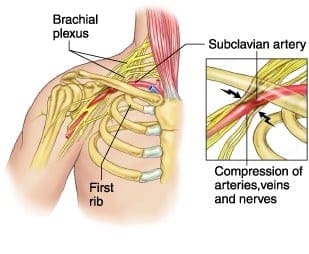
Brachial plexopathy is a type of peripheral neuropathy, which affects the nerves that transmit messages from the brain and the spinal cord to the rest of the body. This kind of nerve damage occurs when harm affects the brachial plexus, a region found on each side of the neck where nerve roots from the spinal cord branch out into each arm’s nerves. Damage, injury or a condition that impacts these nerve roots can result in pain, decreased mobility and reduced sensation in the arm and shoulder. In some cases, no cause can be identified.
Erb’s Palsy
Erb’s Palsy, also known as�Erb�Duchenne palsy or Waiter’s tip palsy, is identified as a paralysis of the arm caused by damage or injury to the nerves in the neck which form part of the brachial plexus. The most common mechanism of injury in adults with Erb’s Palsy is a patient who fell forward while holding onto something behind them. Erb�Duchenne palsy can also happen to an infant during childbirth, most commonly, but not exclusively, from shoulder dystocia during a difficult birth. To be more precise, this type of brachial plexopathy results from damage to the C5-C6 nerve roots along the brachial plexus in the neck. Symptoms of Erb’s Palsy include dermatomal distribution of sensory disruption followed by weakness or paralysis in the deltoid, biceps, and brachialis muscles, leading to the �waiter�s tip� position associated with this type of neuropathy. While many infants can recover on their own from this type of brachial plexopathy, some may require rehabilitation.
Klumpke’s Palsy
Klumpke’s Palsy, also known as Klumpke’s paralysis or�Dejerine�Klumpke palsy, is a partial palsy in the nerve roots of the brachial plexus located along the cervical spine, or neck. It is named after�Augusta D�jerine-Klumpke, an American-born French medical doctor acknowledged for her work in neuroanatomy. Klumpke’s Palsy is characterized as a form of paralysis involving the muscles of the forearm and hand, which occurs to�infants during childbirth if their arm is pulled overhead.�Dejerine�Klumpke palsy can also occur to adults with overhead traction injuries caused by harm to the C8-T1 nerve roots in the brachial plexus and upper thoracic region of the spine. Symptoms of Klumpke’s paralysis include dermatomal distribution of sensory disruption, weakness or paralysis, in the wrist flexors and pronators as well as in the muscles of the hand. This type of brachial plexopathy may often lead to Horner�s syndrome, a collection of symptoms which manifest when a set of nerves, known as the sympathetic trunk, are damaged or injured due to T1 involvement. This form of neuropathy is identified by resulting�in a �claw hand� appearance, where the forearm is supinated with the wrist hyperextended, together with finger flexion.
Entrapment Neuropathies
Entrapment neuropathy, also known as nerve compression syndrome or compression neuropathy, is best-known as nerve damage or a type of neuropathy caused by direct pressure on a nerve. Common symptoms include pain and discomfort, tingling or burning sensations, numbness and muscle weakness which affects only a particular part of the human body, depending on which nerve is affected. A nerve can become compressed as a result of a constant external force or due to a lesion, such as a tumor. Additionally, some conditions can make the nerves more susceptible to compression, including diabetes, where the nerves are rendered more sensitive to minor degrees of compression due to their already compromised supply of blood. Nerve damage caused by a single episode of harm can be considered an entrapment neuropathy, however, it is generally not classified under this group of compression neuropathy or nerve compression syndrome.
Thoracic Outlet Syndromes
Thoracic outlet syndromes are a group of disorders which develop when the nerves or blood vessels between the collarbone and the thoracic outlet, located in the region of the first rib, are compressed. As a result, this can cause pain and discomfort in the neck and shoulders as well as numbness in the fingers. There are a number of types of thoracic outlet syndromes, including neurogenic, or neurological, thoracic outlet syndrome, specifically caused by the compression of the brachial plexus, vascular thoracic outlet syndrome, which is caused specifically by the compression of the veins, known as venous thoracic outlet syndrome, or arteries, known as arterial thoracic outlet syndrome, and nonspecific-type thoracic outlet syndrome, which is considered to be idiopathic and has been described to worsen with activity. Several healthcare professionals believe that nonspecific-type thoracic outlet syndrome doesn’t exist, while others claim it to be a common disorders. However, the majority of thoracic outlet syndromes are often classified as neurogenic.
Thoracic outlet syndromes are caused by the compression of the cervical rib, an extra “rib” in the seventh cervical vertebra, subclavius muscle tension, improper posture or�excessive thoracic kyphosis, physical trauma, repetitive activity, obesity and pregnancy. Thoracic outlet syndromes can vary depending on which structures are compressed. Thoracic outlet syndromes can be diagnosed using tests, such as the Adsons test, the Allen maneuver, the Costoclavicular maneuver, the Halstead maneuver, the�Reverse bakody maneuver, the Roos test, the Shoulder compression test and the Wright test. Thoracic outlet syndromes can cause permanent neurological damage if not diagnosed and treated early.
Median Nerve Entrapment
Median nerve entrapment or median nerve entrapment syndrome, is a mononeuropathy, a condition that impacts only a single nerve or nerve group outside the brain and spinal cord, which affects the movement of or sensation in the hand. Median nerve entrapment is caused by the compression of the median nerve found in the elbow or distally in the forearm or wrist. Symptoms include sensory disruption in the lateral portion of the palmar aspect of the hand and dorsal finger tips of the same fingers. In addition, motor fibers may also be affected in the forearm, if applicable, including the muscles of the thenar eminence, such as the abductor pollicis brevis, the opponens pollicis, and the flexor pollicis brevis. Other forms of median nerve entrapment syndromes include: pronator teres syndrome and carpal tunnel syndrome.
Pronator teres syndrome is characterized as the compression of the median nerve at the elbow. It is considered rare compared to carpal tunnel syndrome. Pronator teres syndrome is caused by repetitive movement, pronator teres muscle inflammation and thickened bicipital aponeurosis. Clinical findings for this type of neuropathy include, tenderness with palpation of the pronator teres muscle, pain with resisted pronation of the arm, flexor pollicus longus and flexor digitorum profundus involvement, otherwise, symptoms manifestations for pronator teres syndrome may appear similar to carpal tunnel syndrome but without positive wrist orthopedics.
Carpal tunnel syndrome is characterized as the compression of the median nerve at the wrist. Carpal tunnel syndrome is identified by symptoms of pain and discomfort, tingling sensations in the thumb, index finger, middle finger and the thumb side of the ring fingers, and numbness. These can generally start gradually and may extend up the arm. Advanced instances of carpal tunnel syndrome may cause weakened grip strength where the muscles at the base of the thumb may waste away if left untreated for an extended period of time. In many cases, carpal tunnel syndrome may affect both hands or arms. Carpal tunnel syndrome is caused by repetitive movements, hypothyroidism, obesity, rheumatoid arthritis, diabetes and pregnancy. Orthopedic tests utilized to diagnose carpal tunnel syndrome include the use of the Tinel�s Sign, positive if tapping over the median nerve reproduces/exacerbates symptoms, the�Phalen�s Maneuver/Prayer Sign, performed by bringing the hands together, with wrists flexed, and is repeated in reverse with the wrists extended, for at least 60 seconds, and is considered positive if tests reproduce/exacerbate symptoms, and the�Wringing Test, if wringing a towel produces paresthesia.
Ulnar Nerve Entrapment
Ulnar nerve entrapment is a condition where the ulnar nerve itself becomes physically trapped or pinched, resulting in symptoms of pain, numbness and weakness which extends throughout the little finger, the ulnar half of the ring finger and throughout the intrinsic muscles of the hand. Symptoms or ulnar nerve entrapment ultimately involve sensory disruption in the medial two digits of the palmar and dorsal aspects of the hand. Symptoms of ulnar nerve entrapment may vary depending on the specific location of the ulnar nerve compression or impingement. These may also be classified as motor, sensory or both, depending on the location of the injury. If motor fibers are affected in the hand, all fingers, besides the thumb, may become weakened, described as general hand weakness. The most common location of ulnar nerve entrapment is within the cubital tunnel. Other forms of ulnar nerve entrapment include: cubital tunnel syndrome and tunnel of Guyon syndrome.
Cubital tunnel syndrome is identified by the compression or impingement of the ulnar nerve in the cubital tunnel at the elbow. It is considered to be the second most common entrapment neuropathy which affects the upper extremities, following carpal tunnel syndrome. Symptoms of cubital tunnel syndrome are characterized by pain and discomfort along the region of the ulnar nerve entrapment, along with sensory impairment, paresis and paresthesia.�Causes of cubital tunnel syndrome include, repetitive movements, hypothyroidism, obesity, diabetes, physical trauma or injury to the cubital tunnel, and prolonged sitting with pressure on bent elbow.
Tunnel of Guyon syndrome, or Guyon’s canal syndrome, is identified by the compression or impingement of the ulnar nerve at the wrist, particularly along an anatomical space in the wrist known as Guyon’s canal. Guyon’s canal syndrome may also be referred to as ulnar tunnel syndrome. Symptoms of tunnel of Guyon syndrome are similar to those of cubital tunnel syndrome with slight variations depending on the region of ulnar nerve entrapment.�Causes of tunnel of Guyon syndrome include, repetitive movements, long term crutch use, fracture of the hamate, a carpal bone, due to a ganglion cyst, hypothyroidism, obesity, rheumatoid arthritis and diabetes.�Orthopedic tests utilized to diagnose Guyon’s canal syndrome include the use of the�Tinel�s Sign, positive if test over the ulnar nerve at the wrist elicits symptoms, the Wartenberg Sign, positive if the 5th digit abducts when patient performs hard grip strength test or attempts to squeeze fingers together and reduced two-point discrimination in the hand.
Radial Nerve Entrapment
Radial nerve entrapment, also known as radial tunnel syndrome, is a condition caused by the compression of the radial nerve, which travels from the brachial plexus, to the hand and wrist. Healthcare professionals believe that radial tunnel syndrome occurs because the radial nerve becomes irritated or inflamed due to the friction caused by the impingement of the muscles in the forearm. Radial nerve entrapment manifests symptoms of sensory disruption in the lateral three and a half digits of the dorsal aspect of the hand. Motor�fibers may also be affected along the�posterior arm and extensor compartment of the forearm, and wrist drop may be seen. Other forms of radial tunnel syndrome include: spiral groove entrapment, where all radial nerve innervated muscles below entrapment are affected,�Saturday night palsy caused due to sleeping on your own arm and the brachioradialis & triceps reflexes are both diminished, supinator syndrome, caused by the compression at the arcade of Frohse with no change in reflexes. Posterior interosseous syndrome, or radial tunnel syndrome, also elicits no change in reflexes.
Sciatic Nerve Entrapment
Sciatic nerve entrapment is a condition caused by the compression of the sciatic nerve, the longest and largest nerve in the human body, which travels from the low back, down through the buttocks, thighs, legs and into the foot. The collection of symptoms which manifest as a result of sciatic nerve entrapment, including pain and discomfort, tingling and burning sensations, and numbness as well as weakness in the lower extremitites, is commonly known as sciatica. Sciatic nerve entrapment, or sciatica, can be caused by a variety of injuries and/or aggravated conditions which can lead to the compression of the sciatic nerve, including, but not limited to, disc herniation and spinal stenosis. However, symptoms of sciatic nerve entrapment may vary depending on the location of the compression of the sciatic nerve. Other conditions caused by the compression of the sciatic nerve include: piriformis syndrome, peroneal nerve entrapment and tarsal tunnel syndrome.
Piriformis syndrome is a condition which occurs due to the compression of the sciatic nerve as a result of the irritation or inflammation of the piriformis muscle. Symptoms of piriformis syndrome may include pain and discomfort, followed by numbness in the buttocks and down the leg. Symptoms may worsen with regular activities, such as sitting and running. Piriformis syndrome is caused by anatomic variation or due to piriformis overuse/tension. Piriformis syndrome diagnosis exams include, a positive Lase?gue test, where the healthcare professional�extends the patient�s leg passively, while the patient is lying supine,�test is positive if the maneuver is limited by pain, and through the use of tenderness and palpable tension in piriformis muscle which elicits symptoms.
Peroneal nerve entrapment is a condition which occurs when the peroneal or the fibular branch of the sciatic nerve are compressed at the fibular head. Tinel�s sign may be present at the fibular region of the head and/or neck. Peroneal nerve entrapment generally affects the common peroneal nerve, therefore, motor and sensory symptoms may manifest, including, weakness of the ankle dorsiflexion and eversion, or the tibialis anterior. Other symptoms of peroneal nerve entrapment may include sensory disruption on the dorsum of the foot and lateral aspect of the calf. Common peroneal nerve entrapement at the fibular head is the most common nerve entrapment syndrome in the lower extremities.
Tarsal tunnel syndrome, also known as posterior tibial neuralgia, is a condition caused by the compression of the tibial nerve as it travels through the tarsal tunnel, found along the region of the inner leg, posterior to the medial malleolus, or the bump on the inside of the ankle. Tarsal tunnel syndrome can manifest symptoms of pain and discomfort, burning or tingling sensations, and numbness along the big toe and the first three toes. However, symptoms may vary slightly depending on the area of compression, where the entire foot may manifest the symptoms previously described. Other symptoms associated with posterior tibial neuralgia include sensory changes in the sole of the foot. Tinel�s sign may be present with percussion posterior to the medial malleolus. The exact cause of tarsal tunnel syndrome may be difficult to determine and it is essential to receive a proper diagnosis to determine the source of the symptoms.
Radiculopathy
Radiculopathy is a mononeuropathy,�a condition that impacts only a single nerve or nerve group outside the brain and spinal cord, which affects the movement of or sensation in one specific area. It is often associated with neuropathy involving spinal nerve roots and presents as changes in sensory and/or motor function affecting a single or a few nerve root level(s). The most common types of radiculopathies include: sciatica and cervical radiculopathy. The most prevalent causes of radiculopathy include, disc herniation, osteophytes, spinal stenosis, trauma, diabetes, epidural abscess or metastasis, nerve sheath tumors, such as schwannomas and neurofibromas, Guillain-Barre? syndrome, Herpes Zoster, or shingles, Lyme disease, cytomegalovirus, myxedema and/or thyroid disorder, and idiopathic neuritis.
Narrowing down some of the most common causes of radiculopathy, symptoms can manifest due to disc herniation which most commonly affects the nerve roots along the C6, C7, L5 & S1 vertebrae of the spine, spinal stenosis and lumbar stenosis which may produce neurogenic claudication, and pain and weakness with ambulation. Cervical stenosis may present with mixed radiculopathy and myelopathy due to long tract involvement. Symptoms may also manifest due to trauma, because it may lead to compression, trauma or avulsion of the nerve roots, diabetes, which is most�likely to cause a polyneuropathy, but mononeuropathy is possible, and Herpes Zoster, or shingles, most often on the trunk, accompanied by vesicular lesions in a single dermatome. If pain persists past vesicular regression, radiculopathy may instead be considered post-herpetic neuralgia.
Patients with a history of radiculopathy will often complain of burning pain or tingling sensations which radiates or shoots down an affected area in a “dermatomal” pattern. Occasionally, patients will complain of motor weakness, however if onset is recent, there is often no motor involvement. The diagnosis of radiculopathy can depend on a variety of exams.�Most often, hypoesthesia may be present in the affected dermatome level. It’s recommended to�evaluate for pain, as light touch can be difficult for these patient�s to distinguish. Fasciculations and/or atrophy may be seen if radiculopathy is chronic, due to the lower motor neuron being compressed or impinged. Motor weakness may be seen in muscles innervated by the same root level. Orthopedic tests for the diagnosis of radiculopathy may include: the straight-leg raise test (SLR), where pain between 10 to 60 degrees likely indicates nerve root compression, the�Well-leg raise/Crossed straight-leg raise test (WLR), where if positive, 90 percent specificity for L/S nerve root compression may be present, the Valsalva Maneuver, where its considered positive if there is an increase in radicular symptoms, and spinal percussion, where pain may indicate metastatic disease, abscess or osteomyelitis.
Specific radiculopathy patterns may also develop as a result of different regions being affected. Radiculopathy along the T1 can cause Horner�s syndrome, a combination of symptoms caused by the disruption of a nerve pathway from the brain to the face and eye on one side of the body. This is due to its effect on cervical sympathetic ganglia, includind ptosis, miosis, anhidrosis. Radiculopathy below the L1, can cause Cauda Equina syndrome, a condition caused by damage or injury to the bundle of nerves found below the end of the spinal cord, known as the cauda equina. This type of radiculopathy may manifest symptoms of saddle anesthesia, sensory loss in the S2-S5 distribution, urinary retention or overflow incontinence, constipation, decreased rectal tone or fecal incontinence, and loss of erectile function. Individuals with these signs and symptoms must be referred for emergency care immediately to prevent permanent dysfunction.
Other patterns of neuropathy can include the cape/shawl distribution of symptoms, identified by an intramedullary lesion, such as syringomyeli, intramedullary tumor and central cord damage. Stocking and glove distribution of symptoms may manifest as a result of diabetes mellitus,�B12 deficiency, alcoholism and/or hepatitis,�HIV, and thyroid dysfunction and/or myxedema.
The cape/shawl pattern of neuropathy is characterized by symptoms occurring due to an intramedullary lesion, such as a tumor, syringomyelia or a hyperextension injury in patient with C/S spondylosis. It can also be characterized by loss of pain and temperature sensation in C/T dermatomes because of the arrangement of the lateral spinothalamic tract. The stocking and glove pattern may progress gradually depending on its specific stage. It can also be characterized as a symmetrical polyneuropathy, where the feet and legs are generally affected first, followed by the hands and arms. A vibration-like sensation in the smallest toes are also typically the first to go and the neuropathy symptoms may progress across the foot to the big toe and then upward through the ankle and leg, then hands, arms and finally to the trunk if the condition becomes severe. The most likely cause of this pattern may be attributed to diabetes mellitus, but other possible causes include, B12 deficiency, alcoholism, HIV, chemotherapy treatment, thyroid dysfunction and multiple other causes.
Diabetic Neuropathy
Diabetic neuropathy is medically defined as a collection of nerve damaging disorders associated with diabetes. These conditions are believed to occur as a result of a diabetic microvascular injury involving the small blood vessels, known as the vasa nervorum, which supply the nerves. Additionally, macrovascular conditions have also been considered to accumulate and cause diabetic neuropathy.�Diabetic neuropathy often presents as a polyneuropathy, or the simultaneous damage or disease of many peripheral nerves throughout the body, but it can also present as a mononeuropathy, usually with acute onset. Diabetic neuropathy most commonly affects the CN III, femoral and sciatic nerves. Diabetic neuropathy can affect all peripheral nerves, including the sensory neurons, motor neurons and, although rarely, the autonomic nervous system. As a result, diabetic neuropathy can affect all organs and systems, as these are all innervated. Diabetic neuropathy can manifest into a wide array of symptoms, including, but not limited to, pain, burning or tingling sensations, numbness, dizziness and trouble with balance.
Demyelinating Neuropathies
Demyelinating neuropathies can be individually defined by its two types: Acute inflammatory demyelinating polyneuropathy, best known as�Guillain-Barre? syndrome, or Chronic inflammatory demyelinating polyneuropathy.�Guillain-Barre? syndrome, abbreviated as AIDP, is identified as a rapid-onset muscle weakness caused when the immune system damages, harms or destroys the peripheral nervous system. Onset has been reported by around one to two weeks following viral infection with progressive weakness, loss of DTRs/areflexia, paresthesia in the hands and feet, more motor involvement than sensory, potential autonomic fiber involvement, elevated CSF protein, and EMG/NCV studies indicating demyelination.�Guillain-Barre? syndrome may require treatment with plasmapheresis or IV Ig therapy.�Chronic inflammatory demyelinating polyneuropathy, abbreviated as CIDP,�is identified as an acquired immune-mediated inflammatory disorder of the peripheral nervous system which appears similar to AIDP but does not follow infection. Symptoms must be present for at least 8 weeks for this diagnosis to be considered positive.�Anti-inflammatory treatments may help treat CIDP.
The scope of our information is limited to chiropractic as well as to spinal injuries and conditions. To discuss the subject matter, please feel free to ask Dr. Jimenez or contact us at 915-850-0900 .
Curated by Dr. Alex Jimenez
Additional Topics: Sciatica
Sciatica is medically referred to as a collection of symptoms, rather than a single injury and/or condition. Symptoms of sciatic nerve pain, or sciatica, can vary in frequency and intensity, however, it is most commonly described as a sudden, sharp (knife-like) or electrical pain that radiates from the low back down the buttocks, hips, thighs and legs into the foot. Other symptoms of sciatica may include, tingling or burning sensations, numbness and weakness along the length of the sciatic nerve. Sciatica most frequently affects individuals between the ages of 30 and 50 years. It may often develop as a result of the degeneration of the spine due to age, however, the compression and irritation of the sciatic nerve caused by a bulging or herniated disc, among other spinal health issues, may also cause sciatic nerve pain.
The vast array of symptoms caused by neuropathy, also known as peripheral neuropathy, reflect the fact that it may be caused by an equally broad range of ailments involving disease and damage to peripheral nerves.
Signs and Symptoms of Neuropathy
Depending on the reason and unique to each patient, signs and symptoms of neuropathy can include:�pain; tingling, burning or prickling sensations; increased sensitivity to touch; muscle weakness or wasting;�temporary or permanent numbness; paralysis; dysfunction in glands or organs; or impairment in urination and sexual functioning.
Such signs and symptoms are dependent on whether autonomic, sensory, or motor nerves, as well as a combination of them, are ultimately affected. Autonomic nerve damage can influence physiological functions like blood pressure or create gastrointestinal problems and issues. Damage or dysfunction in the sensory nerves may impact sensations and sense of equilibrium or balance, while harm to motor nerves may affect movement and reflexes. When both sensory and motor nerves are involved, the condition is known as sensorimotor polyneuropathy.
Diabetic Neuropathy Symptoms
Diabetic peripheral neuropathy, which affects between 12 and 50 percent of individuals with diabetes, is one of the most common types of neuropathy. Many times, symptoms include a gradual change in sensation, as well as pain and weakness in the feet and, although less commonly, the hands. As the neuropathy develops further, it can lead to a loss of sensation in the affected regions.
This lack of feeling raises the odds of harm to the affected areas, explains Matthew Villani, doctor of podiatric medicine at Central Florida Regional Hospital at Lake Mary. Without the pain to signal when there’s an issue, individuals with diabetic neuropathy may allow modest abrasions or blisters on their feet, for instance, to fester as sores or ulcers. “The ulcers can become infected since they are open wounds, which can also progress to bone infection. Unfortunately, it frequently requires amputations if it does progress to that point”, states Dr. Matthew Villani.
Chemotherapy-Associated Neuropathy Symptoms
Cancer patients may suffer with neuropathy induced by chemotherapy as well as by other drugs and/or medications used to treat the disease. Symptoms can include intense pain, impaired movement, changes in heart rate and blood pressure, issues with balance, difficulty breathing, paralysis, and even organ failure. After chemotherapy is done, the symptoms frequently abate swiftly, but occasionally they last more, or these may not go away at all.
HIV- and AIDS-Associated Neuropathy Symptoms
Individuals being treated for HIV or AIDS can develop neuropathy from effects of the virus and the drugs and/or medications used to treat it as well. Common symptoms include stiffness, burning, prickling, tingling, and loss of feeling in the toes and soles of their feet. Sometimes the nerves in the fingers, hands, and wrists are also affected. The drugs Videx (didanosine), Hivid (zalcitabine), and Zerit (stavudine) have been most commonly associated with neuropathic symptoms.
Inflammation-Associated Neuropathy Symptoms
Inflammation caused by infections, like herpes zoster (also known as shingles), Lyme disease, or hepatitis B and hepatitis C, may lead to neuropathy, as may inflammation caused by autoimmune disorders, such as vasculitis, sarcoidosis, or autoimmune disease. In such situations, the signs and symptoms generally include burning and tingling sensations or numbness.
Other Causes of Neuropathy Symptoms
Additional causes of neuropathy and associated signs and symptoms include metabolic disorders, such as hypoglycemia or kidney failure; autoimmune disorders, such as rheumatoid arthritis, lupus, Sjogren’s syndrome, and Guillain-Barr� syndrome; toxicity; hereditary disorders, such as Charcot-Marie-Tooth disorder; hormonal disorders; alcoholism; vitamin deficiencies; physical trauma or injury; compression; and repetitive stress. In addition, many individuals may experience idiopathic neuropathy signs and symptoms, meaning that healthcare professionals may not know the reason for their neuropathy.
Dr. Alex Jimenez’s Insight
Neuropathy can be caused by a variety of injuries and/or aggravated conditions, often manifesting into a plethora of associated signs and symptoms. While every type of neuropathy, such as diabetic neuropathy or autoimmune disease-associated neuropathy, develops its own unique group of signs and symptoms, many patients will often report common complaints. Individuals with neuropathy generally describe their pain as stabbing, burning or tingling in character. If you experience unusual or abnormal tingling or burning sensations, weakness and/or pain in your hands and feet, it’s essential to seek immediate medical attention in order to receive a proper diagnosis of the cause of your specific signs and symptoms. Early diagnosis may help prevent further nerve injury.
What are the Common Signs and Symptoms of Neuropathy?
“Although there’s a wide array of signs and symptoms associated with neuropathy, the type of pain that people encounter may be common in many aspects of the disorder”, notes Vernon Williams, MD, a sports neurologist and director of the Center for Sports Neurology and Pain Medicine at Cedars-Sini Kerlan-Jobe Institute in Los Angeles. “The character and quality of neuropathic pain will often be pain that is burning or electric in character.” Furthermore, he describes that the pain will frequently be associated with different symptoms, like paresthesia, or a lack of normal sensation associated with pain; allodynia, or a painful reaction to a stimulus that wouldn’t normally trigger pain signals; and hyperalgesia, or a striking or severe pain in response to a stimulus that normally causes moderate pain.
How is Neuropathy Diagnosed?
If you think you’re having any of the above neuropathy signs and symptoms, consult a healthcare professional. A number of tests can be done to diagnose neuropathy. “There are certain patterns of complaints that indicate neuropathy,” stated Dr. Williams, “so taking down a patient’s history which includes a description of these complaints is an important first step.”
“After that, your healthcare professional can perform a physical evaluation, including checking motor and sensory function, assessing deep tendon reflexes, as well as looking for signs and symptoms like allodynia and hyperalgesia,” Williams says. “Then we can even perform electrodiagnostic testing; the most common being electromyography and nerve conduction testing, where we can stimulate nerves and document responses, calculate the rate at which signals are being transmitted and see whether there are some areas where nerves are not transmitting signals normally,” Williams continues.
With needle tests, Williams states, “We can put modest needles into human muscles, and, according to what we see and listen together with all the needle in the muscle, we get details about the way the nerves supplying those muscle tissues are functioning. There are a number of unique tests that could be handy to identifying neuropathy, in addition to localizing where the abnormality is the most likely to be coming from”, concluded Dr.�Vernon Williams.
Often, blood tests may test for elevated blood glucose to see whether your neuropathy signs and symptoms could possibly be associated to type 2 diabetes, nutritional deficiencies, toxic elements, hereditary disorders, and evidence of an abnormal immune response. Your healthcare professional may also do a nerve biopsy, which normally involves removing a small segment of a sensory nerve to search for abnormalities, or even a skin biopsy to see if there’s a reduction in nerve endings.
To give yourself the best chance of an accurate diagnosis as well as relief from your neuropathy signs and symptoms, be prepared to describe everything you are experiencing in detail, even when you experience them, how long an episode persists, and the amount of pain, discomfort or loss of sensation or movement you experience. The more specific you are on the signs and symptoms you’re experiencing, the easier it’ll be for your doctor to understand what’s happening. The scope of our information is limited to chiropractic as well as to spinal injuries and conditions. To discuss the subject matter, please feel free to ask Dr. Jimenez or contact us at 915-850-0900 .
Curated by Dr. Alex Jimenez
Additional Topics: Sciatica
Sciatica is medically referred to as a collection of symptoms, rather than a single injury and/or condition. Symptoms of sciatic nerve pain, or sciatica, can vary in frequency and intensity, however, it is most commonly described as a sudden, sharp (knife-like) or electrical pain that radiates from the low back down the buttocks, hips, thighs and legs into the foot. Other symptoms of sciatica may include, tingling or burning sensations, numbness and weakness along the length of the sciatic nerve. Sciatica most frequently affects individuals between the ages of 30 and 50 years. It may often develop as a result of the degeneration of the spine due to age, however, the compression and irritation of the sciatic nerve caused by a bulging or herniated disc, among other spinal health issues, may also cause sciatic nerve pain.
IFM's Find A Practitioner tool is the largest referral network in Functional Medicine, created to help patients locate Functional Medicine practitioners anywhere in the world. IFM Certified Practitioners are listed first in the search results, given their extensive education in Functional Medicine