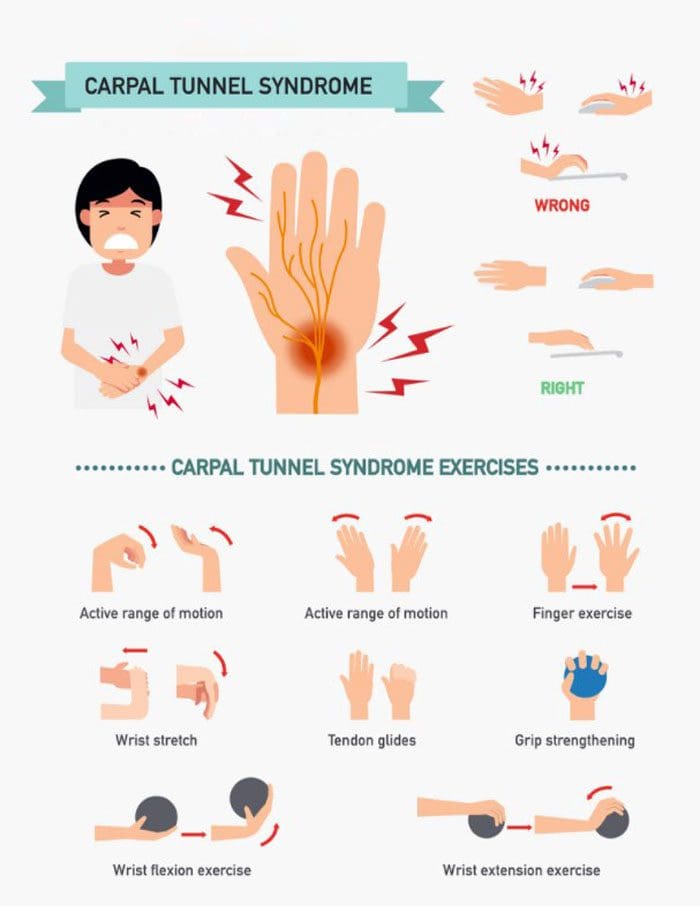
Today, we are constantly tapping, scrolling, clicking, using our hands, fingers, and thumbs on smartphones, tablets, computers, etc. Constant repetitive use has increased the development of carpal tunnel syndrome. If tingling, numbness, soreness, or electrical sensations have begun to develop in the hands, especially the index finger, thumb, or palm, carpal tunnel prevention measures can help before it becomes severe.
Pinched Nerve
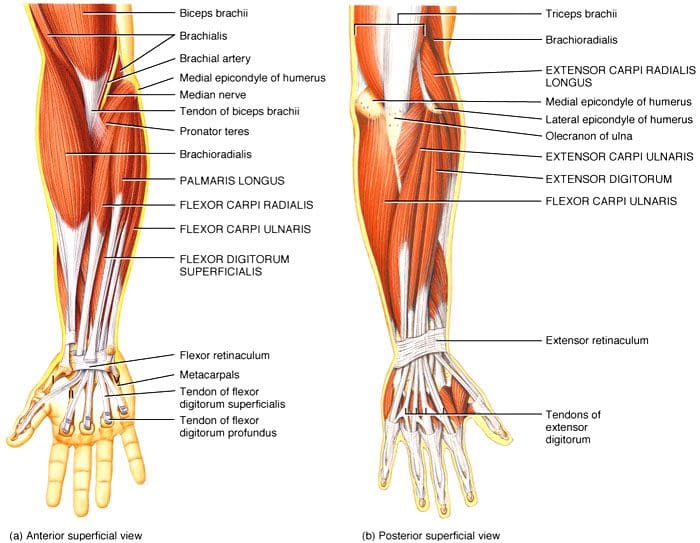
Carpal tunnel syndrome is the medical terminology for a pinched nerve. It is the median nerve that passes through the narrow carpal tunnel passageway of ligaments and bones at the base of the hand. This tunnel houses the median nerve and the tendons that allow the fingers to bend. The median nerve generates physical sensation in the index, middle, ring finger, and palm near the thumb. Compression of the nerve or inflammation can cause tingling, numbness, and pain in any and/or all of the hand areas. It can also cause the fingers to bend awkwardly; however, this symptom develops over time. There are so many different causes of carpal tunnel syndrome that it is almost impossible to avoid with the constant overuse/repetition of the hands.
Work – tasks, typing, mouse use, writing, scanning, etc.
School
Injury
Doctors recommended approach for carpal tunnel prevention is to take action at the first sign/symptom. The most effective preventative measures include:
Using a computer mouse – moving, clicking, using the scrolling wheel, etc.
Writing
Cooking – chopping, slicing, mixing, squeezing, etc.
Drawing
Make sure to take frequent breaks from the motion.
Carpal tunnel is more likely to develop if the nerves and muscles are overused for a long time without stopping. When focused on a task, we often don’t realize how the repetitive motions cause strain until a sting or pinch makes us stop. Taking a hand break is essential to give the muscles, tendons, ligaments, and nerves time to relax and stay loose. The break only has to be a few minutes to be effective.
Repetitive Movements and Proper Hand Form/Posture
Repetitive hand or wrist motions in everyday activities sometimes cannot be helped. It is recommended to try to switch hands when performing the task, space it out over the day, take frequent breaks, stretch, and gently shake out the hands throughout the day. Make sure any pressure on the hands or wrists is as light as possible and evenly distributed. Keep the wrists straight or slightly bent and use light tools if possible. Proper posture is crucial for carpal tunnel prevention. Many individuals don’t realize the back, neck, and wrists are intricately connected. Poor posture like hunching over the computer, shoulders rolled forward, and forward neck posture can cause the nerves and muscles of the arm to become compressed, causing tingling, numbing, pain symptoms because they’re not properly aligned. The compression can run down the arms and affect the wrists and hands as well.
Carpal Tunnel Prevention Supportive Accessories
It is also recommended to consider integrating supportive accessories, like ergonomic keyboards, mice, wrist splints, keypad cushions, etc. These tools can support the body and keep the wrists and hands healthy, comfortable, and pain-free. Wrist splints can help by keeping the wrist in a straight, neutral position without thinking about it. This reduces stress on the area and absorbs the pressure of everyday tasks on the carpal tunnel and median nerve. Individuals can also wear the splint at night to support and train the wrist to stay straight throughout the day. Taking action before the symptoms become severe is highly recommended. Talk to a chiropractor or physical therapist for exercises, stretches, and general tips to help with carpal tunnel prevention.
Body Composition
A Snack and A Meal
Without proper planning, the calories an individual consumes from snacks can add up. A recent survey found that snacking contributes 586 calories for men and 421 calories for women per day. Weight loss, weight gain, and weight maintenance come down to calories in vs. calories out.
Eating snacks that are too high in calories or snacking too much can disrupt and derail health goals.
It’s essential to know what a snack consists of, what to look for on a label, and how to plan.
Snacks come in a range of calories, depending on individual goals.
For many, 100-200 calories are recommended for snacks.
Individuals that need increased calories may require a higher calorie snack.
The number of snacks eaten per day depends on individual needs and goals.
It’s best to plan and factor snacks into the overall meal plan to avoid overeating.
LeBlanc, Kim Edward, and Wayne Cestia. “Carpal tunnel syndrome.” American family physician vol. 83,8 (2011): 952-8.
Page, Matthew J et al. “Splinting for carpal tunnel syndrome.” The Cochrane database of systematic reviews vol. 2012,7 CD010003. 11 Jul. 2012, doi:10.1002/14651858.CD010003
Shiri, Rahman, and Kobra Falah-Hassani. “Computer use and carpal tunnel syndrome: A meta-analysis.” Journal of the neurological sciences vol. 349,1-2 (2015): 15-9. doi:10.1016/j.jns.2014.12.037
The hands are used for all kinds of tasks/chores day and night. Using the hands requires the wrists. When wrist pain presents, it can make life unbearable, causing individuals to make all kinds of awkward and unhealthy habits that can worsen and cause further injury. Chiropractic wrist and hand adjustments are recommended for this type of injury. A majority of wrist injuries are the result of micro-stress/repetitive tearing use. Repetitive stress injuries often require a multifaceted treatment approach. This is why chiropractic is so effective, in that it treats the symptoms and the causes to get back to work, school, and normal life quickly.
Wrist Tendonitis
Wrist tendonitis happens when a tendon becomes inflamed. This is common among athletes, store workers, clerks, warehouse workers, hair stylists/barbers, etc. Individuals that are constantly using their hands, wrists, and arms have an increased risk of developing tendonitis. And without proper treatment and rest, the inflammation continues and worsens. Chiropractic wrist adjustments for wrist tendonitis include:
Diagnosis and assessment.
Swelling and pain are alleviated using ice, bracing, ultrasound, laser therapy, and other inflammation-reducing techniques.
Once the inflammation has been brought down, massage therapy is incorporated to keep the tendons loose and relaxed.
Physical therapy and manual manipulation will restore mobility and flexibility to the wrist.
When the pain is completely reduced and mobility is restored, chiropractic wrist adjustments will break down the scar tissue to prevent future injury.
The chiropractor will recommend ergonomic tips and exercises to prevent flare-ups.
Wrist Crepitus
Another common issue that can be painful is crepitus, which is a popping, clicking, and/or cracking in the wrist when moving the hand. Different causes depend on the type the popping/clicking/cracking. If it occurs without pain, more than likely, it is the gases escaping from the wrist joint. This is normal and is not something to worry about. However, a chiropractor can help if it becomes burdensome. Another cause is when a tendon extends or contracts over the bone with certain types of movements. This type of popping often results in pain and should be addressed by a professional to prevent further damage. Both issues are commonly treated with wrist adjustments.
Dislocated Wrist
A dislocated wrist needs immediate medical care from the emergency room. The wrist needs to be reset and given time to recover/heal before a chiropractor can work on it to repair any issues that the dislocation caused. There are benefits from chiropractic after a serious wrist injury that includes:
Pain relief
Function restored
Mobility restoration
Proper wrist alignment
Scar tissue removal
Strength training
Aching, popping, and cracking relief
Chiropractic Wrist Adjustment
Wrist adjustments depend on the injury/condition that the individual is going through. A chiropractor uses different approaches and techniques that return the joints to the proper alignment. Wrist adjustments are usually done by hand and are gentle. This is because the bones and tendons do not need major force to correct. Chiropractors focus on the wrist the same way they focus on the whole body.
They relieve pain and swelling first.
They determine what caused the injury.
Then focus on strengthening the joint.
Develop a prevention regimen to keep it from recurring.
Body Composition
Complete Body Measurement
Getting body composition tested will help progress to optimal health by the results, not the weight scale. Determining progress with metrics like this and lean body mass equips individuals with the knowledge needed to get the results faster and smarter. The quickest and easiest way to determine body composition is to use the InBody. This means focusing on body fat percentage instead of weight. The devices being used today are extremely accurate at giving reliable body fat percentage results. Get a complete readout of your body that includes:
Muscle mass
Fat mass
Body water
Body fat percentage
Getting as much information as possible using optimal tests will help with goal planning and achieving optimal health.
References
Hulbert, James R et al. “Chiropractic treatment of hand and wrist pain in older people: systematic protocol development Part 2: cohort natural-history treatment trial.” Journal of chiropractic medicine vol. 6,1 (2007): 32-41. doi:10.1016/j.jcme.2007.02.011
Prasad, Ganesh, and Mustafa J Bhalli. “Assessing wrist pain: a simple guide.” British journal of hospital medicine (London, England: 2005) vol. 81,5 (2020): 1-7. doi:10.12968/hmed.2019.0051
Sadowski, M, and D Della Santa. “Les syndromes douloureux du poignet” [Wrist pain]. Revue medicale suisse vol. 2,92 (2006): 2919-23.
Asking questions is the best way to learn, of course, and chiropractic patients often ask questions about some of the health issues they face. Some chiropractic patients are curious about back problems, for example, because chiropractors are well known for being extremely knowledgeable when it comes to spine health and the musculoskeletal system. A few chiropractic patients want to know about TMJ disorders.
Here are a few of the most common things chiropractic patients want to know about TMJ disorders.
The Most Frequently Asked Questions about TMJ Disorders
�TMJ disorder?
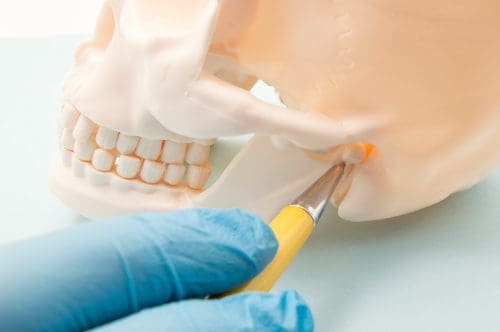
A TMJ disorder affects the temporomandibular joint (TMJ), which is the joint where the jawbone connects to the head, just in front of the ear. The bones and muscles of the TMJ allow the jaw to move up and down, and side to side, enabling a person to talk, chew and yawn.
TMJ disorders (TMDs) can cause pain in the jaw joint and in the muscles that control the movement of the jaw.
How common is it?
About 12 percent of the population experiences symptoms of TMJ at any given time, according to the TMJ Association.
The Causes?
There are several known causes of TMJ disorders, including:
Dental procedures, especially those that require the mouth be open for a long time
Insertion of a breathing tube prior to surgery
Arthritis
Misalignments of the jaw
Grinding teeth, known as bruxism, may cause TMJ disorders but not everyone who grinds their teeth develops a TMD.
Medical professionals may not be able to determine the underlying cause of TMJ disorders in many cases but chiropractors can treat TMJ disorders even if the cause cannot be determined.
The Symptoms of TMJ disorder?
Many people with TMD describe their symptoms as a dull, aching pain that comes and goes in their jaw joint and in nearby areas. Some people with TMJ disorders do not experience pain but have trouble moving their jaws.
Other common symptoms of TMJ disorders include:
Pain or stiffness in the jaw muscles
Chronic headaches
Neck, shoulder pain
Clicking, popping or grating of the jaw joint when the individual opens or closes his or her mouth
Limited movement of the jaw
�Locking� of the jaw
Tinnitus, which includes ear pain, fullness, pressure, and ringing in the ears
Dizziness, vision problems
A bite that feels �off� when the person closes his or her mouth
Treatment for TMJ disorders?
The best way to treat TMJ disorders is to eat soft foods, ice the affected area with ice packs to ease pain and try to avoid extreme jaw movements, such as chewing gum or yawning.
Does Chiropractic treat TMJ disorders?
Yes, chiropractic safely and effective treats TMJ disorders. A chiropractor will perform a full evaluation of the patient�s temporomandibular joint and surrounding bones, muscles, tendons and ligaments to assess the full scope of the TMJ problem and determine its underlying causes. The chiropractor can then suggest a range of treatment that can include stretches and exercises that alleviate pain and melt stiffness in the jaw joint. The chiropractor can also detect and address any misalignments that may be contributing to TMJ pain.
For more information about the temporomandibular joint, TMJ disorders and chiropractic for TMJ problems, contact a chiropractor with experience in diagnosing and treating TMJ problems.
Reduce *IMBALANCE & PAIN* with Functional Orthotics | El Paso, Tx
Foot pronation is a natural movement during standing, walking, or running, however, excessive foot pronation can cause postural imbalances which can result in chronic pain, including low back pain and sciatica. Dr. Alex Jimenez, a chiropractor in El Paso, TX, can help diagnose and treat a variety of health issues associated with foot problems through the utilization of functional custom foot orthotics.
Functional custom foot orthotics are specially designed to accommodate every person’s unique foot anatomy. Excessive foot pronation can ultimately lead to poor posture, which can add unnecessary pressure to the spine and it’s surrounding structures. Dr. Alex Jimenez is the non-surgical choice for foot problems and other health issues through the use of functional custom foot orthotics.
Custom Orthotics & Store Bought Insoles
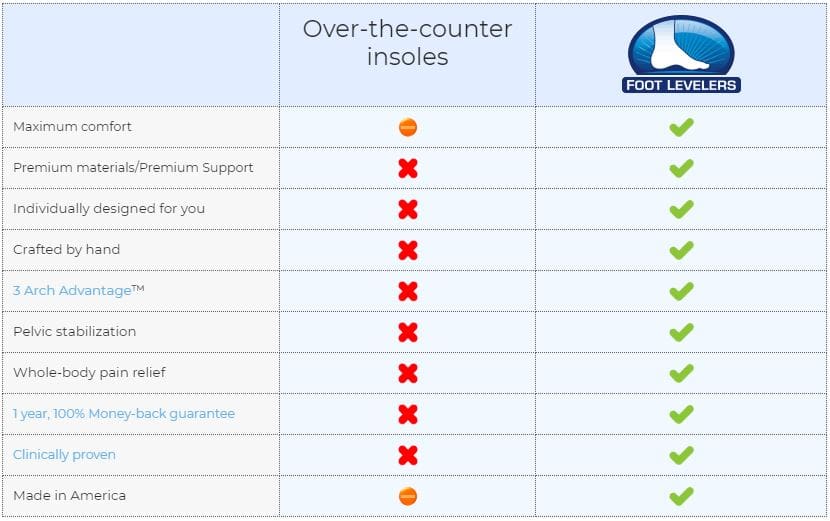
Store-bought orthotic insoles are cheap but the cost to you and your health can be very high. Understanding the differences between over the counter and custom made orthotics is important. Foot Levelers customized orthotics provide the highest-quality and most effective orthotic out there.
Foot Levelers custom orthotics are individually designed for your feet. This achieves a balanced foundation and a stabilized pelvis. These orthotics are handmade based on 3D scans or casts, and your doctor�s examination.
Over-the-counter insoles do cost less, but they only support one arch in the foot. When only one arch is supported, the structure can collapse, and that’s when problems can begin in other parts of the body. Over-support of one arch can cause pain and symptoms, instead of relieving them.
Orthotics Treat Way More Than Feet
Radiculopathy is associated with some of the most significant causes of chronic or acute low back pain. However, it is important to note that the condition itself does not cause pain. Instead, elements of radiculopathy, such as disc herniation, nerve root impingement, and facet arthropathy are actually what causes the pain.
Radiculopathy is a condition of the spine that occurs when a nerve is compressed, causing pain, weakness, tingling, or numbness along the nerve�s course. In the lower back, that course is in the leg. While it is most common in the lower back, radiculopathy can occur in the cervical or thoracic regions of the spine as well.
NCBI Resources
The�temporomandibular joints, TMJ, are the lower jaw hinges that sit on either side of the head in front of each ear. They are responsible for the lower jaw opening, closing, sliding, and rotating. The TMJs are the most body�s most complex joints. The typical person uses them more than 5,000 times a day by talking, laughing, yawning, chewing, eating, smiling, and swallowing.
IFM's Find A Practitioner tool is the largest referral network in Functional Medicine, created to help patients locate Functional Medicine practitioners anywhere in the world. IFM Certified Practitioners are listed first in the search results, given their extensive education in Functional Medicine