With the presence of blood flow restriction training in discussions surrounding intensity coaches and physiotherapists, people are beginning to seek out programs for the best training procedure which might help them reach new levels of athletic performance.
In arenas that were competitive; an athlete’s practice volume is often restricted by their capacity, not their desire to keep training. With elite athletes there are a handful of variables that influence recovery; sleep, nourishment, training volume, the modality of training, body work…etc.. Athletes are looking for everything they can to be able to recuperate faster so they can train harder. Blood flow restriction training is an alternative and should be included in the dialogue of methods which help you recover.
What is Blood Flow Restriction Training (BFR)?
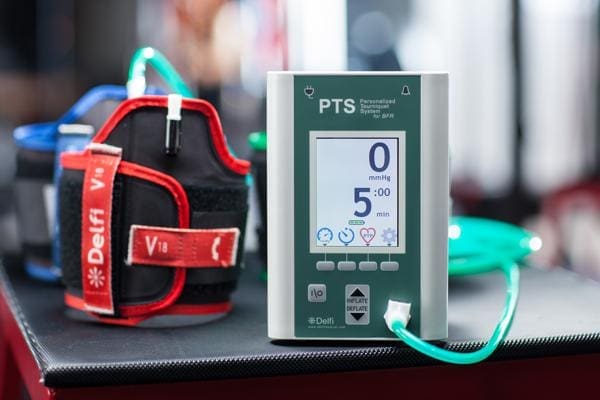
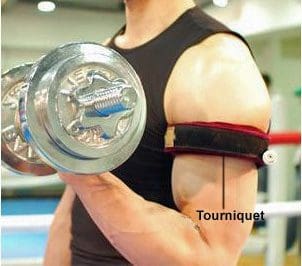
In brief, it is when you use a tourniquet device to restrict blood flow to your extremities while exercising. Faster recovery, and amount of superior training, equals gains.
BFR and Recovery
First let us begin with the thought that BFR does not cause muscle damage. This is an extremely important aspect of BFR training. If we’re currently performing a modality to boost recovery, then we do not want to break down muscle fibers in the procedure.
Think of muscle recovery as an equation of protein balance. Net protein equilibrium muscle protein breakdown. We would like our web protein balance to be over 0 (in the favorable). A positive protein balance suggests we are building muscle, not breaking it down.
There are different markers used in study to quantify muscle breakdown such as CK degrees and myoglobin levels. Delayed onset muscle soreness (DOMS) has also been measured in areas after BFR. The subject revealed no increase in DOMS after blood flow restriction. There seems to be no indirect or direct measures of muscular damage related to BFR when looking at the study. So we can conclude that using BFR will not increase muscle dysfunction following an athlete’s training session.
Process of Recovery with BFR
The very first thing we will look at is the greater release of growth hormone. Studies have shown there to be up to some 290% boost in growth hormone following BFR. Growth hormone is an integral component in collagen synthesis. Collagen synthesis enables the body to restore ligaments and tendons, which are reliant on hydration for strength and their structure.
Tendons, exactly like muscles, are subject to damage following training. When we’ve got higher tendon (collagen) breakdown when compared to tendon (hydration) synthesis we can ultimately wind up with bothersome limb injuries (tendonopathy, tendonitis, tendonosis). Various studies have shown there to be increased cross sectional area and tendon stiffness that was enhanced when comparing raised GH to a control group that was normal without GH.
What exactly does this mean to the athlete? The Growth hormone reaction with blood flow restriction training can lead to tendon strength and durability, thus allowing them to train longer without harm.
Growth hormone can also be correlated with greater healing in bone (thanks to the higher collagen synthesis). A frequent type of sport injury includes stress fractures. A stress fracture is when there’s more collagen breakdown when compared to collagen synthesis. BFR may play a role in helping to stop or limit stress fractures in athletes.
Next let us look at IGF-1. Insulin like growth factor -1 (IGF-1) is ultimately a protein that is connected to muscle growth. When we examine what is needed for muscle development, we could refer back to this equation cited before protein equilibrium muscle protein breakdown. If you have a favorable protein balance we could conclude that muscle development will be achieved by utilizing BFR therapy. More muscle being assembled compared to muscle being destroyed equals more muscle development. If we’re currently attaining a positive protein balance, we could conclude that our muscle fibers are recovering like they ought to be. When comparing to controls, when using BFR training various studies have shown there to be an increased number of IGF-1.
BFR Into Practice
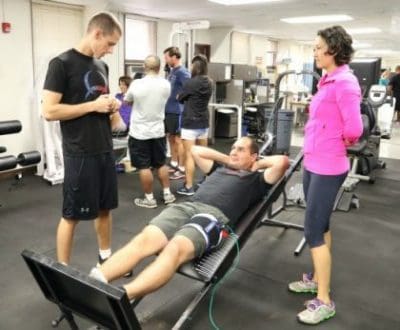
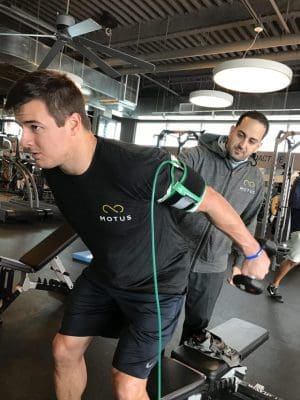
The BFR would take place as the last thing you did before leaving the gym. You can do upper or lower body, however if your goal is strictly muscle recovery, I�d recommend doing the lower extremity. The lower extremity has muscle mass which will create a higher reaction. Since HGH and IGF-1 are carried throughout the blood flow, the result is systemic (whole body). You would be fine doing either the lower or upper extremities. BFR is safe to use on a daily basis, therefore its recommended to switc pper body on your primarily upper body dominant days and the lower body on primarily your lower body dominant days.
The exercise of choice for the lower extremity are some kind of deadlift or squat done at 20 to 30% of your 1RM. The exercise of choice for the upper body would be some kind of push up, row, or press. Once again you are currently aiming for 20-30 percent 1RM. You desire the exercises to be easy. It is not a wonderful notion when performing muscle ups or handstand pushups to perform BFR. That’s a recipe for failure.
The method would be to use 4 sets of 30/15/15/15 reps with a 30 second break between sets and a 2-second concentric and two- second eccentric contraction to get a metabolic reaction. The protocol would be complete in approximately 4-5 minutes.
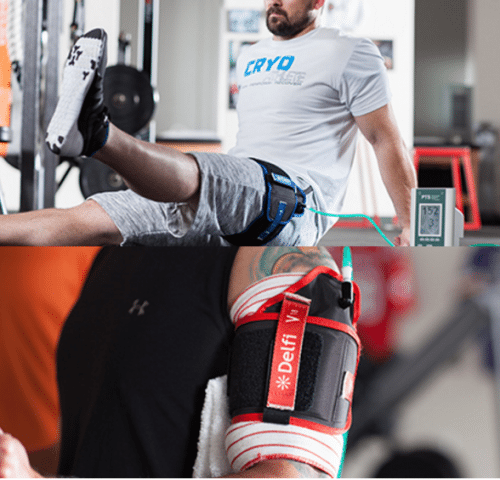
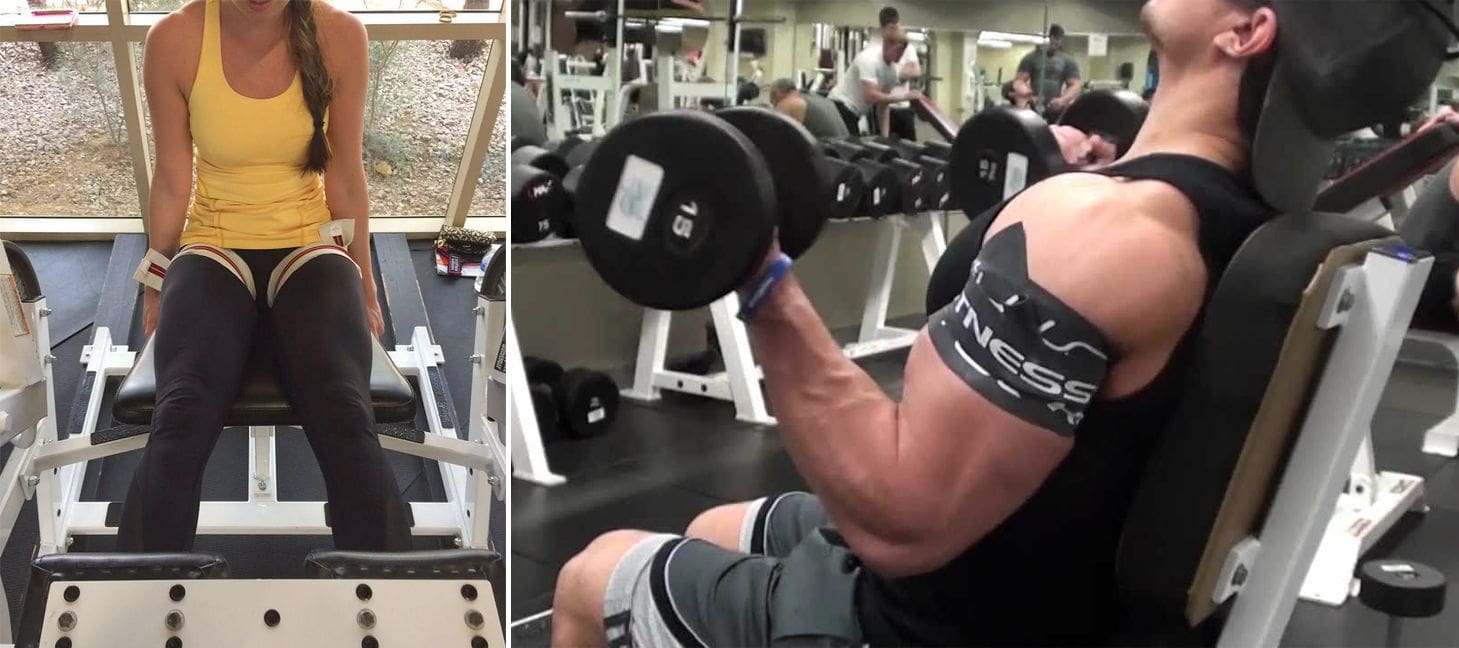
The placement of the cuffs will be at the peak of your arm, the most proximal segment just before the shoulder, or the top of your leg, the most proximal segment below your hip. We want the limb occlusion pressure to be 80 percent for the lower extremities and 50% to the upper extremities. If you experience numbing and tingling sensations, you’ve constricted too much. It will be uncomfortable, and will be the greatest “pump” and “burn” you’ve ever encounter. There ought to be zero numbness or tingling when performing BFR.
The scope of our information is limited to chiropractic and spinal injuries and conditions. To discuss options on the subject matter, please feel free to ask Dr. Jimenez or contact us at 915-850-0900 .�
By Dr. Alex Jimenez
Additional Topics: Sports Care
Athletes engage in a series of stretches and exercises on a daily basis in order to prevent damage or injury from their specific sports or physical activities as well as to promote and maintain strength, mobility and flexibility. However, when injuries or conditions occur as a result of an accident or due to repetitive degeneration, getting the proper care and treatment can change an athlete’s ability to return to play as soon as possible and restore their original health.
BFR or blood flow restriction therapy has been around for a long time, but recently, the evidence for its use in the world that is rehabilitation has begun to emerge. The principle is very simple: that the circulation of blood flow is confined to the area of the human body that’s being trained or undergoing rehabilitation in a certain manner to boost the impacts of the training via lower load (less stress).
Is Blood Flow Restriction Effective?
According to the American College of Sports Medicine, to achieve an increase in muscle size and strength, you want to do 8 to 10 repetitions of an exercise. A moderate to high intensity is deemed to be 65 to 80 percent of their patient’s one rep maximum (the maximum amount of weight a person can lift 1 time). However, the majority of patients that are injured can’t deal with this kind of load, consequently restricting their capacity.
So again we’re faced with the question: Just how can we achieve hypertrophy and gain muscle strength without using heavy loads? The solution involves using a tourniquet to restrict blood flow into a muscle. This technique is known as blood flow restriction training (BFR).
According to the most recent research in the event the appropriate blood flow restriction therapy protocols are utilized, the benefits of the training are equal to those found when using 70 percent of an individual’s maximal load, while using as little as 20 to 30 percent of somebody’s maximum load. The secret is that restricted blood flow training allows healthcare professionals, such as physical therapists, to make a localized region of exercise that is anaerobic.
BFR is a tool that uses a doppler and tourniquet system placed on either thigh or the upper arm to limit blood circulation. After this, it begins to create lactate and hydrogen ions and denies the muscle oxygen. This is what causes the “burning” feeling when we lift heavy weights. The burn is simply the response to being in an active environment of the body. During heavy lifting (65-85%), we create small microtraumas in the muscle that the body then repairs by building more muscle. Together with BFR, we are not generating microtraumas at the muscle, so our body does not have to devote the energy to repair the muscle; rather our bodies just focus on creating the muscle.
Second, soreness is not experienced by us as we would when we were lifting weights. This means we can now lift at low loads (15-30%) and basically gain more muscle strength and size, at a quicker manner, as if we were lifting a more heavier load.
As soon as we create lactate, we activate growth hormone release. The release of IGF-1 subsequently stimulates once growth hormone is released. Such enables your muscles ability to activate; this in turn increases muscle protein synthesis, or our stem cells to the muscle. As previously mentioned, if we were to have muscle breakdown, these stem cells could have to concentrate on repairing muscles building. With blood flow restriction therapy or training, we skip the muscle repair and focus on muscle building. This result is not concentrated throughout the exercise, but impacts the tissues and muscles to create the greater benefit of BFR. BFR has shown to have the ability to help in endurance training and coaching, tendon healing and bone recovery.
All of our muscles are produced from other kinds of fibers, including type 1 which are slow to twitch and rely on oxygen and type 2, which are those we’re currently attempting to build with BFR training and fast-twitch fibers. By limiting the blood flow, we create an environment at the muscle group that compels the increase of more fibers that are type 2. Higher strength gains are the outcome because these type 2 fibers normally can produce more force. Another effect of blood flow restriction is that is allows for a synthesis of proteins needed to build and repair muscles and tissues.
In a treatment setting, this helps us achieve the outcomes for patients faster, and in sports it enables the gains to be attained with less strength and less damage to the muscle. That is why pro and college teams are currently turning to BFR as a training principle. In sports, athletes are attempting to come back to the field quicker after suffering trauma or injury from an accident. Some athletes re-injure themselves by lifting. That is really where BFR can come by lifting loads that are lower and receiving the same, or even much better profits. Healthcare specialists will tend to eliminate strength immediately following a sports injury, but they can not exercise at elevated levels. In this manner, they can not only keep the power but build strength in the process although together with blood flow restriction training.
Is Blood Flow Restriction Safe?
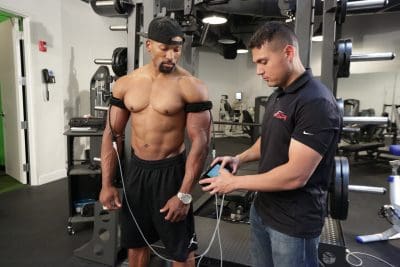
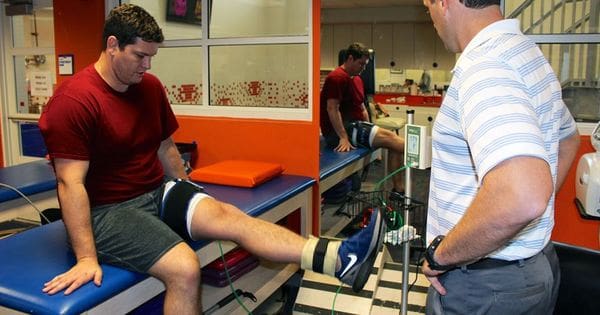
You might be thinking that its effects sounds fantastic, but is it safe? The brief answer is yes, but as with any rehab technique, there are precautions which should be taken and it’s recommended to first seek medical attention from a healthcare professional to discuss the option of BFR therapy for you. We certainly don’t recommend that individuals do this by themselves and tie bands around their limbs. In the practice, specialists can track it as you train and use special devices to know exactly how much you need to train to experience its benefits.
The scope of our information is limited to chiropractic and spinal injuries and conditions. To discuss options on the subject matter, please feel free to ask Dr. Jimenez or contact us at 915-850-0900 .�
By Dr. Alex Jimenez
Additional Topics: Sports Care
Athletes engage in a series of stretches and exercises on a daily basis in order to prevent damage or injury from their specific sports or physical activities as well as to promote and maintain strength, mobility and flexibility. However, when injuries or conditions occur as a result of an accident or due to repetitive degeneration, getting the proper care and treatment can change an athlete’s ability to return to play as soon as possible and restore their original health.
Blood Flow Restriction training (BFR) is a style of resistance training that utilizes the custom of wrapping a kind of tourniquet around a limb and training with a relatively light load. It is a practice that has gained quite a bit of popularity in the resistance coaching realm over the last few decades and is something which can benefit training protocols.
If used properly, practical blood flow restriction training (BFR) could help you through hypertrophy plateaus, pack on additional mass and even aid in growth or maintenance of muscle mass during times in which lifting heavy weight is either laborious or impossible. Let’s understand what’s actually going on in the body when it is used by you.
As mentioned prior, BFR demands using some form of tourniquet around a limb so as to inhibit blood flow. However, not all of blood flow is restricted. The purpose of the tourniquet is to prevent what’s known as ‘venous return’ . When you contract a muscle, more blood than ordinary is shuttled to provide the muscle with a myriad of different nutrients, such as oxygen. Typically, if un-wrapped, the blood then returns to the heart through veins so as to rid the muscle of metabolic bi-products like carbon dioxide, lactate, and hydrogen ions (the acidity that makes your muscle “burn off”).
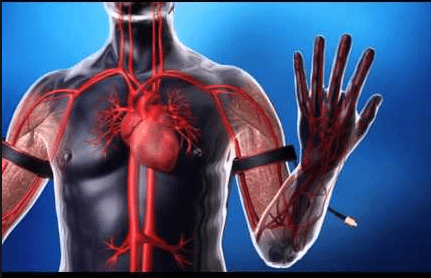
The role of using some form of tourniquet is to inhibit the ‘venous return’ of blood to the heart while still allowing arterial blood circulation to the muscle. By doing this, the blood continues to be shuttled to the muscle and pools without having the ability to escape. It’s believed that the accumulation of blood and bi-products contributes to activation of fast-twitch muscle fibers, which is typically thought to only happen after these are fatigues or due to using fairly heavy loads. By doing this, you increase the potential for the muscle t.
In fact, a recent analysis by suggested that when participants used the same load (40% of 1 RM) and either used a tourniquet or didn’t, the team using BFR observed the same gains in strength and muscle volume as the group that did not. The catch: the BFR team had finished significantly less repeats, and thus less quantity, in addition to less time under pressure. This implies the exact same advantage was observed by them, but achieved in time.
The research appears to indicate that you could complete less work in order to achieve the very same results. Utilizing blood flow restriction training is ideal for times that you are fatigued or simply too sore to execute resistance training that is significant or are just at a time crunch. Additionally, using BFR is a candidate for instances when usage of significant weight is apparently impossible or ill advised, for example post-injury or operation, or being elderly.
Gear
Considering the nature of this kind of training, BFR requires using some form of tourniquet. The easiest and most convenient way to achieve this would be to use some form of strap like an ace bandage or weightlifting knee wraps. If you are able to discover a strap using a comparable elasticity diameter that is smaller, this would be more optimal. When wrapping your limbs, you want to prevent wrap ‘over’ the limb. Otherwise you can risk limiting the muscle’s capacity to contract and your range of movement.
Placement
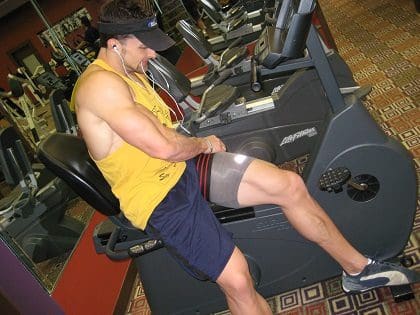
You will want to put the wrap around the proximal portion of the muscle you’re working. This implies over the muscle and close to the torso. If you are thinking about training forearms and your biceps, you should set the wrap beneath the deltoid. Using this technique for the body requires some careful instructions. Some experts say that when practicing BFR for the body, your leg ought to be wrapped close to the groin area, over the quadriceps. If you’re training calves this would be included. When training BFR for calves, its wise to wrap over the calf and beneath the knee. This is because the common wraps are not really large enough to effectively wrap over the quadriceps.
Wrapping Pressure
When wrapping your muscle, remember to keep in mind that you aren’t attempting to completely restrict blood flow. You still require blood circulation to the muscle. As such, when you wrap, you should try to shoot for wrapping the arm at about a 7 out of 10, with ten being very painful and a complete loss of blood flow. If your arm is totally asleep before you even begin training, the wrap is too tight.�If you complete a set of exercises and your arm is not pumped or fatigued, then you’ve probably not wrapped the bands tight enough.
First and foremost, a majority of experts concur that this kind of training is in fact a safe practice provided that it’s executed properly. To be able to maintain proper safety, ensure that you have not completely restricted blood circulation. Further, as soon as you’ve finished your sets, be certain that you remove the wrap in order to give the muscle blood supply and permit the used blood to be recycled. Should you have them too tight or keep the wraps on too long, you run the danger of inducing tissue and cell death. This isn’t advised. Further, if you have higher blood pressure or heart problems BFR, or blood flow restriction, training is not suggested.
There’s also some evidence to indicate that musculature which isn’t directly occluded, for example chest and shoulders, can experience some benefit from BFR. That is interesting because there was a long belief that advantage would be seen by muscle below the tourniquet. A current meta-analysis indicated that despite evidence, the indirect muscle (chest and shoulders) may see increased benefit in comparison to the same training without a tourniquet. If you are feeling tired, yet still want to get a chest and shoulder pump, then it may help you to wrap your arms.
Finally, BFR shouldn’t be used only in place of different sorts of training. Outcomes like power, power output, hypertrophy and force production rely on coaching specificity and varying immunity (i.e to be able to maximize strength, you need to train with heavier loads to get lower repetitions). The study suggests that blood flow restriction training could be as good as other types of instruction, not exceptional. Therefore, blood flow restriction, or BFR, training may be a useful tool within a resistance-training schedule that is well-rounded.
The scope of our information is limited to chiropractic and spinal injuries and conditions. To discuss options on the subject matter, please feel free to ask Dr. Jimenez or contact us at 915-850-0900 .�
By Dr. Alex Jimenez
Additional Topics: Sports Care
Athletes engage in a series of stretches and exercises on a daily basis in order to prevent damage or injury from their specific sports or physical activities as well as to promote and maintain strength, mobility and flexibility. However, when injuries or conditions occur as a result of an accident or due to repetitive degeneration, getting the proper care and treatment can change an athlete’s ability to return to play as soon as possible and restore their original health.
In order to comprehend how BFR, or blood flow restriction, functions, it is important to perform a quick debriefing on how your circulatory system, also called vascular or cardiovascular system, works. Your arteries are blood vessels that carry oxygenated blood away from your heart to your body. Your veins are blood vessels that carry blood from the body back to the heart.
The objective of blood flow restriction training would be to restrict venous return while still allowing arterial flow by strategically wrapping the lightest portion of your own limbs. Blood can keep pooling to a muscle by restricting the veins rather than the arteries and it remains trapped there. It is like filling a water balloon to max capacity (with no popping up, of course).
By gathering all of the blood to the working muscles without letting it leave, a couple key things happen:�One, you receive a crazy pump and your muscles become supersized. The concept is that this contributes to cellular swelling that shocks the muscles into growth. Second, it’s gonna burn tremendously. Your muscles become deprived of oxygen and can not eliminate accumulating waste materials and this creates a great deal of acidosis or strain. Metabolic stress is just one of the three major mechanisms of muscle development and shouldn’t be dismissed.
The Science of BFR
Dr. Brad Schoenfeld is a regular contributor on hypertrophy (the scientific term for muscle growth). In his book Science and maturation of Muscle Hypertrophy, ” he states: “The prevailing body of literature shows that BFR training stimulates anabolic signaling and muscle protein synthesis and markedly increases muscle development despite using loads frequently considered too low to encourage substantial hypertrophy.” Brad goes on further, saying that “it has been speculated that metabolic stress would be the driving force behind BFR-induced muscle hypertrophy.”
Another interesting matter that occurs with blood flow restriction training is since your oxygen-dependent slow-twitch fibers fatigue way quicker than normal, you have to quickly begin tapping into the fast-twitch muscle fibers, which have the biggest potential for growth.
Interestingly enough, your fast-twitch fibers typically don’t get hit unless you’re using heavy loads or pretty hefty loads performed explosively. But BFR lets you really go fast-twitch with loads less than 50 percent of your own one-rep max. Actually, one study from the Journal of Applied Physiology revealed increased muscle cross-sectional area with BFR training using loads as light as 20 percent of one-rep maximum.
What this means for you is that with BFR training you can utilize lighter loads to construct muscle while sparing your muscles from heavy loading and without fatiguing your central nervous system. Additionally, it is important to note that research has proven the gains are not just for legs and the arms but also for muscle groups over the wraps.
How to Wrap For BFR Training
There are some high-end pressure cuffs which may be used to wrap your limbs for BFR, however any wraps will get the job done. Some people utilize knee/elbow or ace bandages wraps. Others use hospital tourniquets that are run-of-the-mill.
For your upper body, wrap it only beneath the shoulder at the top of upper arm so that the wrapping is nestling into your armpit.
For the lower body, wrap only below the gluteal fold from the back and just below the hip flexor in the front.
For both the upper and lower body, you want to wrap at about a 7 out of 10 on the tightness scale (10 being as tight as you can).
You shouldn’t feel any numbness or tingling sensations. That usually means you wrapped it tight, if you do. Wrapping it too tight will limit flow and prevent blood from pooling in the gut, so it defeats the purpose. When in doubt, wrap at first, particularly around the back side of the spectrum.
How can you know whether you wrapped it right? In the event you get your life’s muscular pump. Recall, if it feels sketchy just take off the wraps and re-wrap a tiny bit looser. There is a bit of a learning curve and thus don’t place too much stress to nail it on the first try.
How BFR Training Builds Muscle
The secret to effective BFR training is using light loads (40 to 50 percent of your one-rep maxor less), high repetitions (10 to 15 repetitions or longer), and short rest periods (30 minutes or less). In addition, it is important to note that BFR does not replace your regular training–it just enhances it. Here are my three favorite ways to execute BFR training:
BFR Finishers
After performing your main work out, hit a BFR finisher. If you completed an upper-body workout, hit an upper-body BFR finisher. If you finished a lower-body workout, hit on a BFR finisher. Hit on one for the upper and lower body if you do total-body sessions.
Extra Training Volume and Frequency
BFR is a excellent way to increase training volume (how much work you do) and coaching frequency (how often you train) without impairing your recovery. As an example, to bump up your training volume, if you did 3 routine sets of an exercise with heavier loads, try adding in an additional couple sets of BFR training to the same movement pattern or muscle group using a lighter load for higher reps and shorter rest periods between sets.
Active Recovery and Deloading
Since BFR training requires having lighter loads, it is considerably easier to recover from deeper training. This makes it a process to employ but still want to train. It’s also great to use if you integrate regular deloads–or intervals of decreased loading or training volume–into your training schedule.
It is worth mentioning that BFR is being used with remarkable success in rehabilitation settings, especially with wounded athletes. Being able to operate and develop muscles after an injury or operation with loads is a joint-sparing feature unique to BFR training. As always, consult your physician or physical therapist to find out if BFR training is right for you in such circumstances.
The scope of our information is limited to chiropractic and spinal injuries and conditions. To discuss options on the subject matter, please feel free to ask Dr. Jimenez or contact us at 915-850-0900 .�
By Dr. Alex Jimenez
Additional Topics: Sports Care
Athletes engage in a series of stretches and exercises on a daily basis in order to prevent damage or injury from their specific sports or physical activities as well as to promote and maintain strength, mobility and flexibility. However, when injuries or conditions occur as a result of an accident or due to repetitive degeneration, getting the proper care and treatment can change an athlete’s ability to return to play as soon as possible and restore their original health.
Blood is responsible for the transportation of oxygen, nutrients, and other molecules crucial for life. Most bodybuilders may also tell you that blood is important for gaining muscle, blood flow to be more particular. A whole group of nutritional supplements has surfaced in the past ten years, concentrated on boosting anabolism and so increasing circulation.
However, what if I told you that the opposite could be true? If I told you that occluding blood flow to muscles could have an anabolic effect, what would you say? Blood flow restriction (BFR) training has years of research to support its effectiveness and in this article I will explain what it is and how to use it to augment your training.
What is Blood Flow Restriction Training?
Quite simply, BFR training includes restricting the venous return of blood circulation from the muscle. The objective isn’t to restrict blood circulation to the muscle, but rather prevent blood flow from returning to the muscle, i.e. you don’t need to restrict the blood circulation to the muscle, only the venous return from the muscle, causing the blood to pool in the muscle. This is accomplished by use of a blood pressure cuff or perhaps more practically using knee wraps tightly fastened round the limb(s).
For instance, to utilize blood flow restriction therapy on arm muscles, you would tightly secure a cloth or barbell knee wraps close to the shoulder as possible. This will restrict blood flow return from the arms and cause the blood to pool.
Blood flow restriction training, when done correctly, allows one to utilize much lower weights than normal training protocols and still attain sizable anabolic training results. Actually, occlusion training can increase muscle size and strength using training heaps as mild as 20 percent of a 1 rep max. This is especially useful for trainers who are currently experiencing a deload phase in their training practice or for individuals that are hurt and can only use light weights. BFR training allows you to still make gains using light weights while giving your joints, ligaments, and tendon a rest from heavy lifting.
Blood Flow Restriction Training Effects
Blood flow restriction training induces an anabolic response through various pathways, perhaps the most crucial of which will be by preferentially targeting the big fast twitch muscle fibers. Fast twitch fibers are the muscle fibers that have the potential for growth. These fibers are recruited last during contractions and therefore are largely anaerobic (do not use oxygen) whereas the smaller slow twitch fibers are recruited first through contractions and are aerobic (use oxygen). Slow twitch fibers have a potential for growth compared to fast twitch fibers.
BFR training restricts blood flow to muscles, pre-fatiguing the slow twitch fibers and forcing the anaerobic fast twitch fibers to deal with the load even at low intensities. Metabolically, your muscle is getting an effect that is similar lifting heavy loads although they are using weights that are much lighter. Not only does occlusion training preferentially activate fast twitch muscle fibers, it has been shown to cause a fiber type shift from slow to fast, thus increasing the possibility of muscle growth dimensions.
Metabolic by-product accumulation is primary mechanism by which occlusion training produces hypertrophy. These metabolic by-products would normally be �washed out� by normal blood flow, but occlusion allows them to accumulate near the muscle. Lactate accumulation in particular seems to have an effect, presumably by raising growth hormone (GH) concentrations (4-5). In fact, one study found that BFR training triggered a GH increase 290 times above baseline. This really is a twofold greater increase in GH than what is generated by regular heavy resistance training.
Perhaps even more impressive, blood flow restriction training was demonstrated to reduce myostatin concentrations. Myostatin is a time inhibitor of muscle growth and is thought to limit the possibility of muscle gain. Occlusion training could be able to increase the potential of muscle increase through slow to quickly fiber shifts and reductions in myostatin.
As always, before starting any type of training routine, you should talk with a medical professional. BFR can be performed for the thighs, calves, upper arms, and forearms with a blood pressure cuff or tightly wrapped knee bends (more practical). To occlude the thighs and upper arms, wrap at approximately 70 percent of greatest tightness around the part of their muscles. To occlude forearms wrap or the calves at approximately 70 percent of maximum tightness below the knee or elbow.
Perform 3-5 sets to muscular failure with 20-50 percent of your 1 rep maximum on a particular exercise together with the muscle occluded the whole time. Periods should be 30-60 seconds between sets. After the last set restore blood flow to the muscle and then remove the wraps. Blood flow restriction training takes training to another dimension.
The scope of our information is limited to chiropractic and spinal injuries and conditions. To discuss options on the subject matter, please feel free to ask Dr. Jimenez or contact us at 915-850-0900 .�
By Dr. Alex Jimenez
Additional Topics: Sports Care
Athletes engage in a series of stretches and exercises on a daily basis in order to prevent damage or injury from their specific sports or physical activities as well as to promote and maintain strength, mobility and flexibility. However, when injuries or conditions occur as a result of an accident or due to repetitive degeneration, getting the proper care and treatment can change an athlete’s ability to return to play as soon as possible and restore their original health.
IFM's Find A Practitioner tool is the largest referral network in Functional Medicine, created to help patients locate Functional Medicine practitioners anywhere in the world. IFM Certified Practitioners are listed first in the search results, given their extensive education in Functional Medicine