ClickCease
+1-915-850-0900 [email protected]
Select Page
Assessment and Treatment of Scalenes

Assessment and Treatment of Scalenes

These assessment and treatment recommendations represent a synthesis of information derived from personal clinical experience and from the numerous sources which are cited, or are based on the work of researchers, clinicians and therapists who are named (Basmajian 1974, Cailliet 1962, Dvorak & Dvorak 1984, Fryette 1954, Greenman 1989, 1996, Janda 1983, Lewit 1992, 1999, Mennell 1964, Rolf 1977, Williams 1965).


Clinical Application of Neuromuscular Techniques: Scalenes


Box 4.9 Notes on Scalenes


  • The scalenes are a controversial muscle since they seem to be both postural and phasic (Lin et al 1994), their status being modified by the type(s) of stress to which they are exposed (see Ch. 3 for discussion of this topic).
  • Janda (1988) reports that �spasm and/or trigger points are commonly present in the scalenes as also are weakness and/or inhibition�.
  • The attachment sites of the scalene muscles vary, as does their presence. The scalene posterior is sometimes absent, and sometimes blends with the fibres of medius.
  • Scalene medius is noted to frequently attach to the atlas (Gray 1995) and sometimes extend to the 2nd rib (Simons et al 1998).
  • The scalene minimus (pleuralis), which attaches to the pleural dome, is present in onethird (Platzer 1992) to three-quarters (Simons et al 1998) of people, on at least one side and, when absent, is replaced by a transverse cupular ligament (Platzer 1992).
  • The brachial plexus exits the cervical column between the scalenus anterior and medius. These two muscles, together with the 1st rib, form the scalene hiatus (also called the �scalene opening� or �posterior scalene aperture�) (Platzer 1992). It is through this opening�that the brachial plexus and vascular structures for the upper extremity pass. When scalene fibres are taut, they may entrap the nerves (scalene anticus syndrome) or may elevate the 1st rib against the clavicle and indirectly crowd the vascular, or neurologic, structures (simultaneous compromising of both neural and vascular structures is rare) (Stedman 1998). Any of these conditions may be diagnosed as �thoracic outlet syndrome�, which is �a collective title for a number of conditions attributed to compromise of blood vessels or nerve fibers (brachial plexus) at any point between the base of the neck and the axilla� (Stedman 1998).


Assessment of Shortness in Scalenes (14)


Assessment of cervical sidebending (lateral flexion) strength. This involves the scalenes and levator scapulae (and to a secondary degree the rectus capitis lateralis and the transversospinalis group).


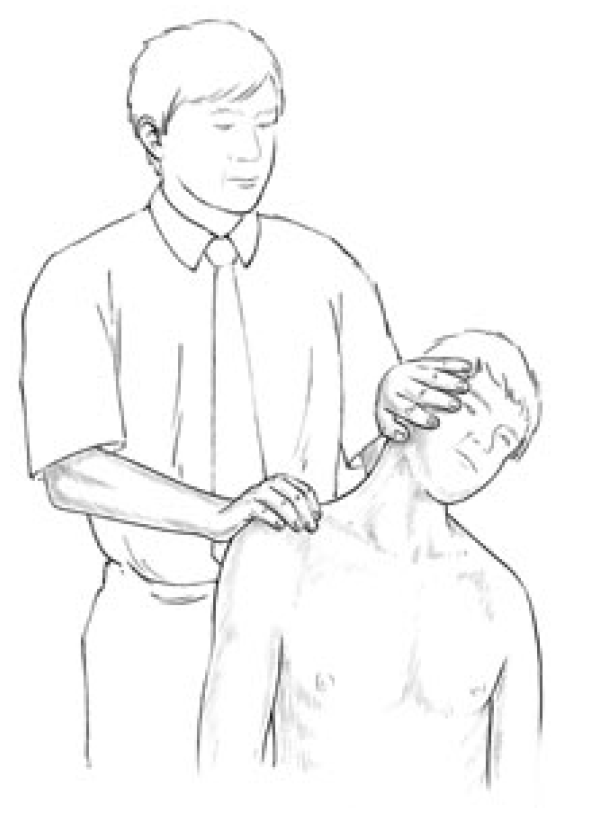
The practitioner places a stabilising hand on the top of the shoulder to prevent movement and the other on the head above the ear, as the seated patient attempts to flex the head laterally against this resistance. Both sides are assessed.


Observation assessment (a) There is no easy test for shortness of the scalenes apart from observation, palpation and assessment of trigger point activity/tautness and a functional observation as follows:


  • In most people who have marked scalene shortness there is a tendency to overuse these (and other upper fixators of the shoulder and neck) as accessory breathing muscles.
  • There may also be a tendency to hyperventilation (and hence for there to possibly be a history of anxiety, phobic behaviour, panic attacks and/or fatigue symptoms).
  • These muscles seem to be excessively tense in many people with chronic fatigue symptoms.


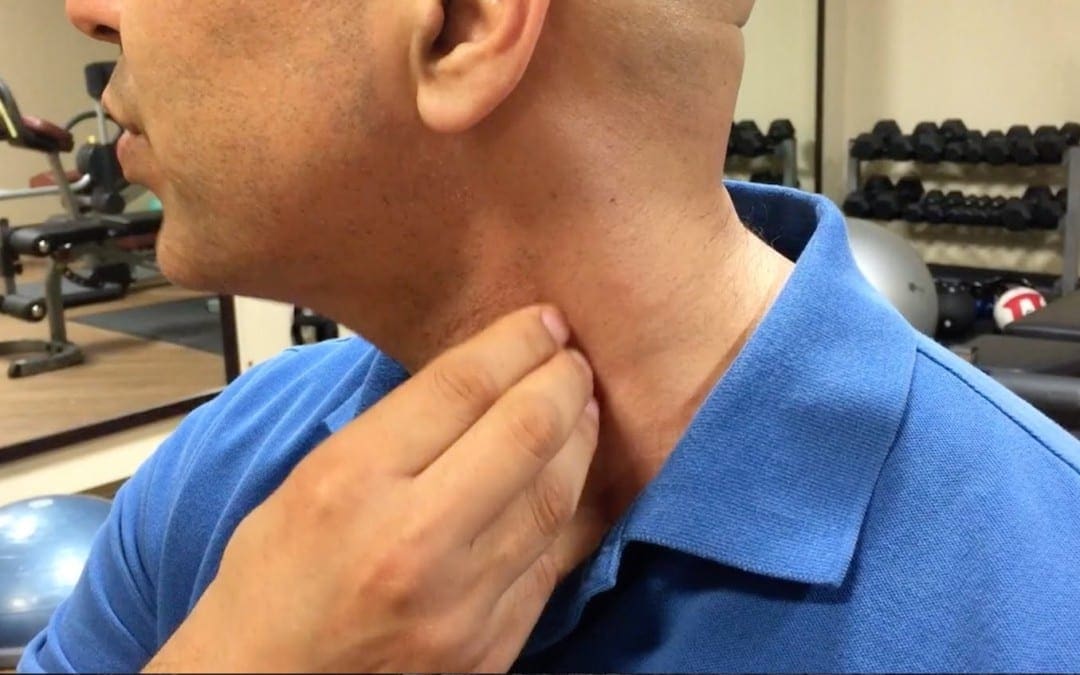
The observation assessment consists of the practitioner placing his relaxed hands over the patient�s shoulders so that the fingertips rest on the clav-icles, at which time the seated patient is asked to inhale deeply. If the practitioner�s hands noticeably rise towards the patient�s ears during inhalation then there exists inappropriate use of scalenes, which indicates that they are stressed, which also means that, by definition, they will have become shortened and require stretching treatment.


Observation assessment (b) (Fig. 4.33) Alternatively, during the history taking interview, the patient can be asked to place one hand on the abdomen just above the umbilicus and the other flat against the upper chest.
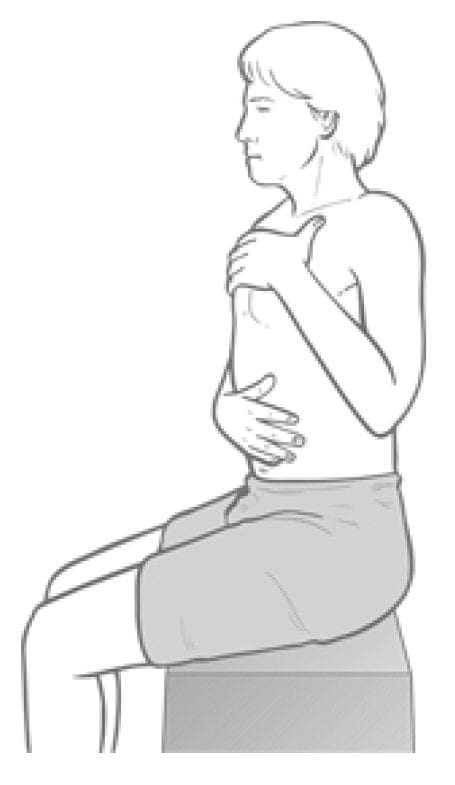
 

Figure 4 33 Observation Assessment of Respiratory Function


Figure 4.33 Observation assessment of respiratory function. Any tendency for the upper hand to move cephalad, or earlier than the caudad hand, suggests scalene overactivity.


On inhalation, the hands are observed: if the upper hand initiates the breathing process and rises significantly towards the chin, rather than moving forwards, a pattern of upper chest breathing can be assumed, and therefore stress, and therefore shortness of the scalenes (and other accessory breathing muscles, notably sternomastoid).


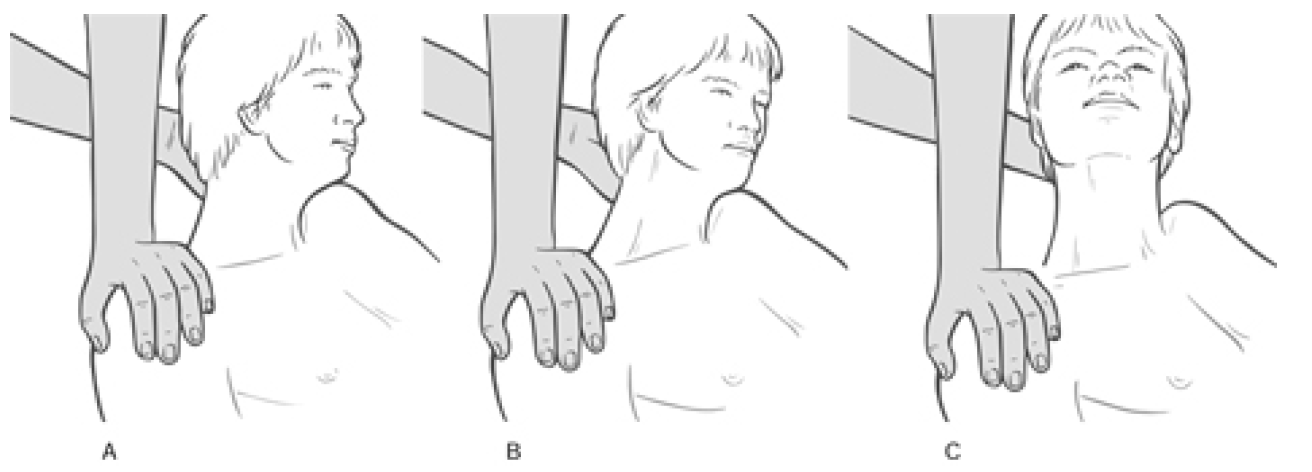
MET Treatment of Short Scalenes (Fig. 4.34A, B, C)


Patient lies supine with a cushion or folded towel under the upper thoracic area so that, unless supported by the practitioner�s contralateral hand, the head would fall into extension. The head is rotated contralaterally (away from the side to be treated). There are three positions of rotation required:


  1. Full contralateral rotation of the head/neck produces involvement of the more posterior fibres of the scalenes
  2. A contralateral 45� rotation of the head/neck involves the middle fibres
  3. A position of only slight contralateral rotation involves the more anterior fibres.


The practitioner�s free hand is placed on the side of the patient�s head to restrain the isometric contraction which will be used to release the scalenes. The patient�s head is in one of the above degrees of rotation, supported by the practitioner�s contralateral hand.
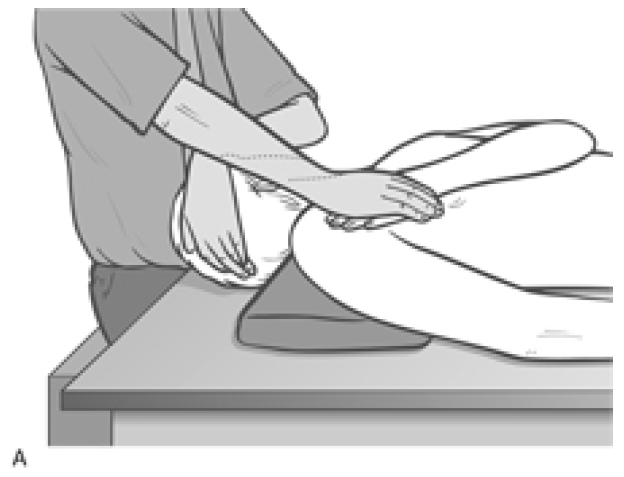
 

Figure 4 34A MET for Scalenus Posticus


Figure 4.34A MET for scalenus posticus. On stretching, following the isometric contraction, the neck is allowed to move into slight extension while a mild stretch is introduced by the contact hand which rests on the second rib, below the lateral aspect of the clavicle.
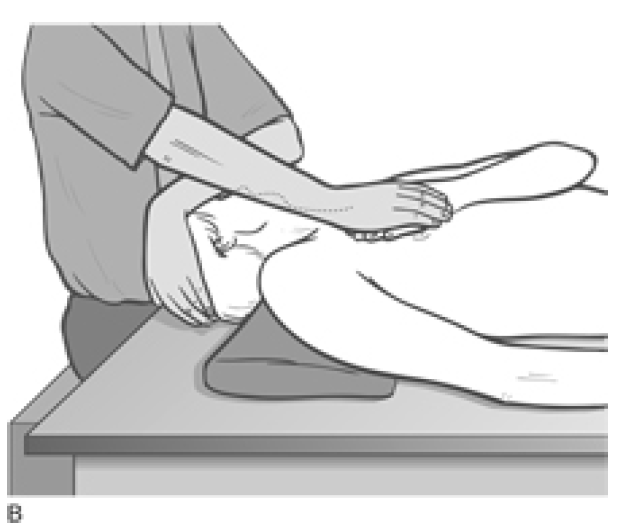
 

Figure 4 34B MET Treatment for the Middle Fibres of Scalenes


Figure 4.34B MET treatment for the middle fibres of scalenes. The hand placement (thenar or hypothenar eminence of relaxed hand) is on the 2nd rib below the centre of the clavicle.
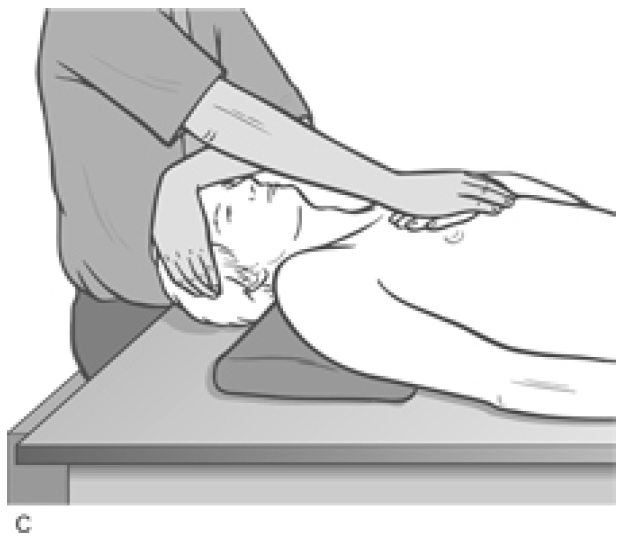
 

Figure 4 34C MET Treatment of the Anterior Fibres of the Scalenes with Hand Placement on the Sternum


Figure 4.34C MET treatment of the anterior fibres of the scalenes; hand placement is on the sternum


The patient is instructed to try to lift the forehead a fraction and to attempt to turn the head towards the affected side, with appropriate breathing cooperation, while resistance is applied by the practitioner�s hand to prevent both movements (�breathe in and hold your breath as you �lift and turn�, and hold this for 7�10 seconds�). Both the effort and, the counter-pressure should be modest and painless at all times.


After a 7�10 second contraction, the head is placed into extension and one hand remains on it to prevent movement during the scalene stretch.


The patient�s contralateral hand is placed (palm down) just inferior to the lateral end of the clavicle on the affected side (for full rotation of the head, posterior scalenes). The practitioner�s hand which was acting to produce resistance to the isometric contraction is now placed onto the dorsum of the patient�s �cushion� hand.


As the patient slowly exhales, the practitioner�s contact hand, resting on the patient�s hand, which is itself resting on the 2nd rib and upper thorax, pushes obliquely away and towards the foot on that same side, following the rib movement into its exhalation position, so stretching the attached musculature and fascia. This stretch is held for at least 20 seconds after each isometric contraction. The process is then repeated at least once more.


The head is rotated 45� contralaterally and the �cushion� hand contact, which applies the stretch of the middle scalenes, is placed just inferior to the middle aspect of the clavicle. When the head is in the almost upright facing position for the anterior scalene stretch, the �cushion� hand contact is on the upper sternum itself.


In all other ways the methodology is as described for the first position above.


NOTE: It is important not to allow heroic degrees of neck extension during any phase of this treatment. There should be some extension, but it should be appropriate to the age and condition of the individual.


A degree of eye movement can assist scalene treatment and may be used as an alternative to the �lift and turn� muscular effort described above. If the patient makes the eyes look caudally (towards the feet) and towards the affected side during the isometric contraction, she will increase the degree of contraction in the muscles. If during the resting phase, when stretch is being introduced, she looks away from the treated side, with eyes looking towards the top of the head, this will enhance the stretch of the muscle.


This whole procedure should be performed bilaterally several times in each of the three head positions. Scalene stretches, with all their variable positions, clearly also influence many of the anterior neck structures.


Dr. Alex Jimenez offers an additional assessment and treatment of the hip flexors as a part of a referenced clinical application of neuromuscular techniques by Leon Chaitow and Judith Walker DeLany. The scope of our information is limited to chiropractic and spinal injuries and conditions. To discuss the subject matter, please feel free to ask Dr. Jimenez or contact us at 915-850-0900 .


By Dr. Alex Jimenez

 

Green-Call-Now-Button-24H-150x150-2-3.png


Additional Topics: Wellness


Overall health and wellness are essential towards maintaining the proper mental and physical balance in the body. From eating a balanced nutrition as well as exercising and participating in physical activities, to sleeping a healthy amount of time on a regular basis, following the best health and wellness tips can ultimately help maintain overall well-being. Eating plenty of fruits and vegetables can go a long way towards helping people become healthy.

 

blog picture of cartoon paperboy big news


WELLNESS TOPIC: EXTRA EXTRA: Managing Workplace Stress



Assessment and Treatment of Upper Trapezius

Assessment and Treatment of Upper Trapezius

These assessment and treatment recommendations represent a synthesis of information derived from personal clinical experience and from the numerous sources which are cited, or are based on the work of researchers, clinicians and therapists who are named (Basmajian 1974, Cailliet 1962, Dvorak & Dvorak 1984, Fryette 1954, Greenman 1989, 1996, Janda 1983, Lewit 1992, 1999, Mennell 1964, Rolf 1977, Williams 1965).


Clinical Application of Neuromuscular Techniques: Upper Trapezius


Lewit (1999) simplifies the need to assess for shortness by stating, �The upper trapezius should be treated if tender and taut.� Since this is an almost universal state in modern life, it seems that everyone requires MET application to this muscle. Lewit also notes that a characteristic mounding of the muscle can often be observed when it is very short, producing the effect of �Gothic shoulders�, similar to the architectural supports of a Gothic church tower (see Fig. 2.13).


Assessment for Shortness of Upper Trapezius (13) (Fig. 4.30)


Figure 4 30 Assessment of the Relative Shortness of the Right Side Upper Trapezius Image 1


Figure 4.30 Assessment of the relative shortness of the right side upper trapezius. One side is compared with the other (for both the range of unforced motion and the nature of the end-feel of motion) to ascertain the side most in need of MET attention.


Test for upper trapezius for shortness (a) See scapulohumeral rhythm test (Ch. 5) which helps identify excessive activity or inappropriate tone in levator scapula and upper trapezius, which, because they are postural muscles, indicates shortness (Fig 5.13A, B). Greenman (1996) describes a functional �firing sequence� assessment which identifies general imbalance and dysfunction involving the upper and lower fixators of the shoulder (Fig. 4.31).


Figure 4 31 Palpation Assessment for Upper and Lower Fixators of the Shoulder Image 2


Figure 4.31 Palpation assessment for upper and lower fixators of the shoulder, including upper trapezius (Greenman 1996).


The patient is seated and the practitioner stands behind. The practitioner rests his right hand over the right shoulder area to assess firing sequence of muscles. The other hand can be placed either on the mid-thoracic region, mainly on the side being assessed, or spanning the lower back to palpate quadratus firing. The assessment should be performed at least twice so that various hand positions are used for different muscles (as in Fig. 4.31).


Greenman bases his description on Janda (1983), who notes the �correct� sequence for shoulder abduction, when seated, as involving: supraspinatus, deltoid, infraspinatus, middle and lower trapezius and finally contralateral quadratus. In dysfunctional states the most common substitutions are said to involve: shoulder elevation by levator scapulae and upper trapezius, as well as early firing by quadratus lumborum, ipsilateral and contralateral.


Inappropriate activity of the upper fixators results in shortness, and of the lower fixators in weakness and possible lengthening (see Ch. 2 for discussion of postural/phasic, etc. muscle characteristics).


Test for upper trapezius for shortness (b) The patient is seated and the practitioner stands behind with one hand resting on the shoulder of the side to be tested and stabilising it. The other hand is placed on the ipsilateral side of the head and the head/neck is taken into contralateral sidebending without force while the shoulder is stabilised (see Fig. 4.30).


The same procedure is performed on the other side with the opposite shoulder stabilised. A comparison is made as to which sidebending manoeuvre produced the greater range and whether the neck can easily reach 45� of side-flexion in each direction, which it should. If neither side can achieve this degree of sidebend, then both trapezius muscles may be short. The relative shortness of one, compared with the other, is evaluated.


Test for upper trapezius for shortness (c) The patient is seated and the practitioner stands behind with a hand resting over the muscle on the side to be assessed. The patient is asked to extend the arm at the shoulder joint, bringing the flexed arm/elbow backwards. If the upper trapezius is stressed on that side it will inappropriately activate during this movement. Since it is a postural muscle, shortness in it can then be assumed (see discussion of postural muscle characteristics in Ch. 3).


Test of upper trapezius for shortness (d) The patient is supine with the neck fully (but not forcefully) sidebent contralaterally (away from the side being assessed). The practitioner is standing at the head of the table and uses a cupped hand contact on the ipsilateral shoulder (i.e. on the side being tested) to assess the ease with which it can be depressed (moved caudally) (Fig. 4.32).


Figure 4 32 MET Treatment of Right Side Upper Trapezius Muscle Image 3


Figure 4.32 MET treatment of right side upper trapezius muscle. A Posterior fibres, B middle fibres, C anterior fibres. Note that stretching in this (or any of the alternative positions which access the middle and posterior fibres) is achieved following the isometric contraction by means of an easing of the shoulder away from the stabilised head, with no force being applied to the neck and head itself.


There should be an easy �springing� sensation as the practitioner pushes the shoulder towards the feet, with a soft end-feel to the movement. If depression of the shoulder is difficult or if there is a harsh, sudden end-point, upper trapezius shortness is confirmed.


This same assessment (always with full lateral flexion) should be performed with the head fully rotated away from the side being treated, half turned away from the side being treated, and slightly turned towards the side being treated, in order to respectively assess the relative shortness and functional efficiency of posterior, middle and anterior subdivisions of the upper portion of trapezius.


MET Treatment of Chronically Shortened Upper Trapezius


MET treatment of upper trapezius, method (a) (Fig. 4.32) In order to treat all the fibres of upper trapezius, MET needs to be applied sequentially. The upper trapezius is subdivided here into anterior, middle and posterior fibres. The neck should be placed into different positions of rotation, coupled with the sidebending as described in the assessment description above, for precise treatment of the various fibres.


The patient lies supine, arm on the side to be treated lying alongside the trunk, head/neck sidebent away from the side being treated to just short of the restriction barrier, while the practitioner stabilises the shoulder with one hand and cups the ear/mastoid area of the same side of the head with the other:


  • With the neck fully sidebent and fully rotated contralaterally, the posterior fibres of upper trapezius are involved in the contraction (see below). This will facilitate subsequent stretching of this aspect of the muscle.
  • With the neck fully sidebent and half rotated, the middle fibres are involved in the contraction.
  • With the neck fully sidebent and slightly rotated towards the side being treated the anterior fibres of upper trapezius are being treated.


The various contractions and subsequent stretches can be performed with practitioner�s arms crossed, hands stabilising the mastoid area and shoulder.


The patient introduces a light resisted effort (20% of available strength) to take the stabilised shoulder towards the ear (a shrug movement) and the ear towards the shoulder. The double movement (or effort towards movement) is important in order to introduce a contraction of the muscle from both ends simultaneously. The degree of effort should be mild and no pain should be felt. The contraction is sustained for 10 seconds (or so) and, upon complete relaxation of effort, the practitioner gently eases the head/neck into an increased degree of sidebending and rotation, where it is stabilised, as the shoulder is stretched caudally.


When stretching is introduced the patient can usefully assist in this phase of the treatment by initiating, on instruction, the stretch of the muscle (�as you breathe out please slide your hand towards your feet�). This reduces the chances of a stretch reflex being initiated. Once the muscle is being stretched, the patient relaxes and the stretch is held for 10�30 seconds.


CAUTION: No stretch should be introduced from the cranial end of the muscle as this could stress the neck. The head is stabilised at its side-flexion and rotation barrier.


Disagreement


There is some disagreement as to the head/neck rotation position as described in the treatment method above, which calls (for posterior and middle fibres) for sidebending and rotation away from the affected side.


Liebenson (1996), suggests that the patient �lies supine with the head supported in anteflexion and laterally flexed away and rotated towards the side of involvement�.


Lewit (1985b) suggests: �The patient is supine � the therapist fixes the shoulder from above with one hand, sidebending the head and neck with the other hand so as to take up the slack. He then asks the patient to look towards the side away from which the head is bent, resisting the patient�s automatic tendency to move towards the side of the lesion.� (This method is described below.)


The author has used the methods described above with good effect and urges readers to try these approaches as well as those of Liebenson and Lewit, and to evaluate results for themselves.


MET treatment of acutely shortened upper trapezius, method (b) Lewit suggests the use of eye movements to facilitate initiation of PIR before stretching, an ideal method for acute problems in this region.


The patient is supine, while the practitioner fixes the shoulder and the sidebent (away from the treated side) head and neck at the restriction barrier and asks the patient to look, with the eyes only (i.e. not to turn the head), towards the side away from which the neck is bent.


This eye movement is maintained, as is a held breath, while the practitioner resists the slight isometric contraction that these two factors (eye movement and breath) will have created.


On exhalation and complete relaxation, the head/neck is taken to a new barrier and the process repeated. If the shoulder is brought into the equation, this is firmly held as it attempts to lightly push into a shrug. After this 10 second contraction the muscle will have released somewhat and slack can again be taken out as the head is repositioned before a repetition of the procedure commences.


Dr. Alex Jimenez offers an additional assessment and treatment of the hip flexors as a part of a referenced clinical application of neuromuscular techniques by Leon Chaitow and Judith Walker DeLany. The scope of our information is limited to chiropractic and spinal injuries and conditions. To discuss the subject matter, please feel free to ask Dr. Jimenez or contact us at 915-850-0900 .


By Dr. Alex Jimenez


Green-Call-Now-Button-24H-150x150-2-3.png


Additional Topics: Wellness


Overall health and wellness are essential towards maintaining the proper mental and physical balance in the body. From eating a balanced nutrition as well as exercising and participating in physical activities, to sleeping a healthy amount of time on a regular basis, following the best health and wellness tips can ultimately help maintain overall well-being. Eating plenty of fruits and vegetables can go a long way towards helping people become healthy.


blog picture of cartoon paperboy big news


WELLNESS TOPIC: EXTRA EXTRA: Managing Workplace Stress


Blank
References
1.�Ballou SK, Keefer L. Multicultural considerations in the diagnosis and management of irritable bowel syndrome: a selective summary.�Eur J Gastroenterol Hepatol.�2013;25:1127�1133.�[PubMed]
2.�Gonzales Gamarra RG, Ruiz S�nchez JG, Le�n Jim�nez F, Cubas Benavides F, D�az V�lez C. [Prevalence of irritable bowel syndrome in the adult population of the city of Chiclayo in 2011]�Rev Gastroenterol Peru.�2012;32:381�386.�[PubMed]
3.�Gwee KA, Lu CL, Ghoshal UC. Epidemiology of irritable bowel syndrome in Asia: something old, something new, something borrowed.�J Gastroenterol Hepatol.�2009;24:1601�1607.�[PubMed]
4.�Krogsgaard LR, Engsbro AL, Bytzer P. The epidemiology of irritable bowel syndrome in Denmark. A population-based survey in adults ? 50 years of age.�Scand J Gastroenterol.�2013;48:523�529.�[PubMed]
5.�Ibrahim NK, Battarjee WF, Almehmadi SA. Prevalence and predictors of irritable bowel syndrome among medical students and interns in King Abdulaziz University, Jeddah.�Libyan J Med.�2013;8:21287.[PMC free article][PubMed]
6.�Lee YY, Waid A, Tan HJ, Chua AS, Whitehead WE. Rome III survey of irritable bowel syndrome among ethnic Malays.�World J Gastroenterol.�2012;18:6475�6480; discussion p. 6479.�[PMC free article][PubMed]
7.�Ghoshal UC, Abraham P, Bhatt C, Choudhuri G, Bhatia SJ, Shenoy KT, Banka NH, Bose K, Bohidar NP, Chakravartty K, et al. Epidemiological and clinical profile of irritable bowel syndrome in India: report of the Indian Society of Gastroenterology Task Force.�Indian J Gastroenterol.�2008;27:22�28.�[PubMed]
8.�Bures J, Cyrany J, Kohoutova D, F�rstl M, Rejchrt S, Kvetina J, Vorisek V, Kopacova M. Small intestinal bacterial overgrowth syndrome.�World J Gastroenterol.�2010;16:2978�2990.�[PMC free article][PubMed]
9.�Dibaise JK, Young RJ, Vanderhoof JA. Enteric microbial flora, bacterial overgrowth, and short-bowel syndrome.�Clin Gastroenterol Hepatol.�2006;4:11�20.�[PubMed]
10.�Bouhnik Y, Alain S, Attar A, Flouri� B, Raskine L, Sanson-Le Pors MJ, Rambaud JC. Bacterial populations contaminating the upper gut in patients with small intestinal bacterial overgrowth syndrome.�Am J Gastroenterol.�1999;94:1327�1331.�[PubMed]
11.�Dukowicz AC, Lacy BE, Levine GM. Small intestinal bacterial overgrowth: a comprehensive review.�Gastroenterol Hepatol (N Y)�2007;3:112�122.�[PMC free article][PubMed]
12.�Posserud I, Stotzer PO, Bj�rnsson ES, Abrahamsson H, Simr�n M. Small intestinal bacterial overgrowth in patients with irritable bowel syndrome.�Gut.�2007;56:802�808.�[PMC free article][PubMed]
13.�Ghoshal U, Ghoshal UC, Ranjan P, Naik SR, Ayyagari A. Spectrum and antibiotic sensitivity of bacteria contaminating the upper gut in patients with malabsorption syndrome from the tropics.�BMC Gastroenterol.�2003;3:9.�[PMC free article][PubMed]
14.�Carrara M, Desideri S, Azzurro M, Bulighin GM, Di Piramo D, Lomonaco L, Adamo S. Small intestine bacterial overgrowth in patients with irritable bowel syndrome.�Eur Rev Med Pharmacol Sci.�2008;12:197�202.�[PubMed]
15.�Ghoshal UC, Ghoshal U, Das K, Misra A. Utility of hydrogen breath tests in diagnosis of small intestinal bacterial overgrowth in malabsorption syndrome and its relationship with oro-cecal transit time.�Indian J Gastroenterol.�2006;25:6�10.�[PubMed]
16.�Ghoshal UC, Kumar S, Mehrotra M, Lakshmi C, Misra A. Frequency of small intestinal bacterial overgrowth in patients with irritable bowel syndrome and chronic non-specific diarrhea.�J Neurogastroenterol Motil.�2010;16:40�46.�[PMC free article][PubMed]
17.�Pimentel M, Chow EJ, Lin HC. Eradication of small intestinal bacterial overgrowth reduces symptoms of irritable bowel syndrome.�Am J Gastroenterol.�2000;95:3503�3506.�[PubMed]
18.�Sachdeva S, Rawat AK, Reddy RS, Puri AS. Small intestinal bacterial overgrowth (SIBO) in irritable bowel syndrome: frequency and predictors.�J Gastroenterol Hepatol.�2011;26 Suppl 3:135�138.�[PubMed]
19.�Park H. The role of small intestinal bacterial overgrowth in the pathophysiology of irritable bowel syndrome.�J Neurogastroenterol Motil.�2010;16:3�4.�[PMC free article][PubMed]
20.�Ghoshal UC, Shukla R, Ghoshal U, Gwee KA, Ng SC, Quigley EM. The gut microbiota and irritable bowel syndrome: friend or foe?�Int J Inflam.�2012;2012:151085.�[PMC free article][PubMed]
21.�Brown AC. Ulcerative colitis, Crohn�s disease and irritable bowel syndrome patients need fecal transplant research and treatment.�J Crohns Colitis.�2014;8:179.�[PubMed]
22.�Sampath K, Levy LC, Gardner TB. Fecal transplantation: beyond the aesthetic.�Gastroenterology.�2013;145:1151�1153.�[PubMed]
23.�Grace E, Shaw C, Whelan K, Andreyev HJ. Review article: small intestinal bacterial overgrowth–prevalence, clinical features, current and developing diagnostic tests, and treatment.�Aliment Pharmacol Ther.�2013;38:674�688.�[PubMed]
24.�Yakoob J, Abbas Z, Khan R, Hamid S, Awan S, Jafri W. Small intestinal bacterial overgrowth and lactose intolerance contribute to irritable bowel syndrome symptomatology in Pakistan.�Saudi J Gastroenterol.�2011;17:371�375.�[PMC free article][PubMed]
25.�Gwee KA, Bak YT, Ghoshal UC, Gonlachanvit S, Lee OY, Fock KM, Chua AS, Lu CL, Goh KL, Kositchaiwat C, et al. Asian consensus on irritable bowel syndrome.�J Gastroenterol Hepatol.�2010;25:1189�1205.�[PubMed]
26.�Lacy BE, Gabbard SL, Crowell MD. Pathophysiology, evaluation, and treatment of bloating: hope, hype, or hot air?�Gastroenterol Hepatol (N Y)�2011;7:729�739.�[PMC free article][PubMed]
27.�Harder H, Serra J, Azpiroz F, Passos MC, Aguad� S, Malagelada JR. Intestinal gas distribution determines abdominal symptoms.�Gut.�2003;52:1708�1713.�[PMC free article][PubMed]
28.�Kumar S, Misra A, Ghoshal UC. Patients with irritable bowel syndrome exhale more hydrogen than healthy subjects in fasting state.�J Neurogastroenterol Motil.�2010;16:299�305.�[PMC free article][PubMed]
29.�Hungin AP, Mulligan C, Pot B, Whorwell P, Agr�us L, Fracasso P, Lionis C, Mendive J, Philippart de Foy JM, Rubin G, Winchester C, de Wit N. Systematic review: probiotics in the management of lower gastrointestinal symptoms in clinical practice — an evidence-based international guide.�Aliment Pharmacol Ther.�2013;38:864�886.�[PMC free article][PubMed]
30.�Attar A, Flouri� B, Rambaud JC, Franchisseur C, Ruszniewski P, Bouhnik Y. Antibiotic efficacy in small intestinal bacterial overgrowth-related chronic diarrhea: a crossover, randomized trial.�Gastroenterology.�1999;117:794�797.�[PubMed]
31.�Marcelino RT, Fagundes-Neto U. [Hydrogen test (H2) in the air expired for the diagnosis of small bowel bacterial overgrowth]�Arq Gastroenterol.�1995;32:191�198.�[PubMed]
32.�Santavirta J. Lactulose hydrogen and [14C]xylose breath tests in patients with ileoanal anastomosis.�Int J Colorectal Dis.�1991;6:208�211.�[PubMed]
33.�Ghoshal UC. How to interpret hydrogen breath tests.�J Neurogastroenterol Motil.�2011;17:312�317.[PMC free article][PubMed]
34.�Yang CY, Chang CS, Chen GH. Small-intestinal bacterial overgrowth in patients with liver cirrhosis, diagnosed with glucose H2 or CH4 breath tests.�Scand J Gastroenterol.�1998;33:867�871.�[PubMed]
35.�Ghoshal UC, Ghoshal U, Ayyagari A, Ranjan P, Krishnani N, Misra A, Aggarwal R, Naik S, Naik SR. Tropical sprue is associated with contamination of small bowel with aerobic bacteria and reversible prolongation of orocecal transit time.�J Gastroenterol Hepatol.�2003;18:540�547.�[PubMed]
36.�Lu CL, Chen CY, Chang FY, Lee SD. Characteristics of small bowel motility in patients with irritable bowel syndrome and normal humans: an Oriental study.�Clin Sci (Lond)�1998;95:165�169.�[PubMed]
37.�Sciarretta G, Furno A, Mazzoni M, Garagnani B, Malaguti P. Lactulose hydrogen breath test in orocecal transit assessment. Critical evaluation by means of scintigraphic method.�Dig Dis Sci.�1994;39:1505�1510.�[PubMed]
38.�Rao SS, Camilleri M, Hasler WL, Maurer AH, Parkman HP, Saad R, Scott MS, Simren M, Soffer E, Szarka L. Evaluation of gastrointestinal transit in clinical practice: position paper of the American and European Neurogastroenterology and Motility Societies.�Neurogastroenterol Motil.�2011;23:8�23.[PubMed]
39.�Yu D, Cheeseman F, Vanner S. Combined oro-caecal scintigraphy and lactulose hydrogen breath testing demonstrate that breath testing detects oro-caecal transit, not small intestinal bacterial overgrowth in patients with IBS.�Gut.�2011;60:334�340.�[PubMed]
40.�Rana SV, Sharma S, Sinha SK, Kaur H, Sikander A, Singh K. Incidence of predominant methanogenic flora in irritable bowel syndrome patients and apparently healthy controls from North India.�Dig Dis Sci.�2009;54:132�135.�[PubMed]
41.�Dridi B, Henry M, El Kh�chine A, Raoult D, Drancourt M. High prevalence of Methanobrevibacter smithii and Methanosphaera stadtmanae detected in the human gut using an improved DNA detection protocol.�PLoS One.�2009;4:e7063.�[PMC free article][PubMed]
42.�Chatterjee S, Park S, Low K, Kong Y, Pimentel M. The degree of breath methane production in IBS correlates with the severity of constipation.�Am J Gastroenterol.�2007;102:837�841.�[PubMed]
43.�Lunia MK, Sharma BC, Sachdeva S. Small intestinal bacterial overgrowth and delayed orocecal transit time in patients with cirrhosis and low-grade hepatic encephalopathy.�Hepatol Int.�2013;7:268�273.[PubMed]
44.�Resmini E, Parodi A, Savarino V, Greco A, Rebora A, Minuto F, Ferone D. Evidence of prolonged orocecal transit time and small intestinal bacterial overgrowth in acromegalic patients.�J Clin Endocrinol Metab.�2007;92:2119�2124.�[PubMed]
45.�Hamilton I, Worsley BW, Cobden I, Cooke EM, Shoesmith JG, Axon AT. Simultaneous culture of saliva and jejunal aspirate in the investigation of small bowel bacterial overgrowth.�Gut.�1982;23:847�853.[PMC free article][PubMed]
46.�Corazza GR, Sorge M, Strocchi A, Benati G, Di Sario A, Treggiari EA, Brusco G, Gasbarrini G. Non-absorbable antibiotics and small bowel bacterial overgrowth.�Ital J Gastroenterol.�1992;24:4�9.�[PubMed]
47.�Kuwahara T, Ogura Y, Oshima K, Kurokawa K, Ooka T, Hirakawa H, Itoh T, Nakayama-Imaohji H, Ichimura M, Itoh K, et al. The lifestyle of the segmented filamentous bacterium: a non-culturable gut-associated immunostimulating microbe inferred by whole-genome sequencing.�DNA Res.�2011;18:291�303.�[PMC free article][PubMed]
48.�Beumer RR, de Vries J, Rombouts FM. Campylobacter jejuni non-culturable coccoid cells.�Int J Food Microbiol.�1992;15:153�163.�[PubMed]
49.�Fromm H, Sarva RP, Ravitch MM, McJunkin B, Farivar S, Amin P. Effects of jejunoileal bypass on the enterohepatic circulation of bile acids, bacterial flora in the upper small intestine, and absorption of vitamin B12.�Metabolism.�1983;32:1133�1141.�[PubMed]
50.�Yoshida T, McCormick WC, Swell L, Vlahcevic ZR. Bile acid metabolism in cirrhosis. IV. Characterization of the abnormality in deoxycholic acid metabolism.�Gastroenterology.�1975;68:335�341.[PubMed]
51.�Bj�rneklett A, Fausa O, Midtvedt T. Bacterial overgrowth in jejunal and ileal disease.�Scand J Gastroenterol.�1983;18:289�298.�[PubMed]
52.�Vanner S. The small intestinal bacterial overgrowth. Irritable bowel syndrome hypothesis: implications for treatment.�Gut.�2008;57:1315�1321.�[PubMed]
53.�Kinross JM, von Roon AC, Holmes E, Darzi A, Nicholson JK. The human gut microbiome: implications for future health care.�Curr Gastroenterol Rep.�2008;10:396�403.�[PubMed]
54.�Clauw DJ. Fibromyalgia: an overview.�Am J Med.�2009;122:S3�S13.�[PubMed]
55.�Pimentel M, Wallace D, Hallegua D, Chow E, Kong Y, Park S, Lin HC. A link between irritable bowel syndrome and fibromyalgia may be related to findings on lactulose breath testing.�Ann Rheum Dis.�2004;63:450�452.�[PMC free article][PubMed]
56.�Simr�n M, Stotzer PO. Use and abuse of hydrogen breath tests.�Gut.�2006;55:297�303.[PMC free article][PubMed]
57.�Gasbarrini A, Lauritano EC, Gabrielli M, Scarpellini E, Lupascu A, Ojetti V, Gasbarrini G. Small intestinal bacterial overgrowth: diagnosis and treatment.�Dig Dis.�2007;25:237�240.�[PubMed]
58.�Ghoshal UC, Srivastava D, Verma A, Misra A. Slow transit constipation associated with excess methane production and its improvement following rifaximin therapy: a case report.�J Neurogastroenterol Motil.�2011;17:185�188.�[PMC free article][PubMed]
59.�Bala L, Ghoshal UC, Ghoshal U, Tripathi P, Misra A, Gowda GA, Khetrapal CL. Malabsorption syndrome with and without small intestinal bacterial overgrowth: a study on upper-gut aspirate using 1H NMR spectroscopy.�Magn Reson Med.�2006;56:738�744.�[PubMed]
60.�Haboubi NY, Lee GS, Montgomery RD. Duodenal mucosal morphometry of elderly patients with small intestinal bacterial overgrowth: response to antibiotic treatment.�Age Ageing.�1991;20:29�32.�[PubMed]
61.�Shindo K, Machida M, Koide K, Fukumura M, Yamazaki R. Deconjugation ability of bacteria isolated from the jejunal fluid of patients with progressive systemic sclerosis and its gastric pH.�Hepatogastroenterology.�1998;45:1643�1650.�[PubMed]
62.�Wanitschke R, Ammon HV. Effects of dihydroxy bile acids and hydroxy fatty acids on the absorption of oleic acid in the human jejunum.�J Clin Invest.�1978;61:178�186.�[PMC free article][PubMed]
63.�Shanab AA, Scully P, Crosbie O, Buckley M, O�Mahony L, Shanahan F, Gazareen S, Murphy E, Quigley EM. Small intestinal bacterial overgrowth in nonalcoholic steatohepatitis: association with toll-like receptor 4 expression and plasma levels of interleukin 8.�Dig Dis Sci.�2011;56:1524�1534.�[PubMed]
64.�Ghoshal UC, Park H, Gwee KA. Bugs and irritable bowel syndrome: The good, the bad and the ugly.�J Gastroenterol Hepatol.�2010;25:244�251.�[PubMed]
65.�Barbara G, Stanghellini V, Brandi G, Cremon C, Di Nardo G, De Giorgio R, Corinaldesi R. Interactions between commensal bacteria and gut sensorimotor function in health and disease.�Am J Gastroenterol.�2005;100:2560�2568.�[PubMed]
66.�Cherbut C, Aub� AC, Blotti�re HM, Galmiche JP. Effects of short-chain fatty acids on gastrointestinal motility.�Scand J Gastroenterol Suppl.�1997;222:58�61.�[PubMed]
67.�Ramakrishna BS, Roediger WE. Bacterial short chain fatty acids: their role in gastrointestinal disease.�Dig Dis.�1990;8:337�345.�[PubMed]
68.�Dumoulin V, Moro F, Barcelo A, Dakka T, Cuber JC. Peptide YY, glucagon-like peptide-1, and neurotensin responses to luminal factors in the isolated vascularly perfused rat ileum.�Endocrinology.�1998;139:3780�3786.�[PubMed]
69.�Balsari A, Ceccarelli A, Dubini F, Fesce E, Poli G. The fecal microbial population in the irritable bowel syndrome.�Microbiologica.�1982;5:185�194.�[PubMed]
70.�Nobaek S, Johansson ML, Molin G, Ahrn� S, Jeppsson B. Alteration of intestinal microflora is associated with reduction in abdominal bloating and pain in patients with irritable bowel syndrome.�Am J Gastroenterol.�2000;95:1231�1238.�[PubMed]
71.�Cummings JH, Macfarlane GT. The control and consequences of bacterial fermentation in the human colon.�J Appl Bacteriol.�1991;70:443�459.�[PubMed]
72.�Camilleri M. Probiotics and irritable bowel syndrome: rationale, mechanisms, and efficacy.�J Clin Gastroenterol.�2008;42 Suppl 3 Pt 1:S123�S125.�[PubMed]
73.�Spiller R. Probiotics: an ideal anti-inflammatory treatment for IBS?�Gastroenterology.�2005;128:783�785.�[PubMed]
74.�Ford AC, Spiegel BM, Talley NJ, Moayyedi P. Small intestinal bacterial overgrowth in irritable bowel syndrome: systematic review and meta-analysis.�Clin Gastroenterol Hepatol.�2009;7:1279�1286.�[PubMed]
75.�Cuoco L, Salvagnini M. Small intestine bacterial overgrowth in irritable bowel syndrome: a retrospective study with rifaximin.�Minerva Gastroenterol Dietol.�2006;52:89�95.�[PubMed]
76.�Di Stefano M, Corazza GR. Treatment of small intestine bacterial overgrowth and related symptoms by rifaximin.�Chemotherapy.�2005;51 Suppl 1:103�109.�[PubMed]
77.�Pimentel M, Lembo A, Chey WD, Zakko S, Ringel Y, Yu J, Mareya SM, Shaw AL, Bortey E, Forbes WP. Rifaximin therapy for patients with irritable bowel syndrome without constipation.�N Engl J Med.�2011;364:22�32.�[PubMed]
78.�Hwang L, Low K, Khoshini R, Melmed G, Sahakian A, Makhani M, Pokkunuri V, Pimentel M. Evaluating breath methane as a diagnostic test for constipation-predominant IBS.�Dig Dis Sci.�2010;55:398�403.�[PubMed]
79.�Low K, Hwang L, Hua J, Zhu A, Morales W, Pimentel M. A combination of rifaximin and neomycin is most effective in treating irritable bowel syndrome patients with methane on lactulose breath test.�J Clin Gastroenterol.�2010;44:547�550.�[PubMed]
80.�Bengmark S. Colonic food: pre- and probiotics.�Am J Gastroenterol.�2000;95:S5�S7.�[PubMed]
81.�Quigley EM, Quera R. Small intestinal bacterial overgrowth: roles of antibiotics, prebiotics, and probiotics.�Gastroenterology.�2006;130:S78�S90.�[PubMed]
82.�Xiao SD, Zhang DZ, Lu H, Jiang SH, Liu HY, Wang GS, Xu GM, Zhang ZB, Lin GJ, Wang GL. Multicenter, randomized, controlled trial of heat-killed Lactobacillus acidophilus LB in patients with chronic diarrhea.�Adv Ther.�2003;20:253�260.�[PubMed]
83.�O’Mahony L, McCarthy J, Kelly P, Hurley G, Luo F, Chen K, O�Sullivan GC, Kiely B, Collins JK, Shanahan F, et al. Lactobacillus and bifidobacterium in irritable bowel syndrome: symptom responses and relationship to cytokine profiles.�Gastroenterology.�2005;128:541�551.�[PubMed]
84.�Tsuchiya J, Barreto R, Okura R, Kawakita S, Fesce E, Marotta F. Single-blind follow-up study on the effectiveness of a symbiotic preparation in irritable bowel syndrome.�Chin J Dig Dis.�2004;5:169�174.[PubMed]
85.�Kim YG, Moon JT, Lee KM, Chon NR, Park H. [The effects of probiotics on symptoms of irritable bowel syndrome]�Korean J Gastroenterol.�2006;47:413�419.�[PubMed]
86.�Park JS, Yu JH, Lim HC, Kim JH, Yoon YH, Park HJ, Lee SI. [Usefulness of lactulose breath test for the prediction of small intestinal bacterial overgrowth in irritable bowel syndrome]�Korean J Gastroenterol.�2010;56:242�248.�[PubMed]
87.�Mann NS, Limoges-Gonzales M. The prevalence of small intestinal bacterial vergrowth in irritable bowel syndrome.�Hepatogastroenterology.�2009;56:718�721.�[PubMed]
88.�Scarpellini E, Giorgio V, Gabrielli M, Lauritano EC, Pantanella A, Fundar� C, Gasbarrini A. Prevalence of small intestinal bacterial overgrowth in children with irritable bowel syndrome: a case-control study.�J Pediatr.�2009;155:416�420.�[PubMed]
89.�Nucera G, Gabrielli M, Lupascu A, Lauritano EC, Santoliquido A, Cremonini F, Cammarota G, Tondi P, Pola P, Gasbarrini G, et al. Abnormal breath tests to lactose, fructose and sorbitol in irritable bowel syndrome may be explained by small intestinal bacterial overgrowth.�Aliment Pharmacol Ther.�2005;21:1391�1395.�[PubMed]
90.�Reddymasu SC, Sostarich S, McCallum RW. Small intestinal bacterial overgrowth in irritable bowel syndrome: are there any predictors?�BMC Gastroenterol.�2010;10:23.�[PMC free article][PubMed]
91.�Lombardo L, Foti M, Ruggia O, Chiecchio A. Increased incidence of small intestinal bacterial overgrowth during proton pump inhibitor therapy.�Clin Gastroenterol Hepatol.�2010;8:504�508.�[PubMed]
92.�Parodi A, Dulbecco P, Savarino E, Giannini EG, Bodini G, Corbo M, Isola L, De Conca S, Marabotto E, Savarino V. Positive glucose breath testing is more prevalent in patients with IBS-like symptoms compared with controls of similar age and gender distribution.�J Clin Gastroenterol.�2009;43:962�966.[PubMed]
93.�Rana SV, Sinha SK, Sikander A, Bhasin DK, Singh K. Study of small intestinal bacterial overgrowth in North Indian patients with irritable bowel syndrome: a case control study.�Trop Gastroenterol.�2008;29:23�25.�[PubMed]
94.�Majewski M, McCallum RW. Results of small intestinal bacterial overgrowth testing in irritable bowel syndrome patients: clinical profiles and effects of antibiotic trial.�Adv Med Sci.�2007;52:139�142.[PubMed]
95.�Lupascu A, Gabrielli M, Lauritano EC, Scarpellini E, Santoliquido A, Cammarota G, Flore R, Tondi P, Pola P, Gasbarrini G, et al. Hydrogen glucose breath test to detect small intestinal bacterial overgrowth: a prevalence case-control study in irritable bowel syndrome.�Aliment Pharmacol Ther.�2005;22:1157�1160.[PubMed]
Close Accordion
Research Studies on SIBO in Irritable Bowel Syndrome

Research Studies on SIBO in Irritable Bowel Syndrome

Irritable bowel syndrome, or IBS, is a prevalent condition characterized by abdominal pain or discomfort, bloating, connected to altered stool form (such as diarrhea and constipation) as well as passage. Approximately 4 percent to 30 percent of individuals world-wide suffer from IBS. Small intestinal bacterial overgrowth, or SIBO, which was clinically demonstrated in patients with structural abnormalities in the gut, such as ileo-transverse anastomosis, stricture, fistula, slow motility and reduced gut defense, may also be characterized by abdominal pain or discomfort, bloating, flatulence and loose motion. It’s been recognized that SIBO may occur in the absence of structural abnormalities. These patients may be incorrectly diagnosed with IBS, or irritable bowel syndrome.


How common is SIBO diagnosed in IBS?


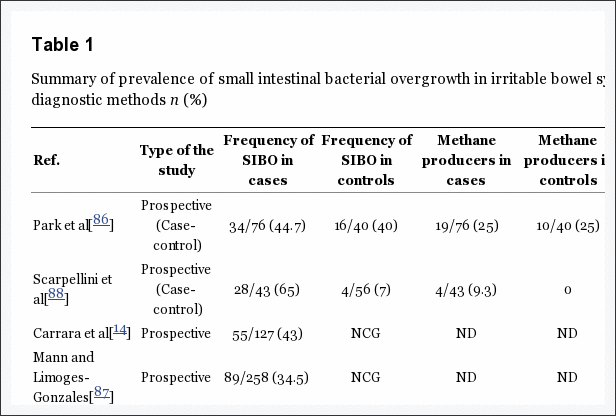
Small intestinal bacterial overgrowth has been described as the excessive presence of bacteria, forming 105 units per milliliter on culture of their intestine aspirate. As this is an invasive test, lots of noninvasive techniques like lactulose and glucose hydrogen breath tests (LHBT and GHBT) are broadly used to diagnose SIBO. This issue has been recognized among people with IBS. In a variety of research studies, frequency of SIBO among patients presenting IBS varied from 4 percent to 78 percent, according to Table ?1, more so among patients with diarrhea-predominant IBS. Not only quantitative increase (SIBO) but qualitative change from the gut bacteria (dysbiosis) was reported among patients with IBS. Research studies utilizing antibiotics and probiotics have caused disagreement to care for this disease with lately transplantation which led to a paradigm shift. Nonetheless, it’s essential to understand the wide-variability in frequency of SIBO among people with IBS. A wide-variability in frequency may indicate it is vital to evaluate the evidence carefully to determine whether the association between IBS and SIBO is under-projected in previous research studies.


Table 1 Summary of Prevalence of SIBO in IBS Image 1


The research studies are examined by people on discordance with the connection between IBS and SIBO as well as their strength and weakness, such as evidence on exploitation of gut flora on indications of IBS and other issues.


Assessment of Studies on SIBO in IBS


Table ?1 summarizes the outcomes among patients with IBS from research studies on individuals with SIBO. As can be noted in the table, the frequency of people with IBS and SIBO varied from 4 percent to 78 percent and from 1 percent and 40 percent among controls. Frequency of individuals with SIBO and IBS was greater than among controls. It might be concluded that SIBO is correlated with IBS. It’s essential to assess the explanations in various research studies.


Critical Evaluation of Studies on SIBO in IBS


Can IBS phenotype determine frequency of SIBO?


IBS is a state that’s heterogeneous. The sub-types may be diarrhea or constipation-predominant or may be alternating. Patients with diarrhea-predominant IBS have organic cause including SIBO compared to other types of IBS. In a study on 129 patients with non-diarrheal IBS, 73 with long-term diarrhea, for example diarrhea-predominant IBS, and 51 healthy controls, frequency of SIBO with GHBT was 11 (8.5 percent), 16 (22 percent) and 1 (2%), respectively. Similar findings are reported in various studies. Diarrheal IBS needs to be evaluated in comparison to other sorts of IBS for SIBO. Research studies that contained percentage of individuals are extremely likely to reveal frequency of SIBO.


Bloating is a symptom commonly reported among patients with IBS. Frequency of bloating has been reported to vary from Asia by 26 percent to 83 percent in research studies on IBS. The pathogenesis of bloating may be correlated with increased quantity of gas in the gut, its abnormal source and improved gut sense in response to distension of the gut. Patients with SIBO may have increased amount of gas inside the gut, so it’s plausible to believe IBS patients with bloating that is noticeable are expected to have SIBO. There is limited data with this specific circumstance. Evidence also demonstrated that both fasting along with post-substrate (e.g., sugar, lactulose) breath hydrogen is considerably higher compared to individuals with IBS compared to controls. Probiotics and antibiotics, which are demonstrated to reduce gas, are demonstrated to ease bloating. It has been noted that treatment can revert hydrogen breath tests back to normal. Patients with IBS, flatulence and bloating should be evaluated for SIBO. More data is involved with this issue.


Can techniques used to diagnose SIBO determine its frequency?


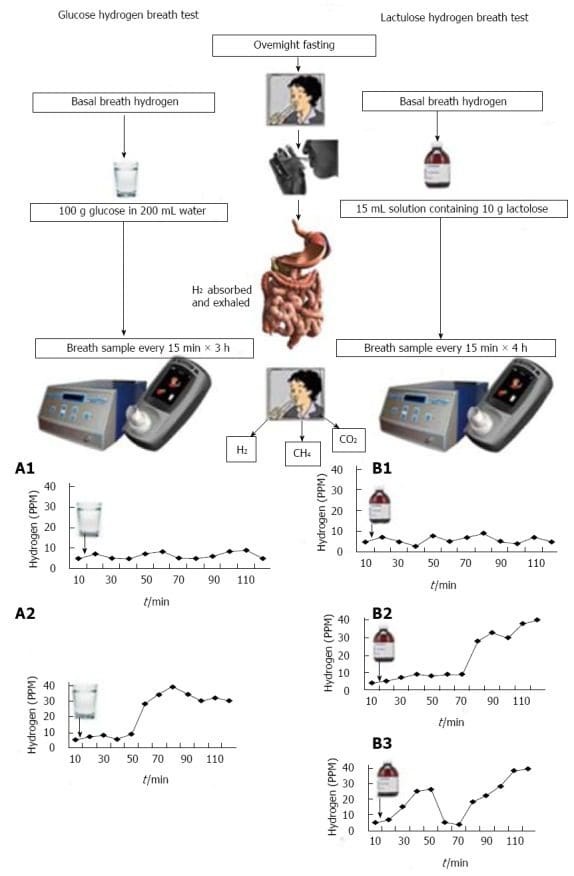
Several techniques are used to diagnose SIBO; including GHBT LHBT,14C breath test, and culture of aspirate. The principle of hydrogen breath tests is summarized in Figure 1. Dietary carbohydrates produce hydrogen in the gut. In patients with SIBO, the bacteria in the small bowel ferment these carbohydrates, producing hydrogen, which gets absorbed and is exhaled in the breath.


Figure 1 Outline of Principle of Method and Interpretation of Glucose and Lactulose Hydrogen Breath Tests Image 2

Figure 1


Hydrogen breath test involves giving patients a load of carbohydrate (generally in the sort of glucose and lactulose) and measuring expired hydrogen concentrations in a period of time. Identification of SIBO using hydrogen breath test depends upon the bodily principle of patients with SIBO, glucose may be fermented by bacteria in the intestine resulting in production of hydrogen gas that is consumed and exhaled in expired air (Figure ?1, A1). By contrast, lactulose, which may function as a non-absorbable disaccharide, will produce an early summit due to fermentation in the small intestine (normally within 90-min) or two summit (as a consequence of small intestine fermentation and minute from colon), if SIBO is present (Figure ?1, B2 and B3). There are limits in hydrogen breath test for identification of SIBO. There may be similarities in patients with problems and SIBO employing rapid transit making differentiation difficult. An ancient summit can be positive in people with gut transit time. By way of instance, in a study from India, median oro-cecal transit interval was 65 minutes (variety 40-110 moments) in healthy subjects. In another study from Taiwan, mean transit interval was 85 min. It’s been substantiated in Western individuals recently by simultaneously using LHBT and radio-nuclide method to gauge gut transport. Double summit standards for evaluation of SIBO using LHBT is quite insensitive. Sensitivity of GHBT to diagnose SIBO is 44 percent contemplating the culture of gut aspirate as a regular standard. As a result, it’s estimated that the researchers who used a historic summit standards in LHBT could discover a greater frequency of SIBO among people with IBS along with controls. In contrast, those who would use either GHBT or double summit benchmark in LHBT might locate a minimum frequency of SIBO alike in patients with IBS and controls. It is well worth noting from Table ?1 that the frequency of SIBO among people with IBS and controls on LHBT (early summit standards) varied from 34.5 percent to 78 percent and 7 percent to 40 percent, respectively; in contrast with the frequency GHBT varied from 8.5 percent to 46 percent and 2 percent to 18percent.


Fifteen percent of people might have methanogenic flora in the gut. Methanobrevibacter smithii, Methanobrevibacter stadmanae and perhaps several of those coliform bacteria are methanogens. In these areas, only hydrogen breath tests may not diagnose SIBO, estimation of methane may also be demanded (Figure ?1). Table ?1 shows that 8.5 percent to 26 percent of IBS sufferers and 0 percent to 25 percent of controls exhaled methane inside their breath. Whether methane was not expected in them, SIBO could not have been diagnosed. Methane was not estimated, which could have resulted in underestimation of frequency of SIBO as outlined in a proportion of the research study. Methane production in excess is connected to constipation. Consequently, methane estimation in breath, which is inaccessible in several commercially available hydrogen breath test machines, is particularly vital in patients employing constipation-predominant IBS. Some could have slow transit through the small intestine making prolonged testing as a lot of hours required and many people may not want to undergo such testing. However, a period of testing for them may overlook SIBO’s identification.


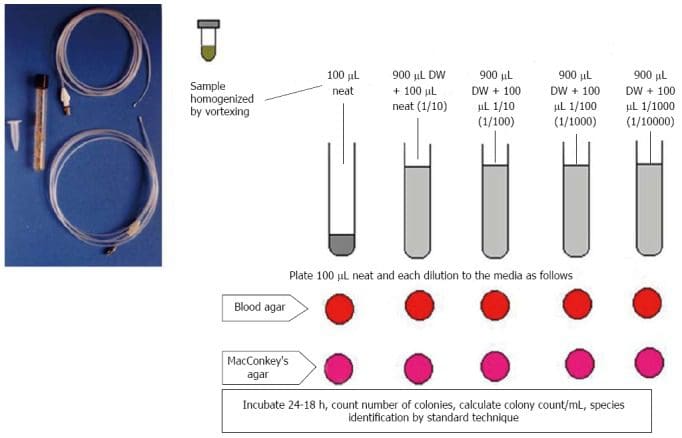
The jejunal aspirate culture has traditionally been used as the gold standard to diagnose SIBO, according to Figure ?2. On the other hand, the limitations of this test include invasiveness in addition to the challenges posed by attempting to civilization all strains and species. In fact, usage of air during endoscopy might lead to a false negative impact as anaerobes do not rise when these are exposed to oxygen. Furthermore, a massive percentage of germs are not cultured. By contrast, single lumen catheter passed through the nose or through the biopsy channel of endoscope, may lead to contamination with oro-pharyngeal flora supplying false positive result. Therefore, we left a double-lumen catheter to prevent these oro-pharyngeal contamination (Figure ?2). Studies on SIBO one of patients with IBS using qualitative civilization of small bowel aspirate are scanty (Table ?1). A study by Posserud et al reported that a frequency of SIBO of 4 percent among people with IBS. Taking the result of study using GHBT, the sensitivity of 44 percent to diagnose the intestine aspirate appears to have the incidence of SIBO . More studies are essential on this issue.


Figure 2 Outline of Method of Culturing Bacteria and Counting the Colonies Image 3

Figure 2


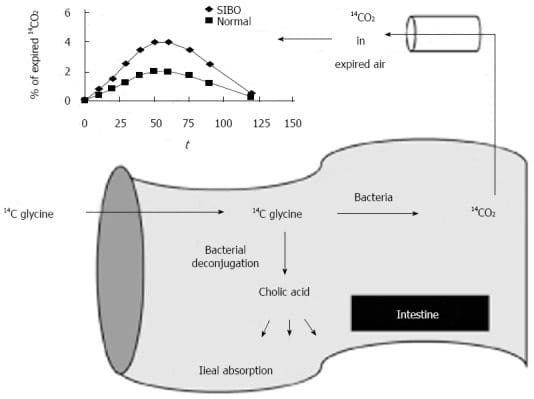
Figure 3 Bile Acid Breath Test Involving Bile Acid and Glycocholic Acid Image 4

Figure 3


13C and�14C based tests have also been developed based on the bacterial metabolism of D-xylose (Figure ?3). Of acids containing13C and�14C may be used to diagnose SIBO. The glycocholic acid breath test contains the managing of the bile acid14C glycocholic acid, as well as the discovery of14CO2, which may be increased in SIBO (Figure 3), according to the clinical and experimental data from the various research studies on SIBO associated with IBS. While evidence may appear conclusive, further research studies may be required to properly determine the results.


Information referenced from the National Center for Biotechnology Information (NCBI) and the National University of Health Sciences. The scope of our information is limited to chiropractic and spinal injuries and conditions. To discuss the subject matter, please feel free to ask Dr. Jimenez or contact us at 915-850-0900 .


By Dr. Alex Jimenez


Green-Call-Now-Button-24H-150x150-2-3.png


Additional Topics: Wellness


Overall health and wellness are essential towards maintaining the proper mental and physical balance in the body. From eating a balanced nutrition as well as exercising and participating in physical activities, to sleeping a healthy amount of time on a regular basis, following the best health and wellness tips can ultimately help maintain overall well-being. Eating plenty of fruits and vegetables can go a long way towards helping people become healthy.


blog picture of cartoon paperboy big news


WELLNESS TOPIC: EXTRA EXTRA: Managing Workplace Stress



Blank
References
1.�Ballou SK, Keefer L. Multicultural considerations in the diagnosis and management of irritable bowel syndrome: a selective summary.�Eur J Gastroenterol Hepatol.�2013;25:1127�1133.�[PubMed]
2.�Gonzales Gamarra RG, Ruiz S�nchez JG, Le�n Jim�nez F, Cubas Benavides F, D�az V�lez C. [Prevalence of irritable bowel syndrome in the adult population of the city of Chiclayo in 2011]�Rev Gastroenterol Peru.�2012;32:381�386.�[PubMed]
3.�Gwee KA, Lu CL, Ghoshal UC. Epidemiology of irritable bowel syndrome in Asia: something old, something new, something borrowed.�J Gastroenterol Hepatol.�2009;24:1601�1607.�[PubMed]
4.�Krogsgaard LR, Engsbro AL, Bytzer P. The epidemiology of irritable bowel syndrome in Denmark. A population-based survey in adults ? 50 years of age.�Scand J Gastroenterol.�2013;48:523�529.�[PubMed]
5.�Ibrahim NK, Battarjee WF, Almehmadi SA. Prevalence and predictors of irritable bowel syndrome among medical students and interns in King Abdulaziz University, Jeddah.�Libyan J Med.�2013;8:21287.[PMC free article][PubMed]
6.�Lee YY, Waid A, Tan HJ, Chua AS, Whitehead WE. Rome III survey of irritable bowel syndrome among ethnic Malays.�World J Gastroenterol.�2012;18:6475�6480; discussion p. 6479.�[PMC free article][PubMed]
7.�Ghoshal UC, Abraham P, Bhatt C, Choudhuri G, Bhatia SJ, Shenoy KT, Banka NH, Bose K, Bohidar NP, Chakravartty K, et al. Epidemiological and clinical profile of irritable bowel syndrome in India: report of the Indian Society of Gastroenterology Task Force.�Indian J Gastroenterol.�2008;27:22�28.�[PubMed]
8.�Bures J, Cyrany J, Kohoutova D, F�rstl M, Rejchrt S, Kvetina J, Vorisek V, Kopacova M. Small intestinal bacterial overgrowth syndrome.�World J Gastroenterol.�2010;16:2978�2990.�[PMC free article][PubMed]
9.�Dibaise JK, Young RJ, Vanderhoof JA. Enteric microbial flora, bacterial overgrowth, and short-bowel syndrome.�Clin Gastroenterol Hepatol.�2006;4:11�20.�[PubMed]
10.�Bouhnik Y, Alain S, Attar A, Flouri� B, Raskine L, Sanson-Le Pors MJ, Rambaud JC. Bacterial populations contaminating the upper gut in patients with small intestinal bacterial overgrowth syndrome.�Am J Gastroenterol.�1999;94:1327�1331.�[PubMed]
11.�Dukowicz AC, Lacy BE, Levine GM. Small intestinal bacterial overgrowth: a comprehensive review.�Gastroenterol Hepatol (N Y)�2007;3:112�122.�[PMC free article][PubMed]
12.�Posserud I, Stotzer PO, Bj�rnsson ES, Abrahamsson H, Simr�n M. Small intestinal bacterial overgrowth in patients with irritable bowel syndrome.�Gut.�2007;56:802�808.�[PMC free article][PubMed]
13.�Ghoshal U, Ghoshal UC, Ranjan P, Naik SR, Ayyagari A. Spectrum and antibiotic sensitivity of bacteria contaminating the upper gut in patients with malabsorption syndrome from the tropics.�BMC Gastroenterol.�2003;3:9.�[PMC free article][PubMed]
14.�Carrara M, Desideri S, Azzurro M, Bulighin GM, Di Piramo D, Lomonaco L, Adamo S. Small intestine bacterial overgrowth in patients with irritable bowel syndrome.�Eur Rev Med Pharmacol Sci.�2008;12:197�202.�[PubMed]
15.�Ghoshal UC, Ghoshal U, Das K, Misra A. Utility of hydrogen breath tests in diagnosis of small intestinal bacterial overgrowth in malabsorption syndrome and its relationship with oro-cecal transit time.�Indian J Gastroenterol.�2006;25:6�10.�[PubMed]
16.�Ghoshal UC, Kumar S, Mehrotra M, Lakshmi C, Misra A. Frequency of small intestinal bacterial overgrowth in patients with irritable bowel syndrome and chronic non-specific diarrhea.�J Neurogastroenterol Motil.�2010;16:40�46.�[PMC free article][PubMed]
17.�Pimentel M, Chow EJ, Lin HC. Eradication of small intestinal bacterial overgrowth reduces symptoms of irritable bowel syndrome.�Am J Gastroenterol.�2000;95:3503�3506.�[PubMed]
18.�Sachdeva S, Rawat AK, Reddy RS, Puri AS. Small intestinal bacterial overgrowth (SIBO) in irritable bowel syndrome: frequency and predictors.�J Gastroenterol Hepatol.�2011;26 Suppl 3:135�138.�[PubMed]
19.�Park H. The role of small intestinal bacterial overgrowth in the pathophysiology of irritable bowel syndrome.�J Neurogastroenterol Motil.�2010;16:3�4.�[PMC free article][PubMed]
20.�Ghoshal UC, Shukla R, Ghoshal U, Gwee KA, Ng SC, Quigley EM. The gut microbiota and irritable bowel syndrome: friend or foe?�Int J Inflam.�2012;2012:151085.�[PMC free article][PubMed]
21.�Brown AC. Ulcerative colitis, Crohn�s disease and irritable bowel syndrome patients need fecal transplant research and treatment.�J Crohns Colitis.�2014;8:179.�[PubMed]
22.�Sampath K, Levy LC, Gardner TB. Fecal transplantation: beyond the aesthetic.�Gastroenterology.�2013;145:1151�1153.�[PubMed]
23.�Grace E, Shaw C, Whelan K, Andreyev HJ. Review article: small intestinal bacterial overgrowth–prevalence, clinical features, current and developing diagnostic tests, and treatment.�Aliment Pharmacol Ther.�2013;38:674�688.�[PubMed]
24.�Yakoob J, Abbas Z, Khan R, Hamid S, Awan S, Jafri W. Small intestinal bacterial overgrowth and lactose intolerance contribute to irritable bowel syndrome symptomatology in Pakistan.�Saudi J Gastroenterol.�2011;17:371�375.�[PMC free article][PubMed]
25.�Gwee KA, Bak YT, Ghoshal UC, Gonlachanvit S, Lee OY, Fock KM, Chua AS, Lu CL, Goh KL, Kositchaiwat C, et al. Asian consensus on irritable bowel syndrome.�J Gastroenterol Hepatol.�2010;25:1189�1205.�[PubMed]
26.�Lacy BE, Gabbard SL, Crowell MD. Pathophysiology, evaluation, and treatment of bloating: hope, hype, or hot air?�Gastroenterol Hepatol (N Y)�2011;7:729�739.�[PMC free article][PubMed]
27.�Harder H, Serra J, Azpiroz F, Passos MC, Aguad� S, Malagelada JR. Intestinal gas distribution determines abdominal symptoms.�Gut.�2003;52:1708�1713.�[PMC free article][PubMed]
28.�Kumar S, Misra A, Ghoshal UC. Patients with irritable bowel syndrome exhale more hydrogen than healthy subjects in fasting state.�J Neurogastroenterol Motil.�2010;16:299�305.�[PMC free article][PubMed]
29.�Hungin AP, Mulligan C, Pot B, Whorwell P, Agr�us L, Fracasso P, Lionis C, Mendive J, Philippart de Foy JM, Rubin G, Winchester C, de Wit N. Systematic review: probiotics in the management of lower gastrointestinal symptoms in clinical practice — an evidence-based international guide.�Aliment Pharmacol Ther.�2013;38:864�886.�[PMC free article][PubMed]
30.�Attar A, Flouri� B, Rambaud JC, Franchisseur C, Ruszniewski P, Bouhnik Y. Antibiotic efficacy in small intestinal bacterial overgrowth-related chronic diarrhea: a crossover, randomized trial.�Gastroenterology.�1999;117:794�797.�[PubMed]
31.�Marcelino RT, Fagundes-Neto U. [Hydrogen test (H2) in the air expired for the diagnosis of small bowel bacterial overgrowth]�Arq Gastroenterol.�1995;32:191�198.�[PubMed]
32.�Santavirta J. Lactulose hydrogen and [14C]xylose breath tests in patients with ileoanal anastomosis.�Int J Colorectal Dis.�1991;6:208�211.�[PubMed]
33.�Ghoshal UC. How to interpret hydrogen breath tests.�J Neurogastroenterol Motil.�2011;17:312�317.[PMC free article][PubMed]
34.�Yang CY, Chang CS, Chen GH. Small-intestinal bacterial overgrowth in patients with liver cirrhosis, diagnosed with glucose H2 or CH4 breath tests.�Scand J Gastroenterol.�1998;33:867�871.�[PubMed]
35.�Ghoshal UC, Ghoshal U, Ayyagari A, Ranjan P, Krishnani N, Misra A, Aggarwal R, Naik S, Naik SR. Tropical sprue is associated with contamination of small bowel with aerobic bacteria and reversible prolongation of orocecal transit time.�J Gastroenterol Hepatol.�2003;18:540�547.�[PubMed]
36.�Lu CL, Chen CY, Chang FY, Lee SD. Characteristics of small bowel motility in patients with irritable bowel syndrome and normal humans: an Oriental study.�Clin Sci (Lond)�1998;95:165�169.�[PubMed]
37.�Sciarretta G, Furno A, Mazzoni M, Garagnani B, Malaguti P. Lactulose hydrogen breath test in orocecal transit assessment. Critical evaluation by means of scintigraphic method.�Dig Dis Sci.�1994;39:1505�1510.�[PubMed]
38.�Rao SS, Camilleri M, Hasler WL, Maurer AH, Parkman HP, Saad R, Scott MS, Simren M, Soffer E, Szarka L. Evaluation of gastrointestinal transit in clinical practice: position paper of the American and European Neurogastroenterology and Motility Societies.�Neurogastroenterol Motil.�2011;23:8�23.[PubMed]
39.�Yu D, Cheeseman F, Vanner S. Combined oro-caecal scintigraphy and lactulose hydrogen breath testing demonstrate that breath testing detects oro-caecal transit, not small intestinal bacterial overgrowth in patients with IBS.�Gut.�2011;60:334�340.�[PubMed]
40.�Rana SV, Sharma S, Sinha SK, Kaur H, Sikander A, Singh K. Incidence of predominant methanogenic flora in irritable bowel syndrome patients and apparently healthy controls from North India.�Dig Dis Sci.�2009;54:132�135.�[PubMed]
41.�Dridi B, Henry M, El Kh�chine A, Raoult D, Drancourt M. High prevalence of Methanobrevibacter smithii and Methanosphaera stadtmanae detected in the human gut using an improved DNA detection protocol.�PLoS One.�2009;4:e7063.�[PMC free article][PubMed]
42.�Chatterjee S, Park S, Low K, Kong Y, Pimentel M. The degree of breath methane production in IBS correlates with the severity of constipation.�Am J Gastroenterol.�2007;102:837�841.�[PubMed]
43.�Lunia MK, Sharma BC, Sachdeva S. Small intestinal bacterial overgrowth and delayed orocecal transit time in patients with cirrhosis and low-grade hepatic encephalopathy.�Hepatol Int.�2013;7:268�273.[PubMed]
44.�Resmini E, Parodi A, Savarino V, Greco A, Rebora A, Minuto F, Ferone D. Evidence of prolonged orocecal transit time and small intestinal bacterial overgrowth in acromegalic patients.�J Clin Endocrinol Metab.�2007;92:2119�2124.�[PubMed]
45.�Hamilton I, Worsley BW, Cobden I, Cooke EM, Shoesmith JG, Axon AT. Simultaneous culture of saliva and jejunal aspirate in the investigation of small bowel bacterial overgrowth.�Gut.�1982;23:847�853.[PMC free article][PubMed]
46.�Corazza GR, Sorge M, Strocchi A, Benati G, Di Sario A, Treggiari EA, Brusco G, Gasbarrini G. Non-absorbable antibiotics and small bowel bacterial overgrowth.�Ital J Gastroenterol.�1992;24:4�9.�[PubMed]
47.�Kuwahara T, Ogura Y, Oshima K, Kurokawa K, Ooka T, Hirakawa H, Itoh T, Nakayama-Imaohji H, Ichimura M, Itoh K, et al. The lifestyle of the segmented filamentous bacterium: a non-culturable gut-associated immunostimulating microbe inferred by whole-genome sequencing.�DNA Res.�2011;18:291�303.�[PMC free article][PubMed]
48.�Beumer RR, de Vries J, Rombouts FM. Campylobacter jejuni non-culturable coccoid cells.�Int J Food Microbiol.�1992;15:153�163.�[PubMed]
49.�Fromm H, Sarva RP, Ravitch MM, McJunkin B, Farivar S, Amin P. Effects of jejunoileal bypass on the enterohepatic circulation of bile acids, bacterial flora in the upper small intestine, and absorption of vitamin B12.�Metabolism.�1983;32:1133�1141.�[PubMed]
50.�Yoshida T, McCormick WC, Swell L, Vlahcevic ZR. Bile acid metabolism in cirrhosis. IV. Characterization of the abnormality in deoxycholic acid metabolism.�Gastroenterology.�1975;68:335�341.[PubMed]
51.�Bj�rneklett A, Fausa O, Midtvedt T. Bacterial overgrowth in jejunal and ileal disease.�Scand J Gastroenterol.�1983;18:289�298.�[PubMed]
52.�Vanner S. The small intestinal bacterial overgrowth. Irritable bowel syndrome hypothesis: implications for treatment.�Gut.�2008;57:1315�1321.�[PubMed]
53.�Kinross JM, von Roon AC, Holmes E, Darzi A, Nicholson JK. The human gut microbiome: implications for future health care.�Curr Gastroenterol Rep.�2008;10:396�403.�[PubMed]
54.�Clauw DJ. Fibromyalgia: an overview.�Am J Med.�2009;122:S3�S13.�[PubMed]
55.�Pimentel M, Wallace D, Hallegua D, Chow E, Kong Y, Park S, Lin HC. A link between irritable bowel syndrome and fibromyalgia may be related to findings on lactulose breath testing.�Ann Rheum Dis.�2004;63:450�452.�[PMC free article][PubMed]
56.�Simr�n M, Stotzer PO. Use and abuse of hydrogen breath tests.�Gut.�2006;55:297�303.[PMC free article][PubMed]
57.�Gasbarrini A, Lauritano EC, Gabrielli M, Scarpellini E, Lupascu A, Ojetti V, Gasbarrini G. Small intestinal bacterial overgrowth: diagnosis and treatment.�Dig Dis.�2007;25:237�240.�[PubMed]
58.�Ghoshal UC, Srivastava D, Verma A, Misra A. Slow transit constipation associated with excess methane production and its improvement following rifaximin therapy: a case report.�J Neurogastroenterol Motil.�2011;17:185�188.�[PMC free article][PubMed]
59.�Bala L, Ghoshal UC, Ghoshal U, Tripathi P, Misra A, Gowda GA, Khetrapal CL. Malabsorption syndrome with and without small intestinal bacterial overgrowth: a study on upper-gut aspirate using 1H NMR spectroscopy.�Magn Reson Med.�2006;56:738�744.�[PubMed]
60.�Haboubi NY, Lee GS, Montgomery RD. Duodenal mucosal morphometry of elderly patients with small intestinal bacterial overgrowth: response to antibiotic treatment.�Age Ageing.�1991;20:29�32.�[PubMed]
61.�Shindo K, Machida M, Koide K, Fukumura M, Yamazaki R. Deconjugation ability of bacteria isolated from the jejunal fluid of patients with progressive systemic sclerosis and its gastric pH.�Hepatogastroenterology.�1998;45:1643�1650.�[PubMed]
62.�Wanitschke R, Ammon HV. Effects of dihydroxy bile acids and hydroxy fatty acids on the absorption of oleic acid in the human jejunum.�J Clin Invest.�1978;61:178�186.�[PMC free article][PubMed]
63.�Shanab AA, Scully P, Crosbie O, Buckley M, O�Mahony L, Shanahan F, Gazareen S, Murphy E, Quigley EM. Small intestinal bacterial overgrowth in nonalcoholic steatohepatitis: association with toll-like receptor 4 expression and plasma levels of interleukin 8.�Dig Dis Sci.�2011;56:1524�1534.�[PubMed]
64.�Ghoshal UC, Park H, Gwee KA. Bugs and irritable bowel syndrome: The good, the bad and the ugly.�J Gastroenterol Hepatol.�2010;25:244�251.�[PubMed]
65.�Barbara G, Stanghellini V, Brandi G, Cremon C, Di Nardo G, De Giorgio R, Corinaldesi R. Interactions between commensal bacteria and gut sensorimotor function in health and disease.�Am J Gastroenterol.�2005;100:2560�2568.�[PubMed]
66.�Cherbut C, Aub� AC, Blotti�re HM, Galmiche JP. Effects of short-chain fatty acids on gastrointestinal motility.�Scand J Gastroenterol Suppl.�1997;222:58�61.�[PubMed]
67.�Ramakrishna BS, Roediger WE. Bacterial short chain fatty acids: their role in gastrointestinal disease.�Dig Dis.�1990;8:337�345.�[PubMed]
68.�Dumoulin V, Moro F, Barcelo A, Dakka T, Cuber JC. Peptide YY, glucagon-like peptide-1, and neurotensin responses to luminal factors in the isolated vascularly perfused rat ileum.�Endocrinology.�1998;139:3780�3786.�[PubMed]
69.�Balsari A, Ceccarelli A, Dubini F, Fesce E, Poli G. The fecal microbial population in the irritable bowel syndrome.�Microbiologica.�1982;5:185�194.�[PubMed]
70.�Nobaek S, Johansson ML, Molin G, Ahrn� S, Jeppsson B. Alteration of intestinal microflora is associated with reduction in abdominal bloating and pain in patients with irritable bowel syndrome.�Am J Gastroenterol.�2000;95:1231�1238.�[PubMed]
71.�Cummings JH, Macfarlane GT. The control and consequences of bacterial fermentation in the human colon.�J Appl Bacteriol.�1991;70:443�459.�[PubMed]
72.�Camilleri M. Probiotics and irritable bowel syndrome: rationale, mechanisms, and efficacy.�J Clin Gastroenterol.�2008;42 Suppl 3 Pt 1:S123�S125.�[PubMed]
73.�Spiller R. Probiotics: an ideal anti-inflammatory treatment for IBS?�Gastroenterology.�2005;128:783�785.�[PubMed]
74.�Ford AC, Spiegel BM, Talley NJ, Moayyedi P. Small intestinal bacterial overgrowth in irritable bowel syndrome: systematic review and meta-analysis.�Clin Gastroenterol Hepatol.�2009;7:1279�1286.�[PubMed]
75.�Cuoco L, Salvagnini M. Small intestine bacterial overgrowth in irritable bowel syndrome: a retrospective study with rifaximin.�Minerva Gastroenterol Dietol.�2006;52:89�95.�[PubMed]
76.�Di Stefano M, Corazza GR. Treatment of small intestine bacterial overgrowth and related symptoms by rifaximin.�Chemotherapy.�2005;51 Suppl 1:103�109.�[PubMed]
77.�Pimentel M, Lembo A, Chey WD, Zakko S, Ringel Y, Yu J, Mareya SM, Shaw AL, Bortey E, Forbes WP. Rifaximin therapy for patients with irritable bowel syndrome without constipation.�N Engl J Med.�2011;364:22�32.�[PubMed]
78.�Hwang L, Low K, Khoshini R, Melmed G, Sahakian A, Makhani M, Pokkunuri V, Pimentel M. Evaluating breath methane as a diagnostic test for constipation-predominant IBS.�Dig Dis Sci.�2010;55:398�403.�[PubMed]
79.�Low K, Hwang L, Hua J, Zhu A, Morales W, Pimentel M. A combination of rifaximin and neomycin is most effective in treating irritable bowel syndrome patients with methane on lactulose breath test.�J Clin Gastroenterol.�2010;44:547�550.�[PubMed]
80.�Bengmark S. Colonic food: pre- and probiotics.�Am J Gastroenterol.�2000;95:S5�S7.�[PubMed]
81.�Quigley EM, Quera R. Small intestinal bacterial overgrowth: roles of antibiotics, prebiotics, and probiotics.�Gastroenterology.�2006;130:S78�S90.�[PubMed]
82.�Xiao SD, Zhang DZ, Lu H, Jiang SH, Liu HY, Wang GS, Xu GM, Zhang ZB, Lin GJ, Wang GL. Multicenter, randomized, controlled trial of heat-killed Lactobacillus acidophilus LB in patients with chronic diarrhea.�Adv Ther.�2003;20:253�260.�[PubMed]
83.�O’Mahony L, McCarthy J, Kelly P, Hurley G, Luo F, Chen K, O�Sullivan GC, Kiely B, Collins JK, Shanahan F, et al. Lactobacillus and bifidobacterium in irritable bowel syndrome: symptom responses and relationship to cytokine profiles.�Gastroenterology.�2005;128:541�551.�[PubMed]
84.�Tsuchiya J, Barreto R, Okura R, Kawakita S, Fesce E, Marotta F. Single-blind follow-up study on the effectiveness of a symbiotic preparation in irritable bowel syndrome.�Chin J Dig Dis.�2004;5:169�174.[PubMed]
85.�Kim YG, Moon JT, Lee KM, Chon NR, Park H. [The effects of probiotics on symptoms of irritable bowel syndrome]�Korean J Gastroenterol.�2006;47:413�419.�[PubMed]
86.�Park JS, Yu JH, Lim HC, Kim JH, Yoon YH, Park HJ, Lee SI. [Usefulness of lactulose breath test for the prediction of small intestinal bacterial overgrowth in irritable bowel syndrome]�Korean J Gastroenterol.�2010;56:242�248.�[PubMed]
87.�Mann NS, Limoges-Gonzales M. The prevalence of small intestinal bacterial vergrowth in irritable bowel syndrome.�Hepatogastroenterology.�2009;56:718�721.�[PubMed]
88.�Scarpellini E, Giorgio V, Gabrielli M, Lauritano EC, Pantanella A, Fundar� C, Gasbarrini A. Prevalence of small intestinal bacterial overgrowth in children with irritable bowel syndrome: a case-control study.�J Pediatr.�2009;155:416�420.�[PubMed]
89.�Nucera G, Gabrielli M, Lupascu A, Lauritano EC, Santoliquido A, Cremonini F, Cammarota G, Tondi P, Pola P, Gasbarrini G, et al. Abnormal breath tests to lactose, fructose and sorbitol in irritable bowel syndrome may be explained by small intestinal bacterial overgrowth.�Aliment Pharmacol Ther.�2005;21:1391�1395.�[PubMed]
90.�Reddymasu SC, Sostarich S, McCallum RW. Small intestinal bacterial overgrowth in irritable bowel syndrome: are there any predictors?�BMC Gastroenterol.�2010;10:23.�[PMC free article][PubMed]
91.�Lombardo L, Foti M, Ruggia O, Chiecchio A. Increased incidence of small intestinal bacterial overgrowth during proton pump inhibitor therapy.�Clin Gastroenterol Hepatol.�2010;8:504�508.�[PubMed]
92.�Parodi A, Dulbecco P, Savarino E, Giannini EG, Bodini G, Corbo M, Isola L, De Conca S, Marabotto E, Savarino V. Positive glucose breath testing is more prevalent in patients with IBS-like symptoms compared with controls of similar age and gender distribution.�J Clin Gastroenterol.�2009;43:962�966.[PubMed]
93.�Rana SV, Sinha SK, Sikander A, Bhasin DK, Singh K. Study of small intestinal bacterial overgrowth in North Indian patients with irritable bowel syndrome: a case control study.�Trop Gastroenterol.�2008;29:23�25.�[PubMed]
94.�Majewski M, McCallum RW. Results of small intestinal bacterial overgrowth testing in irritable bowel syndrome patients: clinical profiles and effects of antibiotic trial.�Adv Med Sci.�2007;52:139�142.[PubMed]
95.�Lupascu A, Gabrielli M, Lauritano EC, Scarpellini E, Santoliquido A, Cammarota G, Flore R, Tondi P, Pola P, Gasbarrini G, et al. Hydrogen glucose breath test to detect small intestinal bacterial overgrowth: a prevalence case-control study in irritable bowel syndrome.�Aliment Pharmacol Ther.�2005;22:1157�1160.[PubMed]
Close Accordion
Mastodon