

Contents
A New Injury or an Old Problem? Understanding Disc Changes After a Fall
Imagine stepping off a curb in El Paso and feeling a sharp jolt travel up your spine. Within hours, the low back that felt ordinary yesterday now radiates pain down one leg, with numbness in the foot and difficulty standing straight. An MRI later shows disc desiccation, a bulge, and an annular fissure at L4-L5. The insurance adjuster or defense reviewer labels everything “pre-existing degeneration.” The question that decides both clinical care and legal causation is whether the fall created a new injury, activated a silent process, or permanently aggravated an older one.
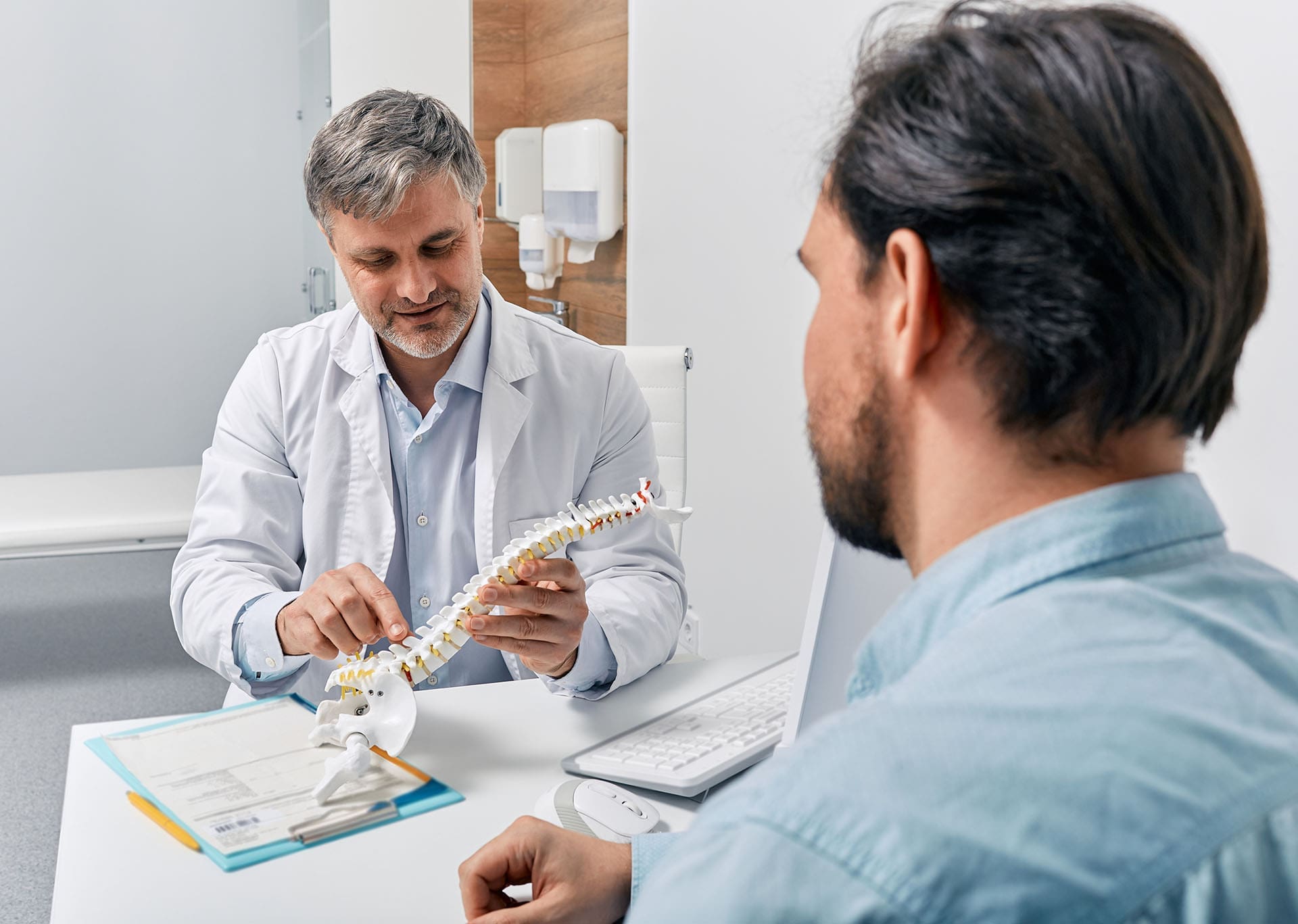
Clinicians at El Paso Back Clinic, led by Dr. Alex Jimenez, DC, APRN, FNP-BC, CFMP, IFMCP (Texas License #1191402, Prescriptive Authority #59628, NPI: 1205907805), and collaborating with Medical Director Dr. Maria Guadalupe Cardenas, MD (Texas License #J2933, NPI: 1164426748), treat this distinction as the foundation of both recovery and documentation. Dual licensure allows structural alignment work to sit alongside medical diagnostics and internal-medicine coordination. The goal is root-cause healing that reduces reliance on heavy medication or early surgery while giving patients clear information so they remain the informed decision-makers.
How Pre-Existing Degeneration Is Separated from Traumatic Aggravation
Disc degeneration is nearly universal with age. Desiccation (loss of water content), height loss, and annular fissures appear on MRI in many people who have never had significant pain. The North American Spine Society, American Society of Spine Radiology, and American Society of Neuroradiology nomenclature deliberately prefers “annular fissure” over “tear” because the finding itself does not prove a traumatic event. Less-than-violent trauma superimposed on degeneration is a clinical judgment that cannot be made from images alone; in the absence of fracture or clear violent disruption, such discs are classified morphologically as degeneration (NASS, 2014).
Texas law follows the eggshell-plaintiff principle. A defendant takes the injured person as found. Pattern Jury Charges instruct that damages cover the aggravation caused by the occurrence, not the underlying condition itself. Even when a disc already showed wear, if the fall produced new or substantially worse symptoms, functional limits, and objective findings, recovery is available for that change (PJC 28.8B and 28.8C guidance). The Fifth Circuit has confirmed that the defendant remains responsible for the full consequences that flowed from the event, even if a healthier person would have been less affected.
Clinicians therefore build a timeline rather than relying on a single film. Key questions include:
- Was the patient asymptomatic or only mildly symptomatic in the same region before the fall?
- Did new or sharply increased pain, radiating symptoms, or functional loss begin immediately or within days?
- Do prior records show a gap in treatment or only distant, resolved complaints?
A patient who worked full days, walked without limitation, and sought no care for the lumbar spine for years, then developed leg pain and positive nerve-tension signs after a fall, presents a different picture from someone already under active treatment for the identical level. Comparison imaging, when available, can show new neural contact or increased herniation size, but absence of prior films does not defeat the case when history, exam, and response to care align.
Acute Symptoms and the Clinical Timeline
Acute disc-related symptoms after a fall typically include sudden or rapidly progressive axial pain that worsens with sitting, bending, coughing, or Valsalva maneuvers, plus radicular pain in a dermatomal pattern. Delayed onset is possible but must be carefully documented; the strongest records note the fall, the immediate or early symptoms, and the progression. Inflammatory mediators released from disrupted annular fibers and nuclear material can sensitize nearby nerve roots, turning a previously compensated segment into a pain generator.
In clinic, history is paired with functional testing and, when indicated, timed inflammatory or metabolic panels ordered under Dr. Cardenas’s medical direction. Elevated markers dated to the post-fall period help isolate traumatic aggravation from baseline age-related change. Objective electronic notes that meet Colossus-style documentation standards record the mechanism (rapid deceleration or axial load of the fall), the anatomical level, and the temporal link. This creates a continuous record that supports both clinical decisions and Letters of Protection.
Neurological Findings That Anchor the Diagnosis
A careful neurological examination localizes the problem and distinguishes it from purely degenerative stiffness. For a lumbar disc herniation, clinicians look for:
- Positive straight-leg-raise or femoral-nerve-stretch tests that reproduce the patient’s radiating pain.
- Dermatomal sensory changes (for example, lateral foot numbness with L5 involvement).
- Myotomal weakness (ankle dorsiflexion or great-toe extension weakness).
- Reflex asymmetry (diminished ankle jerk with S1).
When three of the four classic findings (dermatomal pain, sensory deficit, reflex change, motor weakness) are present, the clinical diagnosis of radiculopathy is supported (StatPearls, 2023). Cervical findings follow the same logic: Spurling’s test, reduced biceps or triceps reflexes, and arm sensory or motor deficits that match the imaged level.
MRI is the preferred study for soft-tissue detail. Signs supporting an acute component include high T2 signal within the annulus (high-intensity zone), focal edema, or asymmetric disc-space signal change, especially when accompanied by ligamentous or soft-tissue injury at the same level. Muscle edema on T2 or STIR sequences can indicate acute denervation, though this is less common. Chronic findings such as advanced disc-space narrowing, large bridging osteophytes, and fatty muscle atrophy suggest longer-standing change. Importantly, an annular fissure or high-intensity zone alone does not prove the date of injury; clinical correlation remains essential.
Electrodiagnostic studies (EMG/NCS) can confirm active denervation when performed at the appropriate interval, but a normal study does not rule out symptomatic nerve-root irritation. The exam and symptom pattern still carry substantial weight.
Integrating Care for Root-Cause Healing
Once the picture of traumatic aggravation is clear, treatment focuses on reducing inflammation, restoring motion, and protecting the nervous system without unnecessary risk. Chiropractic adjustments improve segmental alignment and mobility, decreasing mechanical stress on the aggravated disc and facet joints. Patients often report better sleep, easier walking, and reduced reliance on pain medication. Neurofunctional acupuncture and electroacupuncture modulate pain pathways and support nervous-system recovery. The dual-licensed model offers advanced options—including MLS Class IV laser, extracorporeal shockwave, and carefully selected regenerative or orthobiologic approaches—to target tissue healing when conservative care alone is insufficient. Dr. Cardenas provides medical direction for complex metabolic factors that can slow recovery.
These approaches embody beneficence by addressing the mechanical and inflammatory drivers of symptoms. They embody non-maleficence by favoring non-invasive, drug-sparing methods that lower the chance of surgery or long-term opioid exposure. Autonomy is preserved through clear education: patients understand the difference between baseline degeneration and post-fall change, review their imaging and exam findings, and participate in decisions about care intensity and duration. Coordination with any existing medical team remains seamless.
Documentation produced in this setting—digital imaging reports, functional outcome measures, timed laboratory results, and detailed progress notes—gives treating providers and attorneys objective evidence of proximate causation. The fall’s biomechanical forces (axial load, flexion-compression, or shear) are linked to the specific disc level that now shows neural irritation and matching clinical deficits. Pre-existing wear may have lowered the injury threshold, but the eggshell rule and the clinical timeline show the fall caused the current disability.
Patients who complete a structured course of care frequently regain the ability to sit longer, walk farther, and sleep through the night. The same records that guide that recovery also withstand scrutiny when the question is whether the problem is new, old, or an old problem made newly disabling by a fall.
Chiropractic Care for Healing After Trauma | El Paso, TX
References
NASS, ASSR, & ASNR. (2014). Lumbar disc nomenclature: Version 2.0. The Spine Journal. https://doi.org/10.1016/j.spinee.2014.04.022
StatPearls. (2023). Lumbar disc herniation. https://www.ncbi.nlm.nih.gov/books/NBK560878/
General Disclaimer, Licenses, and Board Certifications *
Professional Scope of Practice *
The information herein on "Disc Changes After Fall: Legal Implications to Consider" is not intended to replace a one-on-one relationship with a qualified health care professional or licensed physician and is not medical advice. We encourage you to make healthcare decisions based on your research and partnership with a qualified healthcare professional.
Blog Information & Scope Discussions
Welcome to El Paso's Premier Wellness and Injury Care Clinic & Wellness Blog, where Dr. Alex Jimenez, DC, FNP-C, a Multi-State board-certified Family Practice Nurse Practitioner (FNP-BC) and Chiropractor (DC), presents insights on how our multidisciplinary team is dedicated to holistic healing and personalized care. Our practice aligns with evidence-based treatment protocols inspired by integrative medicine principles, similar to those on this site and on our family practice-based chiromed.com site, focusing on naturally restoring health for patients of all ages.
Our areas of multidisciplinary practice include Wellness & Nutrition, Chronic Pain, Personal Injury, Auto Accident Care, Work Injuries, Back Injury, Low Back Pain, Neck Pain, Migraine Headaches, Sports Injuries, Severe Sciatica, Scoliosis, Complex Herniated Discs, Fibromyalgia, Chronic Pain, Complex Injuries, Stress Management, Functional Medicine Treatments, and in-scope care protocols.
Our information scope is multidisciplinary, focusing on musculoskeletal and physical medicine; wellness; contributing etiological viscerosomatic disturbances within clinical presentations; associated somato-visceral reflex clinical dynamics; subluxation complexes; sensitive health issues; and functional medicine articles, topics, and discussions.
We provide and present clinical collaboration with specialists from various disciplines. Each specialist is governed by their professional scope of practice and licensure jurisdiction. We use functional health & wellness protocols to treat and support care for musculoskeletal injuries or disorders.
Our videos, posts, topics, and insights address clinical matters and issues that directly or indirectly relate to our clinical scope of practice.
Our office has made a reasonable effort to provide supportive citations and has identified relevant research studies that support our posts. We provide copies of supporting research studies upon request to regulatory boards and the public.
To discuss how these matters can assist in a specific care plan or treatment protocol, please contact Dr. Alex Jimenez, DC, APRN, FNP-BC, or reach out to us at 915-850-0900.
We are here to help you and your family.
Blessings
Dr. Alex Jimenez DC, MSACP, APRN, FNP-BC*, CCST, IFMCP, CFMP, ATN
Email: [email protected]
Multidisciplinary Licensing & Board Certifications:
Licensed as a Doctor of Chiropractic (DC) in Texas & New Mexico*
Chiropractic Licenses:
Texas DC License #: TX5807, Verified: TX5807
New Mexico DC License #: NM-DC2182, Verified: NM-DC2182
Nurse Practitioner Licenses:
Texas APRN License #: 1191402, Verified: 1191402 *
New Mexico CNP License #: 90560, Verified 90560
Florida APRN License #: 11043890, Verified: APRN11043890 *
Colorado License #: C-APN.0105610-C-NP, Verified: C-APN.0105610-C-NP
New York License #: N25929, Verified N25929
Georgia APRN License #: GAA-NP005701
Multi-State Advanced Practice Registered Nurse (APRN*) Texas & Multi-States
Multi-state Compact APRN License by Endorsement (43 States)
Compact Status: Multi-State License: Authorized to Practice in 43 States*
Nursing Licensure Compact: Updated Here
DEA Registration: (Drug Enforcement Agency Registered)
All medical (MDs) and family practice providers (FNP-APRN) are registered and licensed to offer various levels of medication.
Verify Providers Here
License Verification Link: Nursys License Verifier
* Prescriptive Authority Authorized (DEA Registered Providers). Call if Required
Board Certification:
ANCC FNP-BC: Board Certified Nurse Practitioner*
Education:
Graduate with Honors: ICHS: MSN-FNP (Family Nurse Practitioner Program)
Degree Granted. Master's in Family Practice, MSN Diploma (Cum Laude)
Dr. Alex Jimenez, DC, APRN, FNP-BC*, CFMP, IFMCP, ATN, CCST
(Board Certified: Family Practice Nurse Practitioner—Multistate)*
(Licensed Nurse Practitioner & Chiropractor - Multistate)*
Clinical Director
DC & FNP License (Review Above)
Digital Business Card
NPI: 1205907805
Dr. Maria Cardenas, MD
(Board Certified: Internal Medicine)
(Licensed Medical Doctor)
Medical Director, Clinical Director & Collaborative Physician
NPI # 1164426748
MD License #: J2933
Licenses and Board Certifications:
MD: Medical Doctor
DC: Doctor of Chiropractic
APRNP: Advanced Practice Registered Nurse
FNP-BC: Family Practice Specialization (Multi-State Board Certified)
FNP-BC: Family Practice Across Life Span (Neonatal to Geriatrics)
RN: Registered Nurse (Multi-State Compact License)
CFMP: Certified Functional Medicine Provider
MSN-FNP: Master of Science in Family Practice Medicine
MSACP: Master of Science in Advanced Clinical Practice
IFMCP: Institute of Functional Medicine
CCST: Certified Chiropractic Spinal Trauma
ATN: Advanced Translational Neutrogenomics
Family with Primary Care Focus (Family Nurse Practitioner or FNP)
- The Family Nurse Practitioner (FNP) promotes, maintains, and restores health for individuals and families across the lifespan. FNPs also identify health risks, promote wellness, and diagnose and manage acute and chronic illness.
- The FNP focuses on comprehensive primary care, promoting healthy lifestyles for patients across the lifespan in settings such as private practice, physician offices, and community health centers.
Memberships & Associations:
TCA: Texas Chiropractic Association: Member ID: 104311
TNA: Texas Nurse Association: Member ID: 06458222
TNP: Texas Nurse Practitioner Association ID: 2025091511
AANP: American Association of Nurse Practitioners: Member ID: 2198960
ANA: American Nurses Association: Member ID: 06458222 (District TX01)
| Primary Taxonomy | Selected Taxonomy | State | License Number |
|---|---|---|---|
| No | 111N00000X - Chiropractor | NM | DC2182 |
| Yes | 111N00000X - Chiropractor | TX | DC5807 |
| Yes | 363LF0000X - Nurse Practitioner - Family | TX | 1191402 |
| Yes | 363LF0000X - Nurse Practitioner - Family | FL | 11043890 |
| Yes | 363LF0000X - Nurse Practitioner - Family | CO | C-APN.0105610-C-NP |
| Yes | 363LF0000X - Nurse Practitioner - Family | NY | N25929 |
| Yes | 363LF0000X - Nurse Practitioner - Family | NM |
90560 |
| Yes | 363LF0000X - Nurse Practitioner - Family | GA | GAA-NP005701 |
Dr. Alex Jimenez, DC, APRN, FNP-BC*, CFMP, IFMCP, ATN, CCST
(Board Certified: Family Practice Nurse Practitioner—Multistate)*
(Primary Care Across Lifespan—Neonatal / Pediatric / Adult / Geriatrics)
(Licensed Nurse Practitioner & Chiropractor - Multistate)*
Clinical Director
Digital Business Card
NPI: 1205907805
Dr. Maria Cardenas, MD
(Board Certified: Internal Medicine)*
(Licensed Medical Doctor)*
Medical Director, Clinical Director & Collaborative Physician
NPI # 1164426748
MD License #: J2933
📆 Schedule Appointment: Schedule 24/7 (Click Here)









