Looking healthy and being physically fit can get anyone’s attention and for those being a part of a summertime social event, such as a wedding, being the center of attention is enough motivation to maintain overall wellness.
During this wedding season, engaging in the proper form of exercise and performing a variety of physical activities can help tone up some of the most difficult areas of the body. For women looking to increase or maintain the physical condition of their buttocks, Nike trainer and Chisel Club founder Lauren Williams demonstrates the top five exercises for sculpting your booty.
1.Step ups with knee drive: From standing, step onto a bench on your right foot, bringing your left knee into your chest. Step down and repeat on opposite side.
2.Single-leg squat to bench: Sit down on a step with your right leg extended in front of your body. From sitting, lift up to stand on your left leg, then lower back down keeping your right leg extended the whole time. Repeat on opposite side, with your left leg extended out in front of you. Stand up onto your right leg, lower back down.
3.Circle side lunges with dumbbell: Stand tall with legs in a wide straddle stance. Hold dumbbells in front of your chest, with elbows at at 90-degree angle. Hold the weights here as you sink into a side lunge on the right leg, staying low as you move through a squat and shift into a side lunge on the left side. Stand up, return to center, and repeat the circle in the other direction.
4.Split stance single-legdeadlift: From standing, place your right leg a few inches behind your left leg and raise your heel so your weight is on the ball of your right foot. Holding a dumbbell in each hand, lower the upper body toward the floor with the arms extending down, so the dumbbells almost touch the ground. Raise the upper body back up to stand and repeat movement with the left leg back and the right leg forward.
5.All-four rainbow leg raises: From all fours, raise your left leg off the ground and extend it out behind you. Tap the left toes to the ground on the right side of your body, then tap the toes on the ground on the left side of your body, as if you�re drawing a semicircle with your leg. Repeat movement on the right leg.
Maintaining as well as improving your body’s overall health and wellness doesn’t just enhance your physical look, you can also benefit from an improved physical conditioning. Before attempting any of the above exercises, however, be sure to consult a healthcare professional and make sure these are proper for you.
If you have an injury or condition which may be aggravated as a result of these injuries, your medical specialist can recommend a different variety to these exercises to avoid further complications.
For more information, please feel free to ask Dr. Jimenez or contact us at 915-850-0900 .
Chiropractic and Athletic Performance
Many athletes who are injured performing their specific sport or physical activity, frequently seek treatment from chiropractors. Chiropractic care focuses on the prevention, diagnosis and treatment of injuries and conditions affecting the musculoskeletal and nervous system. While chiropractic is a safe and effective form of conservative care for a variety of ailments, chiropractic can also be utilized to enhance athletic performance.
Alcohol In Moderation�Has A Reputation For Being Healthy For The Heart
Drinking about a glass of wine for women per day, and two glasses for men, is linked to a lower risk of heart attack, stroke and death from heart disease. (Drinking too much, of course, negates these benefits and increases the risk of heart problems.)
Now, a new study of nearly two million people published in The BMJ adds more evidence that moderate amounts of alcohol appear to be healthy for most heart conditions�but not all of them.
The researchers analyzed the link between alcohol consumption and 12 different heart ailments in a large group of U.K. adults. None of the people in the study had cardiovascular disease when the study started.
People who did not drink had an increased risk for eight of the heart ailments, ranging from 12% to 56%, compared to people who drank in moderation. These eight conditions include the most common heart events, such as heart attack, stroke and sudden heart-related death. Non-drinkers had a 33% higher risk of unstable angina�a condition in which the heart doesn�t get enough blood flow�and a 56% higher risk of dying unexpectedly from heart disease, compared to people who drank a glass or two of alcohol a day.
But alcohol does not seem to provide protection against four less common heart problems: certain types of milder strokes, which result from brief periods when blood flow to parts of the brain are blocked, and cases of bleeding in the brain.
The study�s findings are particularly interesting because the researchers separated drinkers into categories that are typically lumped together in these kinds of studies. �Non-drinkers� often include people who have never drank, as well as those who quit drinking (who may have been heavy drinkers in the past, and so may have a higher risk of heart problems). This may have inflated the risk of non-drinkers; in some cases, grouping people this way might make drinking alcohol look better for the heart than it actually is.
It�s not clear from the current study why alcohol lowers the risk of some heart conditions and not others. But Steven Bell, a genetic epidemiologist at University of Cambridge and the study�s lead author, says that another study designed to answer that question is currently underway. �We are unpacking how different risk factors are associated with each different disease,� he says. Future studies will also tease apart whether different types of alcohol�wine versus beer or spirits, for example�have varying effects on the risk of heart disease.
In the meantime, Bell says that the results should reassure people who drink a few glasses of alcohol each week. But it shouldn�t compel people who don�t currently drink to pick up the habit in order to stave off heart disease. Because alcohol carries a risk of liver disease, there are safer ways to lower risk, he says, such as quitting smoking, exercising regularly and eating a healthy diet.
Every year, certain ingredients and dishes emerge as trendy �must-haves��even if it�s something we�ve been eating for centuries. Just a few years ago, for example, no one had even heard of quinoa (which has been around for at least 5,000 years), and now not a day goes by when we don�t see it on a menu.
These Foods &�Aren�t Just Being Whipped Up By Chefs Or Served In Popular Restaurants
They�ve become mainstream amongst home cooks across America, and thousands of eaters are also ordering them through delivery services. UberEATS has seen a surge in fresh, nutritious delivery orders (so long, pizza and burgers), so they compiled a list of the top 20 healthy food trends for 2017. The data is based on UberEATS order patterns so far this year.
Unsurprisingly, avocado is at the top of the list�it seems this trend is here to stay. According to their data, the fruit is the most popular healthy food in more than 16 cities across the country. Kale has dropped to number 8 on the list, making way for poke (a Hawaiian raw fish salad), edamame, radishes, and pickles. Bulgur and brown rice have replaced quinoa as the resident grains/seeds in the top 20.
The fact that tofu rounds out the top 10 is a nod to people re-thinking the amount of meat they consume�and how it appears on their plates. More and more, in home kitchens, restaurants, and new cookbooks, we�re seeing veggies take center stage with meat as a side, or a garnish. Check out the full list below, and use it as an opportunity to try out some new healthy ingredients this year.
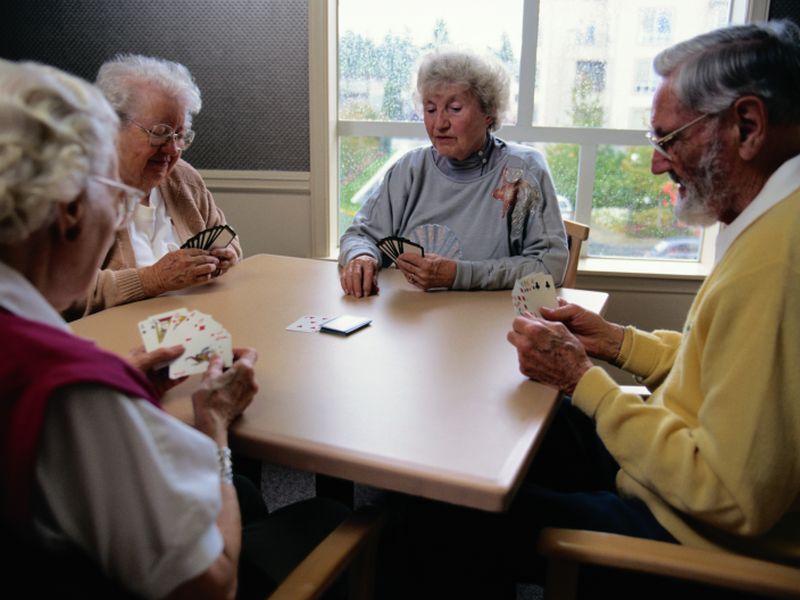
Socializing with Relatives and friends may help you stay mentally sharp as you age,
A new report co-sponsored by AARP finds
“It’s not uncommon for our social networks to shrink in size as we get older,” said Marilyn Albert, professor of neurology and director of cognitive neuroscience at Johns Hopkins University in Baltimore.
“This report provides many helpful suggestions about the things we can do to improve the quality of our relationships with family and friends, which may be beneficial in maintaining our mental abilities,” Albert said in an AARP news release.
The report also discusses the social benefits of having pets, how age-friendly communities boost social ties, how close relationships benefit both physical and mental health, and how social media (including Facebook and Skype) helps older adults maintain social connections.
The report is from the AARP and the Global Council on Brain Health (GCBH). Albert is chair of the GCBH.
In related news, a new AARP survey found that nearly four in 10 adults aged 40 and older said they lack social connections. Those people also reported worse brain health.
Sarah Lock is AARP senior vice president for policy and GCBH executive director. She said, “We know that loneliness and social isolation can increase physical health risks for older people.”
So, Lock added, “The GCBH’s consensus that people who are socially engaged have a lower risk for cognitive [mental] decline shows us just how important social connections are to brain health.”
The AARP said older adults can boost their social ties by making new social connections, including with younger people. Other suggestions include joining a club or taking a class; visiting, calling or emailing regularly with relatives, friends, and neighbors; and volunteering or visiting a lonely neighbor or friend.
SOURCE: AARP, news release, Feb. 14, 2017
News stories are written and provided by HealthDay and do not reflect federal policy, the views of MedlinePlus, the National Library of Medicine, the National Institutes of Health, or the U.S. Department of Health and Human Services.
So many buzzy new workouts, so little time. But we promise, Orangetheory Fitness deserves a spot near the top of your list of sweat tests this year for its smart system and crazy calorie burn.
While it’s not brand new�Orangetheory is close to celebrating its sixth anniversary with more than 330 studios in 28 states, and more overseas�the company only recently opened in big cities like New York and Los Angeles. And it has quickly become a known name (and color) in even the most competitive fitness-focused metropolises. (According to Google, it was one of the 10 Biggest Workout Trends of 2015.)
The model is smart and simple: Enthusiastic, experienced instructors plus a heart-rate monitored cardio and strength session equals max results in just an hour. Here’s everything a first-timer should know before joining the “orange nation.”
The hour blends the perks of traditional workout classes (think good music and an energetic leader) and the one-on-one benefits of small-group personal training.
The instructors remember every client’s name, make an effort to cheer you on and give you constructive feedback during class, and urge everyone to work within their personal fitness level. This means you won’t be overwhelmed by confusing choreography, annoyed by close quarters, or trampled by the stampede rushing to grab the last medicine ball. Everyone goes to work within their own station, complete with various sets of weights, TRX straps, a step, and more.
Being Early is a Must
You’ll receive a welcome email or text message a day or two before your scheduled class, and the message will instruct you to arrive 30 minutes before the start time. Even if you’re experienced using just about any gym tool and have tried every workout under the sun, that half hour is crucial at Orangetheory.
You need about 10 minutes to introduce yourself at the front desk and fill out paperwork. Then, the trainer will chat with you about the types of workouts you do and your fitness goals (as a top-tier trainer should). Are you an Olympic rower? It doesn’t matter; your instructor will want to check out and assist with your form on the WaterRower and also give you a rundown of class lingo (you’ll hear terms like “base push” and “all out” throughout the hour).
You don’t have to memorize everything; there are television screens around the studio that show both a graphic of the move and number of reps per set while you’re doing strength on the floor and treadmill signs hanging on the mirror to guide your speed choices.
High-intensity interval training focuses on working at an all-out effort for shorter intervals of time in order to shoot your heart rate up, followed by brief periods of active recovery. Studies have continuously shown that HIIT is an extremely efficient way to maximize calorie burn.
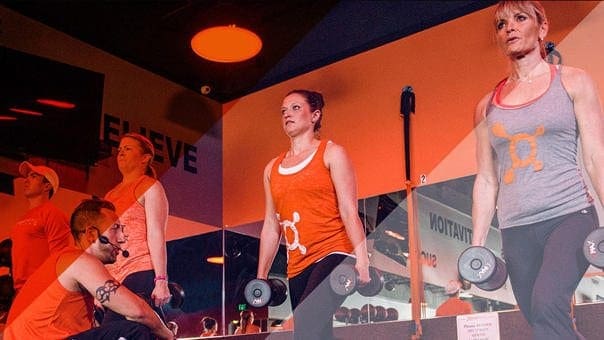
Before you start class, a staffer will provide a heart-rate monitor that you strap right beneath your bust, directly on your skin. The goal is to work in your “orange zone”�which is 84-91% of your max heart rate�for 12 to 20 minutes during the class. How do you know where you stand? There’s an overhead screen that displays a chart with everybody’s name, vitals, and progression between the five “zones” (grey, blue, green, orange and red) in real time. This is both good and bad (depending on how much you like a competitive atmosphere): it means if you start slacking off, everyone in class will know it.
The major pro, however: Wearing the monitor makes you much more in tune with just how hard you’re working at any given time, and your results are emailed to you after class so you can see how you did and track improvement over time.
The instructors switch up the routine every time, offering a unique challenge every time you show up. In general, though, you can expect the 55-minute session to involve a combination of treadmill, indoor rowing, and strength training (with weights, body-weight exercises, or possibly TRX moves).
With folks rowing, running, jumping around on the floor, and screens holding your cue cards all around, it may feel as if there’s a lot going on in the room. But just focus on your movement and form during your first class; the trainer can walk you through your results afterward�then help you set new goals for when you return for round two.
For more information, please feel free to ask Dr. Jimenez or contact us at 915-850-0900 .
Additional Topics: Preventing Sports Injuries
A variety of athletes, including running athletes, commonly seek chiropractic care to diagnose and treat numerous sports injuries. Chiropractic focuses on the treatment of injuries and conditions related to the musculoskeletal and nervous system, making it an ideal care option for athletes. Recent research has demonstrated that chiropractic care can additionally help prevent a variety of sports injuries in athletes.
If you like to run but don�t looove to run, here�s some news that�s sure to put a bounce in your step. A recent review of studies found that to score the major health perks of running, you don�t have to pound the pavement for long: Jogging just five or six milesa week is enough.
The researchers report that people who logged that many miles over the course of one or two runs (and less than 51 cumulative minutes) per week had a lower risk of certain cancers, stroke, osteoarthritis, high blood pressure, and high cholesterol compared to people who jogged less or not at all.
It gets even better: When the reviewers looked at the effect of running on cardiovascular mortality and death from any cause, they found that the low-mileage group had the same reduction in risk as people who laced up more often and covered more ground every week.
�Maximal health benefits of running appear to occur at quite low doses, well below those suggested by the US physical activity guidelines,� the researchers write in the study, which was published in the journal Mayo Clinic Proceedings. (The government recommends 75 minutes of vigorous activity per week.)
But of course, if you�re running to lose weight, the same logic still applies: More steps means more calories burned. You may want to stick to your usual schedule and route. But for anyone who�s been pushing herself on long-distance jaunts in pursuit of optimal health, the new findings may offer some sweet relief.
So�what is a good goal to shoot for, according to science?
Carl J. Lavie, MD, the review�s lead author and the medical director of cardiac rehabilitation and prevention at the Ochsner Medical Center in New Orleans, offered this�advice to�the New York Times: �Running for 20 to 30 minutes, or about a mile-and-a-half to three miles, twice per week would appear to be perfect.�
Let’s face it: whether you’re an experienced exerciser or totally new to working out, very few of us have the time to dedicate hours upon hours to our sweat sessions. That’s why it’s important to make every minute count. These proven tips and techniques will turn up your calorie burn during every workout you do, helping you bust through fitness plateaus and melt fat away in less time.
Pump up the jams
Pop in your earbuds, cue up your favorite playlist and get cranking. Listening to music is one of the easiest�and most fun�ways to rev up your calorie burn. When a team of University of Wisconsin researchers asked men and women to perform two 8-minute exercise sessions on a stationary bike, one with music and one in silence, the exercisers increased their average heart rate by 10 beats per minute, worked harder, and burned 7% more calories when they pedaled to tunes.
Pair up with an inspirational partner
Exercising with someone just a little better than you can bring out your calorie-scorching best. In one study, researchers from Kansas State University found that people who exercised with a partner they thought was a little fitter and stronger than they were increased their workout time and intensity by as much as 200%.
Let go of the rails
The more muscles you use, the more calories you burn. That means letting go of the rails on the treadmill and not leaning on the elliptical so your lower body and supporting core muscles have to work harder to keep you upright and in motion.
Put your arms into it
Race-walkers have an adage: As your arms go, your legs follow. If you want to speed up your pace and turn up your burn, pump your arms faster and your feet will follow. You�ll also engage more upper body muscles for another calorie burning bonus. Ditto for your elliptical machine sessions. Research shows that exercisers use more fat-burning oxygen when they get their arms into the action by using the elliptical machines handles than when they churn along with their legs alone.
Find your sweet spot
High intensity interval training (HIIT) may be great for getting a big metabolic bump for your exercise time, but because it’s so hard, many people burn out and don�t do it enough to see results. For a better, consistently higher, calorie burn, you want to hit your �sweet spot,� says Daniel Frankl, PhD, kinesiology professor at California State University, Los Angeles. �That�s the highest submaximal exercise intensity you can tolerate for 30 minutes.� You know you�re there when your breathing is slightly labored, but you can still talk in short sentences.
Wear some weights
Heavier people burn more calories because their bodies have to work harder to keep them in motion. You obviously don�t want to gain weight to burn calories, but you can fake it by wearing a weighted vest or adjustable weight garment like the TITIN Force Shirt System, a compression shirt that lets you slip up to 8 pounds of weight into 14 pockets. Research shows adding weight to your workouts can increase your calorie burn by 7% during moderate walks and more than 13% during step-climbing exercise.
Use the force
Gravity is an unexpected, but effective calorie burner�you have to work exponentially harder to fight its forces when you walk, bike, or run at an incline. Head to the hills: you can burn 50% more calories when you go from pancake-level terrain to a more challenging 6% incline.
Drink some java
Caffeine not only revs your metabolism, but also is a proven performance enhancer. Studies show that the energizing chemical found in coffee reduces your perception of exercise, so hard efforts feel easier and you can go harder, longer and burn more calories.
Cool your jets
Hydrate with icy-cold water for a one-two metabolic calorie burning punch. For one, downing a couple cups of cold water can raise your metabolism by about 5% as your body works to warm the fluid. Also drinking an icy beverage before exercising in the heat can help you feel fresher and crank out longer and harder efforts before fatiguing, so you can easily burn more calories.
Tune in, not out
Texting, watching TV, and flipping through a magazine are good ways to multitask while spinning away on the stationary bike or churning through an elliptical workout, says Frankl. �But they take your attention away your workout so you may not be giving it your best effort,� says Frankl. �Paying attention to your effort�your heart rate, your breathing, the sensation in your muscles�helps you maintain a steady effort so you can burn more calories,� he says.
IFM's Find A Practitioner tool is the largest referral network in Functional Medicine, created to help patients locate Functional Medicine practitioners anywhere in the world. IFM Certified Practitioners are listed first in the search results, given their extensive education in Functional Medicine