
ClickCease
+1-915-850-0900 [email protected]
Select Page
Psychological Therapy for Chronic Pain Management in El Paso, TX

Psychological Therapy for Chronic Pain Management in El Paso, TX

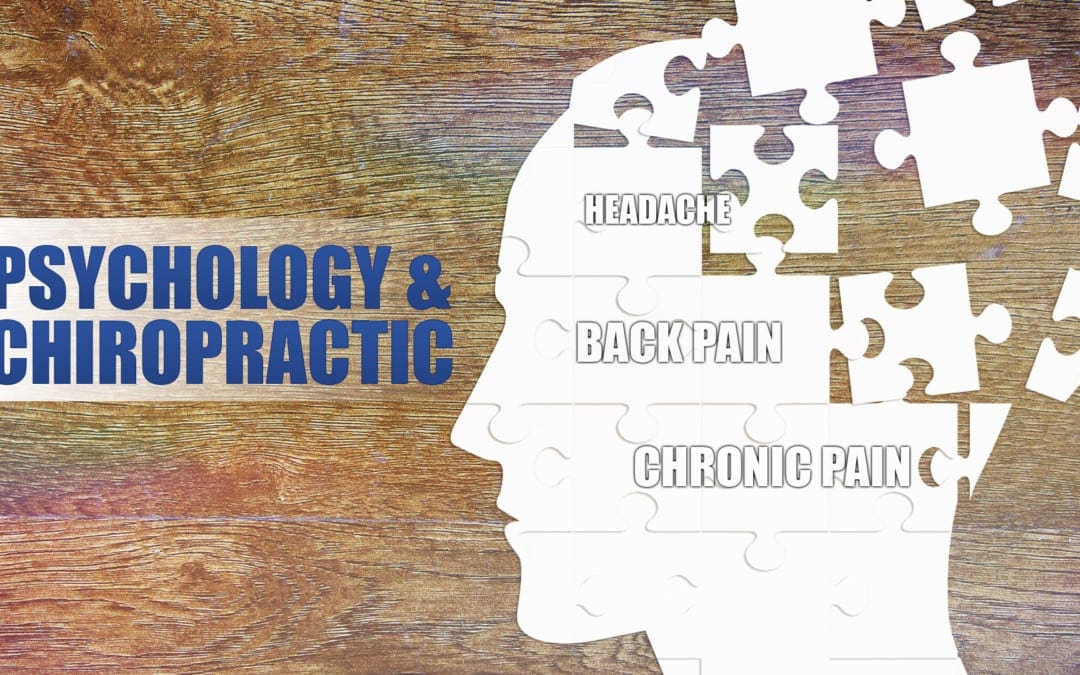
Psychological therapy, also known as psychotherapy, refers to the use of psychological methods to help change an individual’s way of thinking as well as improve their coping skills in order for them to learn how to best deal with stress. Psychological therapies have widely been utilized as a part of the multidisciplinary management of chronic pain. Common psychotherapies include, cognitive-behavioral therapy, mindfulness-based stress reduction and even chiropractic care. The connection between the mind and the body in relation to disease and illness have long been discussed in many research studies.


Evidence-based research studies have demonstrated that proper stress management through the use of psychological therapy as well as mindfulness interventions can effectively benefit patients with chronic pain. By way of instance, chiropractic care can safely and effectively help reduce stress, anxiety and depression by correcting spinal misalignments, or subluxation. A balanced spine can improve mood and mental health. Chiropractic care can include lifestyle modifications, such as nutritional advice, physical activity and exercise recommendations, and promote better sleeping habits, to further enhance the benefits of the treatment. The purpose of the following article is to demonstrate how psychological therapies impact the management of chronic pain.


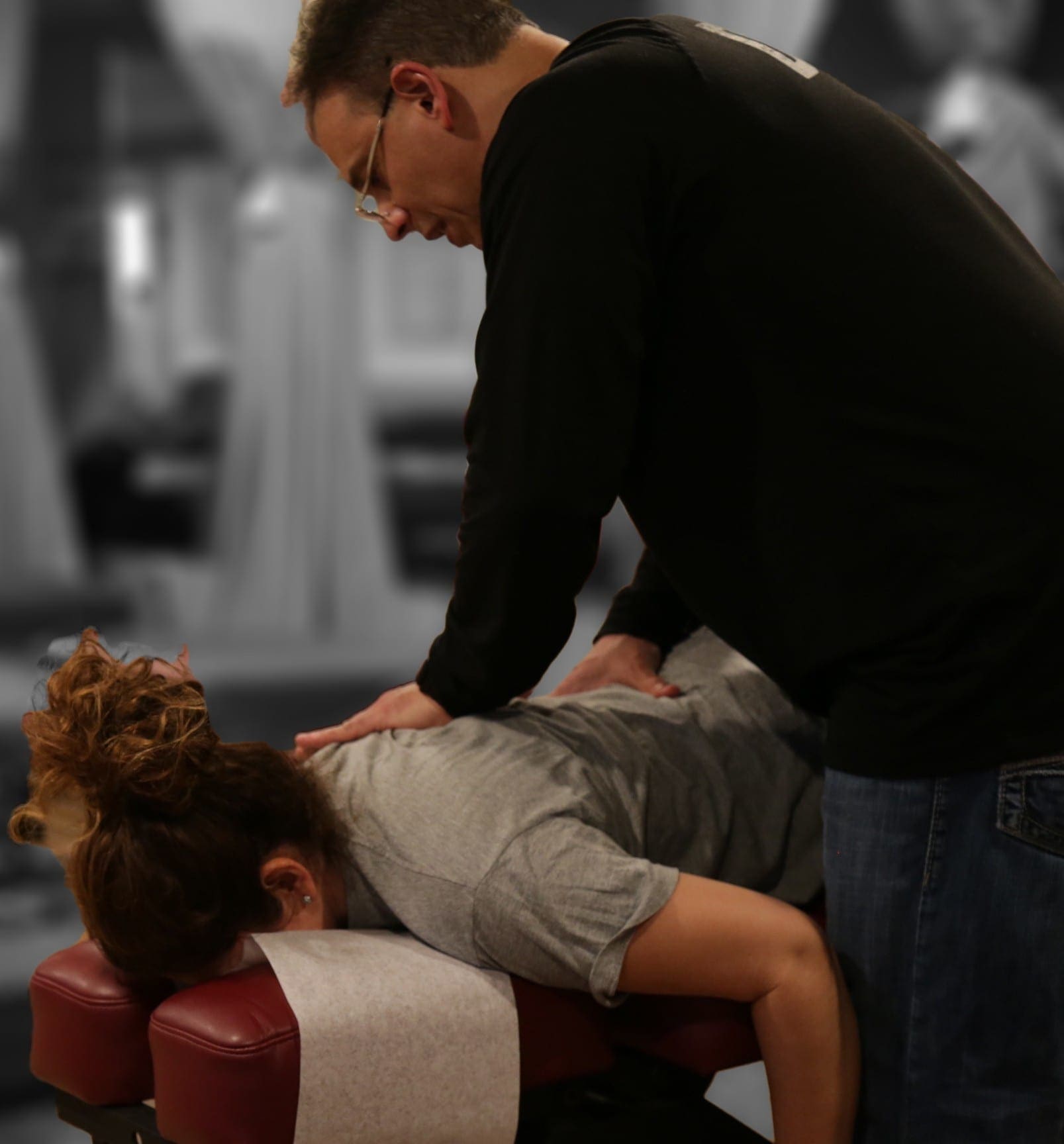
Dr.-Jimenez-works-on-patients-back.jpg


Psychological Therapies for the Management of Chronic Pain


Abstract


Pain is a complex stressor that presents a significant challenge to most aspects of functioning and contributes to substantial physical, psychological, occupational, and financial cost, particularly in its chronic form. As medical intervention frequently cannot resolve pain completely, there is a need for management approaches to chronic pain, including psychological intervention. Psychotherapy for chronic pain primarily targets improvements in physical, emotional, social, and occupational functioning rather than focusing on resolution of pain itself. However, psychological therapies for chronic pain differ in their scope, duration, and goals, and thus show distinct patterns of treatment efficacy. These therapies fall into four categories: operant-behavioral therapy, cognitive-behavioral therapy, mindfulness-based therapy, and acceptance and commitment therapy. The current article explores the theoretical distinctiveness, therapeutic targets, and effectiveness of these approaches as well as mechanisms and individual differences that factor into treatment response and pain-related dysfunction and distress. Implications for future research, dissemination of treatment, and the integration of psychological principles with other treatment modalities are also discussed.


Keywords: pain management, multidisciplinary pain treatment, psychological therapy


Dr Jimenez White Coat

Dr. Alex Jimenez’s Insight

Chiropractic care is an alternative treatment option which utilizes spinal adjustments and manual manipulations to treat injuries and/or conditions associated with the musculoskeletal and nervous system. Chiropractic treatment primarily focuses on spinal health, however, because the spine is the root of the nervous system, chiropractic care can also be effectively used to treat a variety of mental health issues. As a chiropractor, I make sure to focus on the body as a whole, rather than treating the symptoms of a single injury and/or condition. The truth of the matter is, chiropractic treatment must also deal with the emotional component of each health issue in order to provide overall relief. Psychosomatic disorders, refers to a physical illness caused or aggravated by a mental factor, such as stress. Chiropractic care can be utilized as a psychological therapy, in which, a chiropractor may recommend a series of lifestyle modifications to help reduce stress, anxiety and depression, together with spinal adjustments and manual manipulations to reduce symptoms associated with mental health issues. Furthermore, the understanding of the connection between the mind and body is essential in chiropractic treatment towards overall health and wellness.


Introduction to the Non-Pharmacological Treatment of Pain


Pain is an essential biological function that signals disturbance or damage in the body, prevents further harm through overuse of the afflicted area, and promotes physiological homeostasis.[1] Whether through abnormal healing, additional bodily damage, or failed medical intervention, pain may become chronic. Chronic pain no longer signals damage to the body and is instead a detriment to the physical and psychological well-being of the sufferer. Unfortunately, medical intervention frequently cannot resolve chronic pain, resulting in increased need for management approaches to pain, as is the approach to other chronic medical conditions.[2] In recent years, the biopsychosocial model has informed research and intervention in pain psychology, wherein physical, cognitive, affective, and interpersonal factors are used to inform treatment.[2] Currently, psychological interventions for chronic pain target a variety of domains, including physical functioning, pain medication use, mood, cognitive patterns, and quality of life, while changes in pain intensity may be secondary.[3] As such, psychological interventions for pain are ideally suited as complementary treatments to medical treatment.[4] In order to articulate the distinct philosophies and effects of each psychological intervention, it is important to first consider the variety of ways that pain affects psychological functioning.


Psychological Reactions to Pain


Recurrent pain may contribute to development of maladaptive cognitions and behavior that worsen daily functioning, increase psychiatric distress, or prolong the experience of pain.[5] Individuals suffering from chronic pain tend to show increased vulnerability to a variety of psychiatric conditions, including depressive disorders,[6] anxiety disorders,[7] and posttraumatic stress disorder.[7] However, the relationship between depression and pain is likely bidirectional, as the presence of a major depressive disorder has been identified as a key risk factor in the transition from acute pain to chronic pain.[8] Additionally, individuals with pain may suffer from significant anxiety and depressive symptomatology that does not reach the severity of a clinical diagnosis.[9] Further, chronic pain negatively impacts quality of life[10] and contributes to higher levels of disability.[10] Individuals with chronic pain are also vulnerable to higher rates of obesity,[11] sleep disturbance,[12] and fatigue,[13] show greater rates of medical utilization,[10] and are vulnerable to problematic pain medication use.[14] Given the negative psychological consequences of chronic pain, it is worthwhile to consider three psychological mechanisms related to pain-related distress that have proven to be suitable targets for intervention: pain catastrophizing, fear of pain, and pain acceptance.


Pain catastrophizing is defined as a negative cognitive and affective mental set related to expected or actual pain experience.[15] Pain catastrophizing is characterized by magnification of the negative effects of pain, rumination about pain, and feelings of helplessness in coping with pain.[16] Pain catastrophizing has been associated with various forms of dysfunction, including increased rates of depression[17] and anxiety,[16] greater functional impairment and disability due to pain,[17] and lower overall quality of life.[18] Individuals who catastrophize about their pain report lower levels of perceived control over pain,[19] poorer emotional and social functioning,[20] and poorer responses to medical intervention.[21] Pain catastrophizing also contributes to poorer pain coping and overall functioning, making pain catastrophizing a viable target for psychological intervention. Addressing catastrophic thoughts about pain improves physical and psychological functioning in the short term[22] and improves the likelihood of returning to work despite the presence of persistent pain.[23]


Pain-related fear is another psychological mechanism that has significant implications for physical and psychological functioning in chronic pain. Pain-related fear reflects a fear of injury or worsening of one�s physical condition through activities that may trigger pain.[24] Pain-related fear is associated with increased pain intensity[25] and increased disability.[26] Pain-related fear contributes to disability by fostering passive or avoidant pain-coping behaviors that contribute to physical deconditioning and pain.[27] If left unaddressed, fear of pain can impair gains in physical rehabilitation settings.[28] Evidence suggests that pain catastrophizing precedes pain-related fear,[24] but both of these mechanisms uniquely contribute to pain and physical disability.[5,29]


Recently, there has been increased attention to the psychological flexibility model, which extends the fear-avoidance model of chronic pain and proposes to improve treatment outcomes through fostering of accepting attitudes towards pain.[30] Psychological flexibility has been defined as an ability to engage in the present moment in a way that allows the individual to either maintain or adjust his or her behavior in the way that is most consistent with internally held goals and values;[31] this idea is especially important in times of greater pain, given the narrowing of focus that is common during times of pain.[32] Similar to psychological acceptance, which fosters a nonjudgmental approach to distressing thoughts and emotions, pain acceptance is defined as a process of nonjudgmentally acknowledging pain, stopping maladaptive attempts to control pain, and learning to live a richer life in spite of pain.[33] Pain acceptance influences emotional functioning through two distinct mechanisms: a willingness to experience pain, which buffers against negative emotional reactions to pain, and continued engagement in valued activities despite the presence of pain, which bolsters positive emotions.[34] Acceptance of pain is theorized to uncouple the occurrence of catastrophic thoughts about pain from subsequent emotional suffering[35] and reduces reliance on control- or avoidance-based coping,[36] thereby freeing cognitive and emotional resources for more meaningful pursuits.[33] Pain acceptance has demonstrated positive associations with cognitive, emotional, social, and occupational functioning in chronic pain populations.[36] Acceptance of pain predicts lower levels of pain catastrophizing[37] and greater levels of positive affect, which in turn reduce the association between pain intensity and negative emotions.[38] Pain acceptance is a particularly salient target for intervention in mindfulness- and acceptance-based therapies for chronic pain, which will be discussed later (see Table 1).


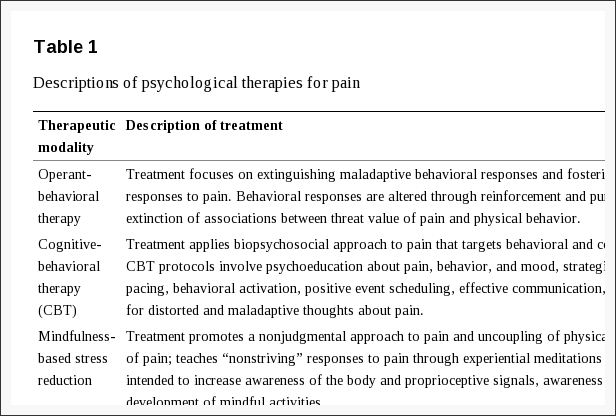
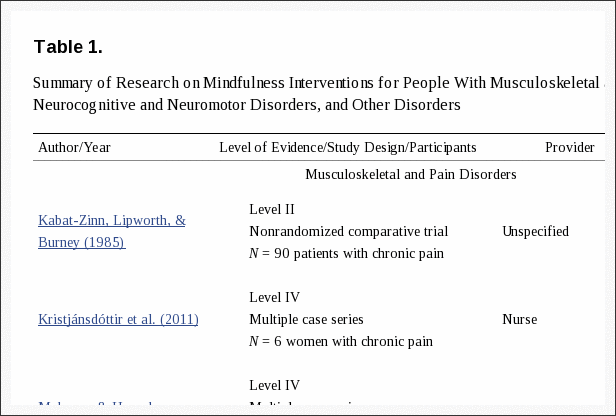
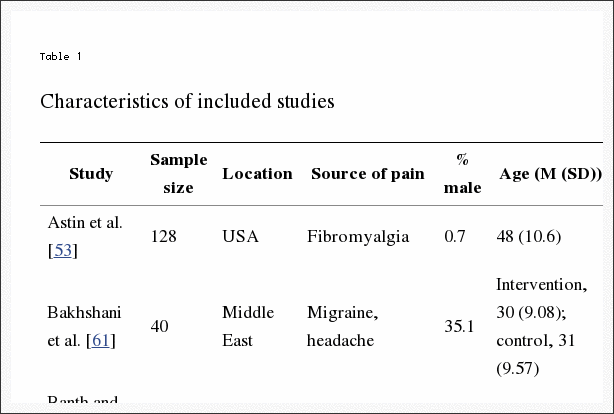
Table 1 Descriptions of Psychological Therapies for Pain

Table 1: Descriptions of psychological therapies for pain.


Psychological Intervention as an Approach to Pain Management


Operant Behavioral Approaches


Fordyce[39] proposed a behavioral model of pain adaptation in which maladaptive behavioral responses to pain develop through contingent relief from pain or pain-related fear. According to this theory, a behavioral drive to avoid pain leads individuals to avoid behaviors that are painful but maintain their physical and emotional health; this avoidance contributes to the development and maintenance of pain chronicity, deconditioning, and depression.[40] Operant therapy for chronic pain utilizes reinforcement and punishment contingencies to reduce pain-related behaviors and foster more adaptive behaviors, including graded patterns of activity, activity pacing, and time-contingent medication management.[40] Behavioral therapy for pain has shown positive effects on a variety of domains, including pain experience, mood, negative cognitive appraisals, and functioning in social roles.[3]


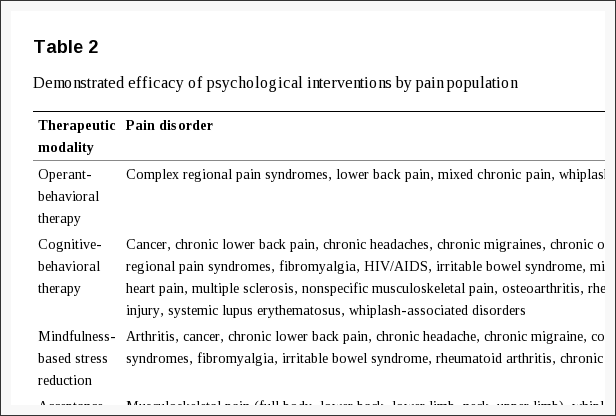
A recent application of learning theory to chronic pain involves in vivo exposure treatment for pain-related fear, which focuses on decreasing the perceived harmfulness of physical activity.[41] Learning theory posits that the aversive signal of pain may be passed to neutral stimuli (like physical movement behaviors), which contributes to avoidant behavior. In vivo exposure therapy extinguishes threat, fear, and behavioral avoidance through progressively increasing engagement in painful behaviors in the absence of catastrophic outcomes; when these behaviors are performed without serious negative consequences, patients may realize that their expectations about the consequences of physical movement and pain are unrealistic.[24,42] Consistent with exposure treatments for phobias and other anxiety disorders, in vivo exposure treatment for fear of pain involves development of a personalized, graded hierarchy of activities that elicit a fearful response, psychoeducation related to pain, fear, and behavior, and ultimately slow and systematic exposure to activities related to the individual�s fear hierarchy.[41] In vivo exposure treatment for pain-related fear has demonstrated efficacy in improving pain, pain catastrophizing, and functional disability,[41] and in decreasing pain-related fear and anxiety, depression, and anxiety.[43] Exclusively behavioral approaches to pain have been less prevalent in recent years but have demonstrated efficacy in lower back pain samples, among others (see Table 2). The effects of in vivo exposure on functional disability appear to be mediated by decreased catastrophizing and perceived harmfulness of activity[41] but may be differentially effective for patients of differing baseline levels of functionality.[40]


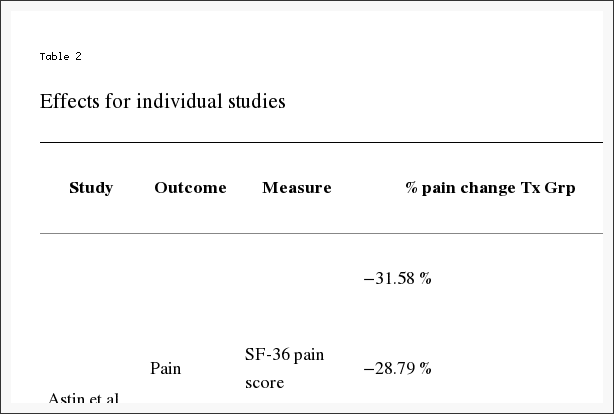
Table 2 Demonstrated Efficacy of Psychological Interventions

Table 2: Demonstrated efficacy of psychological interventions by pain population.


Cognitive-Behavioral Therapy


Cognitive-behavioral therapy (CBT) adopts a biopsychosocial approach to the treatment of chronic pain by targeting maladaptive behavioral and cognitive responses to pain and social and environmental contingencies that modify reactions to pain.[44] CBT principles have demonstrated efficacy for a variety of psychiatric disorders and physical illnesses, in addition to pain.[45] CBT for pain develops coping skills intended to manage pain and improve psychological functioning, including structured relaxation, behavioral activation and scheduling of pleasurable events, assertive communication, and pacing of behavior in order to avoid prolongation or exacerbation of pain flares. Unlike operant-behavioral approaches, CBT for pain also addresses maladaptive beliefs about pain and pain catastrophizing through formal use of cognitive restructuring: identification and replacement of unrealistic or unhelpful thoughts about pain with thoughts that are oriented towards adaptive behavior and positive functioning.[44] CBT for pain has been widely implemented as a standard treatment for pain and constitutes the current �gold standard� for psychological intervention for pain.[44]


According to recent meta-analytic studies,[45] CBT for pain demonstrates small-to-medium effect sizes in a variety of domains and shows effects on pain and functioning comparable to standard medical care for pain.[3] CBT significantly improves disability and pain catastrophizing after treatment and yields longer-term improvements in disability, above and beyond the effects of usual medical care,[3] as well as smaller effects on pain, catastrophizing, and mood when compared to no treatment.[3] CBT-related changes in helplessness and catastrophizing are uniquely predictive of later changes in pain intensity and pain-related interference in daily functioning.[22] CBT is also a valuable adjunct treatment in physical rehabilitation programs.[46] The benefits of CBT for pain have been noted in many chronic pain populations (see Table 2) but may not be as robust in some populations, including fibromyalgia.[47] Further, some have suggested that the effects of CBT are at best moderately sized and not maintained long-term.[30] The intractable nature of chronic pain may make adaptation difficult as attempts to control pain may prove ineffectual, ultimately contributing to greater psychological distress.[36] Recent efforts have thus expanded the cognitive-behavioral model of pain intervention to address these issues, which has yielded two newer treatment modalities: mindfulness-based stress reduction (MBSR) and acceptance and commitment therapy (ACT). Unlike CBT, these approaches focus on fostering acceptance of chronic pain rather than emphasizing strategies for controlling pain, thereby improving emotional well-being and greater engagement in nonpain-related pursuits. Though these interventions both target acceptance of pain, they differ in their therapeutic implementation and approach to meditation and daily practice.


Mindfulness-Based Stress Reduction


Mindfulness-based interventions approach seeks to uncouple the sensory aspects of pain from the evaluative and emotional aspects of pain,[48] and promote detached awareness of the somatic and psychological sensations within the body.[48] As the chronic pain signal often cannot be extinguished, this detachment may enhance individual responses to chronic pain.[48] Through mindful awareness and meditation, thoughts about pain can be viewed as discrete events rather than an indication of an underlying problem that necessitates immediate and possibly maladaptive responses.[49] An individual may then recognize these sensations or thoughts as something familiar, which may serve to ameliorate emotional or maladaptive behavioral responses to pain.


MBSR is a form of meditation developed in Eastern philosophy and later adapted to Western intervention that enhances awareness and acceptance of physical, cognitive, and emotional states and disconnects psychological reactions from the uncontrollable experience of pain flares.[44] MBSR interventions have traditionally been structured as 2-hour sessions occurring weekly over 10 weeks that develop awareness of the body and proprioceptive signals, awareness of the breath and physical sensations, and development of mindful activities (such as eating, walking, and standing).[48] MBSR promotes mindfulness through daily meditation, which is a requisite component of the treatment.[50] The mechanisms underlying effective MBSR intervention may be similar to desensitization to pain, as meditations involve motionless sitting practices that expose participants to painful sensations in the absence of catastrophic consequences.[48,50] In this way, MBSR interventions may function similarly to in vivo exposure for pain but serve the additional purpose of increasing tolerance for negative emotions, thereby fostering more adaptive responses to pain.[50] MBSR also reduces rumination[51] and interoception of distressing physical signals[52] and increases mindful awareness[51] and acceptance of pain.[53] MBSR necessitates cultivation of daily mindfulness practices,[48] yet compliance rates of MBSR have been found to compare favorably to behavioral pain management techniques.[54] However, evidence on the importance of daily practice is mixed; the amount of time devoted to these mindful activities correlates with symptom improvement in some studies,[55] yet compliance rates appear to correlate only modestly with improvement in others.[54] Unlike CBT, which identifies thoughts as distorted and in need of change, practitioners of mindfulness adopt a nonjudgmental approach to thoughts as �discrete events� that encourage emotional distance from thoughts.[44,50] Further, CBT is a goal-oriented treatment modality, targeting an increased relaxation response or an altered behavioral or thought response, whereas mindfulness does not prescribe specific goals, relying instead on nonjudgmental observation.[50] Further, mindfulness instructors are expected to engage in their own daily mindfulness practices, whereas CBT practitioners do not necessarily need daily practice in CBT to teach it effectively.[50]


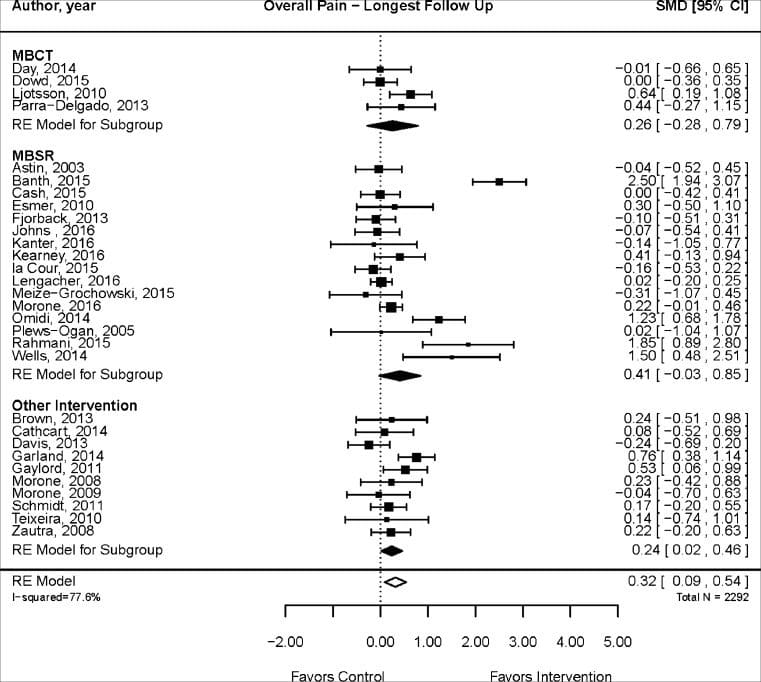
MBSR has demonstrated efficacy in addressing the severity of medical symptoms and psychological symptoms,[48] pain intensity,[56] and coping with stress and pain;[54] these treatment gains may last up to 4 years after intervention in many domains.[54] MBSR has been effective in diverse pain samples,[48,54,56] and in individuals with irritable bowel syndrome,[52] neck pain,[57] migraine,[57] fibromyalgia,[58] and chronic musculoskeletal pain.[59] Additionally, MBSR addresses co-occurring symptoms of depression in individuals with some chronic pain conditions like fibromyalgia[60] and enhances the effects of multidisciplinary treatment on disability, anxiety, depression, and catastrophizing.[61] Meta-analytic studies of MBSR in chronic pain have shown small to moderate effects of MBSR on anxiety, depression, and psychological distress in patients with chronic illnesses including pain,[62] and these benefits tend to be robust across studies.[63] However, as with CBT, MBSR may be differentially effective across populations; a recent longitudinal study noted greater improvements in pain, health-related quality of life, and psychological well-being for back or neck pain than in fibromyalgia, chronic migraine, or headache.[57]


Acceptance and Commitment Therapy


ACT adopts a theoretical approach that thoughts do not need to be targeted or changed; instead, responses to thoughts may be altered so that their negative consequences are minimized.[31] ACT interventions improve well-being through nonjudgmental and purposeful acknowledgment of mental events (ie, thoughts and emotions), fostering acceptance of these events, and increasing the ability of the individual to remain present and aware of personally relevant psychological and environmental factors; in doing so, individuals are able to adjust their behavior in a way that is consistent with their goals or values, rather than focusing on immediate relief from thoughts and emotions.[31] In the treatment of pain, ACT fosters purposeful awareness and acceptance of pain, thereby minimizing the focus on reducing pain or thought content and instead directing efforts towards fulfilling behavioral functioning.[44] ACT shares conceptual similarity with MBSR due to shared goals of promoting mindfulness and acceptance of pain but, unlike MBSR, ACT does not utilize daily mindful meditation and instead focuses on identification of the values and goals of the individual, which serve to direct behavior.[64] ACT-based interventions have demonstrated benefits on various aspects of mental health in chronic pain populations, including mental health quality of life, self-efficacy, depression, and anxiety.[65] Some studies of ACT interventions for chronic pain have reported medium or larger effect sizes for improvements in pain-related anxiety and distress, disability, number of medical visits, current work status, and physical performance,[66,67] with smaller effects of this intervention noted on pain and depression.[64] However, meta-analytic studies of acceptance-based therapies for pain have revealed that ACT does not show incrementally greater efficacy in comparison to other established psychological treatments for chronic pain.[64]


Future Directions and Remaining Questions


The extant literature suggests that each of the previously reviewed psychological interventions has retained value for the treatment of chronic pain. At present, there is little evidence of the superiority of any treatment approach, with one exception: CBT has demonstrated incrementally greater benefit in many areas than the effects of behavioral therapy.[3] As previously noted, however, operant-behavioral principles have been adopted for newer treatment approaches like in vivo exposure for fear of pain, which has demonstrated good benefit in multidisciplinary treatment with some pain populations.[41] Recent reviews have concluded that MBSR and ACT are promising but yield generally comparable effects to CBT, despite their distinct intervention methods.[64] The ability to draw conclusions regarding treatment superiority is further limited by the smaller number of high-quality studies of ACT or MBSR compared to the more robust CBT literature.[64]


Some critical questions remain regarding the comparative effectiveness of these interventions. First, the effects of CBT are significant in the short term but are not consistently maintained across time, possibly due to decreased adherence.[3] It is conceivable that acceptance-based approaches, which are predicated less on mechanistic coping strategies and instead foster accepting attitudes towards pain, may show greater rates of long-term adherence and longer-term benefits than CBT, though future study of this question is needed. Further, some pain disorders (such as fibromyalgia) have shown comparatively poorer treatment response to CBT than other pain disorders in some studies, which highlights the possible benefit of alternative interventions in such populations. Indeed, ACT and MBSR have also shown efficacy in fibromyalgia populations, though there remains a need to identify predictors of differential treatment response.[65]


Safety and Tolerability of Psychological Therapies


Psychological therapies for pain are presumed to be at low risk for adverse effects to the recipient; as a result, there is a dearth of empirical evidence regarding the risks of psychological interventions.[68] Some have suggested that patients who enter psychological treatment face risks of incorrect psychological diagnosis, psychological dependence, undermining of a patient�s ability to make their own decisions, or manipulation by the therapist to achieve nontherapeutic goals.[69,70] However, these concerns are alleviated through proper clinical and ethical training of practitioners and are not typically considered salient risks of psychological therapies when they are properly administered.[70] Recently, there has been a call for additional research to address the possibility of adverse psychotherapeutic effects[71] as well as a more systematic method of monitoring and identifying adverse events related to psychotherapy.[68] Though the rates of adverse effects of psychotherapy are still largely unknown, it is encouraging that recent studies have begun to specifically report the incidence of adverse events directly.[72]


Factors Affecting the Outcomes of Psychological Intervention


Practitioners should be cautioned against the assumption of homogeneity among patients with pain disorders, as a variety of factors may predict treatment response.[69,71] Turk[73] proposed that individuals coping with comparable levels of pain show distinct patterns of response that could be clustered into recognizable subclasses: �dysfunctional� patients, who report high levels of pain-related interference and distress; �interpersonally distressed� patients, who report lacking the support of loved ones in coping with their pain; and �adaptive copers,� who report notably higher levels of function and perceived social support and lower levels of pain-related dysfunction. Turk proposed that these patient subgroups respond differently to psychological intervention, and subsequent findings have supported this idea: �dysfunctional� patients have demonstrated greater response to interdisciplinary treatment involving psychological care than �interpersonally distressed� patients.[74] Identification of patient subgroups may be accomplished using instruments like the Multidisciplinary Pain Inventory[75] and through detailed assessment of chronic pain intensity and disability.[76] Additionally, patients� readiness to adopt a self-management approach to their own chronic pain appears to have significant implications for treatment response;[77] patients who are in the precontemplation stage of treatment readiness may benefit more from insight-focused therapy, versus those in an action stage, who may benefit more from establishing relaxation-based and other active coping strategies.[77] Patient readiness to self-manage pain may be assessed using the Pain Stages of Change Questionnaire.[77] Additionally, treatment response may be subject to patient beliefs about the importance of intervention-specific behaviors and about one�s own ability to perform these actions.[78]


Additionally, there may be demographic, psychological, and medical differences among patients that are relevant to treatment response, including the etiology of pain conditions, socioeconomic status, and cultural and ethnic background; these factors require further empirical research in order to optimize clinical outcomes but have not yet received adequate attention in the clinical literature.[79] For example, baseline levels of physical functioning appear to predict response to certain psychological treatment modalities like in vivo exposure for fear of pain.[40] Further, baseline levels of pain, depression, and anxiety have been found to predict dropout rates in some samples,[80,81] though these effects are not apparent in all samples.[3] In addition to being an important mechanism of treatment, there is evidence that baseline levels of fear of pain may also predict differential treatment response; individuals more fearful of pain at the outset of a multidisciplinary pain treatment program showed greater responsiveness to in vivo exposure for this problem.[28] The presence of medical comorbidities that are likely to impact future functioning is also important to consider; recently, psychological interventions have been developed that address comorbid symptoms of sleep,[82] obesity,[29] and fatigue[83] that may accompany chronic pain. Hybrid treatments may be more important in independent clinical practice, where comorbidity is more common.[82] Notably, there is little evidence that personality variables factor significantly into treatment response; most of the connections between personality traits and variables relevant to psychological intervention for pain are theoretical and have not consistently emerged in empirical research.[84,85]


Patient age is also an important consideration in examining responses to interventions for pain. Older adults have increased risks of various ailments related to pain, including arthritis and osteoporosis, but may have poor tolerance to medications for these conditions.[86] Further, age may alter psychological reactions to pain; the emotional aspects of pain are more strongly correlated with pain catastrophizing in younger adults than older adults while sensory aspects of pain appear more strongly related to pain catastrophizing in older adults.[87] Additionally, treatment protocols may require accommodation for elderly populations; addressing an elderly patient�s fear of movement may be complicated by a fear of falling that is absent in younger populations.[88] As memory concerns are more common in older adulthood, treatment protocols may be improved if they minimize the demand for memorized tasks.[89] Unfortunately, research is lacking for specific psychological interventions in elderly populations.[86] In general, psychological interventions are presumed to be of low risk for older adults,[90] and CBT for pain has received comparatively greater empirical support for older adults.[88] Overall, the efficacy of psychological intervention for pain in older adults is an area that warrants additional study in the future.


Treatment availability is a key consideration for psychological intervention, especially for patients in poverty or living in remote geographical locations. Though it is beyond the scope of this paper to review ethnic and socioeconomic contributors to health, low socioeconomic status is a significant risk factor for the development of chronic pain and factors heavily into racial disparities in health outcomes.[91] As financial challenges may restrict access to traditional psychological interventions, the importance of alternative modalities for provision of mental health interventions for chronic pain is paramount. Teleinterventions[92] and Internet-based interventions[93] may be viable for psychological treatment of chronic pain; Internet-based programs delivering ACT,[94] CBT,[46] and mindfulness interventions[95] have demonstrated benefits in psychosocial functioning, mood, and pain coping. However, methodologically rigorous clinical trials and evidence for maximally effective and efficient implementation of these programs are needed, as many interventions have shown modest effects and comparatively high dropout rates.[96]


Combining psychological treatment modalities with one another and with other medical interventions may constitute the next logical step in enhancing treatment outcomes. Institution of a flexible, goal-oriented approach, akin to ACT, may enhance engagement and adherence in CBT.[97] Additionally, a combination of graded in vivo exposure and ACT may show incremental benefit in addressing pain-related fear and anxiety.[98] Effects of CBT may also be enhanced in conjunction with treatments like biofeedback[99] and hypnosis.[100] A word of caution: presentation of psychological treatment by nontraditional practitioners may show variable effectiveness unless treatment approaches are adjusted appropriately.[101] If trained properly, however, appropriately-designed cognitive-behavioral interventions can be effectively administered by physiotherapists,[102] physical therapists,[103] nurses, and occupational therapists.[104]


Conclusion


Psychotherapy constitutes a valuable modality for addressing the behavioral, cognitive, emotional, and social factors that both result from and contribute to pain-related dysfunction and distress through enhancement of self-management strategies. There are several distinct psychological interventions that differ in their theoretical approaches, therapeutic targets, and areas of efficacy, but CBT, ACT, MBSR, and operant behavioral approaches to pain may all play important roles for enhancing the self-management abilities of individuals with chronic pain. However, there remains a need to identify predictors of differential treatment response and salient patient subgroups to optimize treatment outcomes, as well as additional and alternative means to provision of psychological services for those who are unwilling or unable to engage in traditional psychotherapy. More empirical research into contributing factors of differential treatment response and the dissemination of psychological treatment for pain may result in significant savings to the physical, emotional, and financial costs of chronic pain.


Footnotes


Disclosure:�The author reports no conflicts of interest in this work.


In conclusion, psychological therapies, such as cognitive-behavioral therapy, mindfulness-based stress reduction and even chiropractic care, have been demonstrated to effective help treat chronic pain, according to research studies. The connection between the mind and body has previously been referenced as a cause for a variety of health issues, including chronic pain. Finally, the article above demonstrated the effects of psychological therapy for chronic pain management. Information referenced from the National Center for Biotechnology Information (NCBI). The scope of our information is limited to chiropractic as well as to spinal injuries and conditions. To discuss the subject matter, please feel free to ask Dr. Jimenez or contact us at 915-850-0900 .


Curated by Dr. Alex Jimenez

Green-Call-Now-Button-24H-150x150-2-3.png


Additional Topics: Back Pain


According to statistics, approximately 80% of people will experience symptoms of back pain at least once throughout their lifetimes. Back pain is a common complaint which can result due to a variety of injuries and/or conditions. Often times, the natural degeneration of the spine with age can cause back pain. Herniated discs occur when the soft, gel-like center of an intervertebral disc pushes through a tear in its surrounding, outer ring of cartilage, compressing and irritating the nerve roots. Disc herniations most commonly occur along the lower back, or lumbar spine, but they may also occur along the cervical spine, or neck. The impingement of the nerves found in the low back due to injury and/or an aggravated condition can lead to symptoms of sciatica.


blog picture of cartoon paperboy big news


EXTRA IMPORTANT TOPIC: Managing Workplace Stress


MORE IMPORTANT TOPICS: EXTRA EXTRA: Car Accident Injury Treatment El Paso, TX Chiropractor


Blank
References
1.�Craig AD. A new view of pain as a homeostatic emotion.�Trends Neurosci.�2003;26(6):303�307.[PubMed]
2.�Gatchel RJ. Comorbidity of chronic pain and mental health disorders: the biopsychosocial perspective.�Am Psychol.�2004;59(8):795�805.�[PubMed]
3.�Williams AC, Eccleston C, Morley S. Psychological therapies for the management of chronic pain (excluding headache) in adults.�Cochrane Database Syst Rev.�2012;11:CD007407.�[PubMed]
4.�Turk DC, Audette J, Levy RM, Mackey SC, Stanos S. Assessment and treatment of psychosocial comorbidities in patients with neuropathic pain.�Mayo Clin Proc.�2010;85(Suppl 3):S42�S50.[PMC free article][PubMed]
5.�Thibault P, Loisel P, Durand MJ, Catchlove R, Sullivan MJ. Psychological predictors of pain expression and activity intolerance in chronic pain patients.�Pain.�2008;139(1):47�54.�[PubMed]
6.�Bair MJ, Robinson RL, Katon W, Kroenke K. Depression and pain comorbidity: a literature review.�Arch Intern Med.�2003;163(20):2433�2445.�[PubMed]
7.�McWilliams LA, Cox BJ, Enns MW. Mood and anxiety disorders associated with chronic pain: an examination in a nationally representative sample.�Pain.�2003;106(1�2):127�133.�[PubMed]
8.�Young Casey C, Greenberg MA, Nicassio PM, Harpin RE, Hubbard D. Transition from acute to chronic pain and disability: a model including cognitive, affective, and trauma factors.�Pain.�2008;134(1�2):69�79.[PubMed]
9.�Geenen R, Newman S, Bossema ER, Vriezekolk JE, Boelen PA. Psychological interventions for patients with rheumatic diseases and anxiety or depression.�Best Pract Res Clin Rheumatol.�2012;26(3):305�319.[PubMed]
10.�Winkelmann A, Perrot S, Schaefer C, et al. Impact of fibromyalgia severity on health economic costs: results from a European cross- sectional study.�Appl Health Econ Health Policy.�2011;9(2):125�136.[PubMed]
11.�Wright LJ, Schur E, Noonan C, Ahumada S, Buchwald D, Afari N. Chronic pain, overweight, and obesity: findings from a community-based twin registry.�J Pain.�2010;11(7):628�635.�[PMC free article][PubMed]
12.�Smith MT, Haythornthwaite JA. How do sleep disturbance and chronic pain inter-relate? Insights from the longitudinal and cognitive- behavioral clinical trials literature.�Sleep Med Rev.�2004;8(2):119�132.[PubMed]
13.�Kato K, Sullivan PF, Eveng�rd B, Pedersen NL. Chronic widespread pain and its comorbidities: a population-based study.�Arch Intern Med.�2006;166(15):1649�1654.�[PubMed]
14.�Richardson LP, Russo JE, Katon W, et al. Mental health disorders and long-term opioid use among adolescents and young adults with chronic pain.�J Adolesc Health.�2012;50(6):553�558.�[PMC free article][PubMed]
15.�Sullivan MJ, Thorn B, Haythornthwaite JA, et al. Theoretical perspectives on the relation between catastrophizing and pain.�Clin J Pain.�2001;17(1):52�64.�[PubMed]
16.�Sullivan MJL, Bishop SR, Pivik J. The pain catastrophizing scale: development and validation.�Psychol Assess.�1995;7(4):524�532.
17.�Keefe FJ, Brown GK, Wallston KA, Caldwell DS. Coping with rheumatoid arthritis pain: catastrophizing as a maladaptive strategy.�Pain.�1989;37(1):51�56.�[PubMed]
18.�Wollaars MM, Post MW, van Asbeck FW, Brand N. Spinal cord injury pain: the influence of psychologic factors and impact on quality of life.�Clin J Pain.�2007;23(5):383�391.�[PubMed]
19.�Crisson JE, Keefe FJ. The relationship of locus of control to pain coping strategies and psychological distress in chronic pain patients.�Pain.�1988;35(2):147�154.�[PubMed]
20.�Hamilton NA, Karoly P, Zautra AJ. Health goal cognition and adjustment in women with fibromyalgia.�J Behav Med.�2005;28(5):455�466.�[PubMed]
21.�Mankovsky T, Lynch M, Clark A, Sawynok J, Sullivan MJ. Pain catastrophizing predicts poor response to topical analgesics in patients with neuropathic pain.�Pain Res Manag.�2012;17(1):10�14.[PMC free article][PubMed]
22.�Burns JW, Glenn B, Bruehl S, Harden RN, Lofland K. Cognitive factors influence outcome following multidisciplinary chronic pain treatment: a replication and extension of a cross-lagged panel analysis.�Behav Res Ther.�2003;41(10):1163�1182.�[PubMed]
23.�Sullivan MJL, Adams H, Ellis T. Targeting catastrophic thinking to promote return to work in individuals with fibromyalgia.�J Cogn Psychother.�2012;26(2):130�142.
24.�Leeuw M, Goossens ME, Linton SJ, Crombez G, Boersma K, Vlaeyen JW. The fear-avoidance model of musculoskeletal pain: current state of scientific evidence.�J Behav Med.�2007;30(1):77�94.�[PubMed]
25.�Demmelmaier I, Asenl�f P, Lindberg P, Denison E. Biopsychosocial predictors of pain, disability, health care consumption, and sick leave in first-episode and long-term back pain: a longitudinal study in the general population.�Int J Behav Med.�2010;17(2):79�89.�[PubMed]
26.�Zale EL, Lange KL, Fields SA, Ditre JW. The relation between pain-related fear and disability: a meta-analysis.�J Pain.�2013;14(10):1019�1030.�[PMC free article][PubMed]
27.�Samwel HJ, Evers AW, Crul BJ, Kraaimaat FW. The role of helplessness, fear of pain, and passive pain-coping in chronic pain patients.�Clin J Pain.�2006;22(3):245�251.�[PubMed]
28.�Werneke MW, Hart DL, George SZ, Stratford PW, Matheson JW, Reyes A. Clinical outcomes for patients classified by fear-avoidance beliefs and centralization phenomenon.�Arch Phys Med Rehabil.�2009;90(5):768�777.�[PubMed]
29.�Somers TJ, Keefe FJ, Pells JJ, et al. Pain catastrophizing and pain-related fear in osteoarthritis patients: relationships to pain and disability.�J Pain Symptom Manage.�2009;37(5):863�872.�[PMC free article][PubMed]
30.�Pincus T, McCracken LM. Psychological factors and treatment opportunities in low back pain.�Best Pract Res Clin Rheumatol.�2013;27(5):625�635.�[PubMed]
31.�Hayes SC, Luoma JB, Bond FW, Masuda A, Lillis J. Acceptance and commitment therapy: model, processes and outcomes.�Behav Res Ther.�2006;44(1):1�25.�[PubMed]
32.�Eccleston C, Crombez G, Aldrich S, Stannard C. Worry and chronic pain patients: a description and analysis of individual differences.�Eur J Pain.�2001;5(3):309�318.�[PubMed]
33.�McCracken LM. Learning to live with the pain: acceptance of pain predicts adjustment in persons with chronic pain.�Pain.�1998;74(1):21�27.�[PubMed]
34.�Kranz D, Bollinger A, Nilges P. Chronic pain acceptance and affective well-being: a coping perspective.�Eur J Pain.�2010;14(10):1021�1025.�[PubMed]
35.�Vowles KE, McCracken LM, Eccleston C. Patient functioning and catastrophizing in chronic pain: the mediating effects of acceptance.�Health Psychol.�2008;27(Suppl 2):S136�S143.�[PubMed]
36.�McCracken LM, Eccleston C. A prospective study of acceptance of pain and patient functioning with chronic pain.�Pain.�2005;118(1�2):164�169.�[PubMed]
37.�Vowles KE, McCracken LM, Eccleston C. Processes of change in treatment for chronic pain: the contributions of pain, acceptance, and catastrophizing.�Eur J Pain.�2007;11(7):779�787.�[PubMed]
38.�Kratz AL, Davis MC, Zautra AJ. Pain acceptance moderates the relation between pain and negative affect in female osteoarthritis and fibromyalgia patients.�Ann Behav Med.�2007;33(3):291�301.[PMC free article][PubMed]
39.�Fordyce WE.�Behavioral Methods for Chronic Pain and Illness.�St Louis, MO: Mosby; 1976. p. 1.
40.�Gatzounis R, Schrooten MG, Crombez G, Vlaeyen JW. Operant learning theory in pain and chronic pain rehabilitation.�Curr Pain Headache Rep.�2012;16(2):117�126.�[PubMed]
41.�Leeuw M, Goossens ME, van Breukelen GJ, et al. Exposure in vivo versus operant graded activity in chronic low back pain patients: results of a randomized controlled trial.�Pain.�2008;138(1):192�207.[PubMed]
42.�den Hollander M, de Jong JR, Volders S, Goossens ME, Smeets RJ, Vlaeyen JW. Fear reduction in patients with chronic pain: a learning theory perspective.�Expert Rev Neurother.�2010;10(11):1733�1745.[PubMed]
43.�Woods MP, Asmundson GJ. Evaluating the efficacy of graded in vivo exposure for the treatment of fear in patients with chronic back pain: a randomized controlled clinical trial.�Pain.�2008;136(3):271�280.[PubMed]
44.�Day MA, Thorn BE, Burns JW. The continuing evolution of biopsychosocial interventions for chronic pain.�J Cogn Psychother.�2012;26(2):114�129.
45.�Hofmann SG, Asnaani A, Vonk IJ, Sawyer AT, Fang A. The efficacy of cognitive behavioral therapy: a review of meta-analyses.�Cognit Ther Res.�2012;36(5):427�440.�[PMC free article][PubMed]
46.�Buhrman M, Fredriksson A, Edstr�m G, et al. Guided Internet-delivered cognitive behavioural therapy for chronic pain patients who have residual symptoms after rehabilitation treatment: randomized controlled trial.�Eur J Pain.�2013;17(5):753�765.�[PubMed]
47.�Bennett R, Nelson D. Cognitive behavioral therapy for fibromyalgia.�Nat Clin Pract Rheumatol.�2006;2(8):416�424.�[PubMed]
48.�Kabat-Zinn J. An outpatient program in behavioral medicine for chronic pain patients based on the practice of mindfulness meditation: theoretical considerations and preliminary results.�Gen Hosp Psychiatry.�1982;4(1):33�47.�[PubMed]
49.�Lauwerier E, Van Damme S, Goubert L, Paemeleire K, Devulder J, Crombez G. To control or not? A motivational perspective on coping with pain.�Acta Neurol Belg.�2012;112(1):3�7.�[PubMed]
50.�Baer RA. Mindfulness training as a clinical intervention: a conceptual and empirical review.�Clin Psychol: Sci Pract.�2003;10(2):125�143.
51.�Campbell TS, Labelle LE, Bacon SL, Faris P, Carlson LE. Impact of Mindfulness-Based Stress Reduction (MBSR) on attention, rumination and resting blood pressure in women with cancer: a waitlist-controlled study.�J Behav Med.�2012;35(3):262�271.�[PubMed]
52.�Garland EL, Gaylord SA, Palsson O, Faurot K, Douglas Mann J, Whitehead WE. Therapeutic mechanisms of a mindfulness-based treatment for IBS: effects on visceral sensitivity, catastrophizing, and affective processing of pain sensations.�J Behav Med.�2012;35(6):591�602.�[PMC free article][PubMed]
53.�Kabat-Zinn J.�Full Catastrophe Living: The Program of the Stress Reduction Clinic at the University of Massachusetts Medical Center.�New York, NY: Delta; 1990.
54.�Kabat-Zinn J, Lipworth L, Burney R, Sellers W. Four-year follow-up of a meditation-based program for the self-regulation of chronic pain: treatment outcomes and compliance.�Clin J Pain.�1986;2(3):159�173.
55.�Carmody J, Baer RA. Relationships between mindfulness practice and levels of mindfulness, medical and psychological symptoms and well-being in a mindfulness-based stress reduction program.�J Behav Med.�2008;31(1):23�33.�[PubMed]
56.�Randolph P, Caldera YM, Tacone AM, Greak BL. The long-term combined effects of medical treatment and a mindfulness-based behavioral program for the multidisciplinary management of chronic pain in West Texas.�Pain Digest.�1999;9:103�112.
57.�Rosenzweig S, Greeson JM, Reibel DK, Green JS, Jasser SA, Beasley D. Mindfulness-based stress reduction for chronic pain conditions: variation in treatment outcomes and role of home meditation practice.�J Psychosom Res.�2010;68(1):29�36.�[PubMed]
58.�Grossman P, Tiefenthaler-Gilmer U, Raysz A, Kesper U. Mindfulness training as an intervention for fibromyalgia: evidence of postintervention and 3-year follow-up benefits in well-being.�Psychother Psychosom.�2007;76(4):226�233.�[PubMed]
59.�Plews-Ogan M, Owens JE, Goodman M, Wolfe P, Schorling J. A pilot study evaluating mindfulness-based stress reduction and massage for the management of chronic pain.�J Gen Intern Med.�2005;20(12):1136�1138.�[PMC free article][PubMed]
60.�Sephton SE, Salmon P, Weissbecker I, et al. Mindfulness meditation alleviates depressive symptoms in women with fibromyalgia: results of a randomized clinical trial.�Arthritis Rheum.�2007;57(1):77�85.[PubMed]
61.�Cassidy EL, Atherton RJ, Robertson N, Walsh DA, Gillett R. Mindfulness, functioning and catastrophizing after multidisciplinary pain management for chronic low back pain.�Pain.�2012;153(3):644�650.�[PubMed]
62.�Bohlmeijer E, Prenger R, Taal E, Cuijpers P. The effects of mindfulness-based stress reduction therapy on mental health of adults with a chronic medical disease: a meta-analysis.�J Psychosom Res.�2010;68(6):539�544.�[PubMed]
63.�Merkes M. Mindfulness-based stress reduction for people with chronic diseases.�Aust J Prim Health.�2010;16(3):200�210.�[PubMed]
64.�Veehof MM, Oskam MJ, Schreurs KM, Bohlmeijer ET. Acceptance-based interventions for the treatment of chronic pain: a systematic review and meta-analysis.�Pain.�2011;152(3):533�542.�[PubMed]
65.�Wicksell RK, Kemani M, Jensen K, et al. Acceptance and commitment therapy for fibromyalgia: a randomized controlled trial.�Eur J Pain.�2013;17(4):599�611.�[PubMed]
66.�McCracken LM, MacKichan F, Eccleston C. Contextual cognitive-behavioral therapy for severely disabled chronic pain sufferers: effectiveness and clinically significant change.�Eur J Pain.�2007;11(3):314�322.�[PubMed]
67.�Vowles KE, McCracken LM. Acceptance and values-based action in chronic pain: a study of treatment effectiveness and process.�J Consult Clin Psychol.�2008;76(3):397�407.�[PubMed]
68.�Dimidjian S, Hollon SD. How would we know if psychotherapy were harmful?�Am Psychol.�2010;65(1):21�33.�[PubMed]
69.�Berk M, Parker G. The elephant on the couch: side-effects of psychotherapy.�Aust N Z J Psychiatry.�2009;43(9):787�794.�[PubMed]
70.�Green B. Adverse effects of psychotherapy.�Advances in Psychiatric Treatment.�2011;17(6):476.
71.�Barlow DH. Negative effects from psychological treatments: a perspective.�Am Psychol.�2010;65(1):13�20.�[PubMed]
72.�Shadick NA, Sowell NF, Frits ML, et al. A randomized controlled trial of an internal family systems-based psychotherapeutic intervention on outcomes in rheumatoid arthritis: a proof-of-concept study.�J Rheumatol.�2013;40(11):1831�1841.�[PubMed]
73.�Turk DC. The potential of treatment matching for subgroups of patients with chronic pain: lumping versus splitting.�Clin J Pain.�2005;21(1):44�55.�discussion 69�72.�[PubMed]
74.�Turk DC, Okifuji A, Sinclair JD, Starz TW. Differential responses by psychosocial subgroups of fibromyalgia syndrome patients to an interdisciplinary treatment.�Arthritis Care Res.�1998;11(5):397�404.[PubMed]
75.�Kerns RD, Turk DC, Rudy TE. The West Haven-Yale multidimensional pain inventory (WHYMPI)�Pain.�1985;23(4):345�356.�[PubMed]
76.�Von Korff M, Ormel J, Keefe FJ, Dworkin SF. Grading the severity of chronic pain.�Pain.�1992;50(2):133�149.�[PubMed]
77.�Kerns RD, Rosenberg R, Jamison RN, Caudill MA, Haythornthwaite J. Readiness to adopt a self-management approach to chronic pain: the Pain Stages of Change Questionnaire (PSOCQ)�Pain.�1997;72(1�2):227�234.�[PubMed]
78.�Kratz AL, Molton IR, Jensen MP, Ehde DM, Nielson WR. Further evaluation of the Motivational Model of Pain Self-Management: coping with chronic pain in multiple sclerosis.�Ann Behav Med.�2011;41(3):391�400.�[PMC free article][PubMed]
79.�Reese C, Mittag O. Psychological interventions in the rehabilitation of patients with chronic low back pain: evidence and recommendations from systematic reviews and guidelines.�Int J Rehabil Res.�2013;36(1):6�12.�[PubMed]
80.�Kraaimaat F, Brons MR, Geenen R, Bijlsma JW. The effect of cognitive behavior therapy in patients with rheumatoid arthritis.�Behav Res Ther.�1995;33(5):487�495.�[PubMed]
81.�Wetherell JL, Afari N, Rutledge T, et al. A randomized, controlled trial of acceptance and commitment therapy and cognitive-behavioral therapy for chronic pain.�Pain.�2011;152(9):2098�2107.�[PubMed]
82.�Tang NK, Goodchild CE, Salkovskis PM. Hybrid cognitive-behaviour therapy for individuals with insomnia and chronic pain: a pilot randomised controlled trial.�Behav Res Ther.�2012;50(12):814�821.[PubMed]
83.�Knoop H, Stulemeijer M, Prins JB, van der Meer JW, Bleijenberg G. Is cognitive behaviour therapy for chronic fatigue syndrome also effective for pain symptoms?�Behav Res Ther.�2007;45(9):2034�2043.[PubMed]
84.�Bishop SR. What do we really know about mindfulness-based stress reduction?�Psychosom Med.�2002;64(1):71�83.�[PubMed]
85.�Turner JA, Holtzman S, Mancl L. Mediators, moderators, and predictors of therapeutic change in cognitive-behavioral therapy for chronic pain.�Pain.�2007;127(3):276�286.�[PubMed]
86.�Park J, Hughes AK. Nonpharmacological approaches to the management of chronic pain in community-dwelling older adults: a review of empirical evidence.�J Am Geriatr Soc.�2012;60(3):555�568.[PubMed]
87.�Kraaij V, Pruymboom E, Garnefski N. Cognitive coping and depressive symptoms in the elderly: a longitudinal study.�Aging Ment Health.�2002;6(3):275�281.�[PubMed]
88.�Keefe FJ, Porter L, Somers T, Shelby R, Wren AV. Psychosocial interventions for managing pain in older adults: outcomes and clinical implications.�Br J Anaesth.�2013;111(1):89�94.�[PMC free article][PubMed]
89.�Nicholson NL, Blanchard EB. A controlled evaluation of behavioral treatment of chronic headache in the elderly.�Behav Ther.�1993;24(3):395�408.
90.�Morone NE, Greco CM. Mind-body interventions for chronic pain in older adults: a structured review.�Pain Med.�2007;8(4):359�375.�[PubMed]
91.�Fuentes M, Hart-Johnson T, Green CR. The association among neighborhood socioeconomic status, race and chronic pain in black and white older adults.�J Natl Med Assoc.�2007;99(10):1160�1169.[PMC free article][PubMed]
92.�Naylor MR, Naud S, Keefe FJ, Helzer JE. Therapeutic Interactive Voice Response (TIVR) to reduce analgesic medication use for chronic pain management.�J Pain.�2010;11(12):1410�1419.�[PMC free article][PubMed]
93.�Hoch DB, Watson AJ, Linton DA, et al. The feasibility and impact of delivering a mind-body intervention in a virtual world.�PLoS One.�2012;7(3):e33843.�[PMC free article][PubMed]
94.�Buhrman M, Skoglund A, Husell J, et al. Guided internet-delivered acceptance and commitment therapy for chronic pain patients: a randomized controlled trial.�Behav Res Ther.�2013;51(6):307�315.[PubMed]
95.�Davis MC, Zautra AJ. An online mindfulness intervention targeting socioemotional regulation in fibromyalgia: results of a randomized controlled trial.�Ann Behav Med.�2013;46(3):273�284.�[PubMed]
96.�Macea DD, Gajos K, Daglia Calil YA, Fregni F. The efficacy of Web-based cognitive behavioral interventions for chronic pain: a systematic review and meta-analysis.�J Pain.�2010;11(10):917�929.[PubMed]
97.�Schrooten MG, Vlaeyen JW, Morley S. Psychological interventions for chronic pain: reviewed within the context of goal pursuit.�Pain Management.�2012;2(2):141�150.�[PubMed]
98.�Bailey KM, Carleton RN, Vlaeyen JW, Asmundson GJ. Treatments addressing pain-related fear and anxiety in patients with chronic musculoskeletal pain: a preliminary review.�Cogn Behav Ther.�2010;39(1):46�63.�[PubMed]
99.�Glombiewski JA, Sawyer AT, Gutermann J, Koenig K, Rief W, Hofmann SG. Psychological treatments for fibromyalgia: a meta-analysis.�Pain.�2010;151(2):280�295.�[PubMed]
100.�Castel A, Casc�n R, Padrol A, Sala J, Rull M. Multicomponent cognitive-behavioral group therapy with hypnosis for the treatment of fibromyalgia: long-term outcome.�J Pain.�2012;13(3):255�265.[PubMed]
101.�Gross AR, Kaplan F, Huang S, et al. Psychological care, patient education, orthotics, ergonomics and prevention strategies for neck pain: a systematic overview update as part of the ICON Project.�Open Orthop J.�2013;7:530�561.�[PMC free article][PubMed]
102.�Hunt MA, Keefe FJ, Bryant C, et al. A physiotherapist-delivered, combined exercise and pain coping skills training intervention for individuals with knee osteoarthritis: a pilot study.�Knee.�2013;20(2):106�112.�[PubMed]
103.�Bruflat AK, Balter JE, McGuire D, Fethke NB, Maluf KS. Stress management as an adjunct to physical therapy for chronic neck pain.�Phys Ther.�2012;92(10):1348�1359.�[PMC free article][PubMed]
104.�Lamb SE, Mistry D, Lall R, et al. Back Skills Training Trial Group Group cognitive behavioural interventions for low back pain in primary care: extended follow-up of the Back Skills Training Trial (ISRCTN54717854)�Pain.�2012;153(2):494�501.�[PubMed]
Close Accordion
Cognitive-Behavioral Therapy for Auto Accident Injuries in El Paso, TX

Cognitive-Behavioral Therapy for Auto Accident Injuries in El Paso, TX

Being involved in an automobile accident is an undesirable situation which can result in a variety of physical trauma or injury as well as lead to the development of a number of aggravating conditions. Auto accident injuries, such as whiplash, can be characterized by painful symptoms, including chronic neck pain, however, recent research studies have found that emotional distress resulting from an auto collision could manifest into physical symptoms. Stress, anxiety, depression and post traumatic stress disorder, or PTSD, are common psychological issues which may occur as a result of an automobile accident.


The researchers of the research studies also determined that cognitive-behavioral therapy may be an effective treatment for emotional distress and psychological issues which may have developed as a result of the auto accident injuries. Additionally, auto accident injuries may also cause stress, anxiety, depression and even PTSD if left untreated for an extended amount of time. The purpose of the article below is to demonstrate the effects of cognitive-behavioral therapy, together with alternative treatment options like chiropractic care and physical therapy. for auto accident injuries, such as whiplash.


Neck Exercises, Physical and Cognitive Behavioural-Graded Activity as a Treatment for Adult Whiplash Patients with Chronic Neck Pain: Design of a Randomised Controlled Trial


Abstract


Background


Many patients suffer from chronic neck pain following a whiplash injury. A combination of cognitive, behavioural therapy with physiotherapy interventions has been indicated to be effective in the management of patients with chronic whiplash-associated disorders. The objective is to present the design of a randomised controlled trial (RCT) aimed at evaluating the effectiveness of a combined individual physical and cognitive behavioural-graded activity program on self-reported general physical function, in addition to neck function, pain, disability and quality of life in patients with chronic neck pain following whiplash injury compared with a matched control group measured at baseline and 4 and 12 months after baseline.


Methods/Design


The design is a two-centre, RCT-study with a parallel group design. Included are whiplash patients with chronic neck pain for more than 6 months, recruited from physiotherapy clinics and an out-patient hospital department in Denmark. Patients will be randomised to either a pain management (control) group or a combined pain management and training (intervention)group. The control group will receive four educational sessions on pain management, whereas the intervention group will receive the same educational sessions on pain management plus 8 individual training sessions for 4 months, including guidance in specific neck exercises and an aerobic training programme. Patients and physiotherapists are aware of the allocation and the treatment, while outcome assessors and data analysts are blinded. The primary outcome measures will be Medical Outcomes Study Short Form 36 (SF36), Physical Component Summary (PCS). Secondary outcomes will be Global Perceived Effect (-5 to +5), Neck Disability Index (0-50), Patient Specific Functioning Scale (0-10), numeric rating scale for pain bothersomeness (0-10), SF-36 Mental Component Summary (MCS), TAMPA scale of Kinesiophobia (17-68), Impact of Event Scale (0-45), EuroQol (0-1), craniocervical flexion test (22 mmHg – 30 mmHg), joint position error test and cervical range of movement. The SF36 scales are scored using norm-based methods with PCS and MCS having a mean score of 50 with a standard deviation of 10.


Discussion


The perspectives of this study are discussed, in addition to the strengths and weaknesses.


Trial registration


The study is registered in http://www.ClinicalTrials.gov identifier NCT01431261.


Background


The Danish National Board of Health estimates that 5-6,000 subjects per year in Denmark are involved in a traffic accident evoking whiplash-induced neck pain. About 43% of those will still have physical impairment and symptoms 6 months after the accident [1]. For Swedish society, including Swedish insurance companies, the economic burden is approximately 320 million Euros [2], and this burden is likely to be comparable to that of Denmark. Most studies suggest that patients with Whiplash-Associated Disorders (WAD) report chronic neck symptoms one year after the injury [3]. The main problems in whiplash patients with chronic neck pain are cervical dysfunction and abnormal sensory processing, reduced neck mobility and stability, impaired cervicocephalic kinaesthetic sense, in addition to local and possibly generalised pain [4,5]. Cervical dysfunction is characterised by reduced function of the deep stabilising muscles of the neck.


Besides chronic neck pain, patients with WAD may suffer from physical inactivity as a consequence of prolonged pain [6,7]. This influences physical function and general health and can result in a poor quality of life. In addition, WAD patients may develop chronic pain followed by sensitisation of the nervous system [8,9], a lowering of the threshold for different sensory inputs (pressure, cold, warm, vibration and electrical impulses) [10]. This can be caused by an impaired central pain inhibition [11] – a cortical reorganisation [12]. Besides central sensitisation, the group with WAD may have poorer coping strategies and cognitive functions, compared with patients with chronic neck pain in general [13-15].


Studies have shown that physical training, including specific exercises targeting the deep postural muscles of the cervical spine, is effective in reducing neck pain [16-18] for patients with chronic neck pain, albeit there is a variability in the response to training with not every patient showing a major change. Physical behavioural-graded activity is a treatment approach with a focus on increasing general physical fitness, reducing fear of movement and increasing psychological function [19,20]. There is insufficient evidence for the long-term effect of treatment of physical and cognitive behavioural-graded activity, especially in chronic neck pain patients. Educational sessions, where the focus is on understanding complex chronic pain mechanisms and development of appropriate pain coping and/or cognitive behavioural strategies, have shown reduced general pain [6,21-26]. A review indicated that interventions with a combination of cognitive, behavioural therapy with physiotherapy including neck exercises is effective in the management of WAD patients with chronic neck pain [27], as also recommended by the Dutch clinical guidelines for WAD [28]. However, the conclusions regarding the guidelines are largely based on studies performed on patients with either acute or sub-acute WAD [29]. A more strict conclusion was drawn for WAD patients with chronic pain in the Bone and Joint Decade 2000-2010 Task Force, stating, that ‘because of conflicting evidence and few high-quality studies, no firm conclusions could be drawn about the most effective non-invasive interventions for patients with chronic WAD” [29,30]. The concept of combined treatment for WAD patients with chronic pain has been used in a former randomised controlled trial [31]. The results indicated that a combination of non-specific aerobic exercises and advice containing standardised pain education and reassurance and encouragement to resume light activity, produced better outcomes than advice alone for patients with WAD 3 months after the accident. The patients showed improvements in pain intensity, pain bothersomeness and functions in daily activities in the group receiving exercise and advice, compared with advice alone. However, the improvements were small and only apparent in the short term.


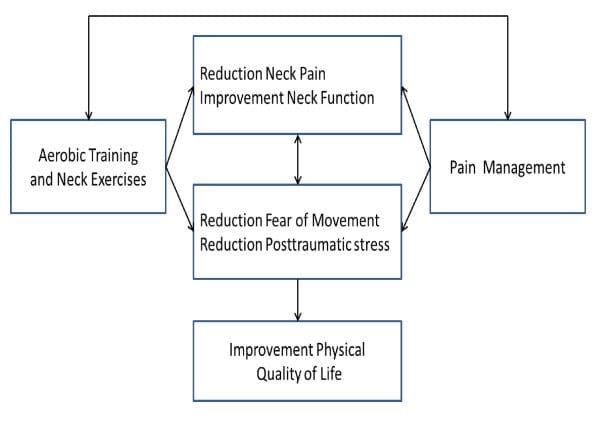
This project is formulated on the expectation that rehabilitation of WAD patients with chronic neck pain must target cervical dysfunctions, training of physical function and the understanding and management of chronic pain in a combined therapy approach. Each single intervention is based upon former studies that have shown effectiveness [6,18,20,32]. This study is the first to also include the long-term effect of the combined approach in patients with chronic neck pain after whiplash trauma. As illustrated in Figure ?Figure1,1, the conceptual model in this study is based upon the hypothesis that training (including both individually-guided specific neck exercises and graded aerobic training) and education in pain management (based on a cognitive behavioural approach) is better for increasing the patients’ physical quality of life, compared with education in pain management alone. Increasing the physical quality of life includes increasing the general physical function and level of physical activity, decreasing fear of movement, reducing post-traumatic stress symptoms, reducing neck pain and increasing neck function. The effect is anticipated to be found immediately after the treatment (i.e. 4 months; short-term effect) as well as after one year (long-term effect).


Figure 1 Hypothesis of the Intervention Effect

Figure 1: Hypothesis of the intervention effect for patients with chronic neck pain after a whiplash accident.


Using a randomised controlled trial (RCT) design, the aim of this study is to evaluate the effectiveness of: graded physical training, including specific neck exercises and general aerobic training, combined with education in pain management (based on a cognitive behavioural approach) versus education in pain management (based on a cognitive behavioural approach), measured on physical quality of life’, physical function, neck pain and neck functions, fear of movement, post-traumatic symptoms and mental quality of life, in patients with chronic neck pain after whiplash injury.


Methods/Design


Trial Design


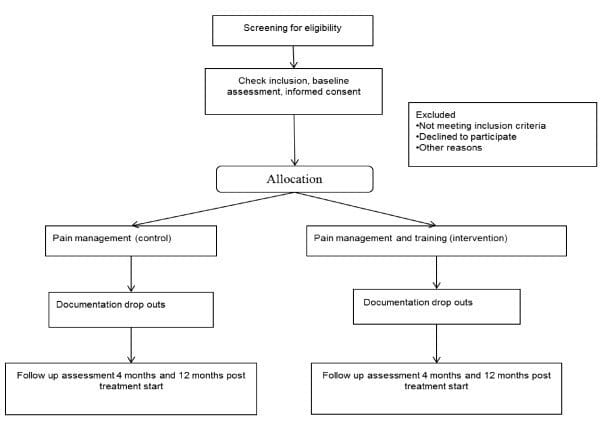
The study is conducted in Denmark as an RCT with a parallel group design. It will be a two-centre study, stratified by recruitment location. Patients will be randomised to either the Pain Management group (control) or the Pain Management and Training group (intervention). As illustrated in Figure ?Figure2,2, the study is designed to include a secondary data assessment 12 months after baseline; the primary outcome assessment will be performed immediately after the intervention program 4 months after baseline. The study utilises an allocation concealment process, ensuring that the group to which the patient is allocated is not known before the patient is entered into the study. The outcome assessors and data analysts will be kept blinded to the allocation to intervention or control group.


Figure 2 Flowchart of the Patients in the Study

Figure 2: Flowchart of the patients in the study.


Settings


The participants will be recruited from physiotherapy clinics in Denmark and from The Spine Centre of Southern Denmark, Hospital Lilleb�lt via an announcement at the clinics and the Hospital. Using physiotherapy clinics spread across Denmark, the patients will receive the intervention locally. The physiotherapy clinics in Denmark receive patients via referral from their general practitioners. The Spine Centre, a unit specialising in treating patients with musculoskeletal dysfunctions and only treating out-patients, receives patients referred from general practitioners and/or chiropractors.


Study Population


Two hundred adults with a minimum age of 18 years, receiving physiotherapy treatment or having been referred for physiotherapy treatment will be recruited. For patients to be eligible, they must have: chronic neck pain for at least 6 months following a whiplash injury, reduced physical neck function (Neck Disability Index score, NDI, of a minimum of 10), pain primarily in the neck region, finished any medical /radiological examinations, the ability to read and understand Danish and the ability to participate in the exercise program. The exclusion criteria include: neuropathies/ radiculopathies (clinically tested by: positive Spurling, cervical traction and plexus brachialis tests) [33], neurological deficits (tested as in normal clinical practice through a process of examining for unknown pathology), engagement in experimental medical treatment, being in an unstable social and/or working situation, pregnancy, known fractures, depression according to the Beck Depression Index (score > 29) [18,34,35], or other known coexisting medical conditions which could severely restrict participation in the exercise program. The participants will be asked not to seek other physiotherapy or cognitive treatment during the study period.


Intervention


Control


The Pain Management (control) group will receive education in pain management strategies. There will be 4 sessions of 11/2 hours, covering topics regarding pain mechanisms, acceptance of pain, coping strategies, and goal-setting, based upon pain management and cognitive therapy concepts [21,26,36].


Intervention


The Pain Management plus Training (intervention) group will receive the same education in pain management as those in the control group plus 8 treatment sessions (instruction in neck exercises and aerobic training) with the same period of 4 months length. If the treating physiotherapist estimates additional treatments are needed, the treatment can be extended with 2 more sessions. Neck training: The treatment of neck-specific exercises will be progressed through different phases, which are defined by set levels of neck function. At the first treatment session, patients are tested for cervical neuromuscular function to identify the specific level at which to start neck training. A specific individually tailored exercise program will be used to target the neck flexor and extensor muscles. The ability to activate the deep cervical neck flexor muscles of the upper cervical region to increase their strength, endurance and stability function is trained progressively via the craniocervical training method using a biopressure feedback transducer [18,37]. Exercises for neck-eye coordination, neck joint positioning, balance and endurance training of the neck muscles will be included as well, since it has been shown to reduce pain and improve sensorimotor control in patients with insidious neck pain [17,38]. Aerobic training: The large trunk and leg muscles will be trained with a gradually increasing physical training program. Patients will be allowed to select activities such as walking, cycling, stick walking, swimming, and jogging. The baseline for training duration is set by exercising 3 times at a comfortable level, that does not exacerbate pain and aims at a rated perceived exertion (RPE) level of between 11 and 14 on a Borg scale [39]. The initial duration of training is set 20% below the average time of the three trials. Training sessions are carried out every second day with a prerequisite that pain is not worsened, and that RPE is between 9 and 14. A training diary is used. If patients do not experience a relapse, and report an average RPE value of 14 or less, the exercise duration for the following period (1 or 2 weeks) is increased by 2-5 minutes, up to a maximum of 30 minutes. If the RPE level is 15 or higher, the exercise duration will be reduced to an average RPE score of 11 to 14 every fortnight [20,40]. By using these pacing principles, the training will be graded individually by the patient, with a focus on perceived exertion – with the aim of increasing the patient’ s general physical activity level and fitness.


Patients’ compliance will be administered by registration of their participation in the control and intervention group. The patients in the control group will be considered to have completed the pain management if they have attended 3 out of 4 sessions. The patiesnts in the intervention group will be considered to have completed if the patient has attended a minimum of 3 out of 4 pain management sessions and a minimum of 5 out of 8 trainings sessions. Each patient’s home training with neck exercises and aerobic training will be registered by him/her in a logbook. Compliance with 75% of the planned home training will be considered as having completed the intervention.


Physiotherapists


The participating physiotherapists will be recruited via an announcement in the Danish Physiotherapy Journal. The inclusion criteria consist of: being a qualified physiotherapist, working at a clinic and having at least two years of working experience as a physiotherapist, having attended a course in the described intervention and passed the related exam.


Outcome Measures


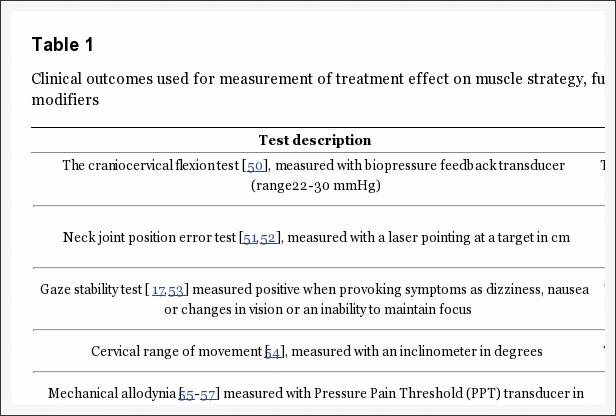
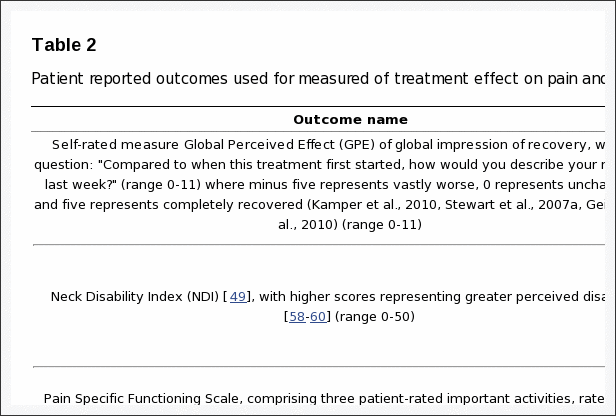
At baseline the participants’ information on age, gender, height and weight, type of accident, medication, development of symptoms over the last two months (status quo, improving, worsening), expectation of treatment, employment and educational status will be registered. As a primary outcome measure, Medical Outcomes Study Short Form 36 (SF36) – Physical Component Summary (PCS) will be used [41,42]. The PCS scales are scored using norm-based methods [43,44] with a mean score of 50 with a standard deviation of 10. The primary outcome with respect to having an effect, will be calculated as a change from baseline [45]. Secondary outcomes contain data on both clinical tests and patient-reported outcomes. Table ?Table11 presents clinical tests for measuring the intervention effect on neuromuscular control of the cervical muscles, cervical function and mechanical allodynia. Table ?Table22 presents the patient-related outcomes from questionnaires used to test for perceived effect of the treatment, neck pain and function, pain bothersomeness, fear of movement, post-traumatic stress and quality of life and potential treatment modifiers.


Table 1 Clinical Outcomes Used for Measurement of Treatment Effect

Table 1: Clinical outcomes used for measurement of treatment effect on muscle strategy, function and treatment modifiers.


Table 2 Patient Reported Outcomes Used for Measured of Treatment Effect

Table 2: Patient reported outcomes used for measured of treatment effect on pain and function.


Patients will be tested at baseline, 4 and 12 months after baseline, except for GPE, which will only be measured 4 and 12 months after baseline.


Power and Sample Size Estimation


The power and sample size calculation is based on the primary outcome, being SF36-PCS 4 months after baseline. For a two-sample pooled t-test of a normal mean difference with a two-sided significance level of 0.05, assuming a common SD of 10, a sample size of 86 per group is required to obtain a power of at least 90% to detect a group mean difference of 5 PCS points [45]; the actual power is 90.3%, and the fractional sample size that achieves a power of exactly 90% is 85.03 per group. In order to adjust for an estimated 15% withdrawal during the study period of 4 months, we will include 100 patients in each group. For sensitivity, three scenarios were applied: firstly, anticipating that all 2 � 100 patients complete the trial, we will have sufficient power (> 80%) to detect a group mean difference as low as 4 PCS points; secondly, we will be able to detect a statistically significant group mean difference of 5 PCS points with sufficient power (> 80%) even with a pooled SD of 12 PCS points. Thirdly and finally, if we aim for a group mean difference of 5 PCS points, with a pooled SD of 10, we will have sufficient power (> 80%) with only 64 patients in each group. However, for logistical reasons, new patients will no longer be included in the study 24 months after the first patient has been included.


Randomisation, Allocation and Blinding Procedures


After the baseline assessment, the participants are randomly assigned to either the control group or the intervention group. The randomisation sequence is created using SAS (SAS 9.2 TS level 1 M0) statistical software and is stratified by centre with a 1:1 allocation using random block sizes of 2, 4, and 6. The allocation sequence will be concealed from the researcher enrolling and assessing participants in sequentially numbered, opaque, sealed and stapled envelopes. Aluminium foil inside the envelope will be used to render the envelope impermeable to intense light. After revealing the content of the envelope, both patients and physiotherapists are aware of the allocation and the corresponding treatment. Outcome assessors and data analysts are however kept blinded. Prior to the outcome assessments, the patients will be asked by the research assistant not to mention the treatment to which they have been allocated.


Statistical Analysis


All the primary data analyses will be carried out according to a pre-established analysis plan; all analyses will be done applying SAS software (v. 9.2 Service Pack 4; SAS Institute Inc., Cary, NC, USA). All descriptive statistics and tests are reported in accordance with the recommendations of the ‘Enhancing the QUAlity and Transparency Of health Research’ (EQUATOR) network; i.e., various forms of the CONSORT statement [46]. Data will be analysed using a two-factor Analysis of Covariance (ANCOVA), with a factor for Group and a factor for Gender, using the baseline value as covariate to reduce the random variation, and increase the statistical power. Unless stated otherwise, results will be expressed as the difference between the group means with 95% confidence intervals (CIs) and associated p-values, based on a General Linear Model (GLM) procedure. All the analyses will be performed using the Statistical Package for Social Sciences (version 19.0.0, IBM, USA) as well as the SAS system (v. 9.2; SAS Institute Inc., Cary, NC, USA). A two-way analysis of variance (ANOVA) with repeated measures (Mixed model) will be performed to test the difference over time between the intervention and the control groups; interaction: Group � Time. An alpha-level of 0.05 will be considered as being statistically significant (p < 0.05, two- sided). The data analysts will be blinded to the allocated interventions for primary analyses.


The baseline scores for the primary and secondary outcomes will be used to compare the control and intervention groups. The statistical analyses will be performed on the basis of the intention-to-treat principle, i.e. patients will be analysed in the treatment group to which they were randomly allocated. In the primary analyses, missing data will be replaced with the feasible and transparent ‘Baseline Observation Carried Forward’ (BOCF) technique, and for sensitivity also a multiple imputation technique will apply.


Secondarily, to relate the results to compliance, a ‘per protocol’ analysis will be used as well. The ‘per protocol’ population he patients who have ‘completed’ the intervention to which they were allocated, according to the principles described in the intervention section above.


Ethical Considerations


The Regional Scientific Ethical Committee of Southern Denmark approved the study (S-20100069). The study conformed to The Declaration of Helsinki 2008 [47] by fulfilling all general ethical recommendations.


All subjects will receive information about the purpose and content of the project and give their oral and written consent to participate, with the possibility to drop out of the project at any time.


Dr Jimenez White Coat

Dr. Alex Jimenez’s Insight

Managing stress, anxiety, depression and symptoms of post traumatic stress disorder, or PTSD, after being involved in an automobile accident can be difficult, especially if the incident caused physical trauma and injuries or aggravated a previously existing condition. In many cases, the emotional distress and the psychological issues caused by the incident may be the source of the painful symptoms. In El Paso, TX, many veterans with PTSD visit my clinic after manifesting worsening symptoms from a previous auto accident injury. Chiropractic care can provide patients the proper stress management environment they need to improve their physical and emotional symptoms. Chiropractic care can also treat a variety of auto accident injuries, including whiplash, head and neck injuries, herniated disc and back injuries.


Discussion


This study will contribute to a better understanding of treating patients with chronic neck pain following a whiplash accident. The knowledge from this study can be implemented into clinical practice, as the study is based on a multimodal approach, mirroring the approach, which in spite of the current lack of evidence, is often used in a clinical physiotherapy setting. The study may also be included in systematic reviews thereby contributing to updating the knowledge about this population and to enhancing evidence-based treatment.


Publishing the design of a study before the study is performed and the results obtained has several advantages. It allows the design to be finalised without its being influenced by the outcomes. This can assist in preventing bias as deviations from the original design can be identified. Other research projects will have the opportunity to follow a similar approach with respect to population, interventions, controls and outcome measurements. The challenges of this study are related to standardising the interventions, treating a non-homogeneous population, defining and standardising relevant outcome measures on a population with long-lasting symptoms and having a population from two different clinical settings. Standardisation of the interventions is obtained by teaching the involved physiotherapists in an instructional course. Population homogeneity will be handled by strict inclusion and exclusion criteria and by monitoring the baseline characteristics of the patients, and differences between groups based on other influences than the intervention/control will be possible to analyse statistically. This research design is composed as an ‘add-on’ design: both groups receive pain education; the intervention group receives additional physical training, including specific neck exercises and general training. Today there is insufficient evidence for the effect of treatment for patients with chronic neck pain following a whiplash accident. All participating patients will be referred for a treatment (control or intervention), as we consider it unethical not to offer some form of treatment, i.e. randomising the control group to a waiting list. The add-on design is chosen as a pragmatic workable solution in such a situation [48].


For whiplash patients with chronic pain, the most responsive disability measures (for the individual patient, not for the group as a whole) are considered to be the Patient Specific Functional Scale and the numerical rating scale of pain bothersomeness [49]. By using these and NDI (the most often used neck disability measure) as secondary outcome measures, it is anticipated that patient-relevant changes in pain and disability can be evaluated. The population will be recruited from and treated at two different clinical settings: the out-patient clinic of The Spine Centre, Hospital Lilleb�lt and several private physiotherapy clinics. To avoid any influence of the different settings on the outcome measures, the population will be block randomised related to the settings, securing equal distribution of participants from each setting to the two intervention groups.


Competing Interests


The authors declare that they have no competing interests.


Authors’ Contributions


IRH drafted the manuscript. IRH, BJK and KS participated in the design of the study. All contributed to the design. RC, IRH; BJK and KS participated in the power and sample size calculation and in describing the statistical analysis as well as the allocation and randomization procedure. All authors read and approved the final manuscript. Suzanne Capell provided writing assistance and linguistic corrections.


Pre-Publication History


The pre-publication history for this paper can be accessed here: http://www.biomedcentral.com/1471-2474/12/274/prepub


Acknowledgements


This study has received funding from the Research Fund for the Region of Southern Denmark, the Danish Rheumatism Association, the Research Foundation of the Danish Association of Physiotherapy, the Fund for Physiotherapy in Private Practice, and the Danish Society of Polio and Accident Victims (PTU). The Musculoskeletal Statistics Unit at the Parker Institute is supported by grants from the Oak Foundation. Suzanne Capell provided writing assistance and linguistic correction.


The trial is registered in http://www.ClinicalTrials.gov identifier NCT01431261.


A Randomized Controlled Trial of Cognitive-Behavioral Therapy for the Treatment of PTSD in the context of Chronic Whiplash


Abstract


Objectives


Whiplash-associated disorders (WAD) are common and involve both physical and psychological impairments. Research has shown that persistent posttraumatic stress symptoms are associated with poorer functional recovery and physical therapy outcomes. Trauma-focused cognitive-behavioral therapy (TF-CBT) has shown moderate effectiveness in chronic pain samples. However, to date, there have been no clinical trials within WAD. Thus, this study will report on the effectiveness of TF-CBT in individuals meeting the criteria for current chronic WAD and posttraumatic stress disorder (PTSD).


Method


Twenty-six participants were randomly assigned to either TF-CBT or a waitlist control, and treatment effects were evaluated at posttreatment and 6-month follow-up using a structured clinical interview, self-report questionnaires, and measures of physiological arousal and sensory pain thresholds.


Results


Clinically significant reductions in PTSD symptoms were found in the TF-CBT group compared with the waitlist at postassessment, with further gains noted at the follow-up. The treatment of PTSD was also associated with clinically significant improvements in neck disability, physical, emotional, and social functioning and physiological reactivity to trauma cues, whereas limited changes were found in sensory pain thresholds.


Discussion


This study provides support for the effectiveness of TF-CBT to target PTSD symptoms within chronic WAD. The finding that treatment of PTSD resulted in improvements in neck disability and quality of life and changes in cold pain thresholds highlights the complex and interrelating mechanisms that underlie both WAD and PTSD. Clinical implications of the findings and future research directions are discussed.


In conclusion, being involved in an automobile accident is an undesirable situation which can result in a variety of physical trauma or injury as well as lead to the development of a number of aggravating conditions. However, stress, anxiety, depression and post traumatic stress disorder, or PTSD, are common psychological issues which may occur as a result of an automobile accident. According to research studies, physical symptoms and emotional distress may be closely connected and treating both physical and emotional injuries could help patients achieve overall health and wellness. Information referenced from the National Center for Biotechnology Information (NCBI). The scope of our information is limited to chiropractic as well as to spinal injuries and conditions. To discuss the subject matter, please feel free to ask Dr. Jimenez or contact us at 915-850-0900 .


Curated by Dr. Alex Jimenez

Green-Call-Now-Button-24H-150x150-2-3.png


Additional Topics: Back Pain


According to statistics, approximately 80% of people will experience symptoms of back pain at least once throughout their lifetimes. Back pain is a common complaint which can result due to a variety of injuries and/or conditions. Often times, the natural degeneration of the spine with age can cause back pain. Herniated discs occur when the soft, gel-like center of an intervertebral disc pushes through a tear in its surrounding, outer ring of cartilage, compressing and irritating the nerve roots. Disc herniations most commonly occur along the lower back, or lumbar spine, but they may also occur along the cervical spine, or neck. The impingement of the nerves found in the low back due to injury and/or an aggravated condition can lead to symptoms of sciatica.


blog picture of cartoon paperboy big news


EXTRA IMPORTANT TOPIC: Managing Workplace Stress


MORE IMPORTANT TOPICS: EXTRA EXTRA: Car Accident Injury Treatment El Paso, TX Chiropractor


Blank
References

1. The National Institute of Public H. Folkesundhedsrapporten, 2007 (engl: Public Health Report, Denmark, 2007) 2007. p. s.112.
2. Whiplash kommisionen och Svenska Lkl. Diagnostik och tidigt omh�ndertagande av whiplashskador (engl: Diagnostics and early treatment of Whiplash Injuries) Sandviken: Sandvikens tryckeri; 2005.
3. Carroll LJ, Hogg-Johnson S, van dV, Haldeman S, Holm LW, Carragee EJ, Hurwitz EL, Cote P, Nordin M, Peloso PM. et al. Course and prognostic factors for neck pain in the general population: results of the Bone and Joint Decade 2000-2010 Task Force on Neck Pain and Its Associated Disorders. Spine. 2008;12(4 Suppl):S75�S82. [PubMed]
4. Nijs J, Oosterwijck van J, Hertogh de W. Rehabilitation of chronic whiplash: treatment of cervical dysfunctions or chronic pain syndrome? ClinRheumatol. 2009;12(3):243�251. [PubMed]
5. Falla D. Unravelling the complexity of muscle impairment in chronic neck pain. ManTher. 2004;12(3):125�133. [PubMed]
6. Mannerkorpi K, Henriksson C. Non-pharmacological treatment of chronic widespread musculoskeletal pain. BestPractResClinRheumatol. 2007;12(3):513�534. [PubMed]
7. Kay TM, Gross A, Goldsmith C, Santaguida PL, Hoving J, Bronfort G. Exercises for mechanical neck disorders. CochraneDatabaseSystRev. 2005. p. CD004250. [PubMed]
8. Kasch H, Qerama E, Kongsted A, Bendix T, Jensen TS, Bach FW. Clinical assessment of prognostic factors for long-term pain and handicap after whiplash injury: a 1-year prospective study. EurJNeurol. 2008;12(11):1222�1230. [PubMed]
9. Curatolo M, Arendt-Nielsen L, Petersen-Felix S. Central hypersensitivity in chronic pain: mechanisms and clinical implications. PhysMedRehabilClinNAm. 2006;12(2):287�302. [PubMed]
10. Jull G, Sterling M, Kenardy J, Beller E. Does the presence of sensory hypersensitivity influence outcomes of physical rehabilitation for chronic whiplash?–A preliminary RCT. Pain. 2007;12(1-2):28�34. doi: 10.1016/j.pain.2006.09.030. [PubMed] [Cross Ref]
11. Davis C. Chronic pain/dysfunction in whiplash-associated disorders95. JManipulative Physiol Ther. 2001;12(1):44�51. doi: 10.1067/mmt.2001.112012. [PubMed] [Cross Ref]
12. Flor H. Cortical reorganisation and chronic pain: implications for rehabilitation. JRehabilMed. 2003. pp. 66�72. [PubMed]
13. Bosma FK, Kessels RP. Cognitive impairments, psychological dysfunction, and coping styles in patients with chronic whiplash syndrome14. Neuropsychiatry NeuropsycholBehavNeurol. 2002;12(1):56�65. [PubMed]
14. Guez M. Chronic neck pain. An epidemiological, psychological and SPECT study with emphasis on whiplash-associated disorders9. Acta OrthopSuppl. 2006;12(320):receding-33. [PubMed]
15. Kessels RP, Aleman A, Verhagen WI, van Luijtelaar EL. Cognitive functioning after whiplash injury: a meta-analysis5. JIntNeuropsycholSoc. 2000;12(3):271�278. [PubMed]
16. O’Sullivan PB. Lumbar segmental ‘instability’: clinical presentation and specific stabilizing exercise management. ManTher. 2000;12(1):2�12. [PubMed]
17. Jull G, Falla D, Treleaven J, Hodges P, Vicenzino B. Retraining cervical joint position sense: the effect of two exercise regimes. JOrthopRes. 2007;12(3):404�412. [PubMed]
18. Falla D, Jull G, Hodges P, Vicenzino B. An endurance-strength training regime is effective in reducing myoelectric manifestations of cervical flexor muscle fatigue in females with chronic neck pain. ClinNeurophysiol. 2006;12(4):828�837. [PubMed]
19. Gill JR, Brown CA. A structured review of the evidence for pacing as a chronic pain intervention. EurJPain. 2009;12(2):214�216. [PubMed]
20. Wallman KE, Morton AR, Goodman C, Grove R, Guilfoyle AM. Randomised controlled trial of graded exercise in chronic fatigue syndrome. MedJAust. 2004;12(9):444�448. [PubMed]
21. Hayes SC, Luoma JB, Bond FW, Masuda A, Lillis J. Acceptance and commitment therapy: model, processes and outcomes. BehavResTher. 2006;12(1):1�25. [PubMed]
22. Lappalainen R, Lehtonen T, Skarp E, Taubert E, Ojanen M, Hayes SC. The impact of CBT and ACT models using psychology trainee therapists: a preliminary controlled effectiveness trial. BehavModif. 2007;12(4):488�511. [PubMed]
23. Linton SJ, Andersson T. Can chronic disability be prevented? A randomized trial of a cognitive-behavior intervention and two forms of information for patients with spinal pain. Spine (Phila Pa 1976) 2000;12(21):2825�2831. doi: 10.1097/00007632-200011010-00017. [PubMed] [Cross Ref]
24. Moseley L. Combined physiotherapy and education is efficacious for chronic low back pain. AustJPhysiother. 2002;12(4):297�302. [PubMed]
25. Soderlund A, Lindberg P. Cognitive behavioural components in physiotherapy management of chronic whiplash associated disorders (WAD)–a randomised group study6. GItalMedLavErgon. 2007;12(1 Suppl A):A5�11. [PubMed]
26. Wicksell RK. Exposure and acceptance in patients with chronic debilitating pain – a behavior therapy model to improve functioning and quality of life. Karolinska Institutet; 2009.
27. Seferiadis A, Rosenfeld M, Gunnarsson R. A review of treatment interventions in whiplash-associated disorders70. EurSpine J. 2004;12(5):387�397. [PMC free article] [PubMed]
28. van der Wees PJ, Jamtvedt G, Rebbeck T, de Bie RA, Dekker J, Hendriks EJ. Multifaceted strategies may increase implementation of physiotherapy clinical guidelines: a systematic review. AustJPhysiother. 2008;12(4):233�241. [PubMed]
29. Verhagen AP, Scholten-Peeters GG, van WS, de Bie RA, Bierma-Zeinstra SM. Conservative treatments for whiplash34. CochraneDatabaseSystRev. 2009. p. CD003338.
30. Hurwitz EL, Carragee EJ, van dV, Carroll LJ, Nordin M, Guzman J, Peloso PM, Holm LW, Cote P, Hogg-Johnson S. et al. Treatment of neck pain: noninvasive interventions: results of the Bone and Joint Decade 2000-2010 Task Force on Neck Pain and Its Associated Disorders. Spine. 2008;12(4 Suppl):S123�S152. [PubMed]
31. Stewart MJ, Maher CG, Refshauge KM, Herbert RD, Bogduk N, Nicholas M. Randomized controlled trial of exercise for chronic whiplash-associated disorders. Pain. 2007;12(1-2):59�68. doi: 10.1016/j.pain.2006.08.030. [PubMed] [Cross Ref]
32. Ask T, Strand LI, Sture SJ. The effect of two exercise regimes; motor control versus endurance/strength training for patients with whiplash-associated disorders: a randomized controlled pilot study. ClinRehabil. 2009;12(9):812�823. [PubMed]
33. Rubinstein SM, Pool JJ, van Tulder MW, Riphagen II, de Vet HC. A systematic review of the diagnostic accuracy of provocative tests of the neck for diagnosing cervical radiculopathy. EurSpine J. 2007;12(3):307�319. [PMC free article] [PubMed]
34. Peolsson M, Borsbo B, Gerdle B. Generalized pain is associated with more negative consequences than local or regional pain: a study of chronic whiplash-associated disorders7. JRehabilMed. 2007;12(3):260�268. [PubMed]
35. Beck AT, Ward CH, Mendelson M, Mock J, Erbaugh J. An inventory for measuring depression. ArchGenPsychiatry. 1961;12:561�571. [PubMed]
36. Wicksell RK, Ahlqvist J, Bring A, Melin L, Olsson GL. Can exposure and acceptance strategies improve functioning and life satisfaction in people with chronic pain and whiplash-associated disorders (WAD)? A randomized controlled trial. Cogn BehavTher. 2008;12(3):169�182. [PubMed]
37. Falla D, Jull G, Dall’Alba P, Rainoldi A, Merletti R. An electromyographic analysis of the deep cervical flexor muscles in performance of craniocervical flexion. PhysTher. 2003;12(10):899�906. [PubMed]
38. Palmgren PJ, Sandstrom PJ, Lundqvist FJ, Heikkila H. Improvement after chiropractic care in cervicocephalic kinesthetic sensibility and subjective pain intensity in patients with nontraumatic chronic neck pain. JManipulative Physiol Ther. 2006;12(2):100�106. doi: 10.1016/j.jmpt.2005.12.002. [PubMed] [Cross Ref]
39. Borg G. Psychophysical scaling with applications in physical work and the perception of exertion. ScandJWork EnvironHealth. 1990;12(Suppl 1):55�58. [PubMed]
40. Wallman KE, Morton AR, Goodman C, Grove R. Exercise prescription for individuals with chronic fatigue syndrome. MedJAust. 2005;12(3):142�143. [PubMed]
41. McCarthy MJ, Grevitt MP, Silcocks P, Hobbs G. The reliability of the Vernon and Mior neck disability index, and its validity compared with the short form-36 health survey questionnaire. EurSpine J. 2007;12(12):2111�2117. [PMC free article] [PubMed]
42. Bjorner JB, Damsgaard MT, Watt T, Groenvold M. Tests of data quality, scaling assumptions, and reliability of the Danish SF-36. JClinEpidemiol. 1998;12(11):1001�1011. [PubMed]
43. Ware JE Jr, Kosinski M, Bayliss MS, McHorney CA, Rogers WH, Raczek A. Comparison of methods for the scoring and statistical analysis of SF-36 health profile and summary measures: summary of results from the Medical Outcomes Study. MedCare. 1995;12(4 Suppl):AS264�AS279. [PubMed]
44. Ware JE Jr. SF-36 health survey update. Spine (Phila Pa 1976) 2000;12(24):3130�3139. doi: 10.1097/00007632-200012150-00008. [PubMed] [Cross Ref]
45. Carreon LY, Glassman SD, Campbell MJ, Anderson PA. Neck Disability Index, short form-36 physical component summary, and pain scales for neck and arm pain: the minimum clinically important difference and substantial clinical benefit after cervical spine fusion. Spine J. 2010;12(6):469�474. doi: 10.1016/j.spinee.2010.02.007. [PubMed] [Cross Ref]
46. Moher D, Hopewell S, Schulz KF, Montori V, Gotzsche PC, Devereaux PJ, Elbourne D, Egger M, Altman DG. CONSORT 2010 Explanation and Elaboration: Updated guidelines for reporting parallel group randomised trials. JClinEpidemiol. 2010;12(8):e1�37. [PubMed]
47. Subjects WDoH-EPfMRIH. WORLD MEDICAL ASSOCIATION DECLARATION OF HELSINKI. WMA Declaration of Helsinki – Ethical Principles for Medical Research Involving Human Subjects. 2008.
48. Dworkin RH, Turk DC, Peirce-Sandner S, Baron R, Bellamy N, Burke LB, Chappell A, Chartier K, Cleeland CS, Costello A. et al. Research design considerations for confirmatory chronic pain clinical trials: IMMPACT recommendations. Pain. 2010;12(2):177�193. doi: 10.1016/j.pain.2010.02.018. [PubMed] [Cross Ref]
49. Stewart M, Maher CG, Refshauge KM, Bogduk N, Nicholas M. Responsiveness of pain and disability measures for chronic whiplash. Spine (Phila Pa 1976) 2007;12(5):580�585. doi: 10.1097/01.brs.0000256380.71056.6d. [PubMed] [Cross Ref]
50. Jull GA, O’Leary SP, Falla DL. Clinical assessment of the deep cervical flexor muscles: the craniocervical flexion test. JManipulative Physiol Ther. 2008;12(7):525�533. doi: 10.1016/j.jmpt.2008.08.003. [PubMed] [Cross Ref]
51. Revel M, Minguet M, Gregoy P, Vaillant J, Manuel JL. Changes in cervicocephalic kinesthesia after a proprioceptive rehabilitation program in patients with neck pain: a randomized controlled study. ArchPhysMedRehabil. 1994;12(8):895�899. [PubMed]
52. Heikkila HV, Wenngren BI. Cervicocephalic kinesthetic sensibility, active range of cervical motion, and oculomotor function in patients with whiplash injury. ArchPhysMedRehabil. 1998;12(9):1089�1094. [PubMed]
53. Treleaven J, Jull G, Grip H. Head eye co-ordination and gaze stability in subjects with persistent whiplash associated disorders. Man Ther. 2010. [PubMed]
54. Williams MA, McCarthy CJ, Chorti A, Cooke MW, Gates S. A systematic review of reliability and validity studies of methods for measuring active and passive cervical range of motion. JManipulative Physiol Ther. 2010;12(2):138�155. doi: 10.1016/j.jmpt.2009.12.009. [PubMed] [Cross Ref]
55. Kasch H, Qerama E, Kongsted A, Bach FW, Bendix T, Jensen TS. Deep muscle pain, tender points and recovery in acute whiplash patients: a 1-year follow-up study. Pain. 2008;12(1):65�73. doi: 10.1016/j.pain.2008.07.008. [PubMed] [Cross Ref]
56. Sterling M. Testing for sensory hypersensitivity or central hyperexcitability associated with cervical spine pain. JManipulative Physiol Ther. 2008;12(7):534�539. doi: 10.1016/j.jmpt.2008.08.002. [PubMed] [Cross Ref]
57. Ettlin T, Schuster C, Stoffel R, Bruderlin A, Kischka U. A distinct pattern of myofascial findings in patients after whiplash injury. ArchPhysMedRehabil. 2008;12(7):1290�1293. [PubMed]
58. Vernon H, Mior S. The Neck Disability Index: a study of reliability and validity. JManipulative Physiol Ther. 1991;12(7):409�415. [PubMed]
59. Vernon H. The Neck Disability Index: state-of-the-art, 1991-2008. JManipulative Physiol Ther. 2008;12(7):491�502. doi: 10.1016/j.jmpt.2008.08.006. [PubMed] [Cross Ref]
60. Vernon H, Guerriero R, Kavanaugh S, Soave D, Moreton J. Psychological factors in the use of the neck disability index in chronic whiplash patients. Spine (Phila Pa 1976) 2010;12(1):E16�E21. doi: 10.1097/BRS.0b013e3181b135aa. [PubMed] [Cross Ref]
61. Sterling M, Kenardy J, Jull G, Vicenzino B. The development of psychological changes following whiplash injury. Pain. 2003;12(3):481�489. doi: 10.1016/j.pain.2003.09.013. [PubMed] [Cross Ref]
62. Stalnacke BM. Relationship between symptoms and psychological factors five years after whiplash injury. JRehabilMed. 2009;12(5):353�359. [PubMed]
63. Rabin R, de CF. EQ-5D: a measure of health status from the EuroQol Group. AnnMed. 2001;12(5):337�343. [PubMed]
64. Borsbo B, Peolsson M, Gerdle B. Catastrophizing, depression, and pain: correlation with and influence on quality of life and health – a study of chronic whiplash-associated disorders4. JRehabilMed. 2008;12(7):562�569. [PubMed]

Close Accordion
Mindfulness Interventions in Chronic Pain Treatment in El Paso, TX

Mindfulness Interventions in Chronic Pain Treatment in El Paso, TX

Stress has become a new standard in today’s society, however, a huge proportion of the United States population has experienced a significant impact on their health due to the stress in their lives. Approximately 77 percent of Americans claim they suffer stress related physical ailments on a regular basis. Also, 73 percent report experiencing stress related emotional symptoms, such as anxiety and depression. Stress management methods and techniques, including chiropractic and mindfulness interventions, are a valuable treatment option for a variety of diseases. Before addressing the symptoms associated with stress, its essential to first understand what stress is, what are the signs and symptoms of stress, and how can stress impact health.


What is Stress?


Stress is a condition of emotional or mental pressure which result from issues, adverse scenarios, or exceptionally demanding circumstances. However, the nature of stress by definition makes it rather subjective. A stressful situation to one person may not be considered stressful to another. This makes it challenging to come up with a universal definition. Stress is much more often used to refer to its symptoms and those symptoms can be as varied as the men and women who experience them.


What are the Signs and Symptoms of Stress?


The signs and symptoms of stress can impact the whole body, both physically and emotionally. Common signs and symptoms of stress include:


  • Sleep problems
  • Depression
  • Anxiety
  • Muscle tension
  • Lower back pain
  • Gastrointestinal problems
  • Fatigue
  • Lack of motivation
  • Irritability
  • Headache
  • Restlessness
  • Chest pain
  • Feelings of being overwhelmed
  • Decrease or increase in sex drive
  • Inability to focus
  • Undereating or overeating


How can Stress Impact Health?


People can experience different signs and symptoms of stress. Stress itself doesn’t directly impact an individual’s health. Instead, it is a combination of the signs and symptoms of stress as well how the person handles those that adversely impact health.


Ultimately, stress may result in some very serious ailments including: heart disease, hypertension, diabetes, obesity, and even certain cancers. Psychologically, stress can lead to social withdrawal and social phobias. It is also often directly linked to alcohol and drug abuse.


Chiropractic for Stress Management


Mindfulness interventions are common stress management methods and techniques which can help reduce the signs and symptoms of stress. According to several research studies, however, chiropractic care is an effective stress management treatment option, which together with mindfulness interventions, could help improve as well as manage stress.�Because the spine is the root of the nervous system, the health of your spine can determine how you will feel each day, both physically and emotionally. Chiropractic can help restore the balance of the body, aligning the spine, and decreasing pain.


A subluxation, or misalignment of the spine, can interfere with the way the nervous system communicates with the different parts of the body. This can lead to increased signs and symptoms of stress. A subluxation may also result in chronic pain, such as headaches, neck pain or back pain. The stress of a misalignment of the spine can aggravate the signs and symptoms of stress and make a person more susceptible to stress.�Correcting the alignment of the spine can help ease stress.


Regular chiropractic care can help effectively manage stress. Through the use of spinal adjustments and manual manipulations, a chiropractor can gently realign the spine, releasing the pressure being placed on the spinal vertebrae as well as reducing the muscle tension surrounding the spine. Furthermore, a balanced spine also helps boost the immune system, promotes better sleeping habits and helps to improve circulation, all of which are essential towards reducing stress. Finally, chiropractic care can “turn off” the flight or fight response which is commonly associated with stress, allowing the entire body to rest and heal.


Stress should not be ignored. The signs and symptoms of stress aren’t very likely to go away on their own. The purpose of the following article is to demonstrate an evidence-based review on the use of stress management methods and techniques along with mindfulness interventions in chronic pain treatment as well as to discuss the effects of these treatment options towards improving overall health and wellness. Chiropractic, physical rehabilitation and mindfulness interventions are fundamental stress management methods and/or techniques recommended for the improvement and management of stress.


Mindfulness Interventions in Physical Rehabilitation: A Scoping Review


Abstract


A scoping review was conducted to describe how mindfulness is used in physical rehabilitation, identify implications for occupational therapy practice, and guide future research on clinical mindfulness interventions. A systematic search of four literature databases produced 1,524 original abstracts, of which 16 articles were included. Although only 3 Level I or II studies were identified, the literature included suggests that mindfulness interventions are helpful for patients with musculoskeletal and chronic pain disorders and demonstrate trends toward outcome improvements for patients with neurocognitive and neuromotor disorders. Only 2 studies included an occupational therapist as the primary mindfulness provider, but all mindfulness interventions in the selected studies fit within the occupational therapy scope of practice according to the American Occupational Therapy Association�s Occupational Therapy Practice Framework: Domain and Process. Higher-level research is needed to evaluate the effects of mindfulness interventions in physical rehabilitation and to determine best practices for the use of mindfulness by occupational therapy practitioners.


MeSH TERMS: complementary therapies, mindfulness, occupational therapy, rehabilitation, therapeutics


Mindfulness interventions are frequently used in health care to assist patients in managing pain, stress, and anxiety and in targeting additional health, wellness, and quality-of-life outcomes. Although mindfulness practices originate from Buddhism, mindfulness interventions have become largely secular and are based on the philosophy that full and nonjudgmental experience of the present moment creates positive outcomes for mental and physical health (Williams & Kabat-Zinn, 2011). This paradigm assumes that many people experience a high volume of future- or past-focused thoughts that produce anxiety. Hence, mindfulness is the practice of refocusing away from these distractions and toward lived experiences.


The prevalence of mindfulness interventions in health care has grown substantially in recent decades, and several types of mindfulness interventions have emerged. The first and most widely recognized mindfulness intervention is mindfulness-based stress reduction (MBSR; Kabat-Zinn, 1982). Initially called the stress reduction and relaxation program, MBSR was developed more than 30 years ago for patients with chronic pain and involves guided sitting meditation, mindful movement, and education on the effect of stress and anxiety on health and wellness. The evidence supporting mindfulness interventions in health care has grown since the inception of MBSR, and modern mindfulness interventions are shown to be effective at reducing pain severity (Reiner, Tibi, & Lipsitz, 2013), reducing anxiety (Shennan, Payne, & Fenlon, 2011), and enhancing well-being (Chiesa & Serretti, 2009).


Mindfulness-based interventions fit well with the strong emphasis on holism within occupational therapy practice (Dale et al., 2002). Specifically, valuing the mind�body whole is a core tenet that distinguishes occupational therapy practitioners from other health care providers (Bing, 1981; Kielhofner, 1995; Wood, 1998). Emerging literature suggests that mindfulness may enhance occupational engagement and be related to flow state (i.e., a state of timelessness within optimal experiences of activity engagement; Elliot, 2011; Reid, 2011). Mindfulness is both the meditative practice, which is an occupation itself, and a means to enhance the experience of occupations (Elliot, 2011). Moreover, a parallel exists between mindfulness practices and the occupational process of doing, being, and becoming (Stroh-Gingrich, 2012; Wilcock, 1999).


Mindfulness-based interventions in health care continue to grow in scope with the description of novel protocols, application of mindfulness to new populations, and targeting of diverse symptoms. The majority of current mindfulness literature focuses on helping people with mental health conditions and improving wellness in people, providing a wealth of evidence for occupational therapy practitioners who work in mental health or health promotion. However, the applicability and effect of mindfulness interventions for clients in rehabilitation for physical dysfunction are not as well established. Current literature that links mindfulness and occupational therapy is largely theoretical, and a translation to practice-based settings has yet to be fully explored. Therefore, the purpose of this review was to describe how mindfulness is currently used in physical rehabilitation, identify the potential applications of mindfulness interventions to occupational therapy practice, and illuminate gaps in knowledge to be explored in future research.


Method


Scoping reviews are rigorous review processes used to present the landscape of the literature on a broad topic, identify gaps in knowledge, and draw implications for further research and clinical application (Arksey & O�Malley, 2005). This type of review differs from a systematic review because it is not intended to answer questions about the efficacy of an intervention or provide specific recommendations for best practice. A scoping review is typically done in place of a systematic review when high-quality literature for a given topic is limited. Although the purpose and outcome of a scoping review differ from those of a systematic review, a systematic process is involved to ensure rigor and minimize bias (Arksey & O�Malley, 2005). A description of the methods used in this study for each of the systematic steps follows.


The question that guided this scoping review was, How is mindfulness being used in physical rehabilitation, and what are the implications for occupational therapy practice and research? Because the purpose of this review was to provide an overview of available literature, an exhaustive search using terms for all potential interventions or diagnoses was not used. Instead, we elected to combine the general key word mindfulness with each of the following major medical subheadings: therapeutics, rehabilitation, and alternative medicine. Searches were conducted in PubMed, CINAHL, SPORTDiscus, and PsycINFO and were limited to articles published in English before October 10, 2014 (i.e., the date the search was conducted). No additional limits were set, and no restrictions were placed on minimum level of evidence or study design.


Abstracts from the searches were compiled, duplicates were eliminated, and two reviewers independently screened all original abstracts. Initial inclusion criteria for abstract screening were a description of a mindfulness intervention, relevance to occupational therapy, and targeting of a disorder addressed in physical rehabilitation. A broad definition of mindfulness intervention was adopted to include any meditative practice, psychological or psychosocial intervention, or other mind�body therapeutic practice that directly mentioned or addressed mindfulness. Abstracts were considered relevant to occupational therapy if the diagnosis being evaluated was within the occupational therapy scope of practice. Disorder addressed in physical rehabilitation was defined as any illness, injury, or disability of the neurological, musculoskeletal, or other body system that could be treated within a medical or rehabilitation setting.


Any abstract identified as relevant by either author was brought to the full-text stage. In large part, these studies were conducted by scientists, psychologists, psychiatrists, or other medical doctors. Additionally, the interventions were often not implemented in settings where physical rehabilitation providers work. Therefore, to most appropriately answer the research question, final inclusion required that the study focus on an applied use of mindfulness in a rehabilitation context. This additional criterion was satisfied if the mindfulness intervention was provided by a rehabilitation professional (e.g., occupational therapist, physical therapist, speech therapist), was an addition or alternative to traditional rehabilitation, or was provided after traditional rehabilitation had failed. The two authors independently reviewed the full texts, and final study inclusion required agreement by both authors. Any disagreement on study selection was settled by deliberation ending in consensus.


For reporting, studies were primarily organized by type of physical disorder being targeted and secondarily sorted and described by type of mindfulness intervention and level of evidence. These data were summarized and are provided in the Results section to answer the first portion of the research question, that is, to describe how mindfulness is being used in physical rehabilitation. The interventions were compared with the �Types of Occupational Therapy Interventions� categories within the Occupational Therapy Practice Framework: Domain and Process (American Occupational Therapy Association [AOTA], 2014) to determine how occupational therapy practitioners might use the interventions in clinical practice. Multiple conversations and coediting of this article between the two authors resulted in the final description of implications for occupational therapy practice and research.


Results


Results of the systematic search and review process are shown in Figure 1. The searches produced a total of 1,967 abstracts across the four databases. After 443 duplicates were removed, 1,524 original abstracts were screened, and 188 full texts were evaluated for inclusion. Exclusion at the abstract review phase was largely the result of diagnoses or interventions outside the occupational therapy scope (e.g., therapy for tinnitus) or interventions not targeting a physical disorder (e.g., anxiety disorder). At the study selection stage, full-text articles were excluded if they failed to describe an applied use of mindfulness within a rehabilitation context (n = 82) or failed to meet other initial inclusion criteria (n = 90). Sixteen studies met all criteria and were included in the data extraction and synthesis.


Figure 1 Search and Inclusion Flow Diagram

Figure 1: Search and inclusion flow diagram.


As shown in Table 1, 14 studies used experimental or quasi-experimental designs, including pretest�posttest (n = 6), multiple case series (n = 4), randomized trials (n = 2), retrospective cohort (n = 1), and a nonrandomized comparative trial (n = 1). Two expert opinion articles were also included because both added anecdotal evidence for the applied use of mindfulness in physical rehabilitation practice settings. Five of the 16 studies reported the involvement of occupational therapists on the study team, but only 2 of these studies specified that an occupational therapist provided the mindfulness intervention. The remaining 11 studies provided mindfulness interventions to participants either in conjunction with rehabilitation interventions not described as part of the study or after rehabilitation had failed. Mindfulness interventions included MBSR (n = 6), general mindfulness and meditation (n = 5), acceptance and commitment therapy (ACT; n = 2), and other study-specific techniques (n = 3). Physical disorders targeted by mindfulness interventions in the included studies were primarily categorized as musculoskeletal and pain disorders (n = 8), neurocognitive and neuromotor disorders (n = 6), or disorders of other body systems (n = 2).


Table 1 Summary of Research on Mindfulness Interventions

Table 1: Summary of research on mindfulness interventions for people with musculoskeletal and pain disorders, neurocognitive and neuromotor disorders, and other disorders.


Common Mindfulness Interventions


Mindfulness-Based Stress Reduction. As referenced in Table 1, 3 studies used MBSR, each with an emphasis on meditation provided in a 2-hr group session, once a week for 8 wk. Three additional studies used an adapted MBSR protocol to meet the needs of the target population. Common adaptations of the MBSR protocol were to change the number of weeks the MBSR group met (Azulay, Smart, Mott, & Cicerone, 2013; B�dard et al., 2003, 2005) as well as to reduce the group size and session length (Azulay et al., 2013). The primary goal of MBSR and MBSR-based programs was to enhance trait-level mindfulness within the participants. Sessions included body scans (i.e., bringing attention to various parts of the body and the sensations felt), mindful yoga, guided mindful meditation, or education about stress and health. One or two people with intensive training in MBSR and who were practitioners of mindfulness themselves always facilitated MSBR sessions. Participants were expected to use recordings to meditate at home on a daily basis. Studies that implemented MBSR used it as a primary intervention to enhance mindfulness through mindfulness practices that patients were expected to integrate into their daily lives. This approach cast mindfulness as a new meaningful occupation for participants facilitated by the intervention. Therefore, the description and use of MBSR in these studies match with occupations and activities, education and training, and group interventions within occupational therapy practice (AOTA, 2014).


General Mindfulness. Five studies applied mindfulness principles generally, failed to fully describe the mindfulness portion of their intervention, or used mindfulness components (e.g., body scan only or guided meditation only) within a comprehensive rehabilitation intervention (see Table 1). Interventions varied widely between group or individual formats, in duration and frequency of sessions, and in duration of the full course of treatment. General mindfulness techniques were used as an opening to, as a closing to, or in parallel with traditional rehabilitation treatments. Therefore, the application of mindfulness was individually targeted to meet the specific needs and goals of clients. Examples of these goals included occupational engagement, engagement in therapy, reduced anxiety, awareness of bodily sensations, and nonjudgmental attitude. Given the holistic targets, general mindfulness interventions as used in these studies would be described as activities, education, or preparatory methods and tasks (AOTA, 2014).


Acceptance and Commitment Therapy. ACT is a psychological intervention stemming from clinical behavioral analysis and mindfulness principles. Two studies implemented ACT with different strategies. In 1 study (McCracken & Guti�rrez-Mart�nez, 2011), an intensive intervention was provided to participants in a group setting, 5 days per week, 6 hr per day, over a 4-wk interval. The other study (Mahoney & Hanrahan, 2011) integrated ACT as part of individual routine physical therapy interventions. In both studies, the primary goals of ACT were to improve psychological flexibility and engagement in therapy through pain acceptance and buffering of other psychological experiences. Similar to the integrative use previously described for general mindfulness, ACT was also used in these studies as activities, education, or preparatory methods and tasks (AOTA, 2014).


Targets of Mindfulness Interventions


Musculoskeletal and Pain Disorders. Musculoskeletal and pain disorders targeted by mindfulness interventions included chronic musculoskeletal pain (n = 6), work-related musculoskeletal injury (n = 1), and knee surgery (n = 1). Five of the 6 studies using mindfulness for chronic pain were experimental. In 3 of these studies, a significant reduction in pain severity was found after participation in mindfulness interventions (Kabat-Zinn, Lipworth, & Burney, 1985; McCracken & Guti�rrez-Mart�nez, 2011; Zangi et al., 2012). One randomized trial contrasted with the other studies; Wong et al. (2011) found that pain was reduced over time, but the amount of pain reduction was not significantly different between clients receiving the mindfulness intervention and a control group. The fifth experimental study (Kristj�nsd�ttir et al., 2011) piloted a mindfulness intervention by using a mobile phone application. This study�s sample size was not large enough to evaluate a significant change in the outcome measures; however, the participants reported that the mobile mindfulness intervention was helpful and appropriate for treating their symptoms. Although these studies demonstrated varied results in reducing pain severity, secondary outcomes such as increased acceptance of pain, improved functioning with pain, and decreased distress produced larger effect sizes and were consistently significant.


A retrospective study (Vindholmen, H�igaard, Espnes, & Seiler, 2014) sought to predict treatment outcomes based on the trait-level mindfulness of patients at a vocational rehabilitation center receiving therapeutic interventions for work-related musculoskeletal disorders. The observational facet of trait-level mindfulness was found to significantly predict time until return to work, but only for highly educated patients. The authors noted that mindfulness interventions may moderate quality of life, which was a significant predictor of time until return to work for all participants.


Two studies, 1 with Level IV (i.e., case series; Mahoney & Hanrahan, 2012) and 1 with Level V (i.e., expert opinion; Pike, 2008) evidence, suggested that combining traditional therapeutic rehabilitation interventions with mindfulness for patients with musculoskeletal and pain disorders has benefits. Clients receiving ACT integrated into their physical therapy sessions after knee surgery reported that the mindfulness intervention was helpful to their rehabilitation process and increased their engagement in therapy (Mahoney & Hanrahan, 2012). In his commentary, Pike (2008) argued for implementing mindfulness interventions in combination with physical therapy for patients who suffer from chronic pain, noting that mindfulness is similar to more widely used awareness-based interventions (e.g., Pilates). Similar to the positive reception noted by Mahoney and Hanrahan (2012), Pike noted that integrating mindfulness into his physical therapy practice had proven to be clinically useful and well tolerated by patients. He hypothesized that the mechanism of mindfulness interventions may either directly reduce pain or improve functional outcomes despite pain, concepts validated by the experimental studies previously discussed in this section.


Neurocognitive and Neuromotor Disorders. Studies using mindfulness interventions for people with neurocognitive and neuromotor disorders included participants with diagnoses of aphasia (n = 1), traumatic brain injury (TBI; n = 4), and developmental coordination disorder (n = 1). Orenstein, Basilakos, and Marshall (2012) found no change attributed to a mindfulness intervention on divided attention tasks or symptoms of aphasia when used with 3 clients. However, 3 pretest�posttest studies using mindfulness interventions for patients with TBI showed more promising results. Azulay et al. (2013) reported a trend (p = .07) toward improved cognitive functioning, with moderate effect sizes (d = 0.31 and 0.32). B�dard et al. (2003) found trends toward reduced symptom distress and improved physical health, with small to moderate effect sizes (0.296 < d < 0.32). They also demonstrated significant improvements in secondary measures such as self-efficacy, quality of life, and mental health. Moreover, a 12-mo postintervention follow-up of their 2003 study showed significant maintenance or improvement in patients with TBI across time in vitality, emotional role, and mental health, but fluctuating pain (B�dard et al., 2005). Of note is that although participants reported that they valued the mindfulness intervention, gender played a role in recruitment and retention because most young men either chose to not participate in or dropped out of the study (B�dard et al., 2005).


In Meili and Kabat-Zinn (2004), Meili, a woman who sustained a TBI, recounted that mindfulness was central to her journey of healing. Using Meili�s experience as an example, Kabat-Zinn asserted that helping patients understand, accept, and adjust to their illness or disability through both inner adjustment to new bodily experiences, or mindfulness, and external restoration of physical functioning, or physical rehabilitation, are essential to the healing process. Moreover, Kabat-Zinn stated that occupational therapy practitioners and other rehabilitation professionals are well equipped to implement mindfulness interventions because these interventions complement their existing practice of facilitating the outer work of healing the body. Adding mindfulness interventions would be clinically appropriate to foster the inner work necessary for patients to heal. Jackman (2014) also suggested that mindfulness is appropriate as part of the rehabilitative process. Jackman discussed the use of mindfulness in occupational therapy for children with developmental coordination disorder. Children who participated in mindfulness-enhanced therapy improved on at least one component of motor coordination. This therapy also helped parent�child dyads meet their self-directed goals.


Other Conditions. Two additional studies targeted physical diagnoses that were not explicitly musculoskeletal or neuromotor. In the first, MBSR was provided to women with urge-predominant urinary incontinence by an occupational therapist who had received intensive training in mindfulness (Baker, Costa, & Nygaard, 2012). Seven women who had an average of 4.14 episodes of urinary incontinence per day participated in an 8-wk MBSR group. In contrast to other studies that combined mindfulness with traditional rehabilitation, participants in this study received no other treatment or traditional interventions for urinary incontinence (e.g., pelvic floor muscle exercises, bladder education). At posttest, participants had significantly fewer episodes (p = .005), averaging 1.23 per day. Although limited by a small sample size and lack of a control group, this study demonstrated preliminary support for stand-alone mindfulness interventions provided by occupational therapists for a physical condition.


The second study used mindfulness-based cognitive therapy in the rehabilitation of vestibular dysfunction and dizziness (Naber et al., 2011). In this study, group-based mindfulness components were nested within standard vestibular rehabilitation practices, dialectical behavioral therapy, and cognitive�behavioral therapy over five biweekly sessions. In addition, participants met individually with a physical therapist who provided personalized exercises. Significant improvement in vestibular symptoms, including functional level, impairment, coping, and skill use (p < .0001), was noted.


Dr Jimenez White Coat

Dr. Alex Jimenez’s Insight

Mindfulness interventions, such as mindfulness-based stress reduction, general mindfulness and acceptance and commitment therapy, are prevalent stress management methods and techniques frequently used in health care to help�relieve symptoms of stress, mental health issues and physical pain as well as to address and treat a variety of symptoms and diseases. Mindfulness interventions are believed to increase the outcome measures of alternative and complementary treatment options. Chiropractic care is another popular stress management option which can help improve as well as manage stress. The use of mindfulness interventions and chiropractic care with other treatments, such as physical rehabilitation, has been determined to increase their results. The article above demonstrated evidence-based results on the effectiveness of mindfulness interventions for symptoms of stress, including chronic pain.


Discussion


This scoping review describes how mindfulness is used in physical rehabilitation, identifies implications for occupational therapy, and illuminates gaps in current research. The studies included in the review provide preliminary support that mindfulness interventions can improve urinary incontinence, chronic pain, and vestibular functioning. These studies also show a promising trend toward improved outcomes for cognitive and behavior targets for patients with TBI. Across the studies, the strongest findings were for improvements in adaptation to illness or disability such as self-efficacy for disease management, increased quality of life, and acceptance of pain symptoms. In addition, mindfulness interventions for these outcomes not only were immediately effective but also maintained effectiveness at follow-up at a clinically significant level. This result suggests that adaptation-based outcomes are an important complement to function- and symptom-based outcomes in clinical mindfulness research. Moreover, patient appraisals of mindfulness interventions were positive, and no studies reported adverse or negative effects.


Occupational therapists were the primary providers of mindfulness interventions in 2 studies (Baker et al., 2012; Jackman, 2014). Although these studies showed promising results, both were limited by small sample size and lack of control conditions. In addition, Jackman (2014) failed to report numeric values for the findings, limiting interpretation. In 3 additional studies, occupational therapists had an ancillary role in providing mindfulness interventions (McCracken & Guti�rrez-Mart�nez, 2011; Vindholmen et al., 2014; Zangi et al., 2012). However, because of the complementary nature of the interventions with the occupational therapy scope of practice (AOTA, 2014) and the manner in which they were implemented, occupational therapy practitioners could have been active providers of the mindfulness interventions in these studies, highlighting the feasibility of integrating mindfulness into occupational therapy practice in future research. Moreover, although MBSR was the primary intervention that promoted engagement in mindfulness as an occupation, general mindfulness interventions and ACT also served as appropriate activity-based, preparatory, and educational interventions in these studies. Given the results of these studies and support from additional literature describing the use of mindfulness by occupational therapists (Moll, Tryssenaar, Good, & Detwiler, 2013; Stroh-Gingrich, 2012), further investigation of best practices for integrating mindfulness techniques into physical rehabilitation is warranted.


Although the literature suggests that mindfulness interventions can have positive effects in physical rehabilitation, substantial limitations exist in the current evidence. First, the majority of the positive studies are limited by their study design, being, at best, Level III evidence (i.e., cohort design). In contrast, an appropriately powered randomized controlled trial found a significant pretest�posttest effect of mindfulness interventions on pain reduction but also noted a similar reduction in pain for control group participants (Wong et al., 2011). Second, the wide variability in mindfulness intervention protocols makes it challenging to reach any general conclusions about intervention effectiveness. Finally, many studies overrepresented middle-aged White women, limiting interpretation of the acceptability of mindfulness interventions by or their effects in other demographics. Specifically, B�dard et al. (2005) noted decreased interest and adherence to their mindfulness intervention by male participants.


More information is needed to understand best practices for integration of mindfulness into occupational therapy practice. Specifically, the mindfulness interventions included in this review were generally complex, used a standardized protocol, were not fully integrated with standard rehabilitation interventions, and required intensive training for providers. Thus, further investigation is needed to:


  • Establish the effectiveness of mindfulness interventions in various settings and patient populations with physical diagnoses in high-level, randomized trials;
  • Examine the utility of training methods for occupational therapy practitioners in the delivery of mindfulness interventions for physical disorders as part of professional curricula, through continuing education programs or other postprofessional training;
  • Describe best practices for clinical integration of mindfulness into occupational therapy practice; and
  • Explore the implications related to reimbursement for and cost-effectiveness of the delivery of mindfulness interventions in occupational therapy practice.


Implications for Occupational Therapy Practice


The results of this study have the following implications for occupational therapy practice:


  • Mindfulness in physical rehabilitation is primarily used to help clients with chronic pain and TBI adapt to illness and disability, which promotes functional recovery as complementary to symptom remediation.
  • Mindfulness for physical disorders has yet to be substantiated as an evidence-based intervention within occupational therapy; however, promising preliminary evidence exists, and current mindfulness protocols fit within the occupational therapy scope of practice as preparatory, activity, or occupation-based interventions.
  • Higher level research is needed to address the substantial limitations in current efficacy studies on mindfulness for physical conditions and to determine best practices for the use of mindfulness in physical rehabilitation by occupational therapy practitioners.


Acknowledgments


Many thanks for the support and guidance received from Dr. Gelya Frank. Work on this review was partially supported by Grant No. K12�HD055929, National Institute of Child Health and Human Development/National Institute of Neurological Disorders and Stroke Rehabilitation Research Career Development Program. The contents of this article are solely the responsibility of the authors and do not necessarily represent the views of the National Institutes of Health. Portions of this work were presented at the 2015 Occupational Therapy Summit of Scholars in Los Angeles, CA.


Footnotes


Indicates studies that were included in the scoping review for this article.


Contributor Information


Ncbi.nlm.nih.gov/pmc/articles/PMC4834757/


In conclusion,�although stress is common in today’s society, stress can lead to a variety of physical and emotional diseases. Stress management methods and techniques are growing as popular treatment options to treat stress and its associated ailments, including chronic pain. Chiropractic care helps reduce stress by correcting subluxations, or spinal misalignments, to release pressure on the vertebrae and reduce muscle tension. The article above also demonstrates the effectiveness of mindfulness interventions in physical rehabilitation, although further research studies are needed. Information referenced from the National Center for Biotechnology Information (NCBI). The scope of our information is limited to chiropractic as well as to spinal injuries and conditions. To discuss the subject matter, please feel free to ask Dr. Jimenez or contact us at 915-850-0900 .


Curated by Dr. Alex Jimenez


Green-Call-Now-Button-24H-150x150-2-3.png


Additional Topics: Back Pain


According to statistics, approximately 80% of people will experience symptoms of back pain at least once throughout their lifetimes. Back pain is a common complaint which can result due to a variety of injuries and/or conditions. Often times, the natural degeneration of the spine with age can cause back pain. Herniated discs occur when the soft, gel-like center of an intervertebral disc pushes through a tear in its surrounding, outer ring of cartilage, compressing and irritating the nerve roots. Disc herniations most commonly occur along the lower back, or lumbar spine, but they may also occur along the cervical spine, or neck. The impingement of the nerves found in the low back due to injury and/or an aggravated condition can lead to symptoms of sciatica.


blog picture of cartoon paperboy big news


EXTRA IMPORTANT TOPIC: Managing Workplace Stress


MORE IMPORTANT TOPICS: EXTRA EXTRA: Choosing Chiropractic? | Familia Dominguez | Patients | El Paso, TX Chiropractor


Blank
References
American Occupational Therapy Association. (2014).�Occupational therapy practice framework: Domain and process (3rd ed.).�American Journal of Occupational Therapy,�68(Suppl. 1), S1�S48.�http://dx.doi.org/10.5014/ajot.2014.682006
Arksey H., & O�Malley L. (2005).�Scoping studies: Towards a methodological framework.�International Journal of Social Research Methodology,�8, 19�32.�http://dx.doi.org/10.1080/1364557032000119616
*�Azulay J., Smart C. M., Mott T., & Cicerone K. D. (2013).�A pilot study examining the effect of mindfulness-based stress reduction on symptoms of chronic mild traumatic brain injury/postconcussive syndrome.�Journal of Head Trauma Rehabilitation,�28, 323�331.�http://dx.doi.org/10.1097/HTR.0b013e318250ebda[PubMed]
*�Baker J., Costa D., & Nygaard I. (2012).�Mindfulness-based stress reduction for treatment of urinary urge incontinence: A pilot study.�Female Pelvic Medicine and Reconstructive Surgery,�18, 46�49.�http://dx.doi.org/10.1097/SPV.0b013e31824107a6[PubMed]
*�B�dard M., Felteau M., Gibbons C., Klein R., Mazmanian D., Fedyk K., & Mack G. (2005).�A mindfulness-based intervention to improve quality of life among individuals who sustained traumatic brain injuries: One-year follow-up.�Journal of Cognitive Rehabilitation,�23, 8�13.
*�B�dard M., Felteau M., Mazmanian D., Fedyk K., Klein R., Richardson J., . . . Minthorn-Biggs M. B. (2003).�Pilot evaluation of a mindfulness-based intervention to improve quality of life among individuals who sustained traumatic brain injuries.�Disability and Rehabilitation,�25, 722�731.�http://dx.doi.org/10.1080/0963828031000090489[PubMed]
Bing R. K. (1981).�Occupational therapy revisited: A paraphrastic journey (Eleanor Clarke Slagle Lecture).�American Journal of Occupational Therapy,�35, 499�518.�http://dx.doi.org/10.5014/ajot.35.8.499[PubMed]
Chiesa A., & Serretti A. (2009).�Mindfulness-based stress reduction for stress management in healthy people: A review and meta-analysis.�Journal of Alternative and Complementary Medicine (New York, N.Y.),�15, 593�600.�http://dx.doi.org/10.1089/acm.2008.0495[PubMed]
Dale L. M., Fabrizio A. J., Adhlakha P., Mahon M. K., McGraw E. E., Neyenhaus R. D., . . . Zaber J. M. (2002).�Occupational therapists working in hand therapy: The practice of holism in a cost containment environment.�Work (Reading, Mass.),�19, 35�45.�[PubMed]
Elliot M. L. (2011).�Being mindful about mindfulness: An invitation to extend occupational engagement into the growing mindfulness discourse.�Journal of Occupational Science,�18, 366�376.�http://dx.doi.org/10.1080/14427591.2011.610777
*�Jackman M. M. (2014).�Mindful occupational engagement. In Singh N. N., editor. (Ed.),�Psychology of meditation�(pp. 241�277). New York: Nova Science.
Kabat-Zinn J. (1982).�An outpatient program in behavioral medicine for chronic pain patients based on the practice of mindfulness meditation: Theoretical considerations and preliminary results.�General Hospital Psychiatry,�4, 33�47.�http://dx.doi.org/10.1016/0163-8343(82)90026-3[PubMed]
*�Kabat-Zinn J., Lipworth L., & Burney R. (1985).�The clinical use of mindfulness meditation for the self-regulation of chronic pain.�Journal of Behavioral Medicine,�8, 163�190.�http://dx.doi.org/10.1007/BF00845519[PubMed]
Kielhofner G. (1995).�A meditation on the use of hands.�Scandinavian Journal of Occupational Therapy,�2, 153�166.�http://dx.doi.org/10.3109/11038129509106808
*�Kristj�nsd�ttir O. B., Fors E. A., Eide E., Finset A., van Dulmen S., Wigers S. H., & Eide H. (2011).�Written online situational feedback via mobile phone to support self-management of chronic widespread pain: A usability study of a web-based intervention.�BMC Musculoskeletal Disorders,�12, 51http://dx.doi.org/10.1186/1471-2474-12-51[PMC free article][PubMed]
*�Mahoney J., & Hanrahan S. J. (2011).�A brief educational intervention using acceptance and commitment therapy: Four injured athletes� experiences.�Journal of Clinical Sport Psychology,�5, 252�273.
*�McCracken L. M., & Guti�rrez-Mart�nez O. (2011).�Processes of change in psychological flexibility in an interdisciplinary group-based treatment for chronic pain based on acceptance and commitment therapy.�Behaviour Research and Therapy,�49, 267�274.�http://dx.doi.org/10.1016/j.brat.2011.02.004[PubMed]
*�Meili T., & Kabat-Zinn J. (2004).�The power of the human heart: A story of trauma and recovery and its implications for rehabilitation and healing.�Advances in Mind�Body Medicine,�20, 6�16.�[PubMed]
Moll S. E., Tryssenaar J., Good C. R., & Detwiler L. M. (2013).�Psychotherapy: A profile of current occupational therapy practice in Ontario.�Canadian Journal of Occupational Therapy,�80, 328�336.[PubMed]
*�Naber C. M., Water-Schmeder O., Bohrer P. S., Matonak K., Bernstein A. L., & Merchant M. A. (2011).�Interdisciplinary treatment for vestibular dysfunction: The effectiveness of mindfulness, cognitive�behavioral techniques, and vestibular rehabilitation.�Otolaryngology�Head and Neck Surgery,�145, 117�124.�http://dx.doi.org/10.1177/0194599811399371[PubMed]
*�Orenstein E., Basilakos A., & Marshall R. S. (2012).�Effects of mindfulness meditation on three individuals with aphasia.�International Journal of Language and Communication Disorders,�47, 673�684.�http://dx.doi.org/10.1111/j.1460-6984.2012.00173.x[PubMed]
*�Pike A. J. (2008).�Body�mindfulness in physiotherapy for the management of long-term chronic pain.�Physical Therapy Review,�13, 45�56.�http://dx.doi.org/10.1179/174328808X251957
Reid D. (2011).�Mindfulness and flow in occupational engagement: Presence in doing.�Canadian Journal of Occupational Therapy,�78, 50�56.�http://dx.doi.org/10.2182/cjot.2011.78.1.7[PubMed]
Reiner K., Tibi L., & Lipsitz J. D. (2013).�Do mindfulness-based interventions reduce pain intensity? A critical review of the literature.�Pain Medicine,�14, 230�242.�http://dx.doi.org/10.1111/pme.12006[PubMed]
Shennan C., Payne S., & Fenlon D. (2011).�What is the evidence for the use of mindfulness-based interventions in cancer care? A review.�Psycho-Oncology,�20, 681�697.�http://dx.doi.org/10.1002/pon.1819[PubMed]
Stroh-Gingrich B. (2012).�Occupational therapy and mindfulness meditation: An intervention for persistent pain.�Occupational Therapy Now,�14, 21�22.
*�Vindholmen S., H�igaard R., Espnes G. A., & Seiler S. (2014).�Return to work after vocational rehabilitation: Does mindfulness matter?�Psychology Research and Behavior Management,�7, 77�88.�http://dx.doi.org/10.2147/PRBM.S56013[PMC free article][PubMed]
Wilcock A. A. (1999).�Reflections on doing, being and becoming.�Australian Occupational Therapy Journal,�46, 1�11.�http://dx.doi.org/10.1046/j.1440-1630.1999.00174.x
Williams J. M. G., & Kabat-Zinn J. (2011).�Mindfulness: Diverse perspectives on its meaning, origins, and multiple applications at the intersection of science and Dharma.�Contemporary Buddhism,�12http://dx.doi.org/10.1080/14639947.2011.564811
*�Wong S. Y., Chan F. W., Wong R. L., Chu M. C., Kitty Lam Y. Y., Mercer S. W., & Ma S. H. (2011).�Comparing the effectiveness of mindfulness-based stress reduction and multidisciplinary intervention programs for chronic pain: A randomized comparative trial.�Clinical Journal of Pain,�27, 724�734.�http://dx.doi.org/10.1097/AJP.0b013e3182183c6e[PubMed]
Wood W. (1998).�It is jump time for occupational therapy.�American Journal of Occupational Therapy,�52, 403�411.�http://dx.doi.org/10.5014/ajot.52.6.403[PubMed]
*�Zangi H. A., Mowinckel P., Finset A., Eriksson L. R., H�ystad T. O., Lunde A. K., & Hagen K. B. (2012).�A mindfulness-based group intervention to reduce psychological distress and fatigue in patients with inflammatory rheumatic joint diseases: A randomised controlled trial.�Annals of the Rheumatic Diseases,�71, 911�917.�http://dx.doi.org/10.1136/annrheumdis-2011-200351[PubMed]
Close Accordion
Stress Management Techniques for Chronic Pain in El Paso, TX

Stress Management Techniques for Chronic Pain in El Paso, TX

In the modern world, it’s easy to find circumstances to stress about. Whether it involves work, financial issues, health emergencies, relationship problems, media stimulation and/or other factors, stress can begin to weigh in on our overall health and wellness if not managed properly. Also, we often tend to create stress ourselves through poor nutrition and a lack of sleep.


In fact, more than three-fourths of the population in the United States experiences stress on a regular basis, where one-third of those individuals characterize their stress levels as “extreme”. Although short-term stress can be helpful, long-term stress can lead to a variety of health issues. Stress has been considered the cause of so many diseases, healthcare professionals estimate it accounts for half of the country’s healthcare-related expenses, according to the U.S. News & World Report.


How Stress Affects the Body


Stress signals the sympathetic nervous system to trigger the “fight or flight” response, a defense mechanism which prepares the body for perceived danger by causing the heart rate, blood volume and blood pressure to rise. This diverts blood away from the digestive system and limbs. The adrenal glands also secrete a special mixture of hormones and chemicals, including adrenaline, epinephrine and norepinephrine, which could affect an individual’s well-being if they’re constantly being secreted into the body.


Also, chronic stress can cause muscle tension. Excess muscle tension along the neck and back may result in the misalignment of the spine, known as a subluxation, ultimately interfering with the proper function of the nervous system and causing symptoms of back pain and sciatica. Fortunately, a variety of stress management techniques, including chiropractic care and mindfulness meditation, can help reduce chronic pain, commonly associated with chronic stress.


Chiropractic Care for Stress


Chiropractic care is a well-known, alternative treatment option utilized to treat a variety of injuries and conditions associated with the musculoskeletal and nervous system.�Correcting spinal misalignments is the first step for reducing stress. If there is a subluxation in the spine, the nervous system may often not be able to properly send signals throughout the rest of the body. By using spinal adjustments and manual manipulations, a doctor of chiropractic can carefully realign the spine,�releasing muscle tension, soothing irritated spinal nerves and improving blood flow, changes which could will alert the brain to switch off the “fight or flight” response so that the body can return to a more relaxed state.


Furthermore, a chiropractor can also recommend lifestyle modifications, together with spinal adjustments and manual manipulations, to help reduce stress. Nutritional supplementation, rehabilitative exercises, deep-tissue massage, relaxation techniques and posture changes recommended by a chiropractor are several stress management techniques which can help improve symptoms of chronic pain associated with stress. The following article is a systematic review and meta-analysis demonstrating the use of mindfulness medication for chronic pain, including back pain and sciatica.


Mindfulness Meditation for Chronic Pain: Systematic Review and Meta-analysis


Abstract


  • Background: Chronic pain patients increasingly seek treatment through mindfulness meditation.
  • Purpose: This study aims to synthesize evidence on efficacy and safety of mindfulness meditation interventions for the treatment of chronic pain in adults.
  • Method: We conducted a systematic review on randomized controlled trials (RCTs) with meta-analyses using the Hartung-Knapp-Sidik-Jonkman method for random-effects models. Quality of evidence was assessed using the GRADE approach. Outcomes included pain, depression, quality of life, and analgesic use.
  • Results: Thirty-eight RCTs met inclusion criteria; seven reported on safety. We found low-quality evidence that mindfulness meditation is associated with a small decrease in pain compared with all types of controls in 30 RCTs. Statistically significant effects were also found for depression symptoms and quality of life.
  • Conclusions: While mindfulness meditation improves pain and depression symptoms and quality of life, additional well-designed, rigorous, and large-scale RCTs are needed to decisively provide estimates of the efficacy of mindfulness meditation for chronic pain.
  • Electronic supplementary material: The online version of this article (doi:10.1007/s12160-016-9844-2) contains supplementary material, which is available to authorized users.
  • Keywords: Chronic pain, Mindfulness, Meditation, Systematic review


Introduction


Chronic pain, often defined as pain lasting longer than 3 months or past the normal time for tissue healing [1], can lead to significant medical, social, and economic consequences, relationship issues, lost productivity, and larger health care costs. The Institute of Medicine recognizes pain as a significant public health problem that costs our nation at least $560�635 billion annually, including costs of health care and lost productivity [2]. Further, chronic pain is frequently accompanied by psychiatric disorders such as pain medication addiction and depression that make treatment complicated [3]. The high prevalence and refractory nature of chronic pain, in conjunction with the negative consequences of pain medication dependence, has led to increased interest in treatment plans that include adjunctive therapy or alternatives to medication [4]. One such modality that pain patients are using is mindfulness meditation. Based on ancient Eastern meditation practices, mindfulness facilitates an attentional stance of detached observation. It is characterized by paying attention to the present moment with openness, curiosity, and acceptance [5, 6]. Mindfulness meditation is thought to work by refocusing the mind on the present and increasing awareness of one�s external surroundings and inner sensations, allowing the individual to step back and reframe experiences. Current research using neuroimaging to elucidate neurological mechanisms underlying effects of mindfulness has focused on brain structures such as the posterior cingulate cortex, which appear to be involved in self-referential processing [7, 8]. Clinical uses of mindfulness include applications in substance abuse [9], tobacco cessation [10], stress reduction [11], and treatment of chronic pain [12�14].


Early mindfulness studies in pain patients showed promising outcomes on pain symptoms, mood disturbance, anxiety, and depression, as well as pain-related drug utilization [5]. Numerous systematic reviews on the effects of mindfulness meditation have been published in recent years. Of those that report pain outcomes, several have focused on specific types of pain such as low back pain [13], fibromyalgia [15], or somatization disorder [16]. Others were not limited to RCTs [14, 17]. There have been several comprehensive reviews focused on controlled trials of mindfulness interventions for chronic pain including a review [4] that showed improvements in depressive symptoms and coping, another review [18] on mindfulness for chronic back pain, fibromyalgia, and musculoskeletal pain that showed small positive effects for pain, and the most recent review [19] on various pain conditions which found improvements in pain, pain acceptance, quality of life, and functional status. Authors of these reviews echoed concerns that there is limited evidence for efficacy of mindfulness-based interventions for patients with chronic pain because of methodological issues. They have concluded that additional high-quality research was needed before a recommendation for the use of mindfulness meditation for chronic pain symptoms could be made.


The purpose of this study was to conduct a systematic review and meta-analysis of the effects and safety of mindfulness meditation, as an adjunctive or monotherapy to treat individuals with chronic pain due to migraine, headache, back pain, osteoarthritis, or neuralgic pain compared with treatment as usual, waitlists, no treatment, or other active treatments. Pain was the primary outcome, and secondary outcomes included depression, quality of life, and analgesic use. The systematic review protocol is registered in an international registry for systematic reviews (PROSPERO 2015:CRD42015025052).


Methods


Search Strategy


We searched the electronic databases PubMed, Cumulative Index to Nursing and Allied Health Literature (CINAHL), PsycINFO, and Cochrane Central Register of Controlled Trials (CENTRAL) for English-language-randomized controlled trials from inception through June 2016. We combined pain conditions and design terms with the following mindfulness search terms: �Mindfulness� [Mesh]) or �Meditation� [Mesh] or mindfulness* or mindfulness-based or MBSR or MBCT or M-BCT or meditation or meditat* or Vipassana or satipa??h?na or anapanasati or Zen or Pranayama or Sudarshan or Kriya or zazen or shambhala or buddhis*.� In addition to this search and the reference mining of all included studies identified through it, we reference mined prior systematic reviews and retrieved all studies included therein.


Eligibility Criteria


Parallel group, individual or cluster RCTs of adults who report chronic pain were included. Studies where the author defined chronic pain and studies in patients reporting pain for a minimum of 3 months were included. Studies were required to involve mindfulness meditation, either as an adjunctive or monotherapy; studies testing other meditation interventions such as yoga, tai chi, qigong, and transcendental meditation techniques without reference to mindfulness were excluded. Mindfulness interventions that did not require formal meditation, such as acceptance and commitment therapy (ACT) were also excluded. Only studies that reported pain measures or change in analgesic use were included. Dissertations and conference abstracts were excluded.


Procedures


Two independent reviewers screened titles and abstracts of retrieved citations�following a pilot session to ensure similar interpretation of the inclusion and exclusion criteria. Citations judged as potentially eligible by one or both reviewers were obtained as full text. The full text publications were then dually screened against the specified inclusion criteria. The flow of citations throughout this process was documented in an electronic database, and reasons for exclusion of full-text publications were recorded. Data abstraction was also conducted in dual. Risk of bias was assessed using the Cochrane Risk of Bias tool [20]. Other biases related to the US Preventive Services Task Force�s (USPSTF) criteria for internal validity of included studies were assessed [21, 22]. These criteria were used to rate the quality of evidence as good, fair, or poor for each included study.


Meta-Analytic Techniques


When sufficient data were available and statistical heterogeneity was below agreed thresholds [20], we performed meta-analysis to pool efficacy results across included studies for the outcomes of interest and present a forest plot for the main meta-analysis. We used the Hartung-Knapp-Sidik-Jonkman method for random effects meta-analysis using unadjusted means and measures of dispersion [23�25]. For studies reporting multiple pain outcomes, we used specific pain measures, such as the McGill Pain Questionnaire (MPQ) for the main meta-analysis rather than the pain subscale of the SF-36, and average or general pain measures rather than situational measures such as pain at the time of assessment. Due to the small number of adverse events reported, quantitative analysis was not conducted. We conducted subgroup analyses and meta-regressions to address whether there were differences in effect sizes between different interventions types, populations, or when used as monotherapy versus an adjunctive therapy. The quality of the body of evidence was assessed using the GRADE approach [22, 26] by which a determination of high, moderate, low, or very low was made for each major outcome [27].


Results


Description of Included Studies


We identified 744 citations through searches of electronic databases and 11 additional records identified through other sources (see Figure 1). Full texts were obtained for 125 citations identified as potentially eligible by two independent reviewers; 38 RCTs met inclusion criteria. Details of study characteristics are displayed in Table ?1 and effects for individual studies are displayed in Table ?2.


Table 1 Characteristics of Included Studies

Table 1: Characteristics of included studies.


Table 2 Effects for Individual Studies

Table 2: Effects for individual studies.


In total, studies assigned 3536 participants; sample sizes ranged from 19 to 342. Fifteen studies reported an a priori power calculation with targeted sample size achieved, ten studies did not report information about a power calculation, and three studies were unclear in the reporting of a power calculation. Ten studies noted there was insufficient power; the authors considered these pilot studies. The majority of the studies were conducted in North America or Europe. The mean age of participants ranged from 30 (SD, 9.08) to 78 years (SD, 7.1. Eight studies included only female participants.


Medical conditions reported included fibromyalgia in eight studies and back pain in eight studies. (Categories are not mutually exclusive; some studies included patients with different conditions.) Osteoarthritis was reported in two studies and rheumatoid arthritis in three. Migraine headache was reported in three studies and another type of headache in five studies. Three studies reported irritable bowel syndrome (IBS). Eight studies reported other causes of pain and three studies did not specify a medical condition or source of chronic pain.


The total length of the interventions ranged from 3 to 12 weeks; the majority of interventions (29 studies) were 8 weeks in length. Twenty-one studies were conducted on mindfulness-based stress reduction (MBSR) and six on mindfulness-based cognitive therapy (MBCT). Eleven additional studies reported results on other types of mindfulness training. Thirteen RCTs provided the mindfulness intervention as monotherapy, and eighteen utilized a mindfulness intervention as adjunctive therapy, specifying that all participants received this in addition to other treatment such as medication. Seven of the studies were unclear as to whether the mindfulness intervention was monotherapy or adjunctive therapy. Nineteen RCTs used treatment as usual as comparators, thirteen used passive comparators, and ten used education/support groups as comparators. Beyond these common comparators, one study each used stress management, massage, a multidisciplinary pain intervention, relaxation/stretching, and nutritional information/food diaries as comparators; two studies used cognitive-behavioral therapy. Several studies had two comparison arms.


Study Quality and Risk of Bias


The study quality for each included study is displayed in Table ?1. Eleven studies obtained a �good� quality rating [28�38]. Fourteen studies were judged to be of fair quality, primarily due to being unclear in some aspects of the methods [39�52]. Thirteen studies were judged to be poor; ten primarily due to issues with completeness of reporting outcome data such as inadequate or missing intention to treat (ITT) analysis and/or less than 80 % follow-up [53�62] and three due to unclear methods [63�65]. Details of the quality ratings and risk of bias for each included study is displayed in Electronic Supplementary Material 1.


Measures


Studies reported patient pain measures such as the Visual Analog Scale, the SF-36 pain subscale, and McGill Pain Questionnaire. Secondary outcome measures included depression symptoms (e.g., Beck Depression Inventory, Patient Health Questionnaire), physical and mental health-related quality of life (e.g., SF-36 mental and physical components), and functional impairment/disability (e.g., Roland-Morris Disability Questionnaire, Sheehan Disability Scale).


Chronic Pain Treatment Response


Thirty RCTs reported continuous outcome data on scales assessing chronic pain [29, 31�33, 36, 39�49, 51�60, 62�64, 66].


Eight studies met screening inclusion criteria but did not contribute to the meta-analysis because they did not report poolable data [28, 30, 34, 35, 38, 50, 61, 65]. Their study characteristics are displayed in Table ?1, and study level effects along with the reasons they were not in pooled analyses are displayed in Table ?2.


Pain scales and comparators varied from study to study. The median follow-up time was 12 weeks, with a range of 4 to 60 weeks. Figure ?2 displays the results of meta-analysis using data at the longest follow-up for each study. The pooled analysis indicates a statistically significant effect of mindfulness meditation compared with treatment as usual, passive controls, and education/support groups (SMD, 0.32; 95 % CI, 0.09, 0.54; 30 RCTs). Substantial heterogeneity was detected (I 2 = 77.6 %). There was no evidence of publication bias (Begg�s p = 0.26; Egger�s test p = 0.09). To investigate whether the treatment estimate is robust when excluding poor-quality studies and to explore the possible source of the substantial heterogeneity, we conducted a sensitivity analysis including only fair or good quality studies. The improvement remained significant, the effect size was smaller (SMD, 0.19; 95 % CI, 0.03, 0.34; 19 RCTs), and there was less heterogeneity (I 2 = 50.5 %). Meta-regressions showed that changes in pain outcomes in good- (p = 0.42) and fair-quality (p = 0.13) studies were not significantly different from changes in poor-quality studies.


Figure 2 Mindfulness Meditation Effects on Chronic Pain

Figure 2: Mindfulness meditation effects on chronic pain.


In subgroup analyses, the effect was not statistically significant at 12 weeks or less (SMD, 0.25; 95 % CI, ?0.13, 0.63; 15 RCTs; I 2 = 82.6 %) but was significant for follow-up periods beyond 12 weeks (SMD, 0.31; 95 % CI, 0.04, 0.59; 14 RCTs, I 2 = 69.0 %). Begg�s test was not statistically significant (p = 0.16) but Egger�s test showed evidence of publication bias (p = 0.04). The quality of evidence that mindfulness meditation is associated with a decrease in chronic pain compared with control is low overall and for both short- and long-term follow-up due to inconsistency, heterogeneity, and possible publication bias. A detailed table displays the quality of evidence for findings for each major outcome in Electronic Supplementary Material 2.


In order to present clinically meaningful results, we calculated the percent change in pain symptoms from baseline to follow-up for mindfulness meditation and comparison groups for each study and displayed findings in Table ?2. We then calculated the overall weighted mean percent change for mindfulness meditation groups versus comparison groups for effects of meditation for pain at longest follow-up. The mean percent change in pain for meditation groups was ?0.19 % (SD, 0.91; min, ?0.48; max, 0.10) while the mean percent change in pain for control groups was ?0.08 % (SD, 0.74; min, ?0.35; max, 0.11). The p value for the difference between groups was significant (p = 0.0031).


Depression


Depression outcomes were reported in 12 RCTs [29, 31, 33, 34, 45, 46, 48, 49, 51�53, 56]. Overall, meditation significantly lowered depression scores as compared with treatment as usual, support, education, stress management, and waitlist control groups (SMD, 0.15; 95 % CI, 0.03, 0.26; 12 RCTs; I 2 = 0 %). No heterogeneity was detected. The quality of evidence was rated as high due to lack of heterogeneity, consistent study results, and precision of effect (small confidence intervals).


Quality of Life


Sixteen studies reported mental health-related quality of life; the effect of mindfulness meditation was significant in the pooled analysis as compared with treatment as usual, support groups, education, stress management, and waitlist controls (SMD, 0.49; 95 % CI, 0.22, 0.76; I 2, 74.9 %). [32�34, 45�49, 52, 54, 56, 59, 60, 62�64]. Sixteen studies measured physical health-related quality of life [32�34, 36, 45�49, 52, 54, 56, 60, 62�64]. Pooled analyses showed a significant effect of mindfulness meditation as compared with treatment as usual, support groups, education, stress management, and waitlist controls (SMD, 0.34; 95 % CI, 0.03, 0.65; I 2, 79.2 %). Both quality-of-life analyses detected substantial heterogeneity, and the quality of evidence was rated as moderate for mental health (small confidence intervals, more consistent results) and low for physical health-related quality of life.


Functional Impairment (Disability Measures)


Four studies reported poolable disability scores from the Roland-Morris Disability Questionnaire and the Sheehan Disability Scale [33, 36, 47, 55]. The difference between the mindfulness and comparison groups in follow-up was not statistically significant (SMD, 0.30; 95 % CI, ?0.02, 0.62; I 2 = 1.7 %), although the results approached significance. No heterogeneity was detected. The quality of evidence was rated low due to imprecision and small total sample size.


Analgesic Use


Only four studies reported use of analgesics as an outcome. In a study of MBSR for treatment of chronic pain due to failed back surgery syndrome [55], at 12-week follow-up, the analgesic medication logs of the intervention group documented a decrease in analgesic use compared with those in the control group (?1.5 (SD = 1.8) vs. 0.4 (SD = 1.1), p = <0.001). A study of mindfulness meditation and cognitive-behavioral therapy vs. usual care for low back pain [35] reported that the mean morphine equivalent dose (mg/day) of opioids was not significantly different between groups at both 8 and 26 weeks. Likewise, a trial of MBSR for back pain [38] found no significant difference between groups in self-reported use of pain medication. Finally, a trial of mindfulness-oriented recovery enhancement (MORE) for chronic pain of various etiologies [44] found intervention participants significantly more likely to no longer meet criteria for opioid use disorder immediately following treatment (p = 0.05); however, these effects were not sustained at 3-month follow-up.


Adverse Events


Only 7 of the 38 included RCTs reported on adverse events. Four stated no adverse events occurred [36, 47, 50, 57]; one described that two participants experienced temporary strong feelings of anger toward their pain condition and two of the participants experienced greater anxiety [46]; two studies recorded mild side effects from yoga and progressive muscle relaxation [35, 38].


Study Characteristic Moderators


Meta-regressions were run to determine if changes in pain outcomes systematically differed by several subcategories. There was no difference in effect on pain between MBSR (16 studies) and MBCT (4 studies; p = 0.68) or other types of mindfulness interventions (10 studies; p = 0.68). When comparing MBSR (16 studies) to all other interventions (14 studies), there was also no difference in effect (p = 0.45). As stated in more detail above, medical conditions reported included fibromyalgia, back pain, arthritis, headache, and irritable bowel syndrome (IBS). Meta-regressions did not suggest differences between headache (six studies) and other conditions (p = 0.93), back pain (eight studies) and other conditions (p = 0.15), and fibromyalgia (eight studies) and other conditions (p = 0.29). Gender composition (% male) had no association with effect on pain (p = 0.26). The total length of the intervention program ranged from 3 to 12 weeks (mean was 8 weeks). Meta-regression did not suggest differences between high-frequency interventions and medium- (p = 0.16) or low-frequency (p = 0.44) interventions. No systematic difference in effect on pain between adjunctive therapy and monotherapy (p = 0.62) or between adjunctive therapy and interventions where this was unclear (p = 0.10) was found. Finally, there was no systematic difference in effect whether the comparator was treatment as usual, waitlist, or another intervention (p = 0.21).


Dr Jimenez White Coat

Dr. Alex Jimenez’s Insight

Chronic stress is a massive issue in the United States and it has had a detrimental impact on the overall health and wellness of the American population. Stress can affect different areas of the body. Stress can increase heart rate and cause rapid breathing, or hyperventilation, as well as muscle tension. Additionally, stress triggers the “fight or flight” response, which causes the sympathetic nervous system to release a mixture of hormones and chemicals into the body. Fortunately, chiropractic care can help with stress management. Chiropractic treatment activates the parasympathetic system which calms the “fight or flight” response. Furthermore, chiropractic care can help reduce muscle tension, improving chronic pain symptoms.


Discussion


In sum, mindfulness meditation was associated with a small effect of improved pain symptoms compared with treatment as usual, passive controls, and education/support groups in a meta-analysis of 30 randomized controlled trials. However, there was evidence of substantial heterogeneity among studies and possible publication bias resulting in a low quality of evidence. The efficacy of mindfulness meditation on pain did not differ systematically by type of intervention, medical condition, or by length or frequency of intervention. Mindfulness meditation was associated with statistically significant improvement in depression, physical health-related quality of life, and mental health-related quality of life. Quality of evidence was high for depression, moderate for mental health-related quality of life, and low for physical health-related quality of life. Only four studies reported on change in analgesic use; results were mixed. Adverse events in the included RCTs were rare and not serious, but the vast majority of studies did not collect adverse events data.


This review has several methodological strengths: an a priori research design, duplicate study selection and data abstraction of study information, a comprehensive search of electronic databases, risk of bias assessments, and comprehensive quality of evidence assessments used to formulate review conclusions. One limitation is that we did not contact individual study authors; results reported in the review are based on published data. We excluded conference abstracts which do not contain enough data to evaluate study quality. In addition, we included only studies published in English.


The included studies had many limitations. Thirteen of the thirty-eight studies were rated as poor quality, primarily due to lack of ITT, poor follow-up, or poor reporting of methods for randomization and concealment of allocation. The authors of ten studies reported inadequate statistical power to detect differences in pain outcomes between mindfulness meditation and the comparator; the authors considered these pilot studies. Ten other studies did not report a power calculation. Sample sizes were small; 15 studies randomized fewer than 50 participants.


More well-designed, rigorous, and large RCTs are needed in order to develop an evidence base that can more decisively provide estimates of its effectiveness. Studies should enroll samples large enough to detect statistical differences in outcomes and should follow-up with participants for 6 to 12 months in order to assess the long-term effects of meditation. Adherence to mindfulness practice and simultaneous use of other therapies should be monitored frequently. Intervention characteristics, including the optimal dose, have also not yet conclusively been established. In order to detect intervention specific effects, studies need to have attention-matched controls. Smaller trials may be conducted to answer these questions. Other outcomes that were outside the scope of this review may be important to explore. As the impact of mindfulness may be related to the appraisal of the pain, it may be useful for future trials to focus primary outcomes on symptoms associated with pain such as quality of life, pain-related interference, pain tolerance, analgesic, and related issues such as opioid craving. Future publications on RCTs of mindfulness meditation should adhere to Consolidated Standards of Reporting Trials (CONSORT) standards.


Only three RCTs attributed minor adverse events to mindfulness meditation. However, only 7 of the 38 included RCTs mentioned whether adverse events were monitored and collected. Thus quality of evidence for adverse events reported in RCTs is inadequate for a comprehensive assessment. Given published reports of adverse events during meditation, including psychosis [67], future trials should actively collect adverse events data. In addition, a systematic review of observational studies and case reports would shed additional light on adverse events during mindfulness meditation.


Further research examining the effect of mindfulness meditation on chronic pain should also focus on better understanding whether there is a minimum frequency or duration of meditation practice for it to be effective. While recent studies have yielded similar positive effects of mindfulness for pain, these effects tend to be small to medium and based on a body of evidence that is, at best, of moderate quality. A potential way to advance research on chronic pain would be to improve intervention and control group descriptions, identify different effects of various components of complex interventions, and work toward a standard criterion for assessing therapeutic gain [68]. Head-to-head trials that compare mindfulness interventions of a similar category but with variations in components or dose may be helpful to tease out the most effective elements of these interventions [69].


Similar to previous reviews in this area, we conclude that while mindfulness meditation interventions showed significant improvements for chronic pain, depression, and quality of life, the weaknesses in the body of evidence prevent strong conclusions. The available evidence did not yield consistent effects for pain outcomes, and few studies were available for forms of mindfulness meditation other than MBSR. Quality of evidence for the efficacy of mindfulness interventions in reducing chronic pain is low. There was higher quality evidence of the efficacy of mindfulness meditation on depression and mental health-related quality-of-life outcomes. This review is consistent with previous reviews concluding that more well-designed, rigorous, and large RCTs are needed in order to develop an evidence base that can more decisively provide estimates of the efficacy of mindfulness meditation for chronic pain. In the meantime, chronic pain continues to pose a tremendous burden on society and individuals. A novel therapeutic approach for chronic pain management such as mindfulness meditation would likely be welcomed by patients suffering from pain.


Electronic Supplementary Material


Ncbi.nlm.nih.gov/pmc/articles/PMC5368208/


Compliance with Ethical Standards


Funding and Disclaimer


The systematic review was sponsored by the Department of Defense Centers of Excellence for Psychological Health and Traumatic Brain Injury (contract number 14-539.2). The findings and conclusions in this manuscript are those of the authors and do not necessarily represent the views of the Department of Defense Centers of Excellence for Psychological Health and Traumatic Brain Injury.


Authors Statement of Conflict of Interest and Adherence to Ethical Standards Authors

Authors Hilton, Hempel, Ewing, Apaydin, Xenakis, Newberry, Colaiaco, Maher, Shanman, Sorbero, and Maglione declare that they have no conflict of interest. All procedures, including the informed consent process, were conducted in accordance with the ethical standards of the responsible committee on human experimentation (institutional and national) and with the Helsinki Declaration of 1975, as revised in 2000.


In conclusion,�stress can ultimately affect our overall health and wellness if not managed properly. Fortunately, several stress management techniques, including chiropractic care and mindfulness meditation, can help reduce stress as well as improve chronic pain associated with stress. Chiropractic treatment is an important stress management technique because it can calm the “fight or flight” response associated with chronic stress. The article above also demonstrated how mindfulness meditation can be a fundamental stress management technique for improving overall health and wellness. Information referenced from the National Center for Biotechnology Information (NCBI). The scope of our information is limited to chiropractic as well as to spinal injuries and conditions. To discuss the subject matter, please feel free to ask Dr. Jimenez or contact us at 915-850-0900 .


Curated by Dr. Alex Jimenez


Green-Call-Now-Button-24H-150x150-2-3.png


Additional Topics: Back Pain


According to statistics, approximately 80% of people will experience symptoms of back pain at least once throughout their lifetimes. Back pain is a common complaint which can result due to a variety of injuries and/or conditions. Often times, the natural degeneration of the spine with age can cause back pain. Herniated discs occur when the soft, gel-like center of an intervertebral disc pushes through a tear in its surrounding, outer ring of cartilage, compressing and irritating the nerve roots. Disc herniations most commonly occur along the lower back, or lumbar spine, but they may also occur along the cervical spine, or neck. The impingement of the nerves found in the low back due to injury and/or an aggravated condition can lead to symptoms of sciatica.


blog picture of cartoon paperboy big news


EXTRA IMPORTANT TOPIC: Managing Workplace Stress


MORE IMPORTANT TOPICS: EXTRA EXTRA: Choosing Chiropractic? | Familia Dominguez | Patients | El Paso, TX Chiropractor


Blank
References
1.�Chou R, Turner JA, Devine EB, et al. The effectiveness and risks of long-term opioid therapy for chronic pain: a systematic review for a National Institutes of Health pathways to prevention workshop.�Annals of Internal Medicine.�2015;162:276�286. doi: 10.7326/M14-2559.�[PubMed][Cross Ref]
2.�Institute of Medicine: Relieving pain in America: A blueprint for transforming prevention, care, education, and research (report brief).�www.iom.edu/relievingpain. 2011.
3.�Department of Veterans Affairs Department of Defense: VA/DoD clinical practice guideline for management of opioid therapy for chronic pain. May 2010.
4.�Chiesa A, Serretti A. Mindfulness-based interventions for chronic pain: a systematic review of the evidence.�Journal of Alternative and Complementary Medicine.�2011;17:83�93. doi: 10.1089/acm.2009.0546.�[PubMed][Cross Ref]
5.�Kabat-Zinn J, Lipworth L, Burney R. The clinical use of mindfulness meditation for the self-regulation of chronic pain.�Journal of Behavioral Medicine.�1985;8:163�190. doi: 10.1007/BF00845519.�[PubMed][Cross Ref]
6.�MARC:�UCLA Mindfulness Awareness Research Center.�Accessed May 29, 2015.�http://marc.ucla.edu/default.cfm
7.�Brewer JA, Garrison KA. The posterior cingulate cortex as a plausible mechanistic target of meditation: findings from neuroimaging.�Ann NY Acad Sci.�2014;1307:19�27. doi: 10.1111/nyas.12246.�[PubMed][Cross Ref]
8.�Boccia M, Piccardi L, Guariglia P: The meditative mind: a comprehensive meta-analysis of MRI studies. Biomed Res Int 2015, Article ID 419808:1�11.�[PMC free article][PubMed]
9.�Chiesa A, Serretti A. Are mindfulness-based interventions effective for substance use disorders? A systematic review of the evidence.�Substance Use and Misuse.�2014;49:492�512. doi: 10.3109/10826084.2013.770027.�[PubMed][Cross Ref]
10.�de Souza IC, de Barros VV, Gomide HP, et al. Mindfulness-based interventions for the treatment of smoking: a systematic literature review.�Journal of Alternative and Complementary Medicine.�2015;21:129�140. doi: 10.1089/acm.2013.0471.�[PubMed][Cross Ref]
11.�Goyal M, Singh S, Sibinga EM, et al. Meditation programs for psychological stress and well-being: a systematic review and meta-analysis.�JAMA Intern Med.�2014;174:357�368. doi: 10.1001/jamainternmed.2013.13018.�[PMC free article][PubMed][Cross Ref]
12.�Kozasa EH, Tanaka LH, Monson C, et al. The effects of meditation-based interventions on the treatment of fibromyalgia.�Curr Pain Headache Rep.�2012;16:383�387. doi: 10.1007/s11916-012-0285-8.[PubMed][Cross Ref]
13.�Cramer H, Haller H, Lauche R, Dobos G. Mindfulness-based stress reduction for low back pain. A systematic review.�BMC Complementary and Alternative Medicine.�2012;12:162. doi: 10.1186/1472-6882-12-162.�[PMC free article][PubMed][Cross Ref]
14.�Reiner K, Tibi L, Lipsitz JD. Do mindfulness-based interventions reduce pain intensity? A critical review of the literature.�Pain Medicine.�2013;14:230�242. doi: 10.1111/pme.12006.�[PubMed][Cross Ref]
15.�Lauche R, Cramer H, Dobos G, Langhorst J, Schmidt S. A systematic review and meta-analysis of mindfulness-based stress reduction for the fibromyalgia syndrome.�Journal of Psychosomatic Research.�2013;75:500�510. doi: 10.1016/j.jpsychores.2013.10.010.�[PubMed][Cross Ref]
16.�Lakhan SE, Schofield KL. Mindfulness-based therapies in the treatment of somatization disorders: a systematic review and meta-analysis.�PloS One.�2013;8:e71834. doi: 10.1371/journal.pone.0071834.[PMC free article][PubMed][Cross Ref]
17.�Merkes M. Mindfulness-based stress reduction for people with chronic diseases.�Aust J Prim Health.�2010;16:200�210. doi: 10.1071/PY09063.�[PubMed][Cross Ref]
18.�Lee C, Crawford C, Hickey A. Mind-body therapies for the self-management of chronic pain symptoms.�Pain Medicine.�2014;15(Suppl 1):S21�39. doi: 10.1111/pme.12383.�[PubMed][Cross Ref]
19.�Bawa FL, Mercer SW, Atherton RJ, et al. Does mindfulness improve outcomes in patients with chronic pain? Systematic review and meta-analysis.�British Journal of General Practice.�2015;65:e387�400. doi: 10.3399/bjgp15X685297.�[PMC free article][PubMed][Cross Ref]
20.�Higgins J, Green S: Cochrane handbook for systematic reviews of interventions, version 5.1.0; 2011.
21.�US Preventive Services Task Force:�US Preventive Services Task Force Procedure Manual. Rockville, MD: Agency for Healthcare Research and Quality; 2008.
22.�The Lewin Group and ECRI Institute: Management of dyslipidemia: Evidence synthesis report. Clinical practice guideline. 2014.
23.�Hartung J. An alternative method for meta-analysis.�Biometrical Journal.�1999;41:901�916. doi: 10.1002/(SICI)1521-4036(199912)41:8<901::AID-BIMJ901>3.0.CO;2-W.�[Cross Ref]
24.�Hartung J, Knapp G. A refined method for the meta-analysis of controlled clinical trials with binary outcome.�Statistics in Medicine.�2001;20:3875�3889. doi: 10.1002/sim.1009.�[PubMed][Cross Ref]
25.�Sidik K, Jonkman JN. Robust variance estimation for random effects meta-analysis.�Computational Statistics & Data Analysis.�2006;50:3681�3701. doi: 10.1016/j.csda.2005.07.019.�[Cross Ref]
26.�Balshem H, Helfand M, Schunemann HJ, et al. GRADE guidelines: 3. Rating the quality of evidence.�Journal of Clinical Epidemiology.�2011;64:401�406. doi: 10.1016/j.jclinepi.2010.07.015.�[PubMed][Cross Ref]
27.�Egger M, Davey Smith G, Schneider M, Minder C. Bias in meta-analysis detected by a simple, graphical test.�BMJ.�1997;315:629�634. doi: 10.1136/bmj.315.7109.629.�[PMC free article][PubMed][Cross Ref]
28.�Wong SY, Chan FW, Wong RL, et al. Comparing the effectiveness of mindfulness-based stress reduction and multidisciplinary intervention programs for chronic pain: a randomized comparative trial.�Clinical Journal of Pain.�2011;27:724�734. doi: 10.1097/AJP.0b013e3182183c6e.�[PubMed][Cross Ref]
29.�Zautra AJ, Davis MC, Reich JW, et al. Comparison of cognitive behavioral and mindfulness meditation interventions on adaptation to rheumatoid arthritis for patients with and without history of recurrent depression.�Journal of Consulting and Clinical Psychology.�2008;76:408�421. doi: 10.1037/0022-006X.76.3.408.�[PubMed][Cross Ref]
30.�Fogarty FA, Booth RJ, Gamble GD, Dalbeth N, Consedine NS. The effect of mindfulness-based stress reduction on disease activity in people with rheumatoid arthritis: a randomised controlled trial.�Annals of the Rheumatic Diseases.�2015;74:472�474. doi: 10.1136/annrheumdis-2014-205946.�[PubMed][Cross Ref]
31.�Parra-Delgado M, Latorre-Postigo JM. Effectiveness of mindfulness-based cognitive therapy in the treatment of fibromyalgia: a randomised trial.�Cognitive Therapy and Research.�2013;37:1015�1026. doi: 10.1007/s10608-013-9538-z.�[Cross Ref]
32.�Fjorback LO, Arendt M, Ornbol E, et al. Mindfulness therapy for somatization disorder and functional somatic syndromes: randomized trial with one-year follow-up.�Journal of Psychosomatic Research.�2013;74:31�40. doi: 10.1016/j.jpsychores.2012.09.006.�[PubMed][Cross Ref]
33.�Ljotsson B, Falk L, Vesterlund AW, et al. Internet-delivered exposure and mindfulness based therapy for irritable bowel syndrome–a randomized controlled trial.�Behaviour Research and Therapy.�2010;48:531�539. doi: 10.1016/j.brat.2010.03.003.�[PubMed][Cross Ref]
34.�Ljotsson B, Hedman E, Andersson E, et al. Internet-delivered exposure-based treatment vs. stress management for irritable bowel syndrome: a randomized trial.�American Journal of Gastroenterology.�2011;106:1481�1491. doi: 10.1038/ajg.2011.139.�[PubMed][Cross Ref]
35.�Zgierska AE, Burzinski CA, Cox J, et al. 2016 Mindfulness meditation and cognitive behavioral therapy intervention reduces pain severity and sensitivity in opioid-treated chronic low back pain: pilot findings from a randomized controlled trial. Pain Medicine�[PMC free article][PubMed]
36.�Morone NE, Greco CM, Moore CG, et al. A mind-body program for older adults with chronic low back pain: a randomized clinical trial.�JAMA Intern Med.�2016;176:329�337. doi: 10.1001/jamainternmed.2015.8033.�[PubMed][Cross Ref]
37.�Johns SA, Brown LF, Beck-Coon K, et al. 2016 Randomized controlled pilot trial of mindfulness-based stress reduction compared to psychoeducational support for persistently fatigued breast and colorectal cancer survivors. Supportive Care in Cancer�[PMC free article][PubMed]
38.�Cherkin DC, Sherman KJ, Balderson BH, et al. Effect of mindfulness-based stress reduction vs cognitive behavioral therapy or usual care on back pain and functional limitations in adults with chronic low back pain: a randomized clinical trial.�JAMA.�2016;315:1240�1249. doi: 10.1001/jama.2016.2323.[PMC free article][PubMed][Cross Ref]
39.�Cash E, Salmon P, Weissbecker I, et al. Mindfulness meditation alleviates fibromyalgia symptoms in women: results of a randomized clinical trial.�Annals of Behavioral Medicine.�2015;49:319�330. doi: 10.1007/s12160-014-9665-0.�[PMC free article][PubMed][Cross Ref]
40.�Cathcart S, Galatis N, Immink M, Proeve M, Petkov J. Brief mindfulness-based therapy for chronic tension-type headache: a randomized controlled pilot study.�Behavioural and Cognitive Psychotherapy.�2014;42:1�15. doi: 10.1017/S1352465813000234.�[PubMed][Cross Ref]
41.�Day MA, Thorn BE, Ward LC, et al. Mindfulness-based cognitive therapy for the treatment of headache pain: a pilot study.�Clinical Journal of Pain.�2014;30:152�161.�[PubMed]
42.�Davis MC, Zautra AJ. An online mindfulness intervention targeting socioemotional regulation in fibromyalgia: results of a randomized controlled trial.�Annals of Behavioral Medicine.�2013;46:273�284. doi: 10.1007/s12160-013-9513-7.�[PubMed][Cross Ref]
43.�Dowd H, Hogan MJ, McGuire BE, et al. Comparison of an online mindfulness-based cognitive therapy intervention with online pain management psychoeducation: a randomized controlled study.�Clinical Journal of Pain.�2015;31:517�527. doi: 10.1097/AJP.0000000000000201.�[PubMed][Cross Ref]
44.�Garland EL, Manusov EG, Froeliger B, et al. Mindfulness-oriented recovery enhancement for chronic pain and prescription opioid misuse: results from an early-stage randomized controlled trial.�Journal of Consulting and Clinical Psychology.�2014;82:448�459. doi: 10.1037/a0035798.�[PMC free article][PubMed][Cross Ref]
45.�Gaylord SA, Palsson OS, Garland EL, et al. Mindfulness training reduces the severity of irritable bowel syndrome in women: results of a randomized controlled trial.�American Journal of Gastroenterology.�2011;106:1678�1688. doi: 10.1038/ajg.2011.184.�[PubMed][Cross Ref]
46.�la Cour P, Petersen M. Effects of mindfulness meditation on chronic pain: a randomized controlled trial.�Pain Medicine.�2015;16:641�652. doi: 10.1111/pme.12605.�[PubMed][Cross Ref]
47.�Morone NE, Greco CM, Weiner DK. Mindfulness meditation for the treatment of chronic low back pain in older adults: a randomized controlled pilot study.�Pain.�2008;134:310�319. doi: 10.1016/j.pain.2007.04.038.�[PMC free article][PubMed][Cross Ref]
48.�Schmidt S, Grossman P, Schwarzer B, et al. Treating fibromyalgia with mindfulness-based stress reduction: results from a 3-armed randomized controlled trial.�Pain.�2011;152:361�369. doi: 10.1016/j.pain.2010.10.043.�[PubMed][Cross Ref]
49.�Wells RE, Burch R, Paulsen RH, et al. Meditation for migraines: a pilot randomized controlled trial.�Headache.�2014;54:1484�1495. doi: 10.1111/head.12420.�[PubMed][Cross Ref]
50.�Jay K, Brandt M, Hansen K, et al. Effect of individually tailored biopsychosocial workplace interventions on chronic musculoskeletal pain and stress among laboratory technicians: randomized controlled trial.�Pain Physician.�2015;18:459�471.�[PubMed]
51.�Kearney DJ, Simpson TL, Malte CA, et al. Mindfulness-based stress reduction in addition to usual care is associated with improvements in pain, fatigue, and cognitive failures among veterans with gulf war illness.�American Journal of Medicine.�2016;129:204�214. doi: 10.1016/j.amjmed.2015.09.015.�[PubMed][Cross Ref]
52.�Lengacher CA, Reich RR, Paterson CL, et al. (2016) Examination of broad symptom improvement resulting from mindfulness-based stress reduction in breast cancer survivors: A randomized controlled trial. Journal of Clinical Oncology�[PMC free article][PubMed]
53.�Astin JA, Berman BM, Bausell B, et al. The efficacy of mindfulness meditation plus qigong movement therapy in the treatment of fibromyalgia: a randomized controlled trial.�Journal of Rheumatology.�2003;30:2257�2262.�[PubMed]
54.�Brown CA, Jones AK. Psychobiological correlates of improved mental health in patients with musculoskeletal pain after a mindfulness-based pain management program.�Clinical Journal of Pain.�2013;29:233�244. doi: 10.1097/AJP.0b013e31824c5d9f.�[PubMed][Cross Ref]
55.�Esmer G, Blum J, Rulf J, Pier J. Mindfulness-based stress reduction for failed back surgery syndrome: a randomized controlled trial.�Journal of the American Osteopathic Association.�2010;110:646�652.[PubMed]
56.�Meize-Grochowski R, Shuster G, Boursaw B, et al. Mindfulness meditation in older adults with postherpetic neuralgia: a randomized controlled pilot study.�Geriatric Nursing (New York, N.Y.)�2015;36:154�160. doi: 10.1016/j.gerinurse.2015.02.012.�[PMC free article][PubMed][Cross Ref]
57.�Morone NE, Rollman BL, Moore CG, Li Q, Weiner DK. A mind-body program for older adults with chronic low back pain: results of a pilot study.�Pain Medicine.�2009;10:1395�1407. doi: 10.1111/j.1526-4637.2009.00746.x.�[PMC free article][PubMed][Cross Ref]
58.�Omidi A, Zargar F. Effect of mindfulness-based stress reduction on pain severity and mindful awareness in patients with tension headache: a randomized controlled clinical trial.�Nursing and Midwifery.�Studies.�2014;3:e21136.�[PMC free article][PubMed]
59.�Plews-Ogan M, Owens JE, Goodman M, Wolfe P, Schorling J. A pilot study evaluating mindfulness-based stress reduction and massage for the management of chronic pain.�Journal of General Internal Medicine.�2005;20:1136�1138. doi: 10.1111/j.1525-1497.2005.0247.x.�[PMC free article][PubMed][Cross Ref]
60.�Banth S, Ardebil MD. Effectiveness of mindfulness meditation on pain and quality of life of patients with chronic low back pain.�Int J Yoga.�2015;8:128�133. doi: 10.4103/0973-6131.158476.[PMC free article][PubMed][Cross Ref]
61.�Bakhshani NM, Amirani A, Amirifard H, Shahrakipoor M. The effectiveness of mindfulness-based stress reduction on perceived pain intensity and quality of life in patients with chronic headache.�Glob J Health Sci.�2016;8:47326.�[PMC free article][PubMed]
62.�Kanter G, Komesu YM, Qaedan F, et al.: Mindfulness-based stress reduction as a novel treatment for interstitial cystitis/bladder pain syndrome: A randomized controlled trial. Int Urogynecol J. 2016.�[PMC free article][PubMed]
63.�Rahmani S, Talepasand S. The effect of group mindfulness�based stress reduction program and conscious yoga on the fatigue severity and global and specific life quality in women with breast cancer.�Medical Journal of the Islamic Republic of Iran.�2015;29:175.�[PMC free article][PubMed]
64.�Teixeira E. The effect of mindfulness meditation on painful diabetic peripheral neuropathy in adults older than 50�years.�Holistic Nursing Practice.�2010;24:277�283. doi: 10.1097/HNP.0b013e3181f1add2.[PubMed][Cross Ref]
65.�Wong SY. Effect of mindfulness-based stress reduction programme on pain and quality of life in chronic pain patients: a randomised controlled clinical trial.�Hong Kong Medical Journal. Xianggang Yi Xue Za Zhi.�2009;15(Suppl 6):13�14.�[PubMed]
66.�Fjorback LO, Arendt M, Ornbol E, Fink P, Walach H. Mindfulness-based stress reduction and mindfulness-based cognitive therapy: a systematic review of randomized controlled trials.�Acta Psychiatrica Scandinavica.�2011;124:102�119. doi: 10.1111/j.1600-0447.2011.01704.x.�[PubMed][Cross Ref]
67.�Kuijpers HJ, van der Heijden FM, Tuinier S, Verhoeven WM. Meditation-induced psychosis.�Psychopathology.�2007;40:461�464. doi: 10.1159/000108125.�[PubMed][Cross Ref]
68.�Morley S, Williams A. New developments in the psychological management of chronic pain.�Canadian Journal of Psychiatry. Revue Canadienne de Psychiatri.�2015;60:168�175. doi: 10.1177/070674371506000403.�[PMC free article][PubMed][Cross Ref]
69.�Kerns RD, Burns JW, Shulman M, et al. Can we improve cognitive-behavioral therapy for chronic back pain treatment engagement and adherence? A controlled trial of tailored versus standard therapy.�Health Psychology.�2014;33:938�947. doi: 10.1037/a0034406.�[PubMed][Cross Ref]
Close Accordion
Chiropractic Treatment Plan for Chronic Pain | Eastside Chiropractor

Chiropractic Treatment Plan for Chronic Pain | Eastside Chiropractor

Chiropractic is a healthcare profession devoted to the nonsurgical treatment of ailments of the nervous system and/or musculoskeletal system. Chiropractors keep a focus on therapy and manipulation of surrounding structures.


What can chiropractic care treat?


Many studies have concluded that massage therapies widely used by chiropractors are effective for treating lower back pain, in addition to for therapy of lumbar herniated disk for radiculopathy and neck pain, among other ailments.


In fact, when patients using non-specific chronic low back pain have been treated by physicians, the long-term result is enhanced by obtaining maintenance spinal manipulation following the initial intensive manipulative treatment.


Core Chiropractic Treatment Plan


The center of chiropractic usually involves treatment of common lower back pain conditions through manual therapy:


  • Spinal manipulation and manual manipulation. This type of manual manipulation identifies a short lever arm push that is applied to vertebra. It is also commonly called “chiropractic adjustment”.
    There is firm literature support for chiropractic treatment of lower back pain. Many of the guidelines that are published urge manipulation to be contained in the therapy strategy in the maintenance of back pain.
  • Mobilization. Mobilization describes velocity manipulation, motion and stretching of the muscles and joints, with the goal of increasing the assortment of movement.


What Does a Chiropractic Treatment Plan Consist Of?


Most chiropractors start treatment throughout the patient’s first visit, although some might wait until the next appointment of the practice. Chiropractic therapy goals and recommendations can include some or all of the following:


  • Adjustments to key joint dysfunctions
  • Modalities to enhance soft tissue healing and pain management, such as ultrasound, electric stimulation, and grip
  • Strengthening and/or stretching exercises to improve muscle balance, strength, and coordination
  • Patient instruction to improve posture and motor controller, as well as potentially reduce anxiety
  • Other treatments like massage, heat/cold application, and education on ergonomics and nourishment.


Goals of Chiropractic Care


The chiropractor will establish Certain goals for a patient’s individual plan for therapy:


  • Short-term goals typically include reducing pain and restoring normal joint function and muscle balance
  • Long-term targets include assigning functional independence and tolerance to normal activities of daily living.
    To accomplish these goals, a particular number of chiropractic visits will be recommended.


For most kinds of lower back pain, a treatment recommendation of 1 to 3 chiropractic visits per week for 2 to 4 weeks will be prescribed, followed closely by a re-examination from the chiropractor.


Chiropractic Evaluation of the Treatment


In the re-evaluation, the chiropractic physician will Assess the response to treatment and decide whether to:


  • Continue chiropractic treatment, if appropriate
  • Release the Individual from chiropractic care, if treatment goals have been met
  • Refer the patient to another health care specialist if treatment goals have not been fulfilled.
  • Chiropractic adjustment (also referred to as spinal manipulation) is a popular and recognized pain relief therapy for many types of lower back pain, sciatica, and neck pain. Knowing what to anticipate from the first visit might help an individual get the maximal benefit from treatment.


Since this profession has an unusually large selection of practice philosophies and chiropractic methods, people should feel comfortable asking all of the questions necessary to comprehend the chiropractic examination, diagnosis, and therapy plan.


The scope of our information is limited to chiropractic and spinal injuries and conditions. To discuss options on the subject matter, please feel free to ask Dr. Jimenez or contact us at 915-850-0900 .�
 

By Dr. Alex Jimenez


Additional Topics: Wellness


Overall health and wellness are essential towards maintaining the proper mental and physical balance in the body. From eating a balanced nutrition as well as exercising and participating in physical activities, to sleeping a healthy amount of time on a regular basis, following the best health and wellness tips can ultimately help maintain overall well-being. Eating plenty of fruits and vegetables can go a long way towards helping people become healthy.


blog picture of cartoon paperboy big news


TRENDING TOPIC: EXTRA EXTRA: About Chiropractic


Interventional Chronic Pain Management Treatments | Central Chiropractor

Interventional Chronic Pain Management Treatments | Central Chiropractor

Chronic pain is known as pain that persists for 12 weeks or even longer, even after pain is no longer acute (short-term, acute pain) or the injury has healed. Of course there are many causes of chronic pain that can influence any level of the spine, cervical (neck), mid back (thoracic), lower spine (lumbar), sacral (sacrum) or some combination of levels.


What treatments do interventional pain management specialists perform?


Oftentimes, early and aggressive therapy of chronic neck or back pain can earn a difference that is life-changing. But remember that knowledge is power: Be certain that you know your choices. There are various treatment procedures and treatments available for chronic pain, each completed by a treatment specialists. Interventional pain management specialist treatments may be a fantastic solution for some people with chronic pain symptoms.


Interventional Pain Management Specialists


Interventional pain management (IPM) is a special field of medicine that uses injections and small processes to help patients control their own chronic pain. Interventional pain management specialists are trained to diagnose and cure ailments, and their goal is to improve patients’ quality of life.


IPM’s Role in Treating Chronic Back Pain


Pain control plays a big role in chronic pain since many forms of pain can’t be cured, so pain victims must find out how to live with and work around the pain. A pain management specialist can help them locate the pain relief that they need to work in the daily. The interventional treatments are part of a multi-disciplinary approach that might include use of medications, psychology, and therapy. Part of IPM is currently finding treatments that works best for your treatment or combination. Some potential interventional pain management therapies are:


Injections


Your interventional pain management expert will have you try injections, which send anti inflammatory medications and strong pain-relieving straight. A few examples of injections used for chronic pain are:


Epidural steroid injection: This is one of the most commonly used injections. An epidural steroid injection (ESI) aims the epidural space, that is the space surrounding the membrane which holds the spinal fluid around the spinal cord and nerve roots. Nerves traveling through the epidural area and then branch out to other parts of your body, like your thighs. When a nerve root is compressed (pinched) from the epidural space, you’ll have pain that travels down your spine and into your legs (commonly called sciatica, even though the technical medical term is radiculopathy). An epidural steroid injection sends steroids right to the nerve root that’s inflamed. You need 2-3 injections; normally, you shouldn’t have that because of the potential side effects of the steroids.


Facet joint injection: Also called facet blocks, facet joint injections are helpful in case your facet joints are causing annoyance. Facet joints in your back allow you to move and provide stability. Though, you will have pain, if they get inflamed. The joint wills numb and can lower your pain.


Sacroiliac joint injection: The joint is where your pelvis and spine come and also an aching sacroiliac joint can be extremely debilitating. The injection may reduce inflammation and pain.


The scope of our information is limited to chiropractic and spinal injuries and conditions. To discuss options on the subject matter, please feel free to ask Dr. Jimenez or contact us at 915-850-0900
 

By Dr. Alex Jimenez


Additional Topics: Wellness


Overall health and wellness are essential towards maintaining the proper mental and physical balance in the body. From eating a balanced nutrition as well as exercising and participating in physical activities, to sleeping a healthy amount of time on a regular basis, following the best health and wellness tips can ultimately help maintain overall well-being. Eating plenty of fruits and vegetables can go a long way towards helping people become healthy.

blog picture of cartoon paperboy big news


TRENDING TOPIC: EXTRA EXTRA: New PUSH 24/7�? Fitness Center


Mastodon