Sometimes you need to see a doctor for help in diagnosis and treatment. For strains or sprains, the pain can increase in the first one to two days, as the spasm surrounding the injury sets in.
When should you see a doctor for a sprain or strain?
If after trying RICE (an acronym for “rest, ice, compression, and elevation” of the injured limb) and over-the-counter medications the pain is not controlled or if the injury is thought to be more severe than initially believed, then a visit to a doctor is wise. A doctor’s visit also is important if swelling gradually develops over a large joint, such as a hip, knee, elbow, or wrist.
Sometimes you need the help of hospital equipment and specialists. Seek care immediately in any of the following cases:
If you are concerned that a bone is broken or a joint is dislocated
If you have numbness or tingling associated with the injury (This may signify damage to a nerve.)
If the injured part of the body is cold and discolored (This may be associated with damaged blood vessels and loss of circulation.)
Children present a special situation. Due to growing bones, muscles, and tendons, these structures can react differently to stress. Parents can be rightly concerned about possible broken bones. Remember, even if you can walk on an injured limb or move it, you may still have a broken bone. It just means that the muscles and tendons are working across the joint.
What tests do physicians use to diagnose a sprain or strain?
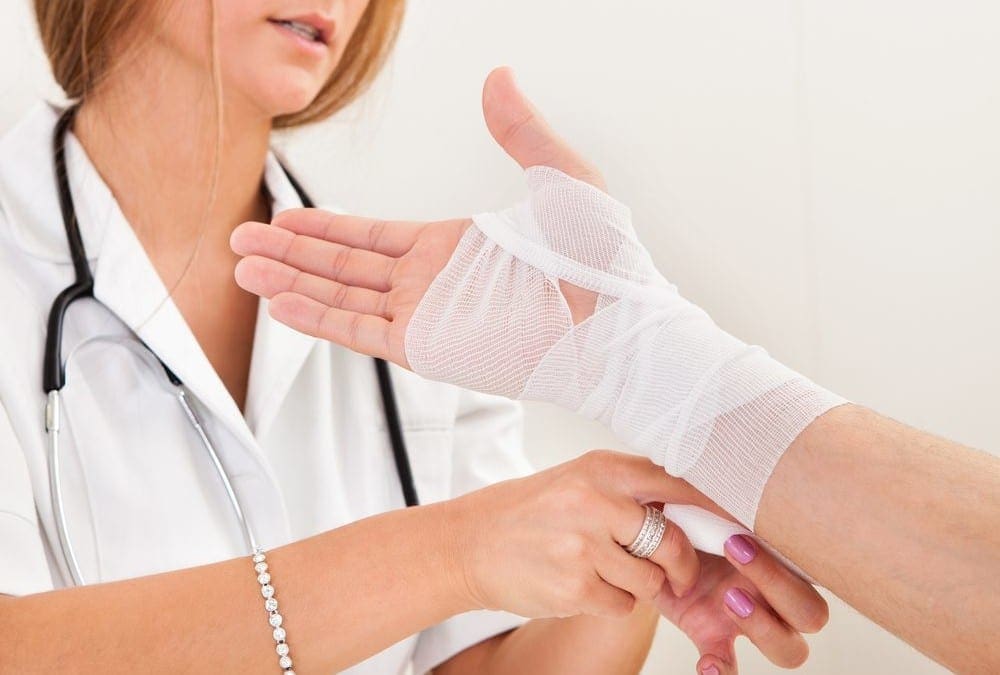
When visiting the doctor, expect many questions about the accident. The mechanism of injury can give clues as to what stresses were put on the body part and what injuries likely happened. The doctor will perform a thorough physical examination of the injured area. The physician will want to examine the joint above and the joint below an injury to make sure no hidden injuries are missed.
The doctor may need to take X-rays or perform other tests. X-rays only show bones and not the soft tissues, such as the muscles, tendons, and ligaments. The physician determines when it is appropriate to order X-rays. Injuries of knees, ankles, and the low back, are often unlikely to warrant X-rays to rule out any broken bones. The physician should discuss the reasons for or against taking X-rays.
Reference:
Young, Craig C. “Ankle Sprain.” Medscape.com. Dec. 16, 2014. <http://emedicine.medscape.com/article/1907229-overview>.
For more information, please feel free to ask Dr. Jimenez or contact us at 915-850-0900 .
Preventing Sports Injuries
Many athletes largely depend on chiropractic care to enhance their physical performance. New research studies have determined that aside from maintaining overall health and wellness, chiropractic can also help prevent sports injuries. Chiropractic is an alternative treatment option utilized by athletes to improve their strength, mobility and flexibility. Spinal adjustments and manual manipulations performed by a chiropractor can also help correct spinal issues, speeding up an athlete’s recovery process to help them return-to-play as soon as possible.
What home remedies are effective for sprains and strains?
Initial treatment for sprains and strains should occur as soon as possible. Remember RICE!
Rest the injured part. Pain is the body’s signal to not move an injury.
Ice the injury. This will limit the swelling and help with the spasm.
Compress the injured area. This again, limits the swelling. Be careful not to apply a wrap so tightly that it might act as a tourniquet and cut off the blood supply.
Elevate the injured part. This lets gravity help reduce the swelling by allowing fluid and blood to drain downhill to the heart.
Over-the-counter pain medication is an option. Acetaminophen (Tylenol) is helpful for pain, but ibuprofen (Motrin, Advil) or naproxen (Aleve) might be better because these medications relieve both pain and inflammation. Remember to follow the guidelines on the bottle for appropriate dose of the medicine, especially for children and teens. Underlying medical conditions or use of other prescription medicines may limit the use of over the counter pain medications.
What is the treatment for sprains and strains?
Sprains and strains can usually be treated with home therapy using the RICE interventions. However, if the injury is more severe, your care provider may suggest splinting or casting to rest the injured joint. In some cases, operations are required to fix complete tears of muscles or tendons to allow complete return of function and to allow those muscles to do their job of moving the body. Significant tears of ligaments that stabilize joints also may need repair, but again, most are treated with short-term immobilization and early return to activity. Sometimes, resting the injury requires some help. Slings for arm injuries or crutches for leg injuries can be used, in addition to a variety of removable splints to protect the injured area from further damage and movement. Resting also helps relieve some of the muscle spasm associated with the injury.
Occasionally, if the injury is especially severe, the physician may want to use a nonremovable splint made of plaster or fiberglass. Although the splint may look like a cast, it doesn’t have plaster or fiberglass completely encircling the injured area. Instead, by only going partially around an injury, there is some room to allow for swelling that may occur during the next few days.
For more information, please feel free to ask Dr. Jimenez or contact us at 915-850-0900 .
Preventing Sports Injuries
Many athletes largely depend on chiropractic care to enhance their physical performance. New research studies have determined that aside from maintaining overall health and wellness, chiropractic can also help prevent sports injuries. Chiropractic is an alternative treatment option utilized by athletes to improve their strength, mobility and flexibility. Spinal adjustments and manual manipulations performed by a chiropractor can also help correct spinal issues, speeding up an athlete’s recovery process to help them return-to-play as soon as possible.
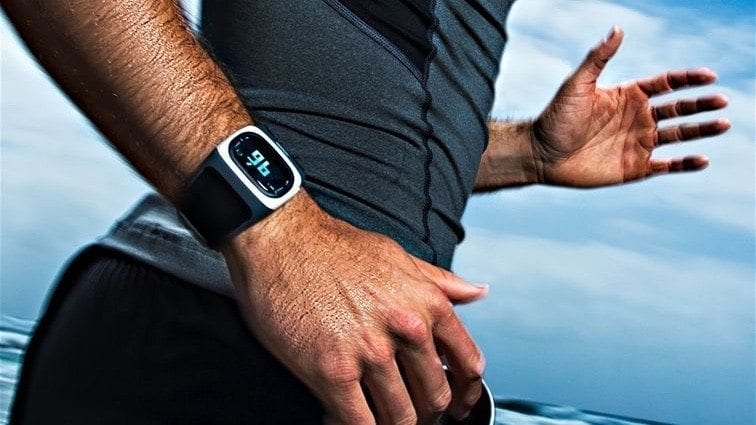
Fitbits and other wrist-worn fitness devices promise to keep track of your heart rate, but new research suggests they are less accurate than thought during certain exercises.
“If you need to know your heart rate with accuracy when exercising — either because you are training for a marathon or have safe heart rate limits set by your doctor, perhaps due to coronary artery disease, heart failure or other heart conditions — wrist-worn monitors are less accurate than the standard chest strap,” study author Dr. Marc Gillinov said in an American College of Cardiology news release.
The heart rates on the wrist-worn devices were compared to those from a continuous 4-lead electrocardiogram (EKG) and a chest strap monitor. Like an EKG, the chest strap measures electrical activity of the heart.
Functioning Errors in Heart Rate Trackers
Depending on the type of activity, the wrist devices were up to 34 beats a minute off. The wrist trackers could either overestimate or underestimate heart rate, Gillinov said. He’s a heart valve research, thoracic and cardiovascular surgery expert at the Cleveland Clinic.
The study included 50 volunteers. Their average age was 38. They tested popular wrist-worn fitness trackers, including the Apple Watch, Fitbit Blaze, Garmin Forerunner 235, and TomTom Spark Cardio.
The volunteers’ heart rates were recorded at rest and after light, moderate and vigorous exercise on a treadmill, stationary bike and elliptical trainer. All of them exercised for 18 minutes.
The chest strap monitor closely matched the readings from the EKG, which is the gold standard for measuring heart rate. And the wrist-worn devices were fairly accurate when a person was at rest. Most wrist devices gave acceptable readings during treadmill activity, but were fairly inaccurate while bicycling or using the elliptical, the study revealed.
Fitbit’s maker took issue with the findings.
“We stand behind our heart-tracking technology. Fitbit trackers are not intended to be medical devices,” Fitbit said in a statement. “Unlike chest straps, wrist-based trackers fit conveniently and comfortably into everyday life, providing continuous heart rate for up to several days without recharging [the device’s batteries].”
The San Francisco-based company added that internal studies involving 60 volunteers showed the device has an average error of 6 percent or less for measuring a person’s heart beat. And the Fitbit was tested against devices like the chest strap during walking, running, biking, using the elliptical and more, the company added.
Of all the wrist devices tested, the Apple watch seemed to fare the best. It performed well during bicycling and on elliptical machines without arm levels. The Apple watch’s heart rate monitor was only noticeably inaccurate compared to the chest strap when used on an elliptical machine with arm levers, the researchers said.
Why Are There Heart Rate Tracker Inaccuracies?
Wrist-worn devices use optical sensing, or light, to measure blood flow, the researchers said.
“It’s not measuring what the heart does, but rather blood flow — basically the volume of blood in the tissue,” Gillinov explained.
Wrist-worn devices also introduce many more variables that can result in incorrect readings, including insufficient contact with the skin due to sweating, poor fit or skin color, he said.
“Even though all these wrist-worn monitors work by the same general principles, there is considerable variation among them,” he said. “Overall, they were most accurate when someone was using the treadmill at low intensity and worst when exercising on the elliptical at high intensity,” Gillinov added.
The study is to be presented at the upcoming annual meeting of the American College of Cardiology, in Washington, D.C. Findings presented at meetings are typically viewed as preliminary until they’ve been published in a peer-reviewed journal.
SOURCE: American College of Cardiology, news release, March 8, 2017
For more information, please feel free to ask Dr. Jimenez or contact us at 915-850-0900 .
Preventing Sports Injuries
Many athletes largely depend on chiropractic care to enhance their physical performance. New research studies have determined that aside from maintaining overall health and wellness, chiropractic can also help prevent sports injuries. Chiropractic is an alternative treatment option utilized by athletes to improve their strength, mobility and flexibility. Spinal adjustments and manual manipulations performed by a chiropractor can also help correct spinal issues, speeding up an athlete’s recovery process to help them return-to-play as soon as possible.
The body is meant to move. Muscles allow that movement to happen by contracting and making joints flex, extend and rotate. Muscles attach on each side of the joint to bone by thick bands of fibrous tissue called tendons. When a muscle contracts, it shortens and pulls on the tendon, which allows the joint to go through a range of motion.
A strain occurs when the muscle tendon unit is stretched or torn. The most common reason is the overuse and stretching of the muscle. The damage may occur in three areas:
The muscle itself may tear.
The area where the muscle and tendon blend can tear.
The tendon may tear partially or completely (rupture).
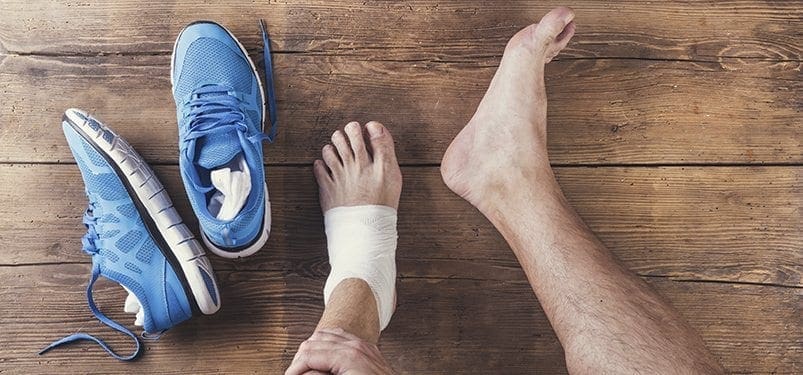
Joints are stabilized by thick bands of tissue called ligaments which surround them. These ligaments allow the joint to move only in specific directions. Some joints move in multiple planes; therefore, they need more than one group of ligaments to hold the joint in proper alignment. The ligaments are anchored to bone on each side of the joint. If a ligament is stretched or torn, the injury is called a sprain.
Causes of Sprains and Strains
Sprains and strains occur when the body is put under stress. In these situations, muscles and joints are forced to perform movements for which they are not prepared or designed to perform. An injury can occur from a single stressful incident, or it may gradually arise after many repetitions of a motion.
Signs and Symptoms of Sprains and Strains
The first symptom of a sprain or strain injury is pain. Other symptoms, such as swelling and spasm, can take time (from minutes to hours) to develop.
Pain is always a symptom that indicates that there is something wrong with the body. It is the message to the brain that warns that a muscle or joint should be protected from further harm. In work, exercise, or sport, the pain may come on after a specific incident or it may gradually progress after many repetitions of a motion.
Swelling almost always occurs with injury, but it may take from minutes to hours to be noticed. Any time fibers of a ligament, muscle, or tendon are damaged, some bleeding occurs. The bleeding (such as bruising on the surface of the skin) may take time to be noticed.
Because of pain and swelling, the body starts to favor the injured part. This may cause the muscles that surround the injured area to go into spasm. Hard knots of muscle might be felt near the site of the injury.
The combination of pain, swelling, and spasm causes the body to further protect the injured part, which results in difficulty with use. Limping is a good example of the body trying to protect an injured leg.
REFERENCE:
Young, Craig C. “Ankle Sprain.” Medscape.com. Dec. 16, 2014. <http://emedicine.medscape.com/article/1907229-overview>.
For more information, please feel free to ask Dr. Jimenez or contact us at 915-850-0900 .
Preventing Sports Injuries
Many athletes largely depend on chiropractic care to enhance their physical performance. New research studies have determined that aside from maintaining overall health and wellness, chiropractic can also help prevent sports injuries. Chiropractic is an alternative treatment option utilized by athletes to improve their strength, mobility and flexibility. Spinal adjustments and manual manipulations performed by a chiropractor can also help correct spinal issues, speeding up an athlete�s recovery process to help them return-to-play as soon as possible.
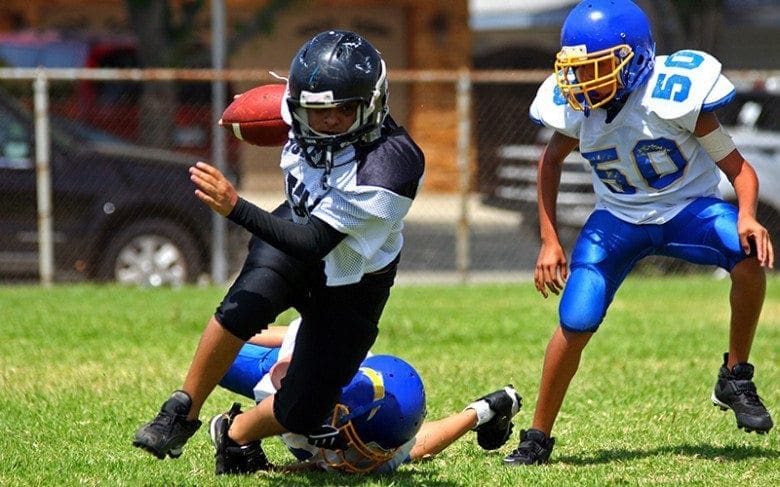
Focusing too much on playing one favorite sport probably isn’t a good idea for kids under 12, researchers report. That’s because specializing in a single sport seems to increase a child’s risk of injury, researchers say.
“Young athletes should participate in one competitive sport per season, and take at least three months off (non-consecutive) from competition per year,” said the study’s leader, Dr. Neeru Jayanthi. He’s a physician with Emory Sports Medicine and an associate professor of orthopaedics and family medicine at Emory University in Atlanta.
For the study, Jayanthi’s team assessed the risk of sports-related injuries among nearly 1,200 young athletes. After tracking their training schedules over the course of three years, the investigators found that nearly 40 percent of the athletes suffered an injury during the study period. The findings also showed that injured athletes began specializing in one sport at an average age younger than 12 years. In addition, nearly two-thirds of these athletes in highly specialized sports sustained a repeat injury. Athletes who didn’t sustain injuries began to focus on one sport when they were older than 12, on average, according to the report.
“While different for each sport, determining a possible age of specialization, as well as other training factors, may help guide young athletes in reducing risk,” Jayanthi said in an Emory news release.
Young athletes who had sports-related injuries during the study period tended to play more year-round sports, played more organized sports each week and were more specialized in specific sports than those who didn’t have an injury, the researchers found. The study authors advise young athletes to play more than one sport. In addition, they said, younger children shouldn’t train more hours than their age each week.
The study was published online March 16 in the British Journal of Sports Medicine. The findings were also presented Thursday at the International Olympic Committee World Conference on Prevention of Injury and Illness in Sport, in Monaco.
SOURCE: Emory University School of Medicine, news release, March 13, 2017
For more information, please feel free to ask Dr. Jimenez or contact us at 915-850-0900 .
Preventing Sports Injuries
Many athletes largely depend on chiropractic care to enhance their physical performance. New research studies have determined that aside from maintaining overall health and wellness, chiropractic can also help prevent sports injuries. Chiropractic is an alternative treatment option utilized by athletes to improve their strength, mobility and flexibility. Spinal adjustments and manual manipulations performed by a chiropractor can also help correct spinal issues, speeding up an athlete’s recovery process to help them return-to-play as soon as possible.
Female soccer players suffer the highest rate of concussions among all high school athletes in the United States, a new study finds.
“While American football has been both scientifically and colloquially associated with the highest concussion rates, our study found that girls, and especially those who play soccer, may face a higher risk,” said study author Dr. Wellington Hsu. He is a professor of orthopaedics at Northwestern University in Chicago.
“The new knowledge presented in this study can lead to policy and prevention measures to potentially halt these trends,” Hsu said in a news release from the American Academy of Orthopaedic Surgeons.
The researchers analyzed data on nearly 41,000 injuries suffered by high school athletes in nine sports between 2005 and 2015. The injuries included nearly 6,400 concussions. The sports studied included football, soccer, basketball, wrestling and baseball for boys; and soccer, basketball, volleyball and softball for girls. During the study period, participation in the sports rose 1.04-fold, but the number of diagnosed concussions increased 2.2-fold.
In sports played by both girls and boys, girls had much higher concussion rates than boys, Hsu’s team found. Between 2010 and 2015, the concussion rate was higher in girls’ soccer than in boys’ football, the findings showed. During the 2014-2015 school year, concussions were more common in girls’ soccer than in any other sport in the study.
Girls may be at greater risk of concussion while playing soccer due to “heading” the ball, a lack of protective gear, and an emphasis on contact during the game, the researchers suggested.
Each year, about 300,000 U.S. teens suffer concussions or mild traumatic brain injuries while participating in high school sports, the study authors said.
The findings were presented Tuesday at the American Academy of Orthopaedic Surgeons meeting in San Diego. Research presented at meetings should be considered preliminary until published in a peer-reviewed journal.
SOURCE: American Academy of Orthopaedic Surgeons, news release, March 14, 2017
For more information, please feel free to ask Dr. Jimenez or contact us at 915-850-0900 .
Additional Topics: Headache and Auto Injury
Whiplash is a common type of automobile accident injury. Characterized by symptoms of neck pain, whiplash is caused when the complex structures and tissues of the neck are stretched beyond their limit as a result of an abrupt back-and-forth motion of the head. While neck pain is the most common symptom associated with the auto injury, headaches can also occur due to complications along the cervical spine.
Low vitamin D levels are common among football players and may put them at increased risk for injuries, a new study suggests.
“Vitamin D has been shown to play a role in muscle function and strength,” said senior study author Dr. Scott Rodeo, co-chief emeritus of the sports medicine and shoulder service at the Hospital for Special Surgery in New York City.
“While most prior studies have focused on the aging population as the group most likely to experience the harmful effects of inadequate vitamin D, few reports have looked at the impact on muscle injury and function in the high-performance athlete,” he said in a hospital news release.
In the study, Rodeo’s team assessed 214 college football players, average age 22. The investigators found that nearly 60 percent had low levels of vitamin D, including 10 percent with a severe deficiency.
Those players with low vitamin D levels had higher rates of lower extremity muscle strain and core muscle injury than those with normal levels. Of the 14 players who missed at least one game due to a strain injury, 86 percent had low vitamin D levels.
LOW VITAMIN D CHANGES TISSUE COMPOSITION
Low levels may cause changes in muscle composition that increase the risk of injury, according to the researchers. But the study only found an association, rather than a cause-and-effect link, between levels and injury.
“Awareness of the potential for vitamin D inadequacy could lead to early recognition of the problem in certain athletes. This could allow for supplementation to bring levels up to normal and potentially prevent future injury,” Rodeo said.
“Although our study looked at high-performance athletes, it’s probably a good idea for anyone engaging in athletic activities to give some thought.” Rodeo said.
Adequate vitamin D is essential for musculoskeletal structure, function and strength, Rodeo explained. However, more than 40 percent of the U.S. population is vitamin D-deficient, he said.
Often called the “sunshine vitamin,” it is produced by the skin when exposed to sunlight. Milk and fortified foods, including orange juice and some cereals, can also provide nutrients. Supplements are usually prescribed for�deficiency, the researchers said.
The study was to be presented Thursday at the annual meeting of the American Academy of Orthopaedic Surgeons, in San Diego. Research presented at meetings is viewed as preliminary until published in a peer-reviewed journal.
SOURCE: Hospital for Special Surgery, news release, March 16, 2017
IFM's Find A Practitioner tool is the largest referral network in Functional Medicine, created to help patients locate Functional Medicine practitioners anywhere in the world. IFM Certified Practitioners are listed first in the search results, given their extensive education in Functional Medicine