MLS Laser and Chiropractic Care: A New Approach
Contents
In this educational post, I walk you through how we integrate modern photobiomodulation (MLS laser therapy) with chiropractic care, manual therapy, and active rehabilitation for spinal and joint pain. You will learn how we set up treatment for low back facet pain, why patient comfort and precise dosing matter, and how we target both the painful site and the connective tissue network to drive better outcomes. I explain energy density (joules per cm²), the Arndt–Schulz dose-response principle, tissue optics, and how pulsed dual-wavelength lasers engage mitochondrial and neuroimmune pathways to reduce pain and enhance recovery. We will also explore how robotic and handheld delivery complement each other, how we schedule acute and chronic care plans, how we combine laser with shockwave, PRP, and movement therapy, and when this approach can delay surgery by improving pain and function. Throughout, I share clinical observations from our El Paso Back Clinic and highlight evidence from leading researchers using rigorous, evidence-based methods. The emphasis is on integrative chiropractic and physical therapy, with medications and hormones kept in the background.
At El Paso Back Clinic, our mission is to merge hands-on chiropractic care, targeted physical therapy, and precision technologies that safely accelerate healing. One modality we employ is MLS laser therapy, a form of photobiomodulation that uses synchronized near-infrared wavelengths to influence cellular energy, microcirculation, and neuroinflammatory signaling. In this post, I reframe a recent procedural walkthrough from my perspective and expand on the physiology, clinical reasoning, and practical protocols we use every day with patients presenting with low back pain, knee osteoarthritis, plantar fasciitis, and other musculoskeletal conditions. The star is not the device; it is the integrated plan that places your spine and movement at the center of care.
When I set up laser therapy—especially with a robotic head—my first priority is patient comfort and stability. If a patient shifts during an unattended cycle, the beam may drift from the intended target. For lumbar facet-mediated pain at L4–L5, I position the patient comfortably prone, ensure the treatment field is exposed with direct skin access when using a contact handpiece, and confirm the exact region of maximal tenderness and referral (e.g., right-sided zygapophyseal joint pain with proximal radiation).
To minimize error, I zero the device’s X and Y axes, center the beam over the primary pain generator, then expand the field to include adjacent connective tissue tracks. This is our clinical multimodal approach: treat the source, the site, and the surrounding soft tissue network. By caring for the paraspinal fascia, intermuscular septa, and periarticular tissues, we respect that pain is rarely a single-point phenomenon. Fascia transmits load and communicates mechanosensory signals; addressing it improves regional glide and reduces nociceptive drive.
Why direct skin contact? Tissue optics favor minimal reflection and refraction losses. Air-skin interfaces reflect more energy, especially at certain angles. When we must avoid contact—such as at post-surgical sites or in cases of allodynia—we employ a non-contact, collimated robotic head positioned at an optimal focal distance, measured with a calibrated ruler.
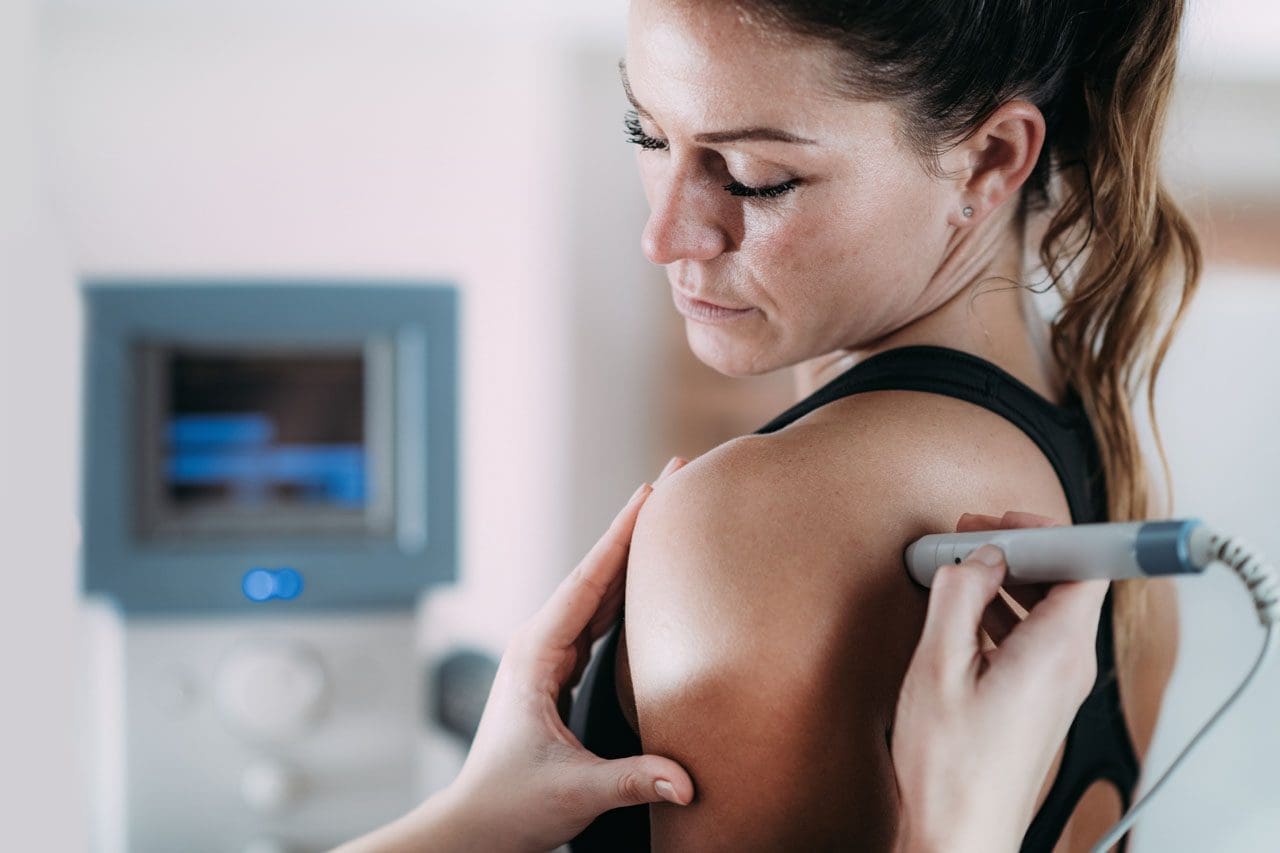
In practice, I often run both channels simultaneously. The robot delivers a uniform, programmable energy density across a defined area while I probe and treat focal trigger points or facet capsules with the handheld. This mirrors how we layer manual therapy with exercise: a global reset paired with local precision.
We dose by energy density, not just total energy. For example, a lumbar facet region might be set to 6 J/cm². On a larger field, total joules increase, but the cellular dose per square centimeter remains constant, aligning with literature-supported ranges that optimize photobiomodulation responses without tipping into bioinhibition. This reflects the Arndt–Schulz principle: too little energy yields no change, optimal energy stimulates, and excessive energy can dampen biological activity.
In our clinic, patients sometimes report warmth or a faint tingling, but with synchronized pulsed delivery and short pulse durations, surface heat remains low while energy is effectively absorbed at depth. When tissue temperature stays stable over time, we know we are within the desired window: enough photons to trigger biochemical cascades without superficial overheating.
These engineering choices align with clinical goals: delivering energy to deeper targets, such as facet capsules or the posterior knee compartment, while preserving patient comfort.
Laser does not replace chiropractic care; it helps us reach the dose of movement sooner by lowering pain and stiffness that otherwise block progress. For example, after an MLS session over L4–L5 facets and paraspinals, we cue diaphragmatic breathing and segmental stabilization to capitalize on reduced nociception and improved circulation.
What my patients often notice is not just pain relief within hours but improved ease of movement—the kind of change that allows us to progress from passive care to active loading.
While no laser regrows cartilage in advanced bone-on-bone disease, many of our patients experience reduced pain and swelling and better function, which can delay the need for surgery. The goal is to expand the movement envelope required for strength and neuromuscular control.
Our patients often report noticeable changes 4–6 hours after a session; we encourage them to “test” function later the same day (for example, stair climbing or walk tolerance) to anchor improvements to real-life tasks.
Hormonal or medication considerations remain in the background for us; when appropriate, we coordinate with the patient’s prescribing providers to avoid interventions (e.g., routine NSAIDs immediately after PRP) that might dampen desired signaling. Our primary emphasis remains movement-based rehabilitation supported by laser and manual care.
Photobiomodulation has a growing body of research demonstrating analgesic, anti-inflammatory, and pro-recovery effects in musculoskeletal conditions. Rigorous, modern methodologies—randomized controlled trials, dose–response investigations, and consensus guidelines—support dosing in the 4–10 J/cm² range for many superficial-to-moderate-depth targets and highlight the importance of wavelength, pulse structure, and treatment frequency. Clinical effectiveness is maximized when photobiomodulation is embedded within active rehabilitation rather than used in isolation.
If you are considering care at El Paso Back Clinic, our team will assess your unique presentation and craft an integrative plan that prioritizes spinal mechanics, movement, and function—leveraging laser therapy where it adds value and always keeping the emphasis on your long-term resilience.
General Disclaimer, Licenses, and Board Certifications *
Professional Scope of Practice *
The information herein on "MLS Laser and Chiropractic Care: A New Approach" is not intended to replace a one-on-one relationship with a qualified health care professional or licensed physician and is not medical advice. We encourage you to make healthcare decisions based on your research and partnership with a qualified healthcare professional.
Blog Information & Scope Discussions
Welcome to El Paso's Premier Wellness and Injury Care Clinic & Wellness Blog, where Dr. Alex Jimenez, DC, FNP-C, a Multi-State board-certified Family Practice Nurse Practitioner (FNP-BC) and Chiropractor (DC), presents insights on how our multidisciplinary team is dedicated to holistic healing and personalized care. Our practice aligns with evidence-based treatment protocols inspired by integrative medicine principles, similar to those on this site and on our family practice-based chiromed.com site, focusing on naturally restoring health for patients of all ages.
Our areas of multidisciplinary practice include Wellness & Nutrition, Chronic Pain, Personal Injury, Auto Accident Care, Work Injuries, Back Injury, Low Back Pain, Neck Pain, Migraine Headaches, Sports Injuries, Severe Sciatica, Scoliosis, Complex Herniated Discs, Fibromyalgia, Chronic Pain, Complex Injuries, Stress Management, Functional Medicine Treatments, and in-scope care protocols.
Our information scope is multidisciplinary, focusing on musculoskeletal and physical medicine; wellness; contributing etiological viscerosomatic disturbances within clinical presentations; associated somato-visceral reflex clinical dynamics; subluxation complexes; sensitive health issues; and functional medicine articles, topics, and discussions.
We provide and present clinical collaboration with specialists from various disciplines. Each specialist is governed by their professional scope of practice and licensure jurisdiction. We use functional health & wellness protocols to treat and support care for musculoskeletal injuries or disorders.
Our videos, posts, topics, and insights address clinical matters and issues that directly or indirectly relate to our clinical scope of practice.
Our office has made a reasonable effort to provide supportive citations and has identified relevant research studies that support our posts. We provide copies of supporting research studies upon request to regulatory boards and the public.
To discuss how these matters can assist in a specific care plan or treatment protocol, please contact Dr. Alex Jimenez, DC, APRN, FNP-BC, or reach out to us at 915-850-0900.
We are here to help you and your family.
Blessings
Dr. Alex Jimenez DC, MSACP, APRN, FNP-BC*, CCST, IFMCP, CFMP, ATN
Email: coach@elpasofunctionalmedicine.com
Multidisciplinary Licensing & Board Certifications:
Licensed as a Doctor of Chiropractic (DC) in Texas & New Mexico*
Chiropractic Licenses:
Texas DC License #: TX5807, Verified: TX5807
New Mexico DC License #: NM-DC2182, Verified: NM-DC2182
Nurse Practitioner Licenses:
Texas APRN License #: 1191402, Verified: 1191402 *
New Mexico CNP License #: 90560, Verified 90560
Florida APRN License #: 11043890, Verified: APRN11043890 *
Colorado License #: C-APN.0105610-C-NP, Verified: C-APN.0105610-C-NP
New York License #: N25929, Verified N25929
Georgia APRN License #: GAA-NP005701
Multi-State Advanced Practice Registered Nurse (APRN*) Texas & Multi-States
Multi-state Compact APRN License by Endorsement (43 States)
Compact Status: Multi-State License: Authorized to Practice in 43 States*
Nursing Licensure Compact: Updated Here
DEA Registration: (Drug Enforcement Agency Registered)
All medical (MDs) and family practice providers (FNP-APRN) are registered and licensed to offer various levels of medication.
Verify Providers Here
License Verification Link: Nursys License Verifier
* Prescriptive Authority Authorized (DEA Registered Providers). Call if Required
Board Certification:
ANCC FNP-BC: Board Certified Nurse Practitioner*
Education:
Graduate with Honors: ICHS: MSN-FNP (Family Nurse Practitioner Program)
Degree Granted. Master's in Family Practice, MSN Diploma (Cum Laude)
Dr. Alex Jimenez, DC, APRN, FNP-BC*, CFMP, IFMCP, ATN, CCST
(Board Certified: Family Practice Nurse Practitioner—Multistate)*
(Licensed Nurse Practitioner & Chiropractor - Multistate)*
Clinical Director
DC & FNP License (Review Above)
Digital Business Card
NPI: 1205907805
Dr. Maria Cardenas, MD
(Board Certified: Internal Medicine)
(Licensed Medical Doctor)
Medical Director, Clinical Director & Collaborative Physician
NPI # 1164426748
MD License #: J2933
Licenses and Board Certifications:
MD: Medical Doctor
DC: Doctor of Chiropractic
APRNP: Advanced Practice Registered Nurse
FNP-BC: Family Practice Specialization (Multi-State Board Certified)
FNP-BC: Family Practice Across Life Span (Neonatal to Geriatrics)
RN: Registered Nurse (Multi-State Compact License)
CFMP: Certified Functional Medicine Provider
MSN-FNP: Master of Science in Family Practice Medicine
MSACP: Master of Science in Advanced Clinical Practice
IFMCP: Institute of Functional Medicine
CCST: Certified Chiropractic Spinal Trauma
ATN: Advanced Translational Neutrogenomics
Family with Primary Care Focus (Family Nurse Practitioner or FNP)
Memberships & Associations:
TCA: Texas Chiropractic Association: Member ID: 104311
TNA: Texas Nurse Association: Member ID: 06458222
TNP: Texas Nurse Practitioner Association ID: 2025091511
AANP: American Association of Nurse Practitioners: Member ID: 2198960
ANA: American Nurses Association: Member ID: 06458222 (District TX01)
| Primary Taxonomy | Selected Taxonomy | State | License Number |
|---|---|---|---|
| No | 111N00000X - Chiropractor | NM | DC2182 |
| Yes | 111N00000X - Chiropractor | TX | DC5807 |
| Yes | 363LF0000X - Nurse Practitioner - Family | TX | 1191402 |
| Yes | 363LF0000X - Nurse Practitioner - Family | FL | 11043890 |
| Yes | 363LF0000X - Nurse Practitioner - Family | CO | C-APN.0105610-C-NP |
| Yes | 363LF0000X - Nurse Practitioner - Family | NY | N25929 |
| Yes | 363LF0000X - Nurse Practitioner - Family | NM | 90560 |
| Yes | 363LF0000X - Nurse Practitioner - Family | GA | GAA-NP005701 |
Dr. Alex Jimenez, DC, APRN, FNP-BC*, CFMP, IFMCP, ATN, CCST
(Board Certified: Family Practice Nurse Practitioner—Multistate)*
(Primary Care Across Lifespan—Neonatal / Pediatric / Adult / Geriatrics)
(Licensed Nurse Practitioner & Chiropractor - Multistate)*
Clinical Director
Digital Business Card
NPI: 1205907805
Dr. Maria Cardenas, MD
(Board Certified: Internal Medicine)*
(Licensed Medical Doctor)*
Medical Director, Clinical Director & Collaborative Physician
NPI # 1164426748
MD License #: J2933
📆 Schedule Appointment: Schedule 24/7 (Click Here)
Is It Your Low Back—or Your SI Joint? Why Pain Near the Belt Line Can… Read More
Why Your Low Back Burns After Standing at a Counter or Workbench Abstract: Standing still… Read More
When Leg Pain Is Too Irritated for Rehab: What an Epidural Injection Is Actually Trying… Read More
Why Rolling Over in Bed Can Trigger Back Pain Even When Lying Still Feels Fine… Read More
Why Repeated Small Bends Can Bother Your Back More Than One Heavy Lift Abstract Repeated… Read More
Why the First Heavy Lift of the Shift Can Feel Worse Than the Twentieth Abstract… Read More