Functional Orthopedics for Spine and Joint Health Insights
Contents
Hello, I’m Dr. Alex Jimenez. In this educational post, we will journey beyond traditional pain management to explore a comprehensive, patient-centered model for treating musculoskeletal conditions. I will introduce the concept of Interventional and Functional Orthopedics, a philosophy that goes beyond simply treating a “pain generator” to address the body’s entire functional unit. We will delve into the latest evidence-based research from leading experts, examining how treating intra-articular (inside the joint), extra-articular (outside the joint), and even intraosseous (inside the bone) structures can lead to superior, long-term outcomes. This discussion will highlight the critical interplay between structure and function, from the microscopic level of cellular health in the subchondral bone to the macroscopic mechanics of how your hip and ankle affect your knee. I’ll also explain how our unique, multidisciplinary practice at Injury Medical Clinic PA integrates cutting-edge chiropractic care, advanced rehabilitation, and medical oversight to restore not just comfort, but true, lasting function.
At Injury Medical Clinic PA, we believe that the future of healthcare lies in collaboration. That’s why I am proud to announce a significant development for our practice and our community here in El Paso, Texas. I, Dr. Alex Jimenez, am thrilled to be working alongside Dr. Maria Guadalupe Cardenas, MD, who has joined our team as the Medical Director and Collaborative Physician.
Dr. Cardenas is a highly respected internist, Board Certified in Internal Medicine, with an impressive career spanning over 40 years (NPI #1164426749, Texas MD License #J2933). Her extensive experience and deep understanding of internal medicine provide an invaluable layer of medical oversight and diagnostic expertise to our practice.
This multidisciplinary setup allows us to offer a truly integrative model of care. Here’s how our team works together for you:
By combining the structural focus of chiropractic care with the medical oversight of an experienced internist, we ensure a safe, effective, and holistic journey back to health. Our focus at elpasobackclinic.com remains centered on chiropractic and physical rehabilitation, but this collaboration allows us to address the whole person in a way that sets a new standard for patient care.
For years, the standard approach to joint pain was to identify the single “thing” causing the pain and treat it. This might mean an injection into a knee joint or therapy focused solely on a sore shoulder. But I ask, is that enough? What if the pain is just a symptom of a much larger, more complex issue?
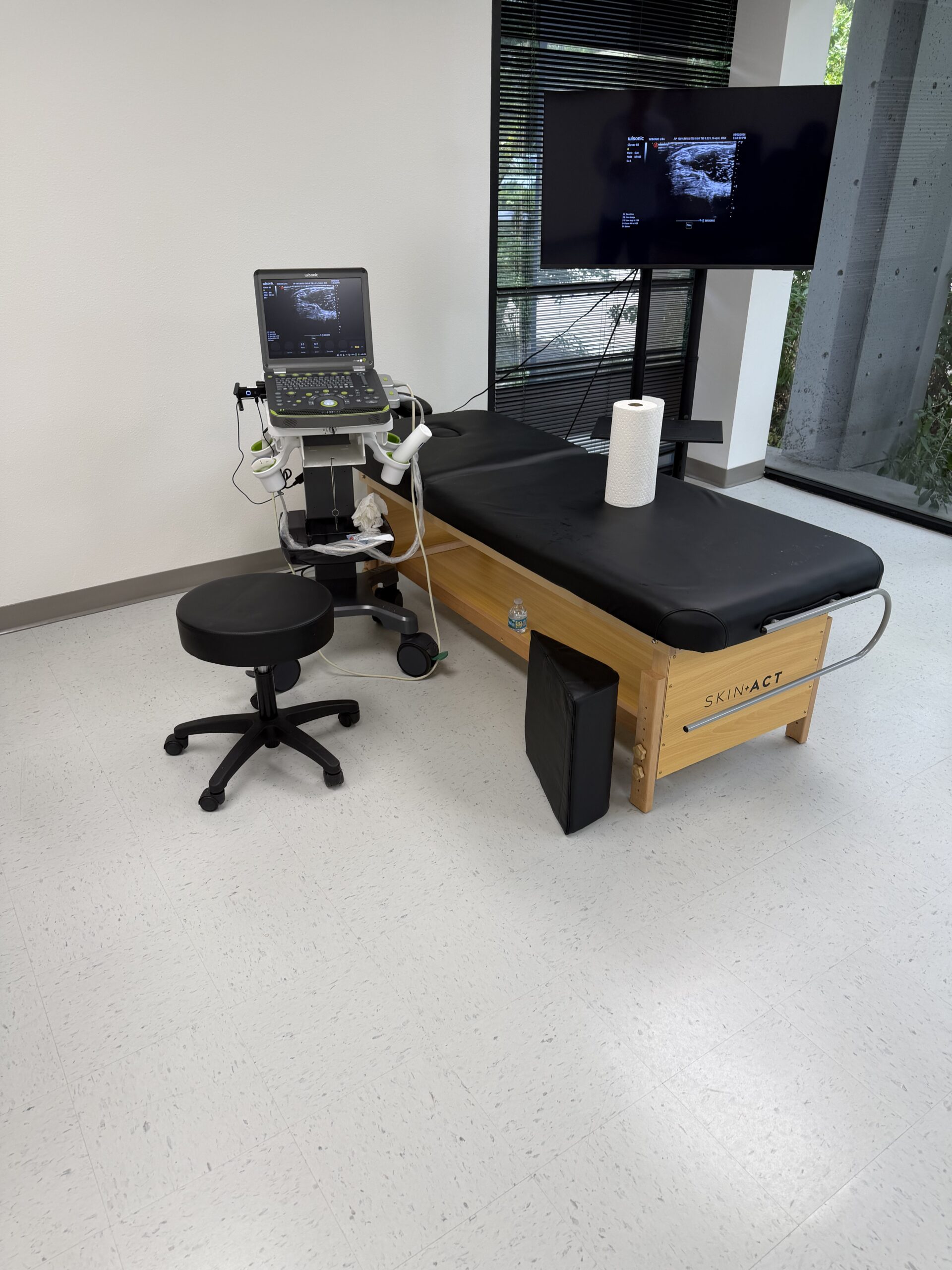
This is where the concept of Interventional Orthopedics comes in. It’s a philosophy that shifts our focus from just treating the pain to understanding and treating the entire system. It means we’re not just “chasing the pain.” Instead, we use advanced imaging guidance, such as musculoskeletal ultrasound and fluoroscopy, to precisely target and treat the specific anatomical structures involved in a person’s unique condition. We look at the whole picture.
But how do we know what to target? How do we build a treatment plan that goes beyond the obvious? This brings us to a philosophy I’ve developed based on my background and clinical experience: Functional Orthopedics.
You likely haven’t heard the term Functional Orthopedics before, because it’s a concept I’ve coined to describe my approach. However, the principles behind it are timeless and deeply rooted in well-established medical philosophies. It draws heavily from my training as an osteopathic physician and my background in Physical Medicine and Rehabilitation (PM&R).
The core tenets are:
Functional Orthopedics applies these principles by looking for the root causes of a condition. Imagine a tree. The leaves and branches might be the symptoms—the knee pain, the back ache—but the real problem may lie in the roots and the soil. We need to examine all factors that may be involved in optimizing the patient’s biological environment for healing. A crucial part of this is the Functional Unit Approach.
The idea of a “functional unit” originated in the surgical literature, specifically in the context of the functional spinal unit. Surgeons recognized that when dealing with the spine, you couldn’t just look at a single vertebra or disc. You had to consider the adjacent vertebrae, the disc between them, the ligaments holding them together, the facet joints that guide their movement, and the muscles that power them. All these components work together as a single unit.
We are now applying this powerful concept to the world of orthopedics and regenerative medicine. Recent research is validating this comprehensive approach.
This marks a major paradigm shift. For conditions like knee osteoarthritis, we should not just be injecting the joint space. We must also assess and treat the supporting cast of characters—the ligaments, tendons, and muscles that make up the knee’s functional unit. But does it stop there?
For decades, we were taught—and we taught our patients—that osteoarthritis is a disease of cartilage. You’ve likely heard someone say, “My cartilage is gone,” as if that’s the end of the story. While cartilage loss is a feature of osteoarthritis, we now recognize that it does not always equate to pain. The plot thickens when the damage goes deeper.
When cartilage wears away, the underlying bone, known as the subchondral bone, becomes exposed to abnormal stress. This bone is not a dead, inert scaffold; it is a living, dynamic tissue rich with blood vessels, nerves, and even a reservoir of stem cells (pericytes) crucial for healing.
Dr. Philippe Hernigou, a true pioneer in regenerative medicine, conducted groundbreaking research comparing the stem cell populations in bone marrow. He found that as knee osteoarthritis worsens with age, the concentration of healing cells in the subchondral bone of the knee declines dramatically, whereas the concentration at a distant site, such as the pelvis (PSIS), remains relatively stable. This tells us that the local healing environment within the arthritic joint becomes depleted. The bone itself is sick.
This has led to a revolutionary treatment strategy: intraosseous injections, or injections directly into the subchondral bone.
The message is clear: for moderate-to-severe osteoarthritis, the most effective approach must address the entire functional unit—the intra-articular space, the extra-articular soft tissues, and the underlying subchondral bone.
So, how do we put this all together in the clinic? How do we analyze the complex interplay of forces and decide which structures to treat? This is where a thorough physical examination and a deep understanding of biomechanics become indispensable. It is not just a matter of “poking to see where it hurts.”
Let’s use the knee as an example:
Here is the final piece of the puzzle, and it’s one I implore every patient and clinician to consider. If someone develops knee pain, like a meniscus tear or patellofemoral pain, without a specific traumatic injury, does the problem really originate in the knee?
Or should we be looking elsewhere?
True, long-term success comes not from just treating the joint itself but from identifying and correcting these dysfunctions throughout the kinetic chain. This is what it means to look at the patient as a whole. This is the essence of integrative chiropractic care and functional rehabilitation. By correcting spinal and pelvic alignment, restoring proper nerve function, and strengthening weak links in the chain, we don’t just put a bandage on the problem—we rebuild the foundation for lasting health.
This journey back to our roots in physical diagnosis, combined with the exciting advancements in orthobiologics, allows us to provide truly transformative care. It’s about creating not just a “pain generator” treatment plan, but a “health and function generator” plan for life.
Thank you.
General Disclaimer, Licenses, and Board Certifications *
Professional Scope of Practice *
The information herein on "Functional Orthopedics for Spine and Joint Health Insights" is not intended to replace a one-on-one relationship with a qualified health care professional or licensed physician and is not medical advice. We encourage you to make healthcare decisions based on your research and partnership with a qualified healthcare professional.
Blog Information & Scope Discussions
Welcome to El Paso's Premier Wellness and Injury Care Clinic & Wellness Blog, where Dr. Alex Jimenez, DC, FNP-C, a Multi-State board-certified Family Practice Nurse Practitioner (FNP-BC) and Chiropractor (DC), presents insights on how our multidisciplinary team is dedicated to holistic healing and personalized care. Our practice aligns with evidence-based treatment protocols inspired by integrative medicine principles, similar to those on this site and on our family practice-based chiromed.com site, focusing on naturally restoring health for patients of all ages.
Our areas of multidisciplinary practice include Wellness & Nutrition, Chronic Pain, Personal Injury, Auto Accident Care, Work Injuries, Back Injury, Low Back Pain, Neck Pain, Migraine Headaches, Sports Injuries, Severe Sciatica, Scoliosis, Complex Herniated Discs, Fibromyalgia, Chronic Pain, Complex Injuries, Stress Management, Functional Medicine Treatments, and in-scope care protocols.
Our information scope is multidisciplinary, focusing on musculoskeletal and physical medicine; wellness; contributing etiological viscerosomatic disturbances within clinical presentations; associated somato-visceral reflex clinical dynamics; subluxation complexes; sensitive health issues; and functional medicine articles, topics, and discussions.
We provide and present clinical collaboration with specialists from various disciplines. Each specialist is governed by their professional scope of practice and licensure jurisdiction. We use functional health & wellness protocols to treat and support care for musculoskeletal injuries or disorders.
Our videos, posts, topics, and insights address clinical matters and issues that directly or indirectly relate to our clinical scope of practice.
Our office has made a reasonable effort to provide supportive citations and has identified relevant research studies that support our posts. We provide copies of supporting research studies upon request to regulatory boards and the public.
To discuss how these matters can assist in a specific care plan or treatment protocol, please contact Dr. Alex Jimenez, DC, APRN, FNP-BC, or reach out to us at 915-850-0900.
We are here to help you and your family.
Blessings
Dr. Alex Jimenez DC, MSACP, APRN, FNP-BC*, CCST, IFMCP, CFMP, ATN
Email: coach@elpasofunctionalmedicine.com
Multidisciplinary Licensing & Board Certifications:
Licensed as a Doctor of Chiropractic (DC) in Texas & New Mexico*
Chiropractic Licenses:
Texas DC License #: TX5807, Verified: TX5807
New Mexico DC License #: NM-DC2182, Verified: NM-DC2182
Nurse Practitioner Licenses:
Texas APRN License #: 1191402, Verified: 1191402 *
New Mexico CNP License #: 90560, Verified 90560
Florida APRN License #: 11043890, Verified: APRN11043890 *
Colorado License #: C-APN.0105610-C-NP, Verified: C-APN.0105610-C-NP
New York License #: N25929, Verified N25929
Georgia APRN License #: GAA-NP005701
Multi-State Advanced Practice Registered Nurse (APRN*) Texas & Multi-States
Multi-state Compact APRN License by Endorsement (43 States)
Compact Status: Multi-State License: Authorized to Practice in 43 States*
Nursing Licensure Compact: Updated Here
DEA Registration: (Drug Enforcement Agency Registered)
All medical (MDs) and family practice providers (FNP-APRN) are registered and licensed to offer various levels of medication.
Verify Providers Here
License Verification Link: Nursys License Verifier
* Prescriptive Authority Authorized (DEA Registered Providers). Call if Required
Board Certification:
ANCC FNP-BC: Board Certified Nurse Practitioner*
Education:
Graduate with Honors: ICHS: MSN-FNP (Family Nurse Practitioner Program)
Degree Granted. Master's in Family Practice, MSN Diploma (Cum Laude)
Dr. Alex Jimenez, DC, APRN, FNP-BC*, CFMP, IFMCP, ATN, CCST
(Board Certified: Family Practice Nurse Practitioner—Multistate)*
(Licensed Nurse Practitioner & Chiropractor - Multistate)*
Clinical Director
DC & FNP License (Review Above)
Digital Business Card
NPI: 1205907805
Dr. Maria Cardenas, MD
(Board Certified: Internal Medicine)
(Licensed Medical Doctor)
Medical Director, Clinical Director & Collaborative Physician
NPI # 1164426748
MD License #: J2933
Licenses and Board Certifications:
MD: Medical Doctor
DC: Doctor of Chiropractic
APRNP: Advanced Practice Registered Nurse
FNP-BC: Family Practice Specialization (Multi-State Board Certified)
FNP-BC: Family Practice Across Life Span (Neonatal to Geriatrics)
RN: Registered Nurse (Multi-State Compact License)
CFMP: Certified Functional Medicine Provider
MSN-FNP: Master of Science in Family Practice Medicine
MSACP: Master of Science in Advanced Clinical Practice
IFMCP: Institute of Functional Medicine
CCST: Certified Chiropractic Spinal Trauma
ATN: Advanced Translational Neutrogenomics
Family with Primary Care Focus (Family Nurse Practitioner or FNP)
Memberships & Associations:
TCA: Texas Chiropractic Association: Member ID: 104311
TNA: Texas Nurse Association: Member ID: 06458222
TNP: Texas Nurse Practitioner Association ID: 2025091511
AANP: American Association of Nurse Practitioners: Member ID: 2198960
ANA: American Nurses Association: Member ID: 06458222 (District TX01)
| Primary Taxonomy | Selected Taxonomy | State | License Number |
|---|---|---|---|
| No | 111N00000X - Chiropractor | NM | DC2182 |
| Yes | 111N00000X - Chiropractor | TX | DC5807 |
| Yes | 363LF0000X - Nurse Practitioner - Family | TX | 1191402 |
| Yes | 363LF0000X - Nurse Practitioner - Family | FL | 11043890 |
| Yes | 363LF0000X - Nurse Practitioner - Family | CO | C-APN.0105610-C-NP |
| Yes | 363LF0000X - Nurse Practitioner - Family | NY | N25929 |
| Yes | 363LF0000X - Nurse Practitioner - Family | NM | 90560 |
| Yes | 363LF0000X - Nurse Practitioner - Family | GA | GAA-NP005701 |
Dr. Alex Jimenez, DC, APRN, FNP-BC*, CFMP, IFMCP, ATN, CCST
(Board Certified: Family Practice Nurse Practitioner—Multistate)*
(Primary Care Across Lifespan—Neonatal / Pediatric / Adult / Geriatrics)
(Licensed Nurse Practitioner & Chiropractor - Multistate)*
Clinical Director
Digital Business Card
NPI: 1205907805
Dr. Maria Cardenas, MD
(Board Certified: Internal Medicine)*
(Licensed Medical Doctor)*
Medical Director, Clinical Director & Collaborative Physician
NPI # 1164426748
MD License #: J2933
📆 Schedule Appointment: Schedule 24/7 (Click Here)
Is It Your Low Back—or Your SI Joint? Why Pain Near the Belt Line Can… Read More
Why Your Low Back Burns After Standing at a Counter or Workbench Abstract: Standing still… Read More
When Leg Pain Is Too Irritated for Rehab: What an Epidural Injection Is Actually Trying… Read More
Why Rolling Over in Bed Can Trigger Back Pain Even When Lying Still Feels Fine… Read More
Why Repeated Small Bends Can Bother Your Back More Than One Heavy Lift Abstract Repeated… Read More
Why the First Heavy Lift of the Shift Can Feel Worse Than the Twentieth Abstract… Read More