Repeated Small Bends: Understanding Spinal Loading
Contents
Repeated small bends for packages, cables, laundry, or drawers can irritate the lower back more than one controlled heavy lift. This article explains cumulative spinal loading, how fatigue and reach distance change forces on the discs and ligaments, and why limited hip mobility and trunk endurance shift more work onto the lumbar spine. It outlines a chiropractic assessment process, progressive hip and trunk conditioning, practical task changes, and a plan to build bending tolerance safely rather than avoid spinal flexion. The goal is better function for Amazon associates, data center technicians, parents, warehouse workers, and desk professionals.
Maria finishes her Amazon shift without a single heavy box. She reaches into totes and bends for packages dozens of times an hour. By the time she gets home, her low back feels tight. At home, she loads the washer and picks up toys. One controlled lift earlier never bothered her as much. The pattern shows up in data center technicians, parents, warehouse workers, and desk professionals who repeatedly bend for cables, laundry, tools, or drawers.
The idea that only heavy objects matter misses how the spine handles repeated work. A single well-executed lift is one event. One hundred lighter bends spread the work across tired muscles, changing angles, and longer reaches. The tissues never fully recover between cycles, so the result can feel different—and sometimes worse.
Advice to “lift with your legs” and “never bend your back” protects against sudden overload. It does not fully describe repeated bending for hours. Research shows both the size of each force and the number of cycles matter. High-frequency moderate loads still contribute substantially to total spinal stress (Coenen et al., 2012).
A controlled heavy lift usually uses a planned technique and finishes before fatigue sets in. Repeated light bends are hurried, done at the end of a reach, and performed after the trunk muscles have already worked. The spine sees a different pattern of compression, shear, and bending moment.
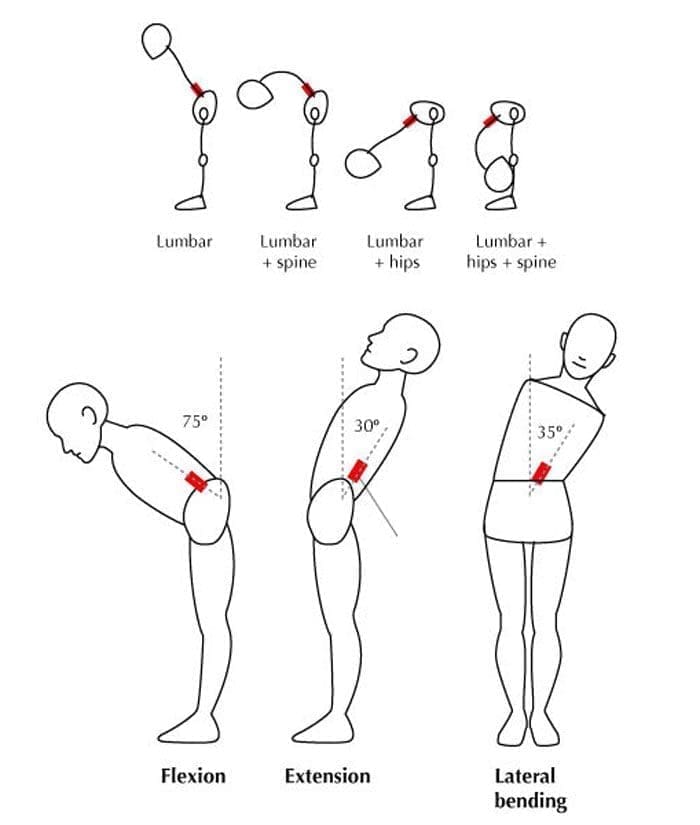
Each bend compresses and bends the lumbar discs and ligaments. When erector spinae muscles fatigue, they allow more lumbar flexion. Volunteers who lifted a 10 kg weight 100 times showed increased peak lumbar flexion and a 36 percent rise in estimated bending moment by the end of the task (Dolan & Adams, 1998).
Fatigue failure studies reinforce the point. Motion segments cyclically loaded to simulate lifting a 9 kg weight failed after far fewer cycles as torso flexion increased. Neutral posture allowed thousands of cycles; 45 degrees of flexion reduced survival to a few hundred cycles on average (Gallagher et al., 2005). Spinal posture during bending changes tissue tolerance.
As back muscles tire, the spine relies more on passive tissues. Repeated flexion produces creep—a slow increase in flexibility. After 20 minutes of sustained flexion, peak flexion rose by about 5.5 degrees, and full stiffness recovery took longer than the loading period (McGill & Brown, 1992). Short rests do not always fully reset the tissues. Residual creep can leave the spine more flexible for the next cycle.
How far the hands are from the body matters as much as the weight. Holding a package at arm’s length multiplies the lumbar bending moment even if the package is light. Reaching into a rack, tote, or across a bed lengthens the lever arm. Bringing the object closer or raising the work surface shortens that distance and reduces demand.
The lumbar spine favors stability; the hips handle large ranges of flexion. Limited hip mobility forces earlier and deeper lumbar flexion. Over dozens of bends, this shifts cumulative load onto the discs and ligaments.
Trunk endurance matters as much as peak strength. Someone who can deadlift once may still fatigue during 40 minutes of light bending if deep stabilizers and hip extensors lack endurance. Building that capacity protects the spine later in the shift.
A thorough evaluation at El Paso Back Clinic looks beyond the single heavy lift. Dr. Alex Jimenez, DC, APRN, FNP-BC, CFMP, IFMCP, and the team examine how the patient moves during the tasks that bother them. Assessment covers lumbar and hip range of motion, hip-hinge ability with a relatively neutral lumbar spine, trunk and hip endurance, control during repeated bending, and postural habits. The evaluation promptly identifies red-flag signs that require imaging or referral.
The evaluation identifies limited hip mobility, poor trunk endurance, excessive reach distance, residual stiffness, or a combination. Medical Director Dr. Maria Guadalupe Cardenas, MD, provides collaborative oversight, interpreting structural findings alongside medical factors when needed. Accurate diagnosis lets treatment address the real pattern. Beneficence guides the process: coordinated care improves safety, function, and recovery.
Low Back Pain Chiropractic Care | El Paso, TX
Fear of spinal flexion can create its own problems. Avoiding all bending leads to deconditioning. The tissues that are never loaded gradually lose capacity. A better approach is to restore control and then gradually reintroduce bending under conditions the spine can tolerate.
Chiropractic care restores restricted joint motion and reduces protective guarding. Adjustments and soft-tissue work free the hips and thoracic spine so the lumbar spine compensates less. Once motion improves, focus shifts to endurance work that matches real tasks:
The plan matches the job. An Amazon associate who bends 200 times per shift needs a different progression from a parent who bends mainly after a desk day. Progress is measured by how the back feels during and after the real task. Non-invasive options reduce risks of surgical complications or heavy medication dependence.
While capacity builds, small changes reduce the total load the spine sees each day:
These changes reduce peak moments and high-flexion cycles while improving capacity. Patients remain the informed decision-makers, choosing modifications that fit their shift and family schedule.
Integrative care at Injury Medical Clinic PA combines chiropractic structural work with medical oversight from Dr. Cardenas. Dr. Jimenez’s dual licensure supports coordinated attention to mechanical alignment and contributing factors. The emphasis remains on non-invasive strategies that restore function and reduce the need for surgery. Many patients with excellent group insurance coverage find coordinated care covered when it addresses documented functional limits.
If repeated bending has become the part of your day you dread, a focused assessment can clarify the drivers and how to rebuild tolerance safely. Call 915-850-0900 or visit the clinic in El Paso. The aim is to keep the spine working for the tasks you actually do.
Coenen, P., Kingma, I., Boot, C. R. L., Bongers, P. M., & van Dieën, J. H. (2012). The contribution of load magnitude and number of load cycles to cumulative low-back load estimations: A study based on in-vitro compression data. Clinical Biomechanics, 27(9), 871–877.
Dolan, P., & Adams, M. A. (1998). Repetitive lifting tasks fatigue the back muscles and increase the bending moment acting on the lumbar spine. Journal of Biomechanics, 31(8), 713–721.
Gallagher, S., Marras, W. S., Litsky, A. S., & Burr, D. (2005). Torso flexion loads and the fatigue failure of human lumbosacral motion segments. Spine, 30(20), 2265–2273.
McGill, S. M., & Brown, S. (1992). Creep response of the lumbar spine to prolonged full flexion. Clinical Biomechanics, 7(1), 43–46.
General Disclaimer, Licenses, and Board Certifications *
Professional Scope of Practice *
The information herein on "Repeated Small Bends: Understanding Spinal Loading" is not intended to replace a one-on-one relationship with a qualified health care professional or licensed physician and is not medical advice. We encourage you to make healthcare decisions based on your research and partnership with a qualified healthcare professional.
Blog Information & Scope Discussions
Welcome to El Paso's Premier Wellness and Injury Care Clinic & Wellness Blog, where Dr. Alex Jimenez, DC, FNP-C, a Multi-State board-certified Family Practice Nurse Practitioner (FNP-BC) and Chiropractor (DC), presents insights on how our multidisciplinary team is dedicated to holistic healing and personalized care. Our practice aligns with evidence-based treatment protocols inspired by integrative medicine principles, similar to those on this site and on our family practice-based chiromed.com site, focusing on naturally restoring health for patients of all ages.
Our areas of multidisciplinary practice include Wellness & Nutrition, Chronic Pain, Personal Injury, Auto Accident Care, Work Injuries, Back Injury, Low Back Pain, Neck Pain, Migraine Headaches, Sports Injuries, Severe Sciatica, Scoliosis, Complex Herniated Discs, Fibromyalgia, Chronic Pain, Complex Injuries, Stress Management, Functional Medicine Treatments, and in-scope care protocols.
Our information scope is multidisciplinary, focusing on musculoskeletal and physical medicine; wellness; contributing etiological viscerosomatic disturbances within clinical presentations; associated somato-visceral reflex clinical dynamics; subluxation complexes; sensitive health issues; and functional medicine articles, topics, and discussions.
We provide and present clinical collaboration with specialists from various disciplines. Each specialist is governed by their professional scope of practice and licensure jurisdiction. We use functional health & wellness protocols to treat and support care for musculoskeletal injuries or disorders.
Our videos, posts, topics, and insights address clinical matters and issues that directly or indirectly relate to our clinical scope of practice.
Our office has made a reasonable effort to provide supportive citations and has identified relevant research studies that support our posts. We provide copies of supporting research studies upon request to regulatory boards and the public.
To discuss how these matters can assist in a specific care plan or treatment protocol, please contact Dr. Alex Jimenez, DC, APRN, FNP-BC, or reach out to us at 915-850-0900.
We are here to help you and your family.
Blessings
Dr. Alex Jimenez DC, MSACP, APRN, FNP-BC*, CCST, IFMCP, CFMP, ATN
Email: coach@elpasofunctionalmedicine.com
Multidisciplinary Licensing & Board Certifications:
Licensed as a Doctor of Chiropractic (DC) in Texas & New Mexico*
Chiropractic Licenses:
Texas DC License #: TX5807, Verified: TX5807
New Mexico DC License #: NM-DC2182, Verified: NM-DC2182
Nurse Practitioner Licenses:
Texas APRN License #: 1191402, Verified: 1191402 *
New Mexico CNP License #: 90560, Verified 90560
Florida APRN License #: 11043890, Verified: APRN11043890 *
Colorado License #: C-APN.0105610-C-NP, Verified: C-APN.0105610-C-NP
New York License #: N25929, Verified N25929
Georgia APRN License #: GAA-NP005701
Multi-State Advanced Practice Registered Nurse (APRN*) Texas & Multi-States
Multi-state Compact APRN License by Endorsement (43 States)
Compact Status: Multi-State License: Authorized to Practice in 43 States*
Nursing Licensure Compact: Updated Here
DEA Registration: (Drug Enforcement Agency Registered)
All medical (MDs) and family practice providers (FNP-APRN) are registered and licensed to offer various levels of medication.
Verify Providers Here
License Verification Link: Nursys License Verifier
* Prescriptive Authority Authorized (DEA Registered Providers). Call if Required
Board Certification:
ANCC FNP-BC: Board Certified Nurse Practitioner*
Education:
Graduate with Honors: ICHS: MSN-FNP (Family Nurse Practitioner Program)
Degree Granted. Master's in Family Practice, MSN Diploma (Cum Laude)
Dr. Alex Jimenez, DC, APRN, FNP-BC*, CFMP, IFMCP, ATN, CCST
(Board Certified: Family Practice Nurse Practitioner—Multistate)*
(Licensed Nurse Practitioner & Chiropractor - Multistate)*
Clinical Director
DC & FNP License (Review Above)
Digital Business Card
NPI: 1205907805
Dr. Maria Cardenas, MD
(Board Certified: Internal Medicine)
(Licensed Medical Doctor)
Medical Director, Clinical Director & Collaborative Physician
NPI # 1164426748
MD License #: J2933
Licenses and Board Certifications:
MD: Medical Doctor
DC: Doctor of Chiropractic
APRNP: Advanced Practice Registered Nurse
FNP-BC: Family Practice Specialization (Multi-State Board Certified)
FNP-BC: Family Practice Across Life Span (Neonatal to Geriatrics)
RN: Registered Nurse (Multi-State Compact License)
CFMP: Certified Functional Medicine Provider
MSN-FNP: Master of Science in Family Practice Medicine
MSACP: Master of Science in Advanced Clinical Practice
IFMCP: Institute of Functional Medicine
CCST: Certified Chiropractic Spinal Trauma
ATN: Advanced Translational Neutrogenomics
Family with Primary Care Focus (Family Nurse Practitioner or FNP)
Memberships & Associations:
TCA: Texas Chiropractic Association: Member ID: 104311
TNA: Texas Nurse Association: Member ID: 06458222
TNP: Texas Nurse Practitioner Association ID: 2025091511
AANP: American Association of Nurse Practitioners: Member ID: 2198960
ANA: American Nurses Association: Member ID: 06458222 (District TX01)
| Primary Taxonomy | Selected Taxonomy | State | License Number |
|---|---|---|---|
| No | 111N00000X - Chiropractor | NM | DC2182 |
| Yes | 111N00000X - Chiropractor | TX | DC5807 |
| Yes | 363LF0000X - Nurse Practitioner - Family | TX | 1191402 |
| Yes | 363LF0000X - Nurse Practitioner - Family | FL | 11043890 |
| Yes | 363LF0000X - Nurse Practitioner - Family | CO | C-APN.0105610-C-NP |
| Yes | 363LF0000X - Nurse Practitioner - Family | NY | N25929 |
| Yes | 363LF0000X - Nurse Practitioner - Family | NM | 90560 |
| Yes | 363LF0000X - Nurse Practitioner - Family | GA | GAA-NP005701 |
Dr. Alex Jimenez, DC, APRN, FNP-BC*, CFMP, IFMCP, ATN, CCST
(Board Certified: Family Practice Nurse Practitioner—Multistate)*
(Primary Care Across Lifespan—Neonatal / Pediatric / Adult / Geriatrics)
(Licensed Nurse Practitioner & Chiropractor - Multistate)*
Clinical Director
Digital Business Card
NPI: 1205907805
Dr. Maria Cardenas, MD
(Board Certified: Internal Medicine)*
(Licensed Medical Doctor)*
Medical Director, Clinical Director & Collaborative Physician
NPI # 1164426748
MD License #: J2933
📆 Schedule Appointment: Schedule 24/7 (Click Here)
Why the First Heavy Lift of the Shift Can Feel Worse Than the Twentieth Abstract… Read More
Why Twisting to Reach Behind a Server Rack Can Hurt More Than Lifting Straight Ahead… Read More
Why Getting Out of the Car Can Hurt More Than the Drive Itself Abstract Getting… Read More
The One-Sided Carry: What a Laptop Bag, Tool Case, or Work Tote Can Do to… Read More
Why Your Back Hurts Monday After a Weekend of Yard Work, Cleaning, or Home Projects… Read More