Low Back or SI Joint: Pain Assessment Techniques
Contents
Pain on one side near the belt line often feels like a classic low-back problem, but it can come from the lumbar spine, the sacroiliac region, the hip joint, or an irritated muscle. This article explains how a careful history, movement testing, and targeted examination separate those possibilities without labeling every one-sided complaint as sacroiliac dysfunction. It also explains when imaging helps and how rehabilitation restores everyday function for programmers, Amazon associates, data center technicians, runners, drivers, and other adults.
A programmer finishes a long coding block, stands, and feels a sharp catch just below the belt on one side. An Amazon associate steps off a ladder after a high reach and notices the same spot lighting up. A data center technician crouches beside a server rack, twists to connect a cable, and the pain returns on the drive home. A runner finishes a longer weekend loop and feels it the next morning near the belt line. A driver climbs out after a multi-hour haul, and the area stiffens before the first step. None of these people has classic sciatica shooting down the leg. The pain stays local or drifts into the buttock. The question is the same: is it the low back, the sacroiliac joint, the hip, or something else?
The area just above and below the belt line is a busy intersection. The lower lumbar joints, sacroiliac joints, hip joints, and surrounding muscles sit close together. Their referral patterns overlap. A problem in one place can feel like a problem in another area. That overlap is why one-sided pain near the belt line is difficult to pinpoint and why a single label—especially “SI dysfunction”—does not fit every case.
The sacroiliac joint connects the sacrum and the ilium. It has very little motion compared with the lumbar spine or the hip. Strong ligaments hold it. When the joint or its supporting tissues become irritated, pain is often felt in the buttock, just below the belt, or along the posterior pelvis. It may also refer to the upper thigh or groin. The same areas can be caused by a lumbar disc or facet joint, hip joint irritation, or muscle overload in the gluteals or deep hip rotators. Distinguishing them requires more than location alone.
Lumbar spine pain often changes when you bend forward or arch backward. It may feel more central or switch sides. When a nerve root is involved, symptoms follow a clearer path down the leg, may include numbness or tingling in a specific skin area, and can show weakness on testing. A positive straight-leg raise that reproduces the leg pain raises the possibility of nerve irritation. Many people with pure lumbar pain do not have those nerve findings.
Sacroiliac-region pain is frequently one-sided and sits below the belt line. Patients often point with one finger to the area just beside the dimple of the lower back—the posterior superior iliac spine region. Activities that load one side tend to aggravate it:
Prolonged sitting can also bother it, which is common for programmers and drivers. Not every person with these features has a primary sacroiliac problem. The pattern is a clue, not a diagnosis.
Hip-related pain can refer to the buttock or the front of the thigh. It is more likely when hip motion is limited, especially internal rotation or flexion, or when specific hip tests provoke the familiar pain in the groin. Runners and people who spend hours standing on concrete sometimes develop hip stiffness that can radiate to the low back or sacroiliac region.
Muscle irritation—particularly in the gluteus medius, gluteus maximus, or piriformis—can create tender spots and pain that mimic either a joint issue or a mild nerve pattern. These muscles work hard during single-leg stance, scanning motions, and directional changes on a warehouse floor.
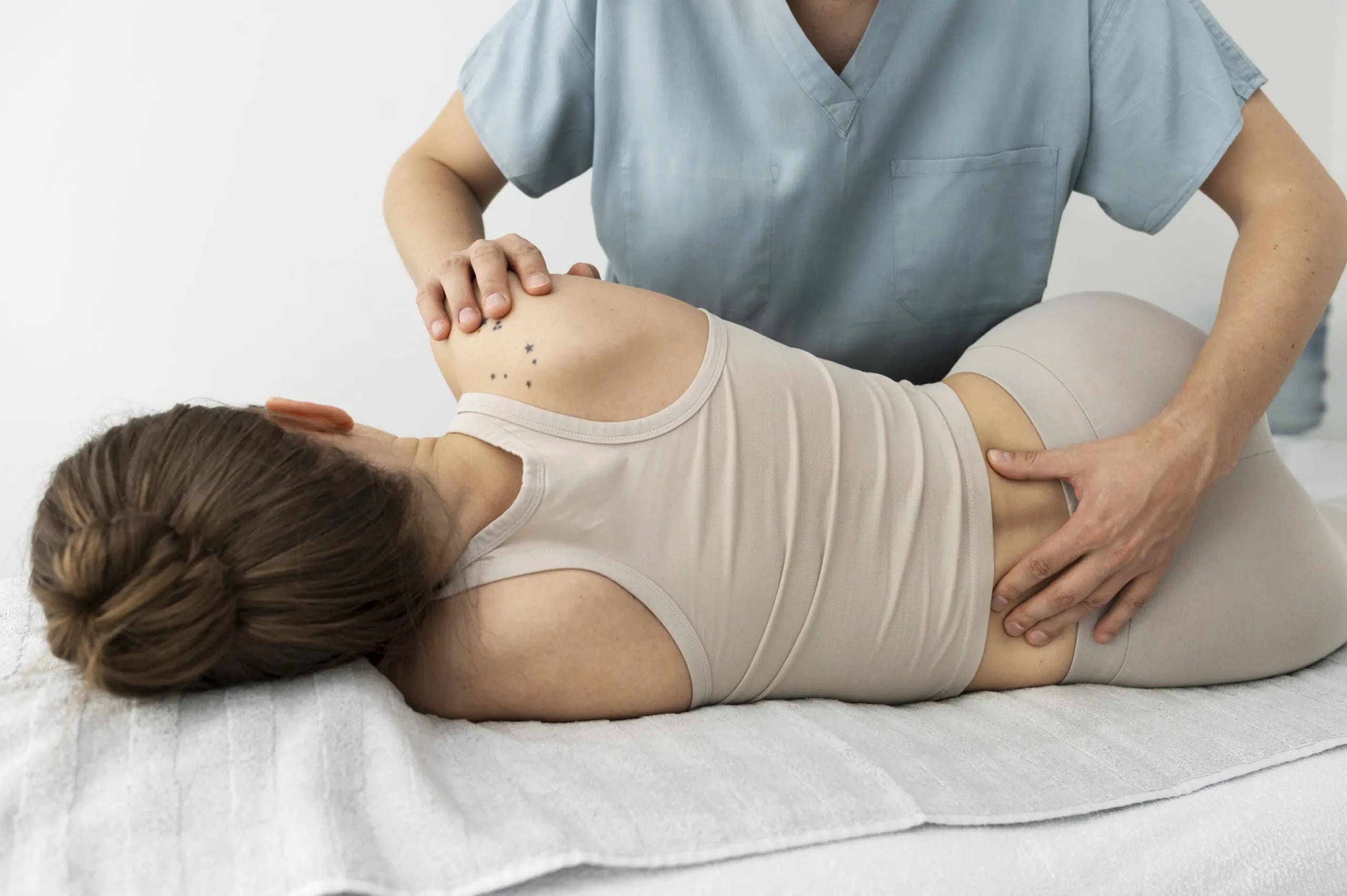
A careful examination starts with the story. When did it begin? Did a specific twist, lift, run, or long sit start it? What makes it better or worse? Does it change with position or time of day? Observation follows: how the person stands, walks, and moves from sitting to standing. Lumbar range of motion is checked. Hip mobility and strength are tested. Watch gait for a limp or a drop of the opposite hip when standing on one leg. These findings narrow the possibilities before any special test is performed.
Understanding Academic Low Back Pain: Impact and Chiropractic Solutions | El Paso, TX
Provocation testing adds another layer. One commonly used set is the cluster described by Laslett and colleagues. It includes distraction, compression, thigh thrust, sacral thrust, and Gaenslen’s tests. When three or more of these tests reproduce the person’s familiar pain, the likelihood that the sacroiliac region is contributing rises (Laslett et al., 2005). Earlier work suggested high sensitivity and specificity for this combination. Later analyses have tempered expectations: the tests help, but they do not deliver certainty by themselves. Negative tests are often more useful for lowering the chance that the sacroiliac joint is the main source. When needed, the most precise confirmation remains an image-guided injection that temporarily relieves the pain. In everyday practice, the goal is not to force a label. The goal is to identify what is limiting function and address it (Cohen et al., 2013).
Hip mobility and gait matter for almost every person in this group. Programmers and analysts who sit for long blocks often develop tight hip flexors and under-used gluteal muscles. Amazon associates and data-center technicians repeatedly load one leg while reaching or scanning. Runners accumulate high step counts. Drivers sit, then suddenly stand and twist to exit the vehicle. Rehabilitation therefore focuses on restoring usable motion and control rather than chasing a single joint name.
Practical steps include:
For many people, these changes reduce the catch near the belt line within a few weeks. Chiropractic care can address related spinal and pelvic mechanics when joint motion is restricted. The emphasis stays on function: being able to sit through a coding session, finish a shift, complete a run, or get out of the car without the sharp reminder.
Imaging is useful when red flags appear—recent significant trauma, unexplained weight loss, night pain that wakes a person, progressive weakness, or changes in bowel or bladder control. It also helps rule out other conditions, such as a lumbar disc herniation with nerve compression, a hip joint problem, a sacral fracture, or an inflammatory arthritis affecting the sacroiliac joints. Plain radiographs of the lumbar spine and pelvis are often the first step. Consider magnetic resonance imaging when neurological signs persist or when the history suggests something beyond ordinary mechanical pain. Imaging does not reliably prove that the sacroiliac joint itself is the pain generator in the absence of clear inflammatory or structural findings. A normal study does not exclude mechanical irritation, and an abnormal study does not automatically explain the symptoms (American Academy of Family Physicians, 2022).
Collaborative care at Injury Medical Clinic PA brings these pieces together. Dr. Alex Jimenez, DC, APRN, FNP-BC, CFMP, IFMCP, combines chiropractic structural work with the ability to order and interpret advanced testing under collaborative oversight with Dr. Maria Guadalupe Cardenas, MD. The focus remains on what serves the patient: reducing pain, restoring mobility, and supporting recovery without unnecessary procedures. The team prioritizes non-invasive options such as targeted exercise, manual care, and activity modification to avoid the risks of surgery or heavy medication when they are not required. Patients remain the decision-makers. Education about the findings, the options, and the expected timeline lets each person choose a plan that fits work, family, and activity demands. Many group insurance plans cover this coordinated approach, providing you with access to both the mechanical and medical sides of the evaluation.
If one-sided pain near the belt line is limiting your shift, run, commute, or time at the desk, a structured examination can identify the contributors and point you to practical next steps. The same team that evaluates the lumbar spine, the sacroiliac region, the hip, and the surrounding muscles can also coordinate any needed imaging or further medical review. Call 915-850-0900 or visit the clinic at Mission Plaza in El Paso to schedule.
Laslett, M., Aprill, C. N., McDonald, B., & Young, S. B. (2005). Diagnosis of sacroiliac joint pain: Validity of individual provocation tests and composites of tests. Manual Therapy, 10(3), 207–218.
Cohen, S. P., Chen, Y., & Neufeld, N. J. (2013). Sacroiliac joint pain: A comprehensive review of epidemiology, diagnosis, and treatment. Expert Review of Neurotherapeutics, 13(1), 99–116.
American Academy of Family Physicians. (2022). Sacroiliac joint dysfunction: Diagnosis and treatment. American Family Physician, 105(3), 239–245.
General Disclaimer, Licenses, and Board Certifications *
Professional Scope of Practice *
The information herein on "Low Back or SI Joint: Pain Assessment Techniques" is not intended to replace a one-on-one relationship with a qualified health care professional or licensed physician and is not medical advice. We encourage you to make healthcare decisions based on your research and partnership with a qualified healthcare professional.
Blog Information & Scope Discussions
Welcome to El Paso's Premier Wellness and Injury Care Clinic & Wellness Blog, where Dr. Alex Jimenez, DC, FNP-C, a Multi-State board-certified Family Practice Nurse Practitioner (FNP-BC) and Chiropractor (DC), presents insights on how our multidisciplinary team is dedicated to holistic healing and personalized care. Our practice aligns with evidence-based treatment protocols inspired by integrative medicine principles, similar to those on this site and on our family practice-based chiromed.com site, focusing on naturally restoring health for patients of all ages.
Our areas of multidisciplinary practice include Wellness & Nutrition, Chronic Pain, Personal Injury, Auto Accident Care, Work Injuries, Back Injury, Low Back Pain, Neck Pain, Migraine Headaches, Sports Injuries, Severe Sciatica, Scoliosis, Complex Herniated Discs, Fibromyalgia, Chronic Pain, Complex Injuries, Stress Management, Functional Medicine Treatments, and in-scope care protocols.
Our information scope is multidisciplinary, focusing on musculoskeletal and physical medicine; wellness; contributing etiological viscerosomatic disturbances within clinical presentations; associated somato-visceral reflex clinical dynamics; subluxation complexes; sensitive health issues; and functional medicine articles, topics, and discussions.
We provide and present clinical collaboration with specialists from various disciplines. Each specialist is governed by their professional scope of practice and licensure jurisdiction. We use functional health & wellness protocols to treat and support care for musculoskeletal injuries or disorders.
Our videos, posts, topics, and insights address clinical matters and issues that directly or indirectly relate to our clinical scope of practice.
Our office has made a reasonable effort to provide supportive citations and has identified relevant research studies that support our posts. We provide copies of supporting research studies upon request to regulatory boards and the public.
To discuss how these matters can assist in a specific care plan or treatment protocol, please contact Dr. Alex Jimenez, DC, APRN, FNP-BC, or reach out to us at 915-850-0900.
We are here to help you and your family.
Blessings
Dr. Alex Jimenez DC, MSACP, APRN, FNP-BC*, CCST, IFMCP, CFMP, ATN
Email: coach@elpasofunctionalmedicine.com
Multidisciplinary Licensing & Board Certifications:
Licensed as a Doctor of Chiropractic (DC) in Texas & New Mexico*
Chiropractic Licenses:
Texas DC License #: TX5807, Verified: TX5807
New Mexico DC License #: NM-DC2182, Verified: NM-DC2182
Nurse Practitioner Licenses:
Texas APRN License #: 1191402, Verified: 1191402 *
New Mexico CNP License #: 90560, Verified 90560
Florida APRN License #: 11043890, Verified: APRN11043890 *
Colorado License #: C-APN.0105610-C-NP, Verified: C-APN.0105610-C-NP
New York License #: N25929, Verified N25929
Georgia APRN License #: GAA-NP005701
Multi-State Advanced Practice Registered Nurse (APRN*) Texas & Multi-States
Multi-state Compact APRN License by Endorsement (43 States)
Compact Status: Multi-State License: Authorized to Practice in 43 States*
Nursing Licensure Compact: Updated Here
DEA Registration: (Drug Enforcement Agency Registered)
All medical (MDs) and family practice providers (FNP-APRN) are registered and licensed to offer various levels of medication.
Verify Providers Here
License Verification Link: Nursys License Verifier
* Prescriptive Authority Authorized (DEA Registered Providers). Call if Required
Board Certification:
ANCC FNP-BC: Board Certified Nurse Practitioner*
Education:
Graduate with Honors: ICHS: MSN-FNP (Family Nurse Practitioner Program)
Degree Granted. Master's in Family Practice, MSN Diploma (Cum Laude)
Dr. Alex Jimenez, DC, APRN, FNP-BC*, CFMP, IFMCP, ATN, CCST
(Board Certified: Family Practice Nurse Practitioner—Multistate)*
(Licensed Nurse Practitioner & Chiropractor - Multistate)*
Clinical Director
DC & FNP License (Review Above)
Digital Business Card
NPI: 1205907805
Dr. Maria Cardenas, MD
(Board Certified: Internal Medicine)
(Licensed Medical Doctor)
Medical Director, Clinical Director & Collaborative Physician
NPI # 1164426748
MD License #: J2933
Licenses and Board Certifications:
MD: Medical Doctor
DC: Doctor of Chiropractic
APRNP: Advanced Practice Registered Nurse
FNP-BC: Family Practice Specialization (Multi-State Board Certified)
FNP-BC: Family Practice Across Life Span (Neonatal to Geriatrics)
RN: Registered Nurse (Multi-State Compact License)
CFMP: Certified Functional Medicine Provider
MSN-FNP: Master of Science in Family Practice Medicine
MSACP: Master of Science in Advanced Clinical Practice
IFMCP: Institute of Functional Medicine
CCST: Certified Chiropractic Spinal Trauma
ATN: Advanced Translational Neutrogenomics
Family with Primary Care Focus (Family Nurse Practitioner or FNP)
Memberships & Associations:
TCA: Texas Chiropractic Association: Member ID: 104311
TNA: Texas Nurse Association: Member ID: 06458222
TNP: Texas Nurse Practitioner Association ID: 2025091511
AANP: American Association of Nurse Practitioners: Member ID: 2198960
ANA: American Nurses Association: Member ID: 06458222 (District TX01)
| Primary Taxonomy | Selected Taxonomy | State | License Number |
|---|---|---|---|
| No | 111N00000X - Chiropractor | NM | DC2182 |
| Yes | 111N00000X - Chiropractor | TX | DC5807 |
| Yes | 363LF0000X - Nurse Practitioner - Family | TX | 1191402 |
| Yes | 363LF0000X - Nurse Practitioner - Family | FL | 11043890 |
| Yes | 363LF0000X - Nurse Practitioner - Family | CO | C-APN.0105610-C-NP |
| Yes | 363LF0000X - Nurse Practitioner - Family | NY | N25929 |
| Yes | 363LF0000X - Nurse Practitioner - Family | NM | 90560 |
| Yes | 363LF0000X - Nurse Practitioner - Family | GA | GAA-NP005701 |
Dr. Alex Jimenez, DC, APRN, FNP-BC*, CFMP, IFMCP, ATN, CCST
(Board Certified: Family Practice Nurse Practitioner—Multistate)*
(Primary Care Across Lifespan—Neonatal / Pediatric / Adult / Geriatrics)
(Licensed Nurse Practitioner & Chiropractor - Multistate)*
Clinical Director
Digital Business Card
NPI: 1205907805
Dr. Maria Cardenas, MD
(Board Certified: Internal Medicine)*
(Licensed Medical Doctor)*
Medical Director, Clinical Director & Collaborative Physician
NPI # 1164426748
MD License #: J2933
📆 Schedule Appointment: Schedule 24/7 (Click Here)
Why Your Low Back Burns After Standing at a Counter or Workbench Abstract: Standing still… Read More
When Leg Pain Is Too Irritated for Rehab: What an Epidural Injection Is Actually Trying… Read More
Why Rolling Over in Bed Can Trigger Back Pain Even When Lying Still Feels Fine… Read More
Why Repeated Small Bends Can Bother Your Back More Than One Heavy Lift Abstract Repeated… Read More
Why the First Heavy Lift of the Shift Can Feel Worse Than the Twentieth Abstract… Read More