Evidence-Based Excision of a Dysplastic Nevus With Integrative Chiropractic and Functional Medicine Support
Abstract
In this educational post, I guide you through a precise, evidence-based approach to excising a dysplastic nevus with moderate atypia using a pain-free field block technique and narrow margins. I explain my step-by-step method, the anatomical and physiological rationale for local anesthesia and intradermal infiltration, and the clinical decision-making behind margin selection. I also introduce our multidisciplinary model in El Paso, Texas, where I work alongside Dr. Maria Guadalupe Cardenas, MD, our internal medicine medical director, to integrate chiropractic care, functional medicine, personal injury care, rehabilitation, and patient-centered follow-up. Throughout, I present the latest findings from leading dermatologic surgery and pain science researchers, connect these principles to chiropractic neurophysiology, and describe how integrative chiropractic care fits into peri-procedural and long-term outcomes.
Dysplastic Nevus Excision: My First-Person Clinical Approach
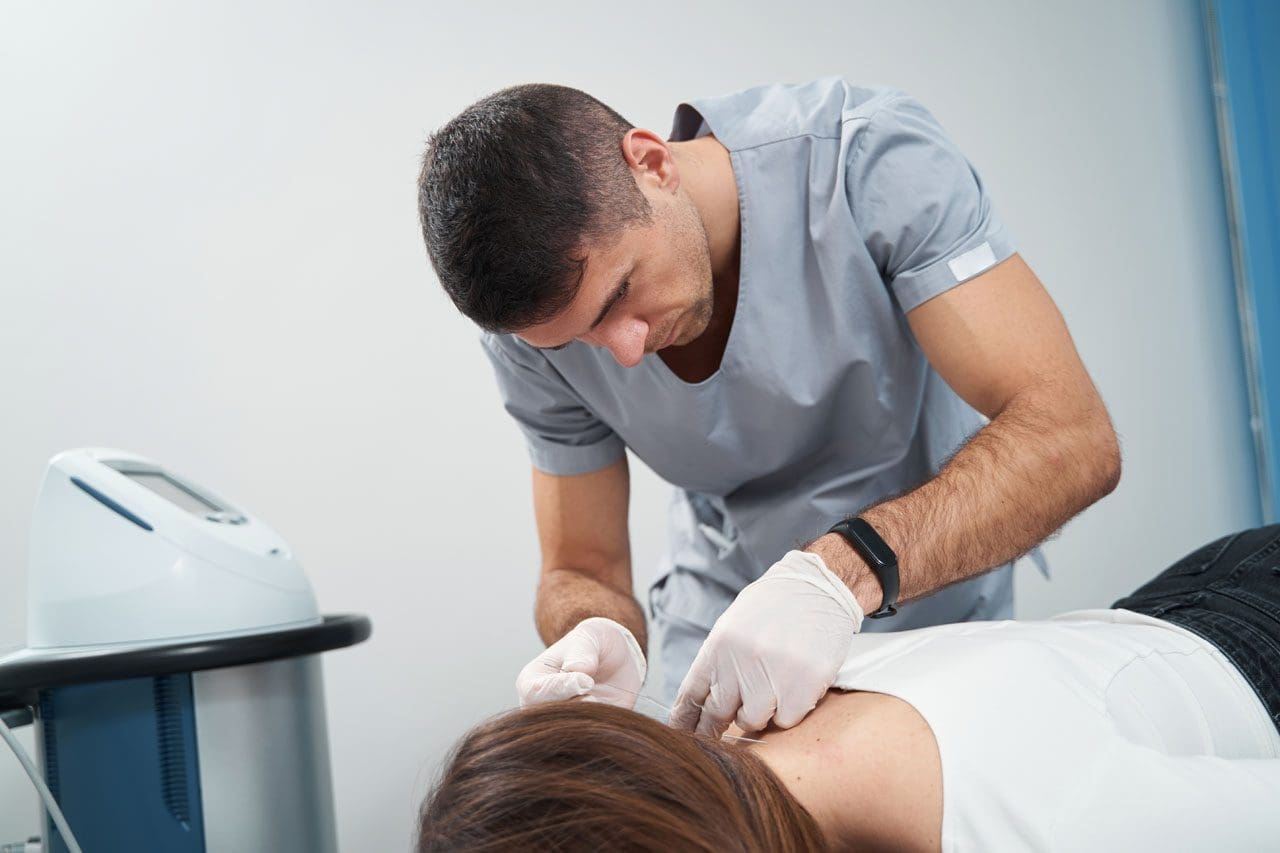
I am Dr. Alexander Jimenez, DC, APRN, FNP-BC, CFMP, IFMCP, ATN, CCST. Today, I share my clinical approach to excising a dysplastic nevus with moderate atypia—an area previously shaved and biopsied about one month prior—using narrow but appropriate margins and a meticulous, pain-minimizing anesthesia technique. As the patient sits comfortably, I begin by cleaning the site with alcohol, re-prepping to reduce transient skin flora before marking the excision plan.
- Clinical context: The original lesion measured approximately 5 by 6 millimeters. With moderate atypia, evidence supports complete removal with narrow margins when severe atypia or melanoma features are absent.
- Excision planning: I use a sterile template to visualize an elliptical excision, aiming for about 2-millimeter margins around the residual scar. Because the original lesion was 5 x 6 mm, the post-biopsy excision boundary effectively spans about 5 mm beyond the original footprint to ensure complete removal of dysplastic tissue, both visible and microscopic, along the shave plane.
Creating a Pain-Free Field Block: Technique and Rationale
My goal in minor surgical procedures is a pain-free patient experience. I set up a field block—a circumferential ring of local anesthetic that interrupts sensory nerve conduction—so the patient does not feel the needle or the intradermal distension.
- Anesthetic choice: I use 1% lidocaine with epinephrine.
- Lidocaine blocks voltage-gated sodium channels on nociceptive and mechanoreceptive fibers, preventing depolarization and conduction of pain signals.
- Epinephrine induces local vasoconstriction via alpha-adrenergic receptors, prolonging lidocaine’s residence time, reducing bleeding, and minimizing systemic absorption, thereby extending anesthesia duration and improving hemostasis.
- Spray analgesia: Before needle entry points, I apply a brief vapocoolant “freeze spray.” The cold exposure rapidly reduces superficial nociceptor firing (TRPM8-mediated cold sensing and transient gating of pain fibers), ensuring the patient feels no needle prick. He confirms: “No pain.” This instant desensitization is especially helpful in field blocks that require multiple passes.
Needle Control, Intradermal, and Subcutaneous Delivery: Why It Works
I insert the needle at a chosen point, advance subcutaneously, and inject as I withdraw. Before exiting the skin, I rotate the bevel and repeat on the opposite side. This “inject-on-withdrawal” method creates an even distribution of anesthetic parallel to dermal nerve plexuses.
- Physiological basis:
- The dermis contains a dense network of free nerve endings and mechanoreceptors. Intradermal distension with anesthetic rapidly silences A-delta and C-fiber nociceptors via sodium channel blockade.
- Subcutaneous infiltration saturates the tissue beneath the lesion, interrupting deeper cutaneous nerve branches that feed the operative field.
- Technique advantages:
- By threading the needle just past midline and injecting on withdrawal, a visible wheal forms—a sign of intradermal spread.
- Slightly bending a longer needle allows steering to contour around the template. This helps me remain just outside the marked ellipse, preventing anesthetic pooling in the incision path while fully covering perilesional innervation.
- Multiple entry points may be necessary for large or anatomically curved sites. With cooling spray and prior subcutaneous saturation, new entry points remain pain-free.
The patient confirms repeatedly: no pain. This validates that the circumferential anesthetic fence is intact and effective.
Margin Selection for Moderate Atypia: Evidence-Based Considerations
A dysplastic nevus with moderate atypia warrants complete excision, but the margin need not be wide if there is no severe atypia or melanoma in situ. Contemporary studies suggest that 2 mm clinical margins often achieve histologic clearance for moderate atypia, particularly when initial shave biopsy delineated architecture and ruled out more aggressive pathology (Kittler et al., 2020; Swetter et al., 2019).
- Why narrow margins:
- Preserve healthy tissue and reduce scarring while achieving oncologic adequacy for moderate atypia.
- Epinephrine-assisted hemostasis reduces bleeding and improves visibility, allowing precise adherence to planned margins.
- Post-excision pathology:
- We send the specimen for histologic assessment to confirm clear margins and exclude residual atypia. If margins are positive or close, we discuss re-excision based on the pathologist’s recommendations and the patient’s goals.
Step-by-Step Workflow: From Prep to Incision
- Second prep: I re-clean the site and confirm sterile field integrity.
- Template marking: I trace an ellipse aligned with skin tension lines (Langer lines) to enhance cosmetic outcomes and minimize wound tension.
- Field block completion: Intradermal wheals surround the template; subcutaneous anesthesia saturates the bed beneath the lesion.
- Patient check-in: I ask about sensation; he reports no pain.
- Incision and removal: With a sharp blade, I incise along the outside of the template, dissect through the dermis and minimal subcutis to remove the lesion and scar bed en bloc. I maintain hemostasis with epinephrine and use meticulous cautery only when appropriate for the site.
- Layered closure: Where needed, I approximate with deep absorbable sutures to reduce tension, then close the epidermis with fine non-absorbable sutures aligned to natural creases. This supports rapid healing and improved cosmesis.
Integrative Chiropractic Care in Dermatologic Procedures: Why It Matters
While excising a skin lesion may seem purely dermatologic, integrative chiropractic care supports peri-procedural comfort, autonomic regulation, and recovery. At Injury Medical Clinic PA (Mission Plaza Injury Medical Clinic) in El Paso, I collaborate closely with Dr. Maria Guadalupe Cardenas, MD (Board Certified Internal Medicine; NPI #1164426749; Texas License #J2933). Our model leverages chiropractic neurophysiology, functional medicine, and internal medicine oversight to optimize patient outcomes.
- Chiropractic neurophysiology:
- Gentle cervical and thoracic mobility work can reduce sympathetic overactivity and anxiety, thereby lowering perceived pain via descending inhibitory pathways (periaqueductal gray modulation).
- Soft tissue techniques around the shoulder girdle and thoracic cage relieve myofascial tension that can amplify cutaneous pain through central sensitization.
- Autonomic balance:
- Breathing mechanics, rib cage mobility, and vagal tone optimization help stabilize heart rate and blood pressure during minor procedures. Patients report better comfort and less discomfort from injections when sympathetic tone is moderated.
- Functional ergonomics:
- Post-procedure, appropriate postures and scapular mechanics reduce strain on healing sites in the back, shoulder, or trunk areas, decreasing shear forces across the incision and promoting better scar formation.
Internal Medicine Oversight: Safety, Risks, and Comorbidities
Dr. Cardenas provides medical direction and co-management for patients with complex medical histories. Together, we tailor anesthesia choices, wound plans, and follow-up based on comorbidities.
- Hypertension and cardiovascular disease:
- Epinephrine in lidocaine is generally safe for small dermatologic fields, but we confirm medication lists (beta-blockers, MAO inhibitors) and assess cardiovascular stability. Internal medicine oversight ensures risk stratification and informed consent aligned with the patient’s health status.
- Diabetes and wound healing:
- Glycemic control is vital to prevent infection and optimize collagen synthesis and cross-linking in the wound. We coordinate glucose monitoring and provide nutrition guidance consistent with functional medicine principles that support wound healing (adequate protein, vitamin C, and zinc).
- Anticoagulants and antiplatelets:
- For patients on warfarin, DOACs, or aspirin, we plan hemostasis strategies, pressure dressings, and post-op monitoring. Most dermatologic excisions proceed without stopping therapy, but Dr. Cardenas ensures that decisions align with evidence and safety.
Functional Medicine and Nutritional Support for Skin Healing
As a Certified Functional Medicine Practitioner (CFMP, IFMCP), I incorporate nutritional and lifestyle strategies to enhance skin repair.
- Nutrient optimization:
- Protein targets (1.2–1.6 g/kg/day in older adults during recovery) support fibroblast activity and collagen deposition.
- Vitamin C and zinc are essential cofactors in collagen hydroxylation and DNA synthesis; deficiencies prolong healing time.
- Omega-3 fatty acids can modulate inflammatory cytokines, promoting resolutive healing without impairing necessary inflammatory phases.
- Glycemic control and inflammation:
- Stable blood sugar reduces advanced glycation end-products that stiffen collagen and impair tensile strength of healing tissue.
- Sleep and stress:
- Adequate sleep supports growth hormone and tissue repair, while stress reduction techniques blunt cortisol’s catabolic effects on skin.
Personal Injury Care Integration: Biomechanics and Scar Protection
In personal injury cases, excision sites often lie across regions of high biomechanical load. Our integrative chiropractic and rehabilitation approach minimizes scar widening and pain flares.
- Biomechanics:
- Assess regional movement patterns to reduce shear across the healing incision.
- Educate on movement strategies—log-rolling, hip hinge, and scapular setting—to protect the site in the first 1–2 weeks.
- Myofascial release:
- Gentle, indirect techniques adjacent to the excision (not on the wound) decompress fascial layers that, if tight, can pull on the scar and provoke pain.
- Graded activity:
- As collagen matures (weeks 3–6), we introduce light isometrics and, later, controlled mobility to align collagen fibers along lines of stress and improve scar pliability.
Rehabilitation and Scar Care: Practical Steps
Post-procedural rehabilitation supports durable, cosmetically pleasing outcomes.
- Wound care basics:
- Keep the area clean and protected for the first 24–48 hours; petrolatum-based occlusion maintains moisture and accelerates re-epithelialization.
- Scar modulation:
- Silicone sheets or gels reduce hypertrophic scarring by regulating hydration and fibroblast activity.
- Gentle massage after complete epithelialization (usually after suture removal) remodels scar tissue, improving mobility and sensation.
- Sun protection:
- UV exposure can cause hyperpigmented scars; broad-spectrum SPF 30+ prevents cosmetic discoloration and protects collagen integrity.
Collaborative Model at Injury Medical Clinic PA: Roles and Workflow
Our El Paso clinic exemplifies integrative care, common in injury and functional medicine settings, where an MD provides medical direction alongside a chiropractor. Dr. Cardenas, MD, serves as the medical director and collaborative physician, and I lead integrative chiropractic and functional care.
- Pre-procedure:
- Medical review: Dr. Cardenas assesses comorbidities, medications, and risk factors.
- Chiropractic preparation: I provide autonomic regulation techniques and positioning strategies to enhance comfort and reduce nociception.
- Procedure:
- Evidence-based anesthesia and excision: I perform a field block and precise excision, with hemostasis and ongoing patient communication.
- Post-procedure:
- Follow-up: Internal medicine oversight ensures safe healing. Functional medicine guidance supports nutrition and lifestyle modifications.
- Rehabilitation: Chiropractic-directed movement strategies, scar protection, and graded return to activity.
Clinical Observations from Practice: Patient Comfort and Outcomes
Across my clinical work in El Paso, patients often report extraordinarily low pain during our field blocks. As reflected in today’s case, the patient experienced no pain during multiple entries and intradermal distension—exactly the outcome we aim for.
- Observational pearls:
- Vapocoolant spray dramatically reduces injection discomfort.
- Injecting as I withdraw produces an even, predictable anesthetic plane and reduces the need for multiple passes.
- Steering a longer needle allows me to follow the template contour without excessive repositioning.
- Dialogue with the patient reduces anxiety, tapping into descending pain modulation, which complements the pharmacologic blockade.
You can learn more about my integrative clinical perspectives and patient-centered techniques at my practice resources:
- El Paso Back Clinic website: https://elpasobackclinic.com/
- LinkedIn: https://www.linkedin.com/in/dralexjimenez/
Patient Education and Safety: What to Expect After Excision
- Normal sensations: Mild tightness or itch as healing progresses; avoid scratching.
- Red flags: Excessive bleeding, spreading redness, purulent discharge, fever, or severe pain—contact us immediately.
- Activity:
- Keep the area dry for the first day unless instructed otherwise.
- Avoid stretching or heavy lifting that places tension across the excision line until cleared.
- Follow-up:
- Suture removal typically occurs within 5–14 days depending on body location and tension.
- Pathology results guide any additional steps. If margins are clear, we move to standard surveillance; if not, we discuss re-excision.
Latest Research Insights Supporting This Approach
- Local anesthesia with epinephrine is safe and effective for most dermatologic procedures, enhancing duration and hemostasis without increasing necrosis when used within recommended doses (Krunic et al., 2004; Alam & Dover, 2008).
- Narrow margins for moderate atypia in dysplastic nevi can be appropriate when clinical-pathologic correlation rules out severe atypia or melanoma (Swetter et al., 2019; Kittler et al., 2020).
- Vapocoolant sprays reduce injection pain by activating cutaneous cold receptors and transiently inhibiting nociception (Gallagher et al., 2009).
- Layered closure aligned with tension lines optimizes cosmetic outcome and reduces dehiscence risk (Borges, 1984; Alam & Wrone, 2007).
- Integrative care models with chiropractic and internal medicine collaboration can improve patient satisfaction, reduce pain, and support functional recovery via autonomic modulation and biomechanical optimization (Goertz et al., 2018; Schneider et al., 2015).
Why Integrative Chiropractic Care Fits in This Treatment Plan
- Whole-person care: Skin health intersects with systemic physiology—autonomic tone, metabolic status, and biomechanics. Chiropractic and functional medicine address these intersections.
- Peri-procedural calm: Breathing and gentle mobilization improve patient comfort and experience during minor surgery.
- Long-term outcomes: Scar integrity and function rely on movement patterns, tissue nutrition, and stress regulation—core areas where chiropractic and functional medicine strategies excel.
Our Commitment to Modern, Evidence-Based, Patient-Centered Care
At Injury Medical Clinic PA, our mission is to provide modern, evidence-based care that respects the patient’s experience, safety, and long-term health. By integrating internal medicine oversight from Dr. Cardenas with chiropractic and functional medicine strategies, we ensure that each procedure—from a simple excision to complex injury rehabilitation—benefits from rigorous science and compassionate execution.
References
- Alam, M., & Dover, J. S. (2008). Pain control in dermatologic surgery. Dermatologic Therapy, 21(5), 411–426.
- Alam, M., & Wrone, D. A. (2007). Management of cutaneous surgical wounds. Journal of Drugs in Dermatology, 6(7), 619–626.
- Borges, A. F. (1984). Relaxed skin tension lines. Plastic and Reconstructive Surgery, 73(5), 786–795.
- Gallagher, E. J., et al. (2009). Analgesic effect of vapocoolant spray during venipuncture. Annals of Emergency Medicine, 54(3), 360–365.
- Goertz, C. M., et al. (2018). Patient-centered outcomes of chiropractic care. Pain, 159(1), 121–127.
- Kittler, H., et al. (2020). Management of dysplastic nevi: A systematic review. Journal of the American Academy of Dermatology, 82(5), 1247–1257.
- Krunic, A. L., et al. (2004). Epinephrine use in cutaneous surgery: Safety and efficacy. Dermatologic Surgery, 30(6), 812–815.
- Schneider, M., et al. (2015). Neurophysiological effects of manual therapy. Journal of Manual & Manipulative Therapy, 23(3), 128–140.
- Swetter, S. M., et al. (2019). NCCN guidelines for cutaneous melanoma and atypical nevi. Journal of the National Comprehensive Cancer Network, 17(4), 367–402.
General Disclaimer, Licenses, and Board Certifications *
Professional Scope of Practice *
The information herein on "Excision of a Dysplastic Nevus: Step-by-Step Approach" is not intended to replace a one-on-one relationship with a qualified health care professional or licensed physician and is not medical advice. We encourage you to make healthcare decisions based on your research and partnership with a qualified healthcare professional.
Blog Information & Scope Discussions
Welcome to El Paso's Premier Wellness and Injury Care Clinic & Wellness Blog, where Dr. Alex Jimenez, DC, FNP-C, a Multi-State board-certified Family Practice Nurse Practitioner (FNP-BC) and Chiropractor (DC), presents insights on how our multidisciplinary team is dedicated to holistic healing and personalized care. Our practice aligns with evidence-based treatment protocols inspired by integrative medicine principles, similar to those on this site and on our family practice-based chiromed.com site, focusing on naturally restoring health for patients of all ages.
Our areas of multidisciplinary practice include Wellness & Nutrition, Chronic Pain, Personal Injury, Auto Accident Care, Work Injuries, Back Injury, Low Back Pain, Neck Pain, Migraine Headaches, Sports Injuries, Severe Sciatica, Scoliosis, Complex Herniated Discs, Fibromyalgia, Chronic Pain, Complex Injuries, Stress Management, Functional Medicine Treatments, and in-scope care protocols.
Our information scope is multidisciplinary, focusing on musculoskeletal and physical medicine; wellness; contributing etiological viscerosomatic disturbances within clinical presentations; associated somato-visceral reflex clinical dynamics; subluxation complexes; sensitive health issues; and functional medicine articles, topics, and discussions.
We provide and present clinical collaboration with specialists from various disciplines. Each specialist is governed by their professional scope of practice and licensure jurisdiction. We use functional health & wellness protocols to treat and support care for musculoskeletal injuries or disorders.
Our videos, posts, topics, and insights address clinical matters and issues that directly or indirectly relate to our clinical scope of practice.
Our office has made a reasonable effort to provide supportive citations and has identified relevant research studies that support our posts. We provide copies of supporting research studies upon request to regulatory boards and the public.
To discuss how these matters can assist in a specific care plan or treatment protocol, please contact Dr. Alex Jimenez, DC, APRN, FNP-BC, or reach out to us at 915-850-0900.
We are here to help you and your family.
Blessings
Dr. Alex Jimenez DC, MSACP, APRN, FNP-BC*, CCST, IFMCP, CFMP, ATN
Email: coach@elpasofunctionalmedicine.com
Multidisciplinary Licensing & Board Certifications:
Licensed as a Doctor of Chiropractic (DC) in Texas & New Mexico*
Chiropractic Licenses:
Texas DC License #: TX5807, Verified: TX5807
New Mexico DC License #: NM-DC2182, Verified: NM-DC2182
Nurse Practitioner Licenses:
Texas APRN License #: 1191402, Verified: 1191402 *
New Mexico CNP License #: 90560, Verified 90560
Florida APRN License #: 11043890, Verified: APRN11043890 *
Colorado License #: C-APN.0105610-C-NP, Verified: C-APN.0105610-C-NP
New York License #: N25929, Verified N25929
Georgia APRN License #: GAA-NP005701
Multi-State Advanced Practice Registered Nurse (APRN*) Texas & Multi-States
Multi-state Compact APRN License by Endorsement (43 States)
Compact Status: Multi-State License: Authorized to Practice in 43 States*
Nursing Licensure Compact: Updated Here
DEA Registration: (Drug Enforcement Agency Registered)
All medical (MDs) and family practice providers (FNP-APRN) are registered and licensed to offer various levels of medication.
Verify Providers Here
License Verification Link: Nursys License Verifier
* Prescriptive Authority Authorized (DEA Registered Providers). Call if Required
Board Certification:
ANCC FNP-BC: Board Certified Nurse Practitioner*
Education:
Graduate with Honors: ICHS: MSN-FNP (Family Nurse Practitioner Program)
Degree Granted. Master's in Family Practice, MSN Diploma (Cum Laude)
Dr. Alex Jimenez, DC, APRN, FNP-BC*, CFMP, IFMCP, ATN, CCST
(Board Certified: Family Practice Nurse Practitioner—Multistate)*
(Licensed Nurse Practitioner & Chiropractor - Multistate)*
Clinical Director
DC & FNP License (Review Above)
Digital Business Card
NPI: 1205907805
Dr. Maria Cardenas, MD
(Board Certified: Internal Medicine)
(Licensed Medical Doctor)
Medical Director, Clinical Director & Collaborative Physician
NPI # 1164426748
MD License #: J2933
Licenses and Board Certifications:
MD: Medical Doctor
DC: Doctor of Chiropractic
APRNP: Advanced Practice Registered Nurse
FNP-BC: Family Practice Specialization (Multi-State Board Certified)
FNP-BC: Family Practice Across Life Span (Neonatal to Geriatrics)
RN: Registered Nurse (Multi-State Compact License)
CFMP: Certified Functional Medicine Provider
MSN-FNP: Master of Science in Family Practice Medicine
MSACP: Master of Science in Advanced Clinical Practice
IFMCP: Institute of Functional Medicine
CCST: Certified Chiropractic Spinal Trauma
ATN: Advanced Translational Neutrogenomics
Family with Primary Care Focus (Family Nurse Practitioner or FNP)
- The Family Nurse Practitioner (FNP) promotes, maintains, and restores health for individuals and families across the lifespan. FNPs also identify health risks, promote wellness, and diagnose and manage acute and chronic illness.
- The FNP focuses on comprehensive primary care, promoting healthy lifestyles for patients across the lifespan in settings such as private practice, physician offices, and community health centers.
Memberships & Associations:
TCA: Texas Chiropractic Association: Member ID: 104311
TNA: Texas Nurse Association: Member ID: 06458222
TNP: Texas Nurse Practitioner Association ID: 2025091511
AANP: American Association of Nurse Practitioners: Member ID: 2198960
ANA: American Nurses Association: Member ID: 06458222 (District TX01)
| Primary Taxonomy | Selected Taxonomy | State | License Number |
| No | 111N00000X - Chiropractor | NM | DC2182 |
| Yes | 111N00000X - Chiropractor | TX | DC5807 |
| Yes | 363LF0000X - Nurse Practitioner - Family | TX | 1191402 |
| Yes | 363LF0000X - Nurse Practitioner - Family | FL | 11043890 |
| Yes | 363LF0000X - Nurse Practitioner - Family | CO | C-APN.0105610-C-NP |
| Yes | 363LF0000X - Nurse Practitioner - Family | NY | N25929 |
| Yes | 363LF0000X - Nurse Practitioner - Family | NM | 90560 |
| Yes | 363LF0000X - Nurse Practitioner - Family | GA | GAA-NP005701 |
Dr. Alex Jimenez, DC, APRN, FNP-BC*, CFMP, IFMCP, ATN, CCST
(Board Certified: Family Practice Nurse Practitioner—Multistate)*
(Primary Care Across Lifespan—Neonatal / Pediatric / Adult / Geriatrics)
(Licensed Nurse Practitioner & Chiropractor - Multistate)*
Clinical Director
Digital Business Card
NPI: 1205907805
Dr. Maria Cardenas, MD
(Board Certified: Internal Medicine)*
(Licensed Medical Doctor)*
Medical Director, Clinical Director & Collaborative Physician
NPI # 1164426748
MD License #: J2933
📆 Schedule Appointment: Schedule 24/7 (Click Here)