Alcohol Chronic Back Pain: Understanding the Risks
Contents
Abstract
Alcohol can quietly undermine sleep quality, medication safety, tissue healing, and long-term cancer risk while masking or worsening musculoskeletal symptoms. Persistent or unexplained back pain is not always a purely mechanical spinal problem and sometimes requires medical evaluation to rule out red-flag conditions. Coordinated physician or nurse practitioner assessment combined with appropriate chiropractic rehabilitation supports safer treatment selection and better recovery outcomes.
Imagine finishing a long day with a drink to “take the edge off” chronic back stiffness, only to wake feeling more fatigued, with tighter muscles and slower recovery. This common pattern hides important biology. Alcohol affects sleep architecture, interacts with common pain medications, slows musculoskeletal repair, and independently raises the risk of several cancers. At the same time, back pain that does not behave like a typical strain sometimes needs medical screening before any hands-on treatment begins. Understanding these connections helps patients make safer choices and receive the right care at the right time.
Even moderate evening drinking can shorten the time it takes to fall asleep, yet it fragments the rest of the night. Alcohol suppresses rapid eye movement (REM) sleep early and then produces rebound fragmentation later, reducing overall sleep efficiency (National Institute on Alcohol Abuse and Alcoholism [NIAAA], 2026). Poor sleep raises pain sensitivity the next day and slows tissue repair because growth hormone and other recovery processes peak during deep sleep stages. For someone already managing back pain, this creates a cycle: alcohol feels helpful at night, yet the resulting sleep loss increases muscle tension, inflammation, and next-day stiffness.
Chronic use also contributes to alcoholic myopathy—muscle wasting and weakness driven by reduced protein synthesis, mitochondrial stress, and impaired regeneration (NIAAA, 2026). Bone density declines with heavier intake because alcohol slows osteoblast activity, the cells that build new bone. Fracture healing can be delayed, and callus formation is weaker. These effects matter for anyone whose back pain involves disc, facet, or soft-tissue loading; slower repair means longer disability and higher risk of reinjury.
Alcohol interacts with many medications used for back pain. Combining it with opioids deepens sedation and respiratory depression. With acetaminophen, it increases liver stress. Even nonsteroidal anti-inflammatory drugs (NSAIDs) carry higher gastrointestinal risk when alcohol is added. In the recovery window after injury or adjustment, these interactions can turn a routine pain plan into a safety issue.
Beyond drug interactions, alcohol impairs the very processes needed for healing. It promotes systemic inflammation, disrupts collagen remodeling in tendons and ligaments, and reduces the body’s ability to clear waste from strained tissues. Patients who continue drinking while receiving rehabilitation often report slower progress, more night pain, and greater reliance on medication. Reducing or pausing alcohol during active recovery provides the musculoskeletal system a cleaner environment in which to rebuild.
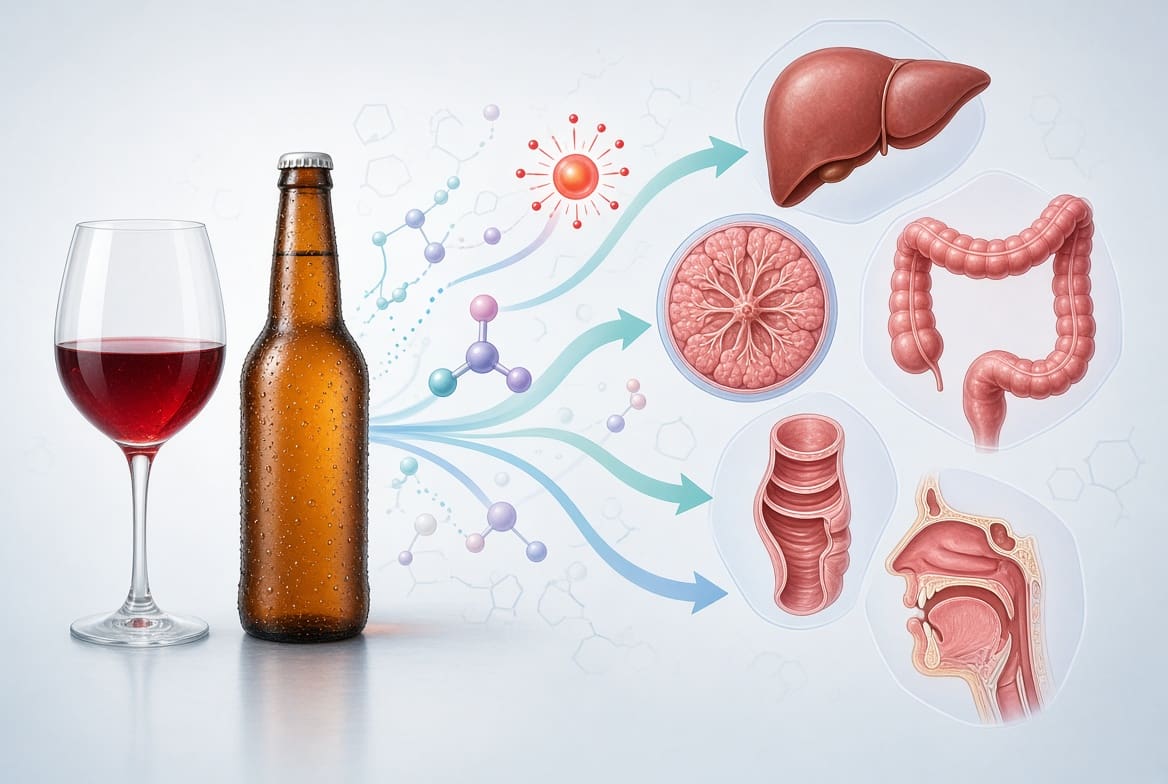
Alcohol is classified as a known human carcinogen. Risk rises with total exposure and appears for several common cancers even at levels some people consider moderate (NIAAA, 2026; Office of the Surgeon General, 2025). Established associations include cancers of the oral cavity, pharynx, larynx, esophagus, liver, colorectum, and female breast. Mechanisms include acetaldehyde production (a toxic metabolite), oxidative stress, hormonal shifts (particularly estrogen), and enhanced absorption of other carcinogens.
This cancer risk is independent of back pain yet relevant to screening decisions. Unexplained weight loss, night pain, or progressive symptoms in a person with significant alcohol history may warrant earlier medical work-up rather than prolonged assumption that the pain is only mechanical. The same lifestyle factor that delays soft-tissue healing also elevates lifetime cancer risk, making coordinated medical awareness valuable.
Most episodes of back pain improve with activity modification, exercise, and conservative care. A smaller subset does not. Red-flag features raise concern for fracture, infection, malignancy, or serious nerve compression and justify medical assessment before or alongside chiropractic care (Downie et al., 2013; Verhagen et al., 2017).
Key historical red flags include:
Physical examination may add point tenderness over bone, neurological deficits, or signs of systemic illness. No single red flag is perfectly accurate, but combinations improve diagnostic utility. A history of cancer plus unexplained weight loss, for example, substantially raises the post-test probability of spinal malignancy. Guidelines therefore recommend medical evaluation when red flags are present, rather than automatically attributing symptoms to mechanical spinal dysfunction.
At Injury Medical Clinic PA, initial encounters routinely include this screening. Dr. Alex Jimenez, DC, APRN, FNP-BC, applies both chiropractic and nurse-practitioner perspectives so mechanical findings are interpreted in a medical context. When red flags appear, further diagnostics or referral can occur without delay, protecting patient safety while still allowing appropriate rehabilitation to proceed once serious pathology is excluded.
Safe treatment selection begins with accurate triage. Physician or nurse practitioner assessment clarifies medication risks, screens for systemic contributors (including alcohol-related neuropathy or metabolic issues), and decides whether imaging or laboratory work is indicated. Once red flags are addressed, chiropractic care focuses on restoring joint mobility, reducing protective muscle spasm, improving movement patterns, and guiding graded exercise.
This sequence prevents the common error of applying manual therapy to an undiagnosed fracture, infection, or metastatic lesion. It also avoids unnecessary imaging in uncomplicated mechanical pain. Outcome measures such as the Oswestry Disability Index help track functional progress objectively (see clinic resources on assessing lower back pain). Patients who reduce alcohol intake during this phase often notice better sleep, less morning stiffness, and faster mobility gains.
Alcohol-related peripheral neuropathy can further complicate the picture by producing burning pain, numbness, or weakness in the extremities that may be mistaken for radiculopathy. Differentiating the two requires a careful neurological examination and, when indicated, laboratory evaluation for nutritional deficiencies (Jimenez, n.d.; see alcoholic peripheral neuropathy overview).
Injury Medical Chiropractic and Functional Medicine Clinic is unique in El Paso, Texas, because it integrates a medical director, Dr. Maria Guadalupe Cardenas, MD (board-certified in internal medicine), with a dual-licensed chiropractor and board-certified family practice nurse practitioner who specializes in soft-tissue injury. This structure is the only one in El Paso that combines on-site medical direction and nurse-practitioner assessment with comprehensive chiropractic rehabilitation, advanced soft-tissue therapies, and functional medicine tools under one coordinated team. Patients receive medical screening for red flags, medication safety review, and systemic contributors (including alcohol effects) in the same visit where spinal mechanics and rehabilitation are addressed, reducing fragmentation and supporting safer, root-cause-oriented care.
These steps empower patients as informed decision-makers while ensuring care remains aligned with their primary medical team.
Multidisciplinary Call to Action
If you are experiencing chronic or unexplained back pain—especially if alcohol use, sleep disruption, or medication concerns are part of the picture—schedule a coordinated evaluation at Injury Medical Clinic PA. Medical screening by the nurse practitioner and medical director team, followed by appropriate chiropractic rehabilitation, can clarify whether your symptoms are mechanical, systemic, or both, and guide a safer path toward improved mobility, better sleep, and reduced reliance on pain medication. Contact the clinic to begin a personalized assessment that prioritizes both root-cause insight and patient safety.
Downie, A., Williams, C. M., Henschke, N., Hancock, M. J., Ostelo, R. W. J. G., de Vet, H. C. W., Macaskill, P., Irwig, L., van Tulder, M. W., Koes, B. W., & Maher, C. G. (2013). Red flags to screen for malignancy and fracture in patients with low back pain: Systematic review. BMJ, 347, f7095. https://doi.org/10.1136/bmj.f7095
Jimenez, A. (n.d.). Exploring alcoholic peripheral neuropathy: Symptoms and risks. Injury Medical Clinic PA. https://dralexjimenez.com/exploring-alcoholic-peripheral-neuropathy-symptoms-and-risks/
National Institute on Alcohol Abuse and Alcoholism. (2026). Alcohol’s effects on the body. https://www.niaaa.nih.gov/alcohols-effects-health/alcohols-effects-body
Office of the Surgeon General. (2025). Alcohol and cancer risk: The U.S. Surgeon General’s Advisory. U.S. Department of Health and Human Services. https://www.hhs.gov/surgeongeneral/reports-and-publications/alcohol-cancer/index.html
Verhagen, A. P., Downie, A., Maher, C. G., & Koes, B. W. (2017). Most red flags for malignancy in low back pain guidelines lack empirical support: A systematic review. Pain, 158(10), 1860–1868. https://doi.org/10.1097/j.pain.0000000000000998
General Disclaimer, Licenses, and Board Certifications *
Professional Scope of Practice *
The information herein on "Alcohol Chronic Back Pain: Understanding the Risks" is not intended to replace a one-on-one relationship with a qualified health care professional or licensed physician and is not medical advice. We encourage you to make healthcare decisions based on your research and partnership with a qualified healthcare professional.
Blog Information & Scope Discussions
Welcome to El Paso's Premier Wellness and Injury Care Clinic & Wellness Blog, where Dr. Alex Jimenez, DC, FNP-C, a Multi-State board-certified Family Practice Nurse Practitioner (FNP-BC) and Chiropractor (DC), presents insights on how our multidisciplinary team is dedicated to holistic healing and personalized care. Our practice aligns with evidence-based treatment protocols inspired by integrative medicine principles, similar to those on this site and on our family practice-based chiromed.com site, focusing on naturally restoring health for patients of all ages.
Our areas of multidisciplinary practice include Wellness & Nutrition, Chronic Pain, Personal Injury, Auto Accident Care, Work Injuries, Back Injury, Low Back Pain, Neck Pain, Migraine Headaches, Sports Injuries, Severe Sciatica, Scoliosis, Complex Herniated Discs, Fibromyalgia, Chronic Pain, Complex Injuries, Stress Management, Functional Medicine Treatments, and in-scope care protocols.
Our information scope is multidisciplinary, focusing on musculoskeletal and physical medicine; wellness; contributing etiological viscerosomatic disturbances within clinical presentations; associated somato-visceral reflex clinical dynamics; subluxation complexes; sensitive health issues; and functional medicine articles, topics, and discussions.
We provide and present clinical collaboration with specialists from various disciplines. Each specialist is governed by their professional scope of practice and licensure jurisdiction. We use functional health & wellness protocols to treat and support care for musculoskeletal injuries or disorders.
Our videos, posts, topics, and insights address clinical matters and issues that directly or indirectly relate to our clinical scope of practice.
Our office has made a reasonable effort to provide supportive citations and has identified relevant research studies that support our posts. We provide copies of supporting research studies upon request to regulatory boards and the public.
To discuss how these matters can assist in a specific care plan or treatment protocol, please contact Dr. Alex Jimenez, DC, APRN, FNP-BC, or reach out to us at 915-850-0900.
We are here to help you and your family.
Blessings
Dr. Alex Jimenez DC, MSACP, APRN, FNP-BC*, CCST, IFMCP, CFMP, ATN
Email: coach@elpasofunctionalmedicine.com
Multidisciplinary Licensing & Board Certifications:
Licensed as a Doctor of Chiropractic (DC) in Texas & New Mexico*
Chiropractic Licenses:
Texas DC License #: TX5807, Verified: TX5807
New Mexico DC License #: NM-DC2182, Verified: NM-DC2182
Nurse Practitioner Licenses:
Texas APRN License #: 1191402, Verified: 1191402 *
New Mexico CNP License #: 90560, Verified 90560
Florida APRN License #: 11043890, Verified: APRN11043890 *
Colorado License #: C-APN.0105610-C-NP, Verified: C-APN.0105610-C-NP
New York License #: N25929, Verified N25929
Georgia APRN License #: GAA-NP005701
Multi-State Advanced Practice Registered Nurse (APRN*) Texas & Multi-States
Multi-state Compact APRN License by Endorsement (43 States)
Compact Status: Multi-State License: Authorized to Practice in 43 States*
Nursing Licensure Compact: Updated Here
DEA Registration: (Drug Enforcement Agency Registered)
All medical (MDs) and family practice providers (FNP-APRN) are registered and licensed to offer various levels of medication.
Verify Providers Here
License Verification Link: Nursys License Verifier
* Prescriptive Authority Authorized (DEA Registered Providers). Call if Required
Board Certification:
ANCC FNP-BC: Board Certified Nurse Practitioner*
Education:
Graduate with Honors: ICHS: MSN-FNP (Family Nurse Practitioner Program)
Degree Granted. Master's in Family Practice, MSN Diploma (Cum Laude)
Dr. Alex Jimenez, DC, APRN, FNP-BC*, CFMP, IFMCP, ATN, CCST
(Board Certified: Family Practice Nurse Practitioner—Multistate)*
(Licensed Nurse Practitioner & Chiropractor - Multistate)*
Clinical Director
DC & FNP License (Review Above)
Digital Business Card
NPI: 1205907805
Dr. Maria Cardenas, MD
(Board Certified: Internal Medicine)
(Licensed Medical Doctor)
Medical Director, Clinical Director & Collaborative Physician
NPI # 1164426748
MD License #: J2933
Licenses and Board Certifications:
MD: Medical Doctor
DC: Doctor of Chiropractic
APRNP: Advanced Practice Registered Nurse
FNP-BC: Family Practice Specialization (Multi-State Board Certified)
FNP-BC: Family Practice Across Life Span (Neonatal to Geriatrics)
RN: Registered Nurse (Multi-State Compact License)
CFMP: Certified Functional Medicine Provider
MSN-FNP: Master of Science in Family Practice Medicine
MSACP: Master of Science in Advanced Clinical Practice
IFMCP: Institute of Functional Medicine
CCST: Certified Chiropractic Spinal Trauma
ATN: Advanced Translational Neutrogenomics
Family with Primary Care Focus (Family Nurse Practitioner or FNP)
Memberships & Associations:
TCA: Texas Chiropractic Association: Member ID: 104311
TNA: Texas Nurse Association: Member ID: 06458222
TNP: Texas Nurse Practitioner Association ID: 2025091511
AANP: American Association of Nurse Practitioners: Member ID: 2198960
ANA: American Nurses Association: Member ID: 06458222 (District TX01)
| Primary Taxonomy | Selected Taxonomy | State | License Number |
|---|---|---|---|
| No | 111N00000X - Chiropractor | NM | DC2182 |
| Yes | 111N00000X - Chiropractor | TX | DC5807 |
| Yes | 363LF0000X - Nurse Practitioner - Family | TX | 1191402 |
| Yes | 363LF0000X - Nurse Practitioner - Family | FL | 11043890 |
| Yes | 363LF0000X - Nurse Practitioner - Family | CO | C-APN.0105610-C-NP |
| Yes | 363LF0000X - Nurse Practitioner - Family | NY | N25929 |
| Yes | 363LF0000X - Nurse Practitioner - Family | NM | 90560 |
| Yes | 363LF0000X - Nurse Practitioner - Family | GA | GAA-NP005701 |
Dr. Alex Jimenez, DC, APRN, FNP-BC*, CFMP, IFMCP, ATN, CCST
(Board Certified: Family Practice Nurse Practitioner—Multistate)*
(Primary Care Across Lifespan—Neonatal / Pediatric / Adult / Geriatrics)
(Licensed Nurse Practitioner & Chiropractor - Multistate)*
Clinical Director
Digital Business Card
NPI: 1205907805
Dr. Maria Cardenas, MD
(Board Certified: Internal Medicine)*
(Licensed Medical Doctor)*
Medical Director, Clinical Director & Collaborative Physician
NPI # 1164426748
MD License #: J2933
📆 Schedule Appointment: Schedule 24/7 (Click Here)
Learn how chiropractic rehabilitation can relieve symptoms and improve quality of life for people with… Read More
Cervical Muscle and Joint Factors That Amplify Migraine Frequency — and How Structural Care Complements… Read More
Learn how omega-3s and chiropractic rehabilitation can support your recovery and promote a healthier lifestyle.… Read More
Before and After the Accident: How Comparing Spine Examinations Helps Explain New Limitations A car… Read More
Cervical Contributions to Chronic Migraine and How Guideline-Based Botox Complements Structural Care After a low-speed… Read More
Learn how chiropractic care, combined with causation, can impact headaches and support your journey to… Read More